A winter morning in Amman can begin with frost, while the same afternoon beside the Red Sea may be pleasantly warm. By August, the contrast is equally striking: temperatures in Aqaba approach 40°C, while the capital enjoys comparatively cooler evenings. Jordan's rainy season extends broadly from late autumn into early spring, followed by a prolonged period of summer sunshine and exceptionally dry conditions.
Much of this variation is explained by the country's geography. Mediterranean weather systems influence the western highlands, the Jordan Rift Valley creates warmer lowland conditions, and the southern and eastern deserts experience pronounced aridity. Understanding Jordan's monthly weather therefore requires looking beyond the national average and considering where, as well as when, temperatures and rainfall are measured.
Average Monthly Temperatures and Rainfall in Jordan
Amman and Aqaba provide two contrasting reference points for Jordan's climate. The capital represents elevated inland conditions, whereas Aqaba illustrates the considerably warmer desert climate of the southern Red Sea coast.
The following figures come from the World Meteorological Organization's climate records for Amman and the Aqaba Special Economic Zone Authority's Sustainable Energy and Climate Action Plan.
| Month | Amman high / low | Amman rainfall | Aqaba high / low | Aqaba rainfall |
| January | 12.3°C / 3.6°C | 63.4 mm | 21.0°C / 10.3°C | 5 mm |
| February | 13.7°C / 4.2°C | 61.7 mm | 22.6°C / 11.1°C | 6 mm |
| March | 17.2°C / 6.1°C | 43.1 mm | 26.3°C / 14.1°C | 5 mm |
| April | 22.6°C / 9.5°C | 13.7 mm | 30.1°C / 17.6°C | 4 mm |
| May | 27.8°C / 13.5°C | 3.3 mm | 35.1°C / 20.6°C | 1 mm |
| June | 30.8°C / 16.6°C | 0 mm | 38.0°C / 24.0°C | 0 mm |
| July | 32.0°C / 18.5°C | 0 mm | 38.9°C / 25.4°C | 0 mm |
| August | 32.4°C / 18.6°C | 0 mm | 39.3°C / 25.6°C | 0 mm |
| September | 30.7°C / 16.6°C | 0.3 mm | 35.7°C / 24.1°C | 0 mm |
| October | 27.1°C / 13.8°C | 6.6 mm | 32.6°C / 20.7°C | 1 mm |
| November | 20.4°C / 9.3°C | 28.0 mm | 27.8°C / 16.4°C | 4 mm |
| December | 14.4°C / 5.2°C | 49.2 mm | 22.6°C / 11.8°C | 6 mm |
Data sources: World Meteorological Organization (WMO), Jordan Meteorological Department and Aqaba Special Economic Zone Authority, Climate Action Plan, Table 3.
These historical averages illustrate seasonal and geographical differences rather than providing forecasts. The two datasets have not been established as covering an identical measurement period, and zero average rainfall does not guarantee completely rain-free conditions.
Jordan Weather in January
January is the month that most clearly challenges the perception of Jordan as a constantly warm desert country. Cold weather reaches the western highlands, bringing rain to Amman and occasionally snow to elevated districts. Petra can feel particularly chilly inside the shaded Siq, even when surrounding sandstone slopes receive winter sunshine.
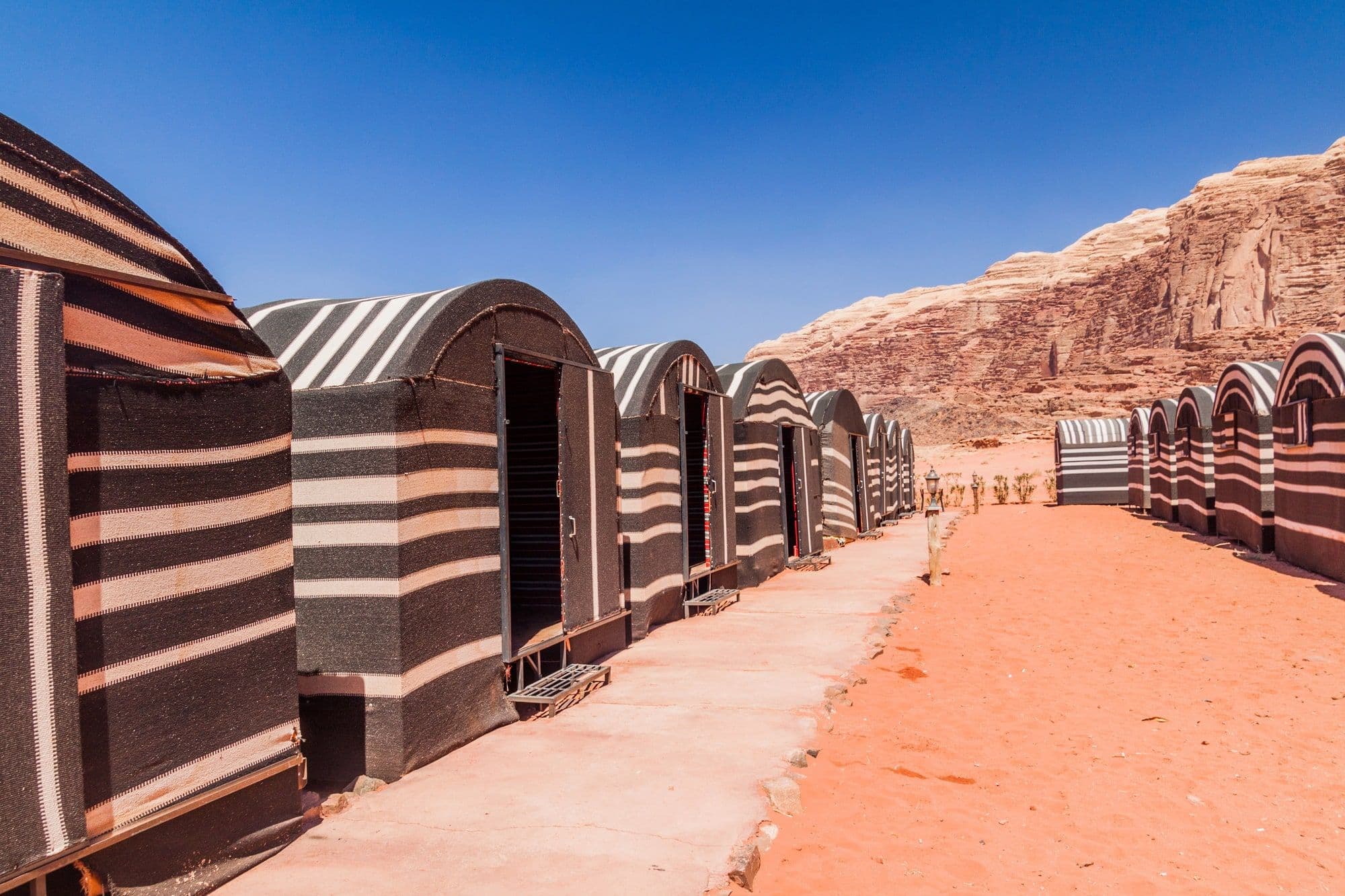
Aqaba remains considerably milder, but inland desert camps require different preparations. Clear skies over Wadi Rum allow rapid heat loss after sunset, making overnight conditions potentially much colder than daytime temperatures suggest.
Jordan Weather in February
Much of northern Jordan remains under the influence of Mediterranean winter weather systems during February. Rain continues replenishing agricultural land and woodland around Ajloun, although sunny intervals occasionally create surprisingly comfortable afternoons.
The landscape begins responding to accumulated winter moisture before consistently warmer weather arrives. At higher elevations, however, cold mornings and unsettled conditions remain characteristic of the season.
Jordan Weather in March
March brings gradual warming and a visible change in the countryside. Moisture accumulated over winter supports seasonal vegetation across the hills surrounding Jerash and Ajloun, where spring wildflowers may appear following favourable rainfall.
Weather conditions are less predictable than the rising monthly temperatures might imply. Passing rain systems, cool winds and occasional airborne dust can interrupt otherwise pleasant days. Petra's exposed viewpoints may also feel considerably cooler than sheltered areas receiving direct sunlight.
Jordan Weather in April
The transition towards summer becomes increasingly apparent in April, when rainfall declines sharply across the highlands. Spring vegetation can remain visible in northern Jordan, while the Dead Sea basin already experiences substantial daytime warmth.
April also falls within the season when Khamsin-type winds may affect the region. These hot, dry, dust-bearing airflows can temporarily raise temperatures, reduce visibility and alter outdoor conditions, even during an otherwise mild spring period.
Jordan Weather in May
May often reveals how differently summer develops across Jordan. Around Aqaba, daytime heat is already well established, while Amman's evenings retain some of their spring coolness.
The countryside gradually loses its seasonal greenery as rainfall becomes increasingly scarce. At Jerash and Petra, surfaces exposed to prolonged sunshine begin retaining more heat, making shade an important factor in how comfortable outdoor conditions feel.
Jordan Weather in June
By June, the northern highlands have largely entered their dry season. The disappearance of regular rainfall changes the appearance of agricultural landscapes, while desert areas experience increasingly intense solar radiation.
In Wadi Rum, the temperature experienced beneath a sandstone overhang can differ considerably from conditions on open sand. Conventional air temperature measurements cannot fully describe the additional radiant heat encountered during prolonged exposure to direct sunlight.
Jordan Weather in July
July brings persistent heat to the Jordan Rift Valley. The Dead Sea basin's exceptionally low elevation contributes to high temperatures, while Aqaba experiences warm nights that offer comparatively little relief from daytime conditions.
Amman's elevated position produces a more noticeable evening temperature decline. Dry inland air can also cause perspiration to evaporate quickly, making fluid loss less apparent during extended outdoor activity.
Jordan Weather in August
August has the highest average daytime maximum in both historical datasets presented above. The difference between Amman and Aqaba remains significant, particularly when nighttime temperatures are considered.
Heat absorbed by sandstone, paved streets and exposed desert surfaces influences outdoor comfort long after the morning sun has strengthened. In Petra, sheltered passages and exposed climbing routes may therefore feel quite different despite sharing the same local weather forecast.
Jordan Weather in September
September marks the beginning of summer's gradual retreat rather than an immediate arrival of autumn. Highland mornings become cooler, and the difference between daytime and evening conditions becomes increasingly noticeable.
The Dead Sea and Aqaba retain considerable warmth, while rainfall generally remains scarce. Southern lowland destinations can still feel distinctly summery when conditions around Amman are beginning to moderate.
Jordan Weather in October
October restores a clearer seasonal contrast between warm afternoons and cooler evenings. The first autumn weather systems may bring scattered rainfall to areas that have experienced months of predominantly dry conditions.
In canyon environments, the return of rain has implications beyond personal comfort. Runoff from surrounding terrain can affect narrow valleys even when rainfall occurs some distance away, making local meteorological warnings increasingly relevant.
Jordan Weather in November
November changes the character of the western highlands as wetter conditions gradually return. Shorter days, cooler winds and increasingly variable temperatures distinguish the month from early autumn.
The southern coastline retains considerably milder conditions. Travelling between Amman, Petra and Aqaba during November can therefore involve several different climatic environments within a relatively short geographical journey.
Jordan Weather in December
December brings Jordan back into its winter rainfall cycle, particularly across the northern and western highlands. Cold weather disturbances may affect elevated districts, while desert nights become increasingly demanding for exposed accommodation.
The Dead Sea and Aqaba generally remain milder. Nevertheless, winter sunshine should not be interpreted as a guarantee of warm evenings or consistently settled weather.
How Weather Differs Between Jordan's Main Regions
Jordan's Department of Statistics reinforces the importance of elevation in its meteorological publications. In the 2022 Statistical Yearbook, the average maximum temperature for August was 34.9°C at Amman Civil Airport and 41.0°C at Dair Alla in the Jordan Valley. These are observations for that particular year, rather than long-term climate averages, but they demonstrate the regional contrast.
| Destination | Winter conditions | Summer conditions | Principal climatic influence |
| Amman | Cool, rainy, occasionally snowy | Hot and dry | Elevated inland terrain |
| Ajloun | Cool and comparatively wet | Warm and dry | Mediterranean-influenced highlands |
| Petra | Cold mornings and variable rainfall | Hot, exposed trails | Mountainous sandstone landscape |
| Wadi Rum | Cold nights and sunny intervals | Intense desert heat | Arid desert environment |
| Dead Sea | Generally mild | Exceptionally hot | Low elevation within the Jordan Rift Valley |
| Aqaba | Mild and relatively dry | Very hot days and warm nights | Red Sea desert climate |
Petra and Wadi Rum should not be assigned Aqaba's temperatures simply because they are all located in southern Jordan. Differences in elevation, terrain and exposure create distinct local weather conditions.
Exceptional Weather Conditions in Jordan
Monthly averages cannot anticipate individual heatwaves, snowfall, dust storms or sudden heavy rainfall. Flash flooding is particularly important around Petra's Siq and the sandstone canyons of Wadi Mujib, where water flowing from higher ground can create hazardous conditions downstream.
When interpreting weather information for outdoor activities:
- Check forecasts for individual destinations rather than relying exclusively on Amman's weather.
- Pay attention to nighttime minimum temperatures before staying in desert camps.
- Monitor official rainfall and flash flood warnings before entering narrow valleys.
- Limit strenuous outdoor activity during extreme summer heat.
- Follow local authority instructions and respect weather-related closures.
The most useful way to understand Jordan's weather is to consider elevation alongside the calendar. A winter afternoon beside the Red Sea and an evening in the mountains surrounding Petra may belong to the same month, yet require entirely different clothing and weather precautions.
Meteorological and Institutional Sources
- World Meteorological Organization – Amman Climatological Records
- Aqaba Special Economic Zone Authority – Sustainable Energy and Climate Action Plan, Table 3
- Jordan Department of Statistics – Statistical Yearbook 2022, Meteorological Data
- Jordan Meteorological Department – Weather Forecasts and Official Warnings
Climate statistics describe historical seasonal patterns. Current local forecasts and official meteorological warnings should always take precedence when planning weather-sensitive activities.
Frequently asked questions
July and August generally experience the strongest summer heat. Historical climate records presented here identify August as the month with the highest average maximum in Amman and Aqaba.
January generally brings the lowest temperatures, particularly across the western highlands. Aqaba and the Dead Sea remain comparatively mild because of their lower elevations.
Rainfall varies geographically, but winter is generally the wettest season. WMO records identify January as Amman's wettest month, averaging 63.4 millimetres of precipitation.
Yes. Snow occasionally falls in Amman and other elevated districts during winter cold spells. It is much less characteristic of Aqaba and the Jordan Valley.
The Dead Sea lies far below sea level, whereas Amman occupies elevated inland terrain. This substantial difference in elevation contributes to their contrasting seasonal temperatures.
Khamsin-type winds carry warm, dry and dusty air from desert regions. They can temporarily increase spring temperatures, reduce visibility and create uncomfortable outdoor conditions.
Summer nights are generally much warmer than winter nights, although temperatures fall after sunset. Local forecasts provide the most reliable indication of actual overnight conditions.