Where White Terraces Meet an Ancient City
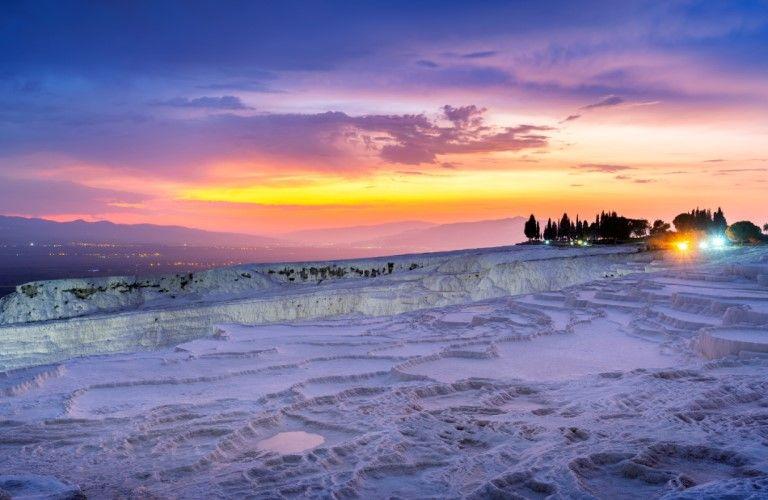
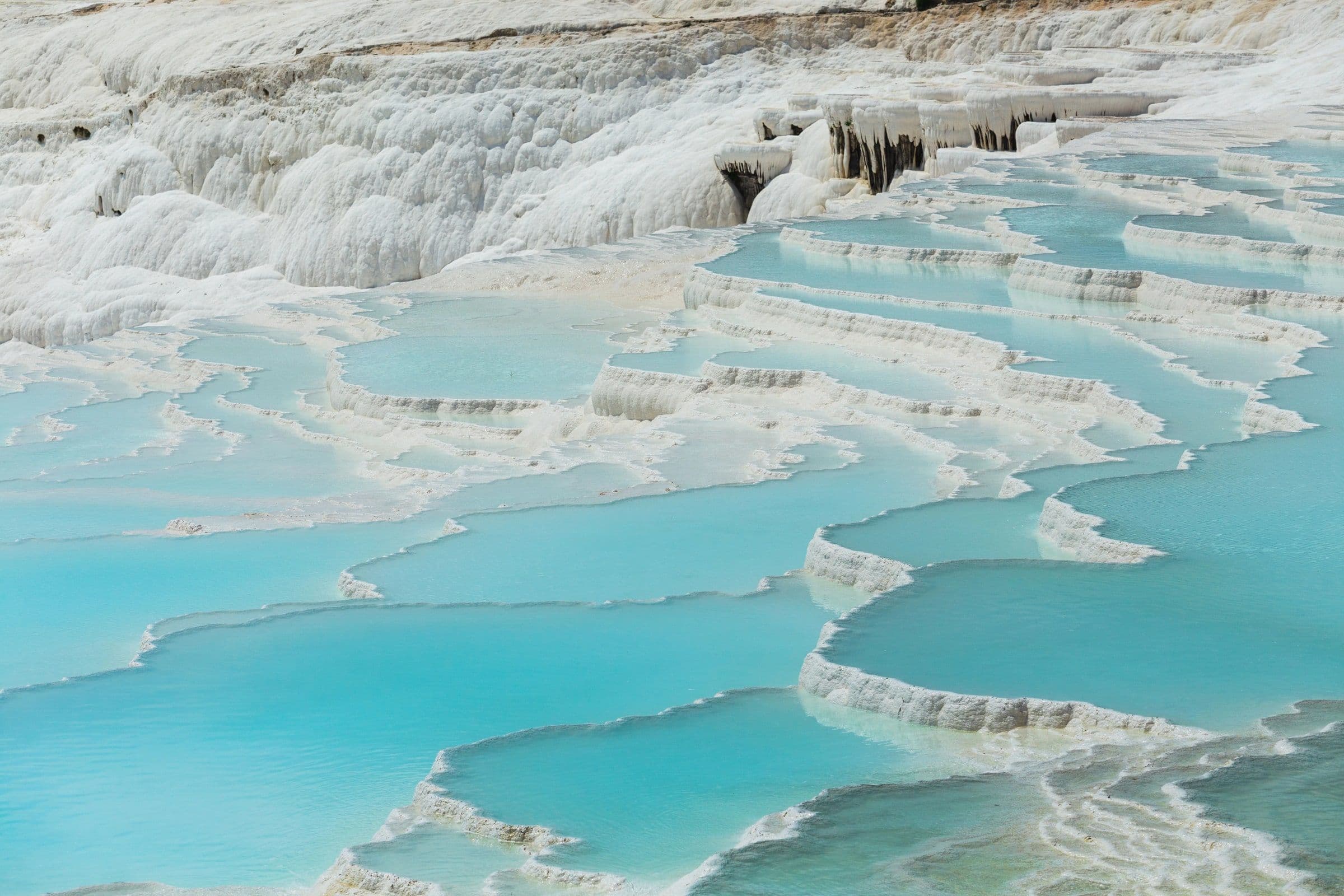
Pamukkale is one of those places where photographs reveal only part of the story. From the valley below, its white hillside resembles a frozen waterfall, with pale mineral ridges descending toward the surrounding countryside. Above the terraces, however, lie the remains of Hierapolis, an ancient city whose inhabitants lived alongside these thermal springs nearly two thousand years ago.
The relationship between the two is what makes this corner of Denizli Province so unusual. The same mineral-rich water that created Pamukkale's celebrated landscape also shaped the development of Hierapolis, attracting ancient visitors who came for bathing, religious ceremonies, and the reputation of the springs. The Romans built theatres, baths, temples, and monumental streets here, leaving a city whose surviving remains extend far beyond the white terraces.
Recognized as a UNESCO World Heritage Site in 1988, Hierapolis-Pamukkale combines natural and cultural heritage within one protected area. Exploring both sides of the site reveals why this landscape has attracted people for centuries.
What Makes Pamukkale's Travertines White?
Pamukkale means "Cotton Castle" in Turkish, a name inspired by the bright formations covering the hillside. Although they may resemble snow, the terraces are made of travertine, a form of limestone deposited by mineral-rich thermal water.
As water emerges from underground springs and flows across the surface, it releases carbon dioxide and deposits calcium carbonate. Over long periods, these mineral deposits accumulate into white ridges, shallow basins, and formations resembling petrified waterfalls.
The process continues today, although water flow is carefully managed to protect the landscape. Some terraces may be filled with pale blue water while others remain dry. This variation is normal and does not necessarily indicate that the springs have stopped flowing.
One common misconception comes from photographs showing hundreds of perfectly filled turquoise pools. In reality, the appearance of Pamukkale changes with water distribution, light, and environmental conditions. The contrast between the white limestone and the surrounding valley remains impressive even when individual basins contain little water.
Protecting this fragile surface is essential. The formations can be damaged by unrestricted walking, contamination, and changes in water movement, which explains why access is limited to designated sections.
Walking Barefoot on the Travertines
Walking across the accessible travertines is one of Pamukkale's most distinctive experiences. Unlike a conventional sightseeing stop, it allows visitors to feel the mineral surface beneath their feet while shallow thermal water flows through selected pools.
Shoes must be removed before entering the designated walking area. This conservation rule helps prevent dirt and damage to the white limestone, and it applies even to those who intend to spend only a few minutes on the terraces.
The surface is not uniformly smooth. Some sections feel firm and slightly textured, while wet areas may be slippery. Walking slowly is advisable, particularly when moving between pools or descending along the permitted route. Anyone with mobility difficulties should be aware that the barefoot section can be challenging.
It is also important to distinguish the accessible bathing terraces from the protected formations visible elsewhere on the hillside. The broader travertine landscape is not open for unrestricted exploration, and stepping beyond marked boundaries can damage areas undergoing conservation.
Strong sunlight reflects off the white surface, making sunglasses and sun protection especially useful. Carrying a small bag for footwear is more convenient than holding shoes throughout the walk.
Hierapolis: A City Built Around Thermal Water
The ancient city of Hierapolis developed on the plateau overlooking Pamukkale's terraces. Established during the Hellenistic period under the Attalid rulers of Pergamon, it became increasingly prosperous under Roman administration.
The settlement was repeatedly affected by earthquakes, including a destructive event in AD 60. Much of the monumental city visible today reflects subsequent Roman rebuilding, when Hierapolis developed its grand streets, public baths, theatre, and religious buildings.
Thermal water remained central to its identity. Ancient visitors associated the springs with bathing and healing, while local religious traditions gave certain natural features spiritual significance. Hierapolis was therefore more than an ordinary provincial city; its landscape influenced both daily life and the beliefs of its inhabitants.
The city's importance continued into the Byzantine period, when it became a Christian religious center. The remains of churches and the Martyrium of St. Philip illustrate another chapter in its history, showing how the settlement changed as religious traditions evolved.
These layers of history make Hierapolis particularly rewarding for travelers who enjoy archaeology. Rather than presenting monuments from a single period, the site reveals centuries of rebuilding, adaptation, and changing cultural practices.
The Roman Theatre: Hierapolis' Most Impressive Monument
The theatre is arguably the finest surviving architectural feature of Hierapolis. Positioned on a hillside above the ancient settlement, it combines an extensive semicircular seating area with the remains of an elaborately decorated Roman stage building.
Much of its monumental appearance developed during the Roman imperial period, particularly under the Severan dynasty. Sculptural decoration once illustrated mythological and religious subjects, while the theatre's substantial seating capacity reflected the importance of public performances in urban life.
The uphill approach requires some effort, especially in summer, but the view from the upper seating rows is worth the climb. From here, the arrangement of the auditorium becomes clear, and visitors can appreciate how the builders used the natural slope to support the structure.
The theatre also provides an interesting contrast with other Roman monuments in western Turkey. Its architectural decoration and elevated position give it a character distinct from the better-known theatre at Ephesus.
Spend a little time examining the surviving stage façade rather than viewing the monument only from a distance. Its carved details offer a glimpse of the wealth and craftsmanship associated with Roman Hierapolis.
The Necropolis, Frontinus Street and Sacred Monuments
Beyond the theatre, Hierapolis contains an extensive collection of archaeological remains that often receive less attention than the travertines.
The northern necropolis is particularly significant. Extending for more than two kilometers, this ancient burial ground includes sarcophagi, monumental tombs, and funerary structures belonging to different periods. Their variety reveals changes in burial customs and the social standing of those commemorated.
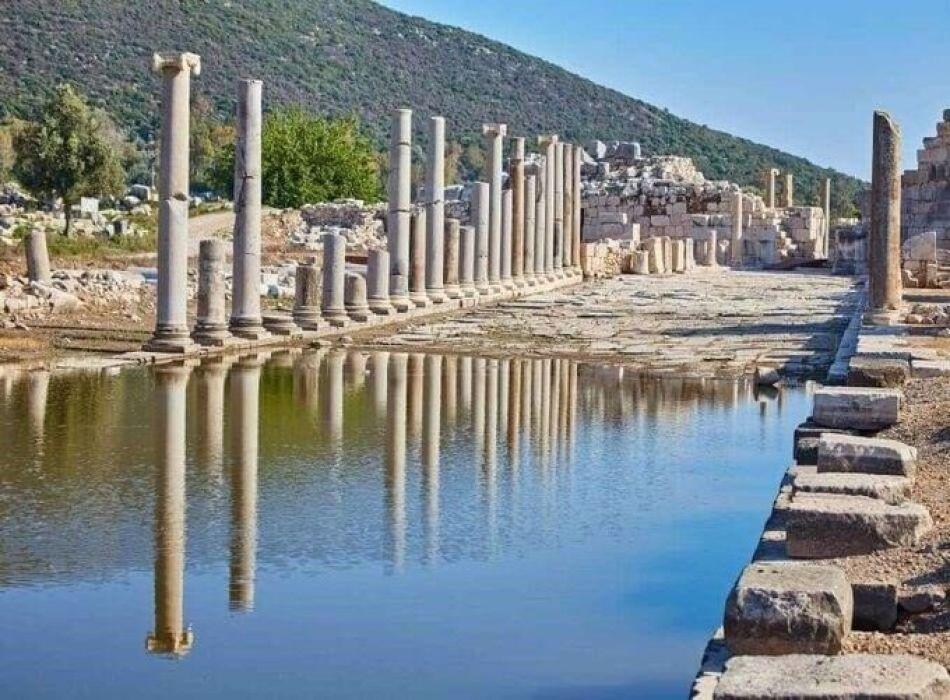
Closer to the former urban center, Frontinus Street and its monumental gateways help visitors imagine how people once moved through the city. The surviving stone pavement, architectural fragments, and remains of public buildings provide a sense of the settlement's original scale.
The Temple of Apollo and the nearby Plutonium reflect the religious importance of the thermal landscape. The Plutonium was associated with dangerous gases emerging from a geological fault, a natural phenomenon that ancient communities interpreted through religious beliefs.
Another important monument is the Martyrium of St. Philip, an octagonal Christian structure associated with the apostle's local tradition. Its position away from the busiest visitor areas means that reaching it requires additional walking, but it offers valuable insight into the city's Byzantine history.
With limited time, the theatre and central ruins are the most practical priorities. Those particularly interested in ancient history can spend several additional hours exploring the more distant monuments.
Cleopatra's Pool and the Hierapolis Archaeological Museum
The Antique Pool, widely known as Cleopatra's Pool, is associated with the site's long bathing tradition. Its appeal comes from the possibility of swimming in thermal water among ancient architectural fragments, although the popular connection with Cleopatra should be understood as a tradition rather than an established historical fact.
The pool operates separately from the designated travertine walking area. Its availability, swimming arrangements, and any additional charges should be confirmed before visiting, as maintenance or restoration work can affect access.
The Hierapolis Archaeological Museum offers a different perspective on the ancient city. Housed within a restored Roman bath complex, it contains sculptures, sarcophagi, architectural pieces, and other discoveries from Hierapolis and nearby archaeological sites.
The museum is especially worthwhile for understanding the craftsmanship and everyday culture behind the ruins. Seeing individual objects after walking through the ancient streets helps connect archaeological remains with the people who once inhabited the city.
Tickets, Opening Hours and Choosing an Entrance
Pamukkale and Hierapolis are visited as a connected archaeological site, but admission arrangements and access to individual facilities can change. It is therefore better to verify current conditions than rely on ticket prices or opening hours quoted in older articles.
The site has several access points, including the town-side pedestrian entrance and northern and southern entrances. The most suitable entrance depends on where you are arriving from and which part of the site you wish to explore first.
Entering from the town side places the travertines at the beginning of the visit, followed by an uphill walk toward Hierapolis. An upper entrance allows exploration of the archaeological plateau before approaching the terraces.
Opening hours can vary by season, and separate facilities may operate on different schedules. Before arriving, check the official Turkish Museums website for the latest information about admission, entrance access, and visiting hours.
How Long Should You Spend at Pamukkale and Hierapolis?
Four to five hours is a reasonable amount of time for a first visit that includes the accessible travertines, Roman theatre, and selected ruins of Hierapolis. This allows enough time to experience both the natural and archaeological features without rushing between the main highlights.
A shorter visit is possible, but it usually means spending less time among the ancient monuments. Travelers interested in photography, archaeology, or the museum may prefer most of a day, especially if they plan to explore the necropolis and more distant religious buildings.
The archaeological plateau is exposed, with limited shade across many walking areas. During warmer months, visiting earlier in the day can make the uphill sections more comfortable. Comfortable shoes, drinking water, and sun protection are essential, even though footwear must be removed while walking on the permitted travertines.
The most rewarding way to experience Pamukkale is to recognize that the terraces and ancient city are not separate attractions competing for attention. They are parts of the same landscape, shaped by water, geology, and the communities that settled around the springs. Taking time to appreciate that connection turns a visit from a brief photographic stop into a memorable encounter with one of Turkey's most unusual heritage sites.
Frequently asked questions
Yes. Visitors can walk barefoot through designated travertine sections, but the surrounding mineral formations are protected. Access depends on conservation rules and water management.
Yes. Hierapolis-Pamukkale was inscribed in 1988 as a mixed natural and cultural World Heritage Site, recognizing both the travertines and the ancient city.
Allow four to five hours for the travertines, Roman theatre, and main archaeological remains. A longer visit is worthwhile for exploring the necropolis and museum.
The Antique Pool has separate operating arrangements, and swimming may involve an additional charge. Check current access and ticket conditions before planning your visit.
The Roman theatre, northern necropolis, Frontinus Street, Temple of Apollo, and Martyrium of St. Philip are among the site's most historically significant surviving monuments.