Map of Turkey: Understand the Country Before Planning Your Trip
Updated: August 2026
A map of Turkey becomes useful to a traveler when it stops being a collection of place names and starts explaining how a journey actually fits together.
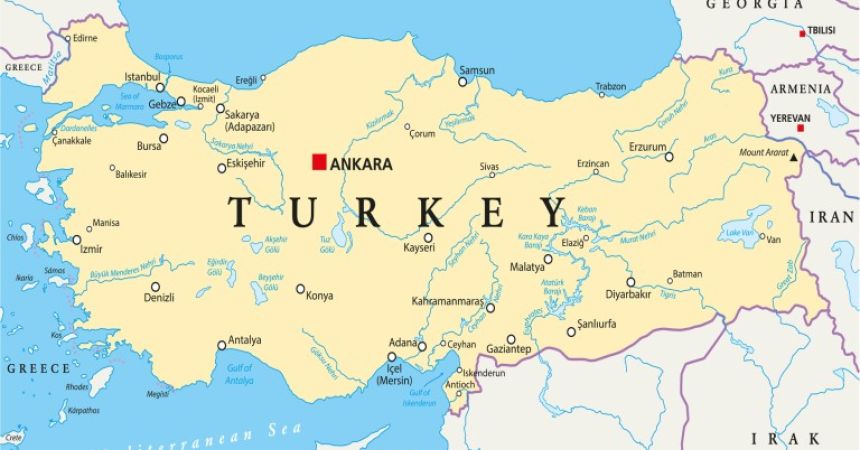
At first glance, the country's classic destinations can seem relatively easy to combine. Istanbul occupies the northwest, Cappadocia appears somewhere around the middle, Ephesus and Pamukkale sit toward the west, and Antalya stretches along the Mediterranean side of the map. Reduce an entire country to the size of a laptop screen and the distances between them look deceptively manageable.
They are not always.
Turkey is a large country extending from southeastern Europe deep into Western Asia, with the Black Sea along its north, the Aegean to the west and the Mediterranean to the south. For travelers, however, the more important geographical fact is that its major experiences are distributed across several distinct regions rather than concentrated around one tourism center.
That changes how a good trip should be designed.
Istanbul belongs to a completely different geographical corner from Cappadocia. Ephesus naturally fits the western Aegean side of a journey, while Antalya opens a southern Mediterranean route. Trabzon belongs to another travel geography altogether, and southeastern destinations such as Gaziantep and Şanlıurfa cannot simply be inserted between western highlights without considering the additional distance.
Understanding the map first prevents an itinerary from becoming a collection of famous names connected by exhausting transfers.
Turkey Makes More Sense When You Stop Reading the Map Left to Right
Many first-time visitors instinctively imagine traveling through Turkey in a neat line.
The geography rarely works quite that simply.
Istanbul lies in the far northwest around the Bosphorus and Sea of Marmara, while many classical archaeological destinations are concentrated much farther south along the western side of the country. Cappadocia occupies the Central Anatolian interior, Antalya belongs to the Mediterranean south, and the Black Sea follows an entirely different northern corridor.
A more useful way to read the country is through travel zones.
The northwest gives you Istanbul and the Marmara world. The west brings Izmir, Ephesus, Pergamon and the Aegean coast. Moving inland brings Pamukkale and eventually Central Anatolia, while the south opens toward Antalya, Side, Fethiye and other Mediterranean destinations.
Farther east, Turkey becomes another journey again.
Once you see those zones, route planning becomes less about collecting destinations and more about deciding which geographical story you want the trip to follow.
The Seven Regions Explain Turkey, but Travelers Need a Second Map
Geographically, Turkey is commonly divided into seven major regions: Marmara, Aegean, Mediterranean, Central Anatolia, Black Sea, Eastern Anatolia and Southeastern Anatolia.
Those divisions are useful because they reveal how dramatically the country changes.
For travel planning, however, administrative or geographical labels alone are not enough. A visitor needs to understand which places naturally work together.
| Travel Zone | Important Traveler Reference Points | Geographic Character | Route Planning Meaning |
|---|---|---|---|
| Marmara | Istanbul, Bursa, Gallipoli | Europe–Asia crossroads | Natural international gateway |
| Aegean | Izmir, Ephesus, Pergamon, Bodrum | Western coast and ancient sites | Strong archaeology + coast combination |
| Mediterranean | Antalya, Side, Fethiye | Southern coastline | Best suited to coastal extensions |
| Central Anatolia | Ankara, Cappadocia, Konya | Inland plateau | Usually requires deliberate air/road connection |
| Black Sea | Trabzon, Rize, Amasya | Long northern corridor | Better treated as a distinct regional journey |
| Southeastern Anatolia | Gaziantep, Şanlıurfa | Mesopotamian cultural zone | Strong specialist cultural extension |
| Eastern Anatolia | Van, Kars, Mount Ararat region | Large mountainous east | Requires substantially more travel time |
The difference between a geographical map and a travel map is important.
Geography tells you where something is.
Travel planning asks whether going there next makes sense.
Istanbul Sits at the Edge of Turkey, Not in Its Center
This is perhaps the most useful thing a first-time visitor can learn from a map.
Istanbul feels central to Turkey tourism because so many journeys begin there, but geographically it occupies the country's northwestern edge.
The Bosphorus divides the city's European and Asian sides, placing Istanbul at the meeting point of two continents. That position explains its historical importance, but it also explains why continuing deeper into Turkey requires meaningful movement.
Cappadocia is not an excursion from Istanbul in the ordinary sense. Neither are Ephesus or Antalya.
They belong to another stage of the journey.
This is why domestic flights often become useful on broader Istanbul and Cappadocia Turkey tours. The alternative is not merely “seeing more scenery by road”; it can mean spending a significant part of valuable holiday time moving between regions.
The map therefore changes the question from:
What can we visit from Istanbul?
to:
Where should Istanbul sit within the larger journey?
That is a much better planning question.
Cappadocia Is Inland, and That Changes Almost Everything Around It
Cappadocia occupies the Central Anatolian interior, broadly around the provinces of Nevşehir, Kayseri and surrounding areas.
This matters because travelers sometimes mentally place Cappadocia between Istanbul and Turkey's western archaeological destinations, as though it were a convenient stop along the same route.
Look carefully at the map and a different picture appears.
Cappadocia pulls the journey inland.
If you travel from Istanbul to Cappadocia and then want to continue toward Ephesus, you are effectively changing direction toward western Turkey again. Continue instead toward Antalya and you begin forming a more southerly route.
Neither is inherently wrong.
The map simply tells you that Cappadocia needs to be connected intentionally.
Its position also explains why the region feels so different from coastal Turkey. Central Anatolia's plateau environment creates a landscape and travel experience that has little resemblance to Istanbul's waterways or the Aegean coast.
Cappadocia is not merely another stop.
Geographically, it is a change of chapter.
Ephesus Belongs to the Aegean Story
Ephesus makes much more sense once you place it correctly on Turkey's western map.
The ancient city lies near Selçuk, south of Izmir, which makes Izmir and nearby Kuşadası important reference points for travelers approaching the area.
This western location creates natural relationships with other Aegean destinations.
Pergamon lies farther north. Bodrum sits much farther south along the broader Aegean side, while Pamukkale is inland to the east and can become a bridge away from the coast.
This is why Ephesus should not be viewed as an isolated archaeological pin on the map.
Its geography makes it part of a larger western Turkey route.
Travelers primarily interested in archaeology can use the Aegean side to connect several historical landscapes, while those who want history followed by coastal time can continue toward southwestern Turkey.
The destination guide should explain what to see at Ephesus.
The map should explain why Ephesus belongs where it does in your journey.
Pamukkale Is the Geographic Hinge Many Travelers Miss
Pamukkale is particularly interesting on a travel map because it sits inland rather than directly on Turkey's western coastline.
That position can make it useful as a geographical hinge.
Travelers coming from Ephesus or the broader Aegean region can move inland toward Pamukkale, while journeys continuing south can begin turning toward Mediterranean Turkey.
Its location is therefore more important to route planning than a simple “must-see” label suggests.
However, this does not mean Pamukkale should automatically be inserted into every journey passing through western Turkey.
The map can tell you that two places are relatively well positioned to combine. It cannot tell you whether the additional hotel change, road journey and sightseeing time fit the pace of your particular trip.
This is a recurring principle in Turkey:
geographic logic creates possibilities; available time determines whether you should use them.
The Mediterranean Coast Is Long Enough to Be Several Holidays
Look at southern Turkey on a map and the word “coast” begins to lose precision.
Antalya, Side, Alanya, Kaş, Fethiye and the southwestern coastal areas are not interchangeable points along one compact resort strip. Turkey's southern and southwestern coastline covers substantial distances and includes different tourism bases, landscapes and access patterns.
Antalya provides one major gateway to the Mediterranean region. Side and Alanya extend eastward along the coast, while Kaş and Fethiye pull the journey west.
This matters when combining sightseeing with relaxation.
A traveler finishing an inland journey in Cappadocia might consider Antalya because of its southern position and transportation connections. Someone already traveling through Ephesus and Pamukkale may see southwestern Turkey differently, with Fethiye or Bodrum fitting another geographical flow.
A map does not choose the beach for you.
It reveals which coast requires the least disruption to the journey you already have.
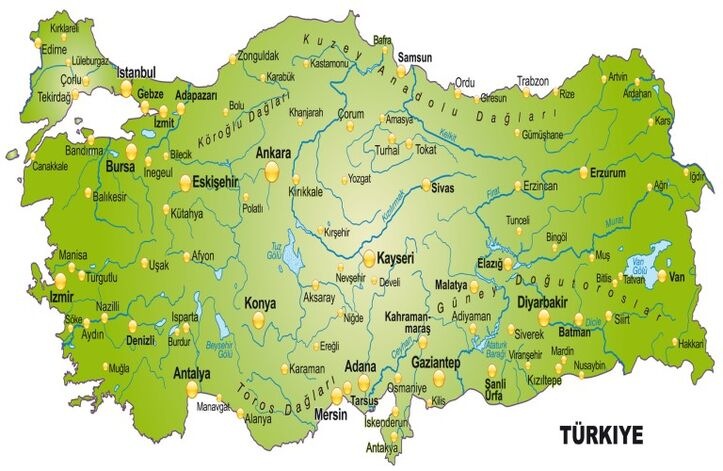
The Aegean and Mediterranean Should Not Be Treated as One Coast
Turkey's western and southern shores sometimes appear under broad phrases such as “Turkish coast,” but from a travel-planning perspective the Aegean and Mediterranean deserve separate attention.
The Aegean side connects naturally with Izmir, Ephesus and western archaeological routes. Bodrum occupies an important southwestern position, facing an island-filled maritime landscape that feels geographically connected to the eastern Aegean.
The Mediterranean side curves around southern Turkey through areas associated with Fethiye, Kaş, Antalya, Side and Alanya.
Choosing between them should therefore involve more than comparing beaches.
If the journey already includes Ephesus, western coastal destinations may preserve a smoother geographical flow. If Cappadocia is the preceding major stop, a southern continuation can create another logic.
For travelers considering Turkey cultural and coastal journeys, the route should ideally move through the country rather than repeatedly returning to the same geographical starting point.
That is one of the clearest lessons the map provides.
The Black Sea Is Not a Quick Northern Detour
Trabzon looks temptingly accessible when an entire map of Turkey is reduced to one page.
In reality, the Black Sea deserves to be understood as a separate travel corridor.
Turkey's northern coast stretches for a considerable distance beneath the Black Sea, with mountains shaping the geography behind it. Trabzon and Rize belong to a landscape that differs markedly from Istanbul, Cappadocia and the Aegean.
This is precisely why the region is interesting.
It is also why adding Trabzon to a classic first-time Istanbul–Cappadocia–Ephesus route should be a deliberate decision rather than an afterthought.
If the Black Sea is important to you, give it enough time to become a meaningful part of the journey.
Do not treat a vast northern region as another pin to collect.
Southeastern Turkey Changes the Scale of the Journey Again
Gaziantep and Şanlıurfa open another important cultural geography.
Şanlıurfa provides access to Göbeklitepe, while Gaziantep brings a different urban, culinary and historical dimension. Together they can form a compelling southeastern extension.
But look at their location relative to Istanbul, Ephesus or the Aegean coast.
You have moved deep into another part of the country.
This does not make southeastern Turkey difficult to include; domestic aviation and carefully planned road sectors can make ambitious routes possible. What the map prevents is the assumption that an eastern or southeastern extension carries no geographical cost.
For a short first visit, concentration usually produces a stronger journey.
For a longer return trip, the map begins opening entirely new versions of Turkey.
Why Domestic Flights Appear So Often in Turkey Itineraries
Turkey's geography explains something visitors occasionally find surprising when they first examine a multi-destination itinerary: the number of domestic flights.
A flight between distant regions is not necessarily an attempt to rush the journey.
Sometimes it is what prevents the journey from becoming rushed.
Spending most of a day traveling overland can be worthwhile when the route itself contains places you genuinely want to experience. It becomes less attractive when the road exists only to connect two distant points.
The practical planning principle is to distinguish travel that contributes to the holiday from travel that merely consumes it.
For some sectors, road transportation creates a natural progression. For others, flying preserves an additional afternoon or evening in the destination itself.
A good Turkey route normally uses both ideas rather than insisting that one transportation method must solve the entire country.
A Map Can Reveal When You Are Backtracking
Backtracking is not automatically bad.
Istanbul's international air connectivity means some journeys naturally return there before flying home. Domestic schedules can also make a route that appears geographically imperfect operationally sensible.
Unnecessary backtracking is different.
Imagine traveling from Istanbul south or east, returning to Istanbul, flying elsewhere in Turkey, then returning again simply because each destination was planned independently.
The map exposes that immediately.
Instead, look for progression.
Northwest → Central Anatolia → South can create one route.
Northwest → Aegean → Southwest creates another.
Istanbul → Cappadocia → Aegean can also work when transportation is deliberately designed around the change in direction.
There is no single correct line through Turkey.
There are simply routes where each movement has a reason and routes where the traveler repeatedly pays for poor geography with time.
The Classic Turkey Triangle Is Bigger Than It Looks
For many first-time travelers, three broad areas dominate the map:
Istanbul – Cappadocia – Western Turkey.
Together they provide a remarkable contrast.
Istanbul introduces Ottoman and Byzantine layers, the Bosphorus and a living metropolis. Cappadocia takes the journey into Central Anatolia and an entirely different landscape. Western Turkey brings Ephesus, Aegean history and possible access to the coast.
This combination works precisely because the places are different.
It also requires transportation planning precisely because they are far apart.
Adding the Mediterranean creates a fourth geographical dimension, while adding the Black Sea or southeast expands the trip even further.
A map helps you recognize the point at which “variety” quietly becomes “too much geography.”

A travel professional specializing in tailor-made travel planning, guest experience management, and multi-destination tourism operations.
With over 23 years of experience in the travel industry, he designs and manages private and cultural tours for international travelers across Türkiye, Greece, Egypt, Jordan, Morocco, and other destinations.
He has strong expertise in both online and face-to-face guest communication, sales processes, and end-to-end travel operations.
Working closely with hotels, travel agencies, and local partners, he ensures smooth coordination and high-quality travel experiences at every stage of the journey.
His focus is on delivering personalized, reliable, and seamless travel experiences for international guests worldwide.