What Would You Regret Leaving Out of Your First Egypt Trip?
Updated: August 2026
Egypt has a way of making a reasonable itinerary look inadequate.
You begin with the Pyramids, naturally enough. Then someone mentions Luxor and the Valley of the Kings, which clearly cannot be missed. Aswan looks beautiful, Abu Simbel seems too extraordinary to leave out, and the Nile deserves more than a photograph from a bridge. Before long, Alexandria has entered the conversation, the Red Sea looks tempting, somebody recommends the Western Desert, and your comfortable holiday has quietly become an attempt to cross a large country while carrying luggage every other morning.
The problem is not a shortage of worthwhile places.
It is the opposite.
For a first journey, the useful question is therefore not “What are the ten best places in Egypt?” There is no defensible universal answer because a diver, an archaeology enthusiast and a family traveling with young children will make different choices.
A better question is:
What disappears from my understanding of Egypt if I leave this out?
That is the test used here.
A must-see earns its place because it contributes something difficult for the rest of the journey to reproduce. Once that principle is applied, famous places stop competing purely on reputation and start competing for a much more valuable resource: your time.
Egypt Is Too Large for a Real Must-See List
Calling somewhere a “must-see” creates the impression that skipping it represents a travel mistake.
Egypt does not work particularly well that way.
A traveler with seven days should not be judged against somebody spending three weeks in the country, while a visitor fascinated by archaeology has no reason to allocate time exactly as someone whose ideal holiday combines history with several quiet days beside the Red Sea.
There is also a practical cost hidden inside every addition.
Adding another destination does not merely require the hours spent sightseeing there. It can mean another flight, road transfer, hotel change, early departure and repacking morning. The real price of including somewhere is therefore partly measured in what happens to the destinations already in the itinerary.
At Magnificent Travel, this becomes particularly obvious when planning Egypt Highlights Tours. An itinerary can remain technically possible long after it has stopped being enjoyable.
That is why the following ten choices are not ranked from first to tenth.
They answer ten different questions.
1. Giza — Because Your First Egypt Trip Needs a Point of Scale
Few places suffer more from familiarity than the Pyramids of Giza.
You have already seen them thousands of times before arriving, which makes it easy to assume that the experience will simply confirm something you know.
Then scale interferes.
The Great Pyramid belongs to the Old Kingdom, an extraordinarily early phase of the monumental history visitors later encounter elsewhere in Egypt. Giza therefore does more than provide the photograph most travelers expect to take; it establishes a starting point for understanding how long Egyptian civilization developed and changed.
If you remove Giza from a first archaeology-focused journey, you do not merely lose three famous pyramids and the Great Sphinx.
You lose chronological perspective.
Later temples and royal monuments become easier to place once you have confronted how ambitious Egyptian monumental building already was more than four millennia ago.
Fame is not what makes Giza difficult to replace.
Time does.
2. Historic Cairo — Because Egyptian History Did Not End With the Pharaohs
A first Egypt trip can become so dominated by antiquity that several thousand years of later history almost disappear.
Cairo corrects that distortion.
Its Islamic heritage, historic streets, mosques and urban fabric belong to a completely different historical world from Giza, yet both exist within the same modern metropolis. That contrast matters because it prevents “Egyptian history” from becoming shorthand for “pharaonic history.”
This is not an argument for trying to cover every historic mosque or turning a first visit into an architectural survey. Those questions belong to specialist Cairo content.
The prioritization question is simpler.
If your journey contains only pyramids, tombs and temples, where will you encounter Egypt's later historical identity with comparable force?
For travelers who want historical range rather than exclusively ancient archaeology, Historic Cairo protects that missing layer.
3. Luxor's East Bank — Because Monumental Egypt Changes Here
Giza establishes one kind of scale.
Luxor introduces another.
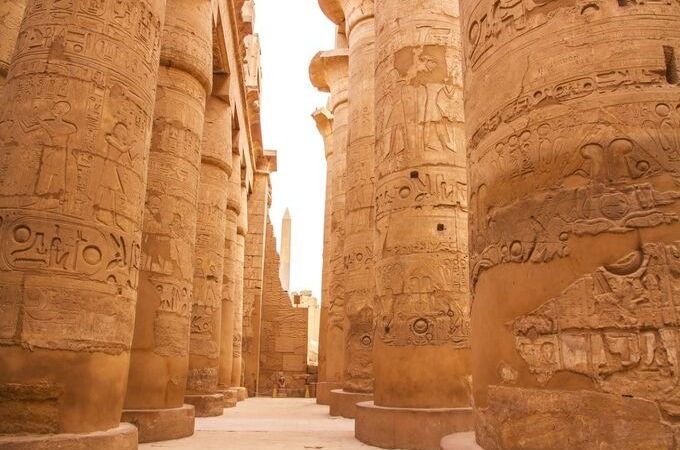
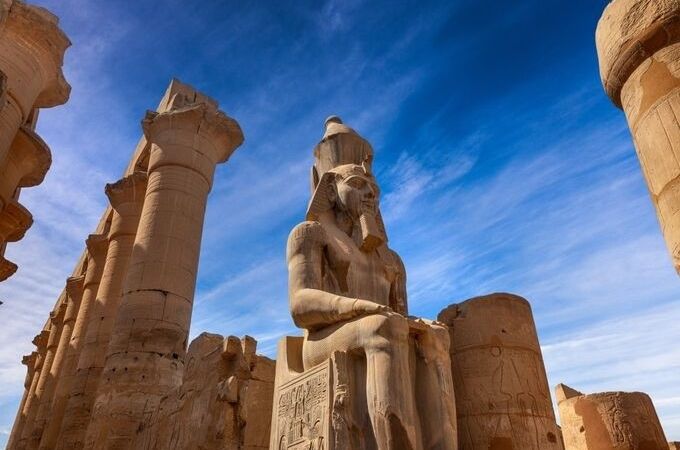
The great temple complexes associated with the East Bank belong to a religious and political landscape that is fundamentally different from the pyramid fields around Cairo. Columns, courts, gateways, reliefs and successive phases of construction reveal monuments that evolved as rulers added their own statements to places already carrying enormous significance.
That accumulation matters.
Ancient Egypt begins to feel less like a collection of isolated masterpieces and more like a civilization repeatedly building upon its own sacred geography.
Removing Luxor's East Bank from a first history-centered trip therefore costs more than the loss of individual monuments.
You lose one of the clearest opportunities to experience how royal power, religion and monumental architecture interacted over long periods.
4. Luxor's West Bank — Because Death Had Its Own Landscape
It would be easy to treat Luxor as one item on a list.
For prioritization purposes, that hides an important distinction.
Crossing conceptually from the East Bank's temple environment toward the royal funerary landscape of the West Bank changes what you are trying to understand. The Valley of the Kings and surrounding archaeological environment bring beliefs about death, royal burial and the afterlife into physical space.
This is why seeing “Luxor” without thinking about both sides can be misleading.
The East and West Banks do not simply offer more ancient things to see. They answer different historical questions.
If time becomes tight, the solution should not automatically be to rush both in half the time. Protecting enough attention for the experience can be more valuable than maximizing the number of entrances completed before sunset.
5. The Nile — Because the Journey Between Monuments Explains the Monuments
The Nile is frequently treated as a method of getting from Luxor toward Aswan while enjoying a comfortable cruise.
That description misses its greatest value.
Once you spend time moving along the river, the geography that shaped Egyptian settlement becomes visible. Fertile land follows water, cultivation occupies narrow spaces, towns relate to the river, and desert often waits surprisingly close beyond the green.
Suddenly, something learned abstractly in school becomes physical.
The Nile did not merely provide an attractive setting for ancient civilization. It structured where life was possible on a vast scale.
This is why a Nile experience deserves protection on many first journeys even when another temple could technically be inserted into the same hours.
Sometimes the space between the archaeological sites explains why the archaeological sites are there.
6. Aswan — Because Egypt Needs a Southern Perspective
Aswan changes the tone of a journey without needing to compete with Luxor on monument count.
The Nile looks and feels different, Nubian identity becomes more visible, and Egypt's connections farther south begin to matter more clearly.
This makes Aswan useful as a corrective to an itinerary that might otherwise present Egypt primarily through Cairo and royal monuments.
If you remove it, you are not simply sacrificing another city.
You may also lose an opportunity to understand that Egyptian identity developed within relationships extending both north and south, while the Nile connected different communities rather than creating one culturally uniform corridor.
That perspective can be particularly valuable on Egypt Classic Trips, where the danger is assuming that the classic route tells only one story.
It does not have to.
7. Abu Simbel — Because Monumentality Can Carry a Political Message
Abu Simbel presents a more difficult must-see question because reaching it requires additional time and logistics.
That makes it exactly the kind of place that should be evaluated through omission cost rather than reputation.
Its enormous rock-cut temples, association with Ramesses II and location in southern Egypt create an experience that is difficult to duplicate elsewhere. Monumentality here is not simply a matter of making something very large; architecture, royal imagery and geographical position work together.
Does that make Abu Simbel compulsory for every visitor?
No.
A short first trip can still be excellent without it, particularly when adding the excursion would damage the pacing of higher-priority destinations.
This is an important distinction.
Exceptional does not automatically mean essential.
Abu Simbel earns its place when the value of experiencing it outweighs what the required time removes elsewhere.
8. A Desert Landscape — Because Egypt Does Not End Where the Green Ends
Many first-time visitors experience Egypt almost entirely through Cairo and the Nile Valley.
The desert becomes scenery outside a vehicle window.
Yet the contrast between fertile land and arid landscape is fundamental to understanding Egyptian geography, and spending meaningful time within a desert environment can dramatically change the visual balance of a trip.
This does not mean that Siwa, the White Desert or another desert destination suddenly becomes mandatory.
Choosing between them is a different travel decision and belongs to their own destination content.
For a first trip, the question is whether your available time justifies expanding beyond the core Nile route in order to experience another geographical Egypt.
If it does, the desert contributes something no additional temple can reproduce.
If it does not, leave it for another journey rather than forcing a long detour into an already crowded itinerary.
9. The Red Sea — Because Not Every Day in Egypt Needs a Dynasty
There is a peculiar kind of fatigue that can develop on an archaeology-heavy journey.
The sites remain extraordinary, but the traveler's ability to absorb them begins to decline. Another temple appears, another ruler is introduced, another date enters the conversation, and information starts arriving faster than memory can organize it.
The Red Sea can provide a deliberate counterweight.
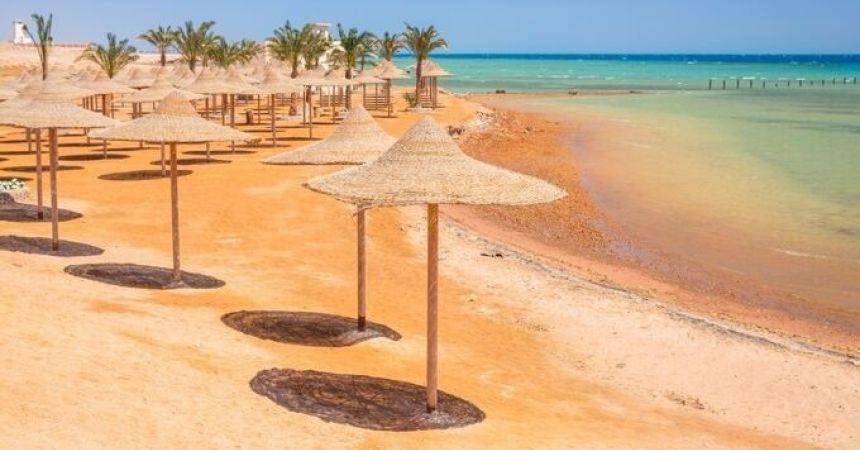
Its value in a broader Egypt journey is not that beaches somehow complete the historical story. They do something almost opposite: they allow the historical intensity to stop for a while.
Whether that deserves precious first-trip time depends on the traveler.
Someone with eight days and a strong archaeological focus may reasonably exclude the coast. Someone with two weeks who enjoys snorkeling, diving or genuine downtime may find that a Red Sea stay improves the entire journey because it changes the pace.
Rest is not necessarily time removed from travel.
Sometimes it protects the quality of everything that came before it.
10. One Place You Refuse to Rush
The tenth must-see is deliberately not another destination.
It is time.
This may sound evasive in an article promising ten places, but practical itinerary planning repeatedly shows why it matters. A traveler can include Cairo, Luxor, Aswan, Abu Simbel, Alexandria, a desert excursion and the Red Sea, yet spend so much of the holiday transferring between them that every destination feels like an arrival followed by preparation to leave.
At some point, another place stops making the trip larger.
It makes everything else smaller.
Choose one part of your journey and refuse to compress it simply to create room for another pin on the map. Perhaps that means a second day in Luxor, an evening beside the Nile in Aswan or enough time in Cairo that Giza and the city do not have to compete for the same exhausted afternoon.
Your tenth must-see may therefore be somewhere already on the itinerary.
You simply need enough time to see it properly.

The Real Test Is What Disappears When You Remove Something
Once an itinerary becomes too long, ask what each component contributes that the others cannot.
| Experience | What You Lose If You Remove It |
|---|---|
| Giza | Old Kingdom scale and an essential chronological starting point |
| Historic Cairo | A major post-pharaonic layer of Egyptian history |
| Luxor East Bank | Monumental religious architecture and accumulated royal building |
| Luxor West Bank | The royal funerary landscape and its relationship with the afterlife |
| Nile journey | Direct understanding of the geography connecting settlement and civilization |
| Aswan | Southern Egyptian perspective and stronger Nubian context |
| Abu Simbel | A distinctive combination of monumentality, royal imagery and southern geography |
| Desert landscape | Egypt beyond the cultivated Nile environment |
| Red Sea | Natural contrast and genuine recovery from cultural intensity |
| Unhurried time | Depth, memory and the ability to absorb what you have already included |
This changes the planning conversation.
Instead of asking whether a place is famous enough to include, ask whether another part of the itinerary already provides what it contributes.
If the answer is yes, removing it becomes easier.
If the answer is no, think carefully before cutting it.
Famous Does Not Automatically Mean Essential
Travel marketing tends to collapse three different ideas into one:
famous, excellent and essential.
They are not identical.
Alexandria can be fascinating without belonging in every first Egypt itinerary. Abu Simbel can be extraordinary without being operationally sensible on a very short journey. A desert experience can become someone's favorite memory without deserving priority over Luxor for a traveler primarily interested in ancient history.
This is where individual travel interests matter more than generic rankings.
A “must-see” should survive because it supports the journey you are actually taking, not because removing it makes the itinerary look incomplete beside somebody else's Top 10 list.
The internet does not have to travel your itinerary.
You do.
Protect the Core Before You Add the Exceptional
There is a natural point in itinerary planning when the core journey feels secure and curiosity starts expanding outward.
That is when the exceptional detours become interesting.
The mistake is adding them too early.
If including a remote destination forces Cairo into a single rushed day, compresses Luxor beyond recognition or creates repeated one-night stays, the itinerary may be sacrificing foundational experiences to collect unusual ones.
In practical planning, we generally protect experiences that are difficult to reproduce elsewhere before adding geographical reach. This principle is especially useful when designing Egypt First Tours, because first-time travelers often arrive with the longest wish lists and the least intuitive sense of Egyptian distances.
Build a strong journey first.
Then decide how far it can stretch.
The Cost of Another Destination Is Paid Somewhere Else
Suppose an itinerary has one free day.
Adding another destination appears to cost one day.
In reality, it may cost more.
There can be an earlier departure the previous morning, packing, airport or road-transfer time, another hotel check-in, reduced flexibility and a tired start to the following day. The new destination receives its allocated hours by quietly taking smaller pieces from several existing ones.
This is why itinerary feasibility and itinerary quality are not the same thing.
A route can work perfectly on a spreadsheet.
Every flight connects. Every transfer fits. Every hotel has a room.
Yet the traveler may still spend too much of the holiday in transit and too little time actually being anywhere.
That distinction becomes increasingly important as an Egypt itinerary expands.
Your First Trip Does Not Need to Finish Egypt
Perhaps the most liberating first-trip decision is accepting that Egypt does not need to be completed.
You can visit the Pyramids without adding Alexandria. You can experience the Nile without reaching every city beside it. You can leave the Western Desert for another journey, choose archaeology over the Red Sea or deliberately choose the Red Sea over one additional archaeological destination.
Nothing has failed.
The strongest first Egypt trips are not necessarily those containing the greatest number of famous names. They are the ones in which each major stop still has enough room to justify the effort required to reach it.
A place deserves protection when removing it would take something distinctive out of the journey.
After that, personal interest takes over.
For one traveler, Abu Simbel survives the final cut. For another, those hours belong in Luxor. Someone else will protect three days beside the Red Sea because returning home rested matters more than seeing one additional temple.
That is not inconsistency.
It is good travel planning.
Egypt contains far more than ten places worth seeing, which is precisely why a useful must-see list should not pretend otherwise.
The goal is not to finish with ten boxes checked.
It is to come home remembering why the places you kept deserved to stay.
Questions to Ask Before Cutting Something From Your First Egypt Trip
1. If I can protect only five major experiences, where should I start?
Begin with experiences that match your strongest reason for visiting Egypt and cannot easily substitute for one another. For a history-focused first journey, Giza, Luxor, the Nile environment and southern Egypt usually carry greater contextual value than collecting several geographically scattered secondary destinations.
2. Are the Pyramids still essential if I normally avoid famous tourist attractions?
Their popularity does not reduce their historical significance. If ancient Egypt is a major reason for traveling, Giza provides chronological and monumental context that is difficult to reproduce elsewhere, although visiting it does not oblige you to treat every famous Egyptian attraction as equally essential.
3. Can I visit Giza and skip the rest of Cairo?
You can, but recognize what you are choosing. Giza gives you extraordinary ancient material; Cairo provides later historical and contemporary layers that the pyramid plateau cannot. Whether those layers deserve limited time depends on the historical range you want from the trip.
4. Should I protect Luxor before adding another Egyptian city?
For travelers primarily motivated by ancient Egyptian history, usually yes, because Luxor contains several experiences that are difficult to replace elsewhere. Giving it adequate time can provide more historical depth than shortening it simply to increase the number of cities on the itinerary.
5. Do I really need both the East and West Banks of Luxor?
They contribute different perspectives rather than merely increasing the number of monuments. The East Bank emphasizes major temple environments, while the West Bank introduces royal funerary landscapes. History-focused travelers should understand that distinction before removing one solely to save time.
6. If I want to see Abu Simbel, can I shorten Aswan instead?
Possibly, but the two experiences are not substitutes. Abu Simbel provides a highly concentrated monumental experience, whereas Aswan contributes landscape, Nile atmosphere and southern cultural context. Decide which loss matters more rather than assuming proximity means they perform the same role.
7. Is Abu Simbel genuinely essential on a first visit?
It is exceptional rather than universally essential. Its priority rises for travelers fascinated by Ramesses II, monumental architecture or southern Egypt, but a shorter itinerary can remain outstanding without Abu Simbel when reaching it would force more foundational experiences into an uncomfortable pace.
8. Does a first Egypt trip have to include a Nile cruise?
No. The important experience is understanding and spending meaningful time around the Nile, not fulfilling a particular transport format. A cruise can provide an especially enjoyable way to experience the river, but the correct choice depends on route, available days and travel style.
9. Should I remove an archaeological destination to make room for the Red Sea?
That depends on whether relaxation, diving or snorkeling forms an important part of the holiday. On a longer journey, coastal time can improve the overall pace; on a short archaeology-focused visit, protecting Cairo, Luxor or Upper Egypt may provide greater value.
10. Is a desert experience necessary if I already have a full Egypt itinerary?
No. The desert adds an important geographical contrast, but it should not automatically displace stronger priorities. When reaching a desert destination introduces disproportionate travel time, saving that experience for a future journey can produce a better first trip.
11. When does adding another must-see actually make an Egypt trip worse?
It happens when the new destination requires repeated hotel changes, excessive transfer time or shortened visits to places you care about more. The warning sign is an itinerary that remains technically possible while leaving almost no margin for rest, delays or genuine observation.
12. What should I remove first when my Egypt itinerary becomes overloaded?
Start with the place whose contribution is most closely duplicated elsewhere or whose logistics consume disproportionate time relative to your interest in it. Do not automatically remove the least famous destination; remove the experience that adds the least distinctive value to your journey.

A travel professional specializing in tailor-made travel planning, guest experience management, and multi-destination tourism operations.
With over 23 years of experience in the travel industry, he designs and manages private and cultural tours for international travelers across Türkiye, Greece, Egypt, Jordan, Morocco, and other destinations.
He has strong expertise in both online and face-to-face guest communication, sales processes, and end-to-end travel operations.
Working closely with hotels, travel agencies, and local partners, he ensures smooth coordination and high-quality travel experiences at every stage of the journey.
His focus is on delivering personalized, reliable, and seamless travel experiences for international guests worldwide.