Experiencing Egypt Through Its Celebrations
Shortly before sunset during Ramadan, parts of Cairo become unusually quiet as shopkeepers prepare to close temporarily and families gather for the evening meal. Return to the same neighbourhood a few hours later and the atmosphere may be almost unrecognisable. Lanterns illuminate shopfronts, bakeries sell freshly prepared pastries, and conversations continue outside cafés well into the night. Farther north, Alexandria welcomes spring with family gatherings along the Mediterranean, while in southern Egypt, visitors assemble before sunrise to witness one of Abu Simbel's most remarkable architectural features.
These occasions belong to an Egypt that is sometimes overlooked in conventional sightseeing itineraries. The country's celebrations reflect centuries of religious observance, agricultural traditions, regional customs and artistic expression. Some require careful advance planning, while others can be experienced simply by spending time in a neighbourhood where local life unfolds around you.
Egypt's Annual Festival and Events Calendar
Egyptian celebrations follow several different calendars. Coptic Christmas and the Abu Simbel Sun Festival have established Gregorian dates, Islamic observances move throughout the year, and contemporary cultural events depend on programmes announced by their organisers.
| Festival or event | Usual timing | Main location |
| Coptic Christmas | January 7 | Nationwide |
| Abu Simbel Sun Festival | February 22 and October 22 | Abu Simbel |
| Ramadan | Islamic lunar calendar | Nationwide |
| Eid al-Fitr | Beginning of Shawwal | Nationwide |
| Sham El Nessim | Monday after Coptic Easter | Nationwide |
| Eid al-Adha | Beginning on 10 Dhu al-Hijjah | Nationwide |
| Moulid of Abu El Haggag | Islamic lunar calendar | Luxor |
| Wafaa El Nil | Traditionally August | Selected Nile communities |
| Citadel Music Festival | Announced annually | Cairo |
| El Gouna Film Festival | Announced annually | El Gouna |
| Cairo International Film Festival | Usually November | Cairo |
Because the Islamic lunar year is shorter than the Gregorian year, Ramadan and the two Eid holidays generally occur ten to eleven days earlier each year. Official religious announcements and cultural event programmes remain the most reliable references when arranging travel around specific celebrations.
Abu Simbel Sun Festival: When Sunlight Reaches Ramses II
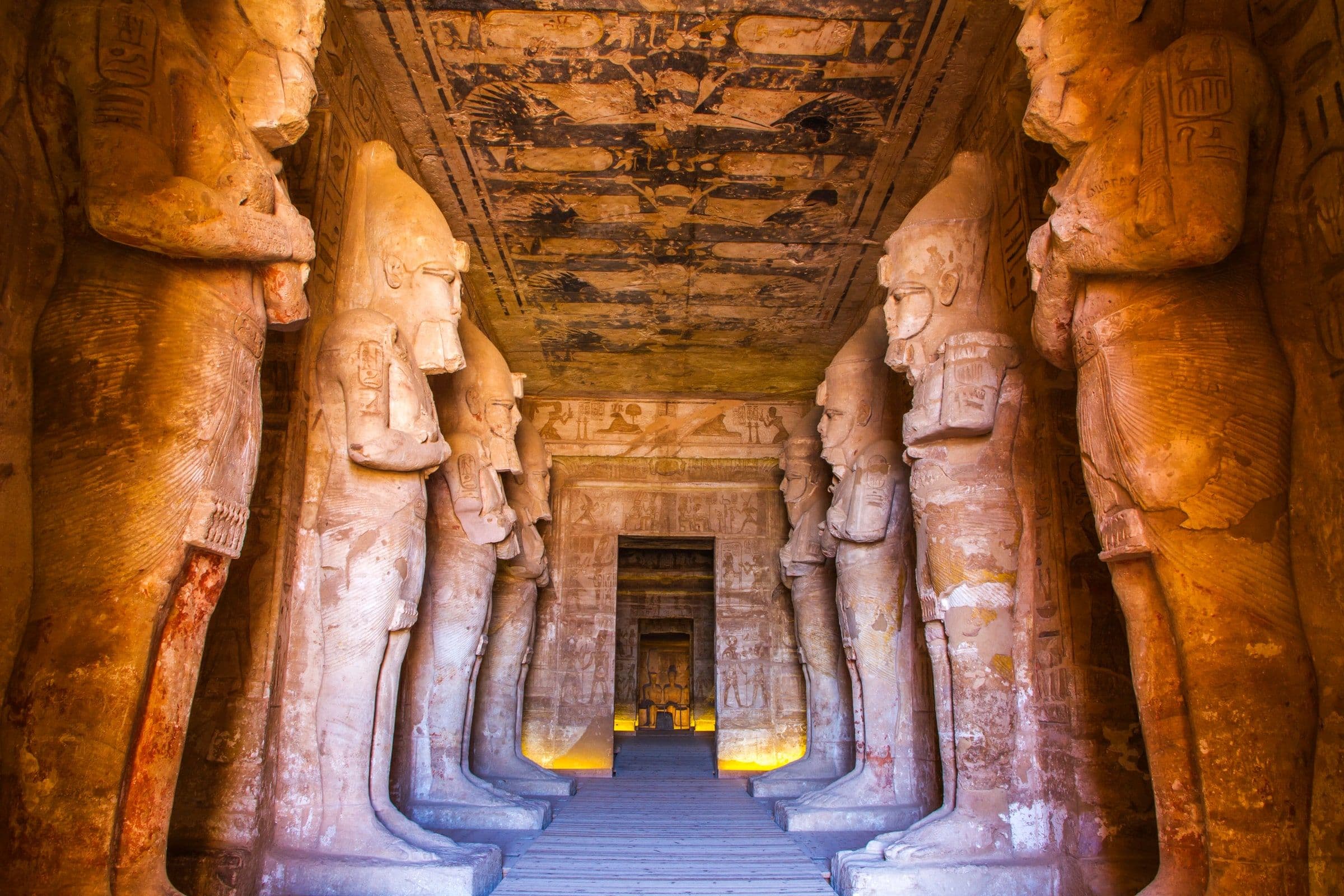
Most visitors to Abu Simbel arrive to admire the enormous seated statues guarding the entrance to the Great Temple of Ramses II. Twice a year, however, attention shifts to a much smaller space deep inside the monument. Around February 22 and October 22, sunlight penetrates the temple's entrance and reaches the sanctuary, illuminating the statues of Ramses II, Amun-Ra and Ra-Horakhty, while Ptah remains largely in shadow.
Popular explanations associate these dates with the birthday and coronation of Ramses II, although neither connection has been conclusively established. Equally remarkable is the preservation of the solar alignment following the international rescue operation of the 1960s, when the temples were dismantled and reconstructed above the rising waters of Lake Nasser. The relocation formed part of the UNESCO-supported campaign to safeguard Nubian monuments threatened by the construction of the Aswan High Dam.
Festival mornings are considerably busier than ordinary visiting days. Travellers coming from Aswan need to coordinate transportation carefully, while staying overnight in Abu Simbel offers an alternative to travelling through the desert before dawn. Access to the inner sanctuary may be restricted or managed according to crowd conditions, making it important to confirm viewing arrangements before booking the excursion.
Ramadan Evenings in Historic Cairo
There is a particular pleasure in exploring Cairo after iftar during Ramadan. The streets around Al-Muizz Street, Al-Hussein Mosque and Khan El Khalili take on a different character as illuminated fanous lanterns decorate buildings and cafés welcome evening customers. Sweet shops prepare kunafa and qatayef, while restaurants may offer special menus featuring traditional dishes and drinks associated with the fasting month.
Ramadan is fundamentally a period of worship, reflection and fasting rather than a festival organised for visitors. Its influence on Egyptian public life nevertheless makes it a fascinating time to experience the capital. Some establishments remain open late enough to serve suhoor, the meal eaten before the next day's fast, and evening gatherings can continue well beyond the usual closing hours.
International visitors are not expected to fast, although consideration when eating or drinking around fasting individuals is appreciated. Daytime restaurant services and attraction opening hours may change, and traffic can become particularly busy before iftar. A flexible sightseeing schedule allows travellers to enjoy the evening atmosphere without overlooking the practical realities of visiting during a religious observance.
Eid al-Fitr and Eid al-Adha: Egypt's Family Holidays
As Ramadan draws to a close, bakeries and households prepare kahk, traditional round biscuits often filled with dates or nuts and covered with powdered sugar. These sweets are closely associated with Eid al-Fitr, when families exchange greetings, visit relatives and celebrate the conclusion of the fasting month. Public gardens, recreational areas and waterfront promenades often become noticeably busier during the holiday.
Eid al-Adha carries a different religious significance, commemorating the devotion of Prophet Ibrahim and emphasising sacrifice, generosity and charitable giving. Both occasions are important periods for domestic travel, with Egyptian families visiting relatives or taking holidays in destinations such as Alexandria, Hurghada and the Red Sea resorts.
For international travellers, the main consideration is increased demand for domestic transportation and accommodation. Booking essential services ahead of the holidays is advisable, particularly when travelling between major cities or visiting popular coastal destinations.
Sham El Nessim: A Spring Tradition Shared Across Egypt
On the Monday following Coptic Easter, Egyptians from different religious backgrounds celebrate Sham El Nessim. Unlike occasions centred on a particular place of worship, this spring holiday is largely spent outdoors. Families gather in public gardens, enjoy picnics beside the Nile and head to Alexandria's Corniche to spend time overlooking the Mediterranean.
Food is an important part of the occasion. Coloured boiled eggs, lettuce, green onions and feseekh, a traditional fermented salted fish, appear on many family tables. Sham El Nessim is frequently associated with ancient Egyptian seasonal customs, although its historical development is more complex than the popular suggestion that the celebration has remained unchanged since pharaonic times.
Visitors do not need tickets or an organised excursion to appreciate the occasion. A walk through a public garden or along the waterfront offers an opportunity to observe Egyptian family life away from the country's archaeological attractions. Travellers should, however, exercise caution regarding feseekh, as improperly prepared fermented fish can cause botulism, a potentially life-threatening illness.
Coptic Christmas and the Christian Heritage of Egypt
For Egypt's Coptic Orthodox community, Christmas celebrations begin with religious services on the evening of January 6, followed by Christmas Day on January 7. After an extended period of fasting, families gather for festive meals that may include fatta, a traditional dish combining bread, rice, meat and sauce.
The historic neighbourhood of Coptic Cairo offers an important introduction to Egypt's Christian heritage. The Hanging Church and the Church of Saints Sergius and Bacchus reflect centuries of religious history, while the Cathedral of the Nativity of Christ in the New Administrative Capital represents a more recent chapter in the country's Christian architectural landscape.
Although visiting churches during the Christmas period can provide additional cultural context, religious services are not public performances. Anyone wishing to attend should confirm visitor access beforehand and respect local expectations regarding clothing, photography and conduct.
The Moulid of Abu El Haggag in Luxor
Above the ancient stonework of Luxor Temple stands the Mosque of Abu El Haggag, a reminder that the site has remained connected to religious life long after the pharaonic period. The annual moulid honours Sheikh Yusuf Abu El Haggag, a revered Muslim religious figure whose legacy remains significant within the local community.
Traditional celebrations have included devotional gatherings, street processions and decorated boats carried through the city. The boats are sometimes compared with ceremonial vessels depicted in ancient Egyptian temple reliefs, although these visual similarities do not establish an uninterrupted historical connection between ancient rituals and modern religious practices.
The moulid follows the Islamic lunar calendar, and its public activities depend on local arrangements. Unlike a scheduled museum visit, attending a traditional religious celebration requires flexibility and an understanding that its primary purpose is serving the community rather than attracting tourists.
Wafaa El Nil: Remembering the River's Annual Flood
Long before the Aswan High Dam regulated the Nile's flow, seasonal flooding deposited fertile sediment across agricultural land and influenced the lives of communities throughout the river valley. Wafaa El Nil, traditionally associated with August, commemorates the river's importance to Egyptian civilisation and preserves the memory of this historic agricultural cycle. Modern observances may include exhibitions, educational programmes and cultural activities, although there is no single nationwide visitor programme. Travellers interested in the occasion should look for locally announced events rather than expecting a large annual public festival.
Egypt's Contemporary Film and Music Festivals
Egypt has played a central role in Arabic-language cinema for generations, a cultural influence reflected in the Cairo International Film Festival, established in 1976. Its screenings and discussions introduce audiences to Egyptian and international filmmakers, offering perspectives on contemporary society that are rarely encountered during conventional archaeological tours.
The El Gouna Film Festival provides a contrasting setting on the Red Sea coast, combining international cinema with the atmosphere of a modern coastal destination. In Cairo, the Opera House presents orchestral concerts, Arabic music, ballet and other performances throughout the year, while the Citadel Music Festival, when scheduled, brings live music into the historic surroundings of the Citadel of Saladin.
Unlike religious observances, these cultural events follow independently announced programmes. Public screenings and concerts may require advance tickets, while certain industry events and ceremonies are restricted to accredited participants or invited guests.
Which Egyptian Celebrations Are Worth Planning a Trip Around?
Abu Simbel's solar illumination is particularly suitable for travellers who want to build part of their itinerary around a specific event. Ramadan offers a different kind of experience, especially for those interested in Cairo's neighbourhoods, culinary traditions and evening atmosphere. Sham El Nessim requires relatively little formal organisation, whereas film festivals and music performances depend on ticket availability and confirmed schedules.
It is worth leaving some unstructured time in your itinerary, regardless of which celebration coincides with your visit. Watching families gather along Alexandria's waterfront or spending an evening in Cairo beneath Ramadan lanterns may reveal more about contemporary Egyptian life than another carefully scheduled excursion. The country's festivals are most rewarding when experienced on their own terms, with an appreciation of the people and traditions that give them meaning.
Frequently asked questions
The Abu Simbel Sun Festival is among Egypt's best-known archaeological celebrations, attracting visitors to witness the remarkable solar illumination of the Great Temple's inner sanctuary.
Yes. Many Egyptian hotels and restaurants serve iftar meals during Ramadan, allowing international visitors to experience traditional dishes and evening customs without participating in religious fasting.
No. Although its date follows Coptic Easter, Sham El Nessim is a national spring celebration enjoyed by Egyptians from different religious backgrounds through shared seasonal traditions.
Many archaeological sites and museums remain open during religious holidays, although operating hours may change. Confirm current schedules before arranging excursions, particularly during Ramadan and Eid.
Abu Simbel's solar festival requires careful transportation planning, while film screenings, concerts and organised cultural performances may require advance tickets, reservations or specific admission arrangements.