Cairo Needs Fewer Days Than You Think—and More Time Than a Map Suggests
Updated: August 2026
Cairo creates an odd planning illusion.
Many of the places first-time visitors want to see appear to belong to the same city, so it is tempting to assemble them into one enormous sightseeing day. Giza in the morning, a museum after lunch, perhaps historic Cairo later in the afternoon and a market in the evening. Nothing looks impossibly distant when viewed on a screen, and every additional stop seems to require only another hour.
Then Cairo enters the itinerary.
The Egyptian capital does not organize itself around the convenience of your sightseeing list. Giza occupies a different part of the metropolitan area from historic Cairo, museum visits expand according to your interests, road journeys are affected by traffic, and archaeological sites require considerably more time than the few minutes it takes to pin them on a map.
For most first-time visitors, three full sightseeing days provide the best balance for Cairo and Giza. Two full days can cover the essential experiences with sensible prioritization, while four days are worthwhile for travelers who want deeper museum time, additional archaeological sites or a slower city experience.
One day is possible.
It simply requires admitting that you are choosing an introduction rather than “doing Cairo.”
First, Stop Counting Nights
A four-night hotel booking sounds like a substantial Cairo stay.
It may be.
It may also contain only two genuinely useful sightseeing days.
Suppose your international flight arrives in the evening. You spend the next two days sightseeing, use the fourth day for a morning activity followed by an airport transfer, and depart that afternoon.
The hotel invoice says four nights.
Your archaeological sites have seen something closer to two and a half days of you.
This distinction becomes especially important when Cairo sits at both ends of an Egypt itinerary. Travelers may have two nights after international arrival and another night before flying home, producing three Cairo hotel nights that never become three consecutive sightseeing days.
When deciding how long Cairo needs, count usable mornings and afternoons, not pillows.
That small change produces a much more accurate itinerary.
One Full Day Means Choosing What Cairo Means to You
If one day is all you have, the question is not how to see everything.
The question is what you would regret missing.
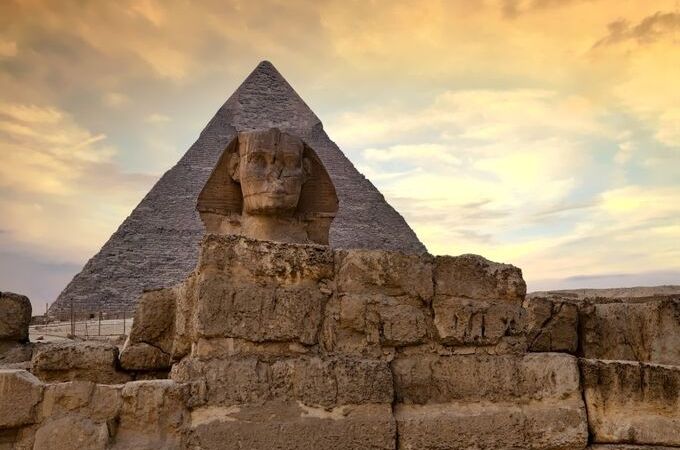
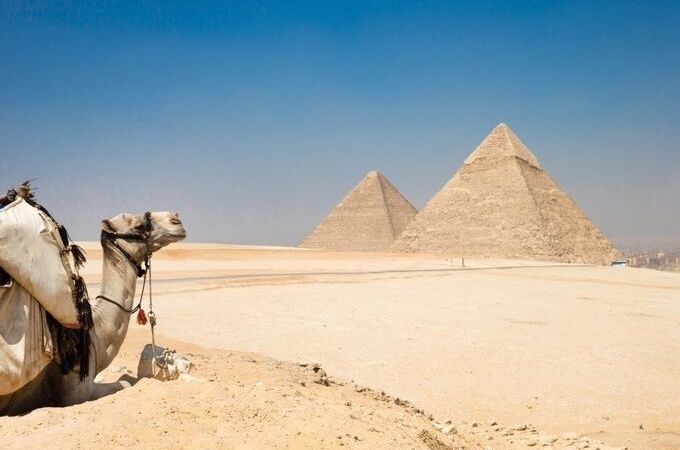
For most first-time visitors, Giza is difficult to exclude. The pyramid complex and Great Sphinx are among the principal reasons many travelers come to Egypt, which means a one-day visit usually needs to build around them rather than treating Giza as one stop among many.
What follows depends on priorities and operating conditions.
A museum may be the natural second half of the day for someone interested in ancient Egyptian history. Another traveler may prefer to spend the remaining time experiencing a different side of Cairo rather than moving directly from ancient monuments to display cases.
What does not work particularly well is trying to make the one-day schedule look like a three-day schedule by shortening every visit.
Giza deserves time.
Museums deserve time.
Historic neighborhoods deserve time for walking rather than merely driving through them.
With one day, something has to wait.
That is not poor planning.
It is the first sign of good planning.
Two Days Can Cover the Essentials Without Becoming a Race
Two complete sightseeing days make Cairo much easier.
A logical approach is to allow one day to revolve primarily around Giza and related archaeological interests, while the second concentrates on Cairo itself. The exact composition should depend on what interests you rather than a compulsory attraction formula.
This is also where Cairo Tours benefit from intelligent sequencing.
The purpose of private transportation and guiding should not be to squeeze an unreasonable number of stops into the day. Their real advantage is reducing logistical friction and helping you use available time where it matters.
Two days still require choices.
If Saqqara is important to you, it consumes real time rather than existing as a small extension to Giza. If museums are a major interest, rushing through one to preserve an overloaded afternoon defeats the reason for visiting. If Islamic Cairo is a priority, it deserves enough walking time for the district to feel like a place rather than a sequence of entrances.
Two days work because you can prioritize.
They stop working when “priority” somehow comes to mean everything.
Three Days Is the Sweet Spot for Most First Visits
Three full days change the character of a Cairo stay.
You are no longer trying to fit the city around Giza.
There is enough space to treat the archaeological landscape, museum experience and historic city as different parts of the destination rather than forcing them to compete for the same afternoon.
For many first-time travelers, this is the strongest duration.
One day can concentrate on Giza and, depending on interests and logistics, the wider pyramid landscape. Another can provide meaningful museum and city sightseeing. The third creates room for historic Cairo, additional cultural interests or a more generous distribution of the first two days.
Notice what the third day does not necessarily do.
It does not require you to find another six attractions.
Its greatest contribution may simply be allowing the places already on your list to receive the time they deserve.
This is particularly valuable in Cairo because the city itself is part of the experience. If every minute outside a monument is treated as transit between scheduled visits, you have technically visited Cairo while seeing remarkably little of Cairo.
Four Days Become Valuable When Your Interests Get Specific
A fourth full day is not essential for every first-time visitor, but it becomes easy to justify when your interests move beyond the headline sights.
Perhaps you want more substantial museum time rather than a highlights visit.
Perhaps Saqqara and the broader archaeological landscape matter enough that you do not want them compressed around Giza.
Perhaps Islamic Cairo is a genuine interest rather than an evening add-on.
Perhaps you simply dislike starting every morning with a schedule designed to extract maximum sightseeing value before sunset.
Four days allow those preferences to influence the trip.
This is an important difference between a destination having enough attractions to fill four days and a traveler needing four days.
Cairo can occupy far longer.
Most first-time itineraries do not need to prove that.
The right duration is the shortest stay that gives your actual priorities enough room.
What an Extra Cairo Day Really Buys You
Instead of asking how many attractions fit into each duration, it is more useful to ask what changes when another day is added.
| Time Available | What You Gain | What You Still Have to Accept |
|---|---|---|
| 1 full day | A focused introduction built around your highest priority | Major parts of Cairo will remain unseen |
| 2 full days | Giza plus substantial city sightseeing | Museum, historic-city and archaeological choices remain necessary |
| 3 full days | A balanced first visit with less competition between major interests | You still will not exhaust Cairo |
| 4 full days | Deeper museum, archaeological or neighborhood time | Extra time only helps if it reflects your interests |
| 5+ full days | Space for specialized interests and a much slower city rhythm | This may be more Cairo time than a first multi-city Egypt itinerary needs |
The table deliberately does not prescribe a minute-by-minute itinerary.
Duration should create possibilities.
It should not turn your holiday into a spreadsheet with pyramids.
Giza Is in Greater Cairo, but It Is Not a Quick Cairo Stop
One of the easiest planning mistakes is treating the pyramids as though they were a monument in a central city square.
They are part of the Greater Cairo experience, but visiting the Giza Plateau is a substantial sightseeing component in its own right.
You need to reach the area, move through the site, allow time for the monuments and Sphinx, and then continue to whatever comes next. Depending on your plans, additional pyramid-related experiences can extend the visit further.
This is why we should resist itineraries where Giza occupies a tiny morning slot before a long list of unrelated Cairo attractions.
The pyramids have survived for more than four thousand years.
They probably deserve longer than the time between breakfast and an early lunch.
The same principle applies to Saqqara, which should not be mentally reduced to “another pyramid nearby.” Adding it changes the geography and duration of the archaeological day.
Saqqara Is Where a Two-Day Plan Can Quietly Become a Three-Day Plan
Saqqara is a perfect example of how Cairo itineraries expand.
A traveler initially plans Giza.
Then Saqqara enters the research.
Once its importance to the development of pyramid architecture becomes clear, leaving it out feels increasingly difficult. Depending on the itinerary, other archaeological locations may also enter the discussion.
This is where priorities matter.
Travelers with two days can certainly include Saqqara, but doing so uses time that must come from somewhere else. Travelers with three days have greater flexibility to give the archaeological landscape more room without sacrificing as much city time.
The issue is not whether Saqqara is “worth it.”
That belongs to a different content intent.
The duration question is simpler:
If Saqqara matters to you, count it as meaningful sightseeing time rather than a small optional stop.
That one assumption makes the rest of the Cairo schedule considerably more realistic.
Museums Are Dangerous to Timetables Because People Actually Stay in Them
Museums create a different planning problem from archaeological sites.
Travel times can be estimated. Opening hours can be checked. What is harder to predict is how long an individual traveler wants to remain once inside.
Someone with a casual interest may be satisfied with a focused visit built around major objects.
Another traveler reaches the first gallery and immediately realizes the planned ninety minutes were optimistic.
This is why our dedicated Egyptian museums content handles collections and museum choices, while this page concentrates only on the scheduling consequence: do not treat a major museum as filler between two fixed attractions.
If Egyptian art and archaeology are central reasons for your trip, protect museum time deliberately.
A guide can help focus the visit, particularly when the collection is extensive, but even excellent interpretation cannot make a large museum physically smaller.
The schedule has to acknowledge the building.
Historic Cairo Punishes the “Drive Past It” Mentality
Some parts of Cairo reveal themselves through individual monuments.
Others depend much more on the space between them.
Historic streets, religious architecture, local commercial activity and the changing atmosphere of different districts cannot always be reduced to a sequence of ten-minute photo stops.
This is particularly relevant to Islamic Cairo.
Our dedicated Islamic Cairo content can explain the area's history and what makes particular monuments significant. For duration planning, the point is different: walking environments consume time differently from single-ticket attractions.
You may cover relatively little distance and still spend a substantial part of the day there.
That is not inefficiency.
The walking is part of the visit.
A Cairo itinerary becomes weaker when every experience is judged according to the number of attractions completed per hour.
Some places are valuable precisely because they slow that arithmetic down.
Traffic Is Real, but It Should Not Become the Whole Cairo Story
Cairo traffic is frequently discussed as though it were an attraction of its own.
Yes, road conditions can affect transfer times, and sensible itinerary design needs to account for them. Travel between different parts of the metropolitan area should not be planned according to idealized map estimates alone.
However, “Cairo has traffic” is not enough to explain poor scheduling.
The larger problem is often geography.
If a day repeatedly moves between distant areas because attractions were selected without considering where they are located, even moderate traffic makes the schedule inefficient.
The solution is not simply leaving earlier.
It is grouping sightseeing intelligently.
This is one of the operational advantages of arranging Egypt Private Tours around geographic logic rather than copying a list of famous places into chronological order.
A good Cairo day should minimize unnecessary crossings of the city before attempting to maximize attraction count.
Arrival Day Is a Bonus, Not a Foundation
International arrival days are particularly dangerous when calculating Cairo duration.
A flight may be scheduled to land at 13:00, which makes the afternoon appear available.
But landing is not hotel arrival.
Immigration, baggage collection, airport procedures, meeting arrangements, road transfer and hotel check-in all stand between the aircraft and sightseeing.
Delays can widen that gap further.
For this reason, we generally should not build an essential Cairo experience around an international arrival day unless the timing provides a genuinely comfortable margin.
If the afternoon remains usable, excellent.
Enjoy it.
Have dinner, walk locally where appropriate or undertake something flexible.
But if your entire plan depends on visiting an important site immediately after landing, the itinerary has created unnecessary fragility.
Arrival day should make the trip better when it works well.
It should not be holding the trip together.
Departure Day Has the Same Problem in Reverse
A late flight can make the final day look temptingly empty.
Sometimes meaningful sightseeing does fit.
The calculation should nevertheless work backward from the airport rather than forward from breakfast.
Consider hotel checkout, luggage, road transfer, required airport arrival time and the location of whatever you plan to visit.
A morning activity close to the logical departure route may work beautifully.
An ambitious excursion that leaves you watching the clock through every explanation does not.
This matters especially when Cairo is the final stop after Luxor, Aswan or a Nile cruise. Travelers naturally want to use every remaining hour, but the last morning should not become the most stressful part of the holiday.
Egypt has been there for a while.
Leaving one monument for next time will not upset it.


A travel professional specializing in tailor-made travel planning, guest experience management, and multi-destination tourism operations.
With over 23 years of experience in the travel industry, he designs and manages private and cultural tours for international travelers across Türkiye, Greece, Egypt, Jordan, Morocco, and other destinations.
He has strong expertise in both online and face-to-face guest communication, sales processes, and end-to-end travel operations.
Working closely with hotels, travel agencies, and local partners, he ensures smooth coordination and high-quality travel experiences at every stage of the journey.
His focus is on delivering personalized, reliable, and seamless travel experiences for international guests worldwide.