Athens in August: Hot, Quieter Locally, Still Very Much Open
Last Updated: August 2026
Athens in August can look contradictory.
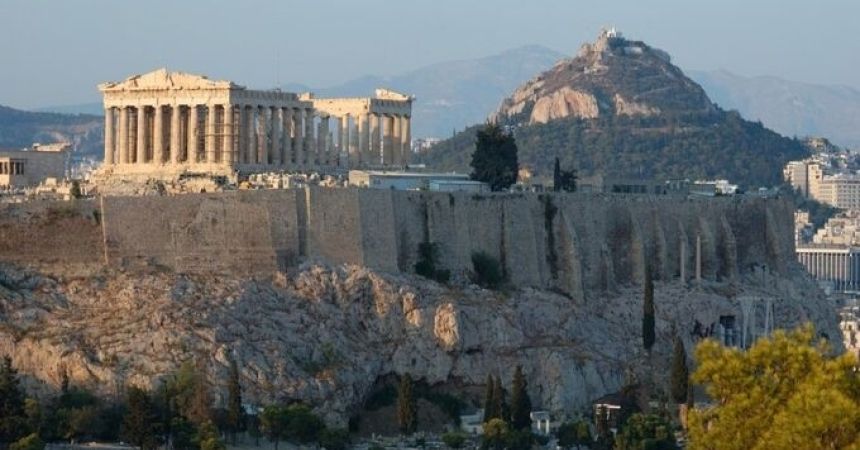
Stand near the Acropolis in the middle of the day and there may be little evidence that the city has entered Greece's traditional summer-holiday period. International visitors continue arriving, archaeological sites remain firmly on sightseeing itineraries, tour groups move through the historical center and restaurants in visitor-heavy districts have every reason to remain active.
Travel several neighborhoods away, particularly around the middle of the month, and another Athens can appear.
Traffic may feel lighter. A neighborhood business you expected to find open may have closed temporarily for summer holidays. Residents who normally give a district its everyday rhythm may be on an island, in a family village or elsewhere along the Greek coast. The capital has not shut down, but parts of local life have loosened their grip on it.
This distinction is what makes August deserving of its own weather page.
The temperature remains important, obviously. August belongs firmly to high summer, and serious heat can influence sightseeing just as it does in July. Yet repeating another two thousand words about visiting the Acropolis early and avoiding unnecessary midday exposure would give travelers little new information.
August asks a different question:
What happens to a hot capital when many of the people who live there traditionally want to be somewhere else?
For visitors, the answer can be unexpectedly appealing, provided expectations are correct.
Athens remains one of Europe's major tourism cities.
It simply becomes a slightly different version of itself.
August Heat Is the Background, Not the Entire Story
Typical daytime highs in Athens during August are often around 32–35°C, with warm nights commonly remaining in the 23–26°C range. Hotter periods and heatwaves are possible, rainfall is generally limited, and prolonged direct sunshine should be expected.
The same summer principles discussed for July therefore remain relevant.
Major exposed archaeological sites are usually more comfortable earlier in the day. Water, sunscreen, shade and sensible pacing matter. During exceptional heat, current official advice and any temporary operating changes should take precedence over generic travel plans.
Those points do not need another full article.
In August, heat provides the setting.
The city's seasonal rhythm provides the story.
There Isn't One August Athens
Visitors sometimes encounter conflicting descriptions of the month.
One person says Athens was crowded.
Another says it felt unusually quiet.
Both may be correct because they were talking about different places.
The historical center serves an international tourism economy that does not disappear when Athenians take summer holidays. More residential or office-oriented districts depend much more heavily on local routines and can therefore feel noticeably different.
Which Athens Are You Looking At?
| Part of the City Experience | What Drives August Activity | What You May Notice |
|---|---|---|
| Major archaeological zone | International tourism | Consistently active |
| Plaka/Monastiraki visitor areas | Tourism + hospitality | Restaurants and shops busy |
| Residential streets | Local population | Quieter during holiday period |
| Office-oriented areas | Business activity | Reduced weekday intensity possible |
| Neighborhood restaurants | Local ownership/clientele | Individual summer closures |
| Riviera | Residents + visitors + summer leisure | Strong seasonal demand |
| Airport/ports | Holiday movement | Very active travel flows |
This explains the apparent contradiction better than calling Athens either “busy” or “empty.”
August redistributes activity.
The Quiet Streets Are Not an Empty-City Guarantee
Photographs of unusually empty Athens streets sometimes circulate as evidence that August is the secret month to experience the capital without people.
That claim needs qualification.
You may indeed find less local traffic in certain areas, particularly around the traditional mid-August holiday period.
That does not mean the Parthenon becomes private.
Tourism follows a different calendar from local commuting. Major attractions can remain busy even when the avenue you crossed on the way there felt calmer than expected.
Travelers who choose August solely because they have been promised “empty Athens” may therefore misunderstand the opportunity.
The benefit is subtler.
Parts of the city can feel less hurried.
August 15 Matters More Than Many Weather Guides Admit
The Dormition of the Virgin Mary on August 15 is one of Greece's major religious and public holidays and sits within a period when many Greeks traditionally take summer vacations.
For Athens visitors, this matters practically.
Individual shops, restaurants and other businesses may operate differently, particularly outside heavily touristed areas. Transportation patterns can reflect domestic holiday travel, while ports and roads serving popular vacation destinations may experience substantial demand around the period.
Major tourism infrastructure does not simply disappear, but travelers should avoid assuming that every locally oriented business will follow its normal schedule.
Check anything important directly.
The Mid-August Reliability Test
Instead of listing what is “open” or “closed” generically, divide plans by how damaging a surprise closure would be:
Verify in advance: a specific restaurant you are traveling to visit, specialty shop, appointment, locally operated experience or service with limited alternatives.
Usually easy to replace: ordinary café, casual restaurant, general shopping or an unscheduled evening venue.
Check official schedules: museums, archaeological sites and public transport services, particularly around the holiday itself.
This approach is more useful than pretending one opening-hours rule applies to an entire capital.
The City Can Feel Easier Without Feeling Cooler
Reduced traffic does not lower the thermometer.
This sounds obvious, yet it affects August expectations.
A quieter street may be more pleasant to cross and less stressful to navigate, but exposed pavement remains exposed pavement. The sun does not care whether half the neighborhood has gone to Naxos.
Continue treating heat seriously even when Athens feels relaxed.
A high-summer Athens highlights tour still benefits from thoughtful morning timing, particularly when archaeological areas are involved.
The quieter urban rhythm is an atmospheric advantage.
It is not climate control.
August Makes You Think About Where Athenians Went
This is perhaps the most interesting seasonal perspective.
During winter, Athens feels unquestionably like the center of everyday Greek urban life.
In August, the national relationship with summer becomes visible partly through absence.
Greeks travel to islands, coastal towns and family destinations across the mainland. Summer holidays are culturally significant, and the capital participates by temporarily releasing part of its population into the rest of the country.
Visitors therefore experience Greece from the opposite direction.
They have arrived in Athens precisely when many Athenians are leaving it.
That creates an unusual opportunity to understand the city as part of a larger national seasonal rhythm rather than treating it as an isolated tourism destination.
Should You Follow Them Toward the Water?
Possibly.
August is the strongest point so far in this Athens cluster for considering the Riviera as a meaningful component of the stay.
The reason is not simply that swimming conditions are good.
The coast is part of how greater Athens lives through summer.
Beaches, seaside dining, marinas and evening venues along the southern suburbs provide a different version of the metropolitan area from the archaeological center.
A August Athens seaside day can therefore add cultural as well as climatic contrast.
The important question is how much time you have.
A two-night first visit still needs to make difficult choices.
A five-night stay has far more room to behave like summer.
Don't Divide the Trip 50/50 Automatically
Warm weather sometimes encourages visitors to assume that half of an August Athens trip should belong to the city and half to the Riviera.
There is no reason for such mathematical symmetry.
Allocation should depend on what brought you to Athens.
Give Each Day a Job
| If Your Trip Has... | Let Central Athens Own... | Give the Coast... |
| 2 full days, first visit | Most of both days | Optional evening only |
| 3 full days, history priority | 2+ days | Partial day if desired |
| 4 full days, mixed interests | Main historical days | One substantial coastal period |
| 5+ days | Flexible cultural time | Easy full-day inclusion |
| Repeat visit | Whatever you want to revisit | Potentially larger share |
| Beach-first priorities | Essential Athens highlights | Majority if that is your purpose |
The table is intentionally not recommending an “ideal itinerary.”
It shows how August creates a stronger allocation decision than earlier months.
Athens Riviera Evenings Can Solve Two Problems at Once
A coastal evening offers both environmental and experiential contrast.
After several days surrounded by dense urban streets and archaeological stone, dining beside the water changes the visual language of the trip. Depending on conditions, sea breezes may also improve comfort, although the coast should never be promised as automatically cool.
This is particularly attractive for travelers who do not want to devote an entire day to the Riviera.
Spend the morning on central priorities, slow down during the afternoon and travel south later.
A summer evening by the Athens coast can then become the destination rather than merely the end of a beach day.
This anchor belongs specifically to August's city-to-coast rhythm and should not be reused elsewhere in the Athens cluster.
What If You Don't Care About Beaches?
Then August can still work.
The assumption that every summer visitor must escape toward water is unnecessary.
Athens has major museums, shaded neighborhoods, restaurants, cafés and evening culture. A traveler fascinated by history may prefer to use the coast minimally or not at all.
The August adjustment is still useful: early outdoor priorities, lower-intensity afternoons and active evenings.
What changes is where the slower period happens.
Perhaps it belongs in the National Archaeological Museum rather than beside the Saronic Gulf.
Seasonal travel should modify your interests.
It should not replace them.
Mid-August Can Be Wonderful for Repeat Visitors
A repeat traveler often benefits more from Athens' unusual August rhythm than a first-time visitor.
Without pressure to complete every major monument, quieter streets and slower local districts become part of the attraction. You can revisit a favorite museum, choose restaurants according to what is open, spend an evening by the coast and accept that the city is temporarily operating outside its ordinary routine.
First-time visitors may notice closure inconveniences.
Repeat visitors may notice atmosphere.
That difference is worth considering when choosing dates.
Don't Build the Food Plan Around One Neighborhood Restaurant
This is particularly relevant around mid-August.
If there is a specific locally oriented restaurant you consider essential, verify that it will be operating during your dates.
Otherwise, remain flexible.
Tourist-heavy central districts retain abundant dining options, and Athens does not become a food desert simply because some independent businesses close temporarily.
The mistake is creating a list of five “must-eat” neighborhood restaurants months earlier and assuming August will respect it.
Allow the city to tell you what is available.
Sometimes seasonal travel requires replacing research with observation.
Hotel Pools Become More Valuable, but Location Still Wins
A pool can be genuinely enjoyable in August.
After an early morning of archaeological sightseeing, returning for a swim before going out again in the evening may create an excellent daily rhythm.
However, a beautiful pool far from everything you want to see can introduce transportation costs in both time and energy.
The trade-off should therefore be evaluated differently from a resort holiday.
Ask whether the pool supports your Athens itinerary or whether you are reorganizing the itinerary to support the pool.
A centrally located hotel with reliable air conditioning remains highly practical.
A centrally located hotel with a pool is a bonus.
August Nights Belong Outdoors
Evenings can remain very warm, particularly during hotter periods, but the removal of direct sunshine makes outdoor life considerably more attractive.
Restaurant terraces, rooftop venues and late walks continue to play an important role.
August adds another possibility: the city can feel calmer after dark in areas where local residents have left for holidays, while visitor-oriented neighborhoods remain active.
This produces an interesting contrast within a relatively small geographic area.
Walk several streets and the atmosphere can change.
Athens has not emptied.
Its center of gravity has moved.
The Month Has a Sound of Its Own
Traffic is part of the Athens soundscape.
So are motorcycles, conversations, delivery vehicles, cafés and the ordinary mechanical noise of a large capital.
When local activity declines in parts of August, some districts can sound different.
This is difficult to communicate through climate statistics and almost impossible to capture in a generic “best time to visit” guide.
Yet travelers often remember it.
A broad avenue feels strangely calm.
Parking appears easier.
A residential street seems sleepy at a time when you expected weekday intensity.
These details are not guaranteed everywhere, nor do they apply uniformly throughout the month.
They are simply part of August Athens.
July, August and September Need Completely Different Stories
July's central question is physical:
What deserves your limited heat tolerance during peak summer?
August's question is seasonal and urban:
How does Athens change when high summer overlaps with Greece's traditional holiday rhythm?
September will move somewhere else again, focusing on the gradual return of urban normality while summer weather lingers, creating a city that is socially back at work before the climate has fully moved on.
Those are three distinct reasons to search for three distinct months.
Temperature alone would never create enough separation.
Traveler behavior does.
August Isn't “Dead Athens”
That phrase appears occasionally in discussions of the month and is far too crude.
A capital of millions does not simply switch off.
Hospitals, transportation, tourism, hospitality and countless everyday services continue functioning. Many residents remain in the city, while international visitors keep central areas active.
What changes is intensity and distribution.
Some locally oriented businesses close temporarily.
Some residential areas become quieter.
Tourist districts may feel almost untouched by the supposed emptiness.
Ports and airports can be extremely busy because the holiday movement itself generates activity.
Athens is not dead.
It is on a different schedule.
The Best August Visitors Notice the Difference
There is no need to romanticize empty offices or a closed neighborhood bakery.
Occasional summer closures can be inconvenient.
Heat can be demanding.
Major attractions can still be crowded.
Yet August provides a version of Athens that visitors at other times do not encounter in quite the same way.
The city remains internationally busy while becoming locally quieter.
Its ancient center continues working while part of its modern population disperses toward islands, villages and coastlines. The Riviera becomes more than an excursion because it reflects the same seasonal instinct that has pulled Athenians away from their ordinary routines.
Understanding that contradiction changes how the month feels.
You stop asking whether Athens is busy or quiet.
What Remains Reliably Athens in August?
Quite a lot.
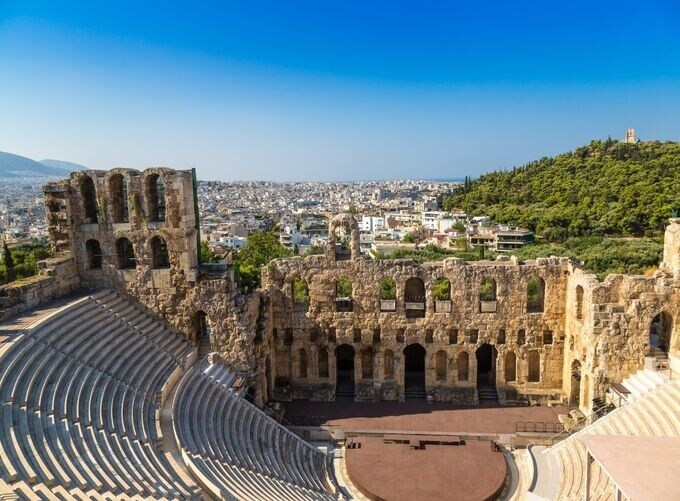
The Acropolis does not become less significant because a neighborhood bakery closes for summer holidays. The museums do not lose their collections because traffic is lighter, nor does the historical center suddenly stop functioning when residents leave the capital for islands and family homes elsewhere in Greece.
The mistake is expecting every layer of Athens to respond to August in the same way.
Tourism, residential life, office activity, nightlife and transportation each follow slightly different seasonal rhythms. Once you accept that, the month becomes easier to understand because a busy morning near the Acropolis and an unusually quiet residential street later that afternoon no longer appear contradictory.
They are simply different parts of the same August city.
August 15 Requires Verification, Not Anxiety
The Dormition of the Virgin Mary on August 15 is an important Greek public and religious holiday. It also falls within the country's traditional summer vacation period, which amplifies its effect on travel patterns.
Visitors should check official opening hours for archaeological sites and museums around their exact dates rather than assuming ordinary schedules. If a particular restaurant, shop or privately operated experience matters enough that its closure would disappoint you, verify it directly as well.
What you do not need is a backup itinerary for every hour of the holiday.
Central Athens retains tourism infrastructure, restaurants and visitor services, even when individual businesses operate differently.
The practical rule is simple: verify what cannot easily be replaced and improvise everything else.
Some August Plans Are More Fragile Than Others
Weather is only one source of uncertainty this month. Local holiday schedules introduce another, which means the usefulness of advance planning depends on what you are planning.
| Your Plan Depends On... | August Vulnerability | Sensible Response |
|---|---|---|
| One specific local restaurant | Higher | Confirm directly |
| Major archaeological site | Schedule-dependent | Check official hours |
| Casual central dinner | Low | Keep alternatives |
| Specialist independent shop | Higher | Verify before traveling across town |
| General neighborhood walk | Very low | Go without overplanning |
| Island connection | Capacity/timing sensitive | Reserve appropriately |
| Exact coastal venue | Variable | Check current operation |
This is a dependency table, not another weather chart.
August rewards travelers who know which details deserve certainty and which are better left flexible.
Ports May Tell a Completely Different Story From Quiet Streets
A calmer central avenue can create the impression that everybody has disappeared.
Go toward the major transport gateways and the opposite may be true.
August is a major domestic and international travel period, with Greeks and visitors moving between Athens, islands and mainland destinations. Ferry demand can be substantial, particularly around popular holiday dates, while the airport naturally remains busy during peak tourism season.
This distinction matters if Athens is only the first stage of a larger Greek trip.
Do not interpret quieter local streets as evidence that transportation will also be quiet.
Your ferry connection deserves more planning than your afternoon coffee.
Athens Before an Island Trip Feels Different in August
Many travelers use the capital as the cultural opening to a longer Greek holiday.
August makes that combination particularly distinct.
Spend several days among archaeological sites, museums and dense urban neighborhoods, then travel to an island and the change in landscape can feel dramatic. The transition is not simply city to beach; it is ancient metropolitan Greece to one of the country's defining summer environments.
For first-time visitors, this sequence often makes more sense than reducing Athens to a single arrival night before immediately leaving for the islands.
Even during hot weather, Athens provides historical context that changes how the rest of Greece is understood.
The key is not overstaying according to someone else's itinerary.
It is giving the capital enough time to have an identity of its own.
How Much Athens Before the Islands?
Instead of recommending one universal number of nights, consider what you would regret leaving unfinished.
If seeing the Acropolis is your only serious Athens priority, a short stay may satisfy you.
If you want the Agora, major museums, neighborhoods, food and an evening that does not feel like preparation for tomorrow's ferry, allow more room.
August heat also slows ambitious itineraries.
Three comfortable days can reveal more than two overloaded ones.
This is especially relevant when travelers schedule a late arrival, one frantic sightseeing day and an early ferry the following morning, then conclude that Athens felt exhausting.
Sometimes the month is not the problem.
The compression is.
First-Time Visitors Should Stay Central to the Story
The unusual local quietness of August is interesting, but first-time visitors should not chase it at the expense of the places that brought them to Athens.
See the major historical core.
Visit the museum that genuinely interests you.
Experience the city after sunset.
If time allows, explore beyond the obvious districts and notice how local rhythms change.
Repeat visitors can invert those priorities.
They may spend more time in residential neighborhoods, revisit only one archaeological site, choose the Riviera over another museum and find the seasonal emptiness itself interesting.
August accommodates both trips.
It simply gives them different centers of gravity.
Don't Confuse an August Closure With a Bad Neighborhood
You may walk past several shuttered businesses in an otherwise appealing residential district.
That does not necessarily indicate economic decline or an area that is normally inactive.
It may simply be August.
This contextual understanding matters because travelers naturally judge cities according to what they encounter during a short visit. Seasonal closure patterns can distort that impression.
If you are considering returning to Athens at another time of year, remember that the same street may feel considerably more active in October, March or May.
August shows a real Athens.
It just does not show the only Athens.
When the City Feels Quiet, Look at Public Space
Reduced everyday intensity can make architectural details easier to notice.
Broad streets, apartment balconies, neoclassical buildings and small squares that might disappear into ordinary traffic become more visible when the surrounding pace slows.
This is particularly rewarding for travelers who enjoy wandering without requiring every route to contain a famous attraction.
The heat still determines when such walking feels sensible, but evening provides an excellent opportunity.
Instead of creating another sightseeing list, choose an area and observe.
August sometimes gives you more visual room to do that.
City or Coast? Ask What Your Trip Is Missing
By this stage of summer, the Riviera can easily justify a substantial part of a longer Athens stay.
The decision should still respond to the trip rather than the temperature alone.
After two history-heavy days, the coast may provide exactly the contrast you need.
After a full day already spent at the hotel pool, another relaxation day may add less value than a museum or historical neighborhood.
If you are continuing to Mykonos, Santorini, Naxos or another island immediately afterward, you may also decide that Athens should remain predominantly urban because abundant sea time is already coming.
That is an important August distinction.
You do not need to turn Athens into an island before visiting an island.
August Versus September Is a Social Change Before a Climatic One
September can remain decidedly summery.
Warm days, strong sunshine and coastal opportunities do not vanish when August ends.
What changes more noticeably is the city's everyday rhythm.
Residents return.
Businesses resume ordinary schedules.
Traffic and professional life regain intensity.
The capital starts behaving more like itself during the working year even while the weather continues to support many summer habits.
This gives September its own semantic territory: summer weather lingering after Athens returns to work.
August belongs to the opposite condition.
The climate and the holiday calendar are moving in the same direction.
Twelve FAQs About Athens Weather in August
1. Is August a good time to visit Athens?
August can work very well for travelers comfortable with high summer temperatures, particularly those combining historical sightseeing with evening activities or the coast. Parts of the city may feel quieter because of Greek summer holidays, although major visitor areas remain active and popular.
2. How hot is Athens in August?
Daytime highs commonly reach approximately 32–35°C, with hotter periods possible during heatwaves. Nights often remain around 23–26°C. Direct sunshine and exposed archaeological areas can feel considerably more demanding, so actual daily conditions should guide outdoor sightseeing decisions.
3. Is Athens empty in August?
No. Some residential and business-oriented districts can become noticeably quieter as residents take summer holidays, particularly around mid-August. However, major archaeological sites, visitor districts, hotels and transportation hubs continue serving substantial numbers of domestic and international travelers.
4. Does Athens close on August 15?
Athens does not completely close, but August 15 is an important public and religious holiday and individual operating schedules may change. Check official attraction hours and confirm any specific restaurant, shop or privately operated service that is important to your itinerary.
5. Is the Acropolis open in August?
The Acropolis normally operates during the tourism season, but visitors should always check current official opening information for their specific date. Exceptional heat or public-holiday arrangements can affect access or hours, making current information more reliable than generic annual schedules.
6. What should I wear in Athens in August?
Lightweight, breathable clothing is generally most comfortable, together with supportive walking shoes, sunglasses and a hat. Sunscreen and water are essential for prolonged outdoor sightseeing. Evenings usually remain warm enough that substantial extra layers are unlikely to be necessary.
7. Is Athens crowded in August?
Crowding varies dramatically by location. Internationally famous attractions and tourism-focused districts can remain busy, while some residential or office areas may feel unusually calm because residents are away. Describing the entire city as either crowded or empty therefore oversimplifies August conditions.
8. Is the Athens Riviera worth visiting in August?
The Riviera is particularly appealing in August for swimming, seaside dining and a change from central urban sightseeing. It works best when your itinerary has enough time to accommodate the coast without sacrificing historical priorities that matter more to you.
9. Do restaurants close in Athens during August?
Some independent and locally oriented restaurants may close temporarily for summer holidays, especially around mid-August, while many establishments in tourism-heavy districts continue operating. Confirm a specific restaurant if it is important, but ordinary dining options remain widely available across central visitor areas.
10. Is August good for combining Athens with Greek islands?
Yes. August offers established summer conditions and extensive island tourism, although it is also a high-demand travel period. Ferry and accommodation planning deserves attention, particularly around popular dates. Spending sufficient time in Athens before departing can provide valuable historical contrast.
11. Is July or August better for Athens?
Both can be very hot. July's main planning issue is managing peak-summer urban heat, while August adds the distinctive effect of Greece's traditional vacation period. Travelers interested in observing a quieter local rhythm may find August particularly interesting despite active tourist areas.
12. Is August or September better for Athens?
September generally offers a more typical working-city atmosphere as residents return, while often retaining warm summer-like weather. August provides a more unusual holiday-period version of Athens. Travelers seeking everyday urban energy may prefer September; those accepting seasonal quiet may enjoy August.

A travel professional specializing in tailor-made travel planning, guest experience management, and multi-destination tourism operations.
With over 23 years of experience in the travel industry, he designs and manages private and cultural tours for international travelers across Türkiye, Greece, Egypt, Jordan, Morocco, and other destinations.
He has strong expertise in both online and face-to-face guest communication, sales processes, and end-to-end travel operations.
Working closely with hotels, travel agencies, and local partners, he ensures smooth coordination and high-quality travel experiences at every stage of the journey.
His focus is on delivering personalized, reliable, and seamless travel experiences for international guests worldwide.