How Many Days in Santorini Are Enough Without Rushing It?
Author: Kenan Ungur
Article Date: 17.08.2024
Reading Time: 20 min

How Many Days in Santorini Are Enough Without Rushing It?
Updated: August 2026

For many first-time visitors, three nights in Santorini is the most balanced starting point, particularly when the island forms part of a longer Greece journey.

Three nights generally gives travelers enough room to experience the caldera environment, spend meaningful time around the principal cliffside settlements and choose one larger experience without making every hour feel committed in advance.

Yet Santorini has an unusual relationship with time.

On many destinations, an extra night mainly creates space for another attraction. In Santorini, an additional night may instead allow you to use the terrace you paid so much for, return to Oia when it is less pressured, linger over breakfast or spend an afternoon doing almost nothing while looking across the caldera.

That is not wasted time.

If the accommodation itself was one of the reasons you chose Santorini, hotel time is destination time.

This is why the correct stay length cannot be calculated only from a sightseeing list. It depends on how much of Santorini you intend to experience outside the hotel and how much of the experience you have already purchased inside it.

Santorini Has a Different Time Economy From Most Greek Islands

A traveler can easily spend three nights somewhere and use almost every waking hour away from the hotel.

Santorini often rewards the opposite behavior.

A cliffside property overlooking the caldera may represent a significant share of the trip budget precisely because the view, terrace, plunge pool or sunset setting is part of the experience. If every morning begins with an early excursion and every evening is spent elsewhere, the traveler may technically see more of Santorini while using surprisingly little of what made the accommodation expensive.

Duration therefore needs to answer two questions simultaneously:

How much time does the island require?

and

How much time does the hotel deserve?

For a traveler staying in a practical inland or beach hotel, three active nights may make perfect sense. For someone paying heavily for a caldera suite, the same schedule could be poor value because the room has been treated only as somewhere to sleep.

Santorini duration is partly sightseeing mathematics and partly accommodation economics.

Two Nights Can Work, but Santorini Becomes an Edited Version of Itself

Two nights is enough to see Santorini.

That statement needs careful interpretation.

With favorable arrival and departure timing, travelers can experience the caldera, spend time in one or two cliffside villages, have a memorable evening and gain a clear sense of why Santorini became famous.

What two nights does not provide is much resilience.

A delayed arrival immediately matters. A long sailing excursion consumes a significant proportion of the stay. A leisurely hotel morning competes directly with sightseeing, while a wine experience or archaeological visit can force another priority out of the schedule.

This does not make two nights a bad decision.

It makes two nights appropriate when Santorini has a defined purpose within a longer route.

A traveler combining Athens, Mykonos, Santorini and Crete may reasonably decide that the caldera and one substantial island experience are enough before continuing.

The mistake is allocating two nights while expecting Santorini to behave like a four-night stay.

Three Nights Creates the First Real Breathing Space

Three nights changes Santorini more than the extra twenty-four hours might suggest.

Assuming transport timing is reasonable, travelers usually gain two fuller days plus parts of the arrival and departure periods. That creates enough space to avoid stacking every major priority together.

One period can belong primarily to the caldera villages and the hotel environment.

Another can carry a larger experience such as sailing, wine, archaeology or wider island exploration.

The arrival evening can remain intentionally simple rather than becoming another sightseeing assignment.

This balance is why three nights works so well for many first-time visitors.

The trip still feels selective, yet a long lunch or delayed morning does not automatically destroy the schedule.

More importantly, the traveler begins to experience Santorini at more than one speed.

That matters on an island where the most memorable moment may be twenty quiet minutes on a terrace rather than another named attraction.

The Fourth Night Should Change the Pace, Not Increase the Checklist

Four nights is where Santorini becomes considerably more comfortable for travelers who value the island itself rather than treating it as a famous stop.

The extra night can absorb a sailing day without sacrificing village time. It allows wine or archaeological interest to enter the stay without forcing the caldera into the margins. Couples can spend a slower morning at the hotel without calculating what must be removed from the afternoon.

What the fourth night should not do is encourage another round of attraction accumulation.

Adding a second boat experience, several beaches, multiple sunset locations and additional tours simply because another day exists defeats the purpose.

Four nights earns its value through decompression.

It creates an itinerary in which experiences can be separated rather than layered on top of one another.

For honeymooners, milestone trips and guests paying for high-category accommodation, this distinction can be especially valuable because the additional night allows the hotel and island to coexist rather than compete.

Five Nights Is About Enjoying Santorini, Not Proving There Is Enough to Do

The question “Is five nights too long in Santorini?” usually assumes that every night needs to be justified by another attraction.

That is the wrong test.

Five nights can be excellent for travelers who want resort time, repeat walks through favorite areas, sailing, wine, archaeology and enough flexibility that weather or fatigue does not dictate the whole stay.

The same five nights can feel excessive to someone who becomes restless after two days without substantial geographical movement.

Travel style is the deciding factor.

Santorini is visually intense but geographically compact. Travelers who enjoy settling into a destination may find that compactness liberating because they no longer need to chase novelty. Travelers who derive enjoyment from constant exploration may prefer giving some of those nights to Crete, Naxos, Paros or mainland Greece.

Five nights works when Santorini is a holiday environment, not merely an attraction cluster.

Your Hotel Category Should Influence How Many Nights You Book

This is where Santorini differs most sharply from many other duration decisions.

Imagine two travelers staying three nights.

Traveler A has booked a centrally located room primarily for sleep and intends to spend most of the day exploring.

Traveler B has chosen a caldera suite with a private terrace, plunge pool and sunset orientation.

The hotel invoices may differ enormously, yet both travelers have scheduled full-day excursions on almost every day.

Traveler B has effectively paid for an experience they rarely use.

When the accommodation itself is expensive because of location or private facilities, a longer stay or lighter sightseeing schedule can improve value more effectively than attempting to “see more.”

Conversely, short stays do not necessarily need the most elaborate room category.

If you know you will be outside most of the time, convenience and location may provide stronger value than features that require several unscheduled hours to enjoy.

Sailing Can Turn Three Nights Into a Surprisingly Short Stay

A caldera sailing experience can become one of the most memorable parts of Santorini, but it takes a substantial block of usable time.

That matters when deciding duration.

On a two-night stay, a major sailing experience can dominate the entire visit. On three nights, it fits much more comfortably, provided the remaining time has not already been overcommitted. With four nights, sailing becomes one distinct chapter rather than something that pushes village exploration or hotel time into whatever hours remain.

The key decision is whether sailing is non-negotiable.

If it is, write it into the duration calculation before booking the hotel.

Do not add it afterward and then assume the same number of nights will somehow absorb the experience without consequences.

Santorini is small geographically, but major activities still consume real hours.

Oia Requires Less Time Than Its Reputation Suggests — and More Than a Photo Stop

Oia creates an interesting duration paradox.

Travelers frequently imagine that it requires a full day because it dominates Santorini photography. In reality, the village can be explored relatively efficiently if the objective is simply seeing major streets and viewpoints.

Yet reducing Oia to a short scheduled stop can miss why people enjoy staying or returning there.

The experience changes with timing.

Morning feels different from late afternoon. Evening differs again once day visitors begin moving elsewhere. A traveler staying nearby can revisit rather than attempting to complete Oia in one concentrated session.

This page deliberately does not become a guide to Oia.

The duration insight is narrower: do not allocate time according to photographic fame; allocate it according to whether Oia is an attraction or part of your daily environment.

That distinction can save hours or justify another night.

Fira, Imerovigli and Oia Should Not Be Counted Like Separate Cities

Another common planning error is treating every major caldera settlement as though each requires its own sightseeing day.

They offer different atmospheres and deserve attention according to traveler interest, but Santorini's geography allows some experiences to be connected rather than isolated.

This matters because an itinerary can look fuller than it really needs to be.

A traveler sees three village names and allocates three large periods. Then sailing, wineries, beaches and archaeology are added around them, creating a five-day sightseeing schedule before any time has been left for the hotel.

Instead, think in terms of caldera time.

How much time do you want to spend walking, eating, looking at the landscape and moving between cliffside areas?

That is often a more honest calculation than assigning formal sightseeing blocks to every settlement.

Wine Travelers Need Time for What Happens After the Tasting

A wine experience can be fitted into several Santorini durations, but the timing around it matters.

If wine tasting is important, the day should not be designed so aggressively that travelers immediately move into another complex transfer or activity afterward. A tasting combined with dinner or a slower evening can create a much more natural rhythm than placing it between two unrelated sightseeing commitments.

This is where four nights can become valuable for travelers with stronger culinary interests.

The extra time does not necessarily add another winery.

It allows the wine experience to occupy the kind of afternoon or evening it deserves.

Detailed winery selection belongs to another search intent, so the important duration principle is simply that food and wine take longer when they are being enjoyed rather than processed.

An itinerary should account for that human reality.

Archaeology Changes Whether Santorini Is a Two-Night or Four-Night Destination

Some travelers visit Santorini almost entirely for landscape.

Others are fascinated by the island's archaeological and volcanic history.

Those travelers need a different duration calculation.

If Akrotiri or other cultural experiences become meaningful priorities rather than optional additions, they compete for time with the caldera, sailing and hotel experience.

On a short stay, that competition can become severe.

A three- or four-night allocation becomes easier to justify when cultural interest is genuine because Santorini then performs more than one role inside the wider Greece itinerary.

The important thing is not to add archaeology because you feel guilty about spending too much time looking at the view.

Choose it because the history actually interests you.

The number of nights should respond to real priorities, not cultural obligation.

A Beach Day Is More Expensive in Time Than It Looks

Santorini is not usually selected primarily as a classic beach island, yet travelers sometimes add a full coastal day once they arrive.

That can be enjoyable.

It also has consequences for duration.

A beach day works best when it remains a beach day rather than becoming another rapid sequence of locations. If you want several unhurried hours by the sea, the activity consumes much of the useful daylight period.

On a two-night visit, this may displace one of the more distinctive Santorini experiences.

On four or five nights, it becomes much easier to incorporate without compromising the caldera-focused purpose of the trip.

This is one reason the correct stay length depends on what Santorini must do inside the entire Greece holiday.

If Naxos or Crete follows, Santorini may not need to provide the major beach component at all.

Think in Experience Density Rather Than Attraction Count

Santorini has unusually high experience density.

A morning on a caldera terrace, a walk through Imerovigli, lunch, a wine tasting and sunset can produce an extremely full day even though only one or two formal attractions appear on the itinerary.

That is why conventional attraction counting underestimates how tiring Santorini can become when too much is added.

Use experience density instead.

Type of Santorini Day Calendar Looks Like How It Actually Feels
Caldera village + long lunch Light Rich but relaxed
Sailing + evening out One activity Substantial full day
Wine + villages + dinner Moderate Socially full
Archaeology + road exploration Several stops High concentration
Hotel + local dinner Almost empty Valuable if accommodation matters
Beach + sunset transfer Simple More movement than expected

This is not another 2/3/4-night table.

The point is to understand why apparently empty Santorini days often already contain enough.

Arrival by Ferry Creates a Different First Day From Arrival by Air

Santorini's arrival experience matters because ferry and airport arrivals create different transfer patterns and timing.

A ferry arrival includes disembarkation, port congestion and movement up from the port area toward accommodation. A flight follows another arrival sequence entirely.

Neither should automatically be treated as the beginning of a major sightseeing day.

Travelers who arrive late afternoon and immediately schedule sunset activities sometimes discover that the first hours are dominated by luggage and orientation instead of the romantic opening they imagined.

A calmer strategy lets arrival day function as settling into Santorini.

Dinner, a first caldera view and perhaps a short walk can be enough.

This makes three nights feel considerably better because the arrival evening no longer carries pressure to compensate for the travel day.

The Departure Morning Is Often Less Useful Than Travelers Think

Checking out of a cliffside property can require more coordination than leaving a conventional city hotel, particularly when luggage assistance and vehicle access are involved.

That means an early or mid-morning departure should not be counted as meaningful Santorini time simply because the traveler slept there the previous night.

This is where duration calculations regularly become inflated.

“Four days in Santorini” may actually contain late arrival, two full days, a partial third day and an early departure.

Always translate the accommodation dates into usable blocks of time.

The island does not care how many nights appear on the voucher.

Do Not Give Santorini Another Night Simply Because It Is Famous

Santorini's reputation can distort itinerary allocation.

Travelers may automatically assign it four nights while giving three to Crete or two to Athens, even when their strongest interests lie in history, road exploration or beaches.

Fame should not determine duration.

If you enjoy the caldera, premium accommodation, wine and slower scenic travel, Santorini may deserve four or five nights.

If your priority is archaeological depth and active exploration, two or three nights may be entirely appropriate before moving elsewhere.

Every additional Santorini night has an opportunity cost.

It is a night that cannot be spent in Crete, Athens, Naxos, Paros or the mainland.

Duration becomes meaningful only when compared with what is being sacrificed.

A Honeymoon and a First-Time Sightseeing Trip Need Different Santorini Calendars

This is one of the clearest examples of traveler intent changing ideal duration.

A honeymoon couple may book Santorini specifically because they want privacy, caldera mornings, a special dinner, perhaps sailing and enough time for the trip not to feel scheduled.

Four nights can therefore be extremely reasonable even if the sightseeing list would fit inside two.

A first-time traveler visiting six destinations across Greece may see Santorini differently. They want the caldera, Oia, perhaps one major experience and then onward movement.

Three nights may serve them perfectly.

The destination has not changed.

The purpose has.

For Santorini honeymoon stays within Greece, time itself can become part of the premium experience because rushing undermines much of what couples paid to enjoy.

Santorini Works Better When the Next Destination Does a Different Job

The ideal number of nights also depends on where you go afterward.

If Crete follows, you may choose to keep Santorini more caldera-focused and leave longer beach days or road exploration to Crete.

If Mykonos follows, Santorini can provide a slower, landscape-led contrast before the trip becomes more socially energetic.

If Athens follows, you may want Santorini to carry more relaxed time before returning to archaeology and city life.

This is particularly important in Santorini and Cyclades multi-island journeys, because destinations should not duplicate one another's responsibilities.

The question is not how many days Santorini can fill.

It is how many days Santorini needs to perform its role inside the entire journey.

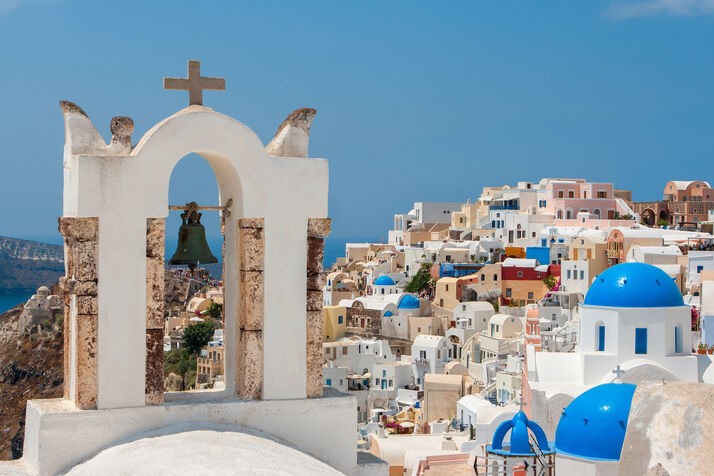
Vibrant pink flowers add beauty to Santorini's traditional Cycladic houses

When Does the Fourth Night Become Worth the Cost?

Santorini's accommodation rates can make this an important financial decision.

A fourth night is particularly defensible when your hotel itself is a major experience, a substantial sailing or wine activity is non-negotiable, you want a genuine unscheduled period, or arrival/departure timing significantly reduces one of the calendar days.

It becomes less compelling when the fourth day merely repeats sightseeing already completed and another Greece destination is being compressed to make room for it.

This is where price and duration interact.

An expensive extra night should create something beyond another night's sleep.

If it creates a slow caldera morning, schedule flexibility and time to use the accommodation, the value can be real.

If it simply delays the next ferry, reconsider.

When Should You Reduce Santorini to Two Nights?

Two nights becomes more sensible when Santorini is one element of a long multi-destination journey, the traveler has narrow priorities, accommodation is mainly practical rather than experiential, and another island already provides the relaxing part of the holiday.

It can also be reasonable for repeat visitors who already understand the island and are returning for one particular experience.

The important condition is expectation management.

Two nights should feel intentionally concise, not accidentally rushed.

Once travelers accept that they will not experience every major option, the shorter stay can be excellent.

The problems begin when a two-night booking is followed by a four-night wish list.

So, How Long Should You Stay in Santorini?

For most first-time travelers visiting several parts of Greece, three nights remains the strongest general starting point because it provides enough time to appreciate the caldera without giving Santorini an excessive share of a shorter itinerary.

Choose two nights when your priorities are focused, travel timing is favorable and Santorini is intended as a concentrated scenic stop.

Choose four nights when the hotel, sailing, wine, archaeology or deliberately slower pace are meaningful parts of the experience.

Consider five nights or longer when Santorini itself is one of the central holiday destinations and you enjoy spending meaningful time at the property rather than continuously searching for another activity.

For tailor-made Santorini travel with private services, the strongest itinerary is rarely the one that fills every hour. It is the one that allows the caldera, hotel and selected experiences to coexist without competing for attention.

Santorini does not generally need more time because there is too much to see.

It needs more time when the traveler wants enough space to actually enjoy what they came for.

Frequently Asked Questions About How Long to Stay in Santorini

1. Is two nights enough if I only want to see the caldera and Oia?

Yes, particularly when arrival and departure times are favorable. Two nights can provide a convincing scenic introduction, but the stay becomes much less flexible if you also add sailing, wineries, archaeology or substantial hotel time.

2. Does booking an expensive caldera suite mean I should stay longer?

Not automatically, but premium accommodation deserves enough usable time to justify its cost. If your schedule keeps you away from the property throughout most of the stay, adding a night or reducing excursions may create more value than another room upgrade.

3. Should I add a fourth night if sailing is important to me?

Often, yes, particularly when you also want slow caldera time and village exploration. A substantial sailing experience uses enough of the day that four nights can prevent the rest of Santorini from being compressed around one excursion.

4. Is three nights enough if I want both wine tasting and Akrotiri?

It can be, but the remaining periods need to be protected carefully, especially if caldera villages and hotel time also matter. Travelers wanting all of these experiences at a relaxed pace may find four nights considerably more comfortable.

5. Does staying in Oia change the number of nights I need?

It can change how you use the nights rather than automatically increasing them. Staying in Oia allows repeated access during quieter periods, which may reduce the need for a dedicated sightseeing excursion but encourages more time spent simply enjoying the village environment.

6. Should I spend more nights in Santorini if I do not plan to rent a car?

Not necessarily. Private transfers, organized experiences and strategic accommodation can make short stays work very well. Duration should reflect the experiences you want rather than whether you personally drive between them.

7. Is a five-night Santorini honeymoon excessive?

Not for couples who value their hotel, privacy, sailing, dining and slow mornings. Five nights becomes excessive only when both travelers prefer continuous exploration and would receive more value from adding another destination to the overall Greece journey.

8. How should a late ferry arrival affect my Santorini stay length?

Treat a late arrival as very limited usable island time rather than counting it as a normal first day. If a short three-night stay also has an early departure, adding another night can dramatically improve the amount of flexible Santorini time.

9. Should families stay longer than couples in Santorini?

Not automatically. Families may benefit from slower pacing, but some also prefer shorter Santorini stays before moving to a beach-oriented destination with simpler daily logistics. The correct duration depends heavily on children's ages and the chosen accommodation environment.

10. Can I make Santorini shorter if Crete is next?

Yes. Crete can provide longer road exploration, beaches and a broader regional experience, allowing Santorini to concentrate on the caldera and one or two distinctive activities rather than trying to perform every role within the same Greece trip.

11. What makes a four-night Santorini stay poor value?

It becomes poor value when the extra night does not create additional flexibility, hotel enjoyment or an experience you genuinely care about. Extending simply because Santorini is famous can unnecessarily remove time from destinations that better match your priorities.

12. What should I count before deciding my final Santorini duration?

Count usable arrival time, full days, excursion commitments, hotel time you genuinely want and the practical departure period. This reveals far more than simply counting nights and prevents a seemingly generous booking from turning into a surprisingly compressed stay.

Kenan Ungur
Author

A travel professional specializing in tailor-made travel planning, guest experience management, and multi-destination tourism operations.

With over 23 years of experience in the travel industry, he designs and manages private and cultural tours for international travelers across Türkiye, Greece, Egypt, Jordan, Morocco, and other destinations.

He has strong expertise in both online and face-to-face guest communication, sales processes, and end-to-end travel operations.

Working closely with hotels, travel agencies, and local partners, he ensures smooth coordination and high-quality travel experiences at every stage of the journey.

His focus is on delivering personalized, reliable, and seamless travel experiences for international guests worldwide.


Join The Newsletter

To receive our best monthly deals

Magnificent Travel Logo

Magnificent Travel
Usually responds the same day

Magnificent Travel
Welcome to the Magnificent Travel

How may i help you?
Today
+905324935198
X