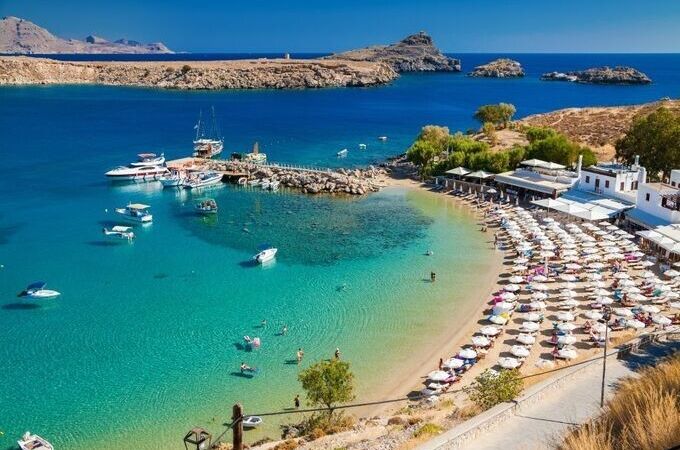
How to Plan a Turkey and Greece Trip That Actually Flows
- Home
- Blog- Turkey, Greece & Egypt Travel Guides
- Greece
- How to Plan a Turkey and Greece Trip That Actually Flows
How to Plan a Turkey and Greece Trip That Actually Flows
Updated: August 2026
The hardest part of combining Turkey and Greece is rarely deciding what you want to see. Istanbul, Cappadocia, Ephesus, Athens and the Greek islands create an appealing list almost by themselves. The difficulty begins when those places have to become one journey rather than five independent reservations.
A good Turkey and Greece trip should feel as though the route keeps moving forward. You arrive through a gateway that makes sense, travel through Turkey without repeatedly returning to Istanbul, cross into Greece from a sensible point, and arrange Athens and the islands so that your final days naturally lead toward the airport used for the journey home.
That sounds obvious, yet it is surprisingly easy to build the opposite. A cheap flight can create backtracking, a Greek island added in the wrong order can require another night in Athens, and a connection that looks efficient on a map may depend on seasonal transportation that does not operate on the required date.
The most useful planning principle is therefore simple:
Plan Turkey and Greece as one continuous route, not as two separate holidays joined in the middle.
Once that principle guides the itinerary, questions about destination order, number of nights and transportation become considerably easier to answer.
Begin With the Two International Flights, Not the Daily Itinerary
Many travelers begin planning by deciding what to do each day, leaving international flights until later. For a multi-country journey, reversing that order often produces a better result.
First establish the realistic international gateways.
Istanbul is the natural entry point for many Turkey-focused journeys because of its extensive international air connections, while Athens plays a similar role in Greece. Depending on origin and season, however, a Greek island or another airport may create a useful alternative at the beginning or end of the trip.
This is where open-jaw flights deserve serious consideration.
Instead of automatically purchasing:
Home → Istanbul → Home from Istanbul
or:
Home → Athens → Home from Athens
compare an itinerary such as:
Home → Istanbul
Athens → Home
The international ticket may initially appear more expensive, but the comparison should include what a conventional return flight forces you to do before departure. If returning to the original country requires another regional flight, airport transfer and perhaps an additional hotel night, the apparently cheaper ticket may no longer represent the cheaper journey.
In a two-country itinerary, airfare should be judged by the route it creates, not only by the fare shown on the booking screen.
Turkey Usually Works Better as a Directional Route
Turkey is large enough that treating Istanbul as a base for every destination creates unnecessary movement.
A classic first journey may include Istanbul, Cappadocia and the Ephesus region. Those places form a much stronger route when arranged according to transportation possibilities rather than repeatedly returning to Istanbul.
For example, after Istanbul, travelers can continue toward Cappadocia and then move toward western Turkey using available domestic connections. If Ephesus is included, the Kusadasi or Izmir area can become the final Turkish stage before Greece.
The exact sequence depends on operating schedules, dates and the destinations included, but the planning principle remains consistent:
Every domestic sector should position you for what comes next.
This becomes particularly important when the final Turkish destination determines whether Greece is best reached by air or whether a seasonal Aegean ferry connection is relevant.
A Turkey route should therefore not be considered complete until the transition into Greece has also been tested.
Cappadocia Is Usually the Destination That Changes the Transport Mathematics
Cappadocia is inland, which makes it fundamentally different from Istanbul or Turkey's Aegean coast when designing a Turkey–Greece journey.
Travelers sometimes imagine a straightforward sequence such as Istanbul → Cappadocia → Greek islands because those are the three experiences they most want. Geographically, however, Cappadocia does not naturally function as a stepping stone into the Aegean.
This does not make the combination difficult; it simply means Cappadocia needs to be positioned intelligently.
Domestic aviation can preserve enormous amounts of time compared with trying to make every stage an overland journey, particularly when the total trip is limited to around two weeks. Depending on schedules, connecting Cappadocia with western Turkey before entering Greece can also make sense when Ephesus belongs in the itinerary.
What should be avoided is assuming that every desired domestic air connection operates conveniently every day or throughout the year.
The route needs to be built around actual connectivity, not merely the existence of airports.
Ephesus Can Change Where Turkey Should End
Ephesus is often treated as another sightseeing addition, but within a Turkey and Greece itinerary it has strategic value because of its western location.
Travelers visiting Ephesus generally stay in or pass through the Izmir/Kusadasi region, placing them considerably closer to the Aegean transition than somebody finishing Turkey in Cappadocia.
That can influence how Greece should be entered.
Depending on the itinerary and season, flying toward Athens may remain the cleanest solution. In other combinations, a Turkish coastal gateway and a nearby Greek island can create an attractive sea transition.
The important point is not that one method is universally better.
It is that the last meaningful destination in Turkey should influence the first meaningful destination in Greece.
This is exactly where a combined-country itinerary begins behaving differently from two independently planned vacations.
Do Not Choose the Turkey–Greece Crossing Until Both Sides Are Known
There is no single “best” way to travel from Turkey to Greece because the answer changes according to where you finish Turkey and where you intend to begin Greece.
An Istanbul-to-Athens transition and an Aegean-coast-to-Greek-island transition solve completely different route problems.
This article deliberately does not reproduce a detailed transportation guide because that belongs to the separate Turkey-to-Greece crossing cluster. What matters at the planning stage is understanding when each category becomes relevant.
| Your Transition Situation | Planning Logic |
|---|---|
| Finish in Istanbul, begin in Athens | Air usually creates the most natural international bridge |
| Finish inland, begin in Greece | Positioning within Turkey becomes part of the calculation |
| Finish on Turkey's Aegean coast | Seasonal sea connections may deserve comparison |
| Begin Greece with Cycladic islands | Athens may still be useful, but avoid assuming it must be the first Greek overnight |
| Begin Greece with Athens sightseeing | A direct transition into Athens simplifies the route |
| Transportation date is fixed | Verify the international connection before locking surrounding hotels |
This is a route-decision table rather than a timetable because schedules change. The planning method remains useful even when individual services do not.
Athens Should Have a Job in the Journey
Athens is sometimes inserted automatically because travelers assume every Greece vacation must begin there.
For many trips, it should. The Acropolis, Acropolis Museum and wider ancient city make Athens a major destination in its own right, and international connections often make the capital operationally convenient.
However, its position should still be deliberate.
If you enter Greece through Athens and want to explore the city, spending two or three nights there before continuing can create a natural transition between the countries. If you arrive only to transfer immediately toward an island and then return several days later for sightseeing, ask whether that double movement is genuinely necessary.
Athens can function as:
a destination,
an international gateway,
a domestic transportation hub,
or sometimes all three.
Problems appear when it becomes an accidental overnight stop every time the itinerary changes direction.
Greek Islands Should Be Chosen as a Transport Chain, Not a Collection
Once travelers reach the Greece portion, the temptation to add islands grows quickly.
Santorini, Mykonos, Naxos, Paros, Crete and Rhodes may all appeal for different reasons, but a combined Turkey and Greece journey has less room for inefficient island hopping than a Greece-only vacation.
The Turkey portion has already required several transportation sectors. Greece should not become another succession of two-night stays separated by packing and port transfers.
Instead, select islands that work together operationally and provide enough contrast to justify the movement between them.
A route such as Athens plus two islands can often create more usable holiday time than Athens plus four islands squeezed into the same period.
For travelers considering carefully planned Turkey and Greek Islands tours, the most important question is not how many destinations fit on paper, but how many transitions the available number of days can comfortably absorb.
Eight, Twelve and Eighteen Days Are Different Planning Problems
The number of days does not simply determine how many destinations can be added. It changes what kind of Turkey and Greece trip should be attempted.
With approximately 8–10 days, combining the countries requires discipline. Istanbul and Athens can form a sensible core, perhaps with one carefully chosen additional region depending on flight schedules and traveler priorities. Trying to include Istanbul, Cappadocia, Ephesus, Athens, Mykonos and Santorini usually turns the journey into transportation with sightseeing attached.
Around 11–14 days, the combination becomes substantially more flexible. Major highlights in Turkey can be connected with Athens and a limited island component, provided the route avoids repeated returns to the same gateway.
At 15–18 days, the additional time is best used to improve depth and pace rather than simply adding destinations. Longer stays in Cappadocia, Athens or the islands can make the journey feel more complete while reducing the percentage of the vacation consumed by transfers.
The goal should never be to discover the maximum number of pins a calendar can physically contain.
Count Hotel Changes Before You Count Attractions
A useful test for any proposed route is to count how many times you will pack your suitcase.
A journey containing Istanbul, Cappadocia, Kusadasi, Athens, Mykonos and Santorini means six hotel bases before any additional overnight required by flight schedules.
That may be perfectly reasonable across a longer trip, but it becomes demanding when compressed.
Hotel changes create hidden time costs: packing, checkout, transfer, airport or port waiting, transportation, another transfer, check-in and the period required to settle into a new location.
None of those activities appears as an attraction, yet collectively they can consume a substantial part of the vacation.
When the itinerary begins feeling rushed, removing one destination is often more effective than shaving hours from every sightseeing day.
Ferries Should Influence the Route Before Hotels Become Non-Refundable
Greek ferry travel can be one of the enjoyable parts of the journey, but it should not be treated as an unlimited network operating identically every day and throughout the year.
Routes and frequencies can be seasonal, and not every pair of islands connects directly on every required date.
This is particularly important when planning far in advance. A route that worked during one summer should not automatically be assumed to operate on precisely the same pattern the following year.
Build a provisional island sequence, test its transportation logic, and avoid making the entire trip dependent on an unverified future service.
The same principle applies to seasonal sea connections between Turkey and Greece.
A map shows what is geographically close.
A schedule determines what is operationally useful.
Give the International Crossing Enough Breathing Room
A two-country trip contains more dependencies than a single-destination holiday, so excessively tight connections deserve extra scrutiny.
If a domestic Turkish flight is delayed and the next sector is an independently booked international flight, the consequences may extend beyond one missed ticket. A hotel transfer, ferry connection or prepaid accommodation in Greece may also be affected.
This does not mean every transition needs a wasted buffer day.
It means the risk should be proportional to what depends on the connection.
A one-hour saving is rarely valuable when several subsequent reservations rely on everything operating perfectly.
Travelers choosing private Turkey and Greece journeys with coordinated logistics often benefit most from coordination at precisely these transition points, where individual reservations need to function as one system rather than separate purchases.
Decide Where the Trip Should Slow Down
A well-designed multi-country itinerary needs at least one place where movement decreases.
For some travelers, that might be three nights in Cappadocia after energetic Istanbul sightseeing. For others, the slower stage begins after reaching a Greek island, where the schedule can shift from guided visits and airports toward beaches and unstructured evenings.
This rhythm matters because Turkey and Greece offer enormous cultural density. Istanbul, Ephesus, Athens and major archaeological sites can create several consecutive days of concentrated sightseeing if arranged without contrast.
Placing a slower destination after a more intensive section changes how the journey feels without adding a single day.
Good itinerary design therefore considers energy geography alongside physical geography.
The route should move efficiently, but the traveler should not feel as though they are constantly moving.
Put the Most Fragile Transport Decisions in Place First
Not every reservation deserves equal planning priority.
International flights are difficult to change once issued. Some domestic air sectors have limited convenient alternatives. Seasonal ferries may determine whether a particular island sequence works. Hotels, by comparison, often offer several alternatives within the same destination.
That suggests a practical planning order:
First establish international gateways and dates. Then test the critical Turkey–Greece transition, domestic flights and essential Greek ferry sectors. Only after the route survives those checks should accommodation selection become the main focus.
This avoids the frustrating situation where six attractive hotels are booked and the traveler later discovers that connecting them requires an unreasonable transportation day.
The architecture comes first.
The decoration comes afterward.
Your Final Greek Destination Should Be Chosen With the Flight Home in Mind
Travelers naturally focus on arrival because it represents the beginning of the holiday, yet the final 48 hours deserve equal attention.
If the international flight departs from Athens, finishing on an island with a same-day connection may introduce weather, ferry or flight dependencies that some travelers would rather avoid. Returning to Athens earlier can provide greater security and also create time for sightseeing if the capital has not already been fully explored.
Alternatively, an open-jaw international ticket may allow departure from another suitable gateway, eliminating the return to Athens altogether.
There is no universal rule requiring a final night in Athens.
The relevant question is:
How many independent transportation events stand between my final hotel and my international flight home?
As that number increases, so does the value of a more conservative departure strategy.
Build the Journey Backward Once Before You Confirm It
After constructing the itinerary from arrival to departure, perform one unusual exercise: read it backward.
Start with the flight home.
How do you reach that airport? Where were you the night before? How did you reach that destination? Which ferry or flight brought you there? What happens if one connection moves by several hours?
Continue backward until Istanbul.
This often reveals problems that are difficult to notice when planning chronologically because forward planning encourages excitement about the next destination, whereas backward planning exposes dependency.
A route that works convincingly in both directions is usually much stronger.

The Best Combined Trip Does Not Give Turkey and Greece Equal Time
Travelers sometimes feel that a two-country vacation should be divided mathematically: seven nights Turkey, seven nights Greece.
There is no reason for that symmetry.
If Istanbul, Cappadocia and Ephesus are priorities while Greece is primarily Athens and Santorini, Turkey may reasonably receive more nights. Another traveler interested in Athens and several islands may reverse the balance.
Allocate time according to what you are actually doing, not according to the number of countries.
This is also where custom Turkey and Greece vacations built around your pace differ from fixed destination collecting. The trip should expand around the places that matter rather than forcing each country into an equal share of the calendar.
A Turkey and Greece Trip Should Become Simpler as You Plan It
The first draft will usually contain too much.
That is normal.
The useful planning process is one of subtraction and alignment: remove the destination that requires disproportionate effort, change the order that creates backtracking, move Athens to the side of the island journey where it performs a useful role, and reconsider any connection whose success depends on an unrealistic transfer.
Eventually the route should become easier to explain.
Perhaps it is Istanbul → Cappadocia → western Turkey → Greece.
Perhaps Istanbul → Cappadocia → Athens → islands works better.
Another trip may require an entirely different sequence because the traveler is arriving from elsewhere or departing from a Greek island.
The specific route is less important than the logic behind it.
A successful Turkey and Greece journey does not feel impressive because it contains the longest destination list. It feels successful because each place seems to lead naturally toward the next, while enough time remains between those movements to remember the countries rather than merely their airports, ferry terminals and hotel receptions.
That is the real objective of planning the two countries together.
Frequently Asked Questions About Planning Turkey and Greece Together
1. Should I visit Turkey or Greece first?
Either direction can work, although international flight availability and your first and final destinations should guide the decision. Many travelers find Istanbul a practical starting gateway, but there is no planning advantage in forcing Turkey first when the wider flight route favors Greece.
2. Is 10 days enough for Turkey and Greece?
Ten days can work if the destination list remains disciplined. Istanbul and Athens form a manageable foundation, while adding several Turkish regions and multiple Greek islands usually creates excessive movement. Shorter combined trips benefit more from selective highlights than ambitious country coverage.
3. How many days are comfortable for Turkey and Greece together?
Around 12–14 days provides considerably more flexibility for combining major highlights without turning every few days into a transfer. Travelers wanting Istanbul, Cappadocia, western Turkey, Athens and more than one Greek island generally benefit from additional time.
4. Should I book Turkey and Greece as two separate return flights?
Usually it is worth comparing an open-jaw international ticket before doing so. Arriving through one country and departing from the other can eliminate unnecessary regional backtracking, although the complete airfare and positioning costs should be compared before making the decision.
5. Does Cappadocia connect easily with Greece?
Cappadocia is inland, so it should not be treated as a natural geographical gateway into Greece. Its position within the itinerary needs to consider domestic flight schedules and whether another Turkish destination, such as western Turkey, follows before the international transition.
6. Should I include Ephesus before traveling to Greece?
Ephesus can fit particularly well when western Turkey already belongs in the journey because the Izmir/Kusadasi region changes the geography of the transition toward Greece. Whether it improves your specific route depends on available time and the next Greek destination.
7. How many Greek islands should I add to a two-country trip?
For many two-week journeys, one or two islands provide a better balance than trying to collect several. Each island adds ferry or flight logistics, transfers and another hotel change, so the destination should contribute enough experience to justify that additional movement.
8. Is flying always better than taking a ferry between Turkey and Greece?
No. Flights often work naturally between major cities, while seasonal ferries can create efficient transitions from parts of Turkey's Aegean coast to nearby Greek islands. The correct choice depends on the actual end point in Turkey and starting point in Greece.
9. Should Athens come before or after the Greek islands?
Both structures can work. Athens should be placed where it reduces unnecessary movement and fits the international gateway. Travelers flying home from Athens may appreciate finishing there, while others prefer Athens first as a cultural transition before a slower island stay.
10. How can I avoid spending too much of the trip in airports and ports?
Reduce unnecessary destination changes, use domestic flights selectively across longer Turkish distances and choose Greek islands that connect logically. Most importantly, evaluate the complete transfer day rather than judging each individual flight or ferry by its travel time alone.
11. When should I book the Greek ferries for a combined trip?
Confirm the route logic before making surrounding arrangements dependent on specific ferry services, particularly when planning well ahead. Seasonal schedules and frequencies can vary, so accommodation decisions should retain reasonable flexibility until critical transportation sectors are sufficiently clear.
12. What is the biggest mistake when planning Turkey and Greece together?
Planning each country independently and trying to connect them afterward usually creates the most unnecessary movement. Decide the international gateways, final Turkish destination and first Greek destination early so that both countries become parts of one continuous journey rather than separate itineraries.
A travel professional specializing in tailor-made travel planning, guest experience management, and multi-destination tourism operations.
With over 23 years of experience in the travel industry, he designs and manages private and cultural tours for international travelers across Türkiye, Greece, Egypt, Jordan, Morocco, and other destinations.
He has strong expertise in both online and face-to-face guest communication, sales processes, and end-to-end travel operations.
Working closely with hotels, travel agencies, and local partners, he ensures smooth coordination and high-quality travel experiences at every stage of the journey.
His focus is on delivering personalized, reliable, and seamless travel experiences for international guests worldwide.
Turkey Tours
Visit some of the most famous and historical areas that Turkey has to offer to its visitors on one of our Turkey Travel Packages and Turkey Tours.
Greece Tours
Immerse yourself in Greece & discover the best that Greece has to offer. Browse our wide range of Greece tours online today.
Egypt Tours
Egypt Tours specializes in providing the most pleasing Egypt tours & vacations, Egypt Nile River cruises, Egypt day tours & excursions, Egypt shore excursions.
Jordan Tours
Book a group tour to Jordan with Magnificent Travel. Visit the ancient city of Petra, trek the Wadi Rum valley or cycle down Mount Ma'in to the shores of the Dead Sea.
Israel Tours
Our premium guided tours to Israel visit Tel Aviv, Sea of Galilee, Golan Heights, Jordan Valley, Dead Sea, Holy City of Jerusalem, Temple Mount & more
Morocco Tours
Book your Morocco tour package and explore the centuries-old history of Casablanca, historic souks and palaces in Marrakesh, Fez and Rabat.
Turkey and Greece Tours
Explore top-rated tours to Turkey and Greece, featuring over 100 reviews. Discover destinations such as Athens, and Istanbul, and the stunning destinations
Turkey, Greece & Egypt Tours
Discover the best of Turkey, Greece, and Egypt with immersive tours combining iconic landmarks, rich history, and vibrant cultures.
Turkey And Egypt Tours
Experience the timeless wonders of Turkey and Egypt with guided tours showcasing ancient history, cultural treasures, and breathtaking landscapes.
Turkey And Jordan
Explore Turkey and Jordan tours for a captivating journey through ancient history, vibrant cultures, and breathtaking landscapes.
Greece And Egypt Tours
Discover the wonders of Greece and Egypt tours, blending ancient civilizations, iconic landmarks, and unforgettable cultural experiences.
Egypt, Jordan & Israel Tours
Experience Egypt, Jordan, and Israel tours, exploring ancient wonders, sacred sites, and rich cultural heritage in one unforgettable journey.
Greece And Jordan Tours
Discover the magic of Greece and Jordan tours, combining ancient history, stunning landscapes, and vibrant cultural experiences.