Mykonos Weather in July: Beaches, Heat and Meltemi
Author: Kenan Ungur
Article Date: 12.09.2024
Reading Time: 20 min

Mykonos Weather in July: Beaches, Heat and Meltemi
Last Updated: August 2026

A July forecast for Mykonos can look perfect until you open the wind details.

Sunshine. Around 28°C. Almost no chance of rain.

Then you reach the beach and discover that the Aegean has its own opinion about what “perfect” means.

The Meltemi, the seasonal northerly wind that affects the Aegean during summer, becomes an important part of Mykonos travel planning in July. It does not blow at exactly the same strength every day, nor does it make the island unsuitable for a beach holiday. In fact, on hot afternoons, a moderate breeze can be one of the reasons Mykonos feels more comfortable than the thermometer suggests.

The complication appears when the wind strengthens.

A beach that worked beautifully yesterday may feel far less comfortable today. Swimming conditions can change, boat excursions may become less appealing or be affected operationally, and the difference between a more sheltered bay and an exposed coastline suddenly matters.

This is why July should not be described simply as “hot, sunny and dry.”

Those things are generally true.

The more useful skill is learning to choose the right part of Mykonos for the conditions you actually have.

Stop Asking Whether Mykonos Is Windy

The answer is too general to help.

Ask instead:

How windy will it be today, from which direction, and what does that mean for the beach I want to visit?

Mykonos has a reputation for wind because of its exposed Cycladic position, while the Meltemi commonly influences conditions during the summer. July sits firmly within the period when it deserves attention.

Typical daytime temperatures often reach around 27–30°C, with warmer periods possible. Nights commonly remain around 21–24°C, and rainfall is generally scarce.

The wind modifies those temperatures considerably.

A breezy 29°C afternoon may feel wonderfully comfortable.

The same temperature with very little wind can feel substantially hotter.

Strong wind creates a different problem altogether: the air temperature remains pleasant, but the beach experience becomes less relaxed.

July Weather Is a Combination, Not a Number

Temperature Wind What It Can Feel Like
27°C Light Warm and comfortable
29°C Moderate Excellent summer beach weather
30°C Fresh breeze Hot but surprisingly manageable
28°C Strong Comfortable temperature, difficult beach conditions
31°C+ Light Heat becomes more noticeable
29°C Strong at exposed coast Beach choice matters considerably

This is why temperature-only weather apps tell an incomplete July story.

The Southern Coast Has a Practical Advantage

Many of Mykonos's best-known beaches are concentrated along the southern side of the island.

That is not merely convenient tourism geography.

When northerly winds affect the island, surrounding terrain and coastal orientation can give parts of the south more protection than exposed northern locations.

This does not mean every southern beach is always calm.

Local conditions depend on wind direction, strength, topography and the exact bay. A strong Meltemi can still be felt across Mykonos.

The useful principle is that beach selection should respond to the day rather than a ranking you saved months earlier.

Ornos, Psarou, Platis Gialos and other southern areas become obvious candidates to investigate when northerly winds strengthen.

Ask locally before setting out.

People working on the island know which areas are behaving well that morning.

A Famous Beach Can Be the Wrong Beach Today

This is one of July's most useful lessons.

Imagine you have been planning to visit a particular beach for months. It appears on every Mykonos list, you have seen hundreds of photographs and you have already decided that Wednesday belongs there.

Wednesday arrives with strong wind.

There are two options.

Go anyway because the itinerary says so.

Or change beaches.

The second is often the better holiday.

A private Mykonos beach tour becomes particularly useful in July when it allows the route to respond to actual conditions rather than locking the day around one predetermined coastal location.

The best beach on a windy Tuesday is not necessarily the beach that receives the highest number of Instagram mentions.

It is the one where you actually want to stay.

The Meltemi Is Not Bad Weather

This deserves emphasis because wind forecasts can make travelers unnecessarily nervous.

The Meltemi is part of the normal summer climate of the Aegean.

Moderate wind can be extremely welcome. It reduces the sensation of heat, keeps air moving and can make an otherwise hot afternoon feel comfortable.

Mykonos without any breeze during a hot July spell can feel considerably heavier than visitors expect.

Problems arise primarily when wind strength reaches a level that affects comfort, sea conditions or planned activities.

So do not spend the entire holiday hoping for zero wind.

Hope for manageable wind.

There is a difference.

Beach Orientation Matters More Than Beach Reputation

During calmer conditions, choose beaches according to atmosphere.

During stronger Meltemi conditions, geography deserves a vote.

How to Think About July Beaches

What You Want What to Consider
Calm swimming Look for more protected conditions
Beach club atmosphere Venue + wind conditions
Long sunbed afternoon Shelter becomes important
Photography Exposed coast may look dramatic
Family swimming Calm water matters more than fame
Watersports Wind may be an advantage depending on activity
Quiet coastline Explore beyond headline beaches when practical

This is not a fixed ranking of individual beaches because that would quickly become misleading.

Wind direction changes.

Conditions change.

The correct beach list for July should be written each morning.

Ornos Can Be Useful for More Than Convenience

Ornos is popular partly because of its accessibility and substantial visitor infrastructure.

Its bay setting also makes it a useful beach to consider when comparing conditions across the island, although no location should be described as permanently protected from every wind.

Restaurants and services allow the beach to function as more than a swimming stop, which becomes useful when conditions fluctuate during the afternoon.

You can arrive, see how the water feels and decide whether the day deserves several hours there.

That sounds obvious.

In July, it is better than committing to an exposed beach before seeing what the wind is actually doing.

Psarou and Platis Gialos Offer Another Kind of Flexibility

The southern beach corridor gives visitors several options relatively close to one another.

That matters when conditions are variable.

Rather than crossing the entire island each time the wind disappoints you, it may be possible to compare nearby areas and choose according to comfort, atmosphere and available facilities.

Platis Gialos also provides useful access to surrounding coastal areas and transport connections during the main season.

A southern Mykonos beaches experience can therefore make more sense than building a July day around one isolated beach selected before arrival.

The goal is not to visit more places.

It is to have alternatives.

Northern Mykonos Shouldn't Be Written Off

If this article stopped here, it would create another misleading rule:

“July is windy, so always stay south.”

That is too simplistic.

Calmer days occur, wind strength changes, and Mykonos's northern and more exposed landscapes provide a very different view of the island.

This is where places such as Panormos and the broader northern coastline can become rewarding, particularly when conditions cooperate.

The difference is that July visitors should approach these areas with awareness.

Check the day's conditions first.

On a calm morning, go.

During a strong northerly wind, there may be better uses of your beach time.

Flexibility is not avoidance.

The Beach Can Feel Cooler Than Chora at the Same Temperature

This is one of the Meltemi's great advantages.

Spend an afternoon beside the water with a steady breeze and 29°C may feel almost effortless.

Return to Chora, enter a protected lane where air movement decreases, and the same general temperature can suddenly feel considerably warmer.

This is the reverse of winter Mykonos, when shelter often improves comfort.

July creates a different relationship.

Sometimes you want the wind.

This distinction is precisely what prevents the February and July articles from competing. February wind determines whether exposed sightseeing remains comfortable.

July wind can be both natural air conditioning and the reason you change beaches.

What About Boat Trips?

This is where wind stops being merely a comfort question.

Boat excursions are popular during July, whether travelers are interested in Delos, swimming cruises or private sailing experiences.

Actual sea conditions matter.

A sunny sky does not automatically mean a comfortable day on the water, and stronger winds may alter, delay or occasionally cancel individual operations depending on conditions and vessel requirements.

Always follow the operator's assessment.

Do not attempt to judge marine safety simply because the beach beside your hotel appears manageable.

Boat Day Decision Guide

Morning Conditions Sensible Approach
Light wind, calm sea Excellent boat-day potential
Moderate breeze Check operator guidance
Stronger wind Confirm before leaving hotel
Rough conditions Expect possible changes
Calm but very hot Prioritize shade and hydration
Wind forecast increasing later Ask about timing and route

The objective is not to predict whether a boat will operate.

That decision belongs to the professionals running it.

Your job is simply not to treat the excursion as guaranteed regardless of conditions.

July Heat Is Easier to Underestimate Than You Think

The Meltemi creates another problem.

It can hide heat.

A steady breeze makes the body feel cooler, particularly beside the sea, while solar exposure remains intense. Travelers can therefore spend hours outdoors without noticing how much sun they are receiving.

This is when sunburn happens.

Use high-SPF sunscreen, reapply after swimming, wear a hat when appropriate and drink water consistently.

Shade still matters even when you feel comfortable.

The breeze is changing your perception of heat.

It is not turning off the sun.

Don't Schedule the Whole Week Around One Beach Club

July is busy.

Popular venues can require reservations, particularly for specific events, tables or premium beach setups.

If one beach club is a major reason for traveling, book it.

The mistake is making every beach day equally rigid.

Leave at least some coastal time flexible enough to respond to wind. Otherwise you may find yourself sitting somewhere uncomfortable simply because a reservation made three months earlier has more authority than today's conditions.

A better July itinerary combines selected reservations with unreserved beach flexibility.

That gives you both certainty and common sense.

Windy Doesn't Mean Cold After Sunset

July evenings remain warm.

Typical nighttime temperatures around the low 20s Celsius mean outdoor dining is generally comfortable, and the island's evening life is fully established.

A strong breeze can still make exposed waterfront seating feel fresher, but heavy layers are rarely necessary under normal summer conditions.

The more important packing item is a light layer that handles wind without adding substantial warmth.

This is particularly useful on boats, exposed terraces or late-night transport.

You are packing against moving air.

Not winter.

July vs August Isn't Primarily a Weather Decision

Both months provide hot, dry summer conditions, warm sea temperatures and the possibility of Meltemi winds.

The more meaningful distinction lies elsewhere.

July August
Peak summer Absolute social peak
Strong beach focus Beach + nightlife intensity
Meltemi decisions important Reservations/crowds become central
Very busy Often exceptionally busy
High prices Maximum seasonal pressure
Beach geography matters Social planning matters more

August's blog will therefore move away from detailed wind geography and focus on what happens when weather, crowds, nightlife, reservations and peak demand all collide.

July owns the beach decision.

You Don't Need to Beat the Wind

Visitors sometimes talk about Mykonos weather as though successful travel requires defeating it.

Find the beach where the wind cannot reach.

Book the boat before the Meltemi arrives.

Choose the perfectly protected hotel.

That mindset misses the point.

The wind is part of Mykonos summer.

On many July days, it is exactly what makes the heat comfortable enough to spend hours outside. You notice it while walking along the coast, sitting beside the water and crossing open sections of the island.

Sometimes it becomes too strong for the plan you had.

Change the plan.

The island contains enough beaches, bays, villages and town life that a windy afternoon does not need to become a lost afternoon.

July Mykonos works best once you stop asking for perfect stillness and start paying attention to where the island itself offers protection.

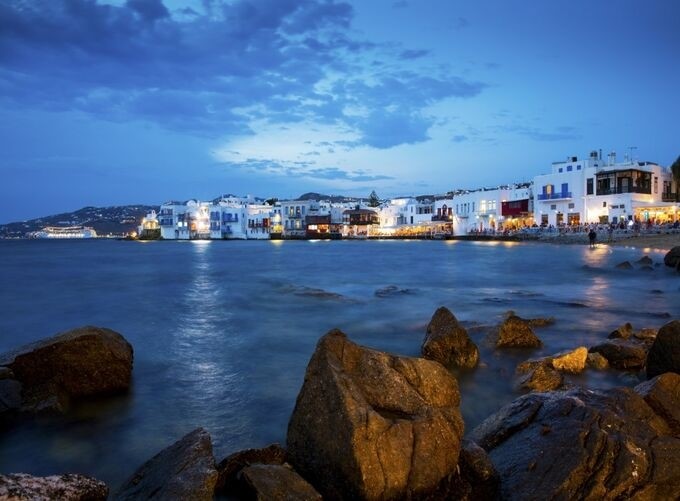
Evening in Mykonos with glowing lights and peaceful waterfront views

Let the Wind Decide the Shape of the Day, Not Whether You Have One

A windy forecast does not automatically cancel a July beach day.

The useful distinction is between a breeze that improves summer comfort and stronger conditions that begin changing what is enjoyable or practical.

You do not need specialist meteorological knowledge to make that distinction. Look at the current forecast, ask locally and pay attention to actual conditions rather than the small weather icon you checked three days earlier.

A Practical July Meltemi Decision Matrix

Conditions Beach Boat Trip Chora / Inland
Light wind Excellent Excellent potential Good
Moderate wind Usually very good Confirm conditions Good
Fresh northerly wind Favor sheltered areas Check operator Very good
Strong wind Choose beach carefully Changes possible Excellent alternative
Very strong / rough sea Beach comfort limited Follow operator advice Make this the main plan
Hot with little wind Excellent, but hotter Good with sun protection Explore earlier/later

This is intentionally not a rigid Beaufort-scale travel chart.

Professional operators determine whether marine activities can proceed safely. Travelers only need enough information to avoid treating every July day as though the coast behaves identically.

Your Hotel Location Can Make Windy Days Easier

Accommodation decisions in July are often dominated by price, nightlife access and whether the hotel has a sea view.

Beach flexibility deserves consideration too.

Staying in or close to Chora gives you excellent access to restaurants and nightlife, but reaching the beach still requires transport. Staying near a southern beach can make spontaneous swimming much easier and reduce daily movement.

Neither is automatically better.

A beach-based hotel works particularly well if swimming and relaxation dominate the trip. Chora suits travelers who expect to spend evenings in town and want broader dining options close by.

The most inconvenient choice can be a remote property selected solely for photographs when every activity you actually want requires transportation.

A spectacular view is useful.

A practical location is useful several times every day.

Don't Confuse a Windy Beach With a Windy Island

This is where local knowledge earns its value.

You arrive somewhere and conditions feel uncomfortable. Sand is moving, the sea is choppier than expected and sitting on the beach has stopped being relaxing.

The natural conclusion is: “Mykonos is too windy today.”

Maybe.

Or perhaps this part of Mykonos is too windy for what you want to do.

Before abandoning the coast entirely, check conditions elsewhere. A differently oriented bay with greater protection may provide a considerably better experience.

This does not guarantee that another beach will be calm during a strong island-wide wind event.

It simply prevents one location from becoming your weather station for the whole island.

Families Should Choose Conditions Before Reputation

Parents traveling with younger children often benefit from a different beach-selection hierarchy.

Calmer water, convenient facilities, shade availability and straightforward access may matter considerably more than whether a beach appears on a list of Mykonos's most famous locations.

On stronger Meltemi days, this becomes especially important.

A beach with a glamorous reputation but uncomfortable swimming conditions provides little value to a family whose main priority is letting children enjoy the water.

Ask accommodation staff or local operators which nearby areas are behaving best that morning.

The question is not:

“Which is the best beach in Mykonos?”

It is:

“Which beach is best today for us?”

That is a much more useful July question.

A Strong Meltemi Day Is a Good Excuse to Remember Ano Mera Exists

When the coast becomes genuinely uncomfortable, visitors sometimes treat the day as a failure.

Mykonos has an interior.

Use it.

Spend time around Ano Mera and Panagia Tourliani Monastery, explore Chora more thoroughly or have the long lunch you kept postponing because every previous afternoon was too good to leave the beach.

This is particularly useful for stays of four nights or longer. You do not need every day to provide identical beach conditions.

The strongest itineraries contain enough variety that one windy afternoon simply changes the order of experiences.

If tomorrow improves, return to the water.

Nothing was lost.

Reservations Should Protect Your Priorities, Not Imprison Them

July requires more advance planning than June.

Hotels are busy, desirable restaurants fill, private experiences have limited capacity and popular beach venues can require reservations.

Booking ahead is sensible.

Booking every hour is not.

What Should Be Fixed and What Should Stay Flexible?

July Plan Best Approach
Hotel Fix early
International/domestic transport Fix early
Must-visit restaurant Reserve
Specific beach-club event Reserve
Private tour Reserve
General beach afternoon Keep flexible
Exact swimming beach Decide from conditions
Casual lunch Leave some freedom
Chora wandering Never over-plan

The distinction becomes particularly valuable during Meltemi periods.

You want enough structure to survive peak demand and enough flexibility to survive the weather.

Boat Excursions Need a Different Kind of Flexibility

A beach can be changed.

A boat departure cannot always be moved as easily.

If a sailing trip, Delos excursion or private cruise is important, consider placing it earlier in a multi-day stay rather than on the final available morning. This may provide more room to reschedule if the operator changes plans because of conditions.

That does not guarantee availability on another day, nor should travelers assume that a windy forecast automatically means cancellation.

The operator decides whether conditions are suitable.

Follow their instructions rather than internet speculation or your own assessment from the hotel balcony.

The sea several kilometers offshore does not need to resemble the water inside a protected bay.

What July Wind Does to Your Packing

Very little extra clothing is required.

The month remains hot.

Instead, think about objects that behave badly in moving air.

A secure hat is more useful than one that disappears along the beach. Lightweight loose clothing can become irritating during strong gusts. A thin overshirt or light layer is useful for exposed evening locations and boat trips.

Beach bags should close properly, while towels and other lightweight belongings may need securing on breezier days.

Contact-lens wearers can also find blowing dust or sand uncomfortable.

These are small details.

On a strong-wind day, they become surprisingly memorable.

Twelve FAQs About Mykonos Weather in July

1. Is July a good time to visit Mykonos?

July is excellent for travelers wanting hot, dry weather, warm swimming conditions, active beaches and a fully operating summer season. It is also busy and expensive, while Meltemi winds can affect individual beach and boat plans, so some daily flexibility remains valuable.

2. How hot is Mykonos in July?

Typical daytime temperatures often reach around 27–30°C, with hotter periods possible. Nights generally remain around 21–24°C. Summer breezes frequently make daytime heat feel more manageable, although strong sunshine means UV exposure remains significant even when the air feels comfortable.

3. What is the Meltemi in Mykonos?

The Meltemi is a seasonal northerly wind affecting the Aegean during summer, including Mykonos. Its strength varies considerably. Moderate Meltemi conditions can make hot weather more comfortable, while stronger periods may influence beach choice, swimming conditions and marine activities.

4. Is Mykonos always windy in July?

No. Mykonos has a well-deserved reputation for summer wind, but this does not mean every July day is strongly windy. Conditions vary from day to day, and even within the island some locations can feel more protected than others depending on wind direction and terrain.

5. Which Mykonos beaches are better when it is windy?

Southern bays such as Ornos, Psarou and Platis Gialos can be useful places to consider during northerly winds because coastal orientation and surrounding terrain may provide greater protection. However, conditions vary, so local advice on the actual day remains more reliable than fixed rankings.

6. Can the Meltemi cancel boat trips?

Strong winds and difficult sea conditions can affect boat operations, routes or departures, but travelers should not assume that every Meltemi forecast causes cancellations. Operators make decisions according to actual marine conditions, vessel requirements and safety considerations. Always follow their current advice.

7. Is the sea warm in Mykonos in July?

Yes. July is firmly within the swimming season, and the Aegean has warmed considerably since spring. The water remains characteristically refreshing rather than tropical, but most visitors find conditions suitable for regular swimming and long beach days throughout the month.

8. Does it rain in Mykonos in July?

Rain is generally uncommon during July, and prolonged wet weather is not a typical concern. Travelers should focus more on heat, sun exposure and wind when planning daily activities, although unusual weather can occur and short-range forecasts should still be checked during the trip.

9. What should I wear in Mykonos in July?

Light summer clothing, swimwear, comfortable sandals or walking shoes, sunglasses and high-SPF sunscreen are essential. A thin layer can be useful for exposed evening terraces or boat trips. Secure hats and beach belongings carefully when stronger winds are affecting the island.

10. Is July too crowded in Mykonos?

July is one of Mykonos's busiest periods, so popular beaches, restaurants and Chora can become crowded. Travelers who value summer energy usually enjoy this atmosphere, while those prioritizing quiet sightseeing and spontaneous reservations may find June or September better suited to their preferences.

11. Should I rent a car in Mykonos in July?

A rental vehicle can provide useful beach flexibility, particularly when conditions encourage changing coastal areas. However, summer traffic and parking should be considered. Private transfers, taxis and public transportation may be preferable for travelers mainly moving between Chora and established beach areas.

12. Is July or August better for Mykonos?

July is particularly suited to travelers interested in beach conditions and learning how to work with the summer Meltemi. August brings even stronger peak-season social energy, high demand and greater reservation pressure. Both offer hot weather and excellent swimming, but their travel priorities differ.

The Best July Beach Is a Moving Target

Travel planning encourages certainty.

We rank hotels, save restaurants and create lists of the five beaches that absolutely must be visited.

The Meltemi is not interested in those lists.

A beach you loved on Monday can feel completely different on Wednesday. Another place you barely considered may become the obvious choice because its bay is behaving beautifully that afternoon.

This is not a flaw in a Mykonos beach holiday.

It is part of how the island works.

The smartest July travelers therefore arrive with preferences rather than commandments. They reserve what truly matters, ask local people about current conditions and leave enough space to change one beach for another.

Some days the Meltemi will barely deserve discussion.

On others, it will cool a hot afternoon so effectively that you will be grateful for it.

And occasionally it will become strong enough to alter the plan completely.

When that happens, Mykonos has not stopped working.

You simply need to stop asking yesterday's itinerary where to go today.

Kenan Ungur
Author

A travel professional specializing in tailor-made travel planning, guest experience management, and multi-destination tourism operations.

With over 23 years of experience in the travel industry, he designs and manages private and cultural tours for international travelers across Türkiye, Greece, Egypt, Jordan, Morocco, and other destinations.

He has strong expertise in both online and face-to-face guest communication, sales processes, and end-to-end travel operations.

Working closely with hotels, travel agencies, and local partners, he ensures smooth coordination and high-quality travel experiences at every stage of the journey.

His focus is on delivering personalized, reliable, and seamless travel experiences for international guests worldwide.
Join The Newsletter

To receive our best monthly deals

Magnificent Travel Logo

Magnificent Travel
Usually responds the same day

Magnificent Travel
Welcome to the Magnificent Travel

How may i help you?
Today
+905324935198
X