Santorini Weather in January: The Island Without Summer
Last Updated: August 2026
If your picture of Santorini is whitewashed terraces filled with breakfast tables, crowded sunset viewpoints and blue-domed churches under an almost aggressively blue sky, January requires a reset.
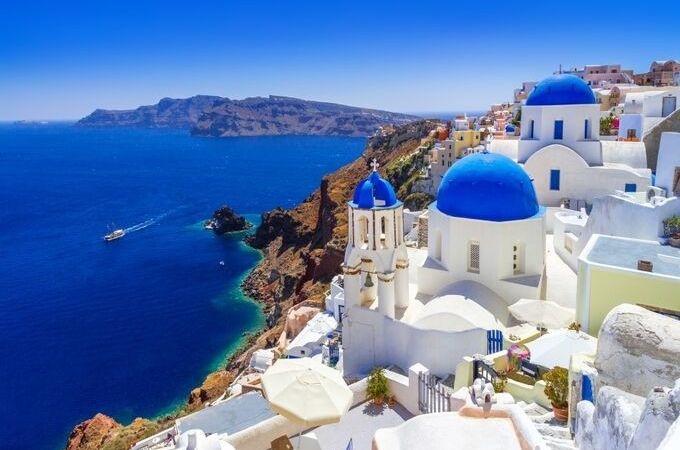
The cliffs are still there. Oia has not become any less beautiful. The caldera remains enormous.
Almost everything around them, however, moves at a different speed.
January belongs less to the Santorini of postcards and more to the island where people actually live. Some tourism businesses close for winter. Beach areas can feel almost deserted. The wind coming across the caldera has none of summer's softness, and a grey morning can make the volcanic landscape look surprisingly severe.
Then the clouds separate.
The sea turns blue again, sunlight reaches the white villages, and you may find yourself standing at a viewpoint that would be surrounded by people in July—with almost nobody beside you.
That is the January trade.
You give up the predictable holiday machinery of summer and get something far less polished in return: Santorini as an island rather than a seasonal resort.
January Weather Is More About Exposure Than Temperature
Look only at the thermometer and January does not appear particularly intimidating.
Daytime temperatures are often around 12–15°C, with nights commonly around 8–11°C. Exact conditions vary, of course, and colder periods occur.
The numbers tell only half the story.
Santorini is exposed to the Aegean. Wind changes how those temperatures feel, especially along the caldera edge and in elevated settlements. A 14°C afternoon with sunshine and little wind can feel comfortable for walking. The same temperature under cloud with a strong breeze feels entirely different.
Rain is also a genuine part of the month.
January sits within Santorini's wetter season, so a winter trip should include the possibility of showers, unsettled days and rapidly changing skies rather than being built around guaranteed sunshine.
What 14°C Can Mean in Four Different Places
| Setting | How January Can Feel |
|---|---|
| Sheltered lane in Fira | Relatively mild in sunshine |
| Exposed caldera viewpoint | Considerably colder in wind |
| Oia cliff edge | Cool to cold when breezy |
| Protected terrace in direct sun | Surprisingly comfortable |
This is one of the first Santorini-specific weather lessons.
The forecast does not tell you exactly how the island will feel.
Where you stand matters.
A Winter Morning in Fira
Imagine waking in Fira to a grey sky.
There is no reason to panic.
Have breakfast. Watch what the clouds are doing. By 10:30 the sky may begin breaking apart, and suddenly a morning that looked lost becomes perfectly usable.
This flexibility matters because January weather can be changeable rather than uniformly poor.
Instead of planning every outdoor activity for a specific hour days in advance, keep a loose list of what works in different conditions.
When the sky clears, go outside.
When rain arrives, stop trying to beat it.
The island is small enough that you can reorganize relatively quickly.
That makes Fira particularly practical as a January base. It remains the island's main town rather than existing primarily for tourism, so winter does not erase its everyday function.
Oia in January Is Beautiful for a Completely Different Reason
Summer Oia is partly about managing other people.
Where should you watch sunset? How early should you arrive? Which lanes are busiest? Can you photograph a famous viewpoint without a queue?
January removes much of that conversation.
You can walk.
Stop.
Turn around.
Walk back because you noticed something you missed.
That freedom is significant.
But Oia in January is not simply “Oia without crowds.” Some hotels, restaurants and tourism-focused businesses may be closed, and the village can feel extremely quiet compared with its summer personality.
For some visitors, this is exactly the appeal.
For others, it feels as though part of Santorini is missing.
Both reactions are reasonable.
A Santorini island tour is especially useful in winter when the goal is to understand more than one settlement rather than expecting Oia alone to provide the complete Santorini experience.
The Caldera Does Not Close for Winter
This sounds obvious, but it changes the value of January considerably.
Many of Santorini's most important experiences do not require swimming.
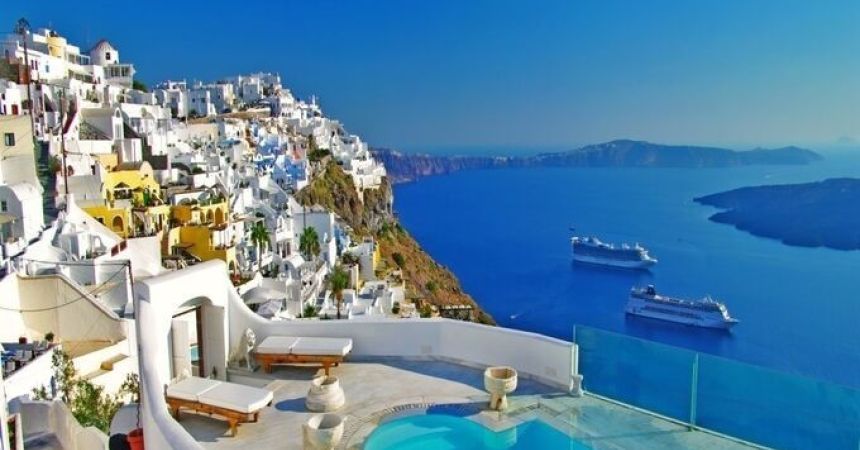
You can still stand above the caldera in Fira, Firostefani or Imerovigli. You can explore village lanes, archaeological sites when operating, traditional settlements and the island's volcanic geography.
The landscape remains the main attraction.
What changes is how long you may want to stay exposed to it.
January: Caldera Side vs Beach Side
| Experience | Caldera Villages | Beach Areas |
| Winter scenery | Excellent | Stark and quiet |
| Restaurants/services | Better chance of options | More limited |
| Walking atmosphere | Strong | Very quiet |
| Wind exposure | Can be high | Also exposed depending on conditions |
| Swimming relevance | None | Very limited |
| January appeal | Landscape and local life | Solitude and volcanic coastline |
This is not a summer comparison of which side has the better hotel.
January changes the question to where the island still feels alive.
For most first-time winter visitors, the caldera settlements make a more practical base.
Don't Come for the Beach Holiday
You can absolutely visit Santorini's beaches in January.
You just need to change the verb.
You visit them rather than organize the day around lying on them.
Perissa, Perivolos and Kamari reveal another side of the island in winter. The dark volcanic coastline can look dramatic under changing skies, and walking beside an almost empty shore has its own appeal.
But this is not reliable sunbathing weather.
The sea is cold, air temperatures are cool, and seasonal businesses around beach areas may be closed or operating differently.
Trying to recreate a July beach day in January misses the point.
The coastline is now landscape rather than resort infrastructure.
January Rain Can Improve Santorini
Rain is usually described only as a disadvantage.
Visually, that is not always true here.
Santorini after rain can become unusually clear. Dust is washed from surfaces, cloud formations add depth over the caldera, and breaks of sunlight create dramatic contrast between the sea and volcanic cliffs.
The island also looks different when winter moisture returns to the landscape.
Visitors accustomed to photographs of dry summer Santorini can be surprised by the seasonal vegetation and softer tones outside the built-up villages.
Rain becomes inconvenient when you planned a long exposed walk.
It becomes much less troublesome when you have no rigid schedule and can wait for the next weather window.
Should You Walk Fira to Oia in January?
This deserves more than a generic “yes, weather permitting.”
The famous route between Fira and Oia is highly exposed in places. January wind, rain and wet surfaces can transform what looks like a straightforward scenic walk into something considerably less pleasant.
On a dry, calm day, however, cooler temperatures can make walking comfortable.
The key is not simply checking whether rain is falling when you leave.
Consider wind.
Consider recent rain.
Consider the amount of daylight remaining.
And be willing to abandon the idea if the day does not suit it.
A Santorini caldera journey can include shorter sections around Fira, Firostefani and Imerovigli without turning the entire experience into a commitment to completing the full route.
January rewards adaptable walking rather than checklist hiking.
What Do You Actually Wear?
Not a heavy expedition wardrobe.
Not summer clothes either.
The most useful January outfit is layered enough to handle sunshine, wind and occasional rain without requiring a return to the hotel every time the weather changes.
A sweater or fleece under a wind-resistant jacket works well for many days. Add comfortable trousers and proper walking shoes.
A waterproof outer layer or compact umbrella is useful, although an umbrella becomes much less helpful when Aegean wind enters the equation.
Good footwear deserves particular attention.
Santorini has slopes, steps and smooth paved surfaces that can become slippery when wet. Shoes chosen purely for photographs may become annoying very quickly.
A scarf is surprisingly useful around exposed viewpoints.
Sunglasses should also stay in the suitcase. January may be winter, but a clear day over the Aegean can still be intensely bright.
Sunset Is No Longer a Crowd-Control Exercise
You do not need to arrive in Oia ninety minutes early to defend a position.
That alone changes the experience.
January sunset happens earlier, and cloud can obscure it entirely. Yet the days when the sky cooperates can feel unusually personal.
You can choose a viewpoint because you like it rather than because a travel guide told everyone else to stand there.
And Oia does not own the sunset.
Fira, Firostefani and Imerovigli all offer extraordinary caldera perspectives. In winter, when the objective is less about recreating a famous photograph, there is even more reason to experiment.
A cloudy sunset is not necessarily a failed one either.
Santorini's winter sky can create colors and textures that the almost cloudless summer season rarely provides.
The Question Nobody Should Leave Until Arrival: What's Open?
January travelers should research this before booking.
Santorini does not shut down completely, but tourism activity contracts significantly during winter.
Hotels close temporarily. Seasonal restaurants take breaks. Beach businesses may disappear from the daily picture altogether. Tour schedules and transportation frequencies can differ from summer.
This is precisely why January should not be sold as “the same Santorini for less money and fewer crowds.”
It isn't.
The experience is structurally different.
A private Santorini experience can make sense for travelers wanting to cover several parts of the island when seasonal group-tour options are more limited, particularly if time is short.
Accommodation deserves similar attention.
Do not simply find a hotel you like and assume January availability. Confirm it is actually operating during your dates.
Is the Famous Santorini Romance Still There?
Yes, but it looks less staged.
January is not the month of infinity pools, long outdoor dinners and warm evenings overlooking the caldera.
Instead, the romance comes from space.
Walking through Oia without navigating a procession of visitors. Sitting in a quiet café while rain passes outside. Watching clouds move across the caldera from a hotel window. Finding an empty viewpoint when the sun unexpectedly appears.
It is more introspective than celebratory.
That distinction matters because February will have its own romantic winter identity within this cluster. January belongs more specifically to rediscovering the working island beneath Santorini's summer tourism image.
Who Should Not Visit Santorini in January?
Anyone whose Santorini dream depends on swimming, beach clubs, guaranteed outdoor dining and a fully operating resort atmosphere should choose another season.
Travelers who become frustrated when restaurants or hotels are closed may also find January unnecessarily limiting.
And if every day of your holiday must have predictable blue skies, winter in the Aegean is a gamble you probably do not need to take.
January suits a different traveler.
Someone curious enough to see what happens after the summer photographs disappear.
Someone who can look at a rainy morning without deciding the day has been ruined.
Someone who understands that an island can become more interesting when fewer things are arranged specifically for visitors.
That is the real January Santorini.
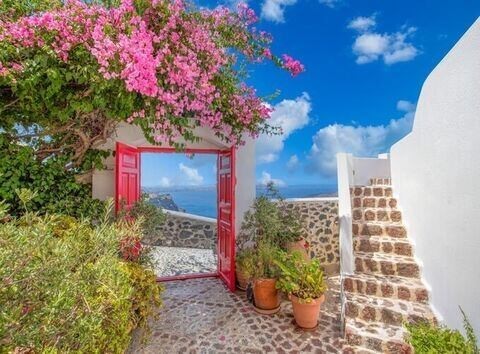
The January Santorini Reality Check
January works best when expectations match the island you will actually find.
This is not summer Santorini with a colder temperature displayed on your phone. The entire rhythm changes.
| If You Expect... | January Actually Offers... |
|---|---|
| Busy sunset atmosphere | Quiet viewpoints |
| Beach days | Volcanic coastal walks |
| Extensive restaurant choice | A smaller year-round selection |
| Warm outdoor evenings | Indoor dinners and early nights |
| Guaranteed blue skies | Sun, cloud, wind and rain |
| Full tourism infrastructure | A working island in low season |
| Crowded village lanes | Space to explore slowly |
| Summer-style island hopping | More weather-dependent logistics |
That final distinction is particularly important.
January should be chosen because you want winter Santorini—not merely because you found cheaper flights or accommodation.
Fira, Oia or Imerovigli: Where Should You Stay in January?
In summer, accommodation decisions often revolve around views, pools and sunset terraces.
January changes the priorities.
Fira: The Practical Choice
Fira has the strongest argument for most first-time winter visitors because it functions as Santorini's main town throughout the year.
That matters when seasonal businesses elsewhere are closed.
You are more likely to find everyday services, places to eat and useful transport connections without needing the island to operate like it does in July.
The compromise is atmosphere. Travelers dreaming specifically of Oia's architecture may still prefer to visit rather than sleep in Fira.
Oia: The Atmospheric Choice
Oia without summer crowds can be extraordinary.
Its narrow lanes become genuinely pleasant to wander, and you can stop at famous viewpoints without the usual choreography of waiting, squeezing past groups and protecting your camera angle.
The trade-off is reduced winter activity.
Check accommodation and restaurant availability carefully rather than assuming the village operates at summer capacity.
Imerovigli: The Caldera Choice
Imerovigli offers magnificent caldera exposure and a peaceful setting, but that same exposure matters during windy winter weather.
It can feel wonderfully secluded on a clear day and considerably more isolated when conditions deteriorate.
For travelers prioritizing views and hotel time, however, that quiet can be exactly the attraction.
January Base Comparison
| Base | Strongest January Advantage | Main Winter Trade-Off |
| Fira | Services and practicality | Less secluded |
| Oia | Empty-lane atmosphere | More seasonal closures |
| Imerovigli | Caldera views and quiet | Exposure and fewer nearby options |
| Kamari | Local/coastal perspective | Limited winter resort atmosphere |
| Perissa | Very quiet volcanic coast | Many seasonal businesses may close |
There is no universally correct choice.
The best winter base depends less on which village is “most beautiful” and more on how independent you want to be when tourism infrastructure is reduced.
How Many Days Do You Need in January?
January is not necessarily a month for a week-long Santorini holiday, especially for first-time visitors.
For most travelers, two to three nights provides a useful window.
Two nights can work if Santorini forms part of a broader Greece itinerary and your expectations are primarily caldera views, villages and a taste of winter island life.
Three nights are safer if you want flexibility.
A rainy or very windy day matters much more during a two-night trip because it represents such a large proportion of your available time. Adding another night increases the chance of catching a clearer weather window without forcing you to stay outdoors in poor conditions.
Four nights can suit photographers, writers, couples seeking genuine quiet or travelers deliberately choosing slow off-season travel.
The important point is that more nights do not automatically mean more attractions.
January rewards time rather than volume.
What About Ferries and Flights?
Winter transport deserves more attention than it receives in generic Santorini guides.
Flights connect Santorini with Athens, while ferry services operate on seasonal schedules that differ substantially from the high-frequency summer network.
Weather can also affect sea travel.
If your January itinerary depends on reaching another Greek island immediately afterward, avoid treating a summer ferry pattern as though it applies year-round. Check schedules for your actual travel dates and leave sensible margins around important onward connections.
This is another reason January Santorini works differently from a summer island-hopping holiday.
The island itself remains accessible.
The wider Cyclades network is simply not operating for tourism at full summer intensity.
Early January and Late January Are Not Identical
The weather difference is less predictable than the atmosphere difference.
Early January may still carry some festive-season travel around New Year. Later in the month, Santorini settles more completely into its winter rhythm.
| Early January | Late January |
| New Year visitors may remain | Deeper off-season quiet |
| Some festive atmosphere | More everyday island rhythm |
| Winter weather established | Winter weather continues |
| Holiday-period demand possible | Generally less tourism activity |
| Seasonal schedules important | Seasonal schedules equally important |
Neither period guarantees better weather.
That distinction belongs to individual weather systems rather than the calendar.
The practical difference is what kind of island atmosphere surrounds you.
Twelve FAQs About Santorini Weather in January
1. Is January a good time to visit Santorini?
January can be rewarding for travelers interested in quiet villages, caldera landscapes and everyday island life rather than beaches or nightlife. Expect cool temperatures, rain and wind alongside occasional bright days. Reduced tourism services make advance research more important than during the main season.
2. How warm is Santorini in January?
Daytime temperatures are often around 12–15°C, while nights commonly fall to approximately 8–11°C. Wind can make exposed caldera locations feel substantially colder. Sunshine may create pleasantly mild periods, so layered clothing works better than dressing for one fixed winter temperature.
3. Does it rain a lot in Santorini in January?
January belongs to Santorini's wetter part of the year, so rain should be considered a normal possibility. This does not necessarily mean continuous wet days. Conditions can change relatively quickly, allowing outdoor sightseeing between showers when travelers keep their schedules flexible.
4. Is Santorini very windy in January?
Wind can be an important part of the January experience, particularly around exposed caldera viewpoints and elevated settlements. Its effect on comfort may be greater than the temperature itself. A wind-resistant outer layer is therefore more useful than judging clothing needs only from the forecast maximum.
5. Can you swim in Santorini during January?
Most leisure travelers will find both sea and air conditions too cool for a conventional swimming holiday. Winter swimming is possible for people accustomed to cold water, but January Santorini should not be selected for beach time. The coastline is better approached as scenery.
6. Are restaurants open in Santorini in January?
Some restaurants remain open, particularly where year-round residents live, but the choice is much smaller than during summer. Tourism-focused businesses may close seasonally. Fira generally offers greater winter practicality, while visitors staying elsewhere should check nearby dining options before choosing accommodation.
7. Is Oia worth visiting in January?
Yes, particularly for travelers who want to experience its architecture and caldera views without peak-season crowds. However, Oia becomes considerably quieter and some businesses close for winter. The village should be appreciated for atmosphere and landscape rather than expected to provide its summer tourism experience.
8. Can I walk from Fira to Oia in January?
Potentially, on a dry and relatively calm day. The route includes exposed sections where strong wind, rain or wet surfaces can make walking unpleasant or unsafe. Check current conditions, available daylight and the forecast rather than deciding in advance that the full trail must be completed.
9. What should I wear in Santorini in January?
Pack layers, including a sweater or fleece and a wind-resistant, preferably water-resistant jacket. Comfortable trousers and walking shoes with reliable grip are useful on slopes and potentially wet surfaces. Add sunglasses for bright periods and a scarf for exposed caldera viewpoints.
10. How many nights should I spend in Santorini in January?
Two nights can cover the main villages and viewpoints, but three provide better flexibility if rain or strong wind interrupts outdoor plans. Longer stays suit travelers specifically seeking slow winter island life rather than those trying to complete a conventional Santorini sightseeing itinerary.
11. Is Santorini cheaper in January?
Accommodation may be less expensive than during peak summer, but availability is also reduced because many seasonal properties close. Price alone should not determine the decision. Confirm that suitable hotels, restaurants and transport services are operating before assuming an off-season trip automatically offers better value.
12. Is January or February better for Santorini?
January is particularly interesting for travelers wanting to see Santorini stripped of its summer tourism identity and functioning primarily as a year-round island community. February remains firmly off-season but will have its own weather patterns and travel character rather than simply being a repeat of January.
January Lets Santorini Stop Performing
Most people meet Santorini when the island is exceptionally busy being Santorini.
Tables are arranged toward the caldera. Sunset becomes an event. Boats move across the water. Beach restaurants fill. Oia's lanes become part village, part international photo studio.
January removes much of that machinery.
The result can initially feel strange.
A closed terrace where you expected dinner. An empty beach road. A famous viewpoint with nobody waiting behind you.
Stay long enough, however, and the absence becomes the interesting part.
You begin noticing which cafés local residents actually use. Fira feels like a town rather than a sightseeing stop. The volcanic coastline looks harsher beneath winter clouds. Oia's architecture becomes easier to appreciate when you are not navigating a crowd.
Then the sun comes out and the caldera turns blue.
For an hour, perhaps several, Santorini looks exactly like the island you imagined—except almost nobody else is standing there.
January is not the month to reproduce a summer Santorini holiday more cheaply.
It is the month to discover what remains when summer leaves.

A travel professional specializing in tailor-made travel planning, guest experience management, and multi-destination tourism operations.
With over 23 years of experience in the travel industry, he designs and manages private and cultural tours for international travelers across Türkiye, Greece, Egypt, Jordan, Morocco, and other destinations.
He has strong expertise in both online and face-to-face guest communication, sales processes, and end-to-end travel operations.
Working closely with hotels, travel agencies, and local partners, he ensures smooth coordination and high-quality travel experiences at every stage of the journey.
His focus is on delivering personalized, reliable, and seamless travel experiences for international guests worldwide.