Eilat, Israel: Where the Desert Meets the Red Sea
Updated: August 2026
Eilat can feel almost disconnected from the Israel you have been traveling through.
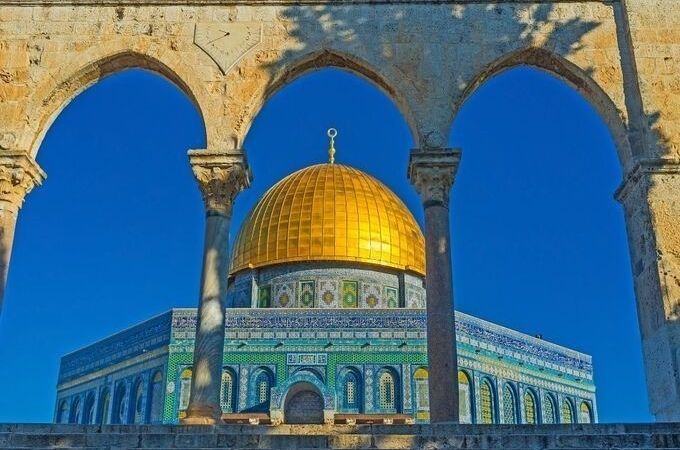
A few days earlier, you may have been walking through Jerusalem while a guide explained layers of religious history, standing among Roman remains or moving between sites associated with biblical events. Continue south through increasingly arid landscapes and the rhythm changes completely. Eventually the desert opens onto a narrow stretch of remarkably blue water surrounded by mountains.
This is Eilat.
The city sits on the Gulf of Aqaba at Israel's southern tip, where the Negev reaches the Red Sea and several countries come remarkably close together geographically. Jordan lies across the water, Egypt begins just beyond Israel's southwestern edge, and the mountains surrounding the gulf give the coastline an enclosed, almost theatrical appearance.
Eilat therefore works best when you stop asking what monuments you are supposed to see there.
Its contribution to an Israel journey is different.
You come south for the water, coral, desert-and-sea landscape and, perhaps most importantly, permission to change the pace.
After Jerusalem, Eilat Can Feel Like Someone Changed the Channel
This contrast is one of the strongest arguments for including Eilat in a longer Israel journey.
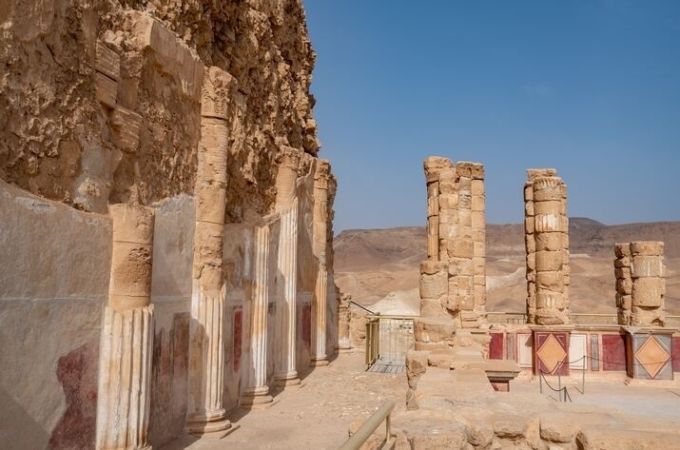
Much of the country's classic sightseeing requires concentration. Jerusalem alone can fill several days with history, religious traditions, archaeology and places carrying enormous cultural meaning. Add Masada, Nazareth, Galilee or Caesarea and the trip can become intellectually rich but surprisingly intensive.
Then Eilat asks almost nothing of you.
You can snorkel in the morning, have lunch without consulting a sightseeing schedule, return to the water later and spend an evening watching the mountains change color across the gulf.
For some travelers this is exactly what the itinerary needs.
It is especially noticeable around the middle or final third of a longer journey, when another full day of churches, ruins or historical explanations might be interesting intellectually but less rewarding because the traveler is simply tired.
Eilat provides contrast rather than continuity.
That is precisely why it can work.
The Geography Is Doing Much of the Work
The first thing worth noticing in Eilat is not a building.
It is the landscape.
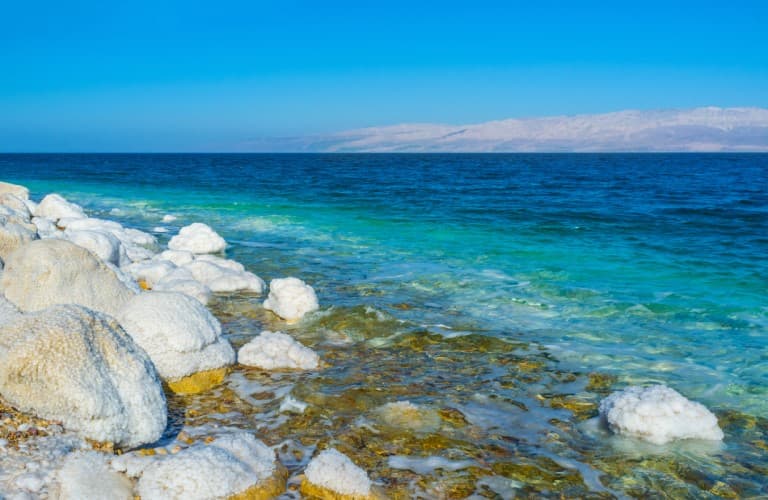
The Gulf of Aqaba is narrow enough that the opposite shoreline feels visually present, while steep arid mountains frame the water. The absence of lush coastal vegetation makes the blue of the Red Sea appear even more pronounced.
For travelers arriving overland, the transition is part of the experience. Long stretches of dry southern terrain eventually reveal a marine environment that seems almost improbable in its surroundings.
This geography also explains why Eilat should not be casually inserted into a short itinerary.
It is genuinely far south.
If you are going to spend the time required to reach Israel's Red Sea coast, the stay should contain enough substance to reward that geographical commitment.
A late arrival, one hotel night and an early departure may put Eilat on your travel record, but it does very little with Eilat itself.
Underwater Eilat Is More Important Than Downtown Eilat
The strongest reason to spend active time here lies beneath the surface.
The northern Gulf of Aqaba supports coral ecosystems and marine life that make snorkeling and scuba diving central to Eilat's identity. Travelers who spend their entire stay looking at the sea from a hotel terrace are therefore seeing only one dimension of the destination.
You do not need to be an experienced diver to appreciate this.
Snorkeling can provide a much more immediate introduction to the marine environment, provided conditions and personal swimming ability are appropriate. Travelers interested in scuba diving should plan more deliberately, choosing qualified operators and organizing the stay around safe diving practices rather than squeezing dives into whatever hours remain after other activities.
This is where itinerary design becomes important.
If coral and marine life motivated your journey south, water time should receive priority.
Do not travel hundreds of kilometers to the Red Sea and then fill the day with secondary activities because an itinerary template says sightseeing must begin at 08:30.
Coral Beach Changes the Meaning of a “Beach Day”
A beach day can mean many things.
Sometimes it means lying beside a hotel pool with the sea visible in the distance. In Eilat, it can also mean entering an environment where the underwater landscape is as important as the shoreline.
Areas associated with coral viewing and snorkeling therefore deserve to be approached differently from an ordinary resort beach. Visitors should respect local regulations and avoid touching, standing on or damaging coral. Marine ecosystems can be vulnerable precisely because so many people want to experience them.
This is one area where responsible travel is not abstract.
It involves how you enter the water, where you swim and what you choose not to touch.
The reward for that restraint is experiencing an environment that makes Eilat fundamentally different from Israel's Mediterranean coast.
You Do Not Need to Dive to Justify Coming Here
Eilat sometimes becomes over-associated with diving.
That can make non-divers wonder whether the journey is worthwhile.
It can be.
The Red Sea landscape works above water as well as below it. Swimming, snorkeling, shoreline time, boat-based experiences where appropriate and simply having several slower hours beside the gulf can provide enough reason for travelers who value coastal environments.
The important distinction is between not diving and not caring about the Red Sea.
If you do not dive but love unusual coastlines, warm-weather breaks and a slower rhythm, Eilat may still fit beautifully.
If beaches bore you, you have no interest in marine life and you would rather spend another day exploring history, then the argument becomes much weaker.
That is not a criticism of Eilat.
It is good itinerary editing.
The Best Eilat Day May Be the One With the Shortest Schedule
Imagine two versions of the same day.
The first begins early, moves through several booked activities, allocates a fixed lunch period, adds an afternoon excursion and returns to the hotel shortly before dinner.
The second begins when you are ready, includes several hours around the Red Sea, leaves space for lunch, allows the afternoon to change according to weather and energy, and finishes without anyone checking whether another attraction could have been squeezed in.
For Eilat, I often prefer the second version.
This is not because there is nothing to do.
It is because Eilat performs a useful function in an itinerary when it creates space rather than consuming it.
Travelers who normally book highly structured Private Israel Tours sometimes benefit most from making this particular section deliberately less structured.
A customized itinerary should know when not to schedule something.
Two Nights and Three Nights Create Very Different Trips
Rather than asking for a universal “ideal stay,” it is more useful to look at what different amounts of time actually allow.
With one night, Eilat is highly dependent on arrival and departure timing. You may receive only an evening and a few hours the following morning, which is poor value if the Red Sea was the reason for traveling south.
Two nights usually create at least one meaningful day.
That can work very well for travelers who want snorkeling, beach time or a short break before continuing.
Three nights change the experience again. Now the stay does not have to succeed on one particular day. Water activities can coexist with relaxation, and families have more flexibility if children become tired or plans need adjustment.
Longer stays make sense for travelers whose holiday genuinely includes a resort component, particularly those diving or intentionally dividing the journey between touring and leisure.
The useful measurement is therefore not nights.
It is unhurried Red Sea time.
A Family May Value Eilat for Reasons That Never Appear on a Sightseeing List
Adults often design family itineraries according to what they believe everyone should see.
Children frequently judge the same trip differently.
After several days of historical sites, guided visits and transportation, a child may remember snorkeling or an afternoon in the water more vividly than the fourth archaeological site of the week.
That does not make one experience more culturally valuable than another.
It demonstrates why rhythm matters.
Eilat can give families a section of the trip where curiosity is physical rather than academic: swimming, seeing fish, being outdoors and enjoying a less formal daily structure.
Parents benefit too.
There is less pressure to keep everyone engaged with explanations and more opportunity for different family members to enjoy the destination at their own pace.
I would therefore resist over-programming family days here.
If the children want another hour in the water, that may be the correct itinerary decision.
The Desert Does Not Disappear When You Reach the Sea
Eilat's marine identity is only half of the visual story.
Look away from the gulf and the landscape immediately reminds you that you are still in an arid southern environment. The mountains and desert terrain surrounding Eilat produce combinations of color and scale that conventional resort imagery sometimes understates.
This creates opportunities for travelers who want more than water.
Desert outings around the Eilat region can introduce geological landscapes and viewpoints that contrast sharply with the coast, although travelers primarily interested in a deeper Negev experience should give that region proper time rather than assuming a short excursion from Eilat replaces it.
That distinction protects the future Negev blog from cannibalization as well.
Eilat shows you where desert and Red Sea meet.
The Negev asks you to enter the desert itself.
Those are different travel experiences.
Summer Eilat Requires a Different Daily Clock
Eilat's desert climate is not something to treat as a footnote.
During hot periods, the middle of the day can influence what feels comfortable outdoors. Activities that involve exposed walking should be planned with actual conditions in mind, while hydration and sun protection become practical necessities rather than generic travel advice.
This can change the rhythm of the day.
An early marine activity, slower middle period and later return outdoors may make more sense than following the same sightseeing timetable used elsewhere in Israel.
Winter brings a different appeal. Travelers escaping colder climates may appreciate southern Israel's comparatively mild conditions, although weather and water conditions still vary and should be checked for the actual travel period.
Eilat rewards travelers who respond to the environment rather than insisting that the environment respond to their itinerary.
The Red Sea, Mediterranean and Dead Sea Should Never Be Sold as Three Versions of the Same Experience
Israel offers three very different relationships with water, and understanding the distinction helps travelers decide whether Eilat is redundant.
It is not.
| Water experience | What defines it | What you actually go there for | How it changes the itinerary |
|---|---|---|---|
| Eilat / Red Sea | Coral, marine life, desert mountains | Snorkeling, diving, water and relaxation | Creates a leisure chapter |
| Tel Aviv / Mediterranean | Urban coastline | Beach combined with restaurants and city life | Remains part of an urban stay |
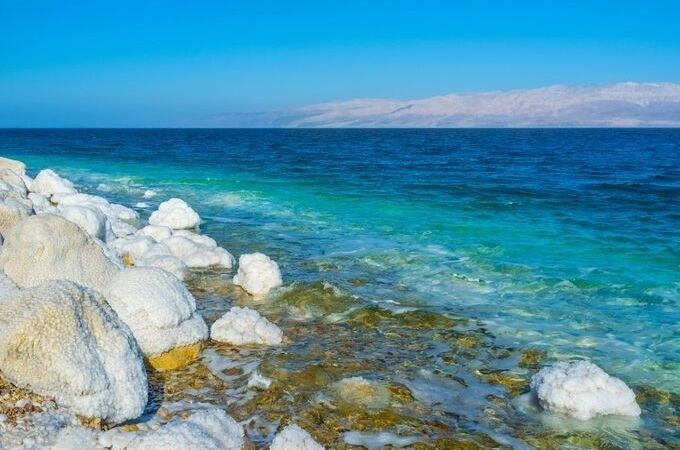
| Dead Sea | Hypersaline water and desert geography | Floating and unusual natural environment | Usually forms part of regional sightseeing |
A traveler can reasonably experience all three without repeating the same type of day.
Equally, nobody needs all three simply because they exist.
This table should help with subtraction, not collection.
Eilat Can Be a Strong Ending to a Busy Journey
There is something satisfying about allowing an Israel itinerary to become progressively less demanding.
You might begin with Jerusalem while energy and concentration are high, continue through archaeological and regional sightseeing, then travel south once the trip needs a different tempo.
Eilat can work beautifully in that position.
Instead of finishing the holiday with another early hotel departure followed by a full sightseeing program, travelers gain a period in which the most complicated decision might be whether to snorkel before or after lunch.
That change can affect how the entire journey is remembered.
Trips are not experienced as averages. The final few days often influence whether travelers return home feeling stimulated or exhausted.
A carefully placed Israel Red Sea Holidays section can therefore serve the broader itinerary rather than functioning as an unrelated beach extension.
But Eilat Can Also Be the Wrong Ending
There is an operational side to this decision.
Ending in Eilat only works well when onward transportation and international departure arrangements make sense. If reaching the departure airport requires an awkward transfer, inconvenient connection or unnecessarily stressful final day, the relaxing conclusion can disappear quickly.
This is why I would never choose itinerary order based purely on narrative.
Flight schedules, available transport, border plans and the next destination matter.
The ideal emotional flow must survive contact with real logistics.
Before confirming Eilat, work backward from what happens afterward.
Where do you need to be?
At what time?
How reliable and comfortable is the transfer?
Does the plan leave a sensible margin?
These questions are less glamorous than coral reefs, but they determine whether the itinerary actually works.
Looking Across the Gulf Naturally Makes Travelers Think About Jordan
From Eilat, Jordan feels close because it is close.
Aqaba lies nearby, and travelers familiar with regional geography often begin thinking about Petra and Wadi Rum.
That can create excellent multi-country possibilities, but the map can also encourage unrealistic assumptions.
Crossing an international border is not equivalent to driving between two Israeli cities. Current border operations, passport requirements, visas where applicable, opening times, transportation and nationality-specific rules can all affect the journey.
These should be checked against current official information when travel is being arranged.
Eilat's role in this discussion is geographical.
It can be a logical southern point from which a wider regional journey is considered, but proximity alone should never be mistaken for guaranteed operational simplicity.
Before Adding Eilat, Remove It From the Itinerary Once
This is one of the most useful tests I know for destinations requiring substantial travel time.
Build the itinerary with Eilat.
Then remove it.
Look at what happens to the days you recover.
Could Jerusalem now receive another night? Could northern Israel be explored without rushing? Could you spend more time around the Dead Sea? Would the entire journey require fewer hotel changes?
Now put Eilat back.
What do you gain?
If the answer is “the Red Sea, snorkeling, coral, several relaxed days and a completely different landscape,” Eilat may clearly deserve its place.
If the answer is mainly “another city in Israel,” leave it out.
This exercise forces the destination to compete for time based on experience rather than reputation.
What Eilat Should Feel Like in a Well-Designed Tour
It should feel different from the days before it.
If you arrive in Eilat and continue waking early for continuous scheduled sightseeing, something has probably gone wrong unless that intensive style is exactly what you requested.
A good Customized Eilat Beach Stay protects the reason for traveling south.
That might mean a snorkeling morning and free afternoon, several dives spread across the stay, a family day with minimal structure or a combination of Red Sea and selected desert experiences.
The itinerary should not be empty.
It should have room.
There is a meaningful difference.
Four Travelers, Four Completely Different Answers About Eilat
Consider four hypothetical travelers.
The first has six days in Israel and has never visited Jerusalem. Eilat probably consumes too much of the available journey unless the Red Sea is a major personal priority.
The second has twelve days, loves snorkeling and wants a break after cultural touring. Eilat becomes much easier to justify.
The third has fourteen days with two children who enjoy water more than museums. A three-night southern stay may improve the entire family trip.
The fourth has ten days, dislikes beaches and wants biblical history, archaeology and Christian heritage. Sending that traveler to Eilat simply because it is famous would be poor planning.
This is why asking “Is Eilat worth visiting?” without knowing the traveler produces weak advice.
Eilat does not have a universal value.
Its value depends on what it replaces.
What I Would Not Do in Eilat
I would not stay one night merely to say I had been there.
I would not treat the Red Sea as background while filling the itinerary with unrelated activities.
I would not assume that a desert excursion from Eilat replaces experiencing the Negev properly.
I would not schedule an international departure without first understanding the real transfer requirements from southern Israel.
I would not promise that a cross-border Jordan extension will operate exactly as expected without checking current arrangements.
Most importantly, I would not send travelers this far south unless something about Eilat genuinely matches the way they like to travel.
That last rule solves most of the others.
Eilat Earns Its Place by Changing the Journey
Eilat does not need to compete with Jerusalem for historical importance, Tel Aviv for urban culture or the Dead Sea for geographical uniqueness.
Its role is different.
It introduces the Red Sea into an Israel itinerary and, with it, coral, marine life, desert-framed water and a pace that can be dramatically less demanding than the rest of the trip.
That makes Eilat especially valuable when contrast is part of the travel plan.
Go south because you want to enter the water, because your children need a different kind of day, because diving matters to you or because a few unhurried nights will improve a longer journey.
Do not go simply because a complete Israel itinerary appears to require Eilat.
The strongest travel plans are not complete because they include everything.
They are complete because everything included has a reason to be there.
Eilat Questions Travelers Usually Ask Once They Start Planning Properly
Will I regret going to Eilat if I do not scuba dive?
Not necessarily. Snorkeling, swimming, Red Sea scenery and relaxed coastal time can justify the stay without scuba diving. The more important question is whether marine environments interest you at all; if they do not, Eilat becomes harder to justify.
Is one full day at the Red Sea actually useful?
Yes, provided arrival and departure logistics protect that day. One genuinely free day can accommodate snorkeling and relaxation surprisingly well, although travelers seeking diving, family downtime or a resort component will generally appreciate more breathing room.
Why does Eilat look so close to everything on an Israel map?
Israel's shape can make north-south distances appear deceptively manageable on a small map. Eilat sits at the extreme southern end of the country, so actual transportation time should be calculated before deciding how comfortably it fits into a short itinerary.
Can children enjoy Eilat without a full schedule of paid activities?
Absolutely. Water, swimming, age-appropriate snorkeling and hotel downtime may already provide the contrast families need after intensive touring. Filling every hour with organized entertainment can defeat one of the strongest reasons for bringing children to Eilat.
Should we save Eilat for the end of the holiday?
It often works well there because Red Sea time creates a natural decompression period after historical sightseeing. However, the final decision should follow transportation and departure logistics; a relaxing stay is less valuable if it creates a stressful journey to your international flight.
If I have already visited the Dead Sea, will Eilat feel repetitive?
Very unlikely. The Dead Sea experience revolves around hypersaline water and desert geography, while Eilat is a Red Sea marine destination associated with coral, snorkeling, diving and conventional swimming. The physical experiences are fundamentally different.
What if only one person in our couple wants to dive?
Eilat can work particularly well in this situation because the non-diver does not need to follow the same program. Beach time, snorkeling where appropriate, relaxation and resort facilities allow travelers to use portions of the day differently without splitting the entire itinerary.
Is a hotel with a good pool enough, or should we prioritize the sea?
If the Red Sea motivated the journey, I would protect access to the marine experience rather than allowing the pool to replace it entirely. A good hotel pool adds value, particularly for families, but it is available in many destinations; the Red Sea is not.
Does staying three nights mean we need three days of activities?
No, and trying to manufacture three full activity days can make Eilat less enjoyable. The extra night is valuable precisely because snorkeling, diving or other planned experiences no longer need to occupy every available hour of the stay.
Can Eilat work for travelers who normally dislike resort holidays?
Yes, particularly as a short contrast within a cultural journey rather than a standalone week-long resort holiday. The desert setting and marine environment give Eilat more geographical character than travelers may expect from the word “resort.”
Should we stop in the Negev while driving to Eilat?
That depends on whether you want a genuine Negev experience or simply a comfortable southbound journey. Meaningful desert exploration deserves appropriate time; adding several rushed stops merely because they lie approximately on the route can weaken both the drive and Eilat stay.
What question should I answer before booking Eilat?
Ask what you intend to do with the time once you arrive. If you can immediately name the Red Sea, snorkeling, diving, family downtime or relaxation, the destination has a purpose. If you cannot, reconsider whether the journey south is necessary.

A travel professional specializing in tailor-made travel planning, guest experience management, and multi-destination tourism operations.
With over 23 years of experience in the travel industry, he designs and manages private and cultural tours for international travelers across Türkiye, Greece, Egypt, Jordan, Morocco, and other destinations.
He has strong expertise in both online and face-to-face guest communication, sales processes, and end-to-end travel operations.
Working closely with hotels, travel agencies, and local partners, he ensures smooth coordination and high-quality travel experiences at every stage of the journey.
His focus is on delivering personalized, reliable, and seamless travel experiences for international guests worldwide.