Haifa Weather in March: One City, Different Heights
Updated: August 2026
You can leave one part of Haifa feeling perfectly dressed and reach another twenty minutes later wondering whether you misread the forecast.
The forecast may be fine.
What changed was your position in the city.
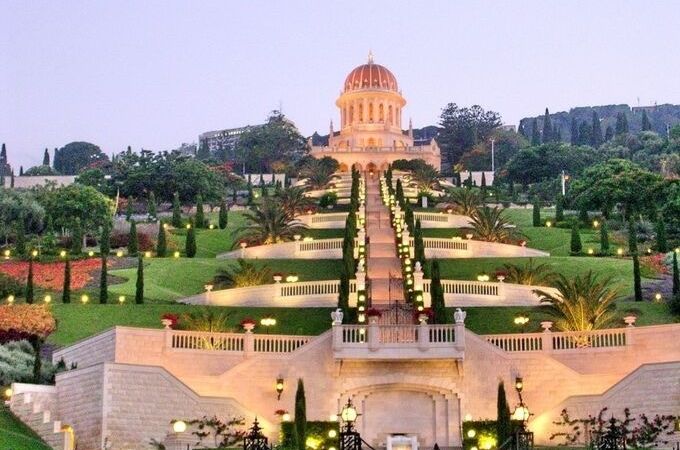
Haifa rises from the Mediterranean toward Mount Carmel, and March is an interesting month for noticing what that geography means in practice. Spring is beginning to reshape the season, yet conditions are not uniformly warm enough for travelers to ignore elevation, exposure or wind.
The useful question is therefore not simply, “What is the temperature in Haifa today?”
It is:
Where in Haifa will you spend that day?
The Weather App Gives Haifa One Number
A city forecast has to simplify.
It gives you a temperature, perhaps a “feels like” value, wind information and hourly changes. What it cannot communicate particularly well is the physical journey from lower neighborhoods toward higher parts of Mount Carmel.
That matters because travelers do not spend their day at a weather station.
They stand beside the Mediterranean, walk along protected streets, wait at exposed viewpoints, enter buildings and later find themselves considerably higher above sea level.
During a Haifa spring journey, one forecast can therefore produce several subtly different experiences.
Elevation Is Only Part of the Story
It would be tempting to write a simple rule:
Higher Haifa = cooler.
Lower Haifa = warmer.
Real weather is less obedient.
Elevation matters, but so do wind direction, cloud, sunshine, building shelter and the exact location where you are standing. A sunny upper neighborhood may feel more comfortable than a shaded, breezy location closer to the coast. Conditions can also change as the day develops.
March should therefore teach adaptation, not a fixed temperature formula.
What Can Change as You Move Through Haifa?
| Change in Setting | What You May Notice | Why It Matters |
|---|---|---|
| Lower city → Carmel | Different temperature perception | Elevation and exposure change |
| Protected street → open viewpoint | Wind becomes more noticeable | Buildings no longer provide shelter |
| Sun → shade | Spring warmth can disappear quickly | March is not established summer |
| Coast-facing → sheltered area | Comfort may change despite similar temperature | Exposure matters |
| Walking uphill → standing still | You may suddenly feel cooler | Activity level changes |
| Midday → later afternoon | Earlier clothing choice may need adjustment | Daily conditions evolve |
This is a microclimate movement table, not a monthly climate summary. Israel-wide March weather belongs elsewhere.
The Jacket You Didn't Need Below May Earn Its Place Above
March is a month when carrying one light additional layer can make more sense than trying to choose the perfect outfit at breakfast.
You may spend the lower part of the day walking comfortably, particularly during brighter conditions, and decide that the extra layer was unnecessary.
Keep it anyway.
Later, after moving uphill and spending time somewhere more exposed, you may appreciate having something available without needing to return to the hotel.
The point is not that Mount Carmel is always cold in March.
It is that portable flexibility works better than pretending the entire city will feel identical.
Viewpoints Expose More Than the View
Elevated viewpoints are designed to remove visual obstruction.
Unfortunately, the buildings that would obstruct the view are often the same buildings that might shelter you from wind.
This creates a simple March trade-off.
The more open the setting, the more directly you may experience whatever the day's atmosphere is doing. A pleasant city street can therefore tell you surprisingly little about how ten minutes standing at an exposed overlook will feel.
For someone following an Israel Mediterranean tour, this is useful Haifa-specific information rather than another description of Israel becoming warmer in spring.
Moving Uphill Can Hide the Difference
There is another reason Haifa's March conditions can be deceptive.
Walking uphill generates heat.
You may reach a higher neighborhood feeling considerably warmer than expected, remove a layer and assume the upper part of the city is just as mild as the lower one. Then you stop walking.
Several minutes later, the situation can feel different.
Activity level is therefore part of Haifa's microclimate experience. The conditions did not necessarily change while you were climbing; your body did.
This is also why March remains separate from July. July will specifically own the relationship between summer heat and physical effort on Haifa's slopes. March is concerned with contrasting conditions between elevations and exposures during a transitional season.
A Cloud Can Matter More Up Here
Spring sunshine can make March feel inviting, but cloud cover can alter perceived comfort quickly when conditions are already moderate rather than hot.
At an exposed higher location, losing direct sunshine while wind continues can be more noticeable than the same cloud passing while you are walking through a sheltered lower street.
There is no need to plan around individual clouds.
Simply avoid using the warmest five minutes of the morning as proof of what clothing you will need for the entire city.
Plan the Day in Three Dimensions
Haifa itineraries become more realistic when you add elevation to time and distance.
Instead of thinking:
“Morning attraction A, lunch, afternoon attraction B,”
consider whether those experiences sit at broadly similar heights or require a significant movement up or down the Carmel slopes.
This does not mean arranging everything according to weather. Geography, opening hours and your interests remain more important.
But when two sequences work equally well, grouping nearby elevations can reduce unnecessary clothing adjustments and repeated vertical transfers.
A Carmel coast discovery should feel like exploring a hillside city, not fighting its topography.
Don't Turn Microclimate Into Micro-Management
There is an obvious danger here.
Once we tell travelers that different parts of Haifa can feel different, it would be easy to recommend checking five forecasts, carrying half a wardrobe and analyzing wind exposure before every café.
That would be absurd.
March requires very little extra work.
Check the Haifa forecast. Wear adaptable clothing. Carry one useful layer when conditions justify it. Remember that a protected lower street may not predict an exposed Carmel viewpoint perfectly.
Then enjoy the city.
Good weather advice should remove uncertainty, not create new anxiety.
March Belongs Between Sea Level and Carmel
February looked outward as winter systems cleared and Haifa's Mediterranean setting became visually expansive again.
March changes dimension.
It looks upward.
Not because Mount Carmel needs another destination guide, and not because we want to compete with Israel's general spring-weather content. March has one narrow job: explaining why moving vertically through Haifa can change how the same spring day feels.
That is something a national Israel weather page cannot answer properly.
And it is something visitors can discover within the space of a single afternoon.
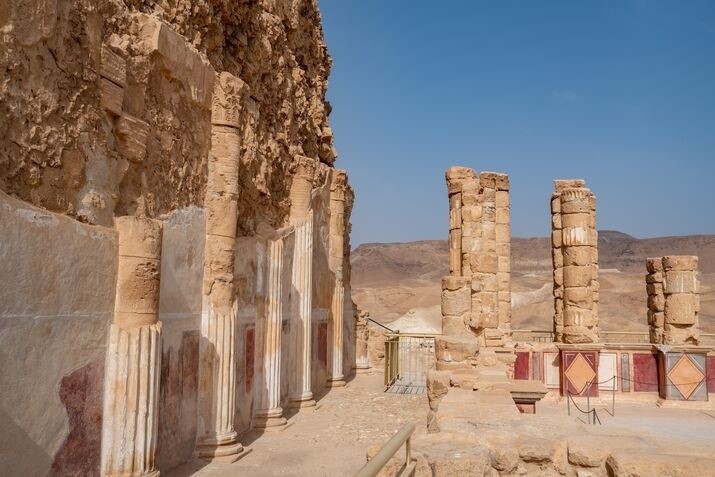
The Same Outfit Can Feel Wrong Twenty Minutes Later
March in Haifa rarely requires complicated clothing, but it can expose the weakness of dressing for a single moment.
You leave the hotel during a bright spell, walk through a relatively protected neighborhood and feel comfortable. Later, you reach a higher, more open part of the city where the breeze is easier to notice. Nothing dramatic has happened to the weather, yet the layer you nearly left behind suddenly seems useful.
The opposite happens too. After climbing uphill, you may become warm enough to remove something, only to put it back on once you stop moving.
This is why March clothing works best when it is easy to adjust rather than perfectly matched to one temperature reading.
Don't Compare Neighborhoods by Temperature Alone
Two locations can share similar recorded temperatures while producing different levels of comfort.
Exposure can matter as much as elevation. So can sunshine, shade and whether you are moving or standing still. Haifa's topography places these variables close together, which is precisely why visitors can notice the differences during an ordinary sightseeing day.
Instead of trying to predict an exact temperature change between the lower city and Mount Carmel, use a more practical framework.
Reading Haifa's March Micro-Environments
| If You Are... | Pay More Attention To... | Practical Reason |
|---|---|---|
| Near the lower city | Sun, shade and local wind | Buildings may alter exposure |
| Moving uphill | Activity level | Climbing can make conditions feel warmer |
| At an open Carmel viewpoint | Wind and cloud | Exposure becomes more direct |
| In a sheltered upper street | Actual conditions | Higher does not automatically mean uncomfortable |
| Stopping after a climb | Cooling once activity ends | Perceived warmth can change quickly |
| Returning later in the day | Hourly forecast | Conditions may differ from the morning |
The point is not to create six different weather zones. It is to show why one citywide temperature cannot predict every moment of a vertical sightseeing day.
Let Transport Simplify the Vertical Changes
Haifa's elevation does not have to become a physical challenge every time you move between areas.
Depending on your route and current transport availability, using public transport, a taxi or another suitable connection for a larger elevation change can make the day more comfortable. You can then explore individual areas on foot rather than spending unnecessary energy repeatedly climbing between them.
In March, this has another small advantage: you avoid making every clothing decision while your body is heated by a long uphill walk.
Sometimes the easiest way to understand how a neighborhood actually feels is to arrive there before you have spent twenty minutes climbing toward it.
Spring Sunshine Can Be More Convincing Than It Should Be
After winter, a bright March day has psychological power.
The sunlight feels warmer, café terraces look inviting and the entire city can seem to announce that winter has finished. You begin treating the jacket in your hand as unnecessary baggage.
Perhaps it is.
But March remains transitional enough that a later cloudier or breezier period can change the experience, particularly somewhere exposed.
Enjoy the spring warmth when it appears without requiring it to last until dinner.
That small amount of flexibility is more useful than trying to decide whether March should officially be called warm or cool.
The Mediterranean and Carmel Create Haifa's Weather Identity
This is where the Haifa cluster needs to remain disciplined.
A general Israel Weather in March article can discuss seasonal change across the country. A future Jerusalem Weather in March article should explain its own inland, elevated urban environment. Neither needs to duplicate the experience of moving between Haifa's Mediterranean lower areas and the slopes of Mount Carmel.
Haifa's geography creates the information gain.
You can experience coastline, steep urban terrain and elevated neighborhoods within one compact city. March simply makes those transitions easier to notice because the weather sits between winter and established warm-season conditions.
Don't Spend the Day Looking for the “Warmest” Part of Haifa
Recognizing microclimate differences does not mean you should use them to optimize every hour.
If a place interests you, go there.
Weather becomes relevant when deciding what to carry, whether an exposed stop deserves an additional layer or why you suddenly feel cooler than you did thirty minutes earlier.
It should not determine which parts of Haifa are worth seeing.
That distinction keeps this article useful rather than turning a subtle geographical effect into an exaggerated travel strategy.
March Makes Haifa's Geography Tangible
You can understand from a map that Haifa rises toward Mount Carmel.
March allows you to feel that geography.
A lower street can be comfortable while an exposed higher stop feels breezier. A climb changes your body temperature before the weather itself has changed. Sunshine makes one location feel distinctly springlike, while shade somewhere else reminds you that the season remains transitional.
None of those differences needs to be dramatic to matter.
Together, they explain why “Haifa: 18°C” is only the beginning of the weather story.
12 Questions About Haifa in March
1. What is the weather like in Haifa in March?
March brings transitional spring conditions to Haifa, with milder periods becoming more common while rain, cloud and cooler weather can still occur. Elevation, exposure and Mediterranean influence can also make different parts of the city feel subtly different during one day.
2. Is Haifa warm in March?
Pleasantly mild or warm periods are possible, particularly in sunshine, although March should not be treated as established summer weather. Cloud, wind, elevation and time of day can change perceived comfort, making adaptable clothing particularly useful.
3. Does it rain in Haifa in March?
Rain can still occur during March as Haifa moves away from its wetter winter period. The frequency and timing vary between individual travel dates, so current forecasts are more useful for itinerary decisions than relying entirely on monthly averages.
4. Is Mount Carmel colder than lower Haifa in March?
Higher areas can sometimes feel cooler or more exposed, but there is no fixed difference that applies every day. Sunshine, wind, cloud, shelter and exact location also influence comfort, so elevation should be treated as one factor rather than a guaranteed rule.
5. What should I wear in Haifa in March?
Adaptable layers are useful because conditions can change with elevation, exposure, activity and time of day. A light additional layer may be valuable even when lower or sheltered areas feel comfortable, particularly if your itinerary includes exposed Carmel locations.
6. Why does Haifa weather feel different between neighborhoods?
Haifa's neighborhoods occupy different elevations and levels of exposure between the Mediterranean and Mount Carmel. Buildings, wind, sunshine and shade add further variation, meaning identical citywide temperature readings do not necessarily produce identical perceived conditions everywhere.
7. Does walking uphill make March feel warmer?
Yes, physical effort can temporarily make conditions feel considerably warmer. After reaching your destination and stopping, you may notice the surrounding temperature or wind more clearly, which is why removable layers work particularly well during a vertical sightseeing day.
8. Are Haifa's viewpoints comfortable in March?
They can be very pleasant when conditions cooperate, although open viewpoints may expose visitors more directly to wind or changing cloud. Check the day's forecast and carry an adaptable layer rather than assuming conditions will match those on a protected street below.
9. Is March good for walking around Haifa?
March can support enjoyable walking when weather conditions are suitable, although Haifa's slopes affect the physical effort required. This article deliberately leaves extended walking-season strategy to April and focuses instead on how elevation changes the weather experience itself.
10. Do I need rain protection in Haifa in March?
It is worth checking the forecast because March can still produce rain. If precipitation is expected, compact rain protection can be useful, but there is no reason to carry substantial wet-weather equipment automatically on every March sightseeing day.
11. Is March the best time to visit Haifa?
That comparison belongs to a dedicated Best Time to Visit Haifa guide. March's exclusive purpose here is explaining how Haifa's elevation, exposure and vertical geography can create different weather sensations while moving between the Mediterranean side of the city and Mount Carmel.
12. How is March different from February in Haifa?
February focuses on the visual transformation that can follow Mediterranean winter rain, particularly when clearing conditions reopen views across Haifa and the sea. March changes dimension entirely, examining how moving between lower Haifa and Mount Carmel can alter perceived weather within the same spring day.

A travel professional specializing in tailor-made travel planning, guest experience management, and multi-destination tourism operations.
With over 23 years of experience in the travel industry, he designs and manages private and cultural tours for international travelers across Türkiye, Greece, Egypt, Jordan, Morocco, and other destinations.
He has strong expertise in both online and face-to-face guest communication, sales processes, and end-to-end travel operations.
Working closely with hotels, travel agencies, and local partners, he ensures smooth coordination and high-quality travel experiences at every stage of the journey.
His focus is on delivering personalized, reliable, and seamless travel experiences for international guests worldwide.