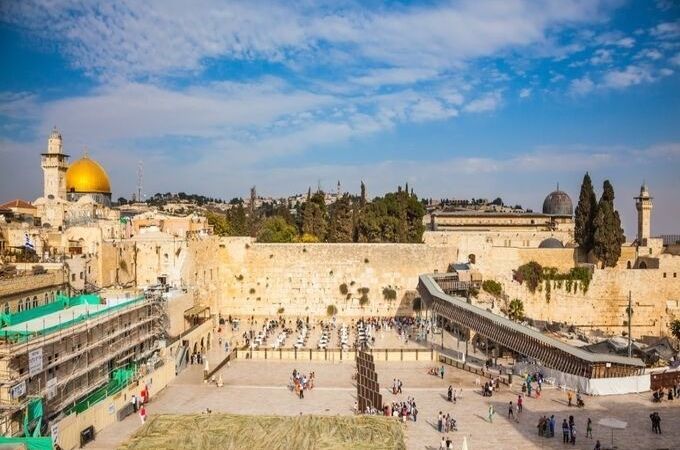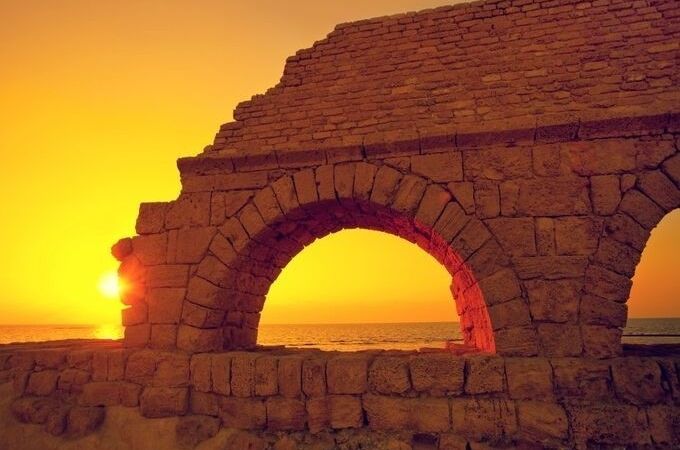
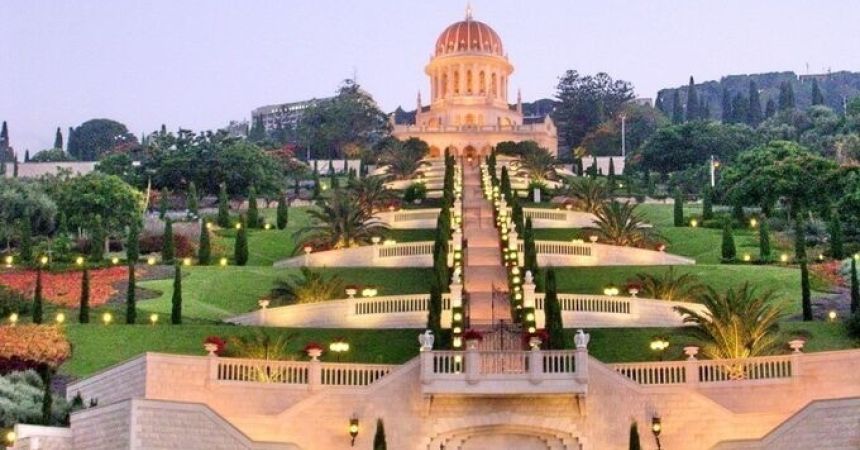
Israel Weather in April: Spring Sunshine & Regional Climates
Last Updated: August 9, 2026
April gives travellers a problem that winter rarely creates: too many good reasons to stay outside.
Jerusalem can support long walking days without the persistent cold of midwinter, Mediterranean cities begin spending more of their lives outdoors, northern landscapes may still carry the colour produced by the rainy season, and the Dead Sea and Negev remain highly attractive before serious summer heat begins narrowing the comfortable part of the day.
It is tempting to translate all of this into one familiar conclusion: April is one of the best months to visit Israel.
That may be true for many travellers, but it is not particularly useful advice.
The more interesting question is what to do with the weather once you have it, because an April itinerary can easily become overloaded with archaeological sites, hikes, city walks, desert excursions and long road days simply because almost everything appears seasonally possible.
Think of April as giving you an outdoor budget.
The goal is not to spend every minute of it.
It is to spend it on experiences that become noticeably harder once the year gets hotter.
Spend Your Best Hours on Places With No Roof
When April produces a clear, comfortable day, the experiences that gain most are generally those with substantial exposure.
Masada is an obvious example. So are desert walks, archaeological landscapes, Jerusalem viewpoints and nature reserves where the surroundings matter as much as the individual site.
Museums do not become worse in good weather, but they do not need it.
This distinction can improve itinerary sequencing considerably.
| Experience | Value of Good April Weather | Why |
|---|---|---|
| Masada & exposed archaeology | Very High | Limited shade makes season important |
| Negev landscapes | Very High | Comfortable outdoor time before summer heat |
| Jerusalem walking | High | Long sightseeing days become easier |
| Nature reserves | Very High | Spring conditions favour outdoor exploration |
| Tel Aviv waterfront | High | Outdoor city life becomes increasingly attractive |
| Museums | Low | Valuable regardless of weather |
| Markets & food experiences | Medium | Easy to combine with mixed conditions |
A good April itinerary therefore does not merely contain outdoor experiences. It gives the best weather to the experiences that deserve it.
April Is When Jerusalem Stops Feeling Like a Winter Project
During January and February, Jerusalem sightseeing often involves watching the forecast, carrying rain protection and accepting that a cold or wet period may rearrange the day. March begins loosening those constraints without fully removing them.
April changes the balance more decisively.
Longer daylight makes it easier to connect different sections of the city without feeling that every outdoor stop is competing with sunset, while generally milder conditions encourage travellers to explore on foot rather than moving efficiently between major landmarks.
That matters in Jerusalem because much of the city exists between the places visitors have already written on their list.
A walk connecting historic quarters, viewpoints and markets can become as memorable as the individual sites themselves when the weather allows enough time to notice the transitions.
Travellers interested in giving this cultural layer proper space can consider Jerusalem cultural tours, where the city is treated as more than a collection of religious landmarks.
Don't Spend All of April in Cities
One of the easiest April mistakes is building an itinerary that could operate almost identically in November.
Jerusalem, Tel Aviv and major historical sites remain essential for many first-time visitors, but April offers something more seasonal: landscapes that are still emerging from the wetter part of the year while temperatures remain broadly favourable for being outdoors.
Depending on winter rainfall and exact timing, northern and central areas may retain green scenery and seasonal flowering. Conditions vary from year to year, so no responsible itinerary should promise a particular wildflower display on fixed dates far in advance.
The broader opportunity remains.
April is a month when looking out of the vehicle window should occasionally make you change the plan.
Give Nature a Real Day, Not Two Hours Between Sites
Nature often receives leftover time in cultural itineraries.
A traveller visits an archaeological site in the morning, stops at a viewpoint for twenty minutes and describes the day as combining history and nature.
April deserves something more deliberate.
A proper outdoor day can involve walking, landscapes, a nature reserve or a slower regional route where the environment is the purpose rather than the background. The exact choice should reflect current conditions and personal ability rather than a generic list of “best hikes.”
Those wanting the seasonal landscape to become part of the journey can consider Israel nature tours, particularly when walking and countryside experiences are integrated before hotter months begin reducing comfortable midday activity.
The important point is not to add another attraction.
It is to allocate enough time for an experience that cannot be rushed successfully.
The Desert Is Still Open for the Whole Day—But Not Forever
April creates an interesting deadline in the Negev and around the Dead Sea.
The region remains highly attractive for outdoor exploration, yet the direction of travel is obvious: temperatures are rising, the sun is becoming stronger and the summer heat-management season is approaching.
Early starts increasingly make sense even when they are not strictly necessary.
This is not because every April afternoon is too hot for desert sightseeing. Many are not. Starting earlier simply provides more flexibility if conditions become warmer than expected and allows exposed sites to be enjoyed before the strongest part of the day.
April therefore sits in a valuable position between winter's cooler desert conditions and the more disciplined schedules required later.
For travellers who want the south to carry significant weight in the itinerary, Israel desert circuits can connect the Dead Sea and Negev while the outdoor day remains relatively generous.
Your April Outdoor Budget Changes by Region
The same sightseeing schedule should not be copied from Jerusalem to the Dead Sea.
By April, regional climate differences remain important, but the question is no longer primarily “Where is warmer?”
It becomes “How many comfortable outdoor hours does this region give me, and when should I use them?”
Jerusalem
Long walking days become one of the city's main seasonal advantages, particularly when the forecast is settled.
Mediterranean Coast
Outdoor city life becomes increasingly appealing, although the sea itself may still feel cool to travellers expecting summer beach conditions.
Northern Israel
Landscape and walking can be particularly rewarding when seasonal greenery remains, but conditions depend on the year's rainfall pattern.
Dead Sea & Negev
Outdoor potential remains excellent, although stronger sun and rising temperatures begin making timing more relevant than during winter.
Eilat
The warmer south is moving quickly towards its hot season, so travellers interested in active outdoor experiences should increasingly favour mornings over the middle of the afternoon.
Notice that these are not five different weather reports.
They are five different ways to spend the same resource: usable outdoor time.
Passover and Easter Can Matter More Than the Forecast
April has another planning variable that does not appear on climate charts.
Depending on the year, Passover and Easter can fall within or near the month, affecting visitor patterns, accommodation demand, opening arrangements, transportation and the atmosphere around important religious locations.
The dates move, which is why they should never be hard-coded into an evergreen weather article.
Travellers should check the calendar for their specific year.
This matters particularly in Jerusalem, where religious holidays can change the experience of particular areas substantially. For some visitors, witnessing that atmosphere is one of the reasons to travel. Others may prefer quieter sightseeing conditions and should plan dates accordingly.
Weather tells you whether a long walk may be comfortable.
The holiday calendar tells you what you may find when you arrive.
Both belong in April planning.
Beach Weather Is the Wrong Test for April
A common question is whether April is warm enough for the beach.
The answer depends on location, exact conditions and what “beach weather” means to you, but the question itself can obscure the month's greater advantage.
April does not need to behave like July to be successful.
A sunny Tel Aviv afternoon beside the Mediterranean can be wonderful even if you never swim. Eilat may provide stronger opportunities for warm-weather activities, while the Dead Sea can increasingly appeal to travellers who want to spend time in the water.
Yet choosing April primarily because you expect a guaranteed beach holiday ignores what the month does unusually well.
This is the season for movement.
Walk farther.
Stay longer at exposed archaeological sites.
Give landscapes a full day.
Use the coast when conditions invite you outside, but do not demand that spring imitate summer.
The April Test: What Would Be Harder in July?
When deciding whether an experience deserves space in the itinerary, ask a simple question:
Would I enjoy this less during serious summer heat?
If the answer is yes, April is probably the time to prioritise it.
A long Jerusalem walk qualifies.
A substantial desert experience qualifies.
Exposed archaeology qualifies.
A nature-focused day may qualify depending on the region and seasonal conditions.
An indoor museum does not disappear in July. Neither does a restaurant.
This creates a useful way to edit an overloaded itinerary without ranking destinations arbitrarily.
Don't Turn Good Weather Into a Bad Schedule
April's biggest planning risk is abundance.
When weather allows cities, nature, archaeology and desert to coexist comfortably, travellers often respond by adding all of them in rapid succession. The result can be an itinerary containing excellent experiences that nobody has enough time to enjoy.
Good weather does not make a six-hour drive shorter.
It does not make changing hotels every night less tiring, nor does it turn four major archaeological sites in one day into relaxed sightseeing.
April should create space, not fill it.
If you gain several additional comfortable outdoor hours compared with summer, use some of them to walk more slowly, stop for lunch without checking the clock or stay at a landscape after the photographs have already been taken.
That is a much better use of spring than adding another pin to the route.
April's Advantage Is Freedom With a Deadline
By April, winter no longer dominates the planning conversation, yet the strongest summer heat has not taken control either.
That creates an unusually broad outdoor window.
Jerusalem can be walked seriously, the countryside can still carry seasonal colour, the Dead Sea and Negev remain highly usable, and Mediterranean outdoor life is returning without requiring the trip to become a beach holiday.
The window is generous but temporary.
May will move the country closer to its dry, warm-season rhythm, while June changes the logic again as heat becomes a more important itinerary factor.
April belongs to the period before those compromises become necessary.
The smartest traveller does not respond by doing everything.
They use the weather for the experiences that need it most.
Build an April Day: Three Travellers, Three Completely Different Trips
Two people can visit Israel during the same April week, experience almost identical weather and return home with completely different opinions about the month.
The difference is often not the forecast.
It is what they tried to fit into the day.
April's long, generally comfortable outdoor window gives travellers unusual freedom, but that freedom works differently for someone interested primarily in history than it does for a hiker or a visitor who prefers slow travel.
Here is how three very different April days might work.
The Culture Traveller: Let Walking Connect the History
8:00 AM – 11:30 AM | Begin outdoors
April mornings are valuable for historical areas that involve substantial walking. Rather than beginning with a museum, use comfortable early conditions for archaeological sites, old quarters or locations where streets and surrounding landscapes are part of the experience.
11:30 AM – 2:00 PM | Slow the pace
Lunch can become more than a quick break between monuments. Spring conditions often make terraces and outdoor seating attractive, while the middle of the day provides a natural point to move towards less exposed sightseeing if temperatures rise.
2:00 PM – 5:30 PM | Mix indoor and outdoor sites
Museums, religious interiors, markets and archaeological spaces can be combined without spending the entire afternoon exposed to the sun.
After 5:30 PM | Give the city back its atmosphere
April's increasing daylight means sightseeing does not necessarily collapse into dinner as soon as the afternoon ends. A neighbourhood walk, viewpoint or café can occupy the transition into evening.
For this traveller, April's advantage is not seeing more historical sites.
It is connecting them without spending half the day inside a vehicle.
The Active Traveller: Start Before You Need To
An active April itinerary should borrow one habit from summer even though serious summer heat has not fully arrived: begin earlier than necessary.
That decision creates options later.
| Time | Active April Day |
|---|---|
| 7:00–8:00 AM | Early breakfast and departure |
| 8:00–12:00 PM | Main hike or exposed outdoor activity |
| 12:00–2:00 PM | Lunch and recovery |
| 2:00–4:30 PM | Lighter sightseeing or scenic route |
| Late afternoon | Flexible outdoor stop |
| Evening | Leisure rather than another major activity |
The benefit becomes especially clear in desert regions.
If the afternoon turns warmer than expected, the principal physical activity is already complete. If conditions remain comfortable, the extra hours can be used for another landscape stop without pressure.
This is more sensible than starting late simply because an April forecast does not look hot.
The Slow Traveller: Leave Something Out
April may be even better suited to travellers who dislike highly structured itineraries.
A slow day can begin with a long breakfast, continue through one substantial neighbourhood or historical area and leave several hours without a fixed purpose. Good weather gives those empty hours value because walking, cafés, markets and viewpoints can fill them naturally.
The difficulty is resisting the feeling that favourable weather must be converted into productivity.
It does not.
A spring afternoon spent walking along the Mediterranean, sitting in a Jerusalem courtyard or stopping longer than planned somewhere in the countryside is not unused itinerary space.
For this traveller, April works because being outside can become the activity.
One Forecast, Different Priorities
The same clear April day therefore creates three completely different opportunities.
The culture traveller uses it to connect historical sites on foot.
The active traveller gives the coolest hours to the most physically demanding experience.
The slow traveller deliberately avoids filling every available hour.
None is making better use of the weather than the others.
What matters is recognising that April's seasonal advantage should support the way you actually enjoy travelling rather than encouraging you to adopt a faster itinerary simply because the conditions make one possible.
That distinction becomes increasingly important as Israel moves towards May and June, when warmer conditions begin deciding more of the day's structure for you.
April still leaves much of that decision in your hands.
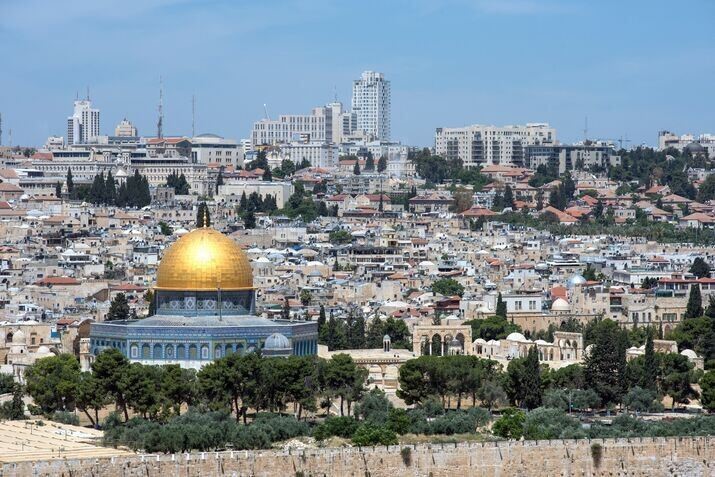
April Weather: What Sounds True vs What Actually Helps You Plan
April attracts confident statements.
“Perfect weather.”
“Best month for Israel.”
“Warm everywhere.”
“Great beach season.”
Each contains enough truth to sound convincing and enough simplification to create the wrong itinerary.
A better April guide needs to separate attractive travel shorthand from information that actually helps once you arrive.
“April Has Perfect Weather”
Not exactly. It has unusually versatile weather.
Those are different things.
Rain can still occur, temperatures vary between elevation, coast and desert, while warmer southern afternoons can already influence active plans. What makes April particularly useful is that many different experiences remain seasonally compatible.
You can build a journey containing long city walks, archaeology, nature and desert landscapes without the weather automatically making one of those elements impractical.
Perfection suggests certainty.
Versatility is the more useful promise.
“You Only Need Light Clothes”
This assumption often survives until the first cool Jerusalem evening.
April is considerably removed from midwinter, but elevation still matters, evenings can feel cool and individual weather systems do not disappear because the calendar says spring.
At the other end of the itinerary, exposed areas around the Dead Sea or farther south may feel considerably warmer during the afternoon.
A small number of compatible layers therefore remains more useful than packing exclusively for warm weather.
The suitcase should handle transitions rather than one average temperature.
“April Is Beach Season”
That depends on what you expect from a beach day.
Tel Aviv's waterfront becomes increasingly enjoyable as spring develops, and clear afternoons may encourage plenty of time beside the Mediterranean. Swimming comfort is more subjective because sea conditions, wind and individual tolerance vary.
Eilat and the Dead Sea present different possibilities again.
For travellers whose holiday succeeds only if several days provide reliably hot Mediterranean swimming conditions, April is not the strongest month to choose.
For travellers who want the sea alongside cities, nature and archaeology, it makes much more sense.
“The Desert Is Comfortable All Day”
April can provide excellent desert conditions, particularly compared with summer, but “comfortable” should not become permission to ignore sun exposure or current forecasts.
By this point in spring, southern temperatures are moving upward and exposed landscapes offer limited protection during the strongest part of the day.
Starting substantial outdoor activities earlier provides insurance against an unexpectedly warm afternoon and leaves room to slow down later.
This is especially useful because April's pleasant reputation can make travellers less cautious than they would be in July.
“Spring Means the Rainy Season Is Over”
The direction is towards drier weather, but seasonal transitions do not happen on a fixed date.
Rain can still affect parts of an April journey, particularly earlier in the month or in central and northern regions. One unsettled period should not be interpreted as abnormal, nor does it usually mean the entire trip will be wet.
For itinerary planning, this means retaining one or two movable outdoor experiences rather than constructing a winter-style rain strategy for every day.
“Holiday Crowds Are a Weather Problem”
Passover and Easter periods can coincide with excellent spring conditions, but weather is not necessarily what makes particular locations busy.
Calendar effects can matter independently.
Religious sites, accommodation demand and visitor flows may change substantially around important holiday dates, especially in Jerusalem. Because these dates vary by year, travellers should check the calendar for their exact trip rather than assuming every April week behaves similarly.
This distinction is important for evergreen planning.
Climate patterns are seasonal.
Holiday dates move.
“If April Is So Good, You Should See More”
This may be the most expensive myth in terms of travel quality.
Favourable weather makes it physically possible to fit more into the day, which encourages ambitious itineraries containing multiple cities, archaeological sites and landscapes with little time between them.
Yet April's real advantage is the opposite.
You can stay outside longer.
You can walk between places that might require more careful timing in hotter weather.
You can stop at a viewpoint without immediately calculating how much heat remains in the afternoon.
The month gives travellers additional usable time, but the best way to spend that time is not necessarily adding another attraction.
Sometimes April's greatest luxury is simply not needing to hurry.
Should You Actually Choose April?
April sounds attractive for almost everyone, which makes it easy to recommend without asking what kind of holiday the traveller wants.
A better decision can be made by looking at what would cause you to reject the month.
| Your Priority | April Verdict | Main Consideration |
|---|---|---|
| History + substantial walking | Excellent fit | Comfortable outdoor time |
| Nature + seasonal landscapes | Excellent fit | Conditions vary with winter rainfall |
| Dead Sea + archaeology | Excellent fit | Increasing southern warmth |
| Negev exploration | Strong fit | Earlier starts becoming useful |
| Mediterranean beach holiday | Conditional | Swimming weather not guaranteed |
| Avoiding holiday-period demand | Check dates | Passover/Easter vary annually |
| One climate throughout the trip | Poor expectation | Regional differences remain |
| Mixed first-time itinerary | Excellent fit | Several regions work simultaneously |
April's strength is obvious in the middle of this table: it performs particularly well for travellers who want several different types of experience within the same journey.
If Your Trip Is Only Five Days...
Do not use April's good conditions as an excuse to cross the entire country.
Choose a strong base and one contrasting region. Jerusalem combined with the Dead Sea, for example, provides cultural depth and a completely different landscape without allowing transportation to consume the holiday.
The seasonal advantage comes from having time to be outside, so spending too much of a short trip moving between hotels wastes precisely what April gives you.
If You Have Around a Week...
A week allows the itinerary to become more varied without turning into a race.
Jerusalem and Tel Aviv can be combined with the Dead Sea or another outdoor-focused region, depending on interests. Travellers who care more about nature than urban life may choose a different balance and give additional time to landscapes.
April does not require one “correct” seven-day route.
Its weather allows several versions to work.
If You Have Ten Days or Longer...
This is where April's versatility becomes especially valuable.
A longer journey can move through different elevations and environments while maintaining substantial outdoor content. Jerusalem, Mediterranean areas, northern landscapes and the desert can potentially belong to the same trip without requiring completely different seasonal strategies.
The temptation, once again, is adding too much.
Ten days should produce greater depth rather than simply a longer destination list.
Questions Travellers Usually Ask Once the Trip Is Almost Booked
Will I need a jacket in April?
Probably at some point, particularly during cooler evenings, at elevation or if unsettled weather arrives. A lightweight outer layer combined with other layers is more useful than packing exclusively for warm afternoons, especially when the itinerary moves between Jerusalem, the coast and southern regions.
Can I plan outdoor sightseeing every day?
You can build April around substantial outdoor activity, but leaving some flexibility remains sensible. Rain is still possible, while warmer southern conditions may influence timing. Activities heavily dependent on clear weather should be movable whenever reservations and logistics allow.
Can I swim during an April trip?
Possibly, particularly around the Dead Sea or Eilat, although comfort varies with actual conditions and personal preference. Tel Aviv can provide beautiful spring beach days, but travellers requiring reliably hot Mediterranean swimming weather should not treat April as equivalent to summer.
Does April work for children?
It can work particularly well for family itineraries because sightseeing does not generally require the same heat-management strategy as summer. The key is avoiding the opposite mistake: using comfortable weather to overload each day with long transfers and excessive sightseeing.
Do Passover and Easter make April a bad choice?
No, but their dates should be checked before finalising the itinerary. Holiday periods can influence demand, atmosphere and access around particular locations, especially Jerusalem. Some travellers actively value the experience, while others may prefer dates with fewer religious-calendar considerations.
Is early April different from late April?
Yes, although there is no guaranteed dividing line. Earlier April may retain a greater possibility of unsettled spring weather, while later dates generally move closer towards warmer, drier conditions, particularly in the south. Current forecasts remain more useful than assuming every year follows an identical progression.
Should I choose April specifically for hiking?
April can be excellent for suitable walking and hiking experiences, but trail choice should still reflect current weather, recent rainfall, heat and local conditions. Desert routes require particular attention because temperature and flash-flood considerations cannot be determined safely from monthly averages.
Is April better for cities or nature?
It does not require that choice, which is one of its greatest advantages. Comfortable city walking, seasonal landscapes, archaeology and desert experiences can coexist within the same itinerary, allowing travellers to build the trip around interests rather than selecting destinations solely according to climate.

A travel professional specializing in tailor-made travel planning, guest experience management, and multi-destination tourism operations.
With over 23 years of experience in the travel industry, he designs and manages private and cultural tours for international travelers across Türkiye, Greece, Egypt, Jordan, Morocco, and other destinations.
He has strong expertise in both online and face-to-face guest communication, sales processes, and end-to-end travel operations.
Working closely with hotels, travel agencies, and local partners, he ensures smooth coordination and high-quality travel experiences at every stage of the journey.
His focus is on delivering personalized, reliable, and seamless travel experiences for international guests worldwide.