Israel Weather in June: Summer Heat, Beaches & Desert Climate
Last Updated: August 9, 2026
At 1:30 in the afternoon, two travellers can be having completely different experiences of June in Israel.
One is walking through Jerusalem after lunch, looking for a shaded route towards the next historical site and planning to stay outside until evening. The other left Masada hours earlier and is now deliberately doing very little beside the Dead Sea because the exposed archaeological part of the day was finished before the strongest heat arrived.
Neither has chosen the wrong schedule.
They are simply travelling through two different versions of the same June.
This is the point in the year when asking “What is the weather like in Israel?” becomes less useful than asking “What should my day look like where I am going?”
June brings long daylight, a firmly established dry-season pattern and increasingly dependable summer conditions, but geography determines what you should do with them. Jerusalem's elevation, Tel Aviv's Mediterranean setting and the much hotter low-lying desert regions cannot sensibly share one sightseeing timetable.
So instead of touring the country city by city, follow two June days running side by side.
7:00 AM — One Traveller Can Take Their Time; The Other Should Already Be Moving
Jerusalem: Breakfast is beginning.
An early start is certainly useful, particularly for travellers planning a substantial walking day, but June does not automatically require everyone in Jerusalem to leave the hotel at sunrise. The morning is valuable because conditions are generally more comfortable and major outdoor sections can be completed before afternoon warmth builds.
Dead Sea: The day has already started.
Around Masada and the Dead Sea, early hours carry considerably more value. Exposed archaeological sightseeing becomes harder as temperatures rise, which means an early departure is not merely about fitting more attractions into the itinerary.
It changes the quality of the experience.
This is June's first major rule: the hotter the region, the more expensive late mornings become.
9:30 AM — Both Travellers Are Outside, for Different Reasons
In Jerusalem, the traveller is now deep into a historical walking day.
Old City streets, archaeological areas and viewpoints can absorb hours, while the absence of winter rain makes planning considerably more dependable. Shade, water and sensible pacing matter, but the city remains highly workable for cultural touring.
Travellers who want history to form the backbone of the journey can explore Israel cultural journeys, using June's long daylight to create substantial sightseeing days without assuming every region should follow the same schedule.
At the Dead Sea, the second traveller is already approaching the end of the most exposed part of the morning.
This is not a disadvantage.
Starting early can create a much better rhythm because the archaeological or active component happens while conditions are relatively manageable, leaving less demanding experiences for later.
The June Split at a Glance
| Time of Day | Jerusalem / Highlands | Dead Sea / Desert |
|---|---|---|
| Early morning | Excellent | Premium outdoor time |
| Late morning | Strong sightseeing period | Heat increasingly important |
| Midday | Selective outdoor touring | Minimise strenuous exposure |
| Afternoon | Sightseeing with shade/breaks | Slower programme |
| Late afternoon | Outdoor value rises again | Outdoor options gradually improve |
| Evening | Excellent city time | Warm, often pleasant for slower activities |
The important information here is not an exact temperature.
It is when each region asks you to change behaviour.
12:30 PM — Jerusalem Keeps Going
Lunch arrives, but the Jerusalem traveller has no reason to treat it as the end of the sightseeing day.
June is warm, and exposed sections deserve sensible timing, yet the city's elevation makes its summer experience different from the Dead Sea or lower desert regions. After lunch, museums, markets, religious interiors or shaded historical areas can keep the day moving without forcing several consecutive hours under direct sun.
This is where poor June itineraries often become unnecessarily tiring.
They treat the day as one uninterrupted block.
A better programme changes intensity without completely stopping.
12:30 PM — The Dead Sea Traveller Stops Trying to Win
The second traveller is having lunch.
There is no prize for being the person who spends the greatest number of hours outside in desert heat.
The middle of the day can belong to the hotel, pool, a relaxed meal, a transfer or another low-intensity activity. Time beside the Dead Sea may also fit into the itinerary according to current conditions, but heat and sun exposure still require appropriate care.
This slower middle is not wasted travel time.
It is what allows an early archaeological start and a later outdoor period to coexist comfortably.
Those wanting to integrate the region into a wider itinerary can consider Dead Sea and Masada tours, where the sequence of experiences matters as much as the list of places visited.
3:30 PM — Tel Aviv Would Make a Third Schedule
Now introduce another traveller.
They are in Tel Aviv.
June gives the Mediterranean coast its own daily rhythm because the sea becomes a central part of the city's summer identity, while humidity can make the temperature feel different from the drier inland environment.
A traveller who spent the morning exploring Jaffa or neighbourhoods can allow the afternoon to become slower and more coastal without feeling that sightseeing has ended.
This is an important distinction.
In Jerusalem, afternoon adjustment may mean shade and indoor cultural sites.
At the Dead Sea, it may mean deliberately reducing physical activity.
In Tel Aviv, it can mean changing the type of holiday for several hours.
The beach, café and waterfront are not interruptions to the city itinerary.
In June, they are part of it.
6:00 PM — The Country Becomes Larger Again
One of June's great advantages is that daylight remains generous well beyond the traditional sightseeing hours.
Jerusalem becomes increasingly attractive for walking as the strongest afternoon warmth eases, allowing neighbourhoods, viewpoints and outdoor restaurants to return to the centre of the day.
Tel Aviv hardly needs to “return” outdoors because the evening extends naturally from the waterfront into restaurants and nightlife.
In desert regions, late afternoon can reopen opportunities that were deliberately avoided several hours earlier, depending on local conditions and the nature of the activity.
June therefore does not give travellers one long sightseeing day.
It gives them several distinct pieces of day that can be assembled differently.
9:00 PM — Summer Changes the Meaning of Evening
Winter itineraries often treat dinner as the conclusion.
June does not need to.
Warm evenings allow streets, restaurants, neighbourhoods and waterfront areas to remain active long after conventional sightseeing has finished. This is particularly valuable because shifting some travel experience later reduces the pressure to force everything into the hottest daytime hours.
For travellers who enjoy combining cultural touring with a more relaxed evening rhythm, Israel summer itineraries can use this seasonal pattern instead of treating long daylight merely as an excuse to add another attraction.
The distinction matters.
A longer day should create more breathing room.
It should not automatically create a longer checklist.
The Biggest June Mistake Is Copying Yesterday's Schedule
Suppose yesterday was spent in Jerusalem.
Breakfast at 8:00, sightseeing from 9:00, lunch around 1:00 and another outdoor site at 2:30 may have worked perfectly well.
Today you travel to the Dead Sea.
Repeating that timetable simply because it was successful yesterday ignores the most important June variable: geography.
The opposite mistake happens when travellers become so concerned about desert heat that they apply the same restrictions everywhere, abandoning useful Jerusalem afternoon hours or assuming Tel Aviv requires the same schedule as Masada.
June is not one climate demanding one solution.
It is a month when regional differences begin affecting behaviour, not merely clothing.
June Weather Is Really a Scheduling Question
By this stage of the year, rain has largely disappeared from the everyday planning conversation and summer has established itself strongly enough that forecasts become less about whether the trip can proceed and more about how the day should be arranged.
That makes June relatively predictable but not necessarily effortless.
Sun exposure matters.
Hydration matters.
Shade matters.
Most importantly, timing matters differently depending on where you wake up.
A successful June itinerary therefore does something a generic weather chart cannot: it changes its daily rhythm as the route moves through the country.
The traveller who understands that does not need every region to feel equally comfortable at 2:00 PM.
They simply need to be doing the right thing at 2:00 PM.
The June Heat Cost: Not Every Experience Pays the Same Price
Heat does not affect every travel experience equally.
A museum visit at 3:00 PM remains broadly the same whether the temperature outside is mild or hot. A long exposed archaeological walk can become a completely different experience under stronger summer sun, while a Mediterranean afternoon may actually gain value as temperatures rise.
This creates a useful way to plan June: instead of asking whether an activity is “possible,” consider its heat cost.
Heat Cost 1: Almost Weather-Proof
Museums, historical interiors, food experiences and substantial indoor attractions sit at the lowest end of the scale.
They are useful partly because they can absorb hours that would otherwise be spent in stronger afternoon conditions, particularly when an itinerary contains several demanding outdoor mornings.
This does not mean every indoor attraction belongs after lunch.
It means good June planning avoids spending the coolest hours on experiences that would work equally well later.
Heat Cost 2: Better With Timing, Easy to Adapt
Markets, neighbourhood exploration and urban sightseeing fall into a more flexible category.
A long walk through exposed streets may become tiring during the warmest part of the day, but these experiences usually contain cafés, shaded areas, shops and indoor stops that allow the pace to change naturally.
Jerusalem and Tel Aviv therefore remain highly workable even when midday conditions are warm.
The solution is rarely cancelling the experience.
It is reducing how long you remain continuously exposed.
Heat Cost 3: The Weather Starts Rewriting the Plan
Large archaeological sites and substantial outdoor historical areas require more attention.
June sunshine can turn a leisurely two-hour exploration into something travellers want to finish quickly if they arrive during the wrong part of the day.
Starting earlier changes that equation dramatically.
The site itself has not changed, but the amount of attention you are willing to give it has.
This is why timing should be treated as part of sightseeing quality rather than merely a comfort issue.
June Heat Cost Matrix
| Experience | Heat Cost | Better June Strategy |
|---|---|---|
| Museum / indoor heritage | 1/5 | Save for warmer hours |
| Markets & food areas | 2/5 | Mix indoor and outdoor stops |
| Jerusalem walking | 3/5 | Prioritise morning + later afternoon |
| Tel Aviv neighbourhoods | 3/5 | Combine with coastal breaks |
| Exposed archaeology | 4/5 | Visit earlier |
| Masada | 5/5 | Make it an early-day priority |
| Negev hiking | 5/5 | Route, forecast and early timing are essential |
| Mediterranean beach time | 2/5 | Heat can increase its itinerary value |
The table reveals something important: warmer weather does not simply reduce June's travel value.
It redistributes it.
Heat Can Actually Make the Coast More Valuable
Tel Aviv demonstrates the other side of the equation.
As temperatures rise, Mediterranean time becomes more attractive rather than less, allowing beach hours, swimming and waterfront relaxation to balance cultural sightseeing.
A traveller who dislikes slowing down may initially see this as losing half an afternoon.
It is better understood as changing travel mode.
Instead of trying to make 2:00 PM behave like 9:00 AM, June allows the city to become coastal for several hours before urban life takes over again later.
That seasonal rhythm is part of the destination.
Heat Cost 5 Does Not Mean “Don't Go”
This distinction is particularly important for Masada and the Negev.
A high heat cost means that seasonal conditions substantially influence how an activity should be planned. It does not automatically mean the experience should be removed.
An early start can transform the day.
Appropriate routes, sufficient water, sun protection and decisions based on current conditions can keep suitable activities within an itinerary, while strenuous desert hiking may need reconsideration during hotter periods.
The mistake is using a monthly article to decide that every outdoor activity is safe regardless of the actual day's conditions.
Spend Cool Hours Where They Are Worth the Most
June planning becomes easier once time is treated as a limited resource.
If you have three relatively comfortable morning hours, give them to the experience whose quality declines most in heat.
Masada deserves them more than a museum.
A long archaeological walk deserves them more than lunch.
A desert landscape deserves them more than shopping.
Later, when the afternoon becomes warmer, the experiences that tolerate heat—or actively benefit from summer conditions—can take over.
That simple reordering allows June to remain a highly varied travel month without pretending that summer weather affects every part of the itinerary equally.
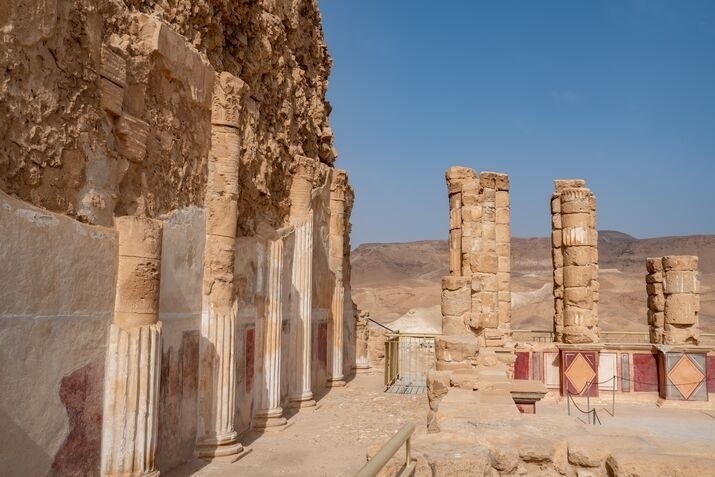
Put Your June Itinerary Through a Stress Test
Imagine this itinerary arrives in your inbox:
8:30 AM: Breakfast
9:30 AM: Depart hotel
11:00 AM: Outdoor archaeological site
1:30 PM: Lunch
3:00 PM: Masada
5:30 PM: Dead Sea
7:30 PM: Return
Nothing looks obviously wrong on paper.
The distances may work. The attractions are open. There is enough daylight. Every important stop appears to fit.
For June, however, this is exactly the kind of itinerary that should be questioned.
The problem is not what it contains.
The problem is where the demanding experiences sit inside the day.
Stress Test 1: Where Is the Most Exposed Experience?
Find the activity with the least shade and greatest physical exposure.
If it sits near the middle of the afternoon, ask whether it can move.
In the example above, placing Masada at 3:00 PM makes little seasonal sense when it could occupy the morning and allow less demanding activities to follow.
This simple test catches many poorly designed summer itineraries without requiring complicated weather data.
Stress Test 2: Is Lunch in the Way?
Lunch should provide relief during a June day, not consume one of its most useful outdoor periods.
A leisurely meal at 11:30 AM may be perfect on a relaxed Tel Aviv day, yet less logical when it delays an exposed archaeological visit until early afternoon.
Meal timing should follow the day's physical demands rather than forcing every itinerary into the same restaurant schedule.
Sometimes the best June lunch is slightly later because the important outdoor work has already been completed.
Stress Test 3: Does the Day Contain a Recovery Period?
A full itinerary does not need to mean continuous sightseeing.
Look for one section where the pace drops: lunch, hotel time, a transfer, museum, coastal break or another experience that reduces physical exposure.
If the schedule contains eight consecutive hours of walking, archaeological sites and open landscapes, long daylight has probably been mistaken for unlimited energy.
June provides enough time to slow down without losing the day.
Stress Test 4: What Happens If It Is Hotter Than Expected?
A robust itinerary should survive a warmer-than-average afternoon.
Ask what can be shortened, moved or replaced without damaging the core experience.
| If This Becomes Difficult... | Protect This Instead |
|---|---|
| Long afternoon walk | Morning historical sightseeing |
| Exposed archaeological stop | Earlier major site |
| Strenuous desert activity | Scenic or lower-intensity experience |
| Continuous city walking | Indoor cultural interval |
| Midday outdoor lunch | Shaded or indoor meal |
| Packed afternoon schedule | Late-day outdoor return |
The goal is not predicting an exact temperature months before travel.
It is making sure one hot period cannot collapse the entire day.
Stress Test 5: Are You Using the Evening?
This is where many June itineraries fail unnecessarily.
They overload the afternoon because they assume meaningful travel ends around 5:00 PM.
June evenings can return hours to the itinerary.
Neighbourhood walks, outdoor restaurants, waterfront time and less structured city exploration can move later, creating room for a slower middle of the day without reducing the overall experience.
A traveller who finishes formal sightseeing earlier may actually experience more of the destination once dinner stops being the final item on the schedule.
Rebuild the Day
The earlier itinerary could therefore become:
Early morning: Masada and the most exposed sightseeing
Late morning: Additional regional visit
Early afternoon: Lunch and reduced physical activity
Mid-afternoon: Dead Sea or relaxed programme according to conditions
Late afternoon: Scenic travel or flexible stop
Evening: Dinner and leisure
The attractions have barely changed.
The day has.
That is the difference between an itinerary designed for a destination and one designed for a destination in June.
Before booking a summer programme, travellers should therefore ask one question that rarely appears in brochures:
Does the order still make sense when the weather becomes part of the itinerary?
If the answer is yes, June becomes much easier.
The June Decision File: Choose It or Leave It?
June is easy to misunderstand because two statements can both be true.
It is hot.
It can also be an excellent month for travelling.
The deciding factor is not whether you enjoy “warm weather” in the abstract, but how you want to spend your days. Travellers comfortable with early starts, slower afternoons and active evenings can use June extremely well, while someone expecting long desert walks at midday may be choosing the wrong month for the trip they have imagined.
Choose June If You Want Long, Dependable Days
June's dry-season pattern removes much of the weather uncertainty that shapes winter and early spring travel.
Plans are less likely to revolve around rain, daylight is generous and evenings remain useful long after formal sightseeing ends. This reliability works particularly well for multi-stop itineraries because fewer contingency periods need to be built around unsettled weather.
The trade-off is that temperature replaces rain as the main scheduling variable.
For many travellers, that is easier to manage.
Choose June If You Want Culture and Coast Together
June gives Tel Aviv and the Mediterranean much greater weight within a cultural itinerary.
Instead of treating the beach as something to visit if the weather happens to cooperate, travellers can build coastal time naturally around city sightseeing. This creates an effective contrast with Jerusalem, where history and substantial walking may dominate the programme.
June therefore suits travellers who dislike choosing between sightseeing and summer atmosphere.
They can have both.
Think Carefully If Desert Hiking Is the Main Goal
The Negev remains fascinating in June, but a hiking-heavy itinerary needs much greater attention to route, timing, current temperature and local advice than it would during cooler months.
This distinction matters because “visiting the desert” and “undertaking strenuous desert hiking” are not the same holiday.
Scenic travel, selected activities and properly timed visits may remain part of a strong itinerary even when demanding exposed routes are unsuitable.
Think Carefully If You Dislike Early Starts
A traveller who prefers breakfast at 9:30 AM and sightseeing from 11:00 AM onwards can still enjoy Jerusalem and Tel Aviv.
The same habit becomes increasingly inefficient around Masada and hotter desert regions.
June does not require sunrise starts every day, but travellers who refuse to adjust their morning schedule may lose some of the month's best outdoor hours.
June Fit Check
| Your Travel Style | June Fit | Why |
|---|---|---|
| History & culture | ★★★★☆ | Strong if exposed sites are timed well |
| City + beach | ★★★★★ | Mediterranean season is established |
| Food & nightlife | ★★★★★ | Warm evenings extend the day |
| Dead Sea experience | ★★★★☆ | Excellent with early scheduling |
| Desert road trip | ★★★★☆ | Strong with heat-aware planning |
| Serious desert hiking | ★★☆☆☆ | Conditions require much greater caution |
| Cool-weather walking | ★★☆☆☆ | Better months exist |
| Sun-focused holiday | ★★★★★ | Dry summer pattern is a major advantage |
“But Isn't June Too Hot?”
Not everywhere in the same way, and not during every hour.
That is the central argument of this entire June guide.
Jerusalem's elevation produces a different summer experience from the low-lying Dead Sea, while Tel Aviv's Mediterranean climate introduces humidity and the cooling value of the coast. The Negev creates another set of conditions again.
A national maximum temperature cannot explain how the trip will feel.
The itinerary can.
If the hottest hours contain the most physically demanding activities, June may feel exhausting. If those activities occupy the morning while afternoons become slower and evenings remain active, the same trip can feel considerably more balanced.
“Will I Need Anything for Rain?”
For most standard June trips, rain is no longer a major packing or itinerary concern because the dry-season pattern is well established.
Luggage priorities have moved elsewhere.
Lightweight clothing, comfortable footwear, sun protection and practical ways to stay hydrated deserve far more attention than carrying equipment for prolonged wet weather.
This is another reason June feels fundamentally different from the spring months.
The question is no longer whether weather will interrupt the itinerary.
It is how intelligently you work with predictable summer conditions.
“Can We Still Visit Masada and the Dead Sea?”
Yes, but the order matters.
Masada belongs earlier in the day because exposed archaeological sightseeing carries a much greater heat cost than relaxing afterwards. The Dead Sea can then form part of the slower section of the programme, depending on current conditions and individual comfort.
Reversing those priorities may place the hardest experience in the least comfortable hours.
June planning is often that simple.
“Is Tel Aviv Better in June Than Jerusalem?”
That is the wrong comparison.
June improves Tel Aviv's coastal identity while requiring more deliberate timing for intensive urban walking. Jerusalem remains one of the country's essential cultural destinations and can still support substantial sightseeing, particularly when mornings and later afternoons are used effectively.
They perform different jobs.
Tel Aviv gives the itinerary summer.
Jerusalem gives it depth.
Combining them can be more rewarding than choosing between them.
“Should I Wait Until July or August?”
Travellers seeking a fully established Mediterranean summer will find that June already provides much of it.
Waiting later generally means accepting stronger heat rather than unlocking an entirely new style of cultural travel.
July and August deserve their own planning logic and should not be written as hotter copies of June. For travellers interested in sightseeing as much as swimming, June can represent a useful point where summer is established but the season has not yet moved into its most intense phase.
June Works When You Stop Fighting Noon
There is an old temptation in travel planning to treat every daylight hour as equally valuable.
June exposes the weakness in that idea.
The best hour for Masada is not necessarily the best hour for a museum. The best time for a long Jerusalem walk does not need to match the best time for a Tel Aviv beach afternoon. A slower period after lunch is not lost time if it allows the day to return strongly in the evening.
Once those differences are accepted, June becomes surprisingly straightforward.
Start exposed experiences earlier.
Let the middle of the day change pace.
Use the Mediterranean rather than merely looking at it.
Bring evenings back into the itinerary.
Most importantly, allow geography to change the schedule.
June does not ask travellers to see less of Israel.
It asks them to stop insisting on seeing everything at the same hour.

A travel professional specializing in tailor-made travel planning, guest experience management, and multi-destination tourism operations.
With over 23 years of experience in the travel industry, he designs and manages private and cultural tours for international travelers across Türkiye, Greece, Egypt, Jordan, Morocco, and other destinations.
He has strong expertise in both online and face-to-face guest communication, sales processes, and end-to-end travel operations.
Working closely with hotels, travel agencies, and local partners, he ensures smooth coordination and high-quality travel experiences at every stage of the journey.
His focus is on delivering personalized, reliable, and seamless travel experiences for international guests worldwide.