Jerusalem Weather in July: When the City Holds Onto the Day
Updated: August 2026
At five in the afternoon, the sun is lower than it was several hours earlier.
Logically, the hardest part of the day should be over.
Then you walk beside a sun-exposed stone wall or across a broad paved space and discover that Jerusalem has not quite finished with the heat yet.
The air may be beginning its gradual transition toward evening, but the surfaces around you have spent hours absorbing solar energy. Stone, paving and other built materials do not instantly surrender that stored warmth simply because the sun has moved lower in the sky.
July therefore introduces a different way of thinking about Jerusalem weather.
Sometimes the atmosphere is only half the story.
The other half is beneath your feet and beside you.
The Temperature Forecast Cannot See the Wall Beside You
Weather forecasts measure atmospheric conditions. They do not describe every surface you will encounter while sightseeing.
That distinction becomes useful in July.
Imagine two locations experiencing broadly the same air temperature. One contains substantial vegetation or surfaces that received limited direct sunshine. The other is dominated by stone and paving that have been exposed for hours.
Standing in those places may not feel identical.
This does not mean Jerusalem stone somehow creates a separate weather system. It means the thermal environment immediately surrounding a traveler includes radiation from surfaces as well as the temperature of the air.
For a Jerusalem summer discovery, this helps explain why the city can occasionally feel warmer at street level than the forecast number seems to suggest.
Jerusalem Stone Is Beautiful—and Thermally Relevant
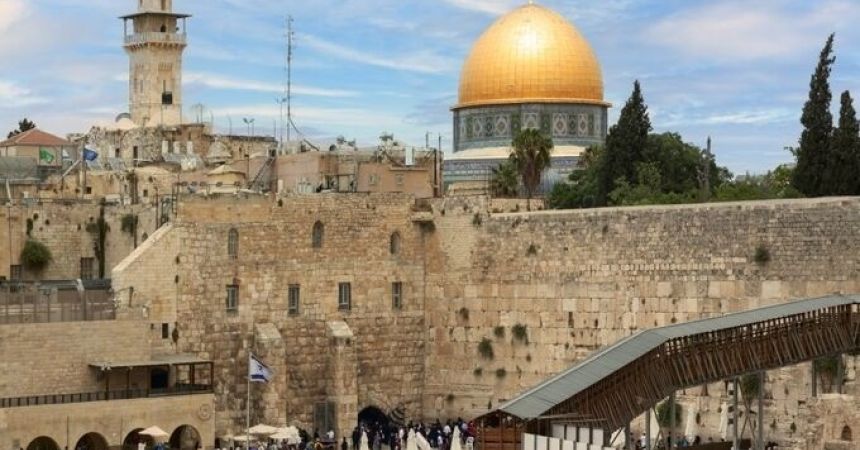
Jerusalem's limestone architecture is fundamental to the city's visual identity.
In July, it also becomes part of the weather experience.
Sunlit walls and paved areas absorb energy during the day and later release some of that stored heat. The amount varies enormously according to orientation, material, shade, surrounding buildings and the duration of exposure, so there is no useful universal number for “how hot Jerusalem stone becomes.”
Nor do travelers need one.
The practical lesson is simply that a heavily exposed built environment can continue influencing perceived warmth after peak solar intensity has passed.
5 PM Is Not 1 PM, but It Isn't Evening Yet Either
Travelers often divide summer days into three convenient categories:
morning, hot midday, cooler evening.
Reality has an awkward transition between the last two.
Late afternoon may bring weaker direct sunlight than midday while exposed surfaces remain warm from everything that happened earlier. Depending on conditions, this can create a period when the sun looks less aggressive but the surrounding built environment has not yet released the day's stored heat.
July owns this thermal lag.
It is a different question from June's immediate benefit of stepping from direct sun into shade.
June asks what happens when you change your exposure now.
July asks what happens when the environment remembers the exposure it received earlier.
Read the Street, Not Just the Clock
A useful July habit is to notice what kind of surface dominates the next section of your walk.
A Surface-Based Reading of Jerusalem
| What Surrounds You | Earlier Sun Exposure | What May Matter Later |
|---|---|---|
| Open stone plaza | Potentially substantial | Stored surface warmth |
| Narrow stone street | Highly variable | Orientation and previous shade |
| Exposed wall | Direction-dependent | Radiated warmth nearby |
| Vegetated area | More mixed | Less continuous hard surface |
| Covered passage | Limited direct sun | Reduced surface heating |
| Large paved courtyard | Potentially high | Warmth may persist into late day |
This is a surface-memory table, deliberately unlike June's route-exposure and sequence-planning tables.
The purpose is not to rank locations as good or bad. It is to show why two outdoor spaces can behave differently after spending the day under the same Jerusalem sky.
Shade Has a Different Meaning in July
June used shade as an immediate tool for reducing direct solar exposure.
July cannot simply repeat that argument.
Here, shade becomes interesting because of history.
A surface that has remained shaded for much of the day has not accumulated solar energy in the same way as one exposed for hours. Therefore, two shaded places in late afternoon can potentially feel different depending on what happened to them earlier.
One was protected.
The other has only recently become shaded.
That is a far more Jerusalem-specific summer story than saying “find shade when it is hot.”
The Old City Is a Patchwork of Thermal Histories
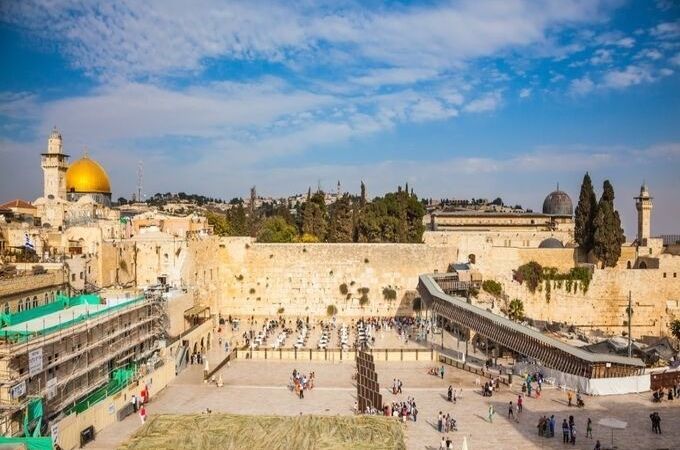
Jerusalem's Old City makes this especially noticeable because streets and walls have different orientations.
One lane may have spent substantial portions of the day protected from direct sun, while another opening has received considerably more exposure. Courtyards, walls and paved spaces each carry their own relationship with sunlight.
On an Israel heritage highlights itinerary, you may move between these environments without traveling more than a few hundred metres.
The forecast has not changed.
The surfaces have.
This helps explain why generalized statements such as “Jerusalem feels cooler after 4 p.m.” can be too simplistic. It may become more comfortable overall as the day advances, but the exact experience depends partly on where you are standing.
Don't Mistake Weaker Sunlight for Instant Cooling
Late afternoon light can be psychologically persuasive.
Shadows lengthen, the glare softens, photography becomes appealing and the day visually appears to be cooling.
Thermal conditions do not necessarily follow the visual transition at exactly the same speed.
This matters when travelers postpone a substantial outdoor walk until later specifically because they expect the built environment to have cooled immediately.
Often, conditions do improve as evening approaches.
The important word is gradually.
July is not a switch from hot afternoon to cool evening.
Why This Matters for Outdoor Dining
A terrace or courtyard chosen for dinner may have spent the previous several hours receiving very different amounts of sunlight from another seating area nearby.
That can influence how comfortable each space feels when you first sit down.
Airflow, shade, time of day and actual weather remain important, of course. There is no need to interrogate restaurant staff about the thermal history of every table.
Simply recognize that an outdoor setting does not reset itself at dinner time.
The afternoon leaves a trace.
July Is Not August
This boundary is especially important because otherwise the two hottest-season articles would become near duplicates.
August will focus on time allocation: protecting valuable morning hours for outdoor experiences and deciding what deserves the cooler opening portion of the day.
July is about material behavior.
It asks why Jerusalem's stone-heavy urban environment can continue contributing to perceived warmth after direct solar intensity begins declining.
One month follows the itinerary clock.
The other follows the surfaces.
You Don't Need to Avoid Jerusalem Stone
None of this should make July sound like an argument against walking through Jerusalem's historic areas.
Quite the opposite.
Understanding the built environment allows you to interpret what you feel without concluding that something is wrong with the forecast or that the entire city must feel identical.
A Jerusalem classic tour naturally moves through spaces with different exposure histories. Some feel warmer, some provide relief, and conditions continue changing as the day progresses.
There is no need to optimize every route around surface temperature.
Awareness is enough.
July Leaves Its Heat in the Architecture
Most weather guides look upward.
They discuss sun, clouds, temperature, wind and occasionally humidity.
July in Jerusalem asks you to look sideways and downward as well.
At the wall beside you.
At the paving underfoot.
At the courtyard that has been receiving sunshine since morning and the narrow street that has spent much of the day protected from it.
Jerusalem's architecture does more than provide the setting for a July visit.
For a few hours each day, it becomes part of the weather story itself.
And that is why the moment when the sun becomes less intense is not necessarily the exact moment when the city stops feeling its warmth.
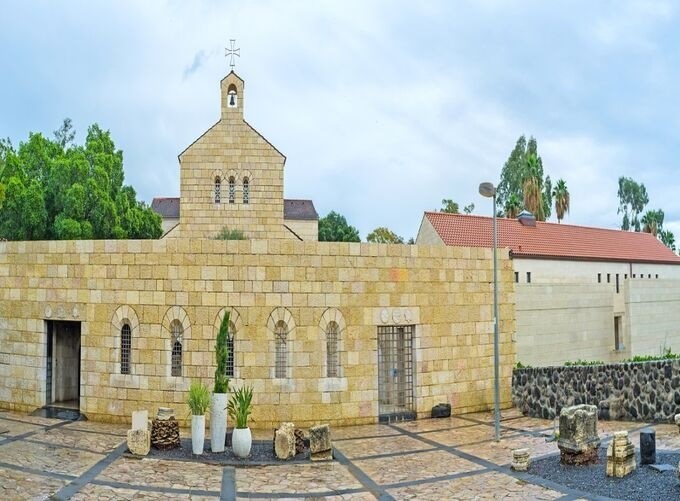
Late Afternoon Has Its Own Thermal Personality
By late afternoon, Jerusalem often looks as though it is preparing for evening before every surface has actually cooled.
The sun sits lower, shadows stretch farther across streets and façades, and the visual intensity of midday begins to soften. Yet a stone wall or paved courtyard that has received hours of direct sunshine may still be releasing stored warmth.
This creates a useful distinction between solar intensity and surface temperature.
The first can fall relatively quickly as the sun lowers. The second may respond more slowly.
For travelers, this means late afternoon should be treated as its own part of the July day rather than simply described as “after the hottest hours.”
The Same Courtyard Can Become a Different Place
Return to the same outdoor space several hours later and you may experience it differently.
At midday, direct sunshine might dominate. Later, surrounding buildings begin casting longer shadows. After sunset, the surfaces gradually release the heat accumulated earlier.
The architecture has not changed, but its relationship with solar energy has.
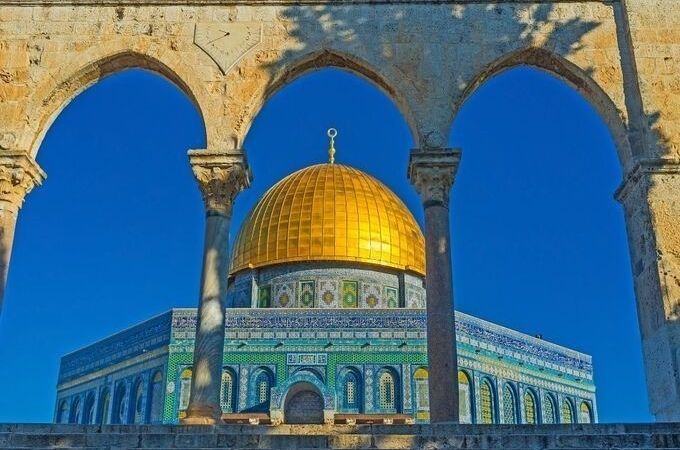
This is particularly interesting in Jerusalem because stone is not merely decorative background. Historic walls, paving, steps and courtyards form a substantial part of the physical environment through which visitors move.
July makes that relationship easier to notice.
Think About Thermal History, Not Just Current Shade
Consider two walls that are both shaded at 5:30 p.m.
One has been protected from direct sunlight for most of the afternoon. The other received strong sun until only recently.
Their current appearance may be similar, but their thermal histories are different.
| Late-Day Setting | What Happened Earlier? | What You May Notice |
|---|---|---|
| Long-shaded lane | Limited direct heating | Earlier relief |
| Newly shaded plaza | Hours of sun exposure | Warm surfaces may persist |
| Stone courtyard | Variable exposure | Uneven thermal feel |
| Open viewpoint | Sun + airflow | Surface and air effects interact |
| Interior stone space | Limited solar exposure | Different thermal response |
| Evening terrace | Depends on orientation | Comfort may improve at different rates |
This thermal-history table extends July's unique subject without repeating Part 1's surface classification.
Why a Breeze Can Suddenly Feel So Welcome
Air movement introduces another variable.
When surfaces remain warm but a breeze develops, perceived comfort may improve even though the surrounding stone has not instantly cooled. This is why judging a July location from one factor alone—temperature, shade, wind or time—can be misleading.
You do not need to calculate any of this while sightseeing.
The practical lesson is simply that Jerusalem's late-day comfort develops through several processes happening at different speeds.
The air changes.
The sunlight weakens.
Surfaces release stored heat.
Air movement alters how your body experiences the combination.
Evening gradually emerges from all four.
Photography Time and Cooling Time Are Not the Same Thing
Late afternoon is attractive to photographers because Jerusalem stone can take on richer tones as the angle of sunlight changes.
That visual transformation can create an assumption that conditions have already become substantially cooler.
Sometimes they have.
Sometimes the light changes faster than the thermal environment.
If you are planning a long photography walk specifically because the late-day light appeals to you, judge comfort from the actual conditions rather than the appearance of the sky alone. A beautifully illuminated stone street can still be carrying much of the afternoon's accumulated warmth.
This is one of those occasions when the camera and the body read the same city differently.
Outdoor Dinner Has a Location Memory
By dinner time, two terraces only a short distance apart can have experienced very different afternoons.
One may have spent hours protected by buildings or shade structures. Another may have received direct sunlight for much longer. As evening develops, their comfort levels can converge, but they do not necessarily arrive there simultaneously.
This does not require complicated restaurant selection.
If you have a choice of tables and one location feels noticeably more comfortable, trust the conditions you are actually experiencing rather than assuming every outdoor seat must feel the same because the weather app displays one temperature for Jerusalem.
Don't Wait for a Magic Cooling Hour
Travel advice sometimes becomes too precise:
“After 5 p.m. it cools down.”
“Go outside after 6.”
Reality is less obedient.
Cooling depends on the day's conditions, the specific location, exposure, wind and the surfaces around you. One July evening may become comfortable relatively quickly, while another retains warmth longer.
Use the clock as context rather than a guarantee.
If a later outdoor plan matters to you, look at current conditions when the time arrives.
July's Useful Packing Advice Is Surprisingly Small
Because July's exclusive intent concerns thermal retention rather than general summer packing, there is no reason to reproduce a long checklist already better handled elsewhere.
For extended outdoor sightseeing, appropriate sun protection, water, comfortable clothing and suitable walking footwear remain sensible. Personal needs and the actual forecast should determine the details.
What July adds is behavioral rather than material:
do not assume the environment has cooled simply because direct sunshine has weakened.
That one piece of understanding can be more useful than another twenty-item packing list.
Jerusalem's Summer Evening Arrives Gradually
The most accurate way to think about a July evening is not as a fixed time but as a transition.
The sun lowers. Direct radiation decreases. Shadows spread. Air conditions evolve. Surfaces begin releasing the energy they absorbed during the day. Eventually, the entire environment takes on a different character.
That transition is one of Jerusalem's distinctive summer experiences because the city's architecture makes it visible as well as physical.
The pale stone changes colour while it changes temperature.
July asks you to notice both.
12 July-Specific Questions About Jerusalem Weather
1. Why can Jerusalem's stone still feel warm late in the day?
Stone and paved surfaces can absorb solar energy while exposed to sunlight and release part of that stored heat later. This means the surrounding built environment may remain warm even after direct sunlight becomes noticeably less intense.
2. Does Jerusalem cool immediately when the sun gets lower?
Not necessarily. Air temperature, direct solar radiation and surface temperatures do not change at exactly the same rate. Exposed stone and paving may retain warmth, so late-afternoon comfort depends partly on the specific environment around you.
3. Why can two Jerusalem streets feel different at the same time?
Street orientation, shade history, airflow, width and surrounding surfaces can all influence local comfort. A lane protected from direct sunlight for hours may feel different from a nearby stone space that only recently entered shade.
4. Are stone plazas warmer than narrow streets in July?
They can be more exposed to direct sunshine, but there is no universal rule. Orientation, shade, wind and the duration of solar exposure all matter, so judge the conditions of the particular space rather than its category alone.
5. Does Jerusalem stone make evenings hot?
Stone can contribute to retained warmth after daytime heating, but evening comfort depends on many factors, including the day's temperature, wind, location and exposure. The effect should be understood as one part of Jerusalem's summer thermal environment.
6. Why might a newly shaded area still feel warm?
Shade immediately reduces direct solar exposure, but it does not instantly remove energy already stored in walls or paving. A surface that spent hours in sunshine can therefore remain warm after a shadow reaches it.
7. Is late afternoon always cooler for sightseeing than midday?
Conditions often become progressively easier as solar intensity decreases, but “late afternoon” does not guarantee immediate cooling everywhere. Check actual conditions, especially when planning prolonged activity in heavily paved or previously sun-exposed areas.
8. Can wind reduce the effect of retained heat?
Air movement can improve perceived comfort even while nearby surfaces remain warm. The experience depends on wind strength, temperature, exposure and individual tolerance, which is why a breezier location may feel different from a sheltered stone courtyard.
9. Does the Old City retain more heat than other parts of Jerusalem?
It would be too simplistic to assign one thermal behavior to the entire Old City. Streets, courtyards and open spaces have different orientations, shade histories and airflow, creating considerable variation over relatively short distances.
10. Is evening outdoor dining comfortable in Jerusalem in July?
It can be, depending on the particular day's conditions and the restaurant's setting. Outdoor areas that received less afternoon sun or benefit from airflow may feel different from exposed terraces that accumulated more solar heating earlier.
11. Why is July's Jerusalem weather article focused on stone?
Because July owns a specific traveler question within this cluster: how Jerusalem's stone-heavy built environment stores and releases daytime heat, creating a late-day thermal lag that cannot be understood from air temperature alone.
12. How is July different from June in Jerusalem?
June focuses on immediate exposure—how direct sunshine, shade and route design affect comfort during dry summer sightseeing. July moves to thermal memory, examining why stone and paving can retain daytime heat and continue influencing the city after solar intensity begins to weaken.

A travel professional specializing in tailor-made travel planning, guest experience management, and multi-destination tourism operations.
With over 23 years of experience in the travel industry, he designs and manages private and cultural tours for international travelers across Türkiye, Greece, Egypt, Jordan, Morocco, and other destinations.
He has strong expertise in both online and face-to-face guest communication, sales processes, and end-to-end travel operations.
Working closely with hotels, travel agencies, and local partners, he ensures smooth coordination and high-quality travel experiences at every stage of the journey.
His focus is on delivering personalized, reliable, and seamless travel experiences for international guests worldwide.