When Is Hanukkah? Dates and Travel in Israel
Updated: August 2026
Hanukkah Does Not Begin on the Same Gregorian Date Every Year
Hanukkah is celebrated for eight nights beginning on the 25th day of Kislev in the Hebrew calendar, which is why travelers looking for the festival on an ordinary December calendar will notice that its dates move from year to year.
In 2026, Hanukkah begins at sunset on Friday, December 4, with the first candle lighting that evening. The first full Hebrew day of Hanukkah begins on December 5, and the festival concludes after nightfall on Saturday, December 12, 2026.
That evening start is worth understanding because Jewish calendar days begin at sunset rather than midnight.
If your itinerary says that you arrive in Jerusalem on December 4, for example, you may already encounter the beginning of Hanukkah that evening even though many English-language calendars list December 5 as the first calendar day.
For travelers, this distinction is much more useful than memorizing one date.
Hanukkah happens according to the Hebrew calendar, while your flights and hotels operate according to the Gregorian one. Planning well requires understanding where those two calendars meet.
Why the Date Moves but the Festival Does Not
Hanukkah is always tied to the same Hebrew date: 25 Kislev.
What changes is its position on the Gregorian calendar used for most international flight bookings and everyday civil schedules.
The Hebrew calendar follows a lunisolar system, which means months are connected to lunar cycles while adjustments keep the calendar aligned broadly with the seasons. As a result, Jewish festivals move across Gregorian dates from one year to another without drifting freely through every season.
For Hanukkah, this generally means a festival occurring in late autumn or early winter, commonly during December but sometimes beginning earlier.
This explains why searching “Hanukkah December 25” or assuming it coincides with Christmas every year leads to confusion.
The festivals can overlap in some years.
In others, they are separated substantially.
For travelers arranging Israel Jewish Heritage Tours, the exact Hebrew-calendar dates should therefore be checked for the actual travel year rather than copied from a previous itinerary.
The First Night Matters More Than the First Full Day
International visitors accustomed to midnight-based calendar changes can easily miss this detail.
Hanukkah begins in the evening.
The first candle is lit after the festival begins at sunset, rather than waiting until the following morning. Each subsequent evening introduces another night of the festival, with an additional light added to the Hanukkah menorah, often called a hanukkiah.
This means that if you specifically want to experience the opening evening, you need to be in your destination before sunset, not arriving sometime on the date listed as Day One.
The same principle applies throughout the festival.
Hanukkah is experienced strongly in evening light, when candles appear in homes, windows and public spaces.
A daytime visitor who leaves Jerusalem before evening can technically be in Israel during Hanukkah while missing one of the festival's most visible characteristics.
Eight Nights Means the Festival Builds Rather Than Repeats
Hanukkah lasts eight nights, but the candle lighting does not look identical every evening.
On the first night, one festival light is lit, with the shamash—the helper candle used to light the others—serving its own role. Each successive night adds another candle until all eight festival lights are illuminated on the final evening.
That gradual increase gives the festival a visual progression.
Travelers staying several nights may notice the difference naturally, particularly when menorahs are displayed where they can be seen from outside.
This is one reason a Hanukkah visit should not be thought of as a single parade or one large event that happens on a fixed date.
The festival develops over eight evenings through family observance, public lighting ceremonies, food traditions, children's activities and community celebrations.
Different cities and neighborhoods may express that atmosphere differently.
Hanukkah Is a Jewish Festival, but It Is Not the Jewish Christmas
The proximity of Hanukkah and Christmas on the international calendar creates a comparison that can be misleading.
Both festivals may involve family gatherings, lights, gifts in some households and seasonal celebrations, yet their religious histories and meanings are entirely different.
Hanukkah commemorates events connected with the Maccabean revolt, the rededication of the Second Temple in Jerusalem and the tradition of the oil that lasted for eight days.
Christmas celebrates the birth of Jesus within Christianity.
For travelers, treating Hanukkah as “Jewish Christmas” removes exactly the cultural context that makes experiencing the festival in Israel interesting.
The better approach is to understand Hanukkah on its own terms and then notice how several religious calendars can coexist in Israel during the winter period.
Jerusalem Gives Hanukkah a Particular Historical Context
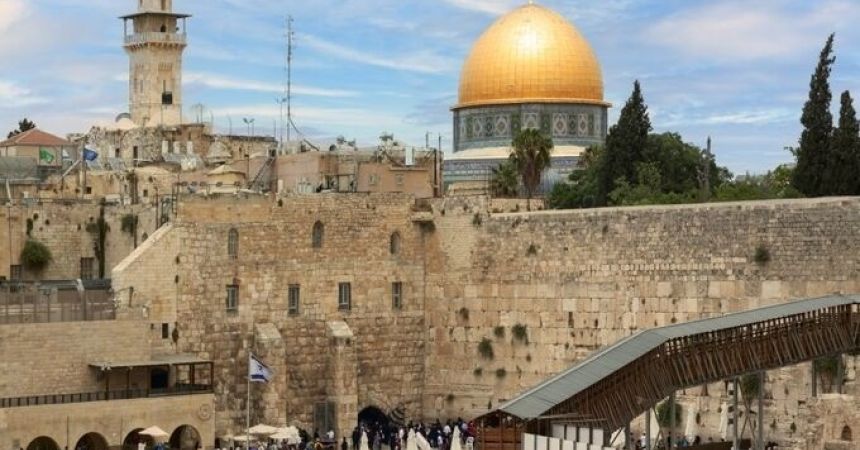
Hanukkah’s historical narrative is connected closely with Jerusalem, which gives the festival an additional layer for travelers spending time in the city.
The story involves the Maccabean struggle and the rededication of the Temple in Jerusalem after its desecration. The festival’s Hebrew name relates to dedication, connecting modern celebration with that ancient religious memory.
You do not need to turn a Hanukkah visit into an archaeological seminar to appreciate this.
Simply understanding that the festival’s origins relate directly to Jerusalem changes how the city feels during those nights.
A public candle lighting is no longer merely seasonal decoration.
It connects contemporary Jewish life with a historical and religious narrative associated with the city itself.
This is where Private Jerusalem Jewish Heritage Tours can add value by explaining the historical setting without reducing a living festival to ancient history alone.
What Travelers Actually Notice in Israel During Hanukkah
Visitors sometimes expect the entire country to transform into one continuous festival scene.
The reality is more interesting because Hanukkah exists inside everyday life.
You may notice menorahs displayed publicly and privately, seasonal foods appearing more prominently, children's events, municipal celebrations and candle-lighting ceremonies. Schools and family schedules can also reflect the holiday period, while different communities may celebrate with varying levels of visibility.
The atmosphere changes according to where you are.
Jerusalem can provide strong historical and religious context.
Tel Aviv may express Hanukkah through a more contemporary urban environment.
Smaller communities can feel different again.
The experience also changes between daytime and evening because the candle lighting naturally gives nighttime greater visual importance.
Travelers should therefore avoid expecting one standardized national performance.
Hanukkah is being lived, not staged for visitors.
Sufganiyot May Be the Festival Tradition You Notice First
Even travelers who know little about Hanukkah often become familiar with sufganiyot, the filled doughnuts associated strongly with the festival in Israel.
The connection comes from the Hanukkah tradition of eating foods prepared with oil, reflecting the miracle-of-the-oil narrative associated with the festival.
During the holiday season, bakeries can produce an enormous variety, moving far beyond the simplest jam-filled versions into elaborate contemporary interpretations.
For travelers, this is one of the easiest ways to encounter Hanukkah without attending a formal religious event.
You walk past a bakery, notice the display and suddenly the festival enters the ordinary food landscape.
Latkes, potato pancakes traditionally fried in oil, are another familiar Hanukkah food, although food traditions vary among families and communities.
Children's Hanukkah and Adult Hanukkah Can Look Quite Different
Hanukkah has a strong family dimension.
Children may encounter songs, games, gifts, chocolate coins and the familiar dreidel, while public celebrations can include activities designed specifically for families.
Adults may experience the same period through family meals, candle lighting, community gatherings or ordinary evenings at home.
Travelers need to understand this because Hanukkah is not necessarily a continuous sequence of tourist events.
Some of its most important traditions happen privately within families.
A visitor should therefore appreciate public access where it exists without expecting intimate religious practice to become entertainment.
That distinction creates a much more respectful cultural experience.
The Dreidel Is More Than a Souvenir-Shop Object
Travelers frequently see four-sided spinning tops associated with Hanukkah and may recognize them primarily as colorful souvenirs.
The dreidel belongs to a game traditionally played during the festival, with Hebrew letters appearing on its sides.
In Israel, the lettering differs slightly from versions used in many Jewish communities outside Israel because the phrase referenced by those letters relates differently to whether the miracle happened “there” or “here.”
That small detail is unusually revealing.
The same Jewish festival is celebrated internationally, yet experiencing it in Israel changes the geographical relationship to the story.
A simple children's game therefore carries a subtle distinction between diaspora and Israeli Hanukkah traditions.
Hanukkah and Shabbat Can Meet During the Same Evening
Because Hanukkah lasts eight nights, it inevitably includes Shabbat.
When Hanukkah candles and Shabbat candles are both relevant, timing and religious practice interact according to Jewish law and household custom.
Travelers do not need to memorize those rules unless they are participating personally.
What matters operationally is recognizing that a Friday during Hanukkah can carry both festival and Shabbat rhythms.
Transportation, restaurants and general activity can therefore reflect ordinary Shabbat considerations in addition to Hanukkah celebrations.
This is a useful example of why religious calendars should be understood together rather than as isolated festivals occupying separate boxes.
Does Hanukkah Shut Israel Down?
Not in the way some travelers imagine.
Hanukkah is an important and highly visible festival, but travelers should not automatically assume that the country enters the type of broad shutdown associated with certain other major Jewish holy days.
The more important practical changes may involve school schedules, family activity, specific events and the normal weekly Shabbat pattern that occurs during the festival.
Individual attractions, transportation services and businesses should still be checked according to the actual date rather than relying on one broad assumption.
Hanukkah should therefore influence awareness more than create fear about whether travel remains possible.
Which Part of Hanukkah Is Most Interesting for a Visitor?
That depends on why you are traveling.
| Traveler interest | Hanukkah experience worth noticing | Why it adds value |
|---|---|---|
| Jewish heritage | Candle lighting and historical context | Connects ancient memory with living tradition |
| Family travel | Public activities, foods and evening lights | Festival traditions are accessible to children |
| Food interest | Sufganiyot and oil-based traditions | Cultural meaning appears through everyday eating |
| Photography | Increasing candle displays after dark | The festival becomes visually stronger each evening |
| Jerusalem history | Maccabean and Temple context | Gives the holiday geographical meaning |
| Contemporary culture | Public celebration in modern cities | Shows how ancient tradition remains part of daily life |
| Interfaith interest | Hanukkah alongside other winter observances | Highlights Israel's overlapping religious calendars |
This table is deliberately about ways of reading the festival, rather than comparing months, destinations or itinerary lengths.
You Do Not Need Eight Nights in Israel to Experience Hanukkah
Travelers sometimes assume that because Hanukkah lasts eight nights, a meaningful Hanukkah trip needs to cover the entire festival.
It does not.
Even two or three evenings can provide a strong impression, especially when they include Jerusalem or another place where public celebration is visible.
A longer stay naturally allows travelers to notice the increasing number of candles and experience different types of events, but the festival should fit inside the wider journey rather than control it unnecessarily.
For Customized Hanukkah Israel Journeys, the itinerary can combine Jewish heritage with ordinary sightseeing rather than treating every day as a dedicated holiday program.
Hanukkah is part of the trip.
It does not need to consume the trip.
Hanukkah Can Add Meaning Without Changing Your Entire Itinerary
This is perhaps the most useful point for travelers whose dates happen to overlap with the festival.
You do not necessarily need to redesign the route.
Continue visiting Jerusalem, Tel Aviv or other destinations according to your interests, while allowing evenings and selected cultural experiences to reflect Hanukkah.
A candle-lighting ceremony, seasonal food experience or additional historical context may be enough to make the timing meaningful.
The festival becomes most interesting when it appears naturally inside the country you were already coming to experience.
That is usually more human than forcing every day into a holiday theme.
Hanukkah Questions Travelers Ask Once They Notice the Calendar Works Differently
Why does Hanukkah sometimes begin in November?
Hanukkah always starts on 25 Kislev in the Hebrew calendar, while its Gregorian date shifts from year to year. Depending on how the two calendars align, the opening evening can therefore fall in late November or during December.
What exact date does Hanukkah begin in 2026?
The first candle is lit after sunset on Friday, December 4, 2026. The Hebrew date of 25 Kislev begins that evening, with the first full daytime portion of Hanukkah falling on December 5.
When does Hanukkah end in 2026?
Hanukkah concludes after nightfall on Saturday, December 12, 2026. The final candle-lighting evening occurs before the festival ends, completing the progression to all eight Hanukkah lights.
Why are Hanukkah dates sometimes listed differently on calendars?
Some calendars show the Gregorian daytime dates, while Jewish observance begins at sunset the previous evening. A festival listed as starting December 5 may therefore actually begin with candle lighting on the evening of December 4.
Does every family light candles at exactly the same minute?
No. Candle-lighting timing follows religious considerations connected with sunset and local practice rather than one worldwide clock time. Exact timing therefore varies according to location, date and the relationship with Shabbat when relevant.
Why are there nine candle positions if Hanukkah lasts eight nights?
Eight lights represent the eight nights of Hanukkah, while the additional shamash serves as the helper light used to kindle the others. It has a different function from the eight festival lights.
Are gifts a religious requirement during Hanukkah?
No. Gift-giving exists within some family and cultural traditions, but it is not the central religious requirement defining Hanukkah. Candle lighting and the festival's historical and religious meaning are much more fundamental.
Why are fried foods associated with Hanukkah?
Foods prepared in oil connect symbolically with the traditional story of a small amount of oil lasting for eight days following the rededication of the Temple, which is why sufganiyot and other fried foods became closely associated with the holiday.
Will I see menorahs in hotel lobbies and public places?
You may see public Hanukkah displays in various settings during the festival, although visibility differs among hotels, cities and communities. Travelers should expect variation rather than assuming every property will organize the same celebration.
Is Hanukkah mainly celebrated at night?
Candle lighting makes evening particularly significant and visually recognizable, while daytime can include school-holiday activities, food traditions and public events. Travelers who experience only daytime sightseeing may therefore miss an important dimension of the festival.
Is it appropriate for a non-Jewish traveler to attend a public candle lighting?
Public ceremonies are often intended for community participation and visitors may be welcome, although travelers should follow local guidance and behave respectfully. Private household observances are different and should not be treated as public tourism experiences.
Why is Hanukkah particularly interesting to experience in Jerusalem?
The festival commemorates events connected with the Maccabees and the rededication of the Temple in Jerusalem. Experiencing contemporary Hanukkah in the same city gives the holiday a geographical and historical context that travelers cannot encounter in quite the same way elsewhere.

A travel professional specializing in tailor-made travel planning, guest experience management, and multi-destination tourism operations.
With over 23 years of experience in the travel industry, he designs and manages private and cultural tours for international travelers across Türkiye, Greece, Egypt, Jordan, Morocco, and other destinations.
He has strong expertise in both online and face-to-face guest communication, sales processes, and end-to-end travel operations.
Working closely with hotels, travel agencies, and local partners, he ensures smooth coordination and high-quality travel experiences at every stage of the journey.
His focus is on delivering personalized, reliable, and seamless travel experiences for international guests worldwide.