Jordan on a Budget: Spend Less Without Missing the Best
Author: Kenan Ungur
Article Date: 02.08.2024
Reading Time: 21 min

Jordan on a Budget: Spend Less Without Missing the Best

Updated: August 2026

Jordan is an interesting country to plan on a budget because some of the most effective savings have surprisingly little to do with choosing the cheapest hotel, restaurant or form of transportation.

The larger expenses often begin with the shape of the trip itself. A route that repeatedly doubles back to Amman can create unnecessary driving. Adding Aqaba for a single night may introduce another hotel change and transfer without leaving enough time to enjoy the Red Sea. Saving money on accommodation outside a convenient location can look sensible until additional transportation begins consuming both the saving and your sightseeing time.

At the other end of the spectrum, travelers sometimes spend more simply because they assume an important holiday requires the highest category everywhere. A luxury hotel can be wonderful when you have time to enjoy its facilities, yet considerably less meaningful when you arrive after dinner and leave immediately after breakfast.

Budget travel in Jordan therefore works best when you stop asking, “What is the cheapest option?” and start asking, “Which expenses will noticeably improve my trip?”

That small change in thinking makes it much easier to save in the right places while protecting the experiences you traveled to Jordan for.

Start With Your Route Before Looking for Cheap Hotels

Imagine finding a hotel that saves you money each night, only to discover that its location requires additional transportation and earlier departures throughout the stay.

The room is cheaper.

The trip may not be.

This is why I would plan the route before spending too much time comparing accommodation prices. Decide which parts of Jordan genuinely matter, place them in a geographical sequence that avoids unnecessary backtracking, and only then begin selecting hotels.

For a typical first visit, the broad movement through northern and southern Jordan already provides clues. Amman and Jerash belong naturally together, while Petra and Wadi Rum sit much farther south. Madaba, Mount Nebo, the Dead Sea and other central stops can sometimes work into the movement between regions rather than requiring separate return journeys.

A cheaper itinerary with poor geography can become an expensive collection of transfers.

A slightly more selective route often saves money without asking you to downgrade anything.

One More Destination Is Rarely Free

Budget conversations tend to focus on the cost of individual attractions, which can obscure the real expense of adding another destination.

Suppose Aqaba is added after Wadi Rum.

The question is not merely what the Aqaba hotel costs. You may also need another transfer, another night or two of accommodation, additional meals away from the previous arrangement and enough time to justify traveling there in the first place.

Dana creates a different version of the same calculation. The reserve may be geographically compatible with a southern Jordan journey, but meaningful hiking requires time, potentially another overnight and transportation that fits the new route.

This does not mean budget travelers should avoid either destination.

It means every addition should be priced as a piece of the journey, not as an isolated attraction.

One of the simplest ways to control a Jordan travel budget is to stop adding places whose main justification is that they happen to be nearby.

The Cheapest Room Can Be Expensive at 7:00 in the Morning

Hotel category receives a great deal of attention during budget planning, while hotel location sometimes receives too little.

For city stays, consider what you intend to do in the evening and how easily you can reach the areas that interest you. Around major sightseeing locations, look at whether the hotel helps you begin the following morning efficiently. At resort destinations, think about whether you will actually use the property enough for its facilities to matter.

The calculation changes from place to place.

A modest hotel in a practical location may provide considerably better value than a more impressive property requiring extra transportation. Conversely, a better resort at the Dead Sea can justify a higher rate when you plan to spend a large portion of the day using the hotel, pools and waterfront facilities.

Budget accommodation should therefore be judged by cost per useful experience, not stars alone.

If the only thing you do at a hotel is sleep for seven hours, you may not need to pay for a spectacular infinity pool.

If the hotel is effectively tomorrow's destination, the equation changes.

Do Not Economize on Petra by Taking Time Away From It

Petra is where false economy becomes particularly obvious.

You may be able to construct a cheaper or denser route by arriving later, leaving earlier or combining the archaeological visit with another major activity. The itinerary technically retains Petra, but the saving has been taken from the part of the journey many first-time visitors care about most.

That is poor budgeting.

The entrance fee, transportation and accommodation required to reach Petra already represent a meaningful commitment. Once you have made that investment, protecting enough usable time to experience the site properly generally provides better value than reducing the visit so another destination can fit.

This does not mean everybody needs multiple Petra days or every optional trail.

It means your highest-priority experience should not be the first place you search for savings.

A traveler comparing professionally organized options can use Jordan Essential Tours as a natural next step, while keeping the purpose of this guide firmly on budget decisions rather than package selection.

Guiding Is Not Equally Valuable Everywhere

A common budget question is whether to hire guides.

I would not answer it with a universal yes or no.

At historically complex archaeological locations, good interpretation can transform what appears to be a collection of ruins into a coherent understanding of the people, architecture, trade and historical periods involved. The value is intellectual rather than merely logistical.

Other parts of a journey may require less formal interpretation, particularly when the primary experience is landscape, relaxation or independent city exploration.

Budget travelers can therefore be selective.

Instead of choosing between “guided Jordan” and “completely independent Jordan,” consider where expert interpretation will materially change what you understand.

Spend there.

Elsewhere, allow yourself more independence if it suits your travel style.

This approach usually produces a better experience than either hiring unnecessary guiding every day or refusing all professional guidance simply to reduce the total price.

Private Transportation Is Not Automatically a Luxury Purchase

For a solo traveler, private transportation can represent a substantial portion of the trip budget.

For a couple, family or small group, the calculation changes because the vehicle cost is effectively distributed across several people.

There is also a second cost that rarely appears on a quote: time.

A transportation option that costs less but requires inconvenient connections, repeated waiting or routing that does not match your sightseeing plan may consume hours you cannot recover. On a longer journey this might be acceptable, particularly for independent travelers who enjoy the process. On a short trip, the value calculation can shift substantially.

This does not make private transportation automatically better.

Rental cars can offer excellent independence for confident drivers, while shared arrangements can reduce costs for travelers comfortable with fixed schedules.

Compare total trip efficiency, not merely the transport line on the budget.

The cheapest kilometer is not particularly valuable if it repeatedly takes you away from where you wanted to spend the day.

Hotel Changes Have a Cost Even When the Room Price Does Not Change

Consider two itineraries using hotels of approximately the same standard.

One contains five properties.

The other contains three.

The nightly accommodation total may be similar, but the travel experience is not.

Each hotel change brings another transfer, luggage handling, check-in, check-out and a period when you are neither properly sightseeing nor relaxing. Sometimes those changes are geographically necessary; sleeping near Petra before an early visit makes obvious sense, while an overnight in Wadi Rum is part of the experience itself.

Other one-night stays exist mainly because too many destinations have been placed into the itinerary.

Budget travelers should be suspicious of those.

Removing an unnecessary overnight can occasionally save more than downgrading several hotels because it may eliminate associated transportation and reduce the pressure to pay for convenience elsewhere.

Fewer hotel changes can be both cheaper and more comfortable, which is a combination worth looking for.

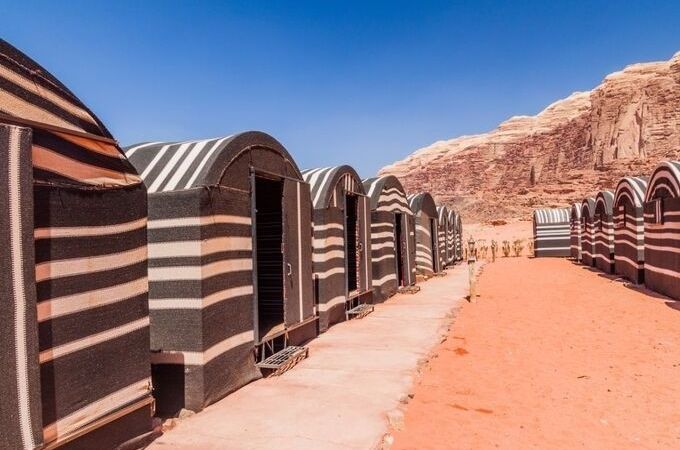
Wadi Rum: Decide What You Are Actually Paying For

Wadi Rum accommodation varies widely in style and comfort, and dramatic photographs can make the room itself seem like the principal decision.

It is worth remembering why you are there.

For many travelers, the strongest value comes from the desert landscape, the route through it, sunset, the evening atmosphere and waking inside an environment completely different from Amman or Petra.

Accommodation matters, particularly for comfort, cleanliness and personal expectations, but paying considerably more for a visually elaborate room is not automatically the best use of a limited budget.

Ask what the upgrade changes.

Does it improve comfort in a way you genuinely value? Does it include services you would otherwise purchase separately? Will you have enough time at camp to enjoy the upgraded facilities?

If the answer is yes, spend confidently.

If the upgrade mainly creates a more impressive photograph of the room you will occupy after dark, your money may produce more memorable value elsewhere.

The Dead Sea Requires a Different Budget Calculation

At the Dead Sea, the hotel can be much more central to the experience.

Travelers commonly want practical access to the water, showers afterward, changing facilities, a pool, somewhere comfortable to relax and perhaps spa services. This means the property itself may contribute significantly more to the day than a hotel used primarily for sleeping.

The budget question is therefore not simply whether to choose an expensive or inexpensive hotel.

It is whether you need an overnight at all.

Depending on your route and preferences, a properly arranged daytime experience may provide what you want without adding another hotel night. Other travelers deliberately want the resort afternoon, dinner, sunset and slow morning, in which case paying for the overnight has a clear purpose.

Decide what version of the Dead Sea you want before comparing room rates.

Otherwise, you may spend an hour trying to save on a night you did not actually need.

Aqaba Becomes Expensive When You Do Not Give It Enough Time

This sounds contradictory.

Staying fewer nights should cost less.

In absolute terms, of course it does. The value problem is that adding Aqaba for a very short stay still requires the geographical diversion, hotel transition and associated transportation while providing only a small portion of the experience that justified going there.

If the Red Sea matters, give Aqaba enough time for swimming, snorkeling, diving or genuine relaxation.

If it does not matter enough to deserve that time, removing it can be one of the cleanest budget savings in a Jordan itinerary.

This is particularly relevant for first-time visitors attempting to combine Amman, Jerash, Petra, Wadi Rum, the Dead Sea and Aqaba within a limited number of days.

The Red Sea is not free merely because it is relatively close to Wadi Rum.

Distance is only one part of travel cost.

Time is another.

Meals Are One of the Easiest Places to Mix Budget and Experience

Eating inexpensively throughout Jordan does not require spending the entire trip searching for the cheapest possible meal.

A more enjoyable approach is to vary how you spend.

Some days may naturally suit straightforward local meals. Another evening in Amman might justify choosing a restaurant specifically because you want to explore Jordanian food in more depth. Resort locations and desert camps may have meal arrangements tied more closely to the accommodation.

This variation prevents a common budget-travel mistake: treating every meal as though it needs the same spending rule.

If breakfast is already included and lunch during a sightseeing day is substantial, perhaps dinner can remain simple. On another day, you may prefer a lighter lunch because dinner is something you have been looking forward to.

Travelers with dietary restrictions should communicate them in advance rather than assuming that the cheapest available meal will also be suitable.

Saving money is much easier when meals are planned around appetite and location instead of a fixed daily food allowance that ignores what each day actually looks like.
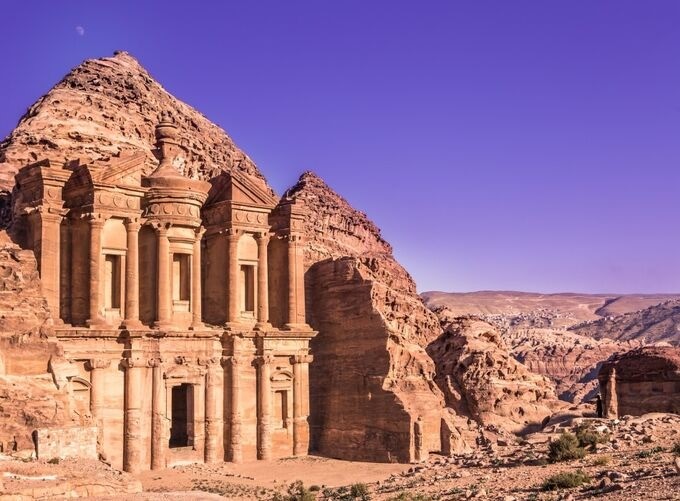
Candlelit paths illuminate Petra’s Treasury during magical night tours

Half Board Can Save Money, but It Can Also Make You Eat Somewhere You Do Not Want To

Hotel meal plans deserve comparison rather than automatic acceptance.

At a remote resort or desert accommodation where outside dining options are limited, an included dinner can be practical and may offer good value.

In central Amman, paying for hotel dinner every night may reduce both flexibility and the opportunity to experience the city's restaurants.

The same principle applies elsewhere.

Ask where you are likely to be at dinner time and whether leaving the hotel would be convenient. Then compare the meal-plan supplement with what you would realistically spend outside.

The cheapest dining arrangement is the one that fits your behavior.

Paying in advance for meals you skip is not budgeting.

Neither is declining a useful meal plan and then discovering that the only convenient alternative requires additional transportation.

Entrance Fees Should Be Calculated After the Itinerary Exists

Travelers sometimes begin budget planning by adding the entrance cost of every attraction they have seen mentioned online.

That reverses the process.

First decide what you genuinely intend to visit. Then check the current admission arrangements, eligibility requirements and any official visitor passes that may apply to those particular sites and your length of stay.

Jordan Pass is one example travelers frequently investigate, but whether it represents good value should be assessed against the current official conditions and the actual itinerary rather than treated as an automatic purchase.

This is an area where current information matters because entrance arrangements and conditions can change.

The principle remains stable even when prices do not:

Do not buy access to places simply because buying them together looks cheaper.

A discount on something you never wanted is still an expense.

Souvenirs Need Their Own Budget or They Quietly Borrow From Everything Else

Souvenir spending is easy to ignore before travel because it feels optional.

Then you reach Jordan.

Perhaps you want locally made crafts, something connected with Petra, products from the Dead Sea or gifts for people at home. Individual purchases may seem small enough that none requires a budget decision, although together they can become a noticeable expense.

Give souvenirs their own approximate allowance before the trip.

This does not need to be restrictive. It simply separates discretionary shopping from the money needed for meals, transportation and activities.

It also makes shopping more enjoyable because you are no longer mentally comparing every purchase with tomorrow's lunch.

If you do not care about souvenirs, excellent.

You have just found one of the easiest budget categories to reduce to almost zero.

Budget Travelers Should Be More Careful With “Optional” Activities Than With Hotel Stars

Optional activities can change the cost of a Jordan trip rapidly because they are often considered individually.

One activity seems affordable.

Then another appears.

A special experience is added in Petra, something extra is considered in Wadi Rum, spa treatments become tempting at the Dead Sea and marine activities appear once you reach Aqaba.

None is necessarily poor value.

The problem is deciding separately rather than ranking them.

Before traveling, identify the two or three optional experiences that matter most and protect money for them. Everything else can be decided according to the remaining budget.

This is a better strategy than reducing accommodation quality across the entire journey to fund activities you did not know you wanted until yesterday.

Spend according to priorities, not proximity.

Traveling as a Couple or Family Changes the Mathematics

Jordan does not have one universal “daily travel cost” because group size changes the economics considerably.

A solo traveler carries the full cost of a private hotel room and cannot divide private transportation among companions.

Two travelers already change that calculation.

Families or small private groups can sometimes make arrangements that appear expensive as a total but become much more reasonable when evaluated per person.

Accommodation behaves differently as well. Room configurations, family rooms, triples and connecting rooms can affect the total in ways that simple per-person budget estimates fail to capture.

This is why generic articles promising that Jordan costs a specific amount “per day” can be misleading.

Your budget depends on how you travel as much as where you travel.

Travelers comparing organized options can therefore look at Affordable Private Jordan Tours in terms of total included value rather than assuming that the word “private” automatically means the highest possible cost.

Do Not Save the Same Percentage Everywhere

Suppose you need to reduce the total Jordan budget by ten percent.

Cutting ten percent from every category feels logical.

It is usually not.

Perhaps you barely care about hotel facilities but deeply value guiding. Reduce accommodation spending more aggressively and preserve interpretation.

Maybe you are traveling for a special occasion and hotels matter greatly, while shopping does not. Protect the accommodation and reduce discretionary spending.

A family might decide that comfortable private transportation deserves priority because it simplifies the entire journey, while restaurant spending can remain relatively modest.

An archaeology enthusiast may allocate disproportionately toward Petra-related time and guiding while skipping a coastal extension entirely.

Budgets become personal when cuts are unequal.

That is a good thing.

Equal spending does not produce equal enjoyment.

Three-Star, Four-Star or Five-Star? Start With the Nights, Not the Stars

There is no reason every hotel in a Jordan itinerary needs to belong to the same category.

A mixed approach can provide much better value.

Look at how each property will actually be used.

If you arrive late and depart early, location, cleanliness and sleep quality may matter far more than extensive facilities. If you are staying two nights with a free afternoon, the hotel becomes part of the experience and may justify a larger share of the accommodation budget.

The Dead Sea is an obvious example because resort facilities can materially influence the stay.

Amman is different for travelers who expect to spend most of the day and evening exploring outside.

Rather than saying, “We are four-star travelers,” decide which nights deserve four-star spending.

That small shift can preserve comfort while reducing the overall cost considerably.

A Budget Needs an Unplanned Category

Unexpected spending is not necessarily a sign that something has gone wrong.

Perhaps you discover a restaurant you want to try, decide on an additional activity, need a taxi you had not anticipated or simply find something worth buying.

A travel budget that allocates every available amount before departure leaves no room for those choices.

Keep a modest discretionary reserve separate from the expected daily spending.

If you never use it, wonderful.

If you do, the purchase does not need to be funded by reducing something already planned.

This also helps with price changes. Accommodation, transportation and other travel costs can vary by season and availability, so a budget built with absolutely no margin is fragile even when the itinerary itself is sensible.

The purpose of a budget is not to predict every transaction.

It is to keep unexpected transactions from controlling the trip.

The Cheapest Jordan Trip and the Best-Value Jordan Trip Are Usually Different

A lowest-cost itinerary can certainly be built.

Choose the least expensive accommodation available, minimize paid interpretation, select transportation entirely by price, avoid optional activities and reduce restaurant spending as far as possible.

That may suit some travelers perfectly.

For most people planning a major international holiday, however, the more useful target is value.

Value asks whether additional spending creates an improvement you will actually notice.

A well-located hotel might.

A knowledgeable guide at an archaeological site might.

A second night in a destination you genuinely want to experience might.

An expensive room upgrade that you see for ten minutes before falling asleep might not.

This distinction protects travelers from both extremes: spending automatically because “it is a holiday” and cutting automatically because “we are on a budget.”

Neither approach pays much attention to the actual journey.

A Smarter Jordan Budget Is Uneven on Purpose

By the time you finish planning, some days should probably cost more than others.

Petra may carry more sightseeing expense because it is one of your principal reasons for traveling. Wadi Rum may combine accommodation and experience costs differently from an ordinary hotel night. A Dead Sea resort day may justify spending more on the property while requiring very little elsewhere.

Another day in Amman might involve inexpensive local food, independent exploration and relatively modest activity costs.

That variation is healthy.

Trying to force every day into the same budget can make travelers overspend on low-priority days and underspend when a meaningful opportunity appears.

Plan the journey first.

Decide where money noticeably improves it.

Reduce costs where the difference matters little to you.

Then leave enough margin that the holiday can still surprise you.

That is a much more reliable way to experience Jordan on a budget than trying to make every component as cheap as possible.

12 Budget Questions That Deserve More Than a Yes-or-No Answer

1. Is Jordan a difficult destination for travelers on a moderate budget?

Not necessarily, although costs can rise when an itinerary includes frequent private transfers, high-category hotels, several resort nights and numerous optional activities. A geographically efficient route and selective spending usually make a greater difference than attempting to choose the cheapest option in every category.

2. Is it cheaper to stay outside central Amman?

The room rate may be lower, but location should be evaluated alongside transportation and the way you plan to spend your evenings. A saving becomes less attractive when reaching restaurants or sightseeing areas repeatedly requires additional rides and consumes time you would rather spend in the city.

3. Are luxury desert camps worth paying extra for?

They can be when comfort, room design and camp facilities are important parts of the experience for you. Travelers primarily interested in Wadi Rum's landscape may prefer directing more of their budget toward the desert experience itself while selecting simpler but comfortable accommodation.

4. Can families save money by arranging private transportation together?

Sometimes. Vehicle costs shared across several travelers can change the per-person calculation significantly, particularly when compared with purchasing several separate transfers or activities. Compare complete costs and inclusions rather than assuming private arrangements are automatically more expensive.

5. Is staying near Petra worth paying more for?

A convenient location can provide meaningful value when it reduces transfer time and helps you begin the archaeological visit efficiently. Whether the premium is worthwhile depends on the actual price difference, your mobility, transportation arrangements and how early you intend to start.

6. Should budget travelers avoid restaurants aimed at tourists?

Not automatically. Location, quality, convenience and the experience you want all matter. Mixing straightforward local meals with a few deliberately chosen restaurant experiences is often more enjoyable than creating a rigid rule that every meal must be as inexpensive as possible.

7. Can I save money by visiting the Dead Sea without staying overnight?

Potentially, provided appropriate daytime access fits your route and gives you the facilities you need. Travelers wanting a resort afternoon, sunset, dinner and a slow following morning may find that the overnight contributes enough to justify the additional cost.

8. Does traveling outside peak periods always make Jordan cheaper?

It can affect accommodation availability and rates, but season should not be chosen on price alone. Weather conditions, daylight, activities and personal comfort also influence the quality of the trip, so compare overall suitability rather than selecting dates solely because a hotel rate appears lower.

9. Is it worth paying for a guide at Jerash if I already have one at Petra?

The sites represent different histories and archaeological environments, so the value of guiding at one does not eliminate the value at the other. If budget requires choosing, base the decision on your historical interests and how much independent research you enjoy doing while sightseeing.

10. How can solo travelers reduce the cost of visiting Jordan?

Solo travelers can compare shared excursions, group departures and accommodation categories while keeping the core itinerary geographically efficient. The largest challenge is that room and private transportation costs cannot be divided with a companion, making selective use of shared services particularly relevant.

11. Is booking the cheapest room category always the best hotel saving?

No. Room type should be considered alongside cancellation conditions, included meals, location and what you receive for the difference. A slightly higher rate may sometimes include something you would otherwise purchase separately, while an upgrade offering facilities you will never use may provide little practical value.

12. What is the first expense I should cut if my Jordan trip exceeds budget?

Start with the item that contributes least to your personal reasons for traveling rather than cutting every category equally. That might be an unnecessary hotel upgrade, an extra destination, a second resort stay, optional shopping or an activity you added simply because it was available.

Kenan Ungur
Author

A travel professional specializing in tailor-made travel planning, guest experience management, and multi-destination tourism operations.

With over 23 years of experience in the travel industry, he designs and manages private and cultural tours for international travelers across Türkiye, Greece, Egypt, Jordan, Morocco, and other destinations.

He has strong expertise in both online and face-to-face guest communication, sales processes, and end-to-end travel operations.

Working closely with hotels, travel agencies, and local partners, he ensures smooth coordination and high-quality travel experiences at every stage of the journey.

His focus is on delivering personalized, reliable, and seamless travel experiences for international guests worldwide.
Join The Newsletter

To receive our best monthly deals

Magnificent Travel Logo

Magnificent Travel
Usually responds the same day

Magnificent Travel
Welcome to the Magnificent Travel

How may i help you?
Today
+905324935198
X