7 Days in Jordan: A One-Week Itinerary That Works
Updated: August 2026
A week in Jordan occupies a particularly useful middle ground. It is long enough to experience the country's major contrasts without reducing every stop to a photograph, yet short enough that poor sequencing can still consume a surprising amount of the trip.
For a first visit, seven days allows Jordan to unfold in a way that shorter itineraries often struggle to achieve. Amman can become more than an arrival point, Jerash can be explored without stealing half of Petra's day, the journey south can include places that genuinely interest you, Petra can receive proper attention, and Wadi Rum can continue beyond a brief desert excursion. The Dead Sea can also fit naturally when the route is built around geography rather than a collection of disconnected highlights.
What a week does not provide is unlimited freedom.
Aqaba, Dana, additional Petra trails, extensive northern Jordan exploration and leisurely resort stays can all be worthwhile, but placing them together in the same seven days usually means that something more important loses depth.
For most first-time travelers, the strongest week is therefore not the itinerary with the greatest number of destinations. It is the one in which each part of Jordan feels noticeably different from the part that came before it.
That is the version we will build here.
Day 1 — Let Amman Introduce Jordan Before the Monuments Take Over
Your arrival time determines how ambitious the first day should be, although Amman deserves more than being treated as the place where the airport happens to be located.
If you arrive early enough and still have reasonable energy, begin gently rather than trying to complete a full capital-city checklist. The Citadel provides historical context and broad views across Amman's hills, while the Roman Theatre brings another layer of the city's long history into view. From there, however, the experience should not remain entirely archaeological.
Walk somewhere.
Have dinner away from the hotel if your energy permits. Notice the density of buildings across the hills, the traffic, cafés, shops and the rhythm of a contemporary Arab capital that behaves very differently from the archaeological landscapes you will encounter later in the week.
This first day has an important job: it reminds you that Jordan is a living country before Petra begins dominating the imagination.
Travelers arriving late should not attempt to recreate this experience after dark simply because the itinerary says “Amman sightseeing.” Have dinner, sleep properly and use whatever capital time remains elsewhere in the week.
A seven-day journey can absorb that adjustment.
Day 2 — Go North Before the Rest of the Trip Pulls You South
Jerash fits naturally near the beginning of a one-week itinerary because once the route turns toward Petra and Wadi Rum, returning north purely for sightseeing makes little geographical sense.
The ancient city deserves a substantial visit.
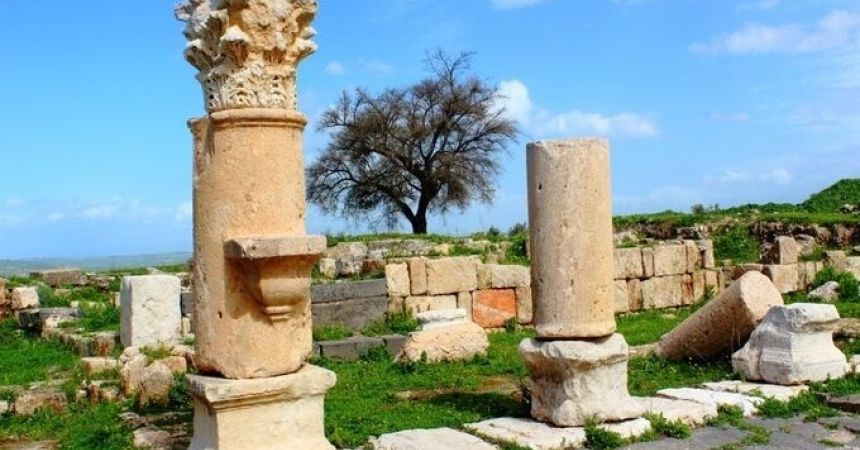
Walking through Hadrian's Arch, the Hippodrome area, Oval Plaza, colonnaded streets, temples and theatres gradually reveals something that isolated photographs cannot: Jerash works because so much of its urban structure can still be understood in relation to everything around it.
This is not Petra before Petra.
The two sites produce very different experiences, and treating Jerash as a minor warm-up would undersell it. Petra's Nabataean architecture is inseparable from sandstone cliffs and narrow passages, while Jerash provides a much clearer sense of a Roman city laid out across an open landscape.
After returning toward Amman, resist the urge to attach another major sightseeing program to the evening.
A relaxed dinner and some independent city time can provide a useful transition before the journey turns south.
This is one of the luxuries seven days provides: an excellent archaeological day does not need to share billing with three unrelated attractions.
Day 3 — Make the Road to Petra Part of the Country
This is where a one-week itinerary begins to separate itself from a shorter highlights trip.
You need to reach Petra, but you do not necessarily need to treat the journey as dead transfer time.
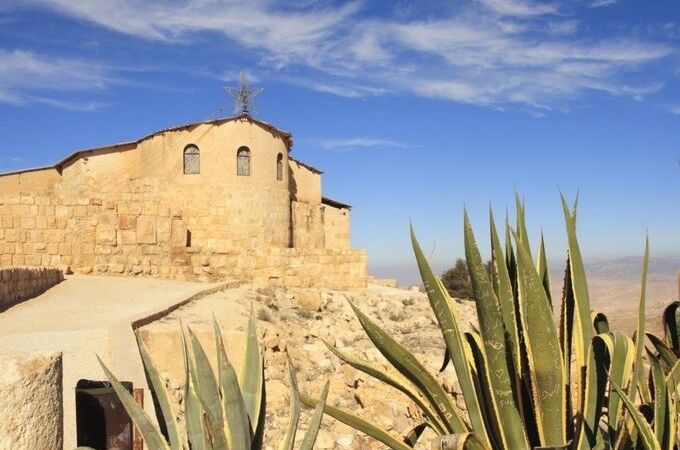
Madaba and Mount Nebo can introduce biblical and early Christian dimensions of Jordan, while the wider route south can reveal landscapes and smaller communities that are easy to miss when traveling only between headline destinations. Depending on the chosen route, interests and available daylight, other historical stops may also be considered.
Selection matters more than quantity.
A common mistake is seeing Day 3 as an opportunity to combine Madaba, Mount Nebo, the Dead Sea, Kerak and every scenic section of the King's Highway before reaching Petra. The map may allow it; the experience rarely benefits from it.
Choose a coherent version of the journey.
Travelers interested in religious history might emphasize Madaba and Mount Nebo. Those interested in medieval history may give Kerak greater weight. Travelers who care most about landscape can allow the road itself to breathe instead of repeatedly entering and leaving the vehicle.
The objective is to arrive in Wadi Musa feeling that the journey south contributed to the holiday rather than delayed Petra.
A comfortable evening and sensible bedtime are worth protecting because tomorrow will probably be the most physically active day of the week.
Day 4 — Give Petra the Day Without Asking It to Share
Petra is one of those places where arriving with too detailed a checklist can actually make the visit worse.
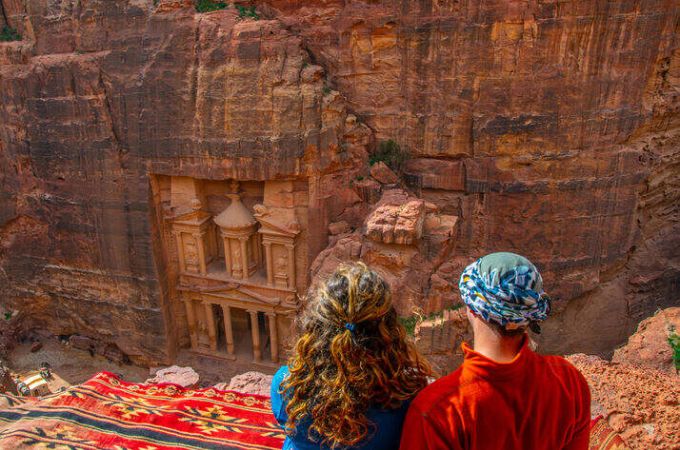
The Siq alone deserves attention. As the gorge narrows and the surrounding rock changes with the light, traces of Nabataean engineering and carved features begin providing context before the Treasury appears. The famous first glimpse of Al-Khazneh is unquestionably memorable, but the archaeological city continuing beyond it is what turns the experience into more than an encounter with a single monument.
Spend time with that wider Petra.
The Street of Facades, theatre, Royal Tombs and archaeological areas further along the main route gradually reveal the scale of the city and the complexity of Nabataean life. Historical interpretation is particularly valuable here because Petra becomes considerably more interesting once the relationship between water, trade, landscape and architecture begins making sense.
Then comes the decision that should remain a decision: whether to continue toward the Monastery.
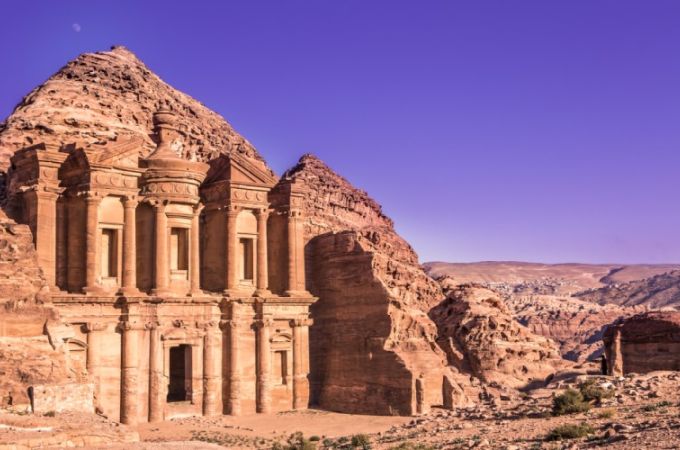
If you are comfortable with substantial walking, conditions are suitable and the Monastery matters to you, allow enough time and energy for the climb rather than treating it as an automatic final attraction. Travelers who have had enough walking can remain with the main archaeological experience without somehow failing Petra.
This entire day belongs to the site.
No Dead Sea departure afterward. No evening drive to Amman. No attempt to “save time” by attaching another destination.
One of the principal benefits of a well-built week is being able to stop doing that.
Day 5 — Leave Ancient Jordan Behind and Enter the Desert
The transition from Petra to Wadi Rum is one of the reasons a one-week route works so well.
You have just spent a day concentrating on carved architecture, archaeology and human history. Wadi Rum changes the visual language almost completely. Space opens up, monumental rock formations replace built structures, and the pace becomes less dependent on walking from one named attraction to another.
There is no need to leave Petra at an unreasonable hour simply to prove that Wadi Rum received a “full day.”
Travel south at a sensible time and allow the desert experience to develop through the afternoon. The exact route inside Wadi Rum should depend on the arrangement, conditions and interests rather than an arbitrary promise to visit a certain number of named locations.
If you are staying overnight, sunset changes the atmosphere again.
Dinner and the evening at camp can become part of the experience precisely because there is no need to drive elsewhere afterward. Some travelers value the stars and quiet; others remember conversations over dinner or the strange pleasure of knowing the hotel for the night is surrounded by desert rather than city streets.
This is also where a professionally arranged Classic Jordan Tour can be useful for travelers who want the transition from Petra to the protected desert environment handled as one continuous journey.
The important thing is that Wadi Rum receives its own identity.
It should never feel like Petra's afternoon extension.
Day 6 — Leave the Desert for Water
After several days dominated by cities, archaeological sites and desert landscapes, the Dead Sea creates a completely different kind of day.
This is partly why it fits so naturally toward the end of a week.
The journey north can be substantial, but arriving at the Dead Sea changes the expectation of what you should be doing. Instead of another long guided visit, travelers can experience the unusually buoyant water, spend time at the hotel or resort facilities and allow the afternoon to become noticeably less structured.
That reduction in activity is useful after Petra and Wadi Rum.
Travelers sometimes attempt to improve this day by adding more sightseeing on the road north. Depending on the route, an additional stop may make sense, but there is little benefit in reaching the Dead Sea so late that the reason for staying there has disappeared.
If you have booked a resort, use it.
A slower afternoon is not wasted time merely because it produces fewer photographs.
One of the pleasures of a week-long Jordan journey is finally having enough days to include an experience that does not require constant historical interpretation.
Day 7 — The Last Day Should Depend on the Flight, Not the Blog
This is where generic itineraries often become unrealistic.
A writer declares Day 7 an Amman sightseeing day without knowing whether the reader's flight leaves at 11:30 in the morning or close to midnight.
Your departure time owns this day.
With a late flight, you may have room for additional Amman exploration, lunch, shopping or another activity that fits naturally between the Dead Sea and the airport. Travelers who had a late arrival on Day 1 can use these hours to recover some of the capital experience they missed.
An afternoon departure requires a considerably more conservative plan.
An early morning flight may mean returning to Amman the previous evening rather than sleeping at the Dead Sea at all.
This does not damage the seven-day itinerary. It demonstrates why a real itinerary should respond to transportation rather than forcing transportation to obey a prewritten schedule.
Keep the final hours deliberately light.
The end of a journey should contain enough margin that a leisurely breakfast does not create airport anxiety.
The Route Works Because the Experiences Do Not Repeat Each Other
Look at the week as a whole rather than counting destinations.
Amman provides contemporary urban life layered over a long history.
Jerash shifts attention toward a remarkably extensive Roman archaeological landscape.
The road south introduces religious, historical or scenic dimensions according to the route you select.
Petra delivers the week's deepest archaeological experience.
Wadi Rum removes the city and monuments almost entirely, replacing them with desert scale and an overnight environment.
The Dead Sea then changes the pace again through water and relaxation.
This progression is why a relatively compact country can produce a week that feels far more varied than its driving distances suggest.
The sequence also reduces a common form of travel fatigue: seeing too many places that ask the same thing from you.
Three consecutive archaeological days may contain extraordinary sites, but they still require repeated concentration on history, architecture and guiding. Changing the mode of travel allows attention to recover.
A good itinerary manages curiosity as carefully as it manages distance.
Where Aqaba Fits — and Why It Usually Does Not
Aqaba creates the most difficult decision in a seven-day itinerary because it is geographically logical after Wadi Rum and attractive for completely understandable reasons.
The Red Sea sounds like the perfect conclusion.
The difficulty is that Aqaba becomes substantially more rewarding when it receives enough time for swimming, snorkeling, diving or resort relaxation. One rushed night may add another destination without delivering the coastal break that justified including it.
For travelers whose primary interests are marine activities, Aqaba should absolutely reshape the itinerary. Perhaps Jerash disappears, the Dead Sea becomes a shorter experience or another component is reduced so that the Red Sea receives meaningful time.
For a conventional first visit centered on Jordan's historical and desert highlights, I would usually leave Aqaba for a longer itinerary.
This is not a ranking.
Seven days simply forces the Red Sea to compete with experiences that already fit the journey more naturally.
What If You Prefer Nature to Roman History?
Then change Day 2.
This is where the phrase “classic itinerary” can become unnecessarily restrictive.
Jerash is exceptional, but travelers who have limited interest in Roman archaeology should not spend a substantial portion of one of seven days there simply because most first-time itineraries include it.
A nature-focused traveler might want to redirect time toward another landscape experience, although hiking ambitions need to be evaluated realistically alongside Petra's physical demands.
Dana, for example, can be far more meaningful when hiking and biodiversity are genuine priorities, but it should receive appropriate time rather than being inserted as another short stop on the way south.
The itinerary should reveal what you care about.
A week is long enough for personalization to matter and short enough that pretending to enjoy somebody else's priorities has a noticeable cost.
What If You Care More About Petra Than Everything Else?
Then give Petra more.
One week makes a second Petra experience possible, although something else will need to become lighter.
This can be worthwhile for photographers, enthusiastic walkers, archaeology-focused travelers or anyone who dislikes the feeling of having only one opportunity to explore an enormous site.
A second period in Petra does not need to repeat the first day. Once the principal route and historical context are familiar, additional time can be directed toward another permitted trail, photography, a slower return to areas that caught your attention or simply exploring without the pressure of fitting the entire site into one visit.
The trade-off might be Jerash, the Dead Sea overnight or part of the Day 3 sightseeing route.
That is perfectly legitimate.
A customized itinerary should not treat every famous Jordan destination as possessing equal voting rights.
Seven Days Is Also Where Private Travel Begins to Feel Different
On an extremely short trip, private transportation is often valued primarily for efficiency.
During a full week, flexibility becomes equally important.
You may decide that Jerash deserves another hour, while another traveler might prefer returning to Amman earlier. A family may need a longer lunch. A couple could want to leave Petra once they have completed their preferred route rather than waiting for a group schedule. Someone who has already visited Roman sites extensively elsewhere may want a different emphasis from the guide.
These adjustments sound small when planning from home.
Across seven days, they accumulate into a journey that feels more personal.
Travelers looking for this degree of control can naturally continue toward Private Jordan Discovery Tours, while the blog itself remains informational rather than turning into a commercial tour description.
The important distinction is that private travel should change the experience, not merely the vehicle.
A Week in Jordan Does Not Require Seven Early Starts
This deserves attention because overplanning often hides inside departure times.
If every morning begins at 06:30 or 07:00, the itinerary may contain more sightseeing, but the cumulative fatigue can become noticeable by Petra or Wadi Rum.
Some early departures are useful, particularly when a major site benefits from cooler conditions or a long journey lies ahead. They should be strategic rather than habitual.
The Amman-to-Jerash day, for example, does not necessarily require a punishing start if the remainder of the schedule is sensible. A Wadi Rum morning after an overnight camp can unfold differently from a transfer day. A Dead Sea morning may be deliberately slower.
Seven days gives enough room for these variations.
Use them.
Travel is not made more authentic by being tired before breakfast.
Families Should Change the Week Before They Change the Children
A standard adult itinerary can become difficult for families when parents attempt to preserve every sightseeing component while merely adding snack stops.
Children alter travel pace more fundamentally than that.
Jerash may need shorter historical explanations. Petra may require a more conservative walking ambition. Wadi Rum could become one of the week's strongest experiences because the landscape and desert travel are immediately engaging without requiring extensive archaeological knowledge.
The Dead Sea also provides a useful change, although families need to follow appropriate guidance for the distinctive water conditions and supervise children carefully.
Hotel selection matters as well.
A well-located property can remove unnecessary transfers, while family-friendly room configurations and meal arrangements reduce friction that has nothing to do with sightseeing.
Seven days with children can be excellent when the itinerary accepts that the family's version of Jordan does not need to duplicate an adult couple's trip.
Older Travelers Do Not Automatically Need Fewer Destinations
What matters more is the physical structure of the days.
A traveler who walks regularly and enjoys active holidays may be completely comfortable with the classic route, while somebody with mobility limitations may need a different Petra plan regardless of age.
The best adjustments often involve sequencing.
Avoid placing the most physically demanding experiences after late arrivals. Give Petra enough time that walking speed does not become a source of pressure. Choose hotels with practical access. Consider how much climbing matters to the traveler rather than assuming every optional route is essential.
Private arrangements can be particularly useful when walking pace varies because the day can respond to the traveler instead of the group.
A week provides enough time to adapt without automatically removing the experiences that motivated the trip.
Food Deserves Space in a One-Week Jordan Journey
Meals are often treated as gaps between attractions, yet seven days provides enough opportunities for food to become part of understanding the country.
Amman is particularly well suited to independent restaurant exploration because the range of dining experiences extends far beyond hotel buffets. Elsewhere, meals may be connected more closely to accommodation, touring arrangements or local environments.
You do not need to turn the journey into a culinary tour.
Simply avoid scheduling every lunch so tightly that eating becomes another timed activity.
Travelers with dietary requirements should communicate them before the trip, especially where meals are prearranged or included at desert accommodation. Jordanian cuisine can offer many dishes suitable for different preferences, although allergies and strict restrictions deserve precise communication rather than assumptions.
One memorable dinner can reveal as much about the pleasure of traveling through Jordan as another hour spent in a vehicle reaching an additional monument.
The Week Should Have One Evening You Barely Remember Planning
Not because nothing happened.
Because nothing had to happen.
Perhaps it is the first evening in Amman when you find somewhere for dinner and walk back without a guide. It could be after Petra, when everybody is too pleasantly tired to consider another activity. It may happen at the Dead Sea when sunset arrives while you are still sitting outside.
These moments matter because organized travel can otherwise create the sensation that every experience has been pre-approved months in advance.
A well-designed Jordan Cultural Escape should leave enough room for the destination to interrupt the plan occasionally.
Seven days is long enough for spontaneity to appear.
Do not schedule it away.
When a Seven-Day Jordan Itinerary Has Gone Too Far
You can usually recognize the problem without calculating mileage.
If the week contains Jerash, Madaba, Mount Nebo, the Dead Sea, Kerak, Dana, Petra, Wadi Rum, Aqaba and extensive Amman sightseeing, the question is no longer whether each destination is worthwhile.
They are.
The question is what kind of traveler can experience all of them meaningfully while continuously checking in and out of hotels, moving luggage and driving between regions.
For most first-time visitors, the answer is not many.
Removing one or two destinations can improve everything that remains because the benefit is distributed across the entire week: later departures, longer visits, relaxed meals, fewer hotel changes and enough margin for the unexpected.
That is the strange arithmetic of travel.
Sometimes subtracting a place adds time everywhere.
A Week Is Enough to Understand Why People Return
Seven days will not exhaust Jordan.
That should never be the objective.
You may leave without seeing Aqaba. Dana might remain unexplored. Perhaps you chose Wadi Rum over additional northern Jordan, or sacrificed a second Petra day because Jerash mattered more.
What a carefully planned week can provide is something more useful than completion: enough contrast to understand the country beyond its most famous photograph.
You can experience the energy of Amman, walk through a Roman city, watch the landscape change on the journey south, spend a substantial day inside Petra, enter Wadi Rum as the light begins to soften and eventually find yourself floating in water where ordinary swimming behaves strangely.
Those experiences do not need another six destinations around them to become a journey.
Give them enough time and one week can feel remarkably complete.
12 Questions to Settle Before Booking a One-Week Jordan Trip
1. Should I book seven nights if I want seven full sightseeing days?
Usually yes, and potentially more depending on flight times. Seven calendar dates do not necessarily produce seven usable days, particularly when arrival occurs late or departure is early. Check the actual flight schedule before deciding how many hotel nights are required for the amount of sightseeing you expect.
2. Is it better to start with the Dead Sea and finish in Amman?
It can be, particularly when arrival timing and hotel preferences make a relaxing first day attractive, although the complete north-to-south route should be considered before deciding. There is no requirement to place the Dead Sea at the end simply because many sample itineraries do so.
3. Should I buy the Jordan Pass for a seven-day trip?
It may be useful depending on nationality, eligibility, length of stay and the attractions you intend to visit. Because prices, visa conditions and inclusions can change, compare the current official Jordan Pass terms with your actual itinerary rather than assuming it is automatically the best option for every visitor.
4. Can I visit Jordan for a week during Ramadan?
Yes, but travelers should understand that operating hours, restaurant availability and daily rhythms may differ, particularly outside heavily touristic settings. Ramadan dates change annually, so confirm the exact period for your travel year and plan with respect for local customs and current operating information.
5. Do I need to change hotels almost every night?
No. Some movement is geographically sensible, especially as the route progresses toward Petra and Wadi Rum, but unnecessary one-night stays can make a week feel fragmented. Choose accommodation according to the following day's activities and avoid moving simply because each destination has been assigned its own hotel.
6. Is a week in Jordan suitable for a honeymoon?
Very much so for couples who enjoy combining history, landscapes and distinctive accommodation rather than spending the entire honeymoon at one resort. Private transportation, carefully selected hotels and enough unscheduled time can make the journey feel personal without removing Petra, Wadi Rum or other major experiences.
7. Can I travel around Jordan for seven days without speaking Arabic?
Many international visitors travel successfully without Arabic, particularly within established tourism services, although learning a few basic expressions is always appreciated. A guide or private driver can also reduce communication friction, while independent travelers may find translation tools useful outside major tourism environments.
8. How many nights should I spend in Wadi Rum during a one-week trip?
One night is sufficient for many first-time visitors because it allows the desert experience to extend through sunset and evening without consuming a disproportionate part of the week. Travelers with a strong interest in hiking, desert landscapes or slower travel may choose longer and reduce another component accordingly.
9. Should I take a large suitcase into a Wadi Rum camp?
It is often more convenient to travel with only what you need for the overnight when your wider arrangements allow luggage to be stored safely elsewhere. The exact solution depends on your transport and camp arrangements, so confirm this beforehand rather than reorganizing luggage after arriving at the desert entrance.
10. Is Friday a problem for sightseeing during a Jordan trip?
Friday is the principal weekly day of prayer, which can affect local rhythms and operating arrangements in some places, although major tourist sites may continue to operate. Check current opening times for specific attractions and avoid assuming that every service follows the same schedule nationwide.
11. Should I exchange all my money into Jordanian dinars at the airport?
There is rarely a need to exchange your entire travel budget immediately. Having some local currency available is practical, while additional exchange or withdrawals can be arranged according to your needs and current options. Compare fees and rates rather than carrying unnecessarily large amounts of cash throughout the week.
12. What is the first thing I should remove if my seven-day plan feels crowded?
Remove the destination that contributes the least to your personal reason for visiting Jordan, not automatically the one with the shortest visit. An archaeology-focused traveler may protect Jerash, while a nature-focused visitor might prioritize Wadi Rum. The correct deletion depends on what would make the remaining week more distinctly yours.

A travel professional specializing in tailor-made travel planning, guest experience management, and multi-destination tourism operations.
With over 23 years of experience in the travel industry, he designs and manages private and cultural tours for international travelers across Türkiye, Greece, Egypt, Jordan, Morocco, and other destinations.
He has strong expertise in both online and face-to-face guest communication, sales processes, and end-to-end travel operations.
Working closely with hotels, travel agencies, and local partners, he ensures smooth coordination and high-quality travel experiences at every stage of the journey.
His focus is on delivering personalized, reliable, and seamless travel experiences for international guests worldwide.