Jordan in December: From Highland Winter to the Red Sea
Last Updated: August 9, 2026
December is the month when calling Jordan a year-round destination requires a little explanation.
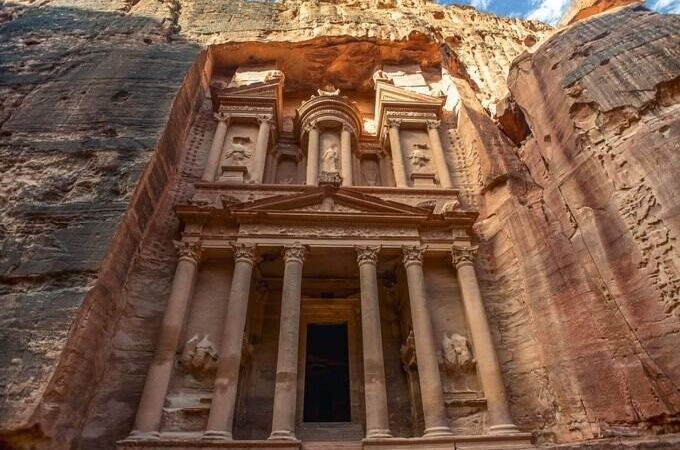
Yes, you can visit Petra.
Yes, Wadi Rum remains extraordinary.
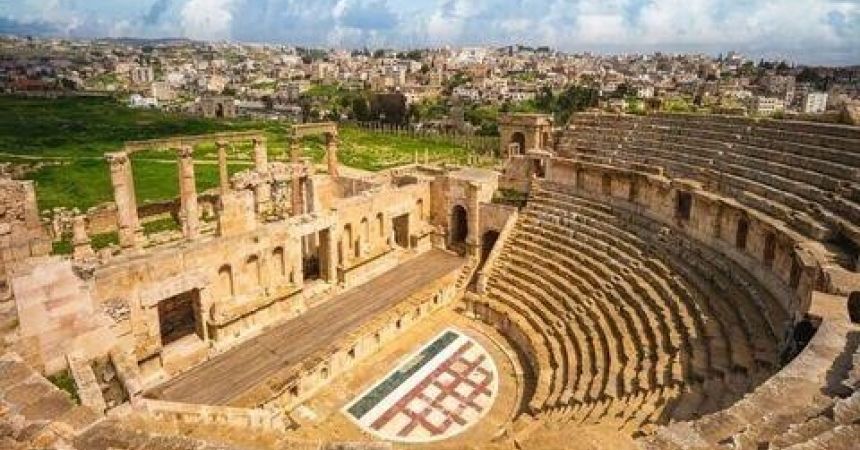
Yes, Amman, Jerash, the Dead Sea and Aqaba can all belong to a winter itinerary.
But December is not simply a quieter version of October with an extra jacket.
Jordan has real winter conditions, particularly at elevation. Days are shorter, evenings can become genuinely cold, rain deserves attention, and occasional more severe weather can affect plans. At the same time, descending towards the Dead Sea or continuing south to Aqaba can make the same holiday feel as though it has moved into another season.
That contrast is what makes December interesting.
You do not travel to Jordan in winter because the weather becomes irrelevant.
You travel knowing that weather is now part of the story.
There Is No Single Jordanian Winter
Look at a map and Jordan appears compact.
Look at December conditions and the country becomes much larger.
Amman sits at elevation and can experience cold, unsettled winter weather. Petra also has an elevated setting, while Wadi Rum introduces the particular character of a desert winter: potentially pleasant sunshine during part of the day followed by a much colder experience after dark.
Then there are the lowlands.
The Dead Sea sits far below sea level, while Aqaba occupies Jordan's Red Sea coast. Neither should be expected to feel like Amman simply because they share the same national forecast.
| Region | December Character | Main Planning Issue |
|---|---|---|
| Amman | Genuine winter conditions | Layers and weather flexibility |
| Jerash | Cool archaeological touring | Rain and shorter days |
| Petra | Winter walking | Daylight and changing weather |
| Wadi Rum | Cool desert days, cold nights | Camp comfort |
| Dead Sea | Milder lowland contrast | Variable swimming conditions |
| Aqaba | Mildest major tourism region | Red Sea-focused stay |
This is why asking “How cold is Jordan in December?” rarely produces a useful answer.
Which Jordan?
Amman Finally Looks Like a Winter Capital
Travellers sometimes arrive in Jordan with a mental image built almost entirely from desert photographs.
December can correct that quickly.
Amman may be cold, grey or rainy at times, and the city's elevation means proper winter clothing can become genuinely useful. Clear days can also be crisp and excellent for exploring, so this should not be interpreted as a month of continuous poor weather.
What December changes is certainty.
You need alternatives.
A city itinerary is well suited to that because outdoor archaeology can be combined with museums, restaurants, cafés and neighbourhood experiences when conditions change.
Travellers interested in beginning with the capital rather than immediately heading south can explore winter tours of Amman, allowing contemporary Jordan to become part of the trip instead of merely the arrival point.
Winter is a good season for cities because cities know what to do when it rains.
Petra in December Can Be Beautifully Unhurried
Petra in winter has a different emotional quality.
The experience becomes less about managing heat and more about managing time, layers and changing conditions. On a clear day, walking through the Siq and deeper into the archaeological city can be extremely rewarding, particularly for travellers who prefer cooler temperatures for substantial physical activity.
But December demands respect.
Rain can affect conditions, and flood risk must be taken seriously. Longer routes also need to fit within shorter daylight hours, while exposed elevated sections can feel considerably colder than travellers expect from photographs of Jordan.
Those wanting a deeper archaeological visit can consider Petra winter journeys, but flexibility matters more than creating an inflexible list of trails before arrival.
The best December Petra day may be ambitious.
It may also be the day when local conditions tell you to do less.
Both can be successful visits.
Winter Light Changes Petra Too
Most discussions of December focus on temperature.
Light deserves attention as well.
The lower winter sun can give Petra's sandstone a different appearance from the harsher illumination of summer. Shadows remain longer, rock surfaces gain depth and photography can take on a completely different character.
The trade-off is obvious.
The day ends earlier.
You cannot spend the morning slowly preparing, enter Petra late and expect the same flexibility available during longer seasons.
Winter rewards purposeful mornings.
Not rushed ones.
There is a difference.
Wadi Rum After Dark Is Properly Winter
A sunny desert afternoon can create false confidence.
You step out of the vehicle, walk around comfortably and begin wondering whether the warm clothing in your bag was excessive.
Wait until evening.
Desert temperatures can drop sharply after sunset, and December nights may feel genuinely cold. Travellers sleeping in Wadi Rum should therefore pay close attention to camp facilities rather than choosing accommodation solely from photographs of panoramic domes.
Ask practical questions.
Is heating provided?
What type?
What bedding is available?
How much time will you spend outside after dinner?
Travellers considering heated Wadi Rum camps should confirm current facilities directly because accommodation standards and heating arrangements differ.
A beautiful transparent roof is less romantic when you are spending the night wondering whether wearing your coat in bed would be unreasonable.
December Makes Camp Quality Matter More
During warmer months, accommodation decisions in Wadi Rum often revolve around style, location and atmosphere.
Winter adds infrastructure.
A simpler traditional camp can still provide an excellent experience when expectations are correct and facilities are suitable. A luxury-looking dome does not automatically guarantee greater winter comfort.
Read what is actually included.
Heating, private bathrooms, hot water and insulation matter more in December than whether the room photographs particularly well on social media.
The desert experience happens outside the room.
Sleep still happens inside it.
Both deserve planning.
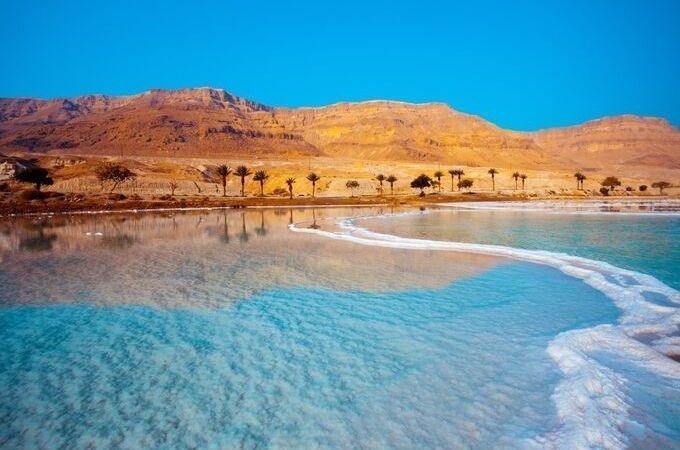
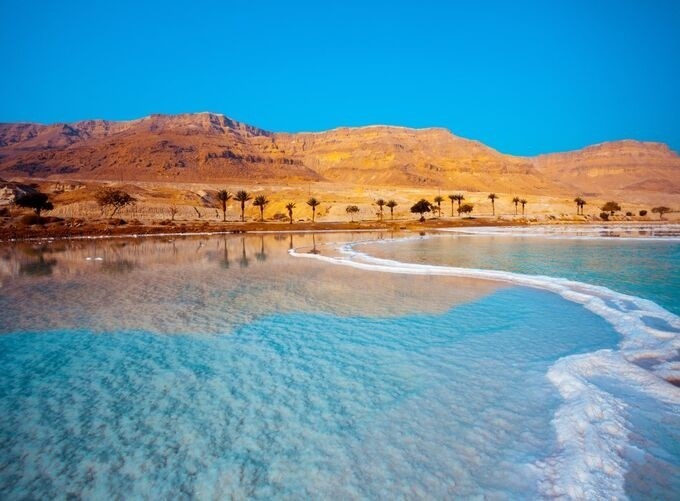
The Dead Sea Can Feel Like an Escape From Winter
Leaving Petra or Amman and descending towards the Dead Sea can produce one of December's most satisfying transitions.
The low elevation often creates milder conditions than Jordan's highlands, although weather remains variable and nobody should book December solely on the assumption of guaranteed pool weather.
The destination nevertheless works beautifully as a contrast.
After several days of archaeological walking and cold evenings, a resort can slow the trip down. Floating may be possible depending on conditions, while spa and wellness facilities provide alternatives if the weather is less inviting.
Travellers wanting that change of pace can consider Dead Sea winter retreats, particularly towards the end of an active itinerary.
December makes elevation something you can feel.
Aqaba Is Where Winter Loosens Its Grip
If warmer conditions matter strongly, Aqaba deserves attention.
Jordan's Red Sea coast generally offers a milder winter environment than Amman or Petra, which allows travellers to combine archaeology and desert with a completely different final chapter.
Diving and other marine activities may still be available depending on conditions and operators, while resort time can make sense for travellers who want to finish the journey slowly.
Aqaba is not guaranteed summer in December.
That is not the point.
Its value lies in relative contrast.
Travellers interested in combining Jordan's cultural route with the coast can explore Aqaba winter escapes, giving the Red Sea enough nights to justify travelling farther south.
Rain Is an Itinerary Issue, Not Just a Clothing Issue
December travellers should follow weather forecasts more carefully than visitors during Jordan's dry summer period.
The reason goes beyond deciding whether to carry an umbrella.
Heavy rain can create dangerous flash-flood conditions in wadis, canyons and low-lying areas. Weather-sensitive routes should therefore be evaluated using current official information and qualified local advice.
If a route closes, it closes.
If local professionals advise against an activity, change the programme.
Winter flexibility is not an optional luxury.
It is part of responsible planning.
Build December With Movable Pieces
A rigid itinerary becomes more vulnerable in winter.
That does not mean leaving hotels unbooked or travelling without a plan.
It means avoiding a structure where one weather-affected morning causes the rest of the journey to collapse.
Two nights around Petra provide more breathing room than arriving late, scheduling one fixed visit and leaving immediately afterwards. Amman offers indoor alternatives. A Dead Sea stay can create a slower period, while Aqaba may provide a completely different weather environment.
The best winter itinerary has anchors.
It also has joints.
It can bend without breaking.
December Is for Travellers Who Like a Journey to Change
Jordan in December does not deliver one consistent climate from airport arrival to departure.
That is its defining strength.
You may begin in a genuinely wintery capital, spend a clear cool day walking through Petra, sit outside in Wadi Rum until the temperature sends you towards another layer and then descend towards a Dead Sea resort where the season suddenly feels softer.
Continue to Aqaba and the contrast grows again.
Travellers wanting identical conditions every day may find this inconvenient.
Travellers who enjoy seeing geography shape a journey may find it fascinating.
December does not hide Jordan's climatic differences.
It puts them on display.
There Is More Than One Good December Route
A first Jordan trip is often planned around a familiar sequence:
Amman → Petra → Wadi Rum → Dead Sea.
It is popular for good reason. The route connects several of the country's defining experiences without requiring enormous travel distances.
December, however, makes it worth asking a second question.
What happens if the weather changes?
An itinerary built entirely around consecutive outdoor highlights has less room to adapt than one containing different types of destinations. Adding nights does not automatically solve that problem either. What matters is where those nights sit and what alternatives they create.
Three December travellers can therefore visit Jordan for roughly the same amount of time and benefit from three quite different routes.
Route 1: Classic Winter Jordan
This is the strongest choice for most first-time visitors who want Jordan's essential cultural and landscape experiences without extending to Aqaba.
Suggested 8-Day Flow
| Day | Destination | Main Experience |
|---|---|---|
| 1 | Amman | Arrival and easy evening |
| 2 | Amman | Capital and cultural touring |
| 3 | Jerash / Amman | Northern archaeology |
| 4 | Petra | Travel south and settle in |
| 5 | Petra | Main archaeological day |
| 6 | Wadi Rum | Desert exploration and camp |
| 7 | Dead Sea | Relaxation and climatic contrast |
| 8 | Departure | Airport transfer |
The strength of this itinerary is variety.
Amman provides urban flexibility at the beginning. Petra receives a proper day rather than being squeezed between transfers. Wadi Rum introduces the desert, and the Dead Sea slows everything down before departure.
It also avoids trying to make every day equally ambitious.
That matters in winter.
If you arrive tired, Amman can absorb a gentle beginning. If Petra becomes the most physically demanding day, the programme does not immediately follow it with another full archaeological site.
The route changes rhythm naturally.
Why Two Amman Nights Make Sense in Winter
Travellers sometimes look at an eight-day itinerary and question whether Amman deserves two nights when Petra is the famous destination.
December makes the case stronger.
Cities offer alternatives.
If conditions are excellent, explore outside. If a period of rain appears, indoor cultural experiences, restaurants, cafés and museums can take more of the day without making it feel lost.
There is also value in not leaving for Petra immediately after an international flight.
A winter itinerary benefits from beginning with some breathing room rather than making the first morning dependent on a long road schedule.
Amman is not filler.
In December, it can also function as flexibility.
Route 2: Petra and Desert Focus
Not every visitor wants the broadest possible introduction to Jordan.
Some travellers are coming primarily for two landscapes.
Petra and Wadi Rum.
If that describes you, spreading limited time across too many secondary destinations can weaken the trip.
Suggested 7-Day Flow
| Day | Destination | Main Experience |
| 1 | Amman | Arrival |
| 2 | Petra | Travel south |
| 3 | Petra | Main exploration |
| 4 | Petra | Second archaeological day |
| 5 | Wadi Rum | Desert experience |
| 6 | Wadi Rum / Amman | Additional desert time and return |
| 7 | Departure | — |
This route gives the two major landscapes more space than the classic circuit.
The second Petra day is particularly useful in December because it reduces the pressure on one fixed weather window. If conditions are excellent, you can use both days for different routes. If one period becomes less suitable for extended exploration, having additional time around the destination provides options that a one-night stop simply cannot.
The same principle applies to Wadi Rum.
Two nights allow the desert to become more than a sunset stop.
Who Should Choose the Focused Route?
This itinerary works particularly well for travellers who:
care deeply about archaeology;
want substantial photography time;
prefer landscapes to cities;
enjoy slower travel;
or have already visited parts of northern Jordan.
It is less suitable for someone whose main goal is to “see the whole country.”
That phrase causes problems anyway.
Seven days will never show you the whole country.
A focused itinerary simply admits it.
Route 3: Winter Jordan + Red Sea
December also creates an opportunity to build a journey with a deliberately warmer finish.
Aqaba changes the equation.
Instead of returning north immediately after Wadi Rum, continue towards the Red Sea and allow the final section of the trip to have a different climate and purpose.
Suggested 10-Day Flow
| Day | Destination | Main Experience |
| 1 | Amman | Arrival |
| 2 | Amman / Jerash | Cultural touring |
| 3 | Travel south | Scenic or direct route |
| 4 | Petra | Archaeological exploration |
| 5 | Petra | Additional time / flexible morning |
| 6 | Wadi Rum | Desert and overnight camp |
| 7 | Aqaba | Transfer to Red Sea |
| 8 | Aqaba | Marine or leisure day |
| 9 | Aqaba | Free coastal day |
| 10 | Departure / onward travel | — |
This route has a completely different ending.
After winter city conditions, archaeological walking and a cold desert evening, Aqaba introduces several days where the suitcase, schedule and daily activities change.
That contrast can be one of December's strongest advantages.
Three Nights in Aqaba Is Not Excessive If You Want the Sea
Travellers sometimes reduce Aqaba to a one-night stop because Jordan is perceived primarily as a cultural destination.
That approach rarely makes sense if the Red Sea is one of the reasons you chose the route.
Marine activities take time.
A diving day should not be squeezed between arrival and departure. Even travellers interested mainly in relaxation need enough time for the coastal section to feel different from the cultural journey that preceded it.
If you do not want several days by the sea, that is also useful information.
Skip Aqaba.
Do not travel farther south simply to say you went there.
Which December Route Fits You?
The answer depends less on the number of attractions and more on the type of holiday you want.
| Priority | Best Route |
| First Jordan visit | Classic Winter Jordan |
| Petra is the main reason for travelling | Petra & Desert Focus |
| Photography and landscapes | Petra & Desert Focus |
| Balanced culture + nature | Classic Winter Jordan |
| Winter sun / coast matters | Winter + Red Sea |
| Diving or snorkelling | Winter + Red Sea |
| Limited tolerance for hotel changes | Focused Route |
| Want maximum variety | Classic or Red Sea Route |
There is no universally superior option.
December simply makes the differences between them more meaningful.
The Best Winter Route Has Fewer Fragile Days
A fragile itinerary is one where everything has to happen exactly as planned.
Arrive Petra tonight.
Visit tomorrow.
Leave tomorrow afternoon.
Reach Wadi Rum before sunset.
Sleep one night.
Depart immediately after breakfast.
On paper, it is efficient.
In December, it leaves very little room for reality.
A stronger itinerary contains at least a few destinations where timing can move without damaging the entire journey. Two Petra nights help. A proper Amman stay helps. More than one night in Aqaba can help if the coast matters.
The objective is not to create empty time.
It is to reduce the number of moments where being three hours late ruins the next experience.
Don't Use Aqaba as a Weather Insurance Policy
There is one important distinction.
Aqaba should not be added solely because it is generally milder.
You still need to want Aqaba.
If archaeology is your passion and you have only eight days, giving Petra more time may create considerably more value than travelling south for a beach experience you never particularly wanted.
Weather should influence itinerary design.
It should not choose your interests for you.
This is true throughout Jordan, but December makes the lesson particularly visible.
Winter Planning Is Really About Resilience
A strong December itinerary does not depend on perfect conditions.
It assumes some days may be clear and beautiful.
It accepts that others may require adjustment.
It gives major experiences enough time to survive small changes and avoids creating a chain where every hotel check-in depends on the previous day's weather cooperating perfectly.
The result is not necessarily a longer holiday.
It is a route with fewer weak points.
That is the difference between planning for winter and simply visiting during winter.
What Does “Cold” Actually Mean in Jordan?
Ask five December travellers whether Jordan was cold and you may receive five different answers.
One spent a clear afternoon walking through Petra in the sun and removed a layer halfway through the route.
Another remembers standing outside a Wadi Rum camp after dinner and wishing they had packed something warmer.
Someone else finished the trip beside the Red Sea and barely thought about winter during the final three days.
None of them is necessarily wrong.
Temperature is only one part of how December feels. Elevation, direct sunshine, wind, shade, physical activity and the time of day can change comfort dramatically.
This is why a national monthly average is useful for orientation but poor at packing your suitcase.
Sunshine Can Make Winter Look Warmer Than It Is
Jordan receives plenty of clear weather, and winter sunshine can be deceptive.
Imagine arriving at Petra on a bright morning. The sky is blue, you begin walking through the Siq, and physical activity generates warmth quickly. Before long, the jacket that seemed essential outside the hotel is open or sitting in your bag.
The temperature has not suddenly risen dramatically.
You have changed.
You are moving.
You are standing in direct sunlight.
Later, you stop for an extended break in shade and the same day feels different.
This is why December clothing works best when it can be adjusted repeatedly rather than worn as one fixed winter outfit.
Amman Cold Is Urban Cold
Amman gives winter a familiar city character.
You move between outdoor viewpoints, streets, archaeological areas, vehicles, restaurants and indoor attractions. Wind and rain can make a cool day feel considerably less comfortable, but shelter is usually nearby.
That makes the capital relatively easy to manage.
You can add or remove a layer.
Step into a café.
Change the sequence of the day.
Move an indoor experience into a less appealing weather window.
Cold in Amman therefore affects the rhythm of sightseeing more than the fundamental ability to travel.
The city has somewhere else for you to go.
Petra Cold Is About Movement
Petra is different because you are outside for much longer.
A traveller completing a substantial route may feel comfortable even when the air is cool because several kilometres of walking generate body heat. Stop for twenty minutes and the sensation changes.
This creates a layering problem.
Dress too heavily at the entrance and you may spend the first hour carrying clothing you no longer want.
Dress only for the active portion and longer breaks may feel surprisingly cold.
The solution is not complicated.
Use layers you can remove easily and carry comfortably.
A backpack containing one useful layer is far more practical than a heavy coat you are committed to wearing all day.
Wadi Rum Cold Arrives When You Stop Moving
The desert creates perhaps the strongest contrast.
During a daytime excursion, you may repeatedly enter and leave a 4x4, walk at selected stops and spend substantial time in sunshine.
Then you reach camp.
The sun disappears.
Activity decreases.
Dinner begins.
Suddenly, your body is no longer generating the same warmth, and there may be little protection from the open desert environment when you are sitting outside.
This is why travellers sometimes describe a Wadi Rum night as much colder than the forecast suggested.
They are comparing two completely different situations.
Walking under the sun at 2:00 p.m.
Sitting outside after dark.
The thermometer is only part of that story.
Wind Changes the Experience Quickly
Wind deserves more attention than it receives in generic Jordan packing advice.
A relatively cool but calm day can feel perfectly comfortable during active sightseeing. Add persistent wind, particularly in exposed landscapes, and the same temperature may feel substantially colder.
This matters around viewpoints, elevated archaeological areas and open desert environments.
A useful outer layer therefore does more than provide insulation.
Protection from wind can make a significant difference without requiring an excessively heavy winter coat.
Check the forecast for more than maximum and minimum temperature.
Look at the conditions around those numbers.
The Dead Sea Rewrites the Winter Rules
Descending towards the Dead Sea can make the clothing decisions of the previous few days feel strangely excessive.
The low elevation often provides noticeably milder conditions than Jordan's highlands, giving travellers a completely different December experience within a relatively short journey.
That does not guarantee hot weather.
Cloud, wind and rainfall can still affect comfort.
But the relative difference matters.
A traveller leaving a cold Amman morning may arrive at the Dead Sea wondering how the same suitcase is supposed to serve both places.
That is exactly why it contains layers.
Not one winter uniform.
Aqaba Is a Different Kind of December Again
Aqaba pushes the contrast further.
Its Red Sea location gives it a milder winter identity than much of the classic cultural route, and travellers may find that lightweight clothing returns to regular use during the daytime.
Those planning marine activities should think beyond air temperature, however.
Swimming, snorkelling and diving comfort depends on water conditions, wind, personal tolerance and the equipment provided by operators.
A warm-looking afternoon does not automatically answer every question about spending an hour in the sea.
Check actual conditions.
Temperature Doesn't Tell You What You're Doing
Consider two travellers experiencing the same cool December afternoon.
One is climbing a Petra trail.
The other is sitting outside at a Wadi Rum camp.
Who feels colder?
Probably not the person climbing.
Activity matters enormously.
This is also why packing lists based entirely on temperature ranges can become misleading. Clothing should reflect what you will be doing as much as where you will be.
Long archaeological walks require flexibility.
Camp evenings require warmth while relatively inactive.
City touring requires clothing that works when moving repeatedly indoors and outdoors.
A Red Sea stay needs an entirely different set of options.
The Most Useful Winter Packing Question
Do not ask:
“What should I wear in Jordan in December?”
Ask:
“What will I be doing when it is cold?”
That question produces better decisions.
If the coldest part of your itinerary is a Wadi Rum evening, pack specifically for sitting outside after dark.
If you plan extensive Petra hiking, make sure your layers can be removed and carried easily.
If Amman occupies several days, prepare for ordinary winter city conditions and possible rain.
If the journey ends in Aqaba, keep warm-weather options accessible instead of burying them underneath every winter item you own.
The destination matters.
The activity matters more.
Comfort Comes From Adjusting, Not Predicting Perfectly
No packing list can tell you exactly how a December day will feel months before you travel.
Nor should it try.
Weather changes.
People experience cold differently.
A temperature that feels refreshing to someone from northern Europe may feel distinctly cold to a traveller arriving from a tropical climate.
The objective is therefore not perfect prediction.
It is adaptability.
Wear clothing that can change with the day. Check current forecasts before departure and again as the relevant destination approaches. Pay attention to wind and rainfall, not only temperature.
And remember that you are moving through dramatically different elevations.
December Jordan does not ask you to predict one kind of winter correctly.
It asks you to be ready for several versions of it.
November vs December vs January: Where Does December Fit?
November, December and January all belong to Jordan's cooler travel season, but they should not be treated as interchangeable winter pages.
November still carries a late-autumn identity. December marks a clearer move into winter, when regional differences, shorter days, cold desert nights and changing weather deserve greater influence over itinerary design. January takes the winter pattern farther and requires its own planning approach.
| November | December | January | |
|---|---|---|---|
| Seasonal Identity | Late autumn | Early winter | Established winter |
| Amman | Cool and increasingly variable | Genuine winter conditions | Deeper winter pattern |
| Petra | Excellent cooler walking | Winter archaeology | Winter-focused planning |
| Wadi Rum | Cool nights | Cold nights more important | Strong winter desert conditions |
| Dead Sea | Mild contrast | Useful lowland escape | Regional contrast remains |
| Aqaba | Mild Red Sea option | Strong winter contrast | Winter-sun potential |
| Packing | Flexible autumn layers | Proper winter layering | Winter wardrobe |
| Main Planning Issue | Daylight | Weather + regional contrasts | Cold-season conditions |
December's appeal lies in the middle.
Winter has arrived strongly enough to transform the journey, but moving through Jordan can still produce surprisingly different climatic experiences within the same week.
Frequently Asked Questions About Jordan in December
1. Is December a good time to visit Jordan?
Yes, particularly for travellers who prefer cooler archaeological sightseeing and are comfortable with variable winter weather. Petra, Amman, Jerash and Wadi Rum remain rewarding, while the Dead Sea and Aqaba can introduce noticeably milder conditions. A flexible itinerary is more important than during the dry summer months.
2. Is Jordan very cold in December?
It depends on where you are. Amman and Petra can experience genuinely cold winter periods, particularly during mornings and evenings, while Wadi Rum can become cold after sunset. The Dead Sea and Aqaba generally have milder winter conditions because of their geography and elevation.
3. Does it snow in Jordan in December?
Snow is possible in higher parts of Jordan during winter, including areas around Amman, although it is not something visitors should expect throughout December. When significant winter weather occurs, transportation and sightseeing can be affected, making current forecasts and local advice particularly important.
4. Can I visit Petra in December?
Yes. December can provide excellent conditions for travellers who enjoy walking in cooler weather. However, shorter daylight, rainfall and changing conditions should be considered when selecting routes. Follow official instructions if weather affects access, and avoid treating long winter trails as completely weather-independent.
5. Does Petra flood in winter?
Heavy rainfall can create flash-flood risk in Petra and other narrow valleys in Jordan. This does not mean every rainy day results in flooding, but the potential should be taken seriously. Visitors should follow official closures, weather warnings and guidance from qualified local professionals.
6. Is Wadi Rum worth visiting in December?
Absolutely, especially for travellers interested in desert landscapes rather than guaranteed warmth. Daytime exploration can be highly rewarding, while nights may become genuinely cold. Check camp heating, bedding and facilities before booking, and carry clothing suitable for spending time outside after sunset.
7. Are Wadi Rum camps heated in December?
Some camps provide heating, but facilities vary substantially according to accommodation type and operator. Do not assume every traditional tent, luxury tent or panoramic dome offers the same system. Confirm heating, bedding, hot-water arrangements and bathroom facilities directly when winter comfort is important.
8. Can I swim in the Dead Sea in December?
It may be possible depending on the day's weather and personal tolerance. The Dead Sea generally has milder conditions than Jordan's highlands, but December does not guarantee warm swimming weather every day. Resorts with additional facilities can make the stay worthwhile even when conditions are less favourable.
9. Is Aqaba warm in December?
Aqaba generally offers one of Jordan's mildest December climates and can provide a significant contrast with Amman, Petra and Wadi Rum. Travellers interested in diving, snorkelling or swimming should still check current sea, wind and weather conditions rather than assuming winter automatically guarantees beach weather.
10. What should I pack for Jordan in December?
Pack adaptable layers rather than relying on one heavy outfit. Include comfortable walking clothing, a warm layer for evenings, a weather-resistant outer layer, dependable footwear and sun protection. Wadi Rum nights may require warmer clothing, while the Dead Sea and Aqaba can call for lighter options.
11. How many days should I spend in Jordan in December?
Around eight to ten days works well for many first-time visitors, providing time for Amman, Petra, Wadi Rum and the Dead Sea without excessive rushing. Adding Aqaba, two substantial Petra days or more northern Jordan exploration can justify extending the trip beyond ten days.
12. Is December or January better for visiting Jordan?
December marks the beginning of a more established winter travel pattern, while January moves farther into the season. Neither is universally better. Travellers should choose according to tolerance for cooler weather, intended activities and willingness to maintain flexibility around changing winter conditions.

A travel professional specializing in tailor-made travel planning, guest experience management, and multi-destination tourism operations.
With over 23 years of experience in the travel industry, he designs and manages private and cultural tours for international travelers across Türkiye, Greece, Egypt, Jordan, Morocco, and other destinations.
He has strong expertise in both online and face-to-face guest communication, sales processes, and end-to-end travel operations.
Working closely with hotels, travel agencies, and local partners, he ensures smooth coordination and high-quality travel experiences at every stage of the journey.
His focus is on delivering personalized, reliable, and seamless travel experiences for international guests worldwide.