Petra in January Feels Different Once You Enter the Siq
Author: Kenan Ungur
Article Date: 15.09.2024
Reading Time: 14 min

Petra in January Feels Different Once You Enter the Siq

Last Updated: August, 2026

January weather in Petra is difficult to understand from a temperature chart alone.

You can leave your hotel dressed for a cold winter morning, begin walking toward the archaeological site under a clear sky and eventually find yourself surprisingly comfortable in sunshine. Then you enter a deeply shaded section of the Siq and the temperature seems to change almost immediately.

The forecast has not changed.

Your surroundings have.

That is the central weather story of Petra in January.

Petra sits at elevation in southern Jordan, where winter brings genuinely cool conditions. Daytime temperatures are often around the low teens Celsius, while nights can approach freezing during colder periods. Rain is possible, and occasional winter systems can produce substantially colder conditions.

Yet visitors experience those temperatures through a landscape of narrow sandstone passages, exposed open areas, stairways, shaded façades and changing elevations.

January in Petra is therefore not simply cold.

It is a day of moving repeatedly between different versions of winter.

The Siq Can Rewrite Your First Impression of the Morning

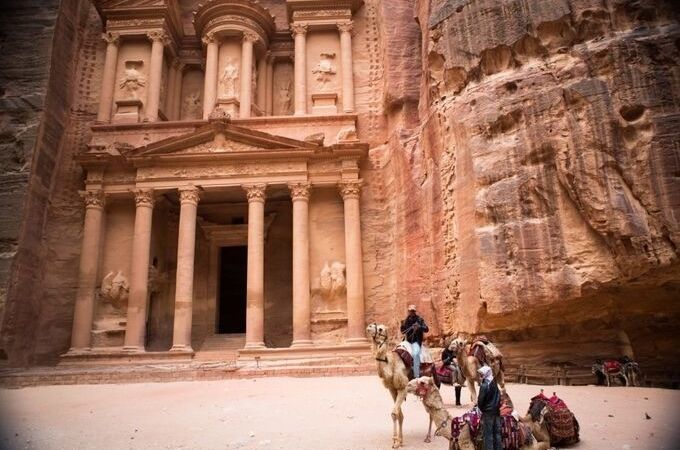
The approach into Petra is one of the world's great archaeological entrances, but in January it also provides an immediate lesson in microclimate.

Before entering the Siq, you may already have spent time walking under open sky. If sunshine is present, movement can make the morning feel increasingly comfortable.

Inside the narrow gorge, direct sunlight becomes much less consistent.

The sandstone walls restrict exposure to the sun, and sections that remain shaded can feel distinctly colder than open ground. If you removed a layer too early, you may find yourself putting it back on.

This is precisely why a January Petra article needs its own semantic identity.

A country-level Jordan weather page can tell you winter is cool. A Petra page should explain where you are likely to notice that cold while actually moving through the archaeological landscape.

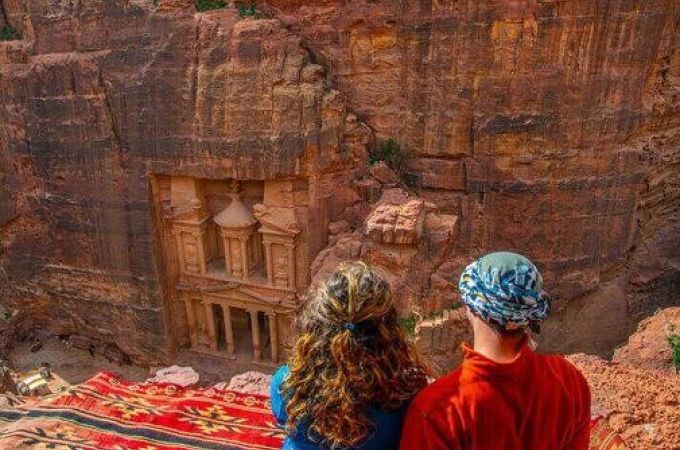
The Treasury Is Not the End of the Weather Story

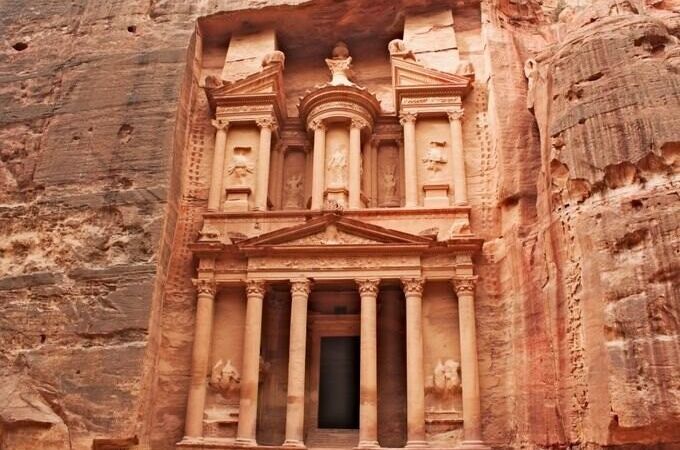
Reaching the Treasury can create the impression that the most substantial walking is behind you.

For many visitors, it is only the beginning.

Petra extends far beyond its most photographed monument. Depending on your route, you may continue toward the Street of Facades, Royal Tombs, Colonnaded Street or other areas, with substantial walking accumulating across the day.

January changes how that distance feels.

Cooler air can make sustained walking considerably more comfortable than during hotter months, but winter conditions introduce another consideration: you are generating body heat while moving through a landscape where shade and exposure continue changing.

Travelers taking a winter Petra discovery should therefore avoid dressing solely for how cold they feel while standing outside the hotel.

Dress for a day that involves movement.

Walking Warms You Faster Than You Expect

Petra is not a passive sightseeing experience.

Even a relatively straightforward visit involves significant time on foot. Add steps or higher routes and the physical effort increases quickly.

This creates a common January problem: overdressing.

You begin cold, put on several heavy layers and feel perfectly prepared. Forty minutes later, after continuous walking, those same clothes become uncomfortable.

The solution is not dressing lightly from the beginning.

It is modularity.

Wear layers that can be removed individually rather than relying on one extremely heavy piece that leaves you with only two choices: too cold or too warm.

January Petra Has Four Different Thermal Environments

Thinking of Petra as one outdoor temperature misses what happens on the ground.

Petra Environment How January Can Feel Practical Response
Early entrance area Cold, especially before sustained walking Begin with layers
Deep Siq sections Cooler because of prolonged shade Keep outer layer accessible
Open sunny areas Considerably more comfortable Remove a layer before overheating
Elevated/exposed routes Wind can increase cold sensation Carry protection even if lower areas feel mild

This is not a generic January temperature table.

It describes the thermal geography of the archaeological site, which is precisely the information this Petra page should own.

Sunshine Can Make Winter Look Warmer Than It Is

Petra's sandstone becomes particularly striking under winter sunshine.

That visual warmth can be deceptive.

A sunny section may feel comfortable enough for you to remove a jacket, especially after walking. Move back into deep shade or stop for a substantial period, however, and the underlying winter temperature becomes obvious again.

The difference matters because Petra repeatedly moves visitors between these environments.

On a January Petra exploration, do not interpret one comfortable sunny hour as evidence that the rest of the day will feel the same.

Keep the layer you removed.

You may want it again sooner than expected.

Stopping Is When You Notice the Cold

One of January's most useful practical lessons appears when you stop moving.

While walking, your body produces enough heat to make surprisingly cool conditions feel manageable. Then you pause to photograph a façade, listen to a guide, wait for someone in your group or sit for lunch.

The temperature suddenly seems lower.

This is particularly noticeable in shade.

Rather than dressing exclusively for continuous walking, make sure you can restore warmth easily during longer stationary periods. A removable outer layer becomes valuable precisely because it can spend part of the day inside your bag and return whenever movement stops.

Don't Delay Simply Because the Morning Is Cold

There is an understandable temptation to postpone entering Petra until the day warms.

That can be counterproductive.

January has relatively limited daylight, and Petra is large enough that starting too late may reduce how much of the archaeological landscape you can explore comfortably before the afternoon light begins disappearing.

The answer is not necessarily entering at the earliest possible minute regardless of conditions.

It is avoiding a weather-driven late start simply because breakfast-time temperatures look uninviting.

Once you begin walking, your thermal experience may improve considerably.

Your Day Bag Is Part of the Winter Strategy

A January bag needs enough room for clothing that may repeatedly go on and off.

That sounds trivial until you are carrying a jacket in one hand while taking photographs, climbing steps and managing water with the other.

Choose a bag that can accommodate at least one removed layer without becoming cumbersome.

Water still matters in winter, even when thirst is less obvious, while sunglasses can remain useful on bright days. Gloves or other cold-weather accessories may be valuable during colder spells, depending on the forecast and your personal tolerance.

The principle is adaptability rather than packing for every possible winter extreme.

January Is Not About Chasing Warmth

Trying to remain in sunshine all day would misunderstand Petra.

Some of the archaeological city's most memorable passages are shaded precisely because of the landscape that makes Petra extraordinary.

The goal is not avoiding cold sections.

It is arriving prepared enough that moving from sun to shade does not repeatedly interrupt the experience.

For travelers on a cold-season Petra journey, that distinction matters. Winter becomes part of the site's character rather than an obstacle standing between you and it.

January Owns Petra's Cold Sandstone Morning

This page deliberately does not answer whether January is the best month to visit Petra. That belongs to a comparative Best Time to Visit page.

It does not describe Jordan's overall January climate, and it does not reproduce Amman's winter city experience.

Its question is much narrower:

What does a January day actually feel like once you are walking inside Petra?

The answer changes from one section to another.

Cold entrance. Shaded Siq. Sunlit sandstone. Long walks. Stationary pauses. Exposed higher ground.

January's defining Petra experience is therefore not a single temperature.

It is the repeated contrast between winter air, physical movement, sandstone shade and moments of surprisingly comfortable sunshine as you move deeper into the archaeological city.
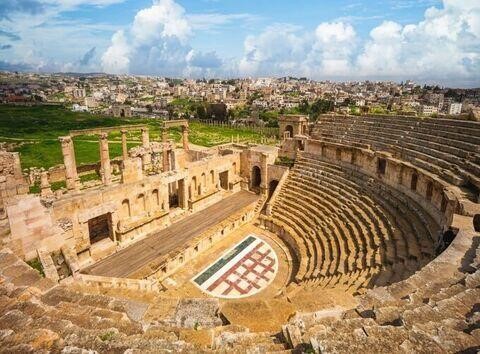
The North Gate of Jerash showcasing ancient Roman engineering brilliance

The Best January Layer Is the One You Can Remove Without Thinking

A January visit becomes much easier when clothing adjustments happen naturally rather than becoming a repeated interruption.

If your jacket is bulky, difficult to pack or uncomfortable to carry, you may keep wearing it long after continuous walking has made it unnecessary. That creates perspiration, and once you eventually stop moving in a shaded section, damp clothing can make the cold feel considerably sharper.

A better system uses several practical layers that can be adjusted gradually. You might begin with all of them during a cold morning, remove one after the walk has warmed you, then restore it during a long stationary stop or when the route enters a colder shaded environment.

The objective is not to predict exactly what you will wear at every monument. It is to make changing your clothing so effortless that you barely think about it.

Lunch Can Feel Colder Than the Walk That Brought You There

After several hours moving through Petra, sitting down for lunch can reveal how much warmth your body had been generating.

This is especially noticeable when the seating area is shaded or exposed to moving air. You may arrive feeling warm enough to remove a jacket, only to want it again once you have been sitting for ten or fifteen minutes.

Rather than interpreting this as unpredictable weather, recognize the difference between active and stationary comfort.

January visitors often need fewer layers while walking and more while resting. Keeping your outer layer accessible rather than buried underneath everything else in your bag makes these transitions much easier.

Higher Routes Need Their Own Judgment

Visitors extending beyond the main archaeological corridor may encounter stairs, climbs and more exposed sections, depending on the route chosen and current access conditions.

These should not be treated as simply longer versions of walking on the main route. Physical effort can make you warmer during the climb, while exposure to wind can make stationary periods at higher points feel considerably colder.

This creates a curious January combination: you may remove clothing while climbing and put it back on shortly after arriving.

Before undertaking longer or higher routes, check current site and weather conditions locally. Access can be affected by weather, maintenance and official safety decisions, and historical monthly patterns should never be used to assume that a particular trail will be suitable on the day of your visit.

Winter Footwear Is About Petra, Not Just the Temperature

Heavy insulated winter boots are not automatically necessary for every January day, but suitable walking footwear certainly is.

Petra involves uneven ground, stone, steps and substantial distances, while wet weather can alter surface conditions. Shoes should therefore provide dependable grip and remain comfortable after several hours rather than being selected simply because they are warm.

This is particularly important because footwear discomfort becomes increasingly difficult to ignore as you travel farther into the site. A minor problem near the entrance can feel considerably less minor after a long archaeological walking day.

A Simple January Petra Clothing Logic

What You Experience Better Response
Cold before entering Begin comfortably layered
Warmer after sustained walking Remove one layer rather than overheating
Long shaded section Restore warmth when needed
Extended photography or guide stop Dress for standing still
Higher exposed area Keep wind exposure in mind
Late-afternoon return Have the removed layer ready again

The point is not carrying clothing for six different climates. One intelligently layered outfit can handle most of these changes.

Don't Forget the Walk Back

Petra creates an unusual sightseeing psychology because every step deeper into the archaeological city also increases the distance you eventually need to cover on your return.

In January, this deserves extra attention because daylight is limited and temperatures can fall as the afternoon progresses. An ambitious extension of the route may feel perfectly reasonable while you are moving under comfortable midday sunshine, yet the return can happen under very different light and temperature conditions.

Keep an eye on time without becoming obsessed with it, and consider the return journey as part of the day's physical effort rather than something that begins after sightseeing has finished.

That small shift in thinking makes a winter visit considerably more realistic.

12 Questions About Petra in January

1. What is the weather like in Petra in January?

January is one of Petra's winter months, bringing cool daytime conditions, cold mornings and nights, and the possibility of rain or occasional stronger winter weather. The experience varies considerably between sunlit open spaces, shaded sandstone passages and more exposed sections of the archaeological site.

2. How cold does Petra feel in January?

Temperature alone does not determine how cold Petra feels. A shaded section of the Siq can feel markedly cooler than an open area receiving direct sunshine, while continuous walking generates enough body heat to make the same winter day feel surprisingly comfortable.

3. What should I wear to Petra in January?

Wear adaptable layers that can be removed during sustained walking and restored during shaded or stationary periods. Comfortable footwear with reliable grip is particularly important, while your exact outerwear should reflect the short-range forecast rather than monthly averages alone.

4. Do I need a heavy winter coat in Petra?

Not necessarily on every January day. Several adjustable layers can sometimes be more practical because substantial walking generates body heat. During colder weather systems, however, warmer outerwear may be appropriate, so check conditions shortly before your visit rather than relying on averages.

5. Does it rain in Petra in January?

Rain is possible during January, and weather conditions can affect parts of the archaeological site differently. Because Petra contains narrow channels and varied terrain, follow official local instructions and never assume a route is safe simply because rainfall appears light where you are standing.

6. Can snow fall in Petra during January?

Snow or wintry precipitation is possible during colder winter systems, although visitors should not expect it as a normal feature of every January trip. Short-range forecasts provide far more useful guidance if unusually cold weather is approaching during your actual travel dates.

7. Is the Siq colder than other parts of Petra?

It can feel colder because substantial sections receive limited direct sunshine, particularly during winter. The contrast becomes more noticeable when you enter after walking through a brighter open area, which is why keeping an easily accessible layer can be surprisingly useful.

8. Is January comfortable for walking inside Petra?

Cooler conditions can make sustained walking comfortable when the weather is settled, but Petra's distances, uneven terrain and elevation changes remain physically demanding. Visitors should judge routes according to fitness, current conditions and daylight rather than assuming cool weather automatically makes every trail easy.

9. Should I enter Petra later because January mornings are cold?

Delaying too long simply to avoid a cold start can reduce the daylight available for exploring a very large archaeological site. With appropriate clothing, beginning while conditions are cool may be more practical than sacrificing a substantial portion of the sightseeing day.

10. What shoes should I wear in Petra in January?

Choose comfortable walking shoes with dependable traction rather than selecting footwear purely for warmth. Petra includes stone, uneven surfaces, steps and long distances, while rainfall can make some areas more challenging, so stability and all-day comfort deserve priority.

11. Does Petra become colder again in late afternoon?

Temperatures can fall as daylight weakens, and the change may feel particularly noticeable after spending time walking in sunshine. Visitors planning a long day should keep removed layers available for the return rather than assuming midday comfort will continue until departure.

12. What makes Petra in January different from other winter destinations in Jordan?

This page does not attempt to compare January conditions across Jordan. Petra's distinctive January experience comes from how winter interacts with the archaeological landscape itself: deep sandstone shade, open sunlit areas, extensive walking, stationary monument stops and exposed sections can produce several different temperature sensations during one visit.

Kenan Ungur
Author

A travel professional specializing in tailor-made travel planning, guest experience management, and multi-destination tourism operations.

With over 23 years of experience in the travel industry, he designs and manages private and cultural tours for international travelers across Türkiye, Greece, Egypt, Jordan, Morocco, and other destinations.

He has strong expertise in both online and face-to-face guest communication, sales processes, and end-to-end travel operations.

Working closely with hotels, travel agencies, and local partners, he ensures smooth coordination and high-quality travel experiences at every stage of the journey.

His focus is on delivering personalized, reliable, and seamless travel experiences for international guests worldwide.
Join The Newsletter

To receive our best monthly deals

Magnificent Travel Logo

Magnificent Travel
Usually responds the same day

Magnificent Travel
Welcome to the Magnificent Travel

How may i help you?
Today
+905324935198
X