Antalya Turkey: How to Plan the Right Mediterranean Stay
Updated: August 2026
Antalya becomes much easier to plan once you stop treating it as one place.
The name can mean the historic city centered around Kaleiçi, a modern Mediterranean metropolis stretching along the coast, resort districts such as Lara, or an enormous province containing beaches, mountains, waterfalls and archaeological sites separated by substantial driving distances. Belek, Side, Kemer and other resort areas are routinely sold under the broad Antalya label even though staying in one of them produces a very different holiday from booking a small hotel inside the old town.
That distinction matters more than almost anything else you will read about Antalya.
Choose the wrong base and you can spend a week taking transfers to reach the experiences you actually wanted. Choose correctly and Antalya becomes one of Turkey's most flexible destinations, capable of combining Roman archaeology, Ottoman-era streets, Mediterranean swimming, resort relaxation and day trips without requiring a new hotel every night.
So before deciding what to see, decide which Antalya you want to wake up in.
The First Decision Is Not Your Hotel — It Is Your Base
Antalya's accommodation choices make more sense when divided by travel purpose rather than star rating.
Kaleiçi suits travelers who want history outside the hotel door. The old town's lanes, restored Ottoman-era houses, restaurants and proximity to the harbor create an urban stay where evenings can be spent walking rather than remaining inside a resort.
Konyaaltı works differently. Its long beach, modern surroundings and relationship with central Antalya make it attractive to travelers who want coast and city in the same holiday without staying inside the historic core.
Lara becomes increasingly relevant when resort facilities and convenient access to Antalya Airport matter more than old-town atmosphere.
Then there is Belek, which is not central Antalya at all. It functions as a purpose-built resort and golf environment east of the city and should be selected for that reason.
None is universally better.
They solve different holidays.
Four Antalya Bases, Four Completely Different Trips
Instead of asking where the “best area” is, ask what you expect to do after breakfast.
| Base | Best for | Daily experience | Main trade-off |
|---|---|---|---|
| Kaleiçi | Culture, restaurants, first visits | Walkable historic atmosphere | Less resort-style space |
| Konyaaltı | Beach + city balance | Coast with urban access | Not an old-town experience |
| Lara | Resort comfort, shorter airport logistics | Hotel-led Mediterranean stay | Less spontaneous historic atmosphere |
| Belek | Golf, resort-focused holidays | Courses, large hotels, relaxation | Poor choice for nightly Antalya exploration |
This is the table that should guide the booking.
A five-star resort in the wrong location is still the wrong hotel.
Kaleiçi Is Where Antalya Feels Like a City With a Past
Travelers who know Antalya only through resort photographs can be surprised by Kaleiçi.
The historic quarter descends through narrow streets toward the old harbor, with architecture and street patterns reflecting layers of Roman, Byzantine, Seljuk and Ottoman history. Hadrian's Gate provides one of the clearest surviving connections with Roman Attaleia, while the surrounding old town works best when explored without turning every building into a checklist item.
Kaleiçi's real advantage is what happens between attractions.
You can leave the hotel in the evening and immediately be somewhere worth walking. Dinner does not require returning to the same buffet. A short stroll can lead toward the harbor, cafés or quieter side streets.
For travelers who normally prefer Istanbul-style independent city exploration to enclosed resorts, this is often the Antalya they were actually looking for.
Antalya Is One of Those Places Where the Museum Changes the Ruins
The Antalya Museum deserves a different kind of attention from the usual “things to do” treatment.
The surrounding region contains some of Turkey's richest ancient sites, particularly those associated with Pamphylia and neighboring ancient landscapes. Archaeological objects removed from their original contexts can become abstract when viewed without understanding where they came from.
Here, the relationship works in both directions.
Visit the museum before the archaeological sites and sculptures, sarcophagi and regional material provide visual context for what you will later encounter.
Visit afterward and objects suddenly reconnect with places you have walked through.
Travelers with a serious interest in antiquity should therefore avoid treating the museum as a rainy-day substitute for “real sightseeing.”
It is part of the interpretation.
Perge and Aspendos Should Not Be Experienced as Two Versions of the Same Ruin
This is where Antalya becomes especially strong for culturally curious travelers.
Perge rewards people who enjoy understanding an ancient city spatially. Streets, baths, gates, public architecture and the surviving urban layout help you imagine movement through a major Pamphylian settlement.
Aspendos delivers a different impact. Its Roman theatre is the immediate architectural focus and demonstrates preservation on a scale that requires far less imagination.
The two sites therefore complement each other.
At Perge, you reconstruct a city.
At Aspendos, one monumental structure confronts you almost intact by comparison.
Trying to decide which is “better” misses the opportunity. When time allows, their difference is precisely why pairing them works.
Travelers who want archaeology to form a meaningful part of the stay can use Antalya ancient sites tours as a route framework rather than reducing the region to isolated excursions.
Termessos Asks More From You
Then there is Termessos.
Its personality could hardly be more different.
Set high in the Taurus Mountains, Termessos combines archaeological remains with terrain, altitude and a much stronger sense of physical separation from modern Antalya. The landscape is not background decoration; it is fundamental to understanding the site.
That also means Termessos should not be recommended casually to every visitor.
Walking conditions, elevation, footwear, weather and physical ability matter considerably more than they do during a straightforward urban attraction visit.
For travelers comfortable with the terrain, however, the effort is part of the reward. The mountain setting explains why ancient geography mattered strategically rather than merely illustrating it on a map.
This is exactly the kind of destination where “only 30 kilometres away” tells you almost nothing about the actual experience.
Antalya Distances Are More Deceptive Than They Look
This is one of the most useful practical lessons for first-time visitors.
Looking at a map, you may see Side, Belek, Kemer, Perge and several waterfalls surrounding Antalya and conclude that everything can be combined effortlessly.
The problem is not always distance.
Traffic, resort access roads, archaeological visit duration, hotel pickups and the direction of travel can turn an apparently neat day into several hours of movement.
This is why itinerary design should work geographically.
If you are staying west of Antalya, repeatedly traveling far east and back wastes time. If your priority attractions cluster east of the city, choosing accommodation purely because another district looks prettier on Instagram can create unnecessary transportation.
Think in corridors, not pins.
Antalya is a region where route efficiency genuinely improves the holiday.
The Waterfalls Offer Two Very Different Breaks From Archaeology
Antalya's waterfalls are often grouped into one attraction category, but they provide different experiences.
Lower Düden is known for water descending dramatically into the Mediterranean and can fit naturally into a city/coastal sightseeing day.
Upper Düden creates a greener inland environment where the experience feels more enclosed and park-like.
Neither needs to become the reason for traveling to Antalya.
Their value lies in changing the rhythm.
After a morning of stone, archaeological interpretation and exposed ancient sites, water and vegetation provide a completely different sensory experience.
Good itineraries benefit from contrast.
That is why combining every Roman ruin into one exhausting sequence can be less satisfying than alternating archaeology with natural landscapes.
Beach Choice Should Follow Your Accommodation Logic
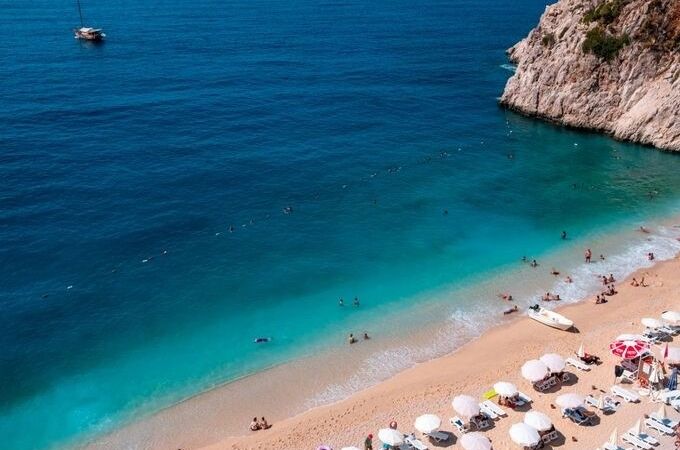
Antalya's coast is extensive enough that “stay near the beach” is not useful planning advice.
If you choose Konyaaltı, the beach becomes part of everyday urban life.
If you stay in a Lara resort, beach access may be integrated into the hotel experience.
If you are in Kaleiçi, history and city atmosphere are likely to be stronger priorities, with swimming fitted around them.
Further along the province, the relationship changes again.
This is why a traveler searching specifically for Turkey's best beaches should use a dedicated beach resource rather than expecting an Antalya city guide to rank the entire coastline.
For this URL, the decision is simpler:
How important is having a beach immediately accessible every day?
If the answer is “essential,” let that influence the base.
If the answer is “nice for one afternoon,” do not allow it to dictate the entire hotel choice.
Antalya and Belek Are Close Enough to Confuse Travelers
Belek appears constantly in Antalya search results, which can create the impression that it is simply another neighborhood.
Operationally, it is better understood as a separate resort base within the wider Antalya tourism region.
That matters particularly in the evening.
A traveler staying in Kaleiçi can walk into Antalya's historic atmosphere after dinner.
A traveler in Belek is choosing a resort-centered environment and should not expect spontaneous nightly walks through central Antalya.
Golfers have an obvious reason to prefer Belek because its concentration of courses is one of its main strengths.
Non-golfers may still choose it for resort quality.
The important thing is to make the choice deliberately rather than discovering the distinction after check-in.
Antalya Can Be Relaxing Without Becoming a Resort Holiday
One of Antalya's underrated strengths is that relaxation does not require surrendering the entire trip to a hotel complex.
A traveler staying in or near the city can spend one day exploring ancient sites, another moving slowly through Kaleiçi, and another largely beside the Mediterranean.
That creates a useful middle ground between intensive touring and conventional resort travel.
It is particularly attractive at the end of a longer Turkey journey.
After Istanbul and Cappadocia, many travelers no longer want another destination requiring twelve attractions in two days. Antalya can lower the pace while still offering meaningful things to do when energy returns.
That flexibility is arguably more valuable than any individual beach.
Antalya Works Differently at the Beginning and End of a Turkey Trip
Where you place Antalya within a multi-region journey changes its role.
At the beginning, it can provide a gentle introduction: Mediterranean setting, manageable sightseeing and time to recover after international travel.
At the end, it becomes decompression.
This second use is particularly effective.
Imagine several days of Istanbul sightseeing followed by Cappadocia's early mornings and active excursions. Moving afterward to Antalya allows the itinerary to become less demanding without becoming empty.
A beach morning does not feel like wasted sightseeing time because the intensive cultural portion has already happened.
Travelers designing that progression can consider Istanbul Cappadocia Antalya trips, where each region performs a different role instead of three destinations competing to provide the same experience.
Do Not Use Antalya as a Base for Everything in Southern Turkey
This is the opposite planning mistake.
Once travelers realize Antalya has excellent transport infrastructure and a huge accommodation inventory, they sometimes try to keep one hotel while making increasingly ambitious day trips.
Eventually the convenience disappears.
Long return journeys turn destinations into drive-by experiences, evenings become recovery periods, and the traveler spends more time seeing Turkey through vehicle windows than exploring it.
Some places deserve their own overnight.
The exact threshold depends on your route, but the principle is reliable: if reaching an attraction requires so much travel that you cannot experience it properly before needing to return, the problem is not the attraction.
The problem is your base strategy.
Antalya With Children Requires Less Sightseeing, Not More
Family itineraries often fail because adults attempt to preserve their normal sightseeing list while adding children's needs on top.
Antalya gives families an easier alternative.
Choose one meaningful cultural activity, then leave part of the day open for swimming, a park, a waterfall or simply the hotel.
Ancient sites can work extremely well with children when they are not delivered as six consecutive hours of archaeology.
Perge, for example, can become an exercise in imagining an ancient city rather than memorizing dates.
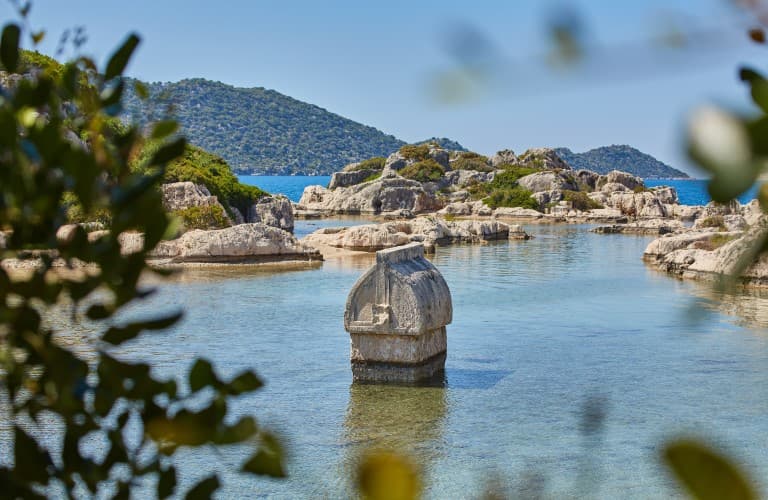
A boat experience can provide another change of pace.
The destination's strength for families lies in having enough variety to stop before everybody becomes tired of the same type of activity.
Three Nights or Seven? The Answer Depends on Antalya's Job
There is no correct Antalya duration without understanding why you are going.
For a culture-focused traveler adding Antalya to a wider Turkey itinerary, three nights can provide a meaningful introduction if the program is selective.
With four or five nights, combining city atmosphere, archaeology and coast becomes considerably easier.
At six or seven nights, Antalya can function as a genuine Mediterranean holiday rather than an extension, particularly when relaxation is part of the objective.
The wrong approach is adding nights without adding purpose.
Seven nights in Antalya are excellent when you want slower days.
They are unnecessary when your real intention is seeing three archaeological sites and immediately continuing elsewhere.
A Better Antalya Itinerary Starts With Energy, Not Attractions
Instead of Day 1: Kaleiçi, Day 2: Perge, Day 3: beach, think about the energy each experience requires.
An archaeological day needs concentration, walking and sun exposure.
A Kaleiçi day is more flexible.
A beach or resort day can function as recovery.
A mountain site such as Termessos requires another level of physical commitment.
Alternating these experiences creates a much better rhythm than grouping everything by category.
For example:
arrival and old-town evening → archaeology → coast and slower city time → demanding outdoor excursion → relaxed final day
The exact attractions can change.
The rhythm is what matters.
Who Should Choose Antalya?
Antalya works exceptionally well for travelers who want their Turkey holiday to contain both substance and downtime.
Choose it if ancient history interests you but you do not want every day dominated by museums and monuments.
Choose it if the Mediterranean matters but a resort-only holiday feels too restrictive.
Choose it if you are traveling as a couple or family with different interests and need one base capable of satisfying more than one travel style.
It is less compelling for travelers who have only a few days in Turkey and are primarily interested in Istanbul's imperial history or Cappadocia's landscape.
Antalya does not need to appear in every itinerary.
It needs to appear in the right one.
For travelers building a longer route, Mediterranean Turkey tour itineraries can position the region according to its real strength: not merely as somewhere to stop at the beach, but as a transition between archaeological exploration and Mediterranean leisure.
Antalya Makes More Sense Once You Stop Asking What You Must See
The city and province contain far too much for one visit.
That is useful, not frustrating.
You do not need to see Perge, Aspendos, Termessos, every waterfall, several beaches, Side, Kaleiçi and every museum simply because they appear on a map around Antalya.
Choose according to the kind of holiday you want.
If history dominates, give archaeology real time.
If the Mediterranean is the reason for coming, stop apologizing for spending half a day beside the water.
If your partner wants a resort and you want ancient sites, choose a base that makes both possible.
Antalya works best when it is not treated as a checklist.
Its greatest advantage is the freedom to build several different versions of the Mediterranean within the same region.
The planning skill lies in choosing yours.
Frequently Asked Questions About Planning an Antalya Stay
1. Is Antalya better for sightseeing or a beach holiday?
Antalya can support either, but its real strength is combining them. Travelers staying around the city can explore historical areas and archaeological sites while retaining access to the Mediterranean, whereas resort districts allow relaxation to become the dominant purpose of the stay.
2. Should first-time visitors stay in Kaleiçi?
Kaleiçi is particularly suitable for travelers who value historic atmosphere, restaurants and the ability to walk outside their hotel into an interesting neighborhood. Those prioritizing large resort facilities, extensive pools or immediate private-style beach access may prefer another Antalya base.
3. Is Konyaaltı a good alternative to Kaleiçi?
Yes, especially for travelers wanting easier everyday access to a long beach while remaining connected to modern Antalya. The experience is more contemporary and coastal than Kaleiçi, so the choice depends on whether historic atmosphere or beach proximity matters more.
4. What is the difference between staying in Lara and Belek?
Lara offers a resort-oriented environment relatively close to Antalya and the airport, while Belek functions as a separate resort and golf destination further east. Travelers planning frequent central Antalya visits should consider those geographical differences before selecting accommodation.
5. Are Perge and Aspendos worth visiting on the same trip?
Yes, because they provide complementary archaeological experiences rather than duplicates. Perge reveals the structure of an ancient city, while Aspendos is particularly memorable for its theatre, allowing travelers to understand different aspects of Roman-era life and architecture within the region.
6. Is Termessos suitable for every Antalya visitor?
No. Termessos involves a more physically demanding archaeological experience because of its mountain setting, terrain and walking requirements. Travelers with appropriate fitness and footwear may find it exceptional, while others can gain more from Antalya's more accessible ancient sites.
7. Do I need a car to enjoy Antalya?
Not necessarily if your priorities are the city, Kaleiçi and organized excursions. Independent transportation becomes more useful when exploring widely separated regional attractions, although parking, traffic and unfamiliar roads mean renting a car is not automatically the easiest solution for every traveler.
8. Can Antalya work without staying at an all-inclusive resort?
Absolutely. Staying around Kaleiçi, Konyaaltı or other urban areas can create a much more independent holiday built around restaurants, sightseeing and local movement. All-inclusive resorts are one version of Antalya rather than a requirement for experiencing the Mediterranean region.
9. Is Antalya suitable as the final stop on a Turkey tour?
Yes. Antalya can work particularly well after more intensive sightseeing in Istanbul, Cappadocia or archaeological regions because travelers can deliberately reduce the pace. Beach time, slower meals and selective excursions provide recovery without making the final days feel culturally empty.
10. How many nights should I spend in Antalya?
Three nights can suit a selective cultural extension, while four or five provide more comfortable balance between archaeology, city exploration and the coast. A week becomes worthwhile when relaxation itself is an important part of the holiday rather than additional nights simply accommodating more attractions.
11. Is Antalya good for families interested in more than beaches?
Yes. Families can alternate ancient sites, waterfalls, coastal time and city exploration instead of repeating one activity throughout the stay. The key is reducing daily sightseeing intensity so children experience Antalya's variety rather than spending several consecutive days following an adult archaeological checklist.
12. What is the biggest planning mistake visitors make in Antalya?
The most common mistake is booking accommodation before understanding Antalya's geography. Kaleiçi, Konyaaltı, Lara and Belek create substantially different holidays, so choosing the base according to price or hotel photographs alone can lead to unnecessary transfers throughout the stay.

A travel professional specializing in tailor-made travel planning, guest experience management, and multi-destination tourism operations.
With over 23 years of experience in the travel industry, he designs and manages private and cultural tours for international travelers across Türkiye, Greece, Egypt, Jordan, Morocco, and other destinations.
He has strong expertise in both online and face-to-face guest communication, sales processes, and end-to-end travel operations.
Working closely with hotels, travel agencies, and local partners, he ensures smooth coordination and high-quality travel experiences at every stage of the journey.
His focus is on delivering personalized, reliable, and seamless travel experiences for international guests worldwide.