Antalya Weather in April: Made for Exploring
Last Updated: August 10, 2026
There is a brief period in Antalya when you can cross the exposed avenues of an ancient city at midday without searching constantly for shade, spend the afternoon walking through the old town, and still have enough energy to wonder what lies around the next corner.
April lives inside that window.
The Mediterranean is becoming brighter and more inviting, terraces are filling, vegetation still carries the freshness of spring, and the day has expanded far beyond its winter dimensions. Yet the heat that will eventually reorganise almost every serious sightseeing plan has not normally taken control.
This makes April less about waiting for Antalya's beach season than taking advantage of what happens immediately before it.
For travellers who actually want to move through the region rather than settle beside the water, that distinction matters enormously.
April Gives You Back the Middle of the Day
Summer travel in Antalya has an invisible timetable.
Experienced visitors learn to respect the morning, become cautious around the hottest afternoon hours and return outside with enthusiasm as the day begins cooling.
April usually requires much less negotiation.
You can begin sightseeing without feeling that every outdoor attraction must be completed before lunch. Long archaeological visits become easier to sustain, walking through Kaleiçi does not need to be broken repeatedly by heat, and a day containing several outdoor experiences can remain enjoyable rather than becoming an endurance test.
This freedom is April's real weather advantage.
Not a particular number on the thermometer.
Time.
The April Advantage: What Weather Changes in Practice
| Activity | April Effect | Why It Matters |
|---|---|---|
| Large archaeological sites | Long visits become comfortable | Limited shade is less problematic |
| Old-city walking | Midday remains usable | Routes can develop naturally |
| Waterfalls | Spring landscape adds context | Nature remains part of the experience |
| Coastal viewpoints | Clear periods can be excellent | Sea and mountain contrast remains strong |
| Outdoor lunch | Increasingly natural | The day does not need an indoor heat escape |
| Long road excursions | More practical | Daylight supports wider exploration |
| Hiking and nature | Strong seasonal potential | Cooler conditions suit movement |
This is why April should not be written as a weaker version of May.
The month owns exploration.
May will own balance.
Perge Needs Time, and April Has It
Perge is one of those places whose scale becomes obvious only after you begin walking.
The ancient city does not reveal itself through one famous building. Its gates, baths, agora, stadium, theatre and long colonnaded streets gradually assemble a picture of an important Roman city.
That requires distance.
It also requires time outdoors.
Under intense summer heat, visitors can become understandably selective, moving quickly between the most recognisable structures. April allows a different relationship with the site.
You can stop.
Look down the ancient street.
Notice the water channels.
Walk farther simply because the next section interests you.
Travellers interested in giving Antalya's archaeological heritage this kind of attention can explore Antalya historical tours, particularly when Perge and other ancient sites are treated as landscapes to understand rather than boxes to tick.
Aspendos Is More Than the Theatre Photograph
Aspendos presents a different challenge.
Its Roman theatre is so spectacular that it can overshadow everything around it.
Visitors arrive, walk inside, photograph the seating and stage building, and feel as though the archaeological assignment has been completed.
April encourages a little more curiosity.
Without oppressive heat dictating the pace, there is greater incentive to understand the site beyond its most famous monument and consider how Aspendos fitted into the wider ancient landscape.
This is one of the recurring benefits of spring archaeology.
Comfort produces attention.
When the body is not demanding shade, the mind has more room for history.
Side Works Better When You Can Walk Between Centuries
Side offers another version of Antalya's historical landscape because ancient remains and modern resort life occupy the same geographical space.
The pleasure comes partly from moving between them.
Columns appear beside contemporary streets. The theatre interrupts the modern town. The Temple of Apollo meets the Mediterranean at the edge of the peninsula.
April suits this kind of wandering particularly well because the experience is neither entirely archaeological nor entirely coastal.
You need weather that encourages movement.
The sea provides the backdrop, but history gives the day its structure.
That relationship is exactly where April belongs in the cluster.
One Spring Day Can Hold Several Landscapes
The remarkable thing about Antalya is how quickly its setting changes once you leave the urban coast.
A single excursion can involve Mediterranean views, agricultural land, archaeological ruins, forested areas and mountains that may still show traces of winter at elevation.
April makes those contrasts particularly visible.
The coast has moved decisively into spring, while higher parts of the Taurus range can retain a completely different seasonal character.
Rather than treating weather as a city-centre statistic, it is worth thinking of an April excursion as movement through several climatic layers.
April by Landscape
| Landscape | Likely Spring Character | Planning Consideration |
| Antalya coast | Mild to warm spring conditions | Excellent for walking |
| Ancient lowland sites | Comfortable, increasingly sunny | Limited shade still worth noting |
| Waterfall areas | Fresh seasonal vegetation | Surfaces may be damp |
| Foothills | Cooler than the coast | Carry an extra layer |
| Higher Taurus Mountains | Potentially much colder | Coastal forecasts do not apply |
This geographical variation is more useful than pretending one temperature describes the entire Antalya region.
April Is When Water and Greenery Still Belong Together
High summer Antalya has its own visual beauty: intense light, blue sea, pale archaeological stone and dry Mediterranean landscapes.
April has another palette.
Winter rainfall has fed vegetation, natural areas can remain noticeably greener, and waterfalls belong to a landscape that has not yet entered the driest part of the year.
This makes April particularly appealing for travellers who want nature to occupy more than a decorative corner of the itinerary.
Düden is the obvious city-accessible example, but the broader region offers many places where water, forest and mountain scenery help explain why Antalya should never be reduced to its beaches.
The Weather Is Comfortable, Not Fully Settled
April's strengths should not be exaggerated into guaranteed perfection.
Spring weather can still change.
Rain remains possible, cloudy periods occur and evenings may feel cooler than the afternoon suggested. A warm day can encourage light clothing before a breezier coastal evening makes another layer suddenly useful.
The difference from earlier months is not that uncertainty disappears.
It becomes less dominant.
A weather interruption is increasingly likely to feel like part of an April trip rather than the defining feature of it.
Packing for Movement Rather Than a Season
The most useful April packing question is not “What do people wear in Antalya?”
Ask what you plan to do.
A traveller spending several hours at archaeological sites needs comfortable shoes, sun protection and clothing suited to prolonged outdoor movement. Someone heading towards higher terrain needs an additional layer. A city-focused visitor can pack lighter but should still account for cooler evenings and possible rain.
Pack According to the Day
| Your Plan | Most Useful Items |
| Ancient cities | Walking shoes, sun protection, water |
| Kaleiçi day | Light layers and comfortable footwear |
| Nature excursion | Grip, adaptable outer layer |
| Mountain direction | Extra warmth |
| Long road trip | Layer that works across changing conditions |
| Evening by the coast | Light jacket or warmer layer |
This avoids the standard weather-blog packing list because April's real variable is not simply temperature.
It is geography.
April Makes a Good Base for Going Somewhere Else
Antalya itself can easily fill several days, but April's longer daylight and manageable heat make it especially useful as a base for excursions.
That may mean archaeological sites east of the city, historical landscapes farther along the coast, waterfalls, nature or combinations that would feel unnecessarily ambitious during hotter periods.
A private itinerary can be particularly useful when the traveller wants to spend more time at one location rather than following a fixed sightseeing sequence. Private Antalya excursions can connect several sites while still allowing the day's pace to respond to interests, road conditions and weather.
The point is not to fit in more attractions.
It is to make distance less expensive in terms of energy.
What About the Beach?
It is there.
It is beautiful.
And in April, it still does not need to run the trip.
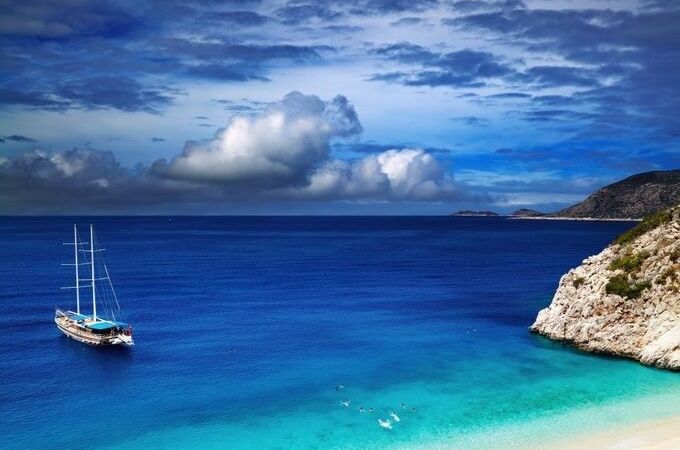
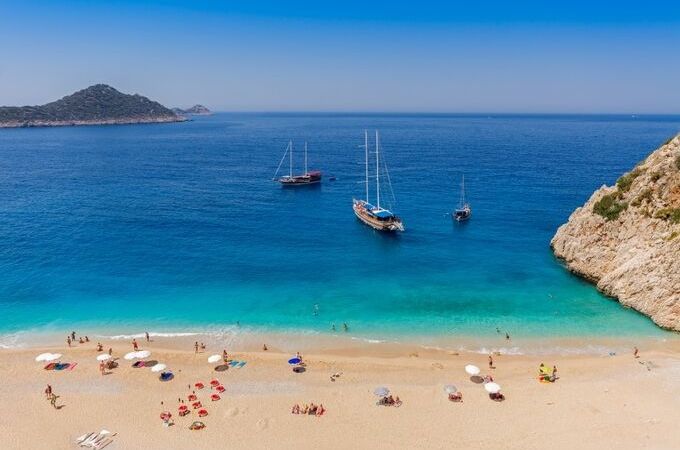
Warm sunny periods may tempt some travellers towards the shore, and occasional swimming is certainly possible for people comfortable with cooler water. Yet the Mediterranean has not reached the broadly appealing swimming conditions associated with later spring and summer.
That distinction protects the cluster.
April is not our “first beach month.”
May owns the moment when sea time and land exploration begin reaching a more convincing balance.
April's beach is a pause.
A walk.
A view after a historical day.
Perhaps shoes off on the sand if the afternoon feels warm enough.
It does not need to be more.
April Has Its Own Daily Rhythm
Instead of the winter strategy of chasing the best weather window or the summer strategy of protecting yourself from midday heat, April permits something simpler.
You can build the day according to interest.
Morning: Begin where curiosity takes you rather than where shade will disappear first.
Midday: Continue exploring instead of automatically retreating indoors.
Afternoon: Add a second landscape—coast, waterfall, old town or another historical site.
Evening: Return to Antalya without feeling that the useful part of the day ended hours earlier.
This flexibility is easy to underestimate until you compare it with a midsummer archaeological itinerary.
When Ancient History Is the Main Reason for Coming
Some visitors arrive in Antalya expecting beaches and discover archaeology.
Others know exactly what they came for.
For the second group, April is particularly persuasive.
Perge, Aspendos, Side and the wider Mediterranean archaeological landscape can form the spine of the trip rather than secondary excursions from a resort stay. Travellers interested in connecting Antalya's sites with other ancient regions may also consider Turkey archaeology tours, using the Mediterranean coast as one chapter in a broader historical journey.
This is where April gains a clear identity beyond “nice spring weather.”
The climate supports the purpose of the trip.
April's Sweet Spot Has an Expiry Date
Spring does not remain suspended indefinitely.
As May approaches, the Mediterranean begins taking a larger role. Warmer conditions make sea time increasingly realistic, beach facilities become more relevant and Antalya starts finding the balance between exploration and coastal leisure that will define the next stage of the season.
April comes just before that shift.
Its advantage is temporary.
You can still give the middle of the day to an ancient city.
You can walk farther than planned.
You can look at the Mediterranean, admire it, and continue somewhere else without feeling you have wasted perfect swimming weather.
For travellers who came to understand Antalya rather than simply lie beside it, that may be the most useful weather window of all.
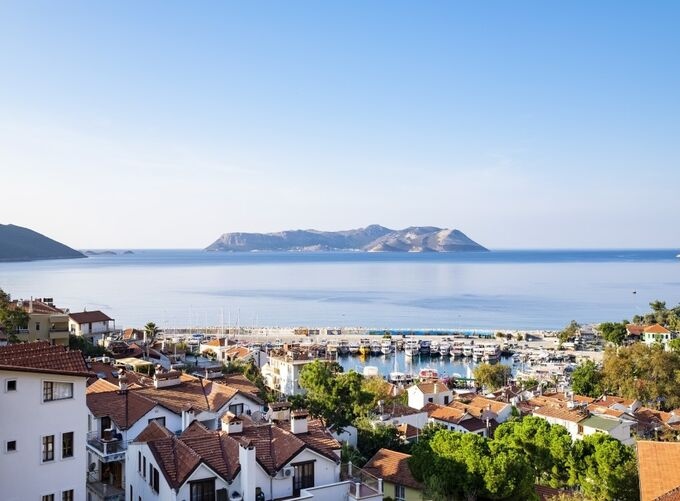
April Is a Month for Building Bigger Days
One of the quieter advantages of Antalya in April is that the day can hold more variety without becoming physically punishing.
A traveller can begin with history, move into nature and finish beside the sea without feeling that three different trips have been forced into one schedule. That flexibility is less about chasing attractions and more about how comfortably the region's different landscapes can coexist within the same day.
This is what makes April especially useful for travellers who dislike choosing between culture, scenery and outdoor time.
You do not have to.
The April Day-Value Matrix
Not every experience benefits equally from spring conditions, and April is strongest when the itinerary gives priority to activities that genuinely gain from mild weather.
| Experience | April Value | Why |
|---|---|---|
| Large archaeological sites | Very High | Long exposure is easier before heat builds |
| Kaleiçi walking | Very High | Streets can be explored continuously |
| Waterfalls and nature | High | Spring greenery improves the setting |
| Mountain-edge excursions | High | Seasonal contrast is still visible |
| Coastal viewpoints | High | Pleasant outdoor stops fit naturally |
| Beach time | Moderate | Enjoyable in warm periods, not yet central |
| Resort-only stay | Moderate | April offers more value beyond the hotel |
| Full swimming holiday | Limited | Sea conditions remain too cool for many visitors |
This is why April often rewards curious travellers more than purely resort-oriented ones.
The month pays back movement.
A Four-Day April Trip Should Not Repeat Itself
Antalya's geography makes repetition unnecessary.
One day can belong to the old city and urban history. Another can move towards major archaeological sites. A third can focus on waterfalls and coastal scenery, while the fourth remains flexible enough to follow the strongest weather or the traveller's energy.
That sequence is deliberately broad.
April does not need an hour-by-hour itinerary because its strongest advantage is freedom from weather extremes. The best days often expand naturally once travellers discover they have more usable outdoor time than expected.
A rigid schedule can actually reduce that advantage.
Choose One Long Excursion, Not Three Short Ones
A common planning mistake is treating the Antalya region as a collection of quick stops.
Perge for an hour.
Aspendos for thirty minutes.
Another site.
Another photo.
Back in the vehicle.
April gives you enough physical comfort to do something better: allow one major historical landscape to become the centre of the day.
Depth creates stronger memories than mileage.
This is particularly true at archaeological sites because their meaning depends on movement through space. Streets, gates, theatres and public buildings become more coherent when they are experienced as parts of one city rather than disconnected ruins.
April gives you the weather to stay longer.
Use it.
The Resort Question Changes in April
Antalya's resort hotels can be excellent in spring, but the reason for choosing one should be different from midsummer.
In July, the resort itself may form a substantial part of the holiday: pools, beach access, shaded facilities and long periods spent inside the property all carry significant value.
April's strongest appeal lies outside.
That means location, transport access and the ease of reaching historic or natural sites may matter more than whether the hotel has the largest beach area.
Travellers who plan to spend most of the day exploring should choose accommodation around the itinerary they actually intend to follow.
The hotel supports the trip.
It does not need to dominate it.
April Is Surprisingly Good for Multi-Generation Travel
Families travelling with different age groups often struggle to find one month that suits everybody.
Peak summer can be demanding for older travellers during long archaeological visits, while younger family members may prefer a destination that still feels connected to the coast and outdoor life.
April can create a useful middle ground.
History remains physically manageable, cafés and waterfronts are pleasant during good weather, and the day can be broken into several different types of experience without forcing anybody to endure prolonged heat.
The key is variety.
A palace-free city day, an archaeological excursion, a waterfall stop and a long meal may work better for mixed-age groups than four consecutive days of monuments.
April Is a Good Month for People Who Usually Avoid Antalya
Some travellers dismiss Antalya because they associate it almost entirely with large resorts.
April is one of the best months for challenging that assumption.
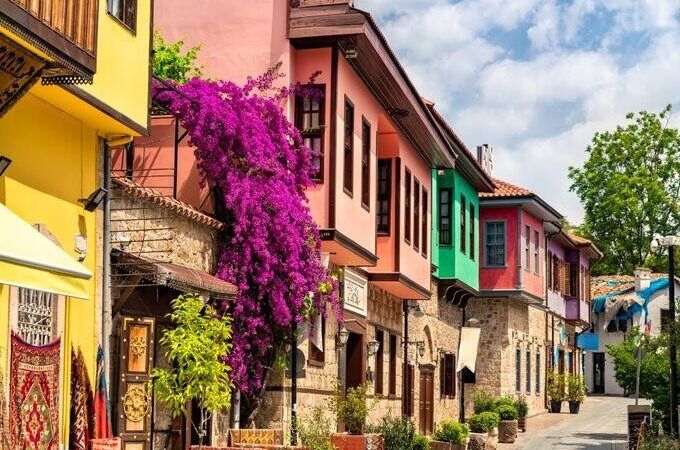
Remove peak beach season and the region becomes easier to see as a historical landscape containing Roman cities, Ottoman streets, waterfalls, mountains and Mediterranean settlements connected by roads that themselves reveal how varied the geography is.
The resort identity remains present.
It simply stops occupying all the space.
For travellers who usually choose cultural destinations over beach destinations, April may be the month when Antalya finally makes sense.
April vs March vs May: Three Different Trips
These neighbouring months should never read like versions of one another.
| Month | Core Experience | What the Traveller Notices Most |
| March | Coast Wakes Up | Spring behaviour becomes visible |
| April | Exploration Before Beach Season | Outdoor sightseeing reaches a major sweet spot |
| May | First Complete Antalya Month | Sea time and land exploration begin balancing |
March is still about seasonal awakening.
May will bring the Mediterranean more firmly into the itinerary.
April sits between them as the month that belongs most clearly to the land.
That is the cluster boundary.
April Is Also a Good Month for Slow Travel
Comfortable weather often creates the wrong instinct: doing more.
There is another possibility.
Stay longer.
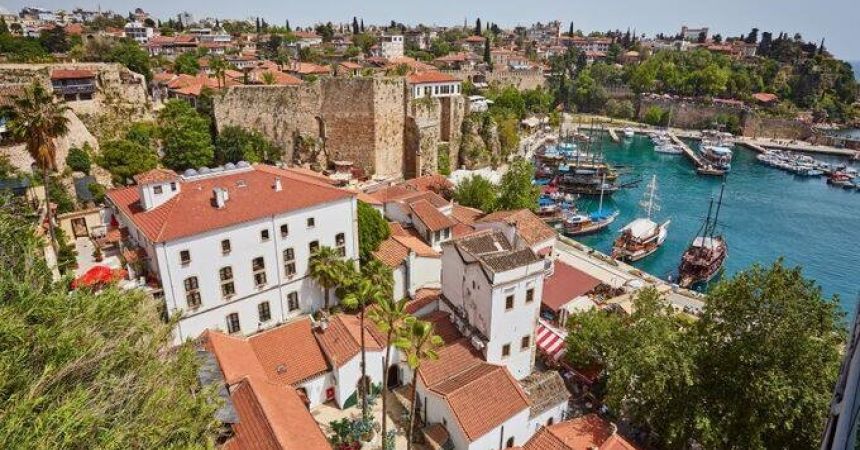
Spend an extra half-hour at a site because nobody is desperate for shade. Sit beside the harbour after lunch because the afternoon does not feel rushed. Explore another street in Kaleiçi without checking how far the walk has become.
April supports slow travel not because the destination is quiet, but because the body is less likely to force the itinerary to change.
That creates a different kind of freedom.
The Best April Itinerary Leaves One Day Unclaimed
This is particularly useful on a five-day or longer stay.
Instead of assigning every excursion in advance, leave one day open for whichever experience most benefits from the strongest forecast.
If skies look clear, use it for a long archaeological or nature-focused day. If conditions turn unsettled, keep the programme closer to Antalya and move the exposed excursion elsewhere.
This is not indecision.
It is good spring planning.
April is stable enough to support ambitious sightseeing but still variable enough that one flexible day can noticeably improve the trip.
12 FAQs About Antalya Weather in April
1. Is April a good time to visit Antalya?
April is particularly well suited to travellers who want to explore Antalya's archaeological sites, old town, waterfalls and coastal landscapes without the intense heat of summer. Spring weather is generally favourable for long outdoor days, although occasional rain and cooler evenings mean flexibility and light layering remain useful.
2. How warm is Antalya in April?
April generally brings mild to warm daytime conditions, with noticeably more spring comfort than March. Individual days can still vary, especially between sheltered urban areas, exposed archaeological sites and higher elevations. Evenings may feel cooler, so a light outer layer remains useful despite increasingly pleasant afternoons.
3. Does it rain in Antalya in April?
Rain is still possible in April, although the month is moving away from the wetter winter pattern. Some visits may be mostly sunny, while others include showers or unsettled periods. The best approach is to keep major exposed excursions flexible rather than assuming every spring day will be consistently dry.
4. Can you swim in Antalya in April?
Some visitors may swim during warm April periods, particularly later in the month, but sea temperatures can still feel cool for many holidaymakers. April should therefore be chosen primarily for sightseeing and outdoor exploration rather than dependable swimming. Travellers seeking regular beach time will usually find May more suitable.
5. Is April good for visiting Perge and Aspendos?
Yes. April can be one of the strongest months for exploring large archaeological sites because daylight is generous and summer heat has not yet become a major concern. Dry weather allows visitors to spend more time on exposed streets, theatres and ruins without constantly searching for shade.
6. Is Antalya green in April?
Yes, the broader region can still show much of its spring greenery in April, particularly after the wetter winter months. Waterfalls, foothills and natural areas often look fresher than they do during the driest part of summer, giving nature-focused excursions a distinctly different seasonal character.
7. What should I wear in Antalya in April?
Light, breathable daytime clothing combined with one adaptable outer layer generally works well. Comfortable walking shoes are especially important because April encourages substantial sightseeing. Rain protection remains sensible, while travellers heading towards higher elevations should carry additional warmth because mountain conditions can differ sharply from the coast.
8. Is April suitable for hiking around Antalya?
April can be a strong month for hiking and nature-based activities because temperatures are generally more comfortable than in summer. Trail conditions depend on rainfall, elevation and specific routes, however, so travellers should check local conditions and avoid assuming that the mild coastal forecast applies everywhere inland.
9. Are Antalya resorts fully open in April?
Many hotels and resorts operate in April, but specific seasonal facilities can vary. Outdoor pools, beach services, entertainment programmes or water-based activities may not all operate exactly as they do during peak summer. Visitors should confirm the facilities most important to them directly with the accommodation before travelling.
10. Is April good for families visiting Antalya?
Yes. April can work especially well for families interested in a mixture of history, nature, city exploration and relaxed coastal time. The absence of peak summer heat makes long days more manageable, while the variety of attractions allows families to alternate demanding sightseeing with lighter outdoor experiences.
11. Is April better than March for Antalya?
April generally offers more established spring conditions, longer outdoor comfort windows and greater flexibility for full-day sightseeing. March retains a stronger seasonal-transition character and can feel cooler or wetter. Travellers prioritising archaeology and extensive walking may therefore find April easier, while those who enjoy early spring atmosphere may prefer March.
12. Is April or May better for Antalya?
April is strongest for active exploration, archaeology and nature before the beach season becomes central. May offers a more balanced combination of sightseeing and increasingly realistic sea time. Travellers who want to spend most of the trip on land may prefer April, while those wanting both coast and culture may favour May.
April Is the Month Before Antalya Changes the Question
In winter, travellers ask whether the weather will allow them to spend enough time outside.
In March, the question becomes whether spring has arrived strongly enough to reshape the trip.
April changes it again.
Now the issue is not whether outdoor sightseeing is possible, but how much of the region you want to explore before the Mediterranean begins competing more seriously for your attention.
That is a very different travel problem.
Perge deserves hours.
Aspendos deserves more than one photograph.
Kaleiçi deserves wandering rather than efficient navigation, while waterfalls and mountain landscapes deserve a place in the itinerary before the dry summer season begins changing the visual character of the region.
None of those experiences disappears in May or June.
What changes is the competition.
As the sea becomes warmer, swimming and resort life begin demanding their share of the day. Travellers increasingly start asking whether the afternoon should belong to another ancient city or to the beach.
April rarely forces that decision.
The Mediterranean can remain the backdrop while history, nature and movement take the leading role.
That gives the month a remarkably clean identity within the Antalya weather cluster.
March wakes the coast.
May begins completing the classic Mediterranean combination of sea and sightseeing.
April belongs to the brief, valuable space in between, when Antalya is ready to be explored extensively and the beach has not yet started asking why you are still wearing your shoes.

A travel professional specializing in tailor-made travel planning, guest experience management, and multi-destination tourism operations.
With over 23 years of experience in the travel industry, he designs and manages private and cultural tours for international travelers across Türkiye, Greece, Egypt, Jordan, Morocco, and other destinations.
He has strong expertise in both online and face-to-face guest communication, sales processes, and end-to-end travel operations.
Working closely with hotels, travel agencies, and local partners, he ensures smooth coordination and high-quality travel experiences at every stage of the journey.
His focus is on delivering personalized, reliable, and seamless travel experiences for international guests worldwide.