Antalya Weather in February: When Winter Starts to Ease
Last Updated: August 10, 2026
February in Antalya feels less like a season and more like a negotiation.
Winter is still present. Rain remains part of the month, evenings can be cool, and anyone arriving with the idea that spring has officially begun may discover that the Mediterranean has not signed the same calendar.
Yet something has changed.
The day feels less compressed. Outdoor sightseeing begins to occupy more space. A walk along the coast that seemed like a short winter interlude in January can stretch naturally into lunch, Kaleiçi or another neighbourhood. Archaeological excursions remain comfortable, and bright afternoons increasingly feel like genuine invitations to stay outside rather than brief rewards between winter systems.
February is not spring.
It is the month when Antalya begins behaving as though spring is negotiable.
February Is the Threshold Month
Threshold months are easy to misunderstand because travellers want clear categories.
Is it winter?
Is it spring?
Is it warm enough for the coast?
Should I pack a proper jacket or lighter layers?
Antalya answers all of these questions with the same frustrating but useful reply: it depends on the day.
The better way to understand February is to stop treating it as January-plus-a-few-degrees and instead look at what the city starts allowing you to do for longer.
That change in behaviour is more important than any single temperature figure.
Antalya in February at a Glance
| February Factor | Typical Character | What It Means for Travellers |
|---|---|---|
| Daytime temperature | Often mild for winter | Good for active sightseeing |
| Evening temperature | Still cool | Layers remain useful |
| Rainfall | Still relevant | Flexibility is necessary |
| Sunshine | Increasingly valuable | Outdoor windows can feel very pleasant |
| Sea temperature | Still cool | Not classic swimming season |
| Daylight | Longer than January | More room for extended excursions |
| Archaeological sightseeing | Strong | Comfortable without summer heat |
| Coastal walking | Increasingly attractive | Longer outdoor periods become realistic |
| Beach holiday suitability | Low | Coast is scenery, not the trip's centre |
This is a transition profile rather than a promise of specific conditions. February can still produce distinctly wintry periods, while some days may feel unexpectedly soft and spring-like.
The First Change You Notice Is Not Temperature
It is time.
You leave an archaeological site and realise the afternoon still has room in it.
You walk through Kaleiçi without the sense that the day is closing almost immediately after lunch. A coastal stroll can become a proper part of the itinerary rather than a short daylight calculation.
This is February's quiet advantage.
Longer daylight does not guarantee better weather, but it increases the number of ways a good-weather period can be used.
That makes the month more forgiving than January, particularly for travellers who enjoy outdoor cultural exploration.
The February Threshold Has Three Doors
Antalya in February tends to open in three directions: city, coast and ancient landscape.
January also contains all three, but the balance is different. February gives each one more room.
| February Door | Why It Gains Value |
| Kaleiçi and city streets | Longer outdoor comfort windows |
| Coastal walking | More usable daylight and milder intervals |
| Archaeological excursions | Cool conditions remain ideal |
| Waterfalls and natural sites | Winter rainfall can add volume and atmosphere |
| Outdoor cafés | More realistic during bright periods |
| Scenic drives | Better fit within longer days |
The month is not yet broad enough to become a full beach-and-sightseeing hybrid.
That belongs to later spring.
February's strength is that the land starts becoming easier to use.
Kaleiçi Feels Less Like a Winter Stop
In January, Kaleiçi works wonderfully as part of a winter itinerary because its streets, history and cafés provide depth when the beach is no longer central.
February keeps that value but changes the pace.
The old town starts feeling less like a place visited between weather episodes and more like somewhere you can remain for several uninterrupted hours when conditions cooperate.
That shift matters because Kaleiçi rewards slow movement.
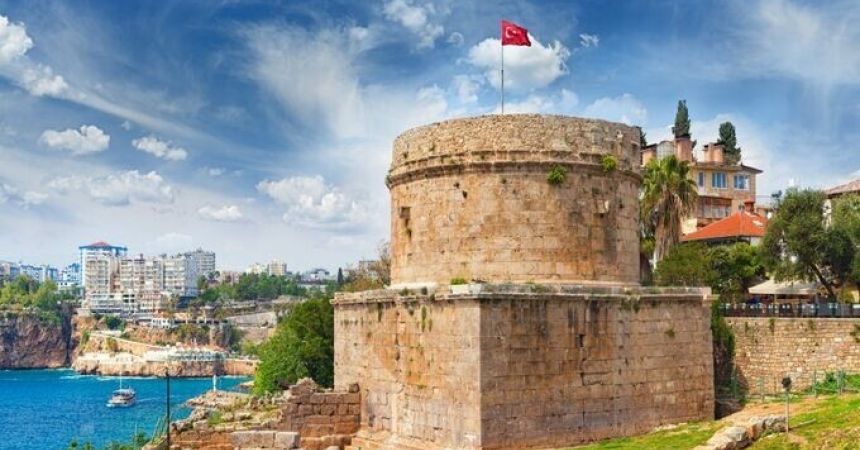
Hadrian's Gate, Ottoman-era houses, courtyards, narrow streets and the old harbour make more sense when they are connected on foot rather than treated as individual sightseeing points.
Travellers interested in this historical side of the city can explore Antalya cultural tours, particularly when the aim is to combine Kaleiçi with surrounding heritage rather than building the day around resort facilities.
February Makes the Coast Walkable, Not Swimmable
This distinction is central to the cluster.
February should not compete with May, June, September or October by pretending the sea has already become the main attraction.
For most visitors, it has not.
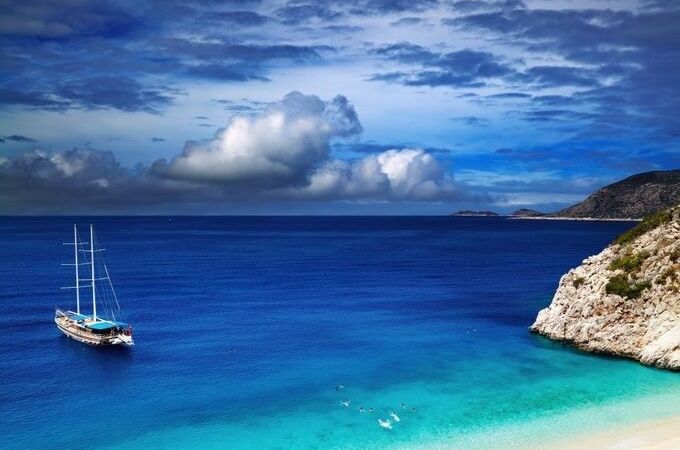
The Mediterranean remains visually important, but the stronger travel benefit is how comfortably you can move beside it.
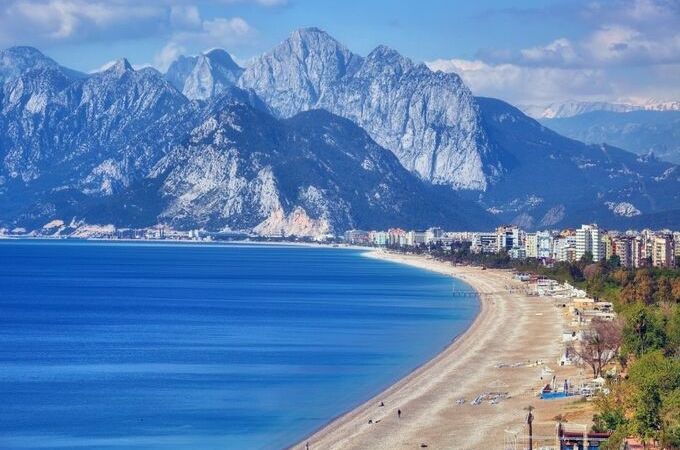
Konyaaltı, the old harbour and coastal viewpoints begin fitting more naturally into active sightseeing days. On bright afternoons, the sea can look deceptively summery, while the actual water temperature still makes recreational swimming unattractive for most travellers.
The coast gives February atmosphere rather than beach time.
A February Day Can Expand Without Becoming Summer
Imagine beginning with an archaeological excursion.
In January, the shorter day may encourage travellers to return directly to the city afterwards. In February, there is increasingly enough time to add another meaningful layer without creating an exhausting schedule.
Perhaps you stop for a coastal viewpoint.
Perhaps Kaleiçi receives another hour.
Perhaps lunch stretches because the daylight no longer feels precious.
This is the month when Antalya begins to tolerate improvisation again.
Not the free-flowing spontaneity of May.
A more cautious version.
February Is Excellent for Archaeology Because Heat Still Hasn't Arrived
This is one of the month's clearest advantages.
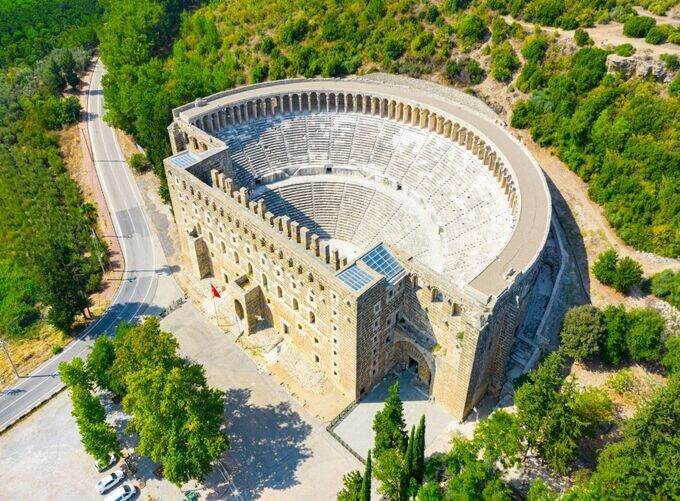
Sites such as Perge, Aspendos and other ancient locations around Antalya remain free from the physical demands associated with summer heat. Visitors can walk through exposed areas, stop for details and spend longer understanding the site rather than planning every movement around shade.
Rain is still the main complication.
An archaeology-heavy February itinerary therefore works best when at least one major excursion remains movable across the available days.
This is where private Antalya day tours can become particularly useful, because the order of archaeological sites, waterfalls and city experiences can be adjusted more easily around the most promising weather windows.
Winter Rain Gives Waterfalls More Personality
Antalya's waterfalls are often photographed under perfect blue summer skies.
February tells a different story.
Winter and early-spring rainfall can give waterfalls a stronger seasonal character, while the surrounding greenery may feel fresher than it does during the driest part of summer.
This does not guarantee dramatic flow on every visit, and actual conditions vary according to recent rainfall.
The more important point is that February's wetter seasonal context can make natural sites feel actively connected to the weather rather than merely scenic.
Bright February Days Can Be Misleading
A sunny afternoon beside the Mediterranean can make travellers overestimate how warm the entire day will feel.
Then the sun lowers.
Or the wind arrives.
Or the itinerary moves from a sheltered old-town street to an exposed coastal area.
The season reappears.
This is why clothing should still be built around layers, even when the afternoon forecast looks encouraging.
The month is loosening.
It has not finished loosening.
What Should You Pack in February?
February does not need a separate winter and spring wardrobe.
A more useful combination is adaptable clothing that can handle cool mornings, mild afternoons, rain and breezier coastal periods.
| Situation | Useful Approach |
| Morning sightseeing | Light-to-medium layers |
| Sunny afternoon | Removable outer layer |
| Coastal walk | Wind-resistant option |
| Rainy period | Water-resistant outerwear |
| Archaeological excursion | Comfortable walking shoes + layers |
| Evening | Additional warmth |
| Higher elevation | Prepare for significantly colder conditions |
Footwear matters almost as much as the outer layer.
February invites longer walking, and wet or uneven historical surfaces can become more important than temperature itself.
Is February Better Than January?
For some travellers, yes.
For others, no.
January has a stronger Mediterranean-winter identity. It suits people deliberately choosing Antalya as a winter destination and accepting that beach expectations should disappear.
February starts returning outdoor flexibility.
A traveller who wants long archaeological days, more usable daylight and a stronger sense that the season is changing may prefer February.
Someone who likes the quiet, unmistakably winter character of January may find that month more distinctive.
This is exactly why the cluster needs both.
Is February Spring?
Not yet.
That answer needs to remain clear because March owns the Coast Wakes Up transition.
February should not steal that story.
This month is the threshold before spring becomes visible as a broader travel pattern. The Mediterranean feels less wintry on suitable afternoons, days are expanding and outdoor exploration gains confidence, but the weather is still capable of reversing the mood quickly.
Think of February as the month when Antalya begins opening the door.
March will step through it.
Who Gets the Most From February?
Travellers who enjoy archaeological sites, walking, city exploration and a flexible coastal atmosphere are particularly well matched to the month.
It also works for people who dislike intense heat and do not need swimming to justify travelling to the Mediterranean.
Those extending their trip beyond Antalya can consider Turkey spring tours, particularly when February sits at the beginning of a longer seasonal journey, although regional climates vary considerably and Antalya's coastal conditions should never be assumed to represent inland Turkey.
The month is not for everyone.
Beach-first travellers should wait.
Culture-first travellers may have found an excellent window.
February's Real Advantage Is Momentum
January is complete in itself.
It does not need to promise that spring is coming.
February feels different because the city begins moving somewhere.
More daylight.
Longer walks.
More flexible outdoor periods.
A coastline that remains too cool for most swimmers but increasingly inviting for everyone who wants to spend time beside it.
The season is still winter.
What has changed is the direction.

A travel professional specializing in tailor-made travel planning, guest experience management, and multi-destination tourism operations.
With over 23 years of experience in the travel industry, he designs and manages private and cultural tours for international travelers across Türkiye, Greece, Egypt, Jordan, Morocco, and other destinations.
He has strong expertise in both online and face-to-face guest communication, sales processes, and end-to-end travel operations.
Working closely with hotels, travel agencies, and local partners, he ensures smooth coordination and high-quality travel experiences at every stage of the journey.
His focus is on delivering personalized, reliable, and seamless travel experiences for international guests worldwide.