
How to Plan a 10-Day Trip to Turkey Without Rushing It
Updated: August 2026
Ten days is enough to have an excellent first trip to Turkey, but it is also just long enough to tempt travelers into planning too much.
On a map, Istanbul, Cappadocia, Ephesus, Pamukkale and Antalya can look like five obvious pieces of the same holiday. Once airport transfers, domestic flights, hotel changes, road journeys and check-in times are added, however, an ambitious ten-day itinerary can quickly become a tour of departure lounges and suitcases.
The most successful ten-day trips are usually built around three principal regions, with a fourth included only when the geography and transport connections make it genuinely efficient. This gives Istanbul enough time to feel like a city rather than an airport stop, protects Cappadocia from becoming a one-night photograph, and leaves enough room for western Turkey or the Mediterranean without forcing every destination into a race against the clock.
Planning therefore begins with subtraction rather than addition.
Instead of asking how many famous places can fit into ten days, ask which combination gives you the strongest contrast for the least logistical cost.
That decision is where a good Turkey itinerary is really made.
Ten Calendar Days May Give You Only Eight Real Travel Days
Before choosing destinations, look carefully at your international flights.
If you arrive in Istanbul at 18:00 on the first day, that date should not be counted as a sightseeing day. By the time immigration, luggage collection, airport transfer and hotel check-in are completed, the useful part of the day may be almost over.
The same applies at the other end. A morning international departure can effectively remove the final day from the itinerary.
A trip shown on the calendar as ten days may therefore contain eight full days, two partial days, or something in between depending on flight times.
This distinction is more important than it sounds because travelers frequently create itineraries that work mathematically but not operationally. They assign a full sightseeing program to an arrival day, count a domestic-flight day as though transportation takes no time, and then discover that the journey has one or two fewer usable days than expected.
Begin with the flights you actually have, then calculate the time available inside Turkey.
Three Regions Is Usually the Sweet Spot
For most first-time travelers, three main regions provide enough variety without making transportation dominate the holiday.
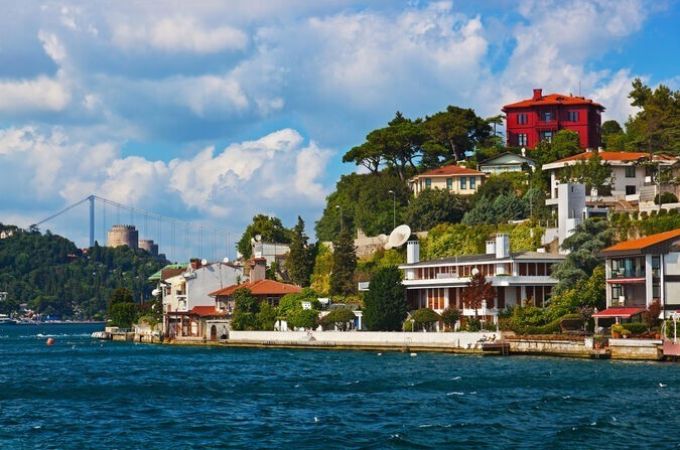
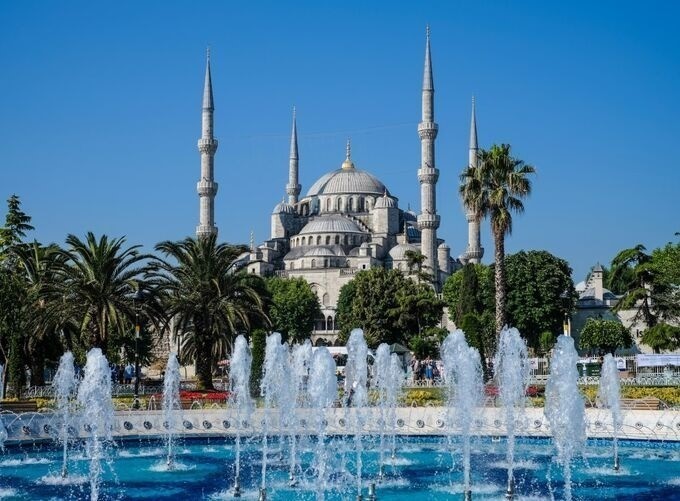
Istanbul is an obvious candidate because it combines Ottoman and Byzantine history, the Bosphorus, markets, museums, neighborhoods and food within one enormous city.
Cappadocia creates a completely different experience through volcanic landscapes, cave architecture, underground cities and optional ballooning.
The third region can then reflect your strongest remaining interest.
Choose western Turkey if Ephesus and archaeology matter most. Choose the Mediterranean if you want coastal atmosphere. Include Pamukkale when its landscape and Hierapolis genuinely interest you and the route allows it without an awkward detour.
The mistake is assuming that because all four are worthwhile, all four must appear.
A ten-day trip becomes stronger when every destination has enough time to justify reaching it.
Choose Your Third Region According to What the First Two Do Not Provide
Istanbul and Cappadocia already create enormous contrast, so the third component should add something genuinely different.
If ancient history is central to the trip, the Ephesus region is a natural choice. Travelers can use Kuşadası or the wider Izmir area as a practical base depending on the route, while Ephesus provides the large-scale archaeological experience absent from Istanbul and Cappadocia.
If the priority is relaxation, the Mediterranean changes the rhythm more effectively. Antalya can combine coastal time with historical sightseeing, while other southwestern destinations can work when the journey is intentionally designed around the sea.
Pamukkale occupies a slightly different position because it is often incorporated as a transitional stop rather than a complete multi-night region. That can work, but only when the preceding and following destinations make geographical sense.
A destination should solve something the itinerary currently lacks.
It should not merely increase the number of names on the final voucher.
Four Regions Can Work, but the Route Has to Earn It
There are ten-day itineraries where four regions make sense.
For example, Istanbul, Cappadocia, Ephesus and Pamukkale can be connected efficiently enough when domestic flights and road transportation are coordinated carefully. Pamukkale can function as part of the western Turkey section rather than requiring another substantial hotel stay.
What generally fails is four geographically dispersed regions that each require independent transfers.
Every hotel change has an invisible cost. Packing, checking out, waiting for transportation, reaching an airport, flying, collecting luggage and checking in again can consume much more of the day than the flight duration suggests.
This is why “only a one-hour flight” is misleading.
The flight may last one hour.
The movement between hotel rooms can take half a day.
Compare 10-Day Routes by Travel Character, Not by Attraction Count
Rather than presenting another fixed itinerary, it is more useful to compare how different allocations change the holiday itself.
| 10-day planning style | Istanbul | Cappadocia | Third region | Travel rhythm | Main sacrifice |
|---|---|---|---|---|---|
| Classic first visit | 3–4 nights | 2–3 nights | Western Turkey 2–3 nights | Balanced | Limited coast |
| History focused | 3 nights | 2 nights | Ephesus + Pamukkale 4 nights | Sightseeing intensive | Less relaxation |
| Culture + Mediterranean | 3 nights | 2–3 nights | Antalya region 3 nights | Strong contrast | Ephesus omitted |
| Slower first trip | 4 nights | 3 nights | One final region 2 nights | Comfortable | Fewer headline stops |
| Repeat visitor | 2–3 nights | Optional | One deeper regional route | More specialized | Classic checklist |
Notice what the table does not contain: a “see everything” option.
That is deliberate.
Ten days should force priorities.
Istanbul Needs Enough Time to Survive Your Arrival Day
Three nights in Istanbul and three full days in Istanbul are not necessarily the same thing.
If Istanbul is your international gateway, the arrival day may contribute little more than dinner and a short walk. That means three nights could leave only two complete sightseeing days before departure for Cappadocia.
For most first-time visitors, that is possible but compressed.
Four nights often creates a better beginning because the city can absorb flight delays and jet lag without sacrificing its most important experiences. It also gives travelers enough time to move beyond the historic peninsula and experience the Bosphorus or another part of the city.
If the entire Turkey trip has only ten days, however, Istanbul cannot expand indefinitely. Four or five full days in the city may be excellent in isolation but can leave Cappadocia or western Turkey unnecessarily thin.
Duration must always be judged against the entire trip.
Cappadocia Is One Place Where a Spare Morning Has Real Value
Cappadocia is often underestimated because travelers think primarily about the balloon flight.
The region deserves time even without ballooning. Valleys, underground cities, rock-cut churches, villages and viewpoints create enough depth for several days.
There is also an operational reason not to compress the stay too aggressively.
Balloon flights depend on suitable weather conditions. If the flight is important, staying multiple nights creates additional mornings in case the original attempt cannot operate.
That does not mean everyone needs four Cappadocia nights.
It means a one-night stay is particularly fragile.
Travelers combining the two most recognizable destinations can consider Istanbul Cappadocia tour journeys, but the important planning principle is to protect meaningful time on the ground rather than viewing Cappadocia as a balloon stop between airports.
Ephesus Does Not Require a Week in Western Turkey
Western Turkey is where careful allocation can create significant efficiency.
Ephesus itself can be explored as part of a shorter regional stay, particularly when accommodation and transportation are organized around the archaeological day rather than around an unnecessarily long coastal holiday.
Travelers interested in history may combine Ephesus with another western Turkey experience, while those primarily interested in the ancient city can keep the region focused and use the saved nights elsewhere.
This is also where itinerary purpose matters.
A traveler visiting in summer may want extra Aegean time because coastal atmosphere is part of the holiday. Someone traveling in cooler months primarily for archaeology may prefer a more concentrated stay.
The number of nights should follow the reason you came.
Pamukkale Is Usually a Route Decision Before It Is a Duration Decision
Pamukkale creates one of the most common ten-day planning dilemmas.
Is it worth adding?
The answer depends less on whether the travertines and Hierapolis are impressive—they are—and more on what the addition does to the route.
If you are already traveling through western Turkey and can connect Pamukkale logically between destinations, the time cost may be reasonable.
If adding Pamukkale requires a substantial detour, another hotel change and an inconvenient onward connection, the calculation changes.
This is the difference between attraction value and itinerary value.
A place can be worth seeing without being worth adding to this particular trip.
That distinction is one of the most useful skills in travel planning.
Antalya Should Replace Something, Not Simply Be Added
Travelers frequently reach the end of a ten-day plan containing Istanbul, Cappadocia, Ephesus and Pamukkale and then ask where Antalya can fit.
Usually, the better question is what Antalya should replace.
If coastal relaxation matters strongly, Antalya may deserve three nights while western Turkey is reduced or removed. If archaeology is the priority, Ephesus may remain more important and Antalya can wait for another journey.
Trying to preserve everything generally produces a one- or two-night Antalya stay in which the traveler arrives tired, sees very little and leaves again.
A Mediterranean section should change the pace of the holiday.
If it does not provide enough time to do that, it has lost much of its purpose.
Domestic Flights Save Time Only When the Whole Transfer Is Efficient
Turkey's size makes domestic flights extremely useful, particularly between distant regions such as Istanbul and Cappadocia.
Yet travelers should calculate door-to-door time, not scheduled flight duration.
A flight requires a hotel departure, airport transfer, check-in, security, boarding, the flight itself, baggage collection and another transfer at the destination.
On some routes this remains dramatically faster than driving.
On others, especially when destinations are already reasonably connected by road, another airport may create unnecessary complexity.
The correct question is therefore not whether Turkey has a flight between two points.
It is whether flying protects enough usable holiday time to justify the airport process.
Avoid Building a Chain of One-Night Hotels
One-night stays look efficient on paper because every morning appears to unlock another destination.
In practice, they produce repeated packing and almost no margin for disruption.
A ten-day Turkey trip containing six hotels is sending a warning.
There may be exceptional reasons for one-night stops, particularly when a destination functions naturally between two larger regions. What should be avoided is allowing that pattern to define the entire holiday.
Two- and three-night bases give the trip stability.
You begin recognizing the neighborhood around the hotel, luggage stays unpacked for more than a few hours, and dinner no longer feels like preparation for tomorrow's checkout.
Comfort is not the enemy of ambitious travel.
It often allows you to absorb more.
Your Travel Style Should Determine Where the Extra Night Goes
Suppose the essential route is already chosen and one night remains unallocated.
Where should it go?
For a city lover, Istanbul.
For someone determined to balloon in Cappadocia, an additional Cappadocia night provides useful flexibility.
For an archaeology enthusiast, western Turkey.
For a couple wanting a slower finish, the coast.
For a family, the extra night often belongs wherever it removes the most difficult transfer rather than wherever it adds another attraction.
This is why universal ten-day itineraries are inherently limited.
The same ten nights can produce several excellent trips because travelers value time differently.
Families Should Design Around Hotel Changes
For families, the number of destinations often matters more than the number of attractions.
Changing hotels means reorganizing luggage, checking rooms, managing children's routines and spending another portion of the day in transportation. Four destinations may therefore feel substantially more demanding than three even when the total driving or flying time appears similar.
A family visiting Turkey for ten days can still combine Istanbul, Cappadocia and another region successfully, but daily schedules should leave room for meals, rest and unexpected delays.
The objective should not be proving that children can follow an adult sightseeing itinerary.
It should be creating enough variety that both adults and children remain interested without making every morning a departure.
Couples Often Benefit From an Uneven Allocation
There is no requirement to divide ten days neatly.
Three nights here, three there and three somewhere else may look balanced, but destinations do not deserve equal time simply because the arithmetic is attractive.
A couple interested in Istanbul food and history might choose four nights there, three in Cappadocia and two in a final region, with arrival/departure logistics determining the remaining time.
Another couple may prefer three nights Istanbul, two Cappadocia and four nights near the Mediterranean.
Uneven allocations often produce more personalized journeys because the itinerary reflects actual interests instead of symmetry.
First-Time Travelers Should Protect the Big Three Experiences They Care About Most
Before finalizing anything, write down the three experiences you would be most disappointed to miss.
Perhaps they are:
the historic heart of Istanbul,
a Cappadocia balloon opportunity,
and Ephesus.
Or perhaps they are Istanbul, Cappadocia and several days beside the Mediterranean.
Now build around those three.
This works better than beginning with ten destinations and gradually deleting them because it establishes the emotional priorities of the trip before logistics begin.
Travel planning becomes easier once you know what must be protected.
Everything else is negotiable.
Leave the Last Night Somewhere Logistically Sensible
The final international departure deserves more attention than it usually receives.
If the flight home leaves Istanbul early in the morning, returning from another region on the same morning creates unnecessary risk and may not even be operationally possible.
Positioning yourself in Istanbul the previous night can protect the international connection.
If the departure is late and domestic schedules allow a comfortable buffer, other structures may work.
The exact solution depends on the flight, but the principle is universal: do not design the final twenty-four hours as though transportation can never be delayed.
The last night should make departure easier, not more adventurous.
When a Guided or Customized Trip Adds Real Value
A ten-day Turkey journey does not require a guided tour from beginning to end.
However, coordination becomes increasingly valuable when several domestic flights, private transfers, archaeological visits and different regional hotels must fit into a short period.
The benefit is not simply having someone tell you historical facts.
It is reducing friction between the components.
A customized 10-day Turkey travel package can be particularly useful when travelers want three or four regions without spending substantial time independently coordinating airports, transfers and local sightseeing.
Independent travel can work extremely well too.
The key is recognizing that complex itineraries require more logistical preparation than simple ones.
The Best Ten-Day Turkey Trip Leaves Something for Next Time
This can be difficult to accept when traveling a long distance.
You may genuinely want Istanbul, Cappadocia, Ephesus, Pamukkale, Antalya, Fethiye, Bodrum and perhaps Gallipoli.
Turkey is not going to become smaller because your holiday is ten days.
Trying to solve that problem by moving faster usually makes the journey less satisfying.
Choose the destinations that create the strongest contrast, arrange them in a geographically sensible order and give each enough time to justify the transfer.
If you finish the trip still wanting to see the Black Sea, eastern Turkey or another stretch of the coast, the itinerary has not failed.
It has simply acknowledged the size of the country.
Ten days is enough for a memorable Turkey journey when you stop asking those ten days to behave like twenty.
Frequently Asked Questions About Planning 10 Days in Turkey
1. Is 10 days enough for a first trip to Turkey?
Yes. Ten days can provide an excellent first journey when the itinerary concentrates on approximately three principal regions. The experience becomes less successful when travelers interpret ten days as enough time to cover most of Turkey's major destinations.
2. How many destinations should I visit in Turkey in 10 days?
Three main regions are comfortable for most travelers, while four can work when transportation connections are efficient. More than four usually introduces frequent hotel changes and transfer time that can reduce the quality of the sightseeing experience.
3. How many days should I allocate to Istanbul?
Most first-time ten-day itineraries benefit from approximately three full sightseeing days in Istanbul. Flight arrival and departure times should be considered separately because three hotel nights may produce considerably less than three usable days in the city.
4. How many nights should I stay in Cappadocia?
Two to three nights works well for many ten-day itineraries, depending on interests and arrival times. Travelers for whom ballooning is particularly important may prefer additional flexibility because flights are weather-dependent and cannot be guaranteed for a specific morning.
5. Can I visit Istanbul, Cappadocia and Ephesus in 10 days?
Yes. These three regions create a strong first-time combination of major-city culture, central Anatolian landscape and classical archaeology. Domestic flights and well-planned transfers can keep the journey efficient enough to give each region meaningful sightseeing time.
6. Can I add Pamukkale to a 10-day Turkey itinerary?
Yes, particularly when Pamukkale fits naturally into a western Turkey route around Ephesus or an onward road journey. It becomes less attractive when reaching it creates a disproportionate detour, additional hotel change and difficult onward connection.
7. Should I include Antalya in a 10-day first trip?
Include Antalya when Mediterranean scenery, relaxation or southern archaeology ranks highly among your priorities. Rather than adding it automatically to an already full itinerary, consider allowing Antalya to replace another region so the coastal section receives enough time to feel worthwhile.
8. Is it better to fly or drive between Turkish destinations?
The answer depends on distance and the complete door-to-door journey. Flights are particularly useful between distant regions, while road transportation can be more efficient where destinations connect naturally without airport procedures, baggage collection and additional transfers.
9. Should I book one-night stays to see more of Turkey?
Occasional one-night stops can make logistical sense, but a chain of them usually creates an exhausting trip. Two- and three-night bases provide better continuity and reduce the amount of holiday time spent repeatedly packing, checking out and changing hotels.
10. How should families plan a 10-day Turkey trip?
Families generally benefit from fewer hotel changes, realistic sightseeing hours and well-planned transportation. Istanbul, Cappadocia and one additional region can provide substantial variety while avoiding the fatigue that often appears when children are moved to a different hotel every day or two.
11. Should I return to Istanbul the night before my flight home?
When an international flight leaves Istanbul early, returning the previous day is usually the more resilient arrangement. Relying on a same-day domestic connection can introduce unnecessary risk if weather, operational changes or other transportation delays affect the first flight.
12. What is the biggest mistake when planning 10 days in Turkey?
The most common mistake is maximizing destinations instead of experiences. A ten-day trip becomes much stronger when travelers choose three or four complementary regions, calculate actual transfer time and accept that leaving several excellent destinations for another visit is sensible planning.

A travel professional specializing in tailor-made travel planning, guest experience management, and multi-destination tourism operations.
With over 23 years of experience in the travel industry, he designs and manages private and cultural tours for international travelers across Türkiye, Greece, Egypt, Jordan, Morocco, and other destinations.
He has strong expertise in both online and face-to-face guest communication, sales processes, and end-to-end travel operations.
Working closely with hotels, travel agencies, and local partners, he ensures smooth coordination and high-quality travel experiences at every stage of the journey.
His focus is on delivering personalized, reliable, and seamless travel experiences for international guests worldwide.