Cairo in November: When One Outfit Has to Handle Two Caires
Updated: August 12, 2026
November in Cairo can make you question your clothing choices twice in the same day.
You leave the hotel under clear skies and comfortable sunshine, spend several hours exploring outdoors and wonder why you carried an extra layer at all. Then the sun drops, you stay out for dinner or a Nile-side evening, and that same layer suddenly stops looking unnecessary.
This is November's defining travel characteristic.
Cairo is generally dry and pleasantly warm during much of the daytime in November, with typical highs around the mid-to-upper 20s°C. Nights are noticeably cooler, often dropping into the mid-teens°C, although actual conditions vary from day to day.
The numbers themselves are not unusual.
What matters is the distance between them.
Unlike summer, when the entire sightseeing day belongs broadly to one warm-weather wardrobe, November can ask the same traveler to dress for sunshine, shade, sunset and evening within a single outing.
November Is a Full-Day Packing Problem
Packing for Cairo becomes easy if you only imagine yourself at the Pyramids at noon.
Light clothing. Comfortable shoes. Sun protection.
Now extend that same day.
You leave Giza, perhaps continue to another attraction, have dinner later and spend part of the evening outside. The clothing that worked perfectly during the brightest hours may no longer feel equally comfortable.
November therefore shifts the practical question from:
“What should I wear in Cairo?”
to:
“How long will I be away from the hotel?”
That is a much more useful distinction.
A traveler returning to the hotel before dinner can change completely. Someone leaving at 8:00am and remaining out until 9:00pm needs one outfit—or one small day bag—to handle a broader range of conditions.
The Day Bag Earns Its Place Again
During the hottest months, unnecessary weight becomes irritating quickly. November changes that calculation.
A lightweight additional layer may now justify the space it occupies, particularly when the itinerary stretches beyond sunset.
That does not mean packing winter clothing for every sightseeing day. Heavy coats and bulky knitwear would often be excessive during Cairo's pleasant daytime conditions.
Think instead about adaptability.
A light jacket, overshirt, cardigan or similarly packable layer can remain in the bag while the sun is doing its job and become useful later.
| November Schedule | Clothing Logic |
|---|---|
| Morning to early afternoon | Lightweight daytime clothing |
| Full archaeological day | Sun protection + optional layer |
| Sightseeing through sunset | Carry a light extra layer |
| Outdoor dinner | Evening comfort matters more |
| Hotel return before evening | Change later if needed |
This is not a packing checklist. It is a way of matching clothing to the length of the itinerary.
Sunshine and Air Temperature Stop Telling the Same Story
A November afternoon in direct sun can feel surprisingly warm.
Move into deep shade, however, and the sensation can change quickly. The air temperature has barely moved, yet the absence of direct solar warmth makes the environment feel different.
This is especially noticeable at open archaeological sites.
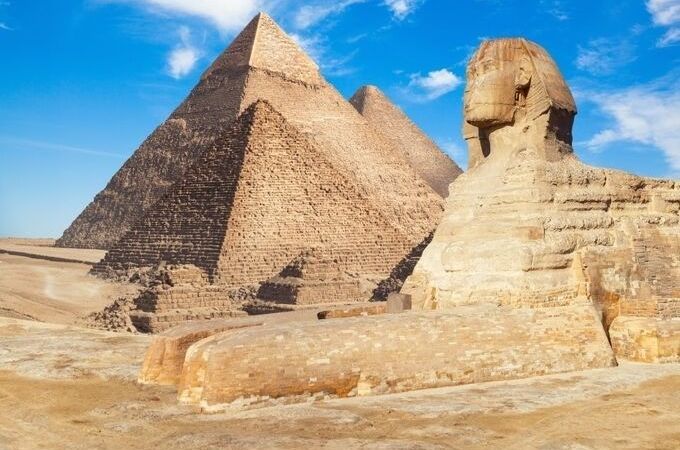
Giza provides long periods of direct exposure, while individual monument areas, interior spaces and shaded positions create sudden contrasts. A traveler who feels warm while crossing the plateau may feel quite different after standing still in shade.
That variation is more interesting than simply saying November is “mild.”
It is variable within the same hour.
Travelers beginning a Cairo archaeology and Nile voyage should therefore avoid using Cairo's pleasant daytime conditions as a packing template for every later destination and every hour of the journey.
Sunset Becomes a Real Boundary
During summer, sunset removes direct sunshine but often leaves a broadly warm environment behind.
November makes sunset more consequential.
The transition is not instant, but once solar warmth disappears, temperatures begin moving toward cooler evening conditions. If you are sitting rather than walking—at an outdoor restaurant, for example—you may notice the change more than someone still actively sightseeing.
This gives sunset practical significance.
An activity that begins comfortably in late-afternoon sunshine may finish under conditions that feel noticeably different.
That matters for outdoor meals, Nile-side settings, rooftop spaces and any itinerary where the evening begins before you have returned to the hotel.
The Pyramids Can Require Two Clothing Decisions
Imagine arriving at Giza during a clear November morning.
At first, conditions may feel fresh enough for a light layer. As the sun climbs and you begin walking, that layer may come off. Several hours later, you are carrying it.
That sounds trivial, but it explains why rigid clothing recommendations are particularly poor for November.
There is no universally correct answer to “Do I need a jacket at the Pyramids?”
The better answer depends on time of day, cloud cover, wind, personal tolerance and how long you remain outside.
For travelers on a Pyramids and ancient Egypt circuit, layering solves that uncertainty more effectively than trying to predict one perfect outfit.
November Rewards the Traveler Who Checks the Evening Forecast
Summer forecast checking tends to focus on the day's maximum temperature.
November gives the minimum more relevance.
If your itinerary finishes in the afternoon, the overnight low matters relatively little. If you are planning dinner outdoors, an evening cruise or a late return, it becomes much more useful.
Wind can also change how those conditions feel.
This does not mean travelers need to study hourly meteorological data obsessively. A quick look at the expected temperature around the hours you will actually be outside is enough.
The key is checking the right part of the forecast.
Outdoor Dining Becomes a Weather Decision Again
For much of Cairo's warmer season, choosing an outdoor table is straightforward.
November makes the decision more personal.
An early dinner may begin under comfortable conditions. A later meal can extend into noticeably cooler air, particularly for someone sitting still for an hour or two.
This is where a small clothing decision can preserve an experience.
Rather than avoiding outdoor dining because the evening may become cooler, carry the layer that allows you to stay comfortably.
Travelers following an Egypt monuments and river journey may encounter the same principle repeatedly: daytime sightseeing clothing and evening comfort do not always belong to exactly the same season.
Don't Call November “Cold Cairo”
The widening day-night contrast creates another writing risk.
Once cooler evenings become relevant, it is easy to overstate them and make November sound like winter.
That would be misleading.
November often provides very pleasant daytime sightseeing conditions, and visitors arriving from colder climates may find the evenings relatively mild. Personal perception varies enormously.
The useful point is not that Cairo becomes cold.
It is that the same clothing choice no longer works equally well for every hour without adjustment.
That gives November its own place within the monthly cluster without invading December's winter scheduling territory.
November's Real Question Is When You Return
Before leaving the hotel, look at the itinerary all the way to the end.
Not just the first attraction.
If you return at 3:00pm, dress for the sightseeing day in front of you. If you will still be outside after sunset, make one small adjustment before leaving.
That is November's exclusive lesson:
The weather does not simply change from one day to another. In November, your Cairo experience can change significantly between lunch and dinner, making the duration of your day as important as its destination.
The Warmest Part of the Day Can Mislead You
November can encourage travelers to make evening decisions based on how they feel at lunch.
At 1:00pm, sitting in the sun after several hours of sightseeing, carrying another layer may seem unnecessary. Four or five hours later, especially after the sun has disappeared, the situation can be different.
This is why November clothing works best when it can be adjusted rather than replaced.
A lightweight layer that spends most of the afternoon inside a day bag has not been wasted. Its value may exist entirely during the final two hours of the itinerary.
Shade Changes the Experience Before Sunset
Even before evening arrives, Cairo's November weather can feel different depending on where you stand.
Direct sunshine can make an archaeological site pleasantly warm, while prolonged time in shade may feel noticeably fresher. This becomes relevant when a guided visit includes periods of standing still rather than continuous walking.
Historic buildings create similar contrasts. Courtyards, stone interiors, narrow streets and shaded areas do not always feel like the sunny open spaces you crossed immediately beforehand.
Rather than repeatedly changing your entire outfit, simple layering lets you respond without interrupting the visit.
Late-Afternoon Archaeology Has a Different Character
November creates interesting possibilities for archaeological visits later in the day.
The physical sensation can change as the sun lowers, particularly when a visit stretches toward closing time. What began as a warm outdoor experience may finish under noticeably softer conditions.
For photographers, this can be appealing because changing light alters the appearance of stone and desert landscapes. For other travelers, it simply means remembering that the final hour may not feel like the first.
The solution is not to avoid late-afternoon sightseeing.
It is to plan for the whole visit rather than the arrival temperature.
What Actually Deserves Space in Your November Day Bag?
November does not require carrying half your suitcase around Cairo.
A practical bag remains relatively simple:
- Water for the day's sightseeing
- Sun protection and sunglasses
- A lightweight additional layer
- Necessary personal items and travel documents
The important difference from summer is that the extra layer now earns its place more often.
Avoid overcorrecting. A bulky coat carried through a sunny afternoon can become more annoying than a slightly cool evening. Choose something light enough to disappear into the bag when you do not need it.
The Best Layer Is the One You Forget You're Carrying
Travel clothing advice often becomes unnecessarily technical.
November does not require a specialized wardrobe.
A light jacket, cardigan, overshirt or similar layer can work perfectly well if it is comfortable, easy to carry and appropriate for the rest of your clothing.
The goal is not to dress for Cairo's lowest possible November temperature. It is to cover the difference between a warm afternoon and a cooler evening without carrying unnecessary weight.
That is why layering works better than dressing heavily from breakfast onward.
A Cloudier Day Changes the Equation
Although Cairo remains predominantly dry, not every November day delivers identical sunshine.
Cloud cover can reduce the solar warmth that makes an otherwise moderate temperature feel particularly pleasant. Add some wind, and a day can feel noticeably different from the one before even when forecast temperatures look similar.
This is another reason not to pack according to climate averages alone.
Check the actual forecast during your stay, especially if the itinerary includes extended outdoor time or an evening activity.
November rewards small adjustments rather than complicated planning.
Three November Mistakes That Are Easy to Avoid
The first is assuming a warm afternoon means the evening will feel identical.
The second is responding to cooler evenings by dressing too heavily for the entire day.
The third is packing for a generic idea of “Egyptian weather” rather than considering what time the Cairo itinerary actually finishes.
All three have the same solution: light, adaptable layering.
That is more useful than trying to decide whether November belongs in a “warm” or “cool” category.
Cairo in November FAQs
1. What is Cairo weather usually like in November?
November generally brings warm, dry and sunny daytime conditions with noticeably cooler evenings. Typical daytime highs are often in the mid-to-upper 20s°C, although individual days vary and the contrast between direct sunshine, shade and evening conditions can be significant.
2. Is Cairo cold in November?
Cairo is not generally cold throughout November. Daytime sightseeing can feel pleasantly warm, especially in direct sunshine. Cooler conditions become more noticeable after sunset and during some mornings, so describing the entire month simply as either warm or cold is misleading.
3. Do I need a jacket in Cairo in November?
A lightweight jacket or similar layer can be useful, particularly when you remain outside after sunset. Heavy outerwear is usually unnecessary for normal daytime sightseeing, although personal temperature tolerance and the actual forecast for your travel dates should guide final packing.
4. Can I wear summer clothes in Cairo during November?
Lightweight clothing can still work very well during sunny daytime hours. The difference from summer is that you may want an additional layer available for mornings, shaded environments and evenings rather than relying on the same clothing combination from breakfast until bedtime.
5. Does it rain in Cairo in November?
Cairo remains relatively dry, although occasional rain becomes more plausible than during the virtually rainless summer period. Most November trips are not structured around rainfall, but checking the short-range forecast before departure is still more useful than relying entirely on monthly averages.
6. Are November mornings cool in Cairo?
Mornings can feel noticeably fresher than the middle of the day, particularly before sunshine has warmed exposed areas. Travelers leaving early for archaeological sightseeing may appreciate a light layer that can easily be removed as conditions become warmer.
7. Is November comfortable for visiting Giza?
November often provides pleasant conditions for substantial outdoor sightseeing at Giza. However, the open plateau can feel different according to sunshine, shade, wind and time of day, so adaptable clothing remains more practical than choosing an outfit based solely on the expected maximum temperature.
8. What should I wear for an evening Nile cruise in November?
Check the forecast for the actual evening, since conditions vary. A lightweight additional layer is generally sensible, particularly when spending time outside on deck where sitting still and exposure to moving air can feel cooler than walking through the city.
9. Can I eat outside at night in Cairo during November?
Yes, outdoor dining can remain very enjoyable. Later meals may feel cooler than early-evening ones, particularly when you are seated for an extended period. Carrying a light layer allows you to choose an outdoor table without depending entirely on afternoon conditions.
10. Does direct sunshine make November feel warmer?
Yes. Direct solar warmth can make daytime conditions feel considerably warmer than the same air temperature experienced in deep shade. This is one reason travelers may remove a layer during archaeological sightseeing and want it again later without any dramatic weather change.
11. Should I pack differently for Cairo and Upper Egypt in November?
Potentially. Egypt covers different climatic zones, and conditions in Cairo should not automatically be treated as identical to Luxor or Aswan. Check destination-specific forecasts before a multi-city journey rather than using one Cairo clothing recommendation for the entire country.
12. What makes November weather different from October in Cairo?
October's particular advantage is the return of longer, more comfortable walking-based exploration. November introduces a stronger day-to-evening contrast. The practical challenge becomes dressing for an itinerary that may begin under warm sunshine and continue into substantially cooler conditions after sunset.

A travel professional specializing in tailor-made travel planning, guest experience management, and multi-destination tourism operations.
With over 23 years of experience in the travel industry, he designs and manages private and cultural tours for international travelers across Türkiye, Greece, Egypt, Jordan, Morocco, and other destinations.
He has strong expertise in both online and face-to-face guest communication, sales processes, and end-to-end travel operations.
Working closely with hotels, travel agencies, and local partners, he ensures smooth coordination and high-quality travel experiences at every stage of the journey.
His focus is on delivering personalized, reliable, and seamless travel experiences for international guests worldwide.