Cairo in December: Make the Daylight Do the Important Work
Author: Kenan Ungur
Article Date: 14.09.2024
Reading Time: 14 min

Cairo in December: Make the Daylight Do the Important Work

Updated: August 12, 2026

December gives Cairo travelers something summer never does: a reason to think carefully about daylight as a limited resource.

Not because the sightseeing day becomes impossibly short. It does not. Cairo still provides enough daylight for a substantial itinerary, and winter conditions are often well suited to outdoor exploration. The difference is that sunrise comes later, sunset arrives earlier, and an inefficiently structured day can spend some of its best natural light in traffic, over lunch or inside an attraction that would have worked equally well later.

Cairo in December is generally mild during the day and cooler after dark. Daytime temperatures commonly sit around the high teens to low 20s°C, although warmer and cooler days occur, while evenings and early mornings can feel considerably fresher. Rain remains limited, but occasional showers are more plausible than during the long dry summer.

Those facts matter.

Yet December's most useful planning question is not simply whether you need a jacket.

It is:

Which parts of Cairo genuinely deserve daylight?

Once you answer that, the winter sightseeing day becomes much easier to organize.

Daylight Has Different Value at Different Attractions

A daylight hour at Giza and a daylight hour inside a major museum are not interchangeable.

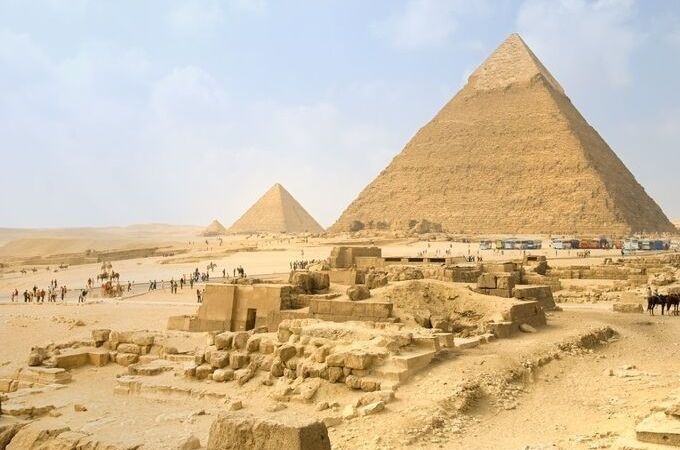
The Pyramids depend heavily on their landscape. You need to see the relationship between monuments, desert, plateau and city. Natural light changes the scale and atmosphere of the experience.

A museum is different. Its collections remain accessible once the outdoor light has become less useful elsewhere.

Historic streets occupy a position somewhere between the two. Architecture benefits from daylight, but certain neighborhoods can continue offering atmosphere into the evening.

This gives December travelers a simple hierarchy.

Experience Daylight Value December Priority
Giza Plateau Very high Protect daylight hours
Saqqara Very high Avoid squeezing it too late
Outdoor architecture High Use the brighter part of the day
Historic streets High Allow daylight for visual context
Museums Lower dependency Useful when outdoor light fades
Dinner / evening experiences Minimal Save for after dark

The point is not to create a rigid timetable.

It is to stop spending the most valuable winter hours on activities that do not need them.

December Punishes the Late Start Differently

Starting a Cairo sightseeing day late in July can create a temperature problem.

Starting late in December creates a light problem.

Imagine leaving the hotel at 10:30am, crossing the city, beginning a major visit before lunch, stopping for a leisurely meal and then driving toward another outdoor archaeological site.

Nothing has gone seriously wrong.

Yet by the time the second experience develops properly, the available daylight is already narrowing.

That matters more at Saqqara than it would inside a museum.

December therefore rewards travelers who look beyond opening hours. An attraction may technically remain open, but that does not mean the final available hour delivers the same experience as the middle of the day.

Travelers beginning a Cairo pyramids and Nile journey should protect their priority outdoor sites first and allow more flexible experiences to occupy the edges of the day.

Lunch Can Accidentally Take the Best Hour

A relaxed lunch is part of a vacation, and there is no reason to turn every meal into a rushed operational stop.

But December changes the cost of a badly positioned long lunch.

If you spend ninety minutes eating while several outdoor experiences remain, you may discover that the day's visual window has become surprisingly narrow.

The solution is not necessarily a shorter meal.

It can be a better sequence.

Complete the daylight-dependent sightseeing first, then enjoy a later lunch or combine the meal with an indoor afternoon experience. Alternatively, place the main outdoor visit before lunch and accept that the second half of the day will have a different character.

December planning works best when food follows the logic of the route, rather than automatically dividing the day at noon.

Giza and Saqqara Should Not Compete for the Last Light

Combining Giza and Saqqara is attractive because both belong naturally to the story of ancient Egyptian pyramid development.

In December, however, the sequence deserves thought.

If both are priorities, they should not be treated as though unlimited daylight remains available. Delays at the first site, traffic, lunch and longer-than-expected explanations can gradually consume the second visit.

This is where a good guide and realistic itinerary matter more than simply starting with a long attraction list.

Decide whether both sites deserve substantial exploration or whether one is clearly the deeper priority.

A traveler on an Ancient Egypt archaeology circuit may prefer giving both proper time even if that means reducing an unrelated city stop later.

December exposes weak prioritization very quickly.

Winter Light Can Improve the Way You See Cairo

Shorter daylight is not purely a limitation.

The lower seasonal sun can give outdoor sites a different visual character. Stone surfaces, desert landscapes and architectural details may appear less flattened than under harsher overhead summer light, particularly earlier and later in the day.

You do not need to be a serious photographer to notice this.

The angle of light affects how monuments feel.

At Giza, shadows can strengthen the geometry of the pyramids. In historic Cairo, textured stone façades and minarets can gain more visual definition. Even an ordinary street can look different as winter sunlight enters from a lower angle.

This gives December daylight quality as well as scarcity.

Photography Needs a Different Clock

A traveler interested in photography should not simply copy the sightseeing timetable of someone who wants documentation photographs at each stop.

Photography slows visits.

You wait for people to move, change position, look for another angle and sometimes remain somewhere because the light is improving.

In December, those extra minutes accumulate against an earlier sunset.

If photography is important, reduce the number of daylight-dependent sites rather than attempting to photograph each one quickly.

Travelers following a Cairo monuments and culture tour may gain more memorable images from three properly timed locations than from six visited under constant pressure to leave.

Museums Can Extend the Useful Sightseeing Day

December's shorter daylight does not mean sightseeing needs to finish with sunset.

It means the type of sightseeing can change.

Indoor collections can become strategically useful later in the day because their value does not depend on the position of the sun. This can extend the itinerary without forcing another outdoor monument into fading light.

That is an important distinction.

The museum is not being used as filler. It remains a major cultural experience in its own right. December simply provides an additional reason to position indoor and outdoor attractions according to what each environment needs.

This creates a more natural winter rhythm: landscape and architecture while daylight contributes something, collections and other less light-dependent experiences when it does not.

Don't Turn December Into a Race Against Sunset

Once travelers become aware of shorter days, another problem can appear: overcorrection.

Breakfast becomes rushed. Every stop receives a strict deadline. Lunch becomes ten minutes. Everyone watches the clock.

That defeats the purpose.

December does not require speed.

It requires sequence.

Put the experiences that depend most heavily on daylight in the strongest positions. Give them enough time. Allow less light-sensitive attractions to move later.

A carefully ordered five-stop day is better than a seven-stop itinerary spent worrying about darkness.

December's Rule Is Simple: Spend Light, Not Time

Time and daylight are not the same resource.

You still have an evening after the sun goes down. Restaurants remain open. Cairo remains alive. Indoor experiences may still be possible depending on operating hours. Your vacation day has not ended.

What has ended is a particular kind of visibility.

That gives December its exclusive ownership within the Cairo monthly weather cluster:

November teaches you to dress for a day that changes after sunset. December asks a different question entirely: before sunset arrives, did you spend the available daylight on the experiences that actually needed it?
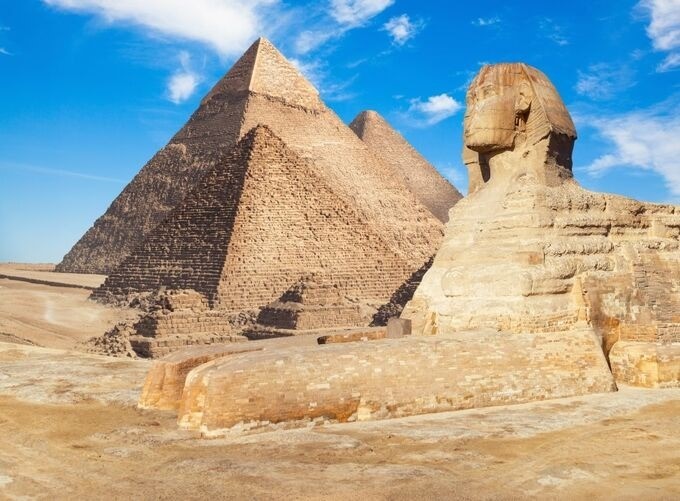
The Great Pyramid of Giza towering over the golden desert

Give Every December Hour a Job

A useful December itinerary does not need to schedule every minute, but each part of the day should broadly match the kind of sightseeing it supports best.

Morning and early afternoon are valuable for archaeological landscapes, monuments and districts where natural light contributes to what you see. Later hours can absorb experiences that depend less heavily on daylight.

Think of it as a daylight budget, not a timetable.

If you spend two hours of that budget sitting in traffic between poorly grouped attractions, you cannot recover those same daylight conditions later. You still have the hours, but their usefulness has changed.

That is why geographical planning matters particularly in December.

Morning or Afternoon? Look at the Experience First

There is no universal rule that every important Cairo attraction must be visited first thing in the morning.

Instead, consider what the experience requires.

An extensive archaeological visit may deserve a large uninterrupted daylight block. A historic district may benefit from several hours in which streets and architectural details remain clearly visible. An indoor collection can often tolerate a later position much better.

A practical December structure might therefore look like this:

Part of Day Strong Use Why It Works
Morning Major outdoor site Large daylight reserve
Late morning Continued archaeology No need to rush the priority visit
Early afternoon Second outdoor area Useful natural light remains
Later afternoon Museum or interior Less dependent on sunlight
Evening Dinner or city experience Daylight no longer required

This is deliberately not an hour-by-hour schedule.

Opening times, traffic and individual itineraries vary. The value lies in putting the right type of experience into each part of the day.

Traffic Becomes More Expensive in December

Cairo traffic affects itineraries throughout the year, but December gives delays another consequence.

Forty minutes in traffic during summer costs forty minutes.

Forty minutes in traffic shortly before a December sunset can cost most of the remaining useful natural light at your next outdoor attraction.

This is another reason to group sightseeing geographically.

Crossing Cairo may be unavoidable. Crossing it repeatedly because the itinerary alternates between distant districts is different.

A route should move logically through the city whenever possible, reducing the number of daylight hours spent looking through a vehicle window.

Don't Save the Outdoor Priority for Last

Some travelers build the day by putting the attraction they care about most at the end, almost as a finale.

December is not always the ideal month for that strategy.

If an outdoor site genuinely matters to you, give it enough margin that lunch, traffic or an unexpectedly interesting earlier visit cannot reduce it to a rushed final hour.

This is especially important for archaeology.

A major historical site deserves time to understand where you are, listen to the guide, explore and occasionally stop without checking the clock.

Save the dramatic finale for dinner.

Protect the archaeology.

Sunset Can Be an Experience Rather Than a Deadline

An earlier sunset does not have to feel like the sightseeing day shutting down.

If the itinerary is structured properly, sunset can become the transition between two different versions of Cairo.

The outdoor archaeological program finishes. The city lights begin appearing. Dinner, an evening outing or another suitable experience takes over.

This creates a more natural rhythm than attempting to force daylight sightseeing beyond the point where natural light is contributing much.

December becomes considerably easier once darkness is treated as a change of scene rather than lost vacation time.

Winter Photography Is About Selectivity

December can reward photographers, but trying to photograph everything creates its own problem.

Lower seasonal light can produce interesting shadows and texture, yet the window for particular conditions is finite. A photographer who repeatedly changes locations may spend the best light inside a vehicle.

Choose the subjects that matter most.

If Giza is the photographic priority, allow it to dominate that part of the day. If historic architecture matters more, give the streets sufficient time rather than squeezing them between unrelated attractions.

Good December photography often comes from being in fewer places at better moments.

Cairo Doesn't Close When Daylight Ends

This point deserves emphasis because shorter winter days can sound more restrictive than they really are.

December reduces daylight.

It does not reduce the day itself.

Cairo continues after dark, and many experiences do not depend on natural light. Dinner, evening atmosphere and appropriate indoor activities can continue after outdoor archaeological sightseeing has finished.

Once you stop asking daylight to perform every job, December becomes much easier to organize.

Cairo in December FAQs

1. What is Cairo weather usually like in December?

December generally brings mild daytime conditions, cooler mornings and evenings, and predominantly dry weather. Daytime temperatures are commonly around the high teens to low 20s°C, although actual conditions vary, so travelers should check their specific forecast shortly before departure.

2. What time does it get dark in Cairo in December?

December has some of Cairo's shortest daylight periods, with sunset occurring relatively early compared with spring and summer. Exact times change through the month, so travelers planning photography or late archaeological visits should check sunset timing for their actual dates.

3. Are December days long enough for Cairo sightseeing?

Yes. There is sufficient daylight for substantial sightseeing when the itinerary is structured sensibly. The key is placing outdoor archaeological and architectural experiences earlier, rather than spending valuable daylight on activities that could work equally well after natural light begins fading.

4. Should I visit the Pyramids in the morning during December?

Morning can work particularly well because it provides a generous daylight reserve, but it is not the only possible time. The more important principle is avoiding a schedule that leaves Giza squeezed into the final limited portion of the afternoon.

5. Can I visit Giza and Saqqara on the same December day?

Yes, provided the itinerary allows meaningful time at both sites and accounts for transportation and daylight. Travelers particularly interested in archaeology should avoid adding too many unrelated stops that could reduce the second major site to a hurried visit.

6. Does Cairo receive rain in December?

Cairo remains relatively dry, although occasional winter rainfall is more plausible than during summer. Rain usually does not define an entire December trip, but checking the short-range forecast remains worthwhile when planning extensive outdoor archaeological or walking-based sightseeing.

7. Is Cairo cold in December?

Cairo can feel cool during mornings and evenings, while sunny daytime conditions may feel considerably milder. Rather than treating December as uniformly cold, pack adaptable layers that can respond to changes between early starts, daytime sightseeing and time spent outside after sunset.

8. What should I wear at the Pyramids in December?

Comfortable walking clothing with adaptable layers generally works well. Conditions may feel fresh early and warmer under direct daytime sunshine. Suitable footwear remains important because archaeological terrain matters regardless of the season, while sun protection can still be useful.

9. Is December good for photography in Cairo?

It can be. Lower seasonal sunlight may create attractive shadows and texture around monuments and historic architecture. Because daylight is shorter, photographers benefit from choosing priority locations rather than losing valuable natural light through excessive transfers between distant areas.

10. Should museums be scheduled later in December?

They can be positioned later when operating hours allow because museum collections depend less on natural daylight than archaeological landscapes. However, museums deserve adequate time in their own right and should not simply become containers for whatever hours remain after outdoor sightseeing.

11. Can I still plan evening activities during December?

Absolutely. Sunset marks the end of useful natural light, not the end of Cairo's travel day. Dinner and suitable evening experiences can continue afterward, allowing the itinerary to shift character instead of trying to keep every activity within daylight hours.

12. What makes December different from November in Cairo?

November's distinctive issue is the widening temperature difference between sunny daytime sightseeing and cooler evenings, making adaptable clothing particularly useful. December shifts the planning problem toward daylight itself: shorter winter days make attraction sequencing, geographical routing and the timing of outdoor experiences more important.

 
Kenan Ungur
Author

A travel professional specializing in tailor-made travel planning, guest experience management, and multi-destination tourism operations.

With over 23 years of experience in the travel industry, he designs and manages private and cultural tours for international travelers across Türkiye, Greece, Egypt, Jordan, Morocco, and other destinations.

He has strong expertise in both online and face-to-face guest communication, sales processes, and end-to-end travel operations.

Working closely with hotels, travel agencies, and local partners, he ensures smooth coordination and high-quality travel experiences at every stage of the journey.

His focus is on delivering personalized, reliable, and seamless travel experiences for international guests worldwide.
Join The Newsletter

To receive our best monthly deals

Magnificent Travel Logo

Magnificent Travel
Usually responds the same day

Magnificent Travel
Welcome to the Magnificent Travel

How may i help you?
Today
+905324935198
X