Cairo in March: Reading the City's Changing Spring Weather
Updated: August 12, 2026
March is the point in Cairo's calendar when relying on the word “spring” becomes less useful than understanding what can change from one day to another. The month begins relatively close to the city's late-winter pattern, yet by its final weeks the afternoon sun can carry noticeably more force and the atmosphere may already hint at the much warmer season ahead.
For travelers, that makes March less predictable in feel than a simple monthly average suggests. A comfortable morning at an archaeological site can develop into a much warmer afternoon, while another day may be affected by wind, haze or airborne desert dust. Clothing that seemed perfectly judged yesterday may need adjusting today.
Typical daytime highs move through the low-to-mid 20s°C during March, while nights remain substantially cooler. Rain plays only a minor role in the month's travel story. The more distinctive factors are strengthening sunshine, dry air, changing afternoon warmth and the possibility of dusty or windy conditions as Egypt moves deeper into spring.
That combination gives March its own place in this Cairo weather series. It is not simply February with slightly higher temperatures, nor is it an early version of summer.
March Rewards Travelers Who Check Tomorrow, Not Just the Month
Monthly climate statistics are excellent for understanding broad patterns. March is one of those months when they become less useful for deciding what to do on a particular day.
Imagine two travelers arriving ten days apart. One might encounter clear skies and moderate afternoons that allow hours around archaeological sites without much thought about the weather. The other could experience considerably stronger sunshine or a dusty spell that changes visibility around Giza.
Both experiences can belong legitimately to Cairo in March.
For that reason, this is the month when short-range forecasting begins to matter more. You do not need to redesign a trip every morning, but checking the next day's conditions can help decide whether an exposed archaeological excursion or a more mixed city day makes better sense.
This is a different planning habit from February, when gradual seasonal transition is the larger story. March introduces greater day-to-day personality.
The Sun Changes Faster Than Your Wardrobe
One of the easiest March mistakes is looking only at the air temperature.
A reading in the low 20s°C may sound almost identical to conditions you have experienced elsewhere, but several hours in direct Egyptian sunshine can feel quite different from walking through shaded streets or entering a museum.
The contrast becomes particularly noticeable at open sites.
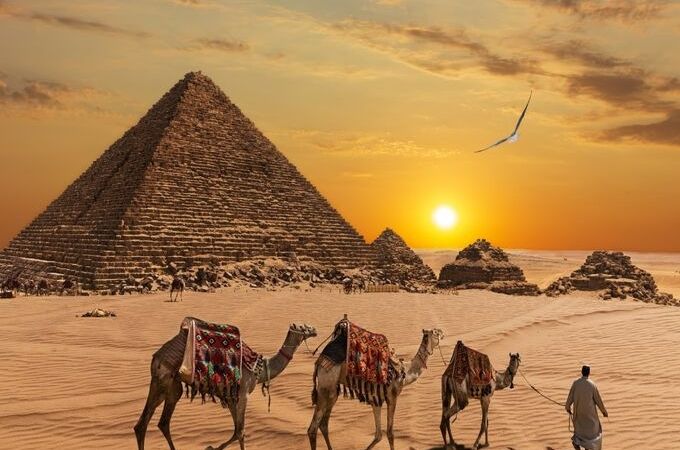
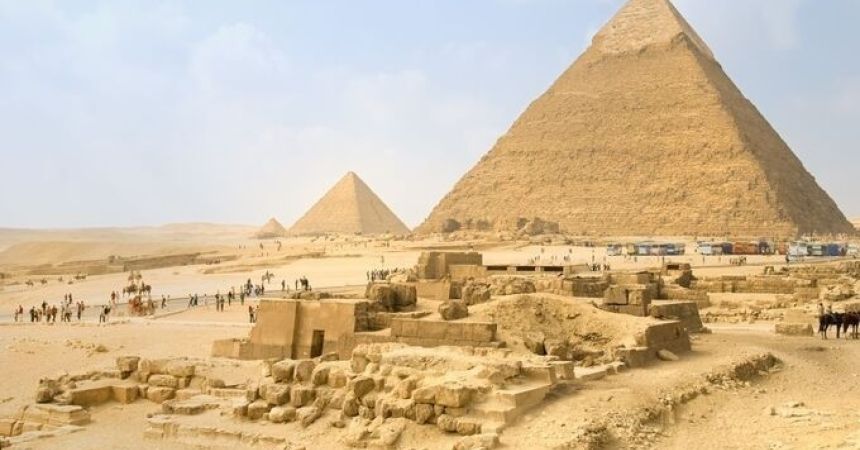
Giza offers vast exposed spaces. Saqqara and Dahshur place visitors even farther into desert-edge landscapes, where shade is limited and the visual openness encourages longer periods outside. In central Cairo, by contrast, buildings, covered areas and indoor attractions break up exposure naturally.
This means March clothing should respond to sun and location, not simply the number displayed by a weather app.
A traveler beginning a broader Egypt highlights journey should also remember that this effect becomes increasingly important when the itinerary continues south, even though the detailed climate of Luxor and Aswan belongs outside this Cairo-specific article.
What March Exposure Looks Like Across Cairo
Instead of another time-of-day temperature table, March is better understood by looking at exposure.
| Setting | Exposure Character | March Consideration |
|---|---|---|
| Giza Plateau | Highly exposed | Sun and visibility matter |
| Saqqara & Dahshur | Open desert-edge terrain | Carry water and sun protection |
| Historic Cairo | Mixed shade and open streets | Conditions change block by block |
| Nile waterfront | Open with possible breeze | Air can feel different near the river |
| Museum districts | Mostly controlled exposure | Useful within a mixed sightseeing day |
| Citadel viewpoints | Elevated and exposed | Haze can affect distant views |
This way of reading the city is particularly useful in March because the same forecast can produce very different levels of comfort depending on where the itinerary takes you.
Dust Deserves More Attention Than Rain
Visitors researching Cairo weather often look immediately for rainfall. In March, that can direct attention toward one of the least important variables.
Cairo remains overwhelmingly dry. A more relevant spring consideration is the possibility of wind carrying dust or sand from desert areas, particularly as the wider khamsin season approaches.
Khamsin is associated with hot, dry, dust-bearing winds that can affect Egypt during spring. It should not be interpreted as a permanent March condition, nor should travelers expect a sandstorm simply because they are visiting this month. Most sightseeing days will not be defined by dramatic dust events.
But occasional dusty conditions matter because they affect Cairo differently from ordinary heat.
Visibility can fall. Distant pyramid views may appear hazier. Eyes can become irritated, and people who wear contact lenses may find prolonged outdoor exposure uncomfortable. Fine dust can also make a long archaeological day less appealing even when the temperature itself seems perfectly manageable.
That creates a March-specific question:
Not “Will it rain?” but “How clear and exposed will tomorrow be?”
When Visibility Becomes Part of the Itinerary
Few weather guides discuss visibility because it does not fit neatly into a temperature chart. Around Cairo, however, visibility can directly influence the character of certain experiences.
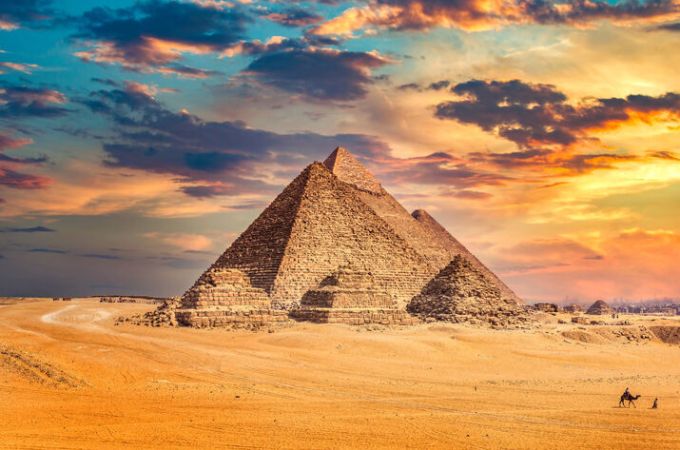
At Giza, much of the visual impact comes from scale and distance: seeing one pyramid in relation to another, looking across the plateau, or using panoramic viewpoints that place the complex against the surrounding landscape.
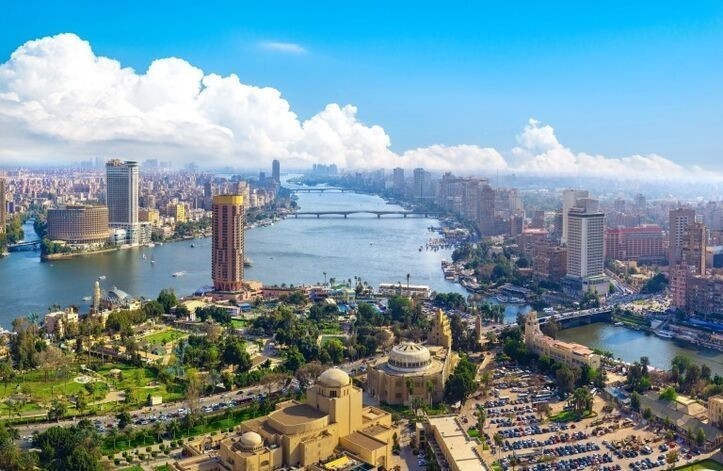
The Citadel provides another example. On a clear day, elevated viewpoints reveal a broad urban panorama; haze naturally softens that distance.
A dusty March day does not make either attraction worthless. The archaeology remains exactly where it was. What changes is the visual dimension of the visit.
If you have several Cairo days available and the forecast indicates unusually poor visibility, it can therefore make sense to exchange two days rather than cancel anything: use the hazier period for attractions where long-distance views matter less, then keep Giza or a panoramic location for clearer conditions.
That kind of small adjustment is particularly easy on a Cairo and Nile cultural tour that provides enough time in the capital rather than compressing every major site into a single day.
March Packing Starts With What You Can Carry
By March, packing too warmly can become almost as inconvenient as packing too lightly.
The most useful clothing system is increasingly based on breathable pieces with one removable layer for cooler periods. A jacket may still earn its place, but its value depends partly on whether you can store it comfortably once the afternoon changes.
Sun protection moves higher up the priority list. Sunglasses, a hat that is practical in open archaeological areas, and appropriate sunscreen become increasingly relevant during prolonged outdoor visits.
March also introduces a less obvious item: something that can help on a dusty day. A lightweight scarf can be useful without turning the suitcase into a desert-expedition kit.
The March Day-Bag Test
Rather than creating another generic packing checklist, ask what each item solves.
| Item | Problem It Solves |
|---|---|
| Sunglasses | Increasing glare and bright exposed sites |
| Water | Longer dry outdoor periods |
| Light removable layer | Cooler starts without afternoon bulk |
| Sun protection | Stronger direct exposure |
| Light scarf | Breeze, dust and cultural-site coverage |
| Lens cloth | Dust on glasses, phone or camera lens |
The last item sounds trivial until a dusty afternoon leaves a fine layer across everything you are using to photograph the city.
Don't Turn a Dust Possibility Into a Dust Forecast
March needs careful language because spring weather discussions about Egypt can easily become exaggerated.
Khamsin conditions are possible during the broader spring period. That does not mean Cairo spends March inside a continuous cloud of sand.
Travelers should treat dust in the same practical way they treat any intermittent weather factor: understand that it can happen, know what changes if it does, and check current conditions near the travel date.
There is no reason to structure an entire vacation around avoiding a phenomenon that may not occur during your stay.
This distinction matters for SEO as much as travel accuracy. Someone searching Cairo weather in March needs realistic preparation, not dramatic desert imagery that misrepresents an entire month.
March Makes Outdoor Sequencing More Relevant
As sunshine becomes stronger, the order of outdoor activities begins to deserve more thought.
This does not yet mean imposing the strict heat-management strategies required during Cairo's hottest period. Doing so would steal semantic territory from later monthly articles where extreme heat genuinely becomes the central planning issue.
March sits earlier in that progression.
The useful adjustment is modest: if a day contains several hours in an exposed archaeological landscape and another experience with natural shade or indoor sections, consider which one benefits most from the conditions forecast for that day.
That could mean giving Saqqara the clearer morning, leaving an urban museum for later, or moving a panoramic viewpoint to another day if haze is expected.
The aim is not to hide from March weather. It is to use its variability rather than fight it.
Travelers continuing through Egypt on a Cairo, Aswan and Nile journey can apply the same habit of checking local conditions as they move between regions, rather than assuming one Cairo forecast describes the entire route.
March Is the Month to Stop Thinking in Seasonal Labels
Calling March “spring” is meteorologically convenient but practically incomplete.
For a traveler standing at Giza, the useful information is whether the afternoon will be clear, windy, dusty, strongly sunny or unusually warm. For someone walking through historic Cairo, shade and street orientation may matter more. For photography, atmospheric clarity can be as relevant as temperature.
That is the identity of this particular month within our Cairo weather cluster.
January belongs to midwinter outdoor comfort and the pronounced daily temperature range. February occupies the gradual late-winter transition. March is where changing spring conditions become active enough that tomorrow's forecast begins to tell you more than the month's label.
And that is why the smartest March itinerary is not rigid. It has enough structure to cover what you came to see and enough flexibility to move one outdoor experience when the sky, wind or visibility suggests a better order.
A Dusty Day Does Not Have to Become a Lost Day
If March brings a dusty or hazy spell during your stay, the first instinct should not be to abandon the day's plans. Cairo contains enough variety that a small change in sequence can often preserve the experience without turning weather into the centre of the itinerary.
Long-distance views are usually the first thing affected when atmospheric clarity deteriorates. A panoramic stop at Giza, an elevated viewpoint from the Citadel, or photography that depends on a clean horizon may therefore benefit from being moved to another day when your schedule allows.
Sites where the interest lies in architecture, interiors or close-range detail are less dependent on distant visibility. Museums provide an obvious alternative, but they are not the only one. Historic mosques, churches, houses and covered sections of older neighborhoods can all remain rewarding when the skyline looks less impressive than expected.
The useful March response is therefore reordering rather than cancelling.
This is also why leaving some flexibility between Cairo sightseeing days can be more valuable than creating an itinerary in which every attraction is tied permanently to a particular morning.
What Changes When the Air Turns Dusty?
Dust affects travel differently from rain, which makes the usual wet-weather advice surprisingly irrelevant.
You may still have dry ground and plenty of daylight, yet extended outdoor exposure can become less comfortable. Eyes may feel irritated, contact lenses can become troublesome, and cameras or phones may collect a fine layer of dust more quickly than expected.
A few simple adjustments usually go further than dramatic changes to the itinerary.
Keep sunglasses accessible rather than packed inside luggage. Travelers who are particularly sensitive to airborne dust may prefer glasses instead of contact lenses on an affected day. Camera equipment should be changed or cleaned carefully, particularly around open archaeological landscapes where fine particles can travel easily in the wind.
If conditions become unusually dusty, follow current local guidance and use common sense about prolonged outdoor exposure rather than relying on what is “normal for March.”
Photography in March Depends on the Atmosphere
March creates an interesting distinction between light and clarity.
The strengthening spring sun can provide excellent illumination, yet haze may soften distant backgrounds. That means a bright day is not automatically a crystal-clear day, particularly when looking across a large urban or desert-edge landscape.
At Giza, atmospheric haze can change how clearly the pyramids separate from the distant cityscape. At the Citadel, it can reduce the depth of the skyline. Close architectural details, reliefs, stone textures and street scenes are much less dependent on long-range visibility.
This does not make March a good or bad photography month; that kind of ranking belongs elsewhere. It simply means photographers should understand that visibility and sunshine are separate variables.
If clear panoramic views matter greatly to you, checking visibility and wind conditions before deciding which outdoor site receives your longest photography session is more useful than relying on temperature alone.
Early March and Late March Can Ask Different Questions
A traveler arriving during the first week of March may encounter conditions that still carry something of the preceding season, particularly at the cooler ends of the day. By the final week, stronger afternoon warmth can become more noticeable.
This progression should not be exaggerated. Weather does not obey calendar boundaries neatly, and an early-March day can occasionally feel warmer than one later in the month.
What changes is the probability and character of warmth, not a switch that flips halfway through March.
For travelers visiting toward the end of the month, sun protection and hydration deserve increasing attention during long outdoor visits. An additional layer may still be useful at other times, but clothing increasingly needs to cope with warmth rather than simply protect against cool air.
March Conditions: Respond to the Signal
| What You Notice | Practical Response |
|---|---|
| Clear sky and good visibility | Prioritize panoramic outdoor sites if they matter to you |
| Strong direct sunshine | Increase sun protection and keep water accessible |
| Noticeable breeze | Secure hats and keep a light layer available |
| Hazy horizon | Favor experiences less dependent on distant views |
| Airborne dust | Protect eyes and equipment; shorten exposure if necessary |
| Warmer late-month afternoon | Avoid carrying unnecessary heavy layers |
This is intentionally not a rating table. March is better approached through response, because conditions can vary more meaningfully than a single monthly label suggests.
Hydration Starts Becoming Easier to Underestimate
Travelers naturally associate hydration with extreme heat. March demonstrates why that assumption can be misleading.
Dry air, sunshine and several hours of walking can increase fluid needs even when you never feel overwhelmingly hot. At an exposed site such as Saqqara, it is easy to remain comfortable enough that drinking water becomes an afterthought.
By the time thirst becomes obvious, several hours may already have passed.
Carrying water should therefore become part of the March routine, particularly on archaeological days. There is no need to adopt the more intensive heat-management approach that later months require; the point is simply to drink consistently rather than waiting for the weather to feel “hot enough.”
That small habit becomes increasingly useful as March progresses.
What March Does to a Multi-Day Cairo Plan
The strongest March itinerary is not one that predicts the weather perfectly. It is one that can absorb variation.
Suppose you have three sightseeing days in Cairo. Instead of designing all three around equally exposed archaeological sites, it can be useful to create days with different weather sensitivities. One might depend heavily on open landscapes and panoramic views, another might combine streets and interiors, while the third has enough flexibility to move between museums and outdoor attractions.
Then, once a reliable short-range forecast is available, those days can be reordered if necessary.
This approach is particularly effective because it does not require sacrificing anything. You are changing when you see a place, not whether you see it.
For a wider Egypt itinerary, the same principle applies before continuing beyond Cairo. A classic Cairo and Nile itinerary may involve very different conditions as it moves south, so current local forecasts remain more valuable than assuming March behaves uniformly across the country.
March Weather Is Something to Read, Not Fear
There is a tendency for travel advice about Egypt's spring winds to become unnecessarily dramatic. Words such as sandstorm attract attention, but they can leave readers with the impression that March sightseeing is routinely disrupted by walls of airborne sand.
That is not a useful picture of the month.
The sensible approach is proportionate. Be aware that spring can produce dusty and windy periods. Understand that these conditions may reduce visibility or make exposed sites less comfortable. Check current forecasts as your travel dates approach, then make modest adjustments when necessary.
Most importantly, do not confuse possibility with normality.
That distinction is what separates useful March preparation from generic weather content designed primarily to sound dramatic.
Cairo in March FAQs
1. What temperatures can I expect in Cairo during March?
March daytime temperatures generally move into the low-to-mid 20s°C, while nights remain noticeably cooler. Conditions can vary across the month, and direct sunshine often makes exposed archaeological sites feel warmer than the measured air temperature suggests, particularly during the later part of March.
2. Is Cairo dusty in March?
Dusty conditions are possible during March as Egypt enters its spring transition, but they are not a permanent feature of the month. Many days can be clear. Travelers should check short-range forecasts rather than assuming their visit will coincide with significant dust or reduced visibility.
3. What is the khamsin, and can it affect Cairo in March?
The khamsin refers to hot, dry, dust-bearing winds associated with Egypt's spring period. Such conditions can occur around this part of the year, although they do not affect every March day or every traveler. When present, they may influence visibility and outdoor comfort more than rainfall does.
4. Can dust affect views of the Pyramids in March?
Yes. Haze or airborne dust can reduce long-distance visibility across the Giza Plateau even when the archaeological site itself remains fully accessible. If panoramic photography is particularly important and you have several Cairo days, moving Giza to a clearer day can sometimes improve the visual experience.
5. Does it rain much in Cairo during March?
Rain is generally limited, and prolonged wet periods are unusual. March travel planning therefore tends to revolve more around sunshine, wind, dry air and occasional dusty conditions than rainfall. A short-range forecast shortly before sightseeing provides more practical information than monthly precipitation figures alone.
6. Do I still need a jacket in Cairo in March?
A lightweight layer can remain useful, particularly during cooler periods or on a breezy day, although heavy winter clothing is generally unnecessary. As March progresses, breathable clothing becomes increasingly important because afternoons in direct sunshine may feel considerably warmer than mornings or shaded areas.
7. How strong is the sun in Cairo during March?
The sun becomes increasingly significant as Cairo moves through March. Travelers spending several hours at exposed archaeological sites should use appropriate sun protection even when the air does not feel particularly hot. Sunglasses, sunscreen, water and sensible clothing become increasingly valuable as the month advances.
8. Should contact-lens wearers prepare for dusty conditions?
It can be sensible to carry glasses as an alternative if you are sensitive to dust. Most March days will not necessarily create a problem, but airborne particles during a dusty spell can irritate eyes and make contact lenses uncomfortable, particularly during extended visits to exposed desert-edge sites.
9. Can March haze affect Cairo photography?
Yes, particularly photography that relies on distant horizons or panoramic city views. Haze has much less impact on close architectural details, monuments, interiors and street photography. Travelers with flexible schedules can prioritize panoramic locations when short-range forecasts suggest better atmospheric clarity.
10. Does March weather feel the same at Giza and in central Cairo?
Not always. Giza, Saqqara and Dahshur contain extensive open areas where wind, direct sunlight and dust may be more noticeable. Central Cairo provides more shelter from buildings and frequent transitions between indoor and outdoor spaces, so identical temperatures can produce different experiences.
11. Is late March much different from early March?
The month generally trends warmer as it progresses, with stronger afternoon sunshine becoming increasingly noticeable, but there is no fixed dividing line. Individual weather systems still create variation, so travelers should use seasonal averages for preparation and current forecasts for actual daily decisions.
12. How should I plan around a dusty March forecast?
Avoid cancelling sightseeing automatically. If conditions are expected to reduce visibility, consider moving panoramic sites to another available day and using museums, historic interiors or close-range architectural experiences instead. If dust becomes significant, reduce prolonged exposure and follow current local guidance.

A travel professional specializing in tailor-made travel planning, guest experience management, and multi-destination tourism operations.
With over 23 years of experience in the travel industry, he designs and manages private and cultural tours for international travelers across Türkiye, Greece, Egypt, Jordan, Morocco, and other destinations.
He has strong expertise in both online and face-to-face guest communication, sales processes, and end-to-end travel operations.
Working closely with hotels, travel agencies, and local partners, he ensures smooth coordination and high-quality travel experiences at every stage of the journey.
His focus is on delivering personalized, reliable, and seamless travel experiences for international guests worldwide.
Turkey Tours
Visit some of the most famous and historical areas that Turkey has to offer to its visitors on one of our Turkey Travel Packages and Turkey Tours.
Greece Tours
Immerse yourself in Greece & discover the best that Greece has to offer. Browse our wide range of Greece tours online today.
Egypt Tours
Egypt Tours specializes in providing the most pleasing Egypt tours & vacations, Egypt Nile River cruises, Egypt day tours & excursions, Egypt shore excursions.
Jordan Tours
Book a group tour to Jordan with Explore. Visit the ancient city of Petra, trek the Wadi Rum valley or cycle down Mount Ma'in to the shores of the Dead Sea.
Israel Tours
Our premium guided tours to Israel visit Tel Aviv, Sea of Galilee, Golan Heights, Jordan Valley, Dead Sea, Holy City of Jerusalem, Temple Mount & more
Morocco Tours
Book your Morocco tour package and explore the centuries-old history of Casablanca, historic souks and palaces in Marrakesh, Fez and Rabat.
Turkey and Greece Tours
Explore top-rated tours to Turkey and Greece, featuring over 100 reviews. Discover destinations such as Athens, and Istanbul, and the stunning destinations
Turkey, Greece & Egypt Tours
Discover the best of Turkey, Greece, and Egypt with immersive tours combining iconic landmarks, rich history, and vibrant cultures.
Turkey And Egypt Tours
Experience the timeless wonders of Turkey and Egypt with guided tours showcasing ancient history, cultural treasures, and breathtaking landscapes.
Turkey And Jordan
Explore Turkey and Jordan tours for a captivating journey through ancient history, vibrant cultures, and breathtaking landscapes.
Greece And Egypt Tours
Discover the wonders of Greece and Egypt tours, blending ancient civilizations, iconic landmarks, and unforgettable cultural experiences.
Egypt, Jordan & Israel Tours
Experience Egypt, Jordan, and Israel tours, exploring ancient wonders, sacred sites, and rich cultural heritage in one unforgettable journey.
Greece And Jordan Tours
Discover the magic of Greece and Jordan tours, combining ancient history, stunning landscapes, and vibrant cultural experiences.