Luxor or Aswan: Where Should Your Nile Cruise Start?
Updated: August 2026
The classic Nile cruise question is usually framed around ships: Which vessel is best? Which cabin should I choose? How many nights should I book?
There is another decision that can influence the wider journey just as much, yet it receives considerably less attention.
Should the cruise begin in Luxor and finish in Aswan, or should you approach the Nile in the opposite direction?
Both can work beautifully. The monuments along the river do not suddenly become more important because you encounter them northbound rather than southbound, and choosing one direction over the other is not a question of discovering a secret “better” Nile.
The practical difference appears around the cruise.
Where will you be immediately beforehand? What happens after disembarkation? Is Cairo part of the same journey? Does Abu Simbel matter to you? Are your international flights already fixed? Are you continuing elsewhere in Egypt?
Once those questions enter the conversation, cruise direction stops looking like an arbitrary detail.
It becomes part of the architecture of the trip.
The Nile Cruise Is a Fixed Chapter Inside a Moving Journey
Hotels are relatively flexible. If necessary, you can sometimes shift a city stay by a night or reorganize sightseeing within it.
A cruise behaves differently.
Ships operate according to sailing patterns, embarkation arrangements and scheduled sightseeing. Once a particular departure is selected, several days of your Egypt journey become linked to that structure.
This is why we do not normally begin a well-designed Egypt journey by building every other destination first and then asking where a Nile cruise might fit into the remaining space.
The cruise should become one of the structural pieces.
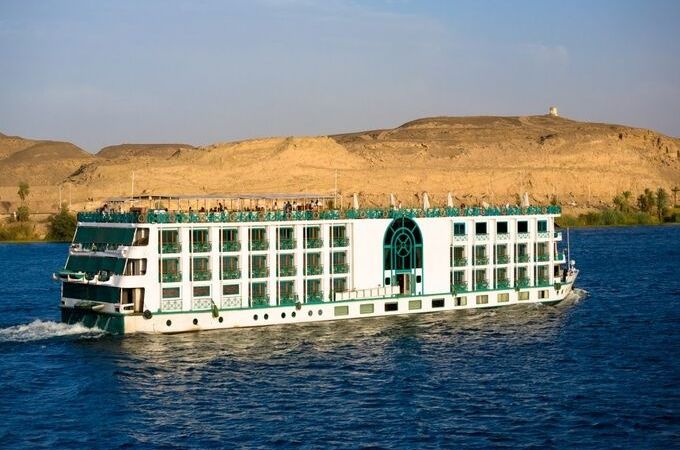
Think of it as a bridge between Luxor and Aswan rather than simply accommodation that happens to move.
Your decision then becomes much clearer: which end of that bridge should connect naturally with the journey before it, and which should connect with what comes next?
That is a more useful way to choose direction than searching for claims that one sailing route is universally superior.
Starting in Luxor Often Feels Natural When Cairo Comes First
For many first-time Egypt journeys, Cairo is the natural opening chapter.
International flights commonly bring travelers there, and the Pyramids, Giza and Cairo's museums provide an introduction to Egyptian history before the journey continues south.
If Cairo is followed by Luxor, beginning the cruise from Luxor can create a satisfying geographical progression.
You move from modern Cairo and the monuments around Giza into Upper Egypt, reach Luxor, and then allow the Nile itself to carry the journey farther south.
There is also a narrative quality to this sequence. Egypt gradually changes around you rather than being experienced as disconnected sightseeing stops linked entirely by airports.
That does not make Luxor the “correct” embarkation point.
It simply means that when Cairo naturally precedes the cruise, Luxor can fit comfortably into the direction in which the wider journey is already moving.
For some travelers, that coherence is worth more than any theoretical difference between northbound and southbound sailing.
Starting in Aswan Can Make More Sense When the Southern End Is Already Doing Important Work
Now reverse the journey.
Perhaps the travel schedule places you in Aswan first. Perhaps a flight connection works better there. Perhaps Abu Simbel is one of the strongest priorities of the entire trip and you want the southern section organized before the cruise rather than after it.
In those circumstances, forcing a Luxor start simply because it sounds more conventional can create unnecessary movement.
Beginning in Aswan allows the cruise to carry you north toward Luxor, after which the trip can continue from a major archaeological center with useful onward connections.
The important point is that cruise direction should follow the logic of the surrounding journey, not a rule copied from somebody else's itinerary.
A northbound cruise can be every bit as rewarding when Aswan is where your wider Egypt plan naturally places you.
Abu Simbel Can Quietly Decide the Direction for You
Abu Simbel deserves special attention because it changes the southern end of the journey.
Travelers sometimes treat it as though it were simply another Aswan attraction that can be inserted whenever there is a free morning. Operationally, it deserves more respect than that.
If Abu Simbel is essential to you, determine where it belongs before finalizing the cruise direction.
Would you rather reach Aswan at the end of a southbound cruise and then continue with Abu Simbel?
Or does it make more sense to position yourself in the south first, experience Abu Simbel and subsequently embark from Aswan?
Both structures can work.
What tends to work less well is booking the cruise independently, later deciding Abu Simbel is non-negotiable and discovering that the available timing creates an unnecessarily demanding connection.
This is a good example of why cruise planning cannot be isolated from the rest of Egypt.
The boat may travel only between Luxor and Aswan, but the decision about which way it sails can be influenced by a monument much farther south.
Luxor Usually Needs to Be Thought About as More Than an Embarkation Port
There is another trap in cruise planning.
The itinerary says “embark Luxor,” so Luxor begins to look like a port rather than one of the most important archaeological landscapes in Egypt.
That is a mistake.
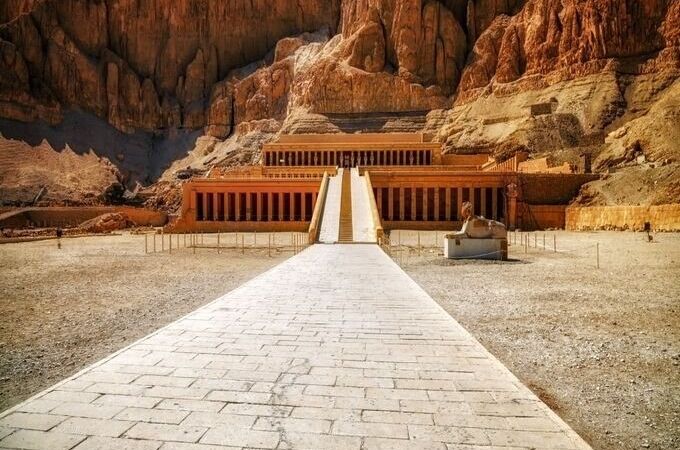
The East Bank, West Bank, temples, tombs and surrounding sites can justify substantial attention in their own right. Depending on the cruise program, some Luxor sightseeing may be incorporated into the cruise arrangements, but travelers should still understand exactly what is included and whether their personal priorities fit comfortably within that structure.
This is especially important for people with a strong interest in ancient Egypt.
If Luxor is one of the principal reasons you are traveling, do not let the embarkation schedule determine its entire allocation accidentally.
Sometimes the stronger arrangement is to give Luxor additional time before embarkation or after disembarkation, depending on sailing direction.
The cruise should connect with Luxor.
It should not reduce Luxor to a boarding point.
Aswan Deserves the Same Protection at the Other End
Aswan can suffer from the opposite problem.
Travelers complete their cruise, disembark and immediately focus on the next flight or Abu Simbel excursion. The city becomes an operational endpoint rather than part of the journey.
Yet Aswan has a markedly different atmosphere from Luxor.
The river feels different, the landscape changes, and the pace can provide a welcome shift after several archaeology-intensive days.
Whether you want that slower transition before the cruise or after it is personal, but it should be considered deliberately.
If the cruise ends in Aswan and you leave almost immediately, ask whether that is genuinely what you want.
If it begins there, consider whether arriving the same day as embarkation leaves enough room for the Aswan experiences that matter to you.
The direction decision becomes stronger when both endpoints are treated as destinations rather than logistical necessities.
Do Not Compare Cruise Directions by the Number of Nights Alone
Travelers frequently encounter Nile cruises of different lengths depending on direction and sailing schedule.
This can lead to a misleading comparison:
“This one has more nights, so I must be getting more.”
Perhaps.
But a cruise night is not an independent unit of sightseeing value.
What matters is the combination of embarkation timing, sailing pattern, included visits and disembarkation schedule. An additional night may produce a more relaxed experience, or it may simply reflect the operating structure of that particular sailing.
The better comparison is not how many nights appear in the package title.
Ask what the additional time actually changes.
Does it create a less rushed archaeological program? More time aboard? Different arrival timing? A more convenient connection at the end?
Only then does the night count become meaningful.
The Two Directions Create Different Edges Around the Cruise
Rather than comparing the river itself, compare what happens immediately before embarkation and immediately after disembarkation.
| Planning Situation | Luxor → Aswan May Fit Naturally | Aswan → Luxor May Fit Naturally |
|---|---|---|
| Cairo before cruise | Creates a southward progression | May require positioning farther south first |
| Abu Simbel priority | Works well when added after Aswan | Can work naturally before embarkation |
| Luxor needs extra time | Add time before boarding | Add time after disembarkation |
| Aswan needs extra time | Add time after cruise | Add time before cruise |
| Continuing north | Requires onward movement from Aswan | Finishing in Luxor may simplify progression |
| Continuing south/elsewhere | Aswan finish may be useful | Requires considering post-Luxor connection |
This is intentionally not a “winner” table.
The purpose is to expose the structural difference.
A cruise direction is good when its edges connect cleanly to the rest of your trip.
Your International Flights May Matter More Than Your Sailing Preference
Sometimes the wider airfare solves the question.
If you are entering Egypt through Cairo and leaving through another airport, or if Egypt forms part of a multi-country journey, your international flight structure may strongly favor one sequence.
This is why it is risky to book a Nile cruise in isolation months before the rest of the trip has been mapped.
A beautiful sailing date can become inconvenient if reaching the embarkation city requires an awkward connection or if disembarkation leaves you on the wrong side of the country for your onward flight.
Before confirming Nile Cruise Trips, place the cruise inside the complete transport chain:
international arrival → Cairo or first destination → domestic connection → cruise embarkation → cruise disembarkation → next destination → international departure.
You do not need every sightseeing detail at this stage.
You do need to know whether the geography makes sense.
A Domestic Flight Is Shorter Than the Travel Block It Creates
Cairo–Luxor and Cairo–Aswan connections can make the Nile Valley much easier to incorporate into a wider Egypt trip.
Still, a domestic flight should never be counted solely by its time in the air.
Hotel departure, airport transfer, check-in, waiting, baggage collection and the onward transfer all occupy parts of the day. This becomes particularly relevant when a flight is being used to connect directly with cruise embarkation.
Theoretically, a same-day connection may work.
The more important question is whether you want the cruise to depend on it.
If a particular sailing has a fixed embarkation schedule, building unnecessary fragility immediately before it may not be worthwhile. An additional night in Luxor or Aswan can sometimes improve the entire journey because it turns a critical connection into an ordinary arrival.
That extra night is not necessarily wasted time.
It may be what makes the rest of the trip comfortable.
The Cruise Should Reduce Hotel Changes, Not Create More of Them
One of the pleasures of a Nile cruise is that your accommodation moves while you remain unpacked.
That advantage can disappear if the surrounding itinerary becomes overly complicated.
Consider a journey that involves a hotel night, cruise embarkation, disembarkation, another one-night hotel, an excursion, another flight and another hotel in quick succession.
Nothing is individually unreasonable.
Collectively, the sequence can feel fragmented.
When assessing direction, look for the option that reduces unnecessary accommodation changes around the cruise.
If an extra night is needed, it is often better placed where it gives you genuine destination time rather than functioning purely as a waiting room between transportation sectors.
This is one of the operational details that separates a journey designed around the traveler from one assembled by joining available services together.
Cruise Sightseeing and Private Sightseeing Need to Be Distinguished
Another planning detail is often missed until late in the booking process.
The sightseeing associated with a cruise may operate differently from the rest of your Egypt journey.
You may have private services in Cairo and then join cruise-based sightseeing arrangements. Alternatively, the entire journey may have private guiding, depending on the package.
Neither arrangement is automatically problematic.
What matters is knowing what you are purchasing.
For travelers considering Private Egypt Tours, the word “private” should be checked across each component rather than assumed to describe every service simply because it appears in the overall tour title.
The same principle applies to guiding language and entrance arrangements.
Cruise direction may determine when particular visits happen, but the operating format determines how those visits feel.
More Time on the Nile Is Not Automatically Better for Everyone
Some travelers adore the cruising rhythm almost immediately.
They enjoy returning to the same cabin, watching the landscape change from the deck and allowing the journey itself to become part of the experience.
Others are primarily interested in archaeological sites and view the vessel as an elegant way of connecting them.
These travelers may evaluate cruise length differently.
There is no reason to maximize the number of nights simply because the Nile is famous. Equally, choosing the shortest possible cruise because “the sites are what matter” can underestimate how much the sailing experience contributes to the journey.
Ask yourself what you want the Nile to be:
transportation with atmosphere, or a major experience in its own right?
Your answer affects how much cruise time feels valuable and therefore which sailing structure suits you.
The Sequence of Archaeological Experiences Can Change the Feel of the Journey
Cruise direction also affects the order in which Upper Egypt unfolds.
This is not about claiming that one sequence is historically correct and the other is not. Egyptian history does not conveniently organize itself around modern cruise schedules.
It is about travel psychology.
Some travelers enjoy beginning with the monumental density of Luxor and gradually moving into a different southern landscape. Others like arriving through Aswan's gentler atmosphere before the archaeological scale intensifies toward Luxor.
Neither experience is objectively richer.
They simply create different narrative rhythms.
This consideration should remain secondary to logistics, but when both directions work equally well operationally, the emotional progression can become a useful tie-breaker.
Families May Care More About Transition Days Than Cruise Direction
For families, the question is often less “northbound or southbound?” and more “what does embarkation day require from us?”
A direction that looks slightly less elegant geographically may be much easier if it avoids an extremely early flight, rushed hotel departure or tight same-day connection.
Children do not experience itinerary efficiency in the same way adults reading a spreadsheet do.
Neither do many adults, once the trip begins.
Families should examine wake-up times, luggage handling and transfer frequency around both ends of the cruise. If one direction produces a noticeably calmer entry or exit, that may be more valuable than a minor advantage elsewhere in the itinerary.
The best direction is the one the people traveling can actually enjoy.

A Longer Cruise Does Not Fix an Overloaded Egypt Trip
It is possible to choose an excellent vessel, sensible direction and attractive sailing schedule, then ruin the wider journey by placing too much around it.
Cairo needs time. Luxor may need additional time. Aswan may deserve more than a transfer window. Abu Simbel can consume meaningful travel hours. The Red Sea or another extension introduces yet another geographical chapter.
Eventually the issue stops being cruise selection.
It becomes total trip scope.
This is why Egypt Nile Tours should be evaluated as part of a complete journey rather than treated as a self-contained product with destinations added to both ends until the available vacation is full.
A well-positioned cruise can make Egypt flow beautifully.
It cannot compensate for a calendar that was already too ambitious.
When I Would Choose Luxor to Aswan
I would lean toward a Luxor departure when the wider trip naturally reaches Luxor from Cairo, when the traveler wants additional Luxor time before embarkation, or when finishing in Aswan creates a useful opportunity for Abu Simbel or another southern continuation.
There is also an intuitive geographical progression to moving south along the Nile after beginning the trip farther north.
But none of these reasons should override an inconvenient flight structure or a sailing date that does not fit the traveler.
The direction works because the surrounding pieces support it, not because southbound sailing possesses an inherent advantage.
When I Would Choose Aswan to Luxor
I would lean toward Aswan when the southern portion of the trip needs to be established first, particularly when Abu Simbel or pre-cruise Aswan time is important.
Finishing in Luxor can also be useful when the next stage of the journey naturally continues north or when the traveler wants additional archaeological time after leaving the ship.
Again, this is not a second-best alternative.
For the right wider itinerary, it may be the cleaner structure.
The important thing is resisting the assumption that a classic route must always be traveled in the same direction.
So, Which Nile Cruise Direction Is Better?
For most travelers, there is no universally better direction between Luxor and Aswan.
The stronger choice is the one that creates the fewest awkward transitions around the cruise while protecting the experiences that matter most at both ends.
If Cairo naturally leads into Luxor and you want to finish farther south, Luxor to Aswan can be extremely logical.
If Abu Simbel, Aswan or your flight arrangements place you in southern Egypt first, Aswan to Luxor may create a cleaner journey.
When both directions work equally well, consider the pace you prefer and how you would like Upper Egypt to unfold.
What should not determine the decision is a generic claim that one direction is always superior.
A Nile cruise does not exist in isolation. It sits between flights, hotels, archaeological visits and the rest of your Egypt journey.
Choose the direction that allows all of those pieces to behave like one trip.
That is usually far more important than which way the ship is pointing when you first unpack your suitcase.
Frequently Asked Questions About Luxor and Aswan Nile Cruises
1. Should I book the Nile cruise before arranging my domestic flights?
It is usually sensible to establish the cruise dates and embarkation structure before finalizing connecting domestic flights. Cruise schedules are relatively fixed, so flights should ideally support that structure rather than forcing the cruise into connections that leave little margin for delays.
2. Is arriving in Luxor on the same day my cruise starts a bad idea?
Not automatically, but the timing deserves careful examination. A same-day arrival can work when schedules provide comfortable margin; however, arriving earlier can reduce dependency on flight punctuality and may also give you more freedom to experience Luxor outside the cruise program.
3. If I want Abu Simbel, is an Aswan-start cruise automatically better?
No. Abu Simbel can be incorporated before an Aswan departure or after a Luxor-to-Aswan cruise. The better arrangement depends on sailing dates, available flights and how much time you want in Aswan rather than on Abu Simbel alone.
4. Do Luxor-to-Aswan and Aswan-to-Luxor cruises visit exactly the same sites?
Cruises commonly cover many of the same major Nile Valley sites, although schedules, sequence and specific inclusions can vary by vessel and program. Compare the actual sightseeing arrangements rather than assuming that reversing direction simply produces an identical itinerary backward.
5. Should I add a hotel night in Luxor if the cruise already includes Luxor sightseeing?
It can be worthwhile when Luxor is a major personal priority or when the extra night creates a safer connection before embarkation. The cruise sightseeing may cover your needs completely, so the decision should depend on interests rather than a fixed rule.
6. Is it better to visit Abu Simbel before or after the Nile cruise?
Both can work. Visiting before a northbound cruise can create a natural south-to-north progression, while visiting after a southbound cruise avoids interrupting the journey beforehand. Flight schedules, energy levels and available time should determine which structure is more comfortable.
7. Can I fly directly home after leaving a Nile cruise?
Potentially, depending on the disembarkation city and your international flight arrangements, but avoid assuming a tight same-day connection is automatically sensible. Fixed cruise timing, airport transfers and flight check-in requirements should be evaluated together before confirming the plan.
8. Does cruise direction matter if Egypt is only one country in a longer Middle East trip?
It can matter even more because your entry and exit points may already be constrained by regional flights. The best direction is usually the one that connects Egypt efficiently with the countries before and after it without creating unnecessary backtracking.
9. Is a Nile cruise suitable if I dislike changing hotels frequently?
It can be particularly appealing because your cabin remains your accommodation while the vessel moves between locations. The benefit is greatest when the pre- and post-cruise itinerary is also kept coherent rather than surrounding the sailing with repeated one-night hotel stays.
10. Should archaeological enthusiasts finish the cruise in Luxor?
Some may enjoy finishing in Luxor because it allows additional independent or privately guided archaeological time after disembarkation. Others prefer exploring Luxor thoroughly before sailing south. The amount of Luxor time matters more than whether it comes before or after the cruise.
11. Can I choose cruise direction based simply on whichever sailing date is cheaper?
You can when both directions integrate equally well with the rest of your trip. If the cheaper departure creates additional hotel nights, inconvenient flights or backtracking, however, the apparent saving may disappear once the complete journey rather than the cruise alone is priced.
12. What should I decide first: cruise ship, direction or overall Egypt route?
Start with the experiences and fixed dates that matter most, then examine which cruise direction connects them naturally. Once that structure is clear, compare suitable vessels operating on those dates. Choosing the ship first can unnecessarily force the rest of the journey around it.

A travel professional specializing in tailor-made travel planning, guest experience management, and multi-destination tourism operations.
With over 23 years of experience in the travel industry, he designs and manages private and cultural tours for international travelers across Türkiye, Greece, Egypt, Jordan, Morocco, and other destinations.
He has strong expertise in both online and face-to-face guest communication, sales processes, and end-to-end travel operations.
Working closely with hotels, travel agencies, and local partners, he ensures smooth coordination and high-quality travel experiences at every stage of the journey.
His focus is on delivering personalized, reliable, and seamless travel experiences for international guests worldwide.