Luxor Rewards Travelers Who Stop Counting Temples
Updated: August 2026
Luxor creates a particular kind of itinerary problem because almost everything sounds close enough to add.
Karnak? Of course. Luxor Temple? Obviously. Valley of the Kings? That is probably why you came. Hatshepsut's temple belongs on the list, and the Colossi of Memnon barely seem to require any extra time. Then you discover additional tombs, temples and archaeological areas, while a sunrise balloon flight appears to fit conveniently before breakfast.
Soon you have designed a day that looks magnificent on paper and feels like employment by mid-afternoon.
The difficulty with Luxor is not deciding whether there is enough to see. It is recognizing when you have seen enough for one day.
This becomes easier once you stop treating Luxor as a collection of famous monuments and understand how the destination actually works. The Nile divides the major sightseeing areas into two distinct geographical sides, archaeological visits can involve considerable walking and exposure, some tombs require separate access arrangements, Nile cruise schedules can occupy time that hotel-night counts conceal, and early departures can change how much energy remains later in the day.
For many first-time visitors, two genuinely usable days provide a sensible foundation. One full day can work when time is limited, while a third gives Luxor room to become a destination rather than a sightseeing assignment.
The important word is usable.
Luxor Looks Smaller on the Map Than It Feels on the Ground
Open a map and Luxor initially appears wonderfully manageable.
The Nile runs through the middle, major sites sit on either side, and the distances do not resemble the enormous stretches involved in reaching places such as Abu Simbel or Siwa.
That geographical compactness is real, but it can create false confidence.
A sightseeing day is not measured only in road kilometers. Archaeological areas require walking, entrances take time, guides need enough space to explain what you are looking at, and heat can make the same distance feel substantially different as the day progresses.
The West Bank adds another layer because the sites are distributed through a wider archaeological landscape rather than concentrated around a single entrance.
This is why an itinerary containing six Luxor sites can look perfectly reasonable on a map.
Google Maps does not get tired.
Travelers occasionally do.
The Nile Is Not Scenery Here; It Organizes Your Schedule
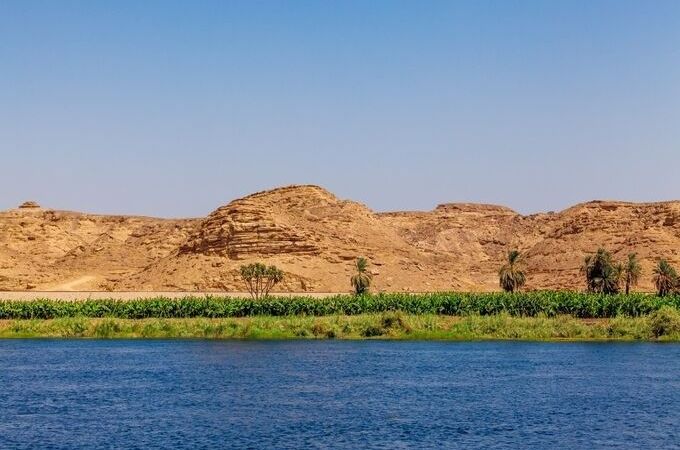
For practical planning, Luxor becomes much easier to understand when divided into East Bank and West Bank.
The East Bank contains major sites including Karnak and Luxor Temple as well as much of the modern city's conventional hotel, restaurant and transportation infrastructure.
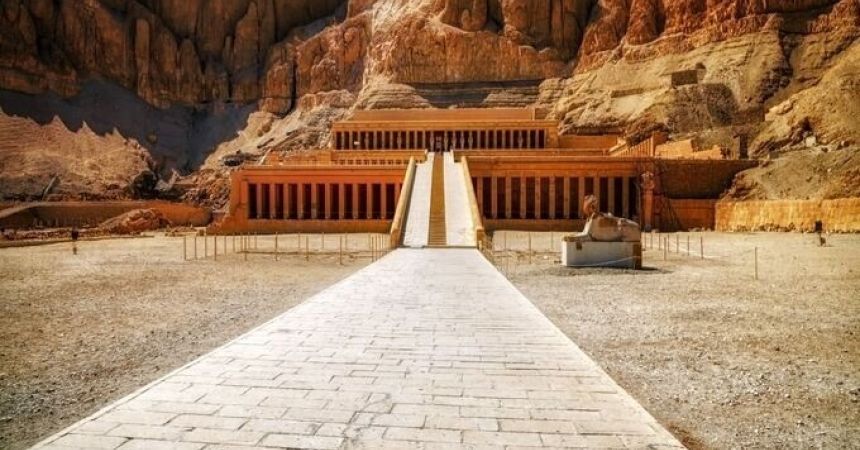
Across the Nile, the West Bank contains the great Theban funerary landscape, including the Valley of the Kings, Hatshepsut's mortuary temple and numerous other archaeological sites.
This does not mean the two sides must never be combined within one day.
They can be.
It means that crossing between them and moving through each archaeological area should be treated as part of the day's logistics rather than invisible space between attractions.
For a first visit with enough time, separating the principal East and West Bank sightseeing generally produces a more comfortable rhythm and makes it less tempting to race through one side because the other is waiting.
The East Bank Is Not Simply the Easier Half
Karnak and Luxor Temple are frequently grouped together because both lie on the eastern side of the Nile.
Logistically, that makes sense.
Experientially, it does not mean they should be rushed.
Karnak in particular is a vast complex whose importance developed across a very long historical period. You do not need to understand every ruler and construction phase to appreciate it, but allowing enough time for context makes an enormous difference.
Luxor Temple offers another advantage: depending on opening arrangements, season and the rest of your schedule, it can sometimes fit naturally later in the day rather than competing for the same early hours as every other archaeological visit.
That flexibility can be valuable.
One of the most common planning mistakes is assuming that every famous Luxor site should be visited as early as possible.
There are only so many early mornings available.
Use them where they matter most.
The West Bank Is Where Your Schedule Can Get Greedy
The West Bank begins innocently.
Valley of the Kings.
Hatshepsut's temple.
Colossi of Memnon.
Reasonable.
Then you start reading.
Another tomb looks interesting. A different archaeological area receives excellent reviews. Somebody recommends a site you had never heard of yesterday but now feel strangely guilty about missing.
This is how the West Bank expands.
The problem is not merely the number of stops. Tomb visits can involve walking, slopes or stairs, and the archaeological landscape offers less relief from environmental conditions than moving between indoor urban attractions.
The result is diminishing attention.
Your fifth beautifully decorated tomb may be historically extraordinary while receiving considerably less mental attention than your second.
When we plan Luxor Tours, this is why adding every technically possible site is not automatically good value. Archaeology needs enough time to remain interesting rather than becoming visual background.
You came to see the tombs.
You should still care about them when you arrive at the last one.
One Day in Luxor Works Only If You Admit It Is One Day
A genuine full day can provide an excellent introduction to Luxor.
It cannot provide a relaxed comprehensive exploration of both banks.
That distinction matters.
With only one usable day, selectivity becomes more important than optimization. Major East and West Bank highlights can be combined with efficient transportation and sensible pacing, but something has to receive less time.
This is not necessarily a problem.
A short, well-prioritized Luxor visit can be more satisfying than an ambitious schedule where every stop is reduced to enough time for photographs before returning to the vehicle.
What causes trouble is pretending that one day somehow contains the capacity of two because the attractions are geographically close.
If you have one day, plan an excellent one-day visit.
Do not plan two days and remove the lunch break.
Two Full Days Are Where Luxor Starts to Breathe
For many first-time visitors, two usable sightseeing days create a much better balance.
One day can concentrate primarily on the West Bank, while another gives the East Bank proper attention. The exact order depends on arrival times, season, cruise arrangements, optional activities and personal interests, but the underlying benefit remains the same: neither side needs to be treated as the part you squeeze in after finishing the other.
Two days also provide some protection against sightseeing fatigue.
Ancient Egyptian monuments are intellectually dense places. Guides explain rulers, dynasties, gods, architectural changes, burial practices and historical relationships, often while you are simultaneously trying to absorb extraordinary visual detail.
At some point, even an enthusiastic traveler reaches archaeological saturation.
A second day does not merely create more hours.
It resets your attention.
That may be its greatest value.
A Third Day Should Change the Pace, Not Just Increase the Score
Three full days in Luxor can be excellent for travelers with a serious interest in ancient Egypt.
The mistake is assuming that the third day exists solely to add more sites.
It can instead provide room for selected lesser-visited archaeological areas, a slower return to something that genuinely interests you, a balloon flight without forcing an overloaded morning afterward, time around the Nile, or simply a less compressed sightseeing rhythm.
This is an important distinction between travel duration and attraction capacity.
If two days contain eight significant visits, a third day does not automatically need four more.
Sometimes its best contribution is turning those eight into a better experience.
What Luxor Feels Like at Different Speeds
| Usable Time | What It Can Do Well | What Commonly Goes Wrong |
|---|---|---|
| 1 full day | Selected East and West Bank highlights | Trying to make the visit comprehensive |
| 2 full days | Logical separation of major sightseeing | Adding too many optional tombs and secondary sites |
| 3 full days | Deeper exploration with a more forgiving pace | Filling every available hour because the time exists |
| Cruise-based visit | Core sightseeing integrated with sailing | Assuming cruise nights equal independent Luxor days |
| Arrival/departure stay | Selected sightseeing in partial windows | Counting transfer days as complete sightseeing days |
The right duration therefore depends less on how many nights appear beside “Luxor” and more on how many uninterrupted periods you actually control.
Two Nights in Luxor May Contain Only One Luxor Day
Hotel nights are terrible units for measuring sightseeing.
Consider a simple example.
You arrive from Cairo during the afternoon and reach the hotel after the transfer. The following day is fully available. On the morning after that, you leave early for another destination.
Your booking confirmation says:
Luxor — 2 nights
Your sightseeing calendar says:
Luxor — 1 full day plus part of an arrival afternoon.
Those are not the same thing.
The difference becomes even more important when domestic flights, cruise embarkation or road transfers are involved.
Whenever we evaluate a Luxor itinerary, the useful question is therefore:
How many full mornings and afternoons are actually available after transportation is accounted for?
This one calculation prevents a surprising number of itinerary problems.
The Valley of the Kings Is Not a Tomb Buffet
The Valley of the Kings creates a planning issue that travelers often discover only after they begin researching individual tombs.
Access arrangements can vary, and a general admission ticket should not automatically be assumed to cover every tomb a traveler has read about. Certain tombs may require separate tickets or arrangements, while openings can change for conservation or operational reasons.
For that reason, check current access rather than building the entire day around an old blog post, screenshot or itinerary.
There is also a more human consideration.
More tombs do not necessarily create a better morning.
Each visit adds time, walking and another layer of visual information. If one particular tomb matters greatly to you, prioritize it according to current access conditions rather than attempting to maximize the total number entered.
You are not collecting tombs.
There is no prize at seven.
A Balloon Flight Uses More of the Morning Than the Flight Duration Suggests
Hot-air ballooning over Luxor can fit beautifully into an itinerary because flights operate around sunrise.
It can also create the illusion that it consumes only the time spent airborne.
In reality, the experience involves collection, transportation, operational preparation, the flight itself and return arrangements. Balloon operations are also weather-dependent, so the day's structure needs some flexibility.
This matters particularly when the balloon is followed immediately by West Bank sightseeing.
The combination can work well, but travelers should understand that their day began considerably earlier than the first archaeological entrance.
Our dedicated Hot Air Ballooning in Luxor guide handles the experience itself, including expectations and practical considerations. Within a Luxor itinerary, the important point is simply that a sunrise activity still occupies energy and time.
The clock may say breakfast.
Your body may believe it is lunchtime.
A Nile Cruise Changes the Arithmetic
Cruise itineraries are another reason that “How many nights in Luxor?” cannot be answered by counting accommodation alone.
If you board a Nile cruise in Luxor, some sightseeing may be incorporated into the cruise program before sailing. If Luxor is the end of a cruise, visits may be scheduled around arrival and disembarkation.
Therefore, a traveler taking Egypt Nile Cruise Tours should first establish exactly what Luxor sightseeing is already included before adding independent hotel nights.
This avoids two opposite problems.
The first is duplication: booking additional visits to places already properly covered through the cruise.
The second is assuming the cruise covers everything you personally want when its schedule only includes selected major sites.
An extra Luxor night can be extremely useful before or after a cruise, but it should solve a specific scheduling problem rather than being added automatically.
Luxor Before Aswan or Aswan Before Luxor?
For travelers combining both destinations, either direction can work.
The practical choice often depends on the wider route, cruise direction, domestic flight availability and what happens before and after the Nile Valley portion.
This is another area where abstract destination advice can become less useful than operational planning.
If an itinerary begins in Cairo and continues south, Luxor may naturally come first. A cruise schedule may dictate the opposite sequence. Flight availability can make one arrangement substantially cleaner on particular travel dates.
There is no prize for traveling the Nile in a particular direction.
What matters is avoiding unnecessary backtracking and awkward connections.
Luxor and Aswan should therefore be planned as part of the same route architecture rather than as two independent hotel bookings that happen to share a river.

Where You Stay Changes the Character of the Visit
Choosing between the East and West Banks is not simply a hotel-quality decision.
The East Bank generally provides easier access to the modern city environment and can be convenient for travelers wanting conventional hotel infrastructure, restaurants and straightforward connections.
The West Bank offers a different atmosphere and can appeal to travelers who prefer a quieter setting closer to the archaeological landscape.
Neither is universally better.
What matters is understanding the trade.
If much of your sightseeing, dining and transportation repeatedly requires reaching the opposite bank, crossing the Nile becomes part of your daily routine. That can be pleasant rather than inconvenient, particularly when expected, but it should be considered when comparing accommodation.
A hotel can look only a short distance from an attraction on a map while the river has a different opinion.
Midday Is a Planning Issue, Not a Test of Determination
Luxor sightseeing often involves significant outdoor exposure, and conditions can become demanding depending on the season.
The solution is not to prove how much archaeology you can tolerate at the least comfortable part of the day.
Early starts can make sense for exposed West Bank sightseeing, while later or more flexible periods may work better for activities where timing allows. Breaks, meals and transportation should be part of the itinerary rather than treated as wasted time between monuments.
This is particularly important for private travel.
The advantage of a private program should not simply be the ability to visit more places faster. It should include the ability to adjust pace intelligently within the practical constraints of opening hours and current operating conditions.
Efficiency and intensity are not synonyms.
A well-designed day can be efficient precisely because it knows when to stop.
Luxor Is One Place Where “No Shopping Stops” Can Matter
Some travelers enjoy visiting workshops and browsing local products during guided touring. Others have limited sightseeing time and would rather devote it entirely to archaeological and cultural visits.
That preference is worth communicating in advance.
If your priority is maximizing meaningful site time, particularly during a one- or two-day Luxor stay, requesting an itinerary without optional shopping stops can help keep the day's purpose clear.
This does not mean shopping is inherently a poor use of travel time.
It means that your time should reflect your interests.
A traveler who wants local crafts should have space for them without feeling hurried. Someone who has waited twenty years to see the Valley of the Kings should not discover that the schedule treats an unwanted retail stop as equally important.
Customization should affect the day itself, not merely the vehicle used to travel through it.
The Best Luxor Day Often Ends With Something Left Unseen
This is perhaps the hardest recommendation to accept in a destination containing so much.
Leave something.
Not because it lacks importance, but because Luxor contains enough archaeology to exceed the attention span of almost anyone attempting to absorb it properly.
A well-planned first visit should give you the major historical landscape, enough time to understand what you are seeing and enough energy to remain interested when the final site of the day appears.
That may mean an additional tomb waits for another journey.
Perhaps a secondary temple does.
Maybe the third day remains deliberately slower rather than becoming another dawn-to-sunset operation.
The objective of Private Egypt Tours should not be to return you to the hotel having defeated Luxor.
Luxor will win that contest anyway.
The better objective is to leave with distinct memories rather than one continuous impression of sandstone, hieroglyphs and somebody asking whether there is time for one more tomb.
There usually is time.
The more important question is whether there should be.
Before You Decide How Long Luxor Needs
1. Is Luxor worth including on a first trip to Egypt?
For travelers whose interest in Egypt is strongly connected with ancient history, Luxor is exceptionally difficult to replace. Its concentration of temples, royal burial landscapes and New Kingdom history complements rather than duplicates Cairo and Giza, making it a logical priority on many first cultural journeys.
2. Can I see Luxor properly in one full day?
One full day can provide a rewarding introduction if you accept the need for selection. Combining major East and West Bank highlights is possible, but trying to cover both sides comprehensively usually sacrifices either depth, comfort or both. A second usable day changes the experience considerably.
3. Are two days enough for a first visit to Luxor?
For many first-time visitors, two genuinely full days provide a sensible balance. They allow the principal West Bank sightseeing and major East Bank sites to be organized without forcing everything into one archaeological marathon, while still leaving room for normal meals, transfers and explanations.
4. Would three days in Luxor be too much?
Not for someone particularly interested in ancient Egypt. A third day can support additional archaeological areas, a slower pace or optional experiences without overloading the first two days. Its value is often greater when used to create breathing room rather than simply increasing the number of sites.
5. Is it better to visit the East Bank and West Bank on different days?
When the itinerary allows it, separating the major sightseeing can produce a more comfortable visit because each bank contains enough to justify focused time. Travelers with only one day can combine selected highlights, but the schedule needs greater discipline to prevent the day becoming excessively dense.
6. Should I stay on Luxor's East Bank or West Bank?
Choose according to how you want the destination to function. The East Bank generally suits travelers prioritizing conventional city access and infrastructure, while the West Bank can provide a quieter atmosphere closer to major archaeological areas. Neither choice is automatically superior for every itinerary.
7. Can I visit Karnak and the Valley of the Kings on the same day?
Yes, and travelers with limited time often do. The question is not whether the combination is geographically possible but what else you intend to add. Once several additional tombs and temples enter the schedule, a manageable day can become unnecessarily rushed.
8. Does my Nile cruise already include enough sightseeing in Luxor?
It depends on the specific cruise program. Review the included sightseeing, embarkation or disembarkation timing and actual time available in Luxor before booking additional nights. A cruise can cover important sites while still leaving room for experiences that matter personally to you.
9. Should I schedule a hot-air balloon flight and West Bank tour on the same morning?
They can work together because balloon flights generally operate around sunrise and the West Bank is a natural sightseeing area afterward. However, collection and operational time mean the morning begins very early, so the rest of the day's intensity should reflect that early start.
10. Does one Valley of the Kings ticket include every tomb?
Travelers should not assume so. Tomb access and ticket arrangements can vary, with certain tombs potentially requiring separate admission and individual sites sometimes closing or changing access. Check current arrangements when planning rather than relying on an old list of included tombs.
11. Do I need an extra Luxor night before or after a Nile cruise?
Not always, although an additional night can be valuable when cruise timing leaves insufficient independent sightseeing time or when you want a less compressed arrival or departure. Base the decision on the actual cruise schedule rather than automatically adding or removing a hotel night.
12. What is the biggest mistake when planning Luxor?
Treating every available hour as space for another archaeological site. Luxor rewards selection because walking, environmental exposure and the amount of historical information accumulate throughout the day. A slightly shorter sightseeing list often produces a much stronger memory of what you actually visited.

A travel professional specializing in tailor-made travel planning, guest experience management, and multi-destination tourism operations.
With over 23 years of experience in the travel industry, he designs and manages private and cultural tours for international travelers across Türkiye, Greece, Egypt, Jordan, Morocco, and other destinations.
He has strong expertise in both online and face-to-face guest communication, sales processes, and end-to-end travel operations.
Working closely with hotels, travel agencies, and local partners, he ensures smooth coordination and high-quality travel experiences at every stage of the journey.
His focus is on delivering personalized, reliable, and seamless travel experiences for international guests worldwide.