Should You Actually Go Inside the Great Pyramid?
Updated: August 2026
Standing beside the Great Pyramid and going inside it are two surprisingly different experiences.
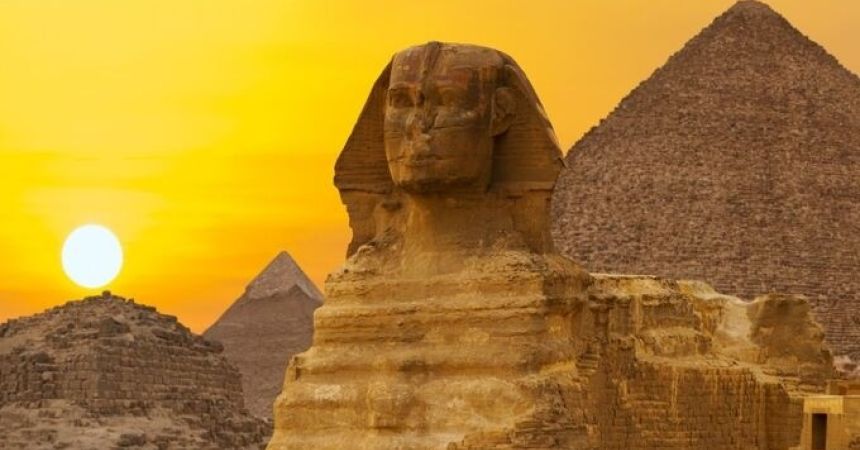
Outside, everything is about scale. You step backwards to fit the monument into a photograph, look upward at blocks that appeared much smaller from the vehicle and try to reconcile what you are seeing with the fact that people built this more than four thousand years ago.
Then you enter, and scale changes direction.
The sky disappears. Stone surrounds you. Passages become restricted, the route can require physical effort, and the experience has considerably less visual drama than many first-time visitors expect.
There are no treasure-filled rooms waiting at the end. Do not expect the brilliantly painted walls associated with some royal tombs in Luxor, nor corridors covered everywhere with hieroglyphs. The Great Pyramid's interior can appear remarkably plain to someone expecting an underground version of a decorated Egyptian tomb.
Yet that apparent simplicity is exactly why the decision to enter is interesting.
Some travelers emerge exhilarated because they have physically moved through one of the world's most extraordinary ancient structures. Others emerge hot, uncomfortable and slightly puzzled about why they paid extra to walk through a narrow stone passage into a largely undecorated chamber.
Both reactions are reasonable.
The difference often comes down to knowing what you are going in for.
From Outside, the Pyramid Gives You Almost No Clue What the Interior Will Feel Like
The Great Pyramid of Giza was built for the pharaoh Khufu during Egypt's Old Kingdom, but most travelers encounter it first as a shape.
Its geometry dominates the experience.
That changes almost immediately once you enter.
The pyramid no longer feels like an object you are observing from a distance. You become physically aware of being surrounded by an enormous mass of stone, while your attention shifts from the monument's exterior dimensions to the passage directly in front of you.
This is an important expectation to establish before buying interior access.
Going inside is not primarily about seeing more artifacts.
It is about experiencing the architecture from somewhere your exterior visit cannot reproduce.
For travelers fascinated by ancient engineering, monumental construction and the physical reality of the pyramid, that can be enormously satisfying. Someone whose main interest is Egyptian painting, hieroglyphic decoration or funerary objects may find the experience less rewarding than expected.
The same pyramid is offering two very different things.
Then the Ceiling Gets Lower
Photographs do not always communicate the physical nature of pyramid interiors particularly well.
A passage photographed without people may look manageable. Once you are inside it, the relationship between your body and the architecture becomes much more obvious.
Parts of the route involve restricted passages and inclines. Depending on your height and the section being traversed, movement can feel awkward, and you may need to adjust your posture rather than simply walking upright through a conventional corridor.
There can also be other visitors moving in the opposite direction.
This is the point where enthusiasm for ancient architecture meets a much more personal question:
How comfortable am I in enclosed spaces when I cannot simply turn left and walk outside?
For some people, this is part of the adventure.
For others, it is the moment they realize that admiring the pyramid from the Giza Plateau would have been perfectly sufficient.
Neither response says anything about how interested you are in ancient Egypt.
You Are Entering a Monument, Not a Decorated Royal Tomb
One of the most persistent expectation problems comes from combining very different ancient Egyptian interiors in our imagination.
Travelers see photographs of beautifully decorated tombs, hieroglyph-covered temple walls and museum objects, then understandably imagine that entering a pyramid will reveal another visually rich archaeological environment.
The Great Pyramid does not offer that kind of interior.
Its experience is architectural.
The passages, changes in spatial scale, construction, stone surfaces, Grand Gallery and King's Chamber matter because of where they are and what it means to physically reach them inside such an enormous structure.
This distinction is worth understanding before your visit because disappointment often begins with the wrong comparison.
If you enter expecting the visual richness of certain tombs in the Valley of the Kings, you may wonder where everything is.
If you enter thinking, “I am moving through the internal architecture of Khufu's pyramid,” the same relatively austere space becomes much easier to appreciate.
Expectation changes the monument before you even step inside.
The Grand Gallery Is Where the Interior Changes Character
After the more restrictive movement associated with parts of the route, the Grand Gallery can create a striking change in spatial perception.
Suddenly the architecture behaves differently.
The height and form of the space contrast with what came before, which is one reason the Grand Gallery can be more memorable than travelers expect from photographs.
This is also where the interior experience begins making more sense for people interested in construction.
You are not simply looking at another ancient room. You are trying to understand how these internal spaces exist within a structure whose exterior mass is already difficult to comprehend.
That relationship between enormous exterior and comparatively limited accessible interior is part of the fascination.
The Great Pyramid does not need an endless sequence of decorated chambers to be impressive from within.
Its stone is doing most of the talking.
The King's Chamber Can Feel Surprisingly Plain
Reaching a place called the King's Chamber creates expectations.
The name alone suggests a dramatic destination at the end of the journey: perhaps inscriptions, elaborate decoration or something that visually announces that you have reached the most important room.
The reality is considerably more restrained.
This is where knowing what not to expect becomes valuable.
The King's Chamber is significant because of its position, construction and relationship with the wider internal architecture, not because it resembles a treasure chamber from an adventure film.
The surviving granite sarcophagus is important, but visitors expecting a room filled with funerary objects will not find one.
This produces an interesting emotional contrast.
You have made an unusual physical journey through one of the most famous buildings ever constructed, and the destination can appear almost stark.
Some people find that simplicity powerful.
Others find the journey more memorable than the chamber itself.
What You Imagine and What You Are Actually Going For
The expectation gap is large enough to influence whether interior access feels worthwhile.
| Before Entering, You May Imagine | What Matters More Once Inside |
|---|---|
| Walls covered with hieroglyphs | Stone construction and internal architecture |
| Painted burial chambers | Relatively plain surfaces |
| Ancient treasures | Mostly empty archaeological spaces |
| Large rooms throughout | Restricted passages leading to larger spaces |
| A normal indoor walk | Inclines and physically awkward sections |
| Another photography opportunity | A predominantly spatial and physical experience |
| The only way to “fully” visit Giza | An optional experience that will not suit everyone |
None of the realities in the right-hand column makes the experience inferior.
They simply describe a different experience from the one many travelers have imagined.
Claustrophobia Is Not a Minor Footnote
Articles about pyramid interiors sometimes mention claustrophobia somewhere near the end, alongside comfortable shoes and carrying water.
It deserves considerably more attention than that.
If you are genuinely uncomfortable in confined spaces, entering the Great Pyramid should be treated as an individual decision rather than an item you are expected to complete because everyone else in the group is doing it.
The psychological effect is difficult to predict from photographs.
Knowing intellectually that a passage leads somewhere does not necessarily make your body comfortable when stone is close around you, other visitors are nearby and the easiest exit is behind rather than immediately beside you.
Someone with mild discomfort may find the experience exciting.
Someone with significant claustrophobia may find it unpleasant almost immediately.
This is one of the situations where FOMO is a particularly poor travel adviser.
The pyramid will remain extraordinary from outside.
Being Fit Does Not Automatically Mean You Will Enjoy It
Physical fitness helps with many travel experiences, but it does not answer the pyramid question by itself.
A fit traveler can still dislike confined spaces.
Someone who walks ten kilometers every day may be uncomfortable with restricted movement or inclines, while another traveler with average fitness may find the route fascinating enough that the effort barely registers.
Mobility is another consideration.
If bending, stairs, inclines or awkward movement cause difficulty, the interior experience deserves careful thought. Conditions and visitor access can also change, so travelers with specific mobility concerns should verify current arrangements rather than relying on an old blog post or somebody else's experience.
The useful question is therefore not:
“Am I fit enough?”
It is:
“Am I comfortable with the type of movement this experience requires?”
That is a much better predictor of whether you will enjoy it.
Heat Feels Different When the Sky Disappears
Visitors sometimes imagine that going inside the pyramid will provide a welcome escape from outdoor conditions.
An interior space is not automatically a comfortable climate-controlled environment.
The combination of enclosed passages, physical effort, limited airflow in parts of the route and other visitors can make the interior feel warm and close. Personal tolerance varies, but it is worth understanding that you are entering an ancient stone monument, not an air-conditioned archaeological museum.
This becomes particularly relevant during hotter travel periods.
A traveler who has already spent hours outdoors before attempting the interior may experience it very differently from someone who approaches with more energy.
When arranging Giza Pyramid Tours, the interior should therefore be treated as a meaningful component of the visit rather than something casually added because there happens to be time before lunch.
Physical experiences deserve scheduling too.
Your Backpack Will Suddenly Feel Larger Than It Did Outside
Anything carried into a restricted environment becomes more noticeable.
A day bag that feels perfectly reasonable while walking around the Giza Plateau can become awkward once movement is constrained.
Current rules concerning what visitors may bring inside, security arrangements and photography should always be checked for the actual travel date because regulations and access conditions can change.
The broader planning principle is more durable.
Carry less than you think you need.
This is not an expedition requiring equipment. Unnecessary belongings do not improve the experience, and anything that makes restricted movement more awkward is likely to become irritating surprisingly quickly.
The pyramid provides enough physical presence on its own.
You do not need to bring half the contents of the hotel room with you.
Children May Find It Brilliant Until They Suddenly Don't
For some children, entering a pyramid sounds almost impossibly exciting.
They are going inside a pyramid.
That sentence alone can carry the first part of the experience.
Yet children's reactions to confined spaces, heat and awkward movement are not always predictable. A child who confidently enters may become uncomfortable farther inside, while another who seemed hesitant may consider the experience the highlight of the day.
Parents therefore need to evaluate temperament rather than simply age.
Is the child comfortable in enclosed places? Do they follow instructions reliably? How do they react when movement becomes awkward or when other visitors are close by?
The interior is not something children need to complete in order to have a meaningful experience of Giza.
The outside of the pyramid is not the consolation prize.
Older Travelers Should Make the Same Individual Decision
Age alone does not determine whether somebody should enter.
Some older travelers are highly active and comfortable with the physical requirements, while younger visitors may struggle with knees, backs, enclosed spaces or heat.
The important factors are mobility, balance, comfort with inclines and restricted movement, and willingness to accept that the experience may involve more effort than a conventional archaeological visit.
For Private Giza Tours, this is one reason it helps to discuss interior plans before arriving rather than treating entry as an automatic part of the sightseeing sequence.
Nobody should feel pressured to participate because the rest of the group has decided to go inside.
A couple can make different decisions and both still have an excellent Giza visit.
Interior Access Is Not the Same as General Giza Admission
Travelers should not assume that every ticket granting access to the Giza Plateau automatically includes every pyramid interior.
Ticket arrangements, available interiors, opening conditions and visitor regulations can change. Certain pyramids or internal areas may also be subject to operational restrictions.
For that reason, current access should be checked for the actual travel date.
The same applies to photography rules.
A blog article that gives you an exact ticket price or promises that a particular interior will be open months from now may look helpful today and become wrong later.
For travel planning, the evergreen principle is simpler:
Decide whether interior access matters to you first. Then confirm what is actually available for your visit.
That order prevents an optional ticket from becoming the reason the entire Giza day is organized incorrectly.
Going Inside Does Not Make Your Pyramid Visit More Complete
This may be the most important point in the article.
You do not need to enter a pyramid to say you have properly experienced Giza.
The monumental exterior, relationship between the pyramids, desert setting and sheer physical scale remain central to the experience. Interior access adds another dimension; it does not validate everything that happened outside.
This matters because travelers sometimes approach Egypt Archaeology Tours with a completion mentality.
If an entrance exists, perhaps they should take it.
If there is another chamber, perhaps they should see it.
If someone else went inside, perhaps they will regret not doing the same.
Archaeological travel becomes exhausting when every possible access point turns into an obligation.
You are allowed to look at a 4,500-year-old pyramid, decide that crawling through its interior is not for you and remain completely satisfied with the decision.
Who Is Most Likely to Love Going Inside?
The interior tends to make the strongest impression on travelers who are fascinated by architecture, ancient engineering and physical encounters with historical spaces.
If the thought that you are moving through the internal structure of the Great Pyramid already gives you a sense of excitement, you are probably approaching with the right expectations.
You may also enjoy it if unusual physical experiences matter to you more than visual decoration.
The relative simplicity of the interior will not feel disappointing because elaborate decoration was never the reason you entered.
For these travelers, the moment of standing inside and thinking about the mass of stone surrounding them can become far more memorable than any photograph they take outside.
That reaction cannot really be reproduced by reading about the chamber.
You have to feel the architecture around you.
Who Should Seriously Consider Skipping It?
If you experience significant claustrophobia, have difficulty with restricted movement or inclines, expect richly decorated interiors, or already feel physically exhausted before reaching the entrance, skipping the interior may be the better decision.
The same applies to anyone joining simply because they think they are supposed to.
There are enough extraordinary experiences at Giza without forcing yourself through one you are unlikely to enjoy.
A guide may explain what is inside. Photographs can show the architecture. Other members of your party can enter while you spend more time outside.
Travel does not become more authentic through discomfort for its own sake.
The question is not whether the Great Pyramid's interior is objectively “worth it.”
The question is whether the specific experience it offers is worth it to you.
The Strange Part Happens After You Come Back Outside
There is a moment after exiting when the Great Pyramid can look slightly different.
Nothing outside has changed.
You have.
Before entering, the pyramid was primarily an enormous exterior form. After moving through part of its internal structure, you may become more conscious of the extraordinary amount of stone surrounding those comparatively limited passages and chambers.
This is arguably the best reason to enter.
Not treasure.
Not decoration.
Not the ability to tell someone that you completed an attraction.
Perspective.
The interior can transform the pyramid from something you looked at into something you briefly experienced from within.
For the right traveler, that is enough.
For somebody else, the exterior already provides everything they came to Giza hoping to feel.
Both travelers can walk away impressed.
Make the Decision Before FOMO Makes It for You
Before purchasing interior access, forget for a moment that you are standing beside one of the most famous monuments on Earth.
Ask yourself what you are expecting.
If the answer involves hidden treasure, painted chambers and walls filled with hieroglyphs, adjust those expectations before entering.
If the answer is that you want to understand what it feels like to move through the architecture of the Great Pyramid, then the restricted passages, physical effort and relatively plain chamber are not disappointments.
They are the experience.
Then ask the more personal questions.
Am I comfortable in enclosed spaces? Am I reasonably comfortable with inclines and awkward movement? Am I doing this because it genuinely interests me, or because I am worried that skipping it means I have somehow failed to visit the Pyramids properly?
That final fear is easy to remove.
You have not failed to experience Giza because you chose to remain outside.
The Great Pyramid's most extraordinary achievement is visible before you ever enter it.
Going inside simply gives some travelers another way to understand what they were already looking at.
Questions Worth Answering Before You Enter
1. Is there actually much to see inside the Great Pyramid?
There is less visual decoration than many first-time visitors expect. The interest comes primarily from experiencing the passages, Grand Gallery, King's Chamber and internal stone architecture rather than viewing collections of objects, painted walls or elaborate funerary decoration.
2. Will I see hieroglyphs covering the walls inside?
Do not expect the extensive hieroglyphic and pictorial decoration associated with many other ancient Egyptian monuments. If inscriptions and colorful wall scenes are your main interest, other archaeological sites are likely to provide a more visually rewarding experience.
3. Is the King's Chamber elaborately decorated?
No. Its appearance can seem surprisingly austere to visitors expecting a decorated royal burial chamber. Its importance lies more in its granite construction, position and architectural relationship with the pyramid than in the kind of decorative program found in later Egyptian tombs.
4. Do visitors actually have to crawl inside the Great Pyramid?
“Crawling” can exaggerate the entire experience, but parts of the route involve restricted space and may require visitors to bend or adjust their posture. Anyone uncomfortable with confined movement should understand the physical conditions before deciding to enter.
5. How claustrophobic can the interior feel?
That varies enormously between individuals. Restricted passages, nearby visitors and the knowledge that the exit is not immediately beside you can be uncomfortable for someone with claustrophobia, while another traveler may find exactly the same environment adventurous rather than stressful.
6. Is entering physically difficult if I am reasonably fit?
Fitness helps, but the experience also depends on mobility and comfort with inclines, restricted passages and awkward movement. Being capable of walking long distances outdoors does not automatically predict how comfortable you will feel inside the pyramid.
7. Is it cool inside the pyramid even during hot weather?
Do not assume that entering provides an air-conditioned escape from outside conditions. Enclosed spaces, limited airflow, physical movement and other visitors can make the experience feel warm, particularly if you are already tired from sightseeing around Giza.
8. Can children enter the Great Pyramid?
Access rules should be checked for the travel date, but suitability is also an individual parental decision. A child's comfort with enclosed spaces, ability to follow instructions and response to physically awkward environments may matter more than enthusiasm about entering a pyramid.
9. Should older travelers avoid going inside?
Not simply because of age. Mobility, balance, knees, back comfort and tolerance for restricted movement are more useful considerations. Active older travelers may enjoy the experience greatly, while someone much younger with mobility difficulties may reasonably choose to remain outside.
10. Can visitors take photographs inside the pyramid?
Photography regulations can change and may differ according to current site rules, equipment and access arrangements. Check the regulations applying on the day of your visit rather than relying on older online reports, particularly if photography is important to your decision.
11. Does my normal Giza ticket automatically include the Great Pyramid interior?
Do not assume that it does. Interior access and general plateau admission can involve different ticket arrangements, while available pyramid interiors and operating conditions may change. Confirm the current access arrangements for your specific visit before planning around entry.
12. Will I regret visiting Giza if I decide not to go inside?
Probably not if you already understand what you are choosing to skip. Entering adds a distinctive architectural and physical experience, but it is not required to appreciate the extraordinary scale, history and setting of the Pyramids from the Giza Plateau.

A travel professional specializing in tailor-made travel planning, guest experience management, and multi-destination tourism operations.
With over 23 years of experience in the travel industry, he designs and manages private and cultural tours for international travelers across Türkiye, Greece, Egypt, Jordan, Morocco, and other destinations.
He has strong expertise in both online and face-to-face guest communication, sales processes, and end-to-end travel operations.
Working closely with hotels, travel agencies, and local partners, he ensures smooth coordination and high-quality travel experiences at every stage of the journey.
His focus is on delivering personalized, reliable, and seamless travel experiences for international guests worldwide.