Six Ancient Wonders Disappeared. The Great Pyramid Did Not.
Updated: August 2026
The Seven Wonders of the Ancient World have a slightly inconvenient problem for modern travelers: almost all of them have disappeared.
You cannot stand beside the Colossus of Rhodes and look upward at the statue. There is no intact Lighthouse of Alexandria rising over the Mediterranean harbor, while the Hanging Gardens of Babylon present an even more fundamental difficulty because their historical existence and precise location remain debated.
Then there is Giza.
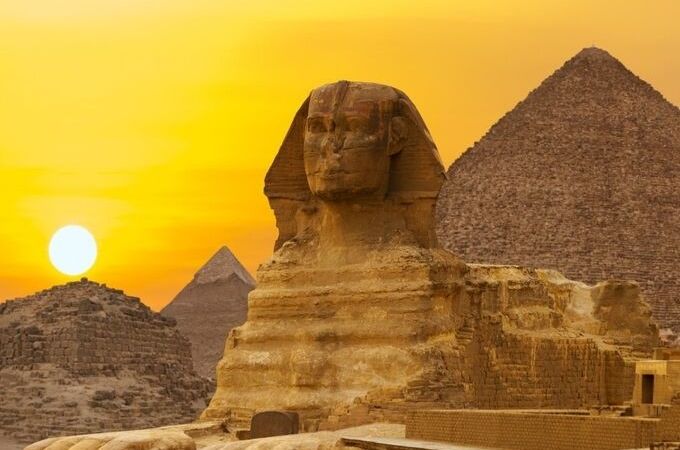
The Great Pyramid of Khufu was already ancient when some of the other monuments associated with the Seven Wonders were constructed, yet more than four thousand years after its creation, travelers can still walk across the Giza Plateau and stand beside it.
That is what makes the Seven Wonders story much more interesting than a list of seven famous ancient structures.
Six eventually disappeared as intact monumental buildings.
One remained.
Understanding how extraordinary that survival is changes the Great Pyramid from an image everyone recognizes into something considerably harder to take for granted.
The Great Pyramid Was Already Old When Some Other Wonders Were New
Ancient history becomes difficult to appreciate because thousands of years tend to collapse into one mental category.
Pyramids, Greek temples, Roman ruins and pharaohs can all begin to feel simply “ancient.”
The chronology tells a much stranger story.
The Great Pyramid was built for Pharaoh Khufu during Egypt's Fourth Dynasty, around the 26th century BCE. The Temple of Artemis traditionally associated with the Seven Wonders belongs to a much later historical world. The Mausoleum at Halicarnassus and the Colossus of Rhodes came later still.
By the time some monuments on the famous list were being constructed, Khufu's pyramid had already stood for many centuries.
This is one of the most useful pieces of context to carry to Giza.
The Great Pyramid is not merely the surviving member of the group.
It is also its oldest member.
That makes survival even more remarkable because the monument with the longest opportunity to disappear is the one that did not.
So Who Decided There Were Seven Wonders?
There was no ancient international committee announcing the results after inspecting the nominees.
The familiar Seven Wonders developed through the Greek and Hellenistic tradition of describing remarkable sights within the known Mediterranean and Near Eastern world. Different ancient writers produced versions of such lists, and the familiar group eventually became established in later tradition.
This explains something easily missed by the modern phrase “Seven Wonders of the World.”
The “world” represented by the list was not the entire planet in the way a contemporary traveler understands it. These were extraordinary monuments within the geographical world familiar to the writers and travelers who created and transmitted the tradition.
Nor should we imagine millions of people voting for their favorites.
The list belongs to an ancient tradition of remarkable sights rather than a modern popularity competition.
The distinction matters because it allows us to stop treating the monuments like contestants and start asking what made them astonishing to ancient observers.
“Wonder” Did Not Mean What a Modern Travel Ranking Means
Today we rank almost everything.
Best cities. Best beaches. Best hotels. Ten attractions you cannot miss before lunch.
It is tempting to project that habit backwards and imagine the Seven Wonders as an ancient version of a travel website's bucket list.
The idea was more interesting than that.
The Greek concept behind these traditions concerned sights worthy of contemplation and amazement. These were works capable of making observers wonder how human beings had produced them.
That perspective suits the Great Pyramid particularly well.
Even now, with modern engineering surrounding us everywhere, its scale remains difficult to process when standing beside it. For an ancient traveler encountering a monument already enormously old by their own time, the effect must have been different again.
The Great Pyramid did not become important because somebody placed it on a list.
It was placed on the list because people already considered it extraordinary.
Seven Wonders, Seven Very Different Outcomes
The phrase “lost wonders” can create the impression that all six disappeared in similar ways.
Their histories are considerably more complicated.
| Ancient Wonder | Historical Location | What Remains of the Ancient-Wonder Story Today |
|---|---|---|
| Great Pyramid of Giza | Giza, Egypt | The monumental structure still stands |
| Hanging Gardens of Babylon | Traditionally associated with Babylon | Their existence and precise identification remain debated |
| Statue of Zeus | Olympia, Greece | The statue itself is lost; the archaeological site survives |
| Temple of Artemis | Ephesus, present-day Türkiye | Archaeological remains survive, but not the monumental temple as ancient visitors knew it |
| Mausoleum at Halicarnassus | Present-day Bodrum, Türkiye | Archaeological remains survive; the original monument does not |
| Colossus of Rhodes | Rhodes, Greece | The colossal statue is lost |
| Lighthouse of Alexandria | Alexandria, Egypt | The lighthouse no longer stands, although its archaeological and historical legacy remains |
The table reveals why Giza is such an anomaly.
Archaeological traces of other wonders and the places associated with them can still be explored, but that is not the same thing as approaching the monumental ancient structure itself.
At Giza, you can.
Six Disappeared. Giza Did Not.
There is no single neat explanation for why the Great Pyramid survived while the others did not.
The monuments differed enormously in materials, structural form, geography and later history. Earthquakes played major roles in the destruction of several ancient wonders. Some structures were dismantled or their materials reused over time, while the circumstances surrounding others are less securely understood.
The Great Pyramid possessed one obvious advantage: mass.
Its construction involved an almost incomprehensible quantity of stone arranged in an exceptionally stable monumental form.
But “it was made of stone” is not a sufficient explanation by itself. Other stone monuments have disappeared or been reduced to foundations and fragments.
Survival is the result of structure, material, environment and what happened around a monument during the thousands of years after construction.
That final part matters.
A building does not survive four millennia simply by completing construction successfully.
It has to survive everything that comes afterwards.
Survival Does Not Mean the Pyramid Is Unchanged
Calling the Great Pyramid the only surviving Ancient Wonder can accidentally create another misconception.
The monument you see today is not identical in appearance to the pyramid completed in Khufu's time.
Much of its original smooth outer casing is gone, exposing the underlying stone blocks that now create the familiar stepped surface. The uppermost form is also not what an Old Kingdom observer would have seen when the pyramid was new.
That distinction does not weaken its status as a survivor.
It makes the survival story more honest.
The Great Pyramid has endured enormous change while retaining enough of its monumental structure that its original form remains unmistakable.
This is different from archaeological survival in the form of foundations, scattered blocks or reconstructed fragments.
Giza is not frozen in time.
It is something perhaps more interesting: an ancient structure that has been altered by time without being erased by it.
The Pyramid You See Is Both a Ruin and an Extraordinary Survivor
We often use the words “ruin” and “surviving monument” as though they describe opposite conditions.
The Great Pyramid is both.
Its original exterior finish has been substantially altered, its funerary context has changed, and the wider Giza Plateau has passed through thousands of years of human history.
Yet stand at an appropriate distance and there is no serious question about the building's fundamental form.
You are looking at a pyramid.
Not a reconstruction showing where one used to stand.
Not a modern replica built beside archaeological foundations.
The ancient structure itself still dominates the landscape.
That continuity is what makes Giza different within the Seven Wonders story.
The monument has lost material without losing its identity.
After forty-five centuries, that is a remarkably high standard for architectural survival.
Egypt Appeared Twice on the Ancient Wonders List
The Great Pyramid was not Egypt's only connection with the Seven Wonders.
The Lighthouse of Alexandria, often called the Pharos of Alexandria, also belonged to the traditional list.
This creates a fascinating historical contrast.
Egypt was associated both with the oldest Ancient Wonder and with one of the great monumental achievements of the later Hellenistic world.
The two structures represented very different Egypts.
The Great Pyramid emerged from the pharaonic Old Kingdom. The Lighthouse belonged to Alexandria, the city founded by Alexander the Great and developed into one of the Mediterranean world's great centers under the Ptolemies.
One country therefore appears at two distant points in the chronological and cultural world represented by the Seven Wonders.
Only one of those Egyptian wonders remains standing monumentally today.
The Lighthouse of Alexandria Tells the Opposite Survival Story
The Lighthouse stood for many centuries, which is itself remarkable.
It did not simply vanish soon after antiquity.
Historical accounts associate its eventual destruction with a long process in which earthquakes caused serious damage. By the later medieval period, the lighthouse had ceased to exist as the great functioning monument ancient observers knew.
Today, travelers visiting Alexandria do not encounter an intact Pharos waiting at the edge of the Mediterranean.
That makes the contrast with Giza particularly effective.
Both belonged to the same famous list.
Both stood in Egypt.
Both survived far beyond the people who built them.
Only one remained sufficiently intact to confront modern travelers at monumental scale.
This is also where this article stops.
The history of Alexandria and whether the city belongs in your itinerary are separate travel decisions. The lighthouse appears here because it helps explain just how unusual the Great Pyramid's survival really is.
The Hanging Gardens Require a Different Kind of Honesty
The Hanging Gardens of Babylon are often illustrated with impressive terraces overflowing with vegetation.
Those images can make the gardens feel as archaeologically secure as the Great Pyramid.
They are not.
The historical existence, location and identification of the Hanging Gardens remain subjects of scholarly debate. Various interpretations have been proposed, including questions about whether traditions associated with Babylon might relate to another location.
For travelers, this is a useful reminder that the Seven Wonders do not all possess equal archaeological certainty.
Ancient texts, later traditions, archaeological evidence and modern reconstruction do not always align neatly.
That uncertainty does not make the story less interesting.
It makes it more historical.
The correct response to an unresolved ancient question is not to fill the gap with confidence because a clean answer reads better.
Sometimes “we do not know with certainty” is the most accurate sentence available.
The Great Pyramid and the New Seven Wonders Are Not the Same List
This causes considerable confusion online.
The Seven Wonders of the Ancient World and the modern New Seven Wonders are different concepts created in completely different historical contexts.
The Great Pyramid belongs to the original ancient tradition.
In the modern New Seven Wonders initiative, Giza was given honorary status rather than simply being treated as another competitor in the final modern selection.
For someone planning an Egypt trip, the important point is much simpler:
When people describe the Great Pyramid as the only surviving Wonder of the Ancient World, they are referring to the ancient list.
That claim should not be confused with whether the pyramid appears on a modern list bearing a similar name.
Once those two ideas are separated, most of the apparent contradiction disappears.
You Do Not Need to Go Inside to Understand Why It Is a Wonder
This distinction is particularly important because entering the Great Pyramid is a separate travel experience.
The Ancient Wonder is the monument itself.
You do not need an interior ticket to stand beside the surviving structure and understand its monumental scale.
Travelers interested in entering have a different decision to make involving restricted passages, physical effort, enclosed spaces and expectations about what exists inside. That belongs to our dedicated pyramid-interior content rather than this article.
Here, the exterior is enough.
In fact, the survival story is arguably easiest to understand from outside because that is where the enormous relationship between mass, geometry and landscape becomes most visible.
You are looking at the reason it survived as an identifiable monument.
A mountain of carefully arranged stone is difficult to erase.
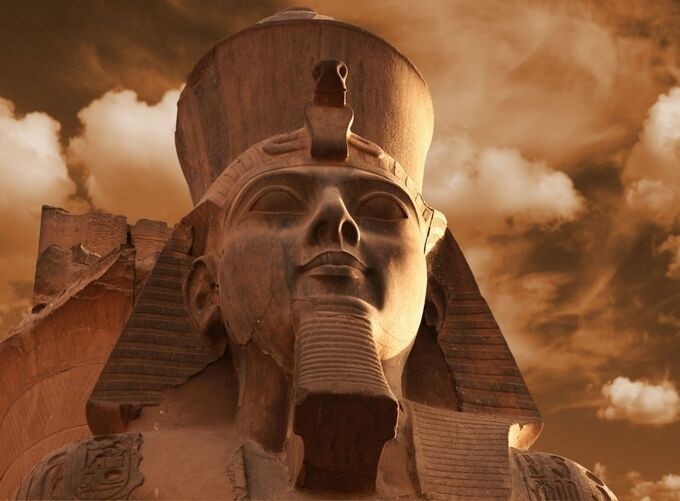
Photographs Have Made the Pyramid Strangely Familiar
There is a disadvantage to being one of the most photographed monuments on Earth.
Everybody thinks they already know what you look like.
Most travelers have seen the Great Pyramid hundreds or thousands of times before reaching Egypt. It appears in textbooks, films, advertisements, documentaries, travel brochures and childhood drawings.
Familiarity reduces surprise.
Then you arrive.
The proportions are the same as the photographs, but the physical experience is not. Individual blocks become visible as objects with weight rather than pixels forming a triangle. People standing near the base provide scale, and the monument suddenly stops fitting comfortably inside the mental image you carried to Egypt.
This is one reason Giza Tours benefit from historical context.
The guide does not need to convince you that the pyramid is famous.
You knew that when you were eight.
The useful information is why something so familiar should still surprise you.
The Great Pyramid Was Ancient to Ancient Tourists
This may be the most effective way to understand its age.
Imagine an ancient traveler living during the Hellenistic period encountering the Great Pyramid.
They were not visiting a recently completed wonder.
They were looking at an antiquity.
By the time traditions surrounding the Seven Wonders developed, Khufu's monument already belonged to a remote past. Generations had risen and disappeared while it remained on the Giza Plateau.
This creates an unusual historical layering.
Modern travelers look back at ancient Greek and Hellenistic observers as people from a distant world.
Those observers could look back at the Great Pyramid and experience a comparable sense of distance from its builders.
Giza therefore connects several different versions of “ancient.”
That is harder to communicate with a construction date than with the realization that ancient people themselves could visit Egypt and encounter something astonishingly old.
We Should Be Careful With the Word “Original”
Travelers often ask whether the Great Pyramid is one of the “original Seven Wonders.”
In normal conversation, yes: it belongs to the canonical Seven Wonders of the Ancient World.
Historically, however, “original list” can oversimplify how the tradition developed.
Different ancient authors referred to remarkable sights, and versions of the list were not necessarily identical in every period. The familiar canonical seven emerged through that broader literary tradition rather than from one official document declaring the winners.
This is a small distinction, but an important one.
History becomes less accurate when modern systems are projected onto ancient practices.
There was no ancient Wonders Authority issuing certificates.
The list evolved because people wrote, traveled, described extraordinary structures and transmitted those descriptions.
The Great Pyramid survived both the monuments and much of the cultural world that first grouped them together.
Seeing the Other Six as Absences Changes Giza
The Seven Wonders are normally presented as seven names.
Try thinking of them instead as six absences and one presence.
The Colossus is absent.
The great statue of Zeus is absent.
The ancient Lighthouse of Alexandria is absent.
The Mausoleum and Temple of Artemis survive archaeologically rather than as the monumental structures ancient travelers encountered.
The Hanging Gardens remain entangled in historical uncertainty.
Then you stand at Giza and the seventh item on that list is occupying an enormous amount of space directly in front of you.
This changes the emotional mathematics.
The Great Pyramid is no longer simply one of seven.
For a modern traveler, it is the only member of that ancient architectural conversation that can still be encountered in anything approaching its original monumental presence.
That is a very different claim from “one of the world's most famous attractions.”
Ancient Travelers Did Not Have Bucket Lists Quite Like Ours
There is something amusing about turning the Seven Wonders into a modern travel challenge.
Visit all seven.
Collect the photographs.
Post the map.
Ancient travel did not work with our transportation networks, border systems, booking engines or assumptions about leisure. Reaching distant monumental sights could involve serious expense, time and difficulty.
The list should therefore not be imagined too literally as a seven-stop package holiday available from an ancient travel agency.
It functioned as a way of identifying extraordinary things worth knowing about and, for those able to travel, perhaps worth seeing.
That makes the Great Pyramid's modern accessibility almost ironic.
Of the seven, the oldest is now the only one you can still visit as a standing monumental wonder.
The traveler with the easiest transportation lives thousands of years after six destinations have already disappeared.
Being the Last Survivor Does Not Make Every Pyramid a Wonder
Another useful distinction concerns the wider Giza complex.
The Giza Plateau contains the pyramids associated with Khufu, Khafre and Menkaure along with the Great Sphinx, tombs and other archaeological features.
The Ancient Wonder designation specifically concerns the Great Pyramid of Khufu.
This does not diminish the importance of the surrounding monuments. It simply prevents the phrase “the Pyramids are one of the Seven Wonders” from becoming unnecessarily imprecise.
When planning Egypt History Tours, these distinctions matter because famous archaeological landscapes often contain several monuments built at different times for different purposes.
Giza is not one object.
The Great Pyramid is one extraordinary component within a much larger ancient landscape.
Its Ancient Wonder status belongs specifically to it.
A Guide Cannot Make the Pyramid Larger, but Can Make Time Larger
Standing beside the Great Pyramid provides scale automatically.
Historical interpretation provides something photographs cannot: chronological scale.
A knowledgeable guide can place Khufu, the Fourth Dynasty, later Egyptian history, the Hellenistic world and the Seven Wonders tradition into a sequence that makes the age of the monument easier to grasp.
This matters because “built around 4,500 years ago” is accurate but abstract.
Human beings are poor at intuitively feeling several thousand years.
Connections help.
The pyramid predates the other Ancient Wonders. It was already ancient to people whom we call ancient. It survived civilizations that themselves became archaeology.
None of these statements changes the stones.
They change the way you look at them.
That is where historical interpretation earns its place.
Giza Is Where an Ancient Travel Idea Becomes Physical
The Seven Wonders survive beautifully as an idea.
Their names still appear in books, classrooms and travel conversations more than two thousand years after ancient writers helped establish the tradition.
Physically, the story is much less balanced.
Six have been lost as intact monumental structures.
At Giza, the idea suddenly becomes stone.
This is why the Great Pyramid deserves more than the sentence “the only surviving Ancient Wonder” hurriedly delivered before moving to the next fact. Its survival connects the modern traveler with ancient travelers who also encountered a monument from a past already remote to them.
When visiting on Egypt Private Trips, there is no need to turn that realization into another item to complete. You do not have to enter every chamber, memorize every measurement or prove that the pyramid deserves its reputation.
Stand far enough away to see the complete form.
Then move closer until the individual blocks stop looking small.
Remember that the youngest of the other six wonders disappeared long ago, while the oldest member of the entire group remains in front of you.
The Great Pyramid did not win the Seven Wonders story.
It outlived it.
Questions That Usually Begin With “But I Thought…”
1. Is the Great Pyramid really one of the original Seven Wonders?
Yes. The Great Pyramid of Khufu belongs to the canonical Seven Wonders of the Ancient World and is the only one still standing monumentally today. The word “original” is convenient, although the ancient list developed through different writers and traditions rather than one official selection.
2. Why is the Great Pyramid the only Ancient Wonder still standing?
There is no single explanation. Its enormous stone mass and stable structural form contributed to its durability, while geography and subsequent history also mattered. Survival across more than four millennia reflects far more than simply having been constructed from durable material.
3. Is the Great Pyramid also one of the New Seven Wonders?
The New Seven Wonders initiative is separate from the ancient list. The Great Pyramid belongs to the Seven Wonders of the Ancient World and received honorary status in the modern initiative, preserving the distinction between the ancient survivor and the newer selection.
4. Who actually created the Seven Wonders of the Ancient World?
The familiar list developed from Greek and Hellenistic traditions in which writers described remarkable sights and monuments. It should not be imagined as one officially commissioned list created at a single moment; different ancient versions existed before the canonical seven became established.
5. Were all seven Ancient Wonders standing at exactly the same time?
There was a historical period when the monuments traditionally included in the canonical group could broadly be considered contemporaneous, but their construction dates differed dramatically. The Great Pyramid was already more than two thousand years old when the youngest wonders were created.
6. How much older is the Great Pyramid than the other Ancient Wonders?
The Great Pyramid dates to roughly the 26th century BCE, making it substantially older than the later Greek and Hellenistic monuments on the list. Its extraordinary age means it had already survived for many centuries before several other wonders were even constructed.
7. Did ancient Egypt have two of the Seven Wonders?
Yes. The Great Pyramid of Giza and the Lighthouse of Alexandria were both included in the traditional Seven Wonders. They belonged to very different periods of Egyptian history: the pyramid to the pharaonic Old Kingdom and the lighthouse to Hellenistic Alexandria.
8. What eventually happened to the Lighthouse of Alexandria?
The lighthouse survived for many centuries but suffered serious damage over time, particularly from earthquakes, and eventually ceased to exist as the monumental structure described by ancient and medieval observers. Its historical and archaeological legacy remains closely associated with Alexandria.
9. Can travelers still visit anything connected with the other six Wonders?
Several locations associated with the lost wonders remain important archaeological sites, including Olympia, Ephesus and Bodrum. However, visiting archaeological remains is fundamentally different from approaching the Great Pyramid, where the ancient monumental structure itself remains unmistakably standing.
10. Did the Hanging Gardens of Babylon definitely exist?
Their status is less certain than popular illustrations suggest. Ancient sources describe extraordinary gardens, but their precise location and archaeological identification remain debated, and scholars have proposed different interpretations. They should therefore not be presented with the same archaeological certainty as the Great Pyramid.
11. Do I have to enter the Great Pyramid to experience the surviving Ancient Wonder?
No. Its status as an Ancient Wonder belongs to the monument itself, and its scale and survival can be appreciated entirely from the Giza Plateau. Interior entry is a separate optional experience with its own physical conditions and expectations.
12. Why should the Seven Wonders list matter to a traveler today?
Its value is historical perspective rather than a modern ranking. Knowing that six famous ancient monuments disappeared while the oldest survived helps travelers understand how unusual the Great Pyramid really is and places a familiar landmark within more than four millennia of human history.

A travel professional specializing in tailor-made travel planning, guest experience management, and multi-destination tourism operations.
With over 23 years of experience in the travel industry, he designs and manages private and cultural tours for international travelers across Türkiye, Greece, Egypt, Jordan, Morocco, and other destinations.
He has strong expertise in both online and face-to-face guest communication, sales processes, and end-to-end travel operations.
Working closely with hotels, travel agencies, and local partners, he ensures smooth coordination and high-quality travel experiences at every stage of the journey.
His focus is on delivering personalized, reliable, and seamless travel experiences for international guests worldwide.