How Egypt’s Museums Change the Way You See Ancient Egypt
Updated: August 2026
A museum visit in Egypt can go wrong in a surprisingly pleasant way.
You enter intending to spend two hours looking at extraordinary objects, become absorbed by statues, jewelry, coffins and reliefs, take far more photographs than expected, and eventually leave convinced that you have seen something remarkable. You probably have, yet there is another possibility: you may have looked at hundreds of objects without becoming much better at understanding them.
Egyptian art becomes considerably more interesting when it stops being treated simply as a collection of beautiful things made a very long time ago.
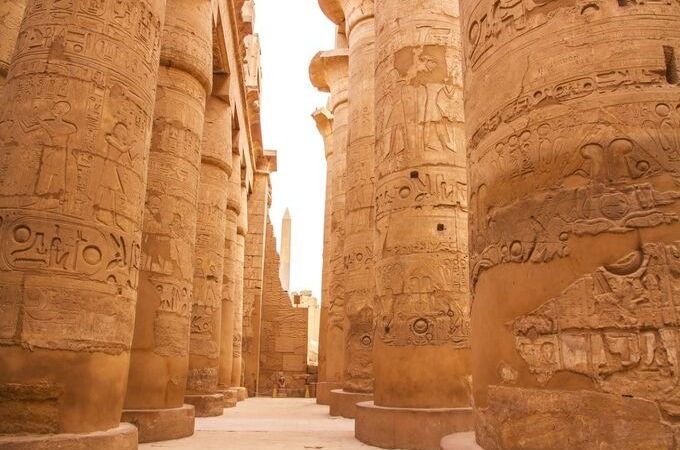
A royal statue communicates authority. Tomb decoration belongs to ideas about death, memory and the afterlife. Materials can reveal wealth, trade and craftsmanship, while changes in artistic conventions help distinguish periods that otherwise collapse into the broad label of “ancient Egypt.”
This is where museums become particularly valuable during an Egypt trip. Their greatest contribution is not necessarily showing you another masterpiece; it is teaching you what to notice when you later stand inside a temple, enter a tomb or look across an archaeological landscape.
The question, therefore, is not how many Egyptian museums you can fit into your itinerary.
It is what you want each museum to help you understand.
Egyptian Art Makes More Sense When You Stop Looking for Decoration
Modern visitors are accustomed to separating art from function. We enter galleries specifically to look at paintings, sculpture or decorative objects and evaluate them partly for their beauty.
Ancient Egyptian objects often ask for a different kind of attention.
A statue was not necessarily produced simply because somebody wanted a beautiful statue. Reliefs were not added to temple walls merely because empty stone looked unfinished. Funerary objects belonged to beliefs and rituals, while royal imagery helped communicate ideas about kingship, divine order and legitimacy.
Once this becomes clear, repetition starts looking different as well.
The familiar poses, proportions and symbols that appear across centuries can initially make Egyptian art seem unusually fixed. Yet those conventions were meaningful. Stability itself could communicate continuity and order, while departures from established forms become more interesting when you know what the established visual language was.
A good museum visit therefore changes the question from:
“Which object is the most impressive?”
to:
“Why was this object made this way?”
That question travels extremely well beyond the museum.
A Museum Gives You Something an Archaeological Site Cannot
Standing at an ancient site provides scale, geography and physical context that no museum display can reproduce.
Museums offer something different.
They allow you to get close.
Materials that can disappear into the scale of a temple become visible at human distance. Fine workmanship, inscriptions, jewelry, carved details and objects associated with everyday or funerary life can be examined in ways that are impossible when encountering architecture as part of a vast archaeological complex.
Museum presentation can also place objects beside material from another period or location, making comparison much easier.
This matters because archaeological sites naturally emphasize what survived in place. Museum collections can broaden the picture by bringing together objects that reveal different aspects of the society that created those monuments.
Neither experience is complete by itself.
The museum helps you inspect.
The archaeological site helps you understand where that world existed.
Then the Archaeological Site Gives Something Back
The relationship works in both directions.
A statue inside a museum can be studied closely, but the building or landscape for which similar objects were created adds a scale that a gallery cannot provide. A funerary object becomes more understandable after you have seen the physical environment of an Egyptian tomb, just as temple reliefs acquire another dimension when you recognize how imagery interacts with architecture.
This is why the sequence of museum visits can matter.
There is no universal rule saying museums must come before archaeological sites. Visiting one beforehand can give you visual clues to carry into the field, while visiting afterward can help organize things you have already encountered.
The second approach is sometimes underestimated.
After several days of sightseeing, a museum object may suddenly feel familiar because you recognize the artistic convention, royal name, material or religious idea connected with something you saw earlier.
The collection has not changed.
You have.
The Grand Egyptian Museum Changes the Scale of the Museum Question
The Grand Egyptian Museum has changed how travelers need to think about museum time around Cairo and Giza.
Its scale and relationship with the Giza area mean it cannot sensibly be treated as a minor extra squeezed into whatever time remains after sightseeing. For travelers strongly interested in ancient Egyptian material culture, the museum can command substantial attention in its own right.
The Tutankhamun collections naturally receive enormous interest, but allowing one famous name to define the entire museum experience would miss much of the point.
The wider opportunity is to see objects across different periods and contexts while beginning to recognize continuities and changes in Egyptian artistic traditions.
This also creates an operational planning issue.
Combining a major museum experience with an already overloaded day simply because the locations appear convenient can leave travelers physically present but mentally exhausted. When planning Egypt Museum Tours, we treat attention as part of the itinerary rather than assuming another hour of opening time automatically means another useful hour of viewing.
A large collection deserves enough mental space to work.
Tutankhamun Is Famous Enough to Distort the Way We Look at Egyptian Art
Tutankhamun creates an unusual problem for anyone trying to understand Egyptian art.
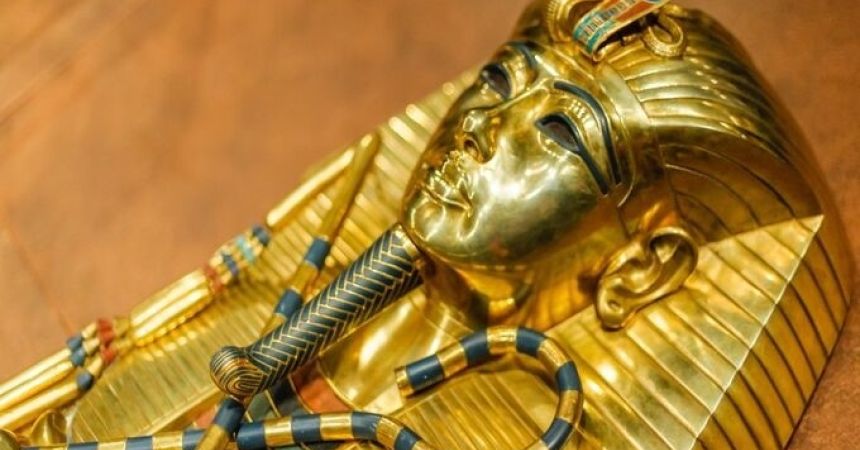
The objects associated with his tomb are so famous, visually compelling and culturally recognizable that they can pull attention toward themselves before the visitor has even entered a museum.
That fame is deserved, but it can distort scale.
Ancient Egyptian civilization developed across thousands of years. Its artistic history cannot be understood through one ruler, one tomb or one spectacular collection, however exceptional those objects may be.
A more rewarding approach is to let Tutankhamun become a doorway rather than the entire room.
Look at workmanship and materials, but then notice how royal imagery functions elsewhere. Compare funerary objects across contexts. Pay attention to what changes between periods and what remains remarkably persistent.
Famous objects become more interesting when they are allowed to belong to a larger story.
The Egyptian Museum in Tahrir Belongs to a Different Museum Story
The opening and development of the Grand Egyptian Museum inevitably changed the way travelers think about the Egyptian Museum in Tahrir.
The wrong conclusion is that every museum must now compete for the title of “best.”
Museums are not interchangeable containers.
The Egyptian Museum has its own institutional history and atmosphere, and encountering collections there creates a different relationship with the history of Egyptology and museum presentation. For travelers interested not only in ancient objects but also in how those objects have been collected, displayed and understood over time, that distinction has value.
Whether it belongs in your particular itinerary is another question.
Someone with limited Cairo time does not need to visit multiple museums merely to prove thoroughness. A traveler with a deeper interest in archaeology, museum history or Egyptian material culture may find the differences meaningful enough to justify more than one collection.
The decision should come from curiosity, not obligation.
NMEC Asks a Broader Question Than “What Did the Pharaohs Leave Behind?”
The National Museum of Egyptian Civilization is useful precisely because the word civilization changes the frame.
Many first-time journeys are understandably dominated by pharaonic Egypt. The Pyramids, royal tombs, monumental temples and famous rulers are powerful enough to occupy an entire trip.
Egyptian history, however, did not end when the pharaohs disappeared.
A civilization-focused museum can help travelers think across a broader historical continuum and resist the tendency to treat modern Egypt as though it simply surrounds an ancient archaeological country.
This makes NMEC conceptually different from choosing another collection because it contains more pharaonic masterpieces.
Its value depends on the question you bring with you.
If your principal interest is seeing the greatest possible concentration of ancient Egyptian objects, your priorities may lie elsewhere. If you want to understand Egypt across a wider historical span, the museum performs a different job.
Luxor Museum Benefits From Everything You Have Already Seen
Some museum experiences become stronger because of their location within the journey.
Luxor Museum is a good example.
By the time many travelers enter it, names and places that once sounded abstract have begun to acquire physical meaning. Karnak is no longer a paragraph in a guidebook. The Nile is not simply a blue line on a map, and the West Bank has become a landscape you have moved through.
Objects connected with that environment therefore arrive with context already attached.
This can make a more focused collection remarkably satisfying after large archaeological sites, particularly for travelers interested in Ancient Egypt Tours where Luxor receives enough time to be understood rather than hurried through.
The operational lesson is equally important.
Do not assume a smaller museum is automatically an easy addition after an exhausting sightseeing day. Concentrated collections still require attention, and attention is one of the first things a badly overloaded itinerary loses.
The Nubian Museum Explains Something the Standard Egypt Story Can Leave Quiet
Aswan changes the geography of an Egypt journey.
The landscape feels different, the relationship with the Nile changes, and Nubian culture becomes increasingly important to understanding southern Egypt.
The Nubian Museum can provide context that a journey focused almost exclusively on pharaonic kingship may otherwise underrepresent.
This is not simply a matter of adding another museum because you happen to be in Aswan.
It is about correcting perspective.
Egypt's history contains regional identities, cultural exchanges and communities that cannot be reduced to a succession of famous rulers. For travelers interested in how geography shapes culture, Nubian material can therefore add something that another large collection of royal objects would not.
Strong museum planning is often about choosing difference rather than volume.
The next museum should answer a question the previous one did not.
What Should You Actually Look for Once You Are Inside?
Trying to remember every ruler, dynasty and deity is a reliable way to become tired very quickly.
Instead, choose a few visual questions and carry them from collection to collection.
| Question to Follow | What to Notice | What It Can Clarify Later |
|---|---|---|
| How is authority shown? | Scale, posture, crowns and royal imagery | Temple and monumental representations |
| How are beliefs about death expressed? | Coffins, funerary objects and symbolic imagery | Tomb decoration and burial landscapes |
| What does craftsmanship reveal? | Stonework, jewelry, wood and fine detail | Skills hidden by monumental scale |
| What remains visually consistent? | Repeated poses, symbols and proportions | Egyptian artistic conventions |
| What changes through time? | Style, materials and representation | Differences between historical periods |
| How does geography matter? | Regional collections and cultural material | A broader understanding of Egypt beyond royal centers |
This method makes even a large collection easier to navigate because you are no longer attempting to absorb everything.
You are following ideas.
Museum Fatigue Is Real, and Egypt Makes It Easy to Underestimate
Egypt creates a particular kind of cultural overload.
A morning may begin at an archaeological site containing enough history for an entire university course, continue to another monumental complex and finish inside galleries containing hundreds or thousands of objects.
Everything is important.
Eventually, importance stops helping.
Museum fatigue is not evidence that you lack interest in history. Human attention has limits, and those limits become especially visible on trips where almost every day contains major cultural material.
This is why adding the Egyptian Museum, GEM and NMEC simply because all three are important can be poor planning for some travelers.
Ask what each museum contributes to your journey.
If the answer is essentially “more ancient Egyptian objects,” reconsider whether another collection is the best use of your remaining attention. If one museum broadens the historical period, explains a regional culture or answers a question raised by previous sightseeing, the additional visit has a clearer purpose.
Families May Learn More From Less
Museum planning with children exposes a truth adults often ignore: longer does not automatically mean better.
A vast collection can be extraordinary without requiring a family to see every gallery. Choosing several memorable objects, looking for recurring symbols or connecting something in the museum with a site visited earlier can create a much stronger experience than pushing through room after room because the admission ticket technically includes them.
The same principle works for adults.
Completeness is a museum administrator's job, not a visitor's obligation.
If you leave having genuinely understood ten things better than when you arrived, the museum has done more for your trip than if you photographed two hundred objects you can no longer identify that evening.
One Museum Chosen for a Reason Can Beat Three Chosen From Fear of Missing Out
This is perhaps the most useful decision rule for first-time visitors.
Choose museums according to what they add, not according to how famous they are collectively.
If your priority is a major ancient Egyptian collection and the scale of the experience itself matters, that points your planning in one direction. If you want a broader civilization narrative, the answer changes. If you are already in Luxor and want objects to connect with the archaeological landscape you have just explored, another collection becomes more relevant.
Travelers on Egypt History Tours sometimes assume that historical seriousness requires visiting every museum available.
It does not.
Historical curiosity is better served by leaving enough time to think.
Leave the Museum Looking for Something
The most rewarding museum visit often continues after you have left the building.
Perhaps you begin noticing the repeated scale relationships between rulers and other figures. Maybe you recognize a crown you previously ignored, understand why a particular material mattered or become more attentive to how funerary imagery was constructed.
This is where Egyptian museums earn their place within a wider journey.
They are not warehouses you visit between archaeological sites.
At their best, they provide a visual vocabulary for everything that follows.
That is why the most useful question before entering a museum is not “What are the ten objects I must see?”
Ask instead:
“What do I want to understand better when I walk out?”
Egypt has collections large enough to occupy days, archaeological sites rich enough to occupy weeks and a history that cannot realistically be mastered during one holiday. Trying to consume all of it usually produces less understanding rather than more.
Choose the museum that adds context your journey does not yet have, give it enough attention to do that job, then take what you learned back outside.
The next temple wall may look different.
That is a far better measure of a successful museum visit than the number of galleries you completed.
Frequently Asked Questions About Egyptian Art and Museums
1. Do I need to understand Egyptian art before visiting a museum in Egypt?
No. A good museum visit can be the beginning of that understanding. Rather than memorizing dynasties beforehand, start by noticing recurring symbols, materials, poses and artistic conventions, then use the collection to ask why Egyptians represented particular ideas in consistent ways.
2. Does the Grand Egyptian Museum make other Egyptian museums unnecessary?
No. Museum collections differ in scope, presentation, historical framing and regional context. GEM has transformed the museum experience around Giza, but it does not make civilization-focused, regional or historically important collections elsewhere in Egypt automatically redundant.
3. Why do many ancient Egyptian statues look unusually formal?
Formality was often meaningful rather than evidence that artists lacked creativity. Pose, scale, symmetry and other conventions could communicate stability, authority and identity, which is why understanding the purpose of Egyptian art can be more revealing than judging it by modern expectations of realism.
4. Is it better to visit a museum before or after an archaeological site?
Both sequences can work. Visiting beforehand provides visual concepts to recognize later, while visiting afterward allows museum objects to connect with places you have physically experienced. The stronger choice depends on your itinerary and how much historical context you already have.
5. Should Tutankhamun be the main focus of my museum visit?
Tutankhamun deserves attention, but allowing his collection to dominate your understanding can make thousands of years of Egyptian art appear much narrower than it was. Use the famous objects as an entry point, then compare their materials, symbolism and craftsmanship with other periods.
6. How many museums are realistic on a first Egypt trip?
There is no ideal number. Choose museums according to the different questions they answer and the amount of attention your itinerary leaves available. Two purposeful museum visits can provide more understanding than four collections visited simply because they appear on essential-sight lists.
7. Why can Luxor Museum feel more meaningful after visiting Luxor's archaeological sites?
Once you have physically experienced Luxor's temples and wider landscape, objects associated with the region no longer exist in isolation. Names, places and artistic conventions become easier to connect, allowing a focused museum collection to reinforce rather than introduce the archaeological story.
8. Does NMEC tell the same story as Egypt's major archaeological museums?
Its civilization-oriented perspective creates a broader historical frame than an exclusively pharaonic collection. This can be valuable for travelers who want to understand Egypt across a longer cultural continuum rather than allowing ancient royal history to represent the country's entire past.
9. Is the Nubian Museum worthwhile if Aswan is already included in my trip?
It can be particularly valuable when you want to understand the regional and cultural context surrounding southern Egypt. The museum adds a Nubian perspective that may receive limited attention in an itinerary otherwise dominated by pharaonic monuments and royal history.
10. How can I avoid museum fatigue during an Egypt trip?
Avoid treating every important collection as compulsory and resist combining several intellectually demanding visits simply because the schedule permits it. Give each museum a purpose, decide what you want to notice and leave enough mental space for the experience to remain meaningful.
11. Are smaller Egyptian museums worthwhile after visiting a major collection?
Yes, when their focus provides context that the larger collection did not. A smaller regional museum can become especially rewarding when its objects relate directly to landscapes and archaeological sites you have recently visited, making relevance more important than sheer collection size.
12. What should I look for in Egyptian art besides famous masterpieces?
Look for patterns: how rulers are represented, how materials change, which symbols recur, how funerary beliefs appear visually and where artistic conventions remain stable or shift. Following these questions turns individual objects into evidence of a much larger cultural system.

A travel professional specializing in tailor-made travel planning, guest experience management, and multi-destination tourism operations.
With over 23 years of experience in the travel industry, he designs and manages private and cultural tours for international travelers across Türkiye, Greece, Egypt, Jordan, Morocco, and other destinations.
He has strong expertise in both online and face-to-face guest communication, sales processes, and end-to-end travel operations.
Working closely with hotels, travel agencies, and local partners, he ensures smooth coordination and high-quality travel experiences at every stage of the journey.
His focus is on delivering personalized, reliable, and seamless travel experiences for international guests worldwide.