
Your First Egypt Trip Does Not Need Every Famous Destination
Updated: August 2026
Planning a first trip to Egypt usually begins with enthusiasm and ends, at least temporarily, with a map covered in too many places.
Cairo and the Pyramids of Giza go on first. Luxor follows because leaving out the Valley of the Kings and the great temples feels unthinkable. Aswan seems logical because it sits farther down the Nile, and once Aswan is included, Abu Simbel starts looking close enough to add. A Nile cruise sounds like an experience in its own right. Then somebody mentions Alexandria, while another photograph makes a few days beside the Red Sea seem like an excellent idea.
None of these choices is unreasonable.
The problem is that a destination costs more than the nights written beside its name.
You have to reach it. You eventually have to leave it. Hotels have check-in and check-out times, domestic flights operate according to schedules rather than your ideal itinerary, road transfers consume hours, and a cruise has its own operational rhythm.
This is why the best first trip to Egypt is rarely the one that includes the most destinations.
It is the one that includes enough contrast to understand the country without spending half the holiday moving through it.
Your First Egypt Trip Has One Enemy: Geography
Egypt looks wonderfully cooperative on a map.
Cairo is in the north. Luxor is farther south. Aswan follows the Nile below it. Abu Simbel is farther south again. The Red Sea is over to the east. Everything appears to form a route that simply needs connecting.
Then real travel begins.
A domestic flight does not consume only the time shown between takeoff and landing. There is a hotel departure, airport transfer, check-in, security, baggage collection and another transfer at the destination. A road journey occupies part of a day even when the scenery is interesting. Cruise embarkation and disembarkation also affect what can realistically happen before and afterward.
This creates one of the most useful rules for a first Egypt itinerary:
Every destination you add creates two journeys: the journey into it and the journey out.
A six-destination itinerary therefore does not merely contain six places. It contains the movement connecting all six.
That is where ambitious first trips quietly become exhausting.
Cairo and Giza Are Difficult to Argue Against
For a first cultural journey through Egypt, Cairo and Giza form the natural foundation.
This is not because every traveler must follow the same route, but because the area brings together several different layers of the country's identity within one stop. Ancient Egypt is represented immediately by the Giza plateau, while Cairo itself opens much wider historical and cultural perspectives.
We do not need to turn this section into a list of Cairo attractions. That belongs elsewhere.
The first-time planning question is simpler: what happens to the trip if Cairo is removed?
For most travelers interested in Egypt's history, quite a lot disappears.
Cairo is also an important logistical gateway for international arrivals and onward domestic travel, which means its position in an itinerary is not purely about sightseeing. A carefully planned Cairo stay can work with the route rather than requiring an artificial detour.
The mistake is not including Cairo.
The mistake is assuming that because you have three hotel nights there, you automatically have three complete sightseeing days.
Arrival and departure times still get a vote.
If Ancient Egypt Brought You Here, Luxor Is Hard to Cut
Ask yourself why Egypt reached your travel list in the first place.
If the answer contains royal tombs, hieroglyphs, monumental temples and the physical remains of ancient Egyptian civilization, Luxor deserves serious priority.
Its archaeological concentration is difficult to reproduce elsewhere in the country, which makes Luxor different from adding another interesting city simply for variety.
Again, the purpose here is not to enumerate Karnak, the Valley of the Kings, Hatshepsut's temple and every other major site. Our dedicated archaeological and destination content can do that without forcing this article to compete with it.
For first-time planning, what matters is Luxor's role.
Cairo and Giza introduce monumental ancient Egypt through one of the world's most recognizable archaeological landscapes. Luxor then expands the picture dramatically through temples, royal burial landscapes and a different historical geography.
If your first Egypt journey is short and cultural history is the priority, I would normally protect Luxor before adding destinations whose main value is variety.
That is prioritization, not ranking.
Aswan Has to Earn Its Nights Differently
Aswan suffers when itineraries are designed according to attraction count.
Luxor can fill a page with famous archaeological names. Aswan's contribution is quieter: Philae, the Nile landscape, Nubian cultural context, islands, granite landscapes and a noticeably different rhythm.
That difference is exactly why it can deserve inclusion.
The question is whether your first trip has enough time to allow Aswan to perform that role.
If you squeeze it between a cruise and an Abu Simbel excursion, you may technically spend several nights associated with Aswan while experiencing surprisingly little of Aswan itself.
This is why our dedicated Aswan content deals much more closely with usable mornings and afternoons rather than simply counting hotel nights.
For this first-trip decision, the principle is enough:
Choose Aswan because you want what Aswan adds, not simply because the route continues south.
A Nile Cruise Is Not Another Pin to Add to the Map
This is where destination counting becomes misleading.
Travelers often describe their route as:
Cairo + Luxor + Nile Cruise + Aswan.
That sounds like four destinations.
It isn't.
A Nile cruise is better understood as a way of experiencing part of the journey between major destinations, while incorporating sightseeing along the Nile according to the cruise program.
This makes it fundamentally different from adding Alexandria or Siwa.
A cruise does not necessarily add another pin to your map. It changes what happens between pins already there.
For first-time visitors, that distinction is useful because a cruise can create continuity in a route that might otherwise involve separate transfers and hotel stays. On the other hand, cruise schedules also determine embarkation, sailing and excursion timing, so they introduce their own structure.
If you are considering Classic Egypt Tours, decide first whether the Nile journey itself is part of the experience you want rather than treating a cruise as another compulsory item on an Egypt checklist.
Abu Simbel Is Extraordinary, but Extraordinary Still Takes Time
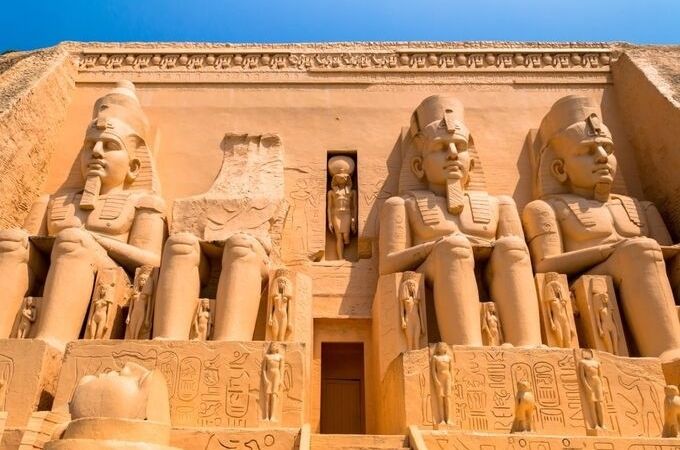
Abu Simbel creates one of the most difficult first-trip decisions because its visual argument is exceptionally strong.
You see the monumental façade and immediately understand why people make the journey.
The practical question is not whether Abu Simbel is impressive enough.
It is.
The question is what adding it does to your route.
Abu Simbel lies far south of Aswan, so visiting it requires a meaningful excursion by road or an appropriate flight arrangement. Either way, those hours come from somewhere.
On a longer Egypt journey, the decision may be easy.
On a seven-day trip already containing Cairo, Luxor and Aswan, the opportunity cost becomes much more important.
This is why “must-see” is such a dangerous phrase in itinerary planning. A place can be extraordinary without being compulsory for every traveler on every trip.
You are allowed to leave something exceptional for next time.
The Red Sea Can Improve the Trip by Asking Less of You
After Cairo, Luxor, perhaps a Nile cruise and several early sightseeing starts, another temple is not always what improves the holiday.
Sometimes the correct addition is a place where very little is required.
This is the role the Red Sea can play particularly well.
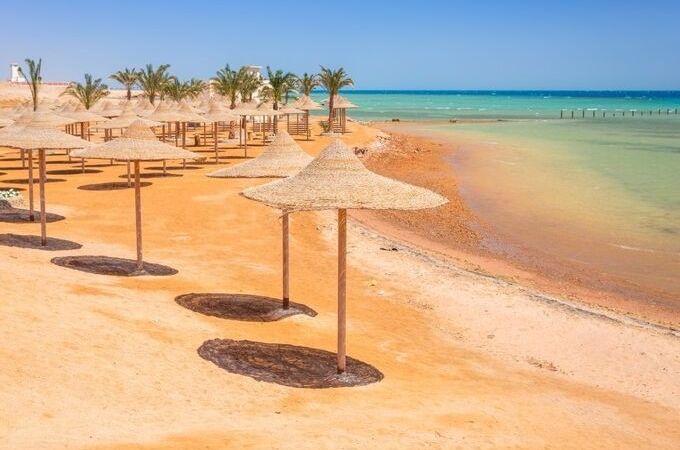
Hurghada, Sharm El Sheikh and other coastal destinations should not simply be attached because an Egypt itinerary is expected to include a beach. They make more sense when the traveler genuinely wants contrast: several culturally intensive days followed by time with fewer logistical demands.
The value is not only relaxation.
It can also change how the earlier part of the trip feels. Travelers may be more comfortable accepting an intensive cultural schedule when they know several slower days follow.
This is why our Red Sea content handles the separate question of which resort area to choose.
At first-trip level, the decision is more fundamental:
Do you want your entire holiday to be cultural touring, or should part of it stop asking you to learn things?
Both are legitimate answers.
Alexandria Is Easy to Love and Easy to Remove
That sounds harsher than intended.
Alexandria offers a Mediterranean dimension that can broaden a traveler's understanding of Egypt considerably, particularly for those interested in Greco-Roman history, the country's Mediterranean identity and historical periods that receive less attention on the classic Cairo–Luxor–Aswan route.
But first trips require priorities.
If someone has seven or eight days and ancient Egypt is the overwhelming reason for traveling, I would generally protect Cairo and Luxor before sacrificing substantial time to Alexandria.
Change the traveler, however, and the answer can change immediately.
Someone fascinated by Hellenistic history may find Alexandria more relevant than an additional day somewhere else. A returning visitor may also appreciate it much more once the classic ancient Egyptian priorities no longer dominate every itinerary decision.
Alexandria is therefore not “less important.”
It is more interest-dependent.
That distinction is useful throughout Egypt.
Siwa Is Where Ambition Starts Fighting the Calendar
Siwa creates a different problem.
Most travelers who research it for long enough eventually want to go.
The oasis environment, desert setting and cultural identity make it substantially different from the classic Nile Valley route.
Unfortunately, Siwa refuses to position itself conveniently between Cairo and Luxor simply because your vacation is only ten days long.
Its remoteness is part of what preserves its distinct travel character, but remoteness also requires itinerary commitment.
This makes Siwa an excellent example of the difference between:
“Is this destination worth visiting?”
and
“Does this destination belong in this particular trip?”
Yes to the first does not automatically produce yes to the second.
For many short first journeys, Siwa is exactly the kind of place I would save rather than squeeze.
A second trip built partly around Western Desert landscapes can give it the attention that a hurried first itinerary cannot.
Not Every First-Time Traveler Needs the Same Egypt
This is where rigid “essential Egypt” lists begin to fail.
Consider three travelers.
One has dreamed about ancient Egypt since childhood and wants archaeology almost every day.
Another enjoys history but knows that after five intensive sightseeing days, enthusiasm will begin declining regardless of how important the next monument is.
A third is traveling primarily for photography, landscapes and cultural variety.
Why should these three people receive identical destination lists?
They should not.
For the first traveler, Cairo, Luxor, Aswan and perhaps Abu Simbel can dominate.
For the second, Cairo and the Nile Valley combined with Red Sea relaxation may produce a much better holiday.
For the third, giving up one classic destination to create room for a desert landscape might be completely rational.
This is what Egypt Tailor-Made Tours should actually solve.
Customization is not changing the hotel while leaving the same route untouched.
It is deciding which version of Egypt deserves your limited time.
Stop Counting Destinations and Start Giving Them Jobs
A useful first itinerary becomes much easier to edit when every destination has a reason for being there.
What Job Is Each Destination Doing?
| Destination | Its Role on a First Journey | It Earns Its Place When... |
|---|---|---|
| Cairo & Giza | Historical and logistical foundation | You want the classic first encounter with Egypt and its wider capital context |
| Luxor | Archaeological core | Ancient Egypt is one of your strongest reasons for traveling |
| Aswan | Southern contrast | Nile landscape, Nubian context and a slower rhythm matter to you |
| Nile Cruise | Journey experience | You want movement between Luxor and Aswan to become part of the holiday |
| Abu Simbel | High-impact extension | The monument justifies the additional journey in your available time |
| Red Sea | Decompression | Your trip benefits from several days without intensive cultural sightseeing |
| Alexandria | Mediterranean layer | Greco-Roman and Mediterranean Egypt genuinely interest you |
| Siwa | Specialist detour | Oasis and desert landscapes matter enough to justify substantial route commitment |
This table is not a ranking.
A destination in the bottom row may be the highlight of your holiday.
Its position simply reflects how easily it fits the average classic first journey, which is a different question from how worthwhile the destination is.
Seven Days Forces You to Be More Opinionated
A short Egypt trip can be excellent.
It simply cannot behave like a long one.
With roughly five to seven days, first-time visitors generally need to identify the strongest priorities rather than collecting regions. For a history-focused traveler, Cairo/Giza and Luxor can form a remarkably substantial first journey.
Once the trip reaches roughly eight to ten days, Aswan and a Nile component become easier to integrate without turning every transfer into a race.
At ten to twelve days, the route has more room to absorb a significant extension such as Abu Simbel or several days of Red Sea relaxation, depending on interests.
With around two weeks, choices become more generous, but the temptation to overfill the itinerary also returns.
These are not fixed formulas.
Flight schedules, cruise operations, arrival times and travel style can shift the balance significantly.
The useful principle is simply that additional days should create breathing room before they create additional destinations.
A Hotel Night Is Not a Day
This sounds obvious until you examine actual itineraries.
Suppose your booking says:
Cairo – 3 nights
Luxor – 2 nights
Aswan – 2 nights
It is tempting to imagine three days, two days and two days.
Now add an international arrival at 6:00 p.m., a domestic flight, hotel check-outs, airport transfers and an early departure from Aswan.
The arithmetic changes quickly.
When planning First Egypt Tours, we therefore look at usable sightseeing periods as well as hotel nights. A destination with two well-positioned nights can sometimes provide more meaningful time than one with three poorly timed nights.
This is also why copying somebody else's itinerary from the internet can be misleading.
The destination names may be identical.
Their flights may not be.
Every New Destination Has a Hidden Departure Day
Adding a place feels exciting because travelers naturally imagine arrival.
They picture walking through the destination, checking into the hotel and beginning the experience.
Nobody daydreams about checking out.
Yet every place eventually requires precisely that.
Bags have to be packed again. There may be a drive to an airport, station or cruise port. Then there is another arrival and another check-in.
The more frequently this happens, the greater the percentage of the holiday spent in transition.
Movement is not inherently bad. Some routes are beautiful precisely because the journey connects very different landscapes.
But movement needs to accomplish something.
Adding Alexandria, Siwa or the Red Sea simply because there is technically enough space on the calendar may create less travel rather than more of it.
The map becomes impressive.
The experience becomes fragmented.
The Destination You Remove Can Improve Everything Else
This is one of the least intuitive lessons in itinerary planning.
Removing a destination feels like losing value.
Sometimes it creates value.
Take one place out of an overloaded route and suddenly Cairo gains a proper final afternoon. Luxor no longer needs three major archaeological areas squeezed into one day. Aswan gets enough time for the Nile rather than functioning as an overnight staging point. The Red Sea becomes two genuinely restful days instead of one arrival evening and one departure morning.
Nothing new was added.
The trip improved anyway.
When an itinerary feels rushed, our first instinct should therefore not always be to rearrange the order more cleverly.
Sometimes the route does not have a sequencing problem.
It has one destination too many.
Save Something Good for Egypt Number Two
Travelers occasionally plan first visits as though leaving anything unseen constitutes failure.
Egypt is particularly good at encouraging this anxiety because the list of historically significant places is enormous.
There is another way to think about it.
A first journey does not need to complete Egypt.
It needs to make you understand why you came.
Cairo and Giza may provide the first encounter. Luxor can deepen the archaeological experience dramatically. Aswan may change the rhythm and cultural geography. A Nile cruise can turn movement itself into part of the journey. The Red Sea can create contrast.
After that, perhaps Alexandria waits.
Perhaps Siwa does.
Maybe Abu Simbel becomes the reason you return south.
Leaving a worthwhile destination for another trip is not poor planning.
Trying to include it badly simply because you are afraid of missing it often is.
Build the First Trip Around Contrast, Not Collection
A strong first Egypt itinerary should feel different as it progresses.
Not different simply because the hotel name changed, but because the nature of the experience changed.
Cairo offers urban intensity alongside ancient and later historical layers. Luxor concentrates archaeology on an extraordinary scale. Aswan shifts the Nile landscape and cultural context. A cruise can change the relationship between sightseeing and movement. The Red Sea can deliberately reduce the pace.
That is contrast.
Collection works differently.
Collection says there are nine famous destinations, so the objective is to reach as many as possible.
The result can look excellent in a booking confirmation while feeling surprisingly repetitive on the ground: unpack, sightseeing, pack, transfer, repeat.
For most first-time visitors, I would rather build an Egypt trip containing four destinations that each have a clear purpose than seven destinations competing for enough time to justify themselves.
You can always return.
Egypt will have plenty left to say.
Questions to Settle Before You Add Another Pin to the Map
1. Which destinations are genuinely essential on a first trip to Egypt?
There is no compulsory route, but Cairo/Giza and Luxor form the strongest foundation for many first-time cultural travelers because they provide very different encounters with ancient Egypt. Beyond them, destinations should be selected according to available time, interests and the amount of movement you enjoy.
2. Do I really need both Cairo and Luxor on my first visit?
If ancient Egyptian history is a major reason for traveling, including both usually creates a much richer first journey. Cairo/Giza and Luxor perform different roles rather than duplicating one another, so removing either should normally be an intentional decision rather than an attempt to save a single day.
3. Can I leave Aswan for my second Egypt trip?
Certainly. Travelers with limited time can prioritize Cairo and Luxor without considering the first trip incomplete. Aswan becomes more compelling when you want southern Nile landscapes, Nubian cultural context, a Nile cruise or access toward Abu Simbel and can give those experiences enough time.
4. Should I give Alexandria a day that could be spent in Luxor?
For a first-time traveler primarily interested in ancient Egypt, I would generally protect the Luxor time. Someone particularly interested in Mediterranean, Greco-Roman or later Egyptian history may reasonably make the opposite choice, which is why destination priority should follow interests rather than a universal ranking.
5. Does a first Egypt trip need a Red Sea stay?
No, particularly if your available time is short and cultural sightseeing is the clear priority. A Red Sea stay becomes valuable when you want the holiday to change pace after several intensive days rather than continuing with historical sightseeing until the final departure.
6. Is Abu Simbel too ambitious for a short first visit?
It can be. The temples are extraordinary, but reaching them from Aswan requires meaningful travel time. On a compressed itinerary, evaluate what must be shortened elsewhere before adding Abu Simbel rather than assuming that such an important monument automatically belongs in every first Egypt journey.
7. If I take a Nile cruise, do I still need separate time in Luxor?
Potentially, because cruise itineraries and hotel stays are not interchangeable. Examine exactly which Luxor experiences the cruise program includes and how much usable time exists around embarkation or departure before deciding that the destination has already received enough attention.
8. Is Siwa realistic for someone visiting Egypt for the first time?
Yes, particularly for travelers with sufficient time or a strong interest in oasis and desert environments. For short classic itineraries, however, Siwa's remoteness makes it harder to integrate without sacrificing substantial time that might otherwise be used along the Cairo–Luxor–Aswan route.
9. How many destinations are sensible in a seven-day Egypt trip?
For most travelers, fewer destinations produce a better seven-day experience. Two major bases, or perhaps a carefully structured third component, can provide far more usable travel time than a route requiring repeated check-outs, domestic connections and transfers simply to increase the destination count.
10. What should I remove first when my Egypt itinerary feels rushed?
Remove the destination that contributes the least to your personal reason for traveling, not automatically the least famous one. For an archaeology-focused visitor that might be a beach stay; for someone needing relaxation, protecting the Red Sea and reducing another cultural stop could be the better decision.
11. Is seeing fewer places really better on a first Egypt trip?
Not automatically, but fewer well-chosen destinations often allow more meaningful sightseeing and less time in transit. The objective is not to travel slowly for its own sake; it is to ensure that each place receives enough usable time to justify the journey required to reach it.
12. Which destinations are particularly worth saving for a return trip?
Siwa and Alexandria can work particularly well on later journeys when travelers have already covered their highest-priority classical sites, although there is no universal second-trip list. The best destination to save is simply one that deserves more time than your first itinerary can currently give it.

A travel professional specializing in tailor-made travel planning, guest experience management, and multi-destination tourism operations.
With over 23 years of experience in the travel industry, he designs and manages private and cultural tours for international travelers across Türkiye, Greece, Egypt, Jordan, Morocco, and other destinations.
He has strong expertise in both online and face-to-face guest communication, sales processes, and end-to-end travel operations.
Working closely with hotels, travel agencies, and local partners, he ensures smooth coordination and high-quality travel experiences at every stage of the journey.
His focus is on delivering personalized, reliable, and seamless travel experiences for international guests worldwide.