Nine Days in Greece: Choosing Two Islands That Work Together
Last Updated: August 10, 2026
Nine days changes the way an island trip through Greece can be planned.
With a week, transportation still has an unusually strong influence over what belongs in the itinerary, because every ferry and hotel change consumes a meaningful share of the available time. Add another couple of days and the possibilities become wider: Athens can have a proper place in the journey, while two islands can begin to feel like destinations rather than brief interruptions between transfers.
That additional freedom creates a different problem.
Which two islands should you choose?
The obvious response is to start with the names you know. Santorini and Mykonos appear together constantly, so the combination feels almost automatic. Naxos enters the conversation when someone recommends a less glamorous Cycladic experience, while Paros often appears as an alternative. Crete promises something larger and culturally deeper, although its scale changes the planning equation again.
All of these islands can belong in an excellent nine-day journey.
They do not, however, produce the same journey.
The strongest pairing is rarely determined by which two islands are most famous. It comes from understanding what each island contributes and whether the second one adds a new dimension or simply repeats the first with different scenery.
For nine days in Greece, compatibility matters more than popularity.
Start With Island Personality, Not Island Rankings
There is no meaningful universal ranking of Greek islands because travelers are asking them to perform different jobs.
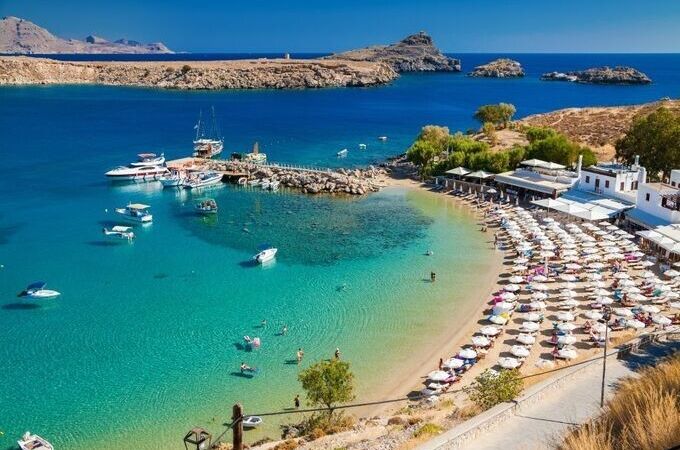
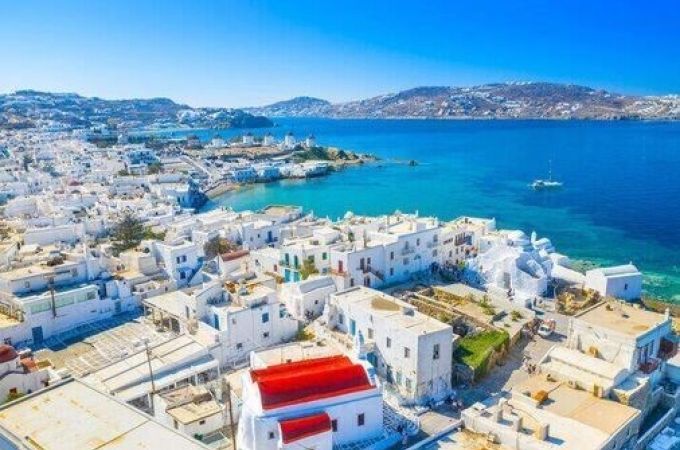
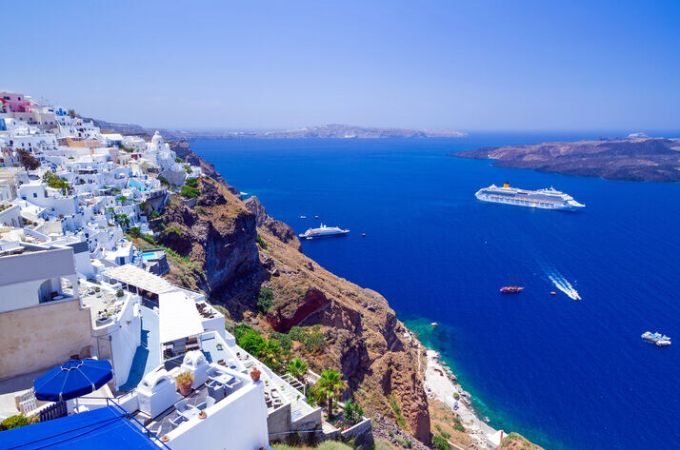
Santorini is valued for its caldera landscape, cliffside settlements and extraordinary visual setting. Mykonos brings a more social and energetic character, alongside beaches and recognizable Cycladic architecture. Naxos offers a larger landscape where beaches, mountain villages, agriculture and ancient sites coexist. Paros combines attractive settlements and coastal life in a format that many travelers find relatively easy to explore.
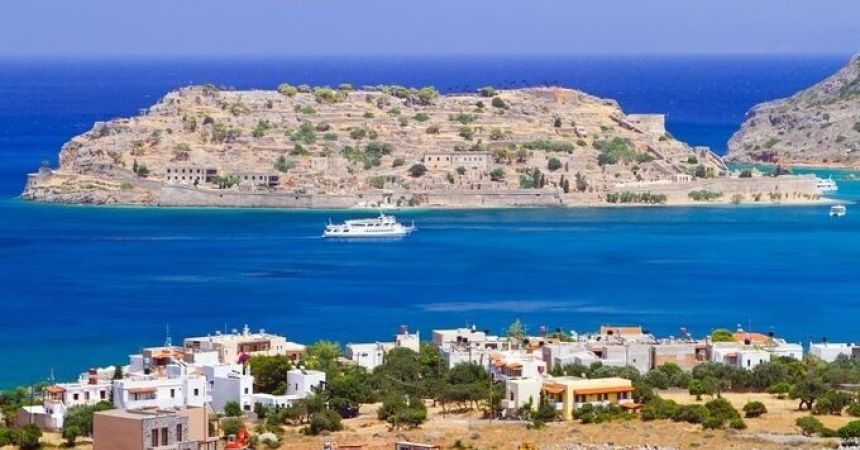
Crete is different again. Calling it simply another Greek island does not really capture its scale or complexity, because it can support an entire journey by itself.
Instead of asking which island is “best,” give each candidate a personality.
| Island | Strongest Character | What It Can Add |
|---|---|---|
| Santorini | Dramatic and visual | Caldera scenery, distinctive setting |
| Mykonos | Social and energetic | Dining, nightlife, beaches |
| Naxos | Spacious and varied | Villages, beaches, inland exploration |
| Paros | Balanced and easygoing | Coastal towns, beaches, relaxed movement |
| Crete | Large and multidimensional | Cities, archaeology, food, landscapes |
This is deliberately not a scorecard.
The objective is to identify differences, because differences are what make a pairing interesting.
The Second Island Should Answer a Different Desire
Imagine that Santorini is your first choice.
You chose it because you want the caldera, dramatic views and the particular atmosphere of villages built high above the sea. Once that decision is made, the second island should not be selected by asking, “What is the next most famous island?”
Ask instead:
What is Santorini not giving me?
Perhaps you want broader beaches and inland villages, which makes Naxos interesting. Maybe you want a livelier social scene, which points toward Mykonos. If you want something relaxed but still unmistakably Cycladic, Paros enters the discussion.
This creates a complementary pairing rather than a collection.
The same logic works if Naxos is your first priority. Because Naxos already provides substantial beaches, village life and inland exploration, your second island might earn its place by offering a more dramatic visual setting or a different social atmosphere.
The second island should complete a sentence the first island began.
Contrast Is Valuable, but Too Much Contrast Can Break the Journey
It would be easy to conclude that maximum difference always creates the best pair.
Not necessarily.
Two islands can be so different in scale, geography and travel rhythm that combining them changes the journey more than you intended.
Crete illustrates this particularly well.
It provides extraordinary contrast with a smaller Cycladic island, but Crete itself requires choices about which part of the island to explore. Distances are greater, the range of experiences is wider and a short stay can barely introduce what the island offers.
The question therefore becomes whether the contrast justifies giving a large destination such a small role.
This is why island compatibility has two dimensions:
experiential compatibility — do the islands contribute different things?
and
scale compatibility — can both be experienced meaningfully within the same nine-day journey?
A good pairing needs both.
Santorini and Naxos: Iconic Meets Expansive
Santorini and Naxos can complement each other particularly well because their strongest qualities are noticeably different.
Santorini's experience is concentrated around its extraordinary geography. The caldera dominates the visual identity of the island, and many of its best-known experiences are tied to that setting.
Naxos spreads the experience outward.
The island is larger, its interior matters, villages play a greater role and beaches can occupy more of the day without the entire visit revolving around a single dramatic landscape.
The transition therefore changes how you interact with the destination.
You might spend part of Santorini looking outward across the caldera, while Naxos encourages more movement through the island itself.
For travelers drawn to that combination, a Santorini and Naxos journey can make sense precisely because the islands are not trying to perform the same role.
The pairing offers recognition and discovery without requiring either island to imitate the other.
Santorini and Mykonos: Famous Does Not Mean Redundant
Santorini and Mykonos are often grouped together commercially, which can make the combination seem predictable.
That does not mean it lacks logic.
Their visual language may share Cycladic elements, but the experiences can be quite different. Santorini's geography creates a dramatic, almost theatrical setting, while Mykonos has a stronger reputation for beaches, dining, nightlife and a social atmosphere that becomes part of the destination itself.
The pairing works best when those differences are exactly what you want.
It works less well when you have chosen both primarily because they are the two island names you recognize.
That distinction is important.
Popularity can hide compatibility, but it can also hide the absence of a personal reason for choosing a destination.
If nightlife and an energetic evening scene have little appeal to you, Mykonos may not provide the complementary value you need. Another island could create a stronger second chapter.
Naxos and Paros: Less Dramatic Contrast, More Continuity
Not every good island pair needs to feel radically different.
Naxos and Paros can work through continuity rather than sharp contrast.
Both can support beaches, villages and a slower Cycladic rhythm, yet they are not identical. Naxos has a larger interior and can feel more expansive, while Paros offers its own coastal settlements and an accessible island atmosphere.
The appeal here is not a dramatic change of mood.
It is the feeling of moving deeper into one regional style.
This can suit travelers who do not want each destination to announce itself as a completely new phase of the holiday. Instead, the journey develops gradually, with differences appearing through places, landscapes and daily rhythm.
That kind of pairing often feels less like collecting highlights and more like spending time in the Cyclades.
Large Island + Small Island Requires Different Mathematics
Combining Crete with a smaller island deserves particular care because the word “island” disguises an enormous difference in scale.
A few nights can give you a meaningful introduction to a compact island.
The same number of nights in Crete may force you to choose between regions before you have even arrived.
This does not make Crete unsuitable for a nine-day trip. It means Crete should not automatically receive equal time simply because you are visiting two islands.
If Crete is central to your interests, it may deserve to dominate the island portion of the journey, while the smaller island provides a shorter contrast.
A Crete and Santorini experience can therefore work better when Crete is treated as a substantial destination rather than as another equal stop in a symmetrical itinerary.
Equal nights do not necessarily create equal experiences.
Do Not Choose Two Islands That Solve the Same Problem
This is one of the most useful tests in the entire planning process.
Suppose the reason you want Island A is:
“Beautiful beaches and relaxed days.”
Then you choose Island B for exactly the same reason.
There is nothing inherently wrong with that if a beach-focused holiday is precisely what you want. However, if the broader objective is to experience different sides of Greece, the second island may not be adding much beyond geographical variety.
Now imagine Island A provides dramatic scenery and iconic villages, while Island B gives you inland exploration, broader beaches and a more local agricultural landscape.
The pairing has a reason to exist.
When evaluating islands, complete this sentence for each:
“I am going here because…”
If both sentences are almost identical, decide whether repetition is intentional.
If it is, keep the pair.
If it is not, choose again.
Think About the Days Between the Postcards
Island selection is often driven by moments.
Sunset in Oia.
A beach photograph.
A harbor.
A whitewashed lane.
Those moments matter, but they occupy only a fraction of the time you will spend on an island.
Ask what an ordinary afternoon looks like.
Would you enjoy driving into Naxos's interior? Do you want the restaurants and evening atmosphere associated with Mykonos? Are you interested enough in Crete's archaeology, food and regional landscapes to give the island the time it needs?
Compatibility is revealed in these ordinary hours.
Two islands may both provide spectacular photographs while supporting very different kinds of days.
The better pair is usually the one whose normal days you would enjoy, not merely the one with the strongest headline sights.
Use a Pairing Matrix, Not a Bucket List
A practical way to compare combinations is to score them conceptually across four dimensions.
| Pair | Experience Contrast | Scale Fit | Regional Continuity | Overall Character |
| Santorini + Naxos | High | Strong | Strong | Iconic + exploratory |
| Santorini + Mykonos | High | Strong | Strong | Dramatic + social |
| Naxos + Paros | Moderate | Strong | Excellent | Relaxed Cyclades |
| Santorini + Crete | High | More demanding | Good | Scenic + multidimensional |
| Mykonos + Paros | Moderate | Strong | Strong | Social + relaxed |
This is not intended to declare a winner.
Its purpose is to expose why a pairing works.
Once that reason becomes clear, choosing between islands becomes far easier than comparing generic lists of “best things to do.”
Nine Days Gives You Permission to Reject the Famous Pair
Perhaps the most useful thing nine days gives you is enough time to make a personal choice without feeling that every destination must be universally recognizable.
If Santorini has always been your dream, go.
If Mykonos fits your travel style, include it.
But if Naxos and Paros sound more like the days you actually want to have, choosing them does not make the trip less complete.
Greece is not an exam in which points are awarded for identifying the most famous islands.
A strong nine-day journey is one where the destinations make sense together and make sense for you.
That requires something more thoughtful than fame.
It requires compatibility.
Do Not Divide the Nights Just to Make the Numbers Look Neat
Once two islands have been chosen, there is a strong temptation to divide the available nights equally. Symmetry feels organized, and an itinerary with three nights here and three nights there can look reassuringly balanced before you travel.
The problem is that islands do not offer equal experiences simply because they receive equal time.
A larger island with an extensive interior may reward an additional day far more than a compact island where your priorities are concentrated within a smaller area. Likewise, an island you chose for beaches and slower exploration may need more breathing room than one selected for a handful of specific experiences.
Instead of dividing nights mathematically, decide what you actually want to accomplish in each place.
If one island has four experiences you care about and the other has two, the allocation should probably reflect that difference. If one is deliberately intended as a slower chapter, give it enough time for slowness to become possible.
A balanced journey does not require an equal number of nights.
It requires each island to have enough time to perform the role you chose it for.
Decide Which Island Leads and Which One Complements
Two-island itineraries become clearer when one destination is allowed to lead.
This does not mean the second island is less important. It means the pair has a hierarchy rather than competing for equal attention.
If Santorini is the reason you started planning Greece, build around that fact and choose a second island that changes the experience without distracting from your priority. If Naxos is where you imagine spending longer days exploring villages and beaches, let it become the principal island stay while another destination provides a shorter, sharper contrast.
This approach also removes an unnecessary pressure from the itinerary.
You no longer need both islands to provide everything.
One can be scenic and concentrated while the other is expansive. One can be energetic while the other is quieter. One may revolve around the coastline while another rewards exploring inland.
Complementary islands are allowed to be incomplete because the pair completes the journey.
Athens Should Support the Pair You Choose
Athens still matters in a nine-day Greece trip, but its role should respond to the island combination rather than being allocated a fixed number of days automatically.
If your two islands are relaxed and beach-oriented, Athens may provide the cultural density and historical intensity that the journey otherwise lacks. If the islands already contain significant archaeological interests, you may approach the capital differently, giving more attention to neighborhoods, food and contemporary city life rather than trying to make every day monument-heavy.
The point is not to reduce Athens to a gateway.
It is to prevent the entire itinerary from being assembled as three unrelated blocks with predetermined night counts.
Athens can provide contrast to both islands at once.
When viewed this way, the journey becomes a triangle of complementary experiences rather than a formula of capital + island + island.
Consider What the Second Island Does to Your Memory of the First
There is another, less obvious form of compatibility that rarely appears in itinerary planning.
The second destination changes how you remember the first.
Moving from Santorini to somewhere more spacious may make the caldera feel even more dramatic in retrospect. Following energetic Mykonos with a quieter island can make the difference in pace more noticeable. Visiting two relatively relaxed islands may instead create continuity, leaving you with a broader impression of Cycladic life rather than two sharply separated memories.
This is one reason sequence can matter even when the same two islands are involved.
You are designing not only two destination stays but the transition between them.
Ask whether the second island provides a satisfying development of the journey. It might deepen the first experience, deliberately contradict it or allow the pace to soften.
What matters is that the sequence feels intentional.
Avoid the “Famous Plus Famous” Shortcut
There is nothing wrong with choosing famous destinations.
They became famous for reasons.
Problems begin when recognition replaces decision-making.
A traveler may select Santorini and Mykonos without considering whether nightlife matters, whether beaches are a priority or whether another island's villages and interior landscapes would better suit the way they travel.
The resulting trip may still be excellent, but that would be partly accidental.
A better approach is to remove the island names temporarily and compare the experiences instead.
Would you prefer:
dramatic scenery + social energy
or
dramatic scenery + village exploration
or
beaches and inland landscapes + relaxed coastal towns?
Once the choice is framed this way, the appropriate island names become much easier to identify.
This is also more useful than asking another traveler for their favorite island. Their favorite may be perfectly matched to a holiday you have no interest in taking.
A Smaller Difference Can Sometimes Produce the Better Pair
Contrast is useful, but harmony has value too.
Naxos and Paros illustrate this well. Their pairing may not create the same dramatic change of atmosphere as Santorini followed by Mykonos, yet that can be precisely the attraction.
You remain within a broadly Cycladic rhythm while experiencing variations within it.
For travelers who want their nine days to feel like one coherent journey rather than several dramatically different mini-holidays, this can be a strength.
A Naxos and Paros island route can therefore make sense when continuity, beaches, villages and a slower regional experience matter more than collecting the most recognizable island names.
Compatibility does not always mean opposites.
Sometimes it means two places speaking the same language with different accents.
Watch for Experience Duplication
Two islands may appear different geographically while competing for the same hours emotionally.
Suppose your main plan on both islands consists of visiting a famous village around sunset, spending the following day at a beach and walking around the main town in the evening.
The scenery may change, but the rhythm does not.
Again, there is nothing inherently wrong with this if repetition is what you want. A deliberately beach-oriented trip can be wonderful precisely because the days follow a relaxed pattern.
The issue arises when you expected variety.
Before confirming the pair, write down the three experiences you most want from each island. If four or five of the six are essentially interchangeable, ask whether the second destination contributes enough to justify its place.
This experience duplication test is often more revealing than comparing attraction lists.
Large Islands Need to Be Treated as Regions
Crete deserves particular emphasis because it can distort an island comparison.
Santorini, Mykonos, Naxos and Paros are different in size and complexity, but Crete operates on another scale. Its cities, archaeological sites, mountain landscapes, beaches and regional food traditions are spread across a large geographical area.
Trying to “do Crete” in the same way you might experience a smaller Cycladic island can therefore produce an unrealistic plan.
If Crete belongs in your nine days, choose which version of Crete belongs.
Perhaps archaeology and Heraklion are central. Perhaps you care more about Chania and western landscapes. Maybe the island is intended mainly for food and a slower coastal stay.
Defining the role prevents Crete from becoming an entire separate itinerary hidden inside one destination name.
The Final Pairing Test
Before booking, evaluate the two islands together rather than separately.
| Compatibility Question | What You Want to See |
|---|---|
| Do they offer different experiences? | Enough contrast to justify both |
| Are they similar in a way I genuinely enjoy? | Intentional continuity |
| Does one require significantly more time? | Unequal nights are acceptable |
| Can I explain why each island is included? | Clear individual roles |
| Are my planned days noticeably different? | Limited accidental duplication |
| Does the sequence improve the journey? | A natural progression |
| Would I choose both without their fame? | Genuine personal fit |
If you can answer these questions confidently, you probably have a strong pair.
If several answers depend on phrases such as “because everyone goes there” or “because it seems like we should,” the itinerary deserves another look.
Nine Days Is Long Enough to Make the Trip Personal
The real advantage of nine days is not that another destination fits.
It is that you have enough time to stop relying entirely on the standard Greece checklist.
Athens can provide the historical and urban foundation, while two islands can reveal different versions of the Aegean or introduce a much larger island world if Crete is involved. The islands do not need equal nights, equal fame or opposite personalities; they simply need to contribute enough individually and make sense together.
That is the difference between choosing destinations and building a journey.
A map can tell you whether two islands are near each other, while a timetable can tell you whether a connection exists. Neither can tell you whether you will enjoy spending several days in both.
For that decision, look at how you actually travel.
Think about the ordinary afternoons, not only the famous sunsets. Consider whether you want contrast or continuity, whether one island deserves to lead and whether the second gives you something the first cannot.
Nine days provides enough room for two islands.
Use that room to choose the right two, rather than simply the obvious two.
Frequently Asked Questions About 9 Days in Greece
How many Greek islands should I visit in nine days?
Two islands can provide an excellent balance when Athens is also part of the journey, particularly if each island has a clear purpose and enough time to feel distinct. Adding more islands may suit faster travelers, but it increases the likelihood that destinations become short stays rather than meaningful experiences.
What are the best two Greek islands to combine in nine days?
There is no universally best pair because compatibility depends on travel style. Santorini and Naxos offer strong contrast, Naxos and Paros provide greater continuity, while Santorini and Mykonos suit travelers wanting dramatic scenery followed by a more social atmosphere. Choose according to complementary experiences rather than rankings.
Are Santorini and Mykonos too similar to combine?
Not necessarily. Although both share recognizable Cycladic characteristics, their strongest travel experiences differ considerably. Santorini is dominated by its caldera landscape and dramatic setting, while Mykonos has a stronger association with beaches, dining and social energy. The combination works when those differences match your priorities.
Are Santorini and Naxos a good island combination?
They can complement each other particularly well because Santorini provides a concentrated, dramatic landscape while Naxos offers broader beaches, inland villages and more extensive exploration. This creates a noticeable change in daily rhythm without moving outside the wider Cycladic setting, which many travelers find appealing.
Should I combine Naxos and Paros in one trip?
Naxos and Paros can suit travelers who prefer continuity over dramatic contrast. Both offer a relaxed Cycladic experience, yet Naxos has a larger interior and a more expansive character. The pairing can feel regionally coherent rather than like two completely separate holiday styles joined together.
Can I combine Crete with another island in nine days?
Yes, but Crete's scale needs to be respected. Rather than treating it as an equal-sized stop alongside a smaller island, identify which part of Crete you actually want to experience and allocate time accordingly. An unequal division of nights may create a considerably stronger journey.
Should both islands get the same number of nights?
No. Equal night counts may look balanced but can ignore differences in island scale and your personal priorities. Give more time to the island with greater experiential depth for your interests, or to the one intended as the slower portion of the journey rather than dividing nights mechanically.
How do I know if two Greek islands are too similar?
Compare the three experiences you most want on each island. If the lists largely consist of the same beaches, village walks, sunsets and evening routines, decide whether that repetition is intentional. Similar islands can work beautifully, but travelers expecting variety should look for stronger complementary value.
Is it better to choose contrasting or similar islands?
Both approaches can work. Contrasting islands create a more noticeable change of mood, while similar islands can provide a deeper sense of one region and a smoother travel rhythm. The important factor is whether the similarity or difference reflects the experience you deliberately want from the trip.
Should Athens still be included when visiting two islands?
For many first-time visitors, Athens adds historical, cultural and urban experiences that contrast strongly with island travel. Its role does not need to follow a fixed number of nights, however. The amount of Athens time should reflect what the two selected islands already contribute to the overall journey.
What is the biggest mistake when choosing two islands?
The most common mistake is choosing both primarily because they are famous rather than because they work together. Two excellent islands do not automatically create an excellent pairing. Compare their atmosphere, scale, ordinary daily experiences and the specific role each will play before committing to both.
How can I choose between several possible island pairs?
Begin by identifying your non-negotiable island, then ask what experience it does not provide. Use the second island to add that missing quality, unless you intentionally prefer continuity. Finally, compare scale, likely daily rhythm and experience duplication before deciding which pairing best reflects how you travel.

A travel professional specializing in tailor-made travel planning, guest experience management, and multi-destination tourism operations.
With over 23 years of experience in the travel industry, he designs and manages private and cultural tours for international travelers across Türkiye, Greece, Egypt, Jordan, Morocco, and other destinations.
He has strong expertise in both online and face-to-face guest communication, sales processes, and end-to-end travel operations.
Working closely with hotels, travel agencies, and local partners, he ensures smooth coordination and high-quality travel experiences at every stage of the journey.
His focus is on delivering personalized, reliable, and seamless travel experiences for international guests worldwide.