Athens in April: The Weather Made for Exploring on Foot
Last Updated: August 2026
There are months when Athens asks you to work around its climate, and there are months when the weather largely gets out of the way.
April belongs much closer to the second group.
The midday heat that will eventually dictate the timing of archaeological visits has not yet arrived, winter's colder interruptions become less influential, and daylight extends far enough into the afternoon that walking across the historical center no longer feels like something to calculate carefully. You can spend substantial time on the Acropolis, continue through surrounding archaeological areas, stop for lunch and still have enough comfortable daylight for another part of the city.
That combination explains April better than the temperature alone.
March is the month when Athens visibly moves toward spring. By April, travelers no longer need to search quite so hard for evidence that the season has changed. Outdoor café tables fill more consistently, vegetation across the city's hills is still benefiting from winter rainfall, and the question shifts from “Will today be good enough for a long walk?” toward “How much of Athens should we cover before dinner?”
Rain has not disappeared, nor has every evening become warm enough for light clothing. April remains spring rather than early summer, and weather systems can occasionally interrupt several otherwise beautiful days.
Yet for travelers whose priorities are the Acropolis, ancient sites, neighborhoods and seeing Athens primarily on foot, the month occupies an unusually favorable climatic window.
April's Advantage Is Not Warmth. It Is Usability.
Typical daytime temperatures often rise into approximately 18–23°C, while nights commonly settle around 11–15°C. Conditions naturally vary between years and individual weeks, with warmer periods possible and cooler, rainy days still part of the month.
Those averages sound pleasant.
What makes them valuable is how little they restrict the sightseeing day.
At 21°C, walking across an exposed archaeological site requires almost no heat strategy. You do not need to seek shade constantly, organize lunch around the hottest part of the afternoon or decide whether another uphill route is worth the physical effort.
How April Weather Changes the Sightseeing Day
| Time | Typical April Opportunity | Main Consideration |
|---|---|---|
| Early morning | Comfortable archaeological visit | Light layer may help |
| Late morning | Excellent walking conditions | Sun protection begins mattering |
| Midday | Outdoor sightseeing remains practical | Increasing UV exposure |
| Afternoon | Long neighborhood walks | Carry water |
| Early evening | Outdoor cafés and terraces | Usually pleasant |
| After dark | Dining and city walks | Jacket may still be useful |
The important word here is continuous.
April can support an outdoor day without forcing a long climatic interruption in the middle.
This Is When the Acropolis Stops Requiring a Weather Strategy
Every month is capable of producing an excellent Acropolis visit.
April simply makes the conditions easier to achieve.
Winter rain becomes less dominant, temperatures remain well below peak-summer extremes and longer daylight gives travelers more freedom over when they visit. Early morning remains attractive for atmosphere and lower visitor pressure, but weather alone no longer forces everyone toward the coolest hours.
This changes the quality of planning.
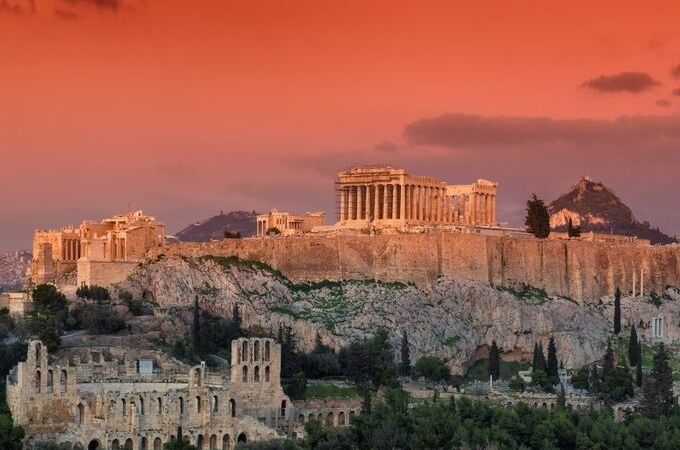
A spring Acropolis and Athens tour can spend proper time outdoors without structuring the entire experience around escaping either cold rain or serious heat.
Visitors interested in history may particularly appreciate the ability to slow down.
Ancient architecture benefits from time. The Acropolis is more than a viewpoint and the Agora is more than a collection of ruins beneath it. Comfortable spring weather makes it easier to stop, look and understand spatial relationships rather than progressing simply because physical conditions encourage you to keep moving.
April Is the Month to Join the Archaeological Dots
Athens contains ancient sites across a living modern city rather than inside one isolated archaeological park.
April weather makes that geography easier to understand.
Walk between the Acropolis slopes, Ancient Agora, Roman Agora and surrounding historic neighborhoods, and the spaces separating those sites become part of the experience rather than inconvenient distances between attractions.
This is where April differs subtly from March.
March expands your walking radius as spring emerges.
April allows you to use that expanded radius with much greater confidence.
How Much Outdoor Archaeology Fits Comfortably?
| Conditions | Suggested Approach |
| 18–21°C, dry | Extensive archaeological walking |
| 21–24°C, sunny | Excellent; add water and sun protection |
| Mild high cloud | Among the best walking conditions |
| Light showers | Mix sites with indoor stops |
| Warmer afternoon | Move exposed sites earlier |
| Rainy day | Museums + sheltered historic center |
This is not a recommended attraction count.
It is a measure of how much less the climate interferes with your interests.
Spring Greenery Has Reached Its Most Convincing Stage
Travelers whose mental image of Athens comes from July or August may be surprised by the landscape around the city in April.
Winter rainfall and spring growth can leave hillsides and archaeological spaces noticeably greener than during the dry summer season. Wildflowers and seasonal vegetation can appear around parts of Attica, while the city's green spaces have not yet endured months of summer heat.
The contrast is particularly visible around hills and less densely built areas.
This matters aesthetically, but also historically.
Ancient sites appear differently when surrounded by spring vegetation rather than the dry ochre landscape familiar from high-season photographs.
A photograph of the Parthenon does not change.
Its seasonal context does.
Philopappos Hill Deserves Time, Not Just a Sunset Slot
Many Athens itineraries treat viewpoints as events scheduled near sunset.
April makes that unnecessarily restrictive.
Philopappos Hill can be incorporated naturally into a longer daytime walk because climbing conditions are generally comfortable, while spring vegetation adds interest to the route itself.
You do not need to race upward at 6:30 p.m. alongside everybody else who had the same idea.
Go when visibility is good.
Stay longer if the weather is pleasant.
A springtime Athens panorama walk works particularly well during April because the route itself can matter as much as the final view.
Lycabettus offers a different urban perspective and remains another strong option, particularly on clear days when visibility extends toward the surrounding mountains and Saronic Gulf.
Wind still deserves attention on exposed viewpoints.
Spring does not eliminate geography.
Rain Is Now More Annoying Than Defining
By April, many travelers mentally expect spring sunshine.
That makes rain feel more disappointing than it did in winter, even though unsettled periods remain entirely normal.
A rainy April day should not be treated as evidence that you chose the wrong month.
The city remains exceptionally well equipped for weather changes because museums, historic neighborhoods, restaurants and archaeological sites sit within an itinerary that can be rearranged relatively easily.
The difference is psychological.
January visitors pack expecting rain.
April visitors sometimes pack expecting postcards.
The second group is more likely to be frustrated.
Bring light waterproof protection and leave enough flexibility that one wet period does not force you to abandon a prepaid sequence of outdoor activities.
Greek Easter Can Completely Change the Character of Your Dates
April requires one calendar check that has nothing to do with temperature.
When is Orthodox Easter this year?
Greek Orthodox Easter moves annually and may fall in April or, depending on the year, at another point in spring. When your visit overlaps with Holy Week or Easter, the atmosphere, operating schedules and movement around the country can differ from an ordinary April week.
This is not a reason to avoid the period.
For travelers interested in Greek culture, it can add considerable depth to the visit.
Churches become more active, religious traditions become visible and the holiday weekend has genuine importance to local life rather than existing primarily as a tourism event.
However, opening schedules, transportation demand and individual business hours may change.
Check exact dates for the year you are traveling rather than relying on generic April advice.
Ordinary April vs Easter Period
| Regular April Dates | Easter-Period Dates |
| Standard city rhythm | Holiday atmosphere |
| Normal transport demand | Increased domestic travel possible |
| Regular attraction planning | Holiday hours require checking |
| Tourism-focused spring trip | Cultural/religious dimension |
| Easier restaurant assumptions | Reservations may matter more |
| Weather drives planning | Calendar also drives planning |
This distinction gives April an identity no other Athens weather month should copy.
Outdoor Lunch Is Becoming a Reliable Pleasure
March gives Athens outdoor café moments.
April makes them part of the normal day.
On mild afternoons, lunch outside can feel completely natural rather than opportunistic, particularly at sheltered tables. The temperature is warm enough to linger without the intense sunshine that will later encourage visitors to search actively for shade.
Evenings remain more variable.
A warm day does not guarantee that you will be comfortable sitting outdoors late at night without another layer, especially earlier in the month or when wind picks up.
Carry something light rather than returning to the hotel simply because dinner will happen after sunset.
April packing should support spontaneity.
What Happens to the Athens Riviera in April?
The coast becomes considerably more appealing as the weather warms.
This still does not make April a guaranteed swimming month for every traveler. Sea temperatures lag behind air temperatures, and personal tolerance varies widely.
The more useful April coastal experience involves walking, dining and spending time beside the Saronic Gulf without the intense heat and seasonal crowds associated with summer.
A April Athens Riviera outing can work well for visitors with four or more days, particularly when the forecast shows a clear, mild afternoon.
If you decide to swim, treat it as a bonus.
The article's semantic ownership remains urban spring sightseeing rather than beach-season prediction.
Sun Protection Starts Mattering More Than Your Jacket
April is mild enough that travelers sometimes underestimate sun exposure.
The absence of uncomfortable heat does not mean UV levels are insignificant, particularly during long days spent outdoors around pale stone surfaces with limited shade.
Sunglasses, sunscreen and water should now become normal daytime items.
A hat can also be useful during extended archaeological visits.
This represents another transition from winter packing.
April's Changing Day Bag
| Carry | Why |
| Sunscreen | Longer outdoor exposure |
| Sunglasses | Stronger spring light |
| Water | Extended walking days |
| Light jacket | Cooler morning/evening |
| Compact rain layer | Spring showers |
| Comfortable shoes | High walking mileage |
| Hat | Exposed archaeological sites |
You are no longer packing mainly against cold.
You are preparing for a long day outside.
Early April and Late April Are Starting to Diverge
The difference is not dramatic enough to create two separate travel seasons, but it is meaningful.
Early April retains more cool-evening potential and a slightly stronger possibility of unsettled spring weather.
Late April generally feels warmer, daylight extends further and outdoor dining becomes easier.
It also moves Athens closer to May's pre-summer conditions.
| Early April | Late April |
| Cooler mornings possible | Milder starts |
| Jacket more useful | Lighter layers often enough |
| Spring fully visible | Warm season approaching |
| Outdoor dining weather-dependent | Outdoor dining increasingly easy |
| Excellent walking | Excellent walking with more sun awareness |
| Lower heat concern | First warmer afternoons possible |
Neither half automatically wins.
Travelers interested in maximum walking comfort may actually prefer conditions before temperatures rise further.
April's Real Luxury Is Not Needing to Choose
Winter Athens often asks visitors to balance indoor and outdoor sightseeing according to the forecast.
Summer asks them to balance sightseeing ambition against heat.
April can remove much of that negotiation.
Spend the morning outside.
Stay outside after lunch.
Climb a hill because it looks inviting rather than because tomorrow might be too hot. Walk back through the city rather than taking the metro simply because the evening remains pleasant.
This is why April deserves its own place in the Athens weather cluster.
It is not merely warmer March.
Nor is it cooler May.
It is the period when the climate becomes unusually cooperative with the way most first-time visitors naturally want to experience Athens: on foot, outdoors and without constantly thinking about the weather.

How Much Athens Can One Comfortable Day Hold?
Quite a lot, although that does not mean you should try to fit everything into it.
This is one of April's pleasant contradictions. The weather often allows travelers to construct extremely ambitious days, yet the same comfortable conditions remove much of the urgency to do so.
Suppose the morning begins at an archaeological site. When the visit finishes, you still feel comfortable walking, so you continue through the historical center rather than looking immediately for transport. Lunch outside takes longer than expected, but there is sufficient daylight left for another neighborhood or hill. By early evening, you realize you have spent most of the day outdoors without once reorganizing the schedule because you were too hot, too cold or waiting for rain to stop.
That is when April works best.
The weather becomes background information.
For a destination where so much of the historical experience happens outside, that is an unusually valuable advantage.
Don't Confuse Comfortable Walking With Fast Sightseeing
Good weather can encourage bad itineraries.
When temperatures are pleasant and daylight is generous, travelers sometimes respond by adding another attraction, then another, until a supposedly relaxed spring day becomes an endurance exercise.
April should make Athens slower rather than busier.
The ability to remain outdoors comfortably means there is less reason to rush through archaeological sites. Sit occasionally. Look back toward the city from elevated areas. Allow twenty minutes for a street or square that was never included in the original plan.
How Hard Should You Push an April Day?
| Travel Style | Outdoor Time | Better April Approach |
|---|---|---|
| Relaxed city break | 4–5 hours | One major site + neighborhoods |
| Typical first visit | 6–7 hours | Archaeology + walking + long lunch |
| History-focused | 7–8 hours | Multiple sites at slower pace |
| Strong walker | 8+ hours | Add hills and wider districts |
| Family | Variable | Break the day around meals/rest |
| Older traveler | Variable | Use taxis/metro between walking zones |
There is no ideal number of hours.
April's advantage is that climate does not automatically determine the limit for you.
Three Nights Are Enough; Four Feel Different
A three-night April stay provides enough time for the major historical core, museums and substantial neighborhood exploration.
Four nights change the experience more significantly than they might appear to on paper.
The additional day allows travelers to stop treating every attractive weather window as something that must be maximized. A coastal afternoon, longer archaeological visit or extended lunch can fit without displacing something important.
Five nights or more suit visitors who want Athens to function as a city rather than a collection of major attractions.
April Stay-Length Decision
| Stay | What It Feels Like |
| 2 nights | Possible, but compressed |
| 3 nights | Strong first-time introduction |
| 4 nights | Excellent balance |
| 5 nights | Slower city + coastal flexibility |
| 6+ nights | Deeper neighborhood experience |
April's reliable outdoor potential makes additional days easier to use than in winter.
They do not exist primarily as weather insurance.
They create freedom.
Easter Travelers Need Two Itineraries in Their Head
If your dates overlap with Orthodox Easter, check current opening schedules before assuming an ordinary sightseeing pattern.
Museums and archaeological sites may have altered hours around public holidays, while transportation patterns can also change as Athenians travel to visit family or leave the capital for Easter celebrations elsewhere in Greece.
Restaurants and local businesses may operate differently as well.
This does not mean constructing a completely separate holiday months in advance.
It means knowing which elements are vulnerable to holiday schedules.
Easter Planning Priority
| Check Before Arrival | Why It Matters |
| Archaeological-site hours | Holiday schedules may differ |
| Museum opening times | Potential closures/reduced hours |
| Intercity transport | High domestic travel demand |
| Restaurant reservations | Holiday-period demand |
| Organized tours | Schedules may change |
| Local Easter events | Vary by year/location |
The religious calendar should never be guessed from the Western Easter date.
Greek Orthodox Easter follows its own calendar calculations and can fall on different dates.
Always verify the year you are traveling.
Holy Week Changes the Sound of Athens
Weather is not the only seasonal signal.
When April overlaps with Holy Week, church services and religious traditions introduce another rhythm into neighborhoods across the city. On Good Friday, epitaphios processions may take place, while the Resurrection service late on Holy Saturday holds major cultural and religious importance.
Travelers are guests around living traditions rather than spectators at a tourism performance.
Dress and behave respectfully around churches, avoid obstructing worshippers for photographs and recognize that local priorities during Easter do not necessarily revolve around visitor convenience.
For culturally curious travelers, this can become one of the most memorable aspects of an April trip.
For those interested only in archaeological sightseeing, it still matters because the holiday can affect practical schedules.
Either way, Easter belongs to April whenever the calendar places it there.
April Doesn't Require a Rain-Day Panic Plan
Rain is still possible.
The difference from winter is that most visitors no longer need to design the trip around it.
If a wet day appears, Athens has enough indoor cultural depth to absorb it. The Acropolis Museum and National Archaeological Museum can occupy substantial time without feeling like substitutes for the “real” trip.
Then move outdoor priorities when conditions improve.
Spring showers can also be intermittent, which means an apparently wet forecast may still contain useful outdoor windows.
Carry light rain protection rather than heavy winter equipment.
April planning should remain flexible without becoming defensive.
Is April Too Busy?
Visitor numbers generally rise as spring progresses, particularly around Easter and other high-demand dates.
This is the trade-off for increasingly attractive conditions.
Do not expect the Acropolis or Plaka to feel undiscovered simply because July has not arrived. Athens is a major international destination, and popular areas can be busy throughout much of the year.
However, April generally avoids the combination of peak summer tourism and extreme heat that can make crowded sites physically demanding.
The solution is not obsessing over crowd-free photographs.
Visit major attractions thoughtfully, then use the rest of the day to explore areas where visitor density naturally disperses.
A city should not be judged entirely by the busiest fifty meters around its most famous monument.
Spring Evenings Start Extending the Social Day
April evenings can be one of the quiet pleasures of the month.
After a full day of sightseeing, there is often enough residual warmth for an evening walk before dinner, particularly later in April. Outdoor tables become more appealing, and rooftop venues begin making greater seasonal sense.
A light jacket may still be useful once the sun disappears.
This is precisely where April should stop semantically.
May will own the transition toward reliably warmer evenings, stronger rooftop culture and the first genuine pre-summer atmosphere.
April is still primarily about the day.
Its evenings are becoming pleasant enough to extend it.
Should You Include Cape Sounion?
April conditions can make Cape Sounion particularly attractive because the archaeological setting is exposed and outdoor-focused.
Cool-to-mild spring temperatures are well suited to exploring the Temple of Poseidon and surrounding coastal landscape without peak-summer heat.
The decision is primarily about trip length.
With only two days in Athens, leaving the city may compete too heavily with central historical priorities. At four or five days, the excursion fits more naturally.
Weather also matters.
A clear afternoon offers greater visual reward than a heavily overcast or rainy one, so avoid fixing the trip to a poor-weather day when your schedule allows flexibility.
March, April or May?
These months can all provide excellent Athens trips, but they should not be treated as interchangeable “spring shoulder season.”
| March | April | May |
| Spring visibly emerging | Spring fully usable | Warm season approaching |
| Walking radius expands | Long outdoor days feel effortless | Heat awareness begins growing |
| Weather still transitional | Greater weather confidence | Increasingly warm afternoons |
| Outdoor café culture returning | Outdoor daytime life established | Evening life moves outdoors |
| Green landscape developing | Strong spring landscape | Gradual drying begins |
| Jacket frequently adjusted | Lighter layering | Summer clothing increasingly useful |
| Best for seasonal transition | Best for intensive walking | Best for pre-summer atmosphere |
If you enjoy watching the season change, choose March.
If you want to walk extensively without thinking much about temperature, April has the strongest argument.
If warmer evenings and a more summery atmosphere matter, May begins pulling ahead.
Who Gets the Most From April?
April has unusually broad appeal because its weather supports many different styles of city travel.
| Traveler | April Fit | Why |
| First-time visitor | Excellent | Easy outdoor sightseeing |
| Archaeology enthusiast | Excellent | Long comfortable site visits |
| Serious walker | Excellent | Mild temperatures + long days |
| Photographer | Excellent | Spring landscape and light |
| Couple | Excellent | Sightseeing + outdoor dining |
| Family | Very good | Manageable daytime temperatures |
| Older traveler | Very good | Less heat stress |
| Heat-sensitive traveler | Excellent | Before summer intensity |
| Beach-first visitor | Moderate | Coast attractive, sea still cool |
| Nightlife-focused traveler | Good | City active, but May onward warmer |
The month succeeds because very few traveler types are fighting the climate.
Twelve FAQs About Athens Weather in April
1. Is April a good time to visit Athens?
April is one of the strongest months for travelers interested in archaeology, extensive walking and outdoor sightseeing. Days are generally mild, daylight is generous and summer heat has not arrived, although spring rain and occasional cooler periods mean light layers and flexible planning remain sensible.
2. How warm is Athens in April?
Daytime temperatures often reach approximately 18–23°C, while nights commonly fall around 11–15°C. Warmer afternoons become more likely later in the month, but conditions remain generally comfortable for walking. Individual weather systems can still produce temporarily cooler or wetter days.
3. Does it rain in Athens in April?
Rain remains possible during April, including occasional unsettled periods or spring showers. However, dry and mild conditions become increasingly common. Visitors should carry light waterproof protection without organizing the entire itinerary around rain, as they might during the wetter winter months.
4. What should I wear in Athens in April?
Pack comfortable walking shoes, trousers or other light daytime clothing, removable layers and a light jacket for mornings and evenings. Sunscreen and sunglasses become increasingly important, while compact rain protection remains useful because spring weather can still change during the trip.
5. Is April good for visiting the Acropolis?
April is particularly well suited to the Acropolis because temperatures generally allow extended outdoor exploration without peak-summer heat. Longer daylight also provides greater scheduling flexibility. Popular sites can still become busy, especially around holidays, so weather comfort should not be confused with guaranteed low crowds.
6. Is Athens crowded in April?
Visitor numbers rise during spring, and popular attractions can be busy, particularly around Easter and other high-demand dates. April is not an empty low-season month. Its advantage lies more in comfortable sightseeing weather than in any guarantee of crowd-free archaeological sites.
7. Can I eat outside in Athens in April?
Yes. Outdoor lunch and café seating become increasingly reliable during April's mild weather, particularly at sheltered tables. Evening dining outside is also possible, especially later in the month, although temperatures can cool after sunset and carrying a light jacket remains sensible.
8. Can you swim in Athens in April?
Some visitors swim along the Athens Riviera in April, but sea temperatures remain cool compared with summer and comfort depends heavily on individual tolerance. The coast is better considered a walking, dining and scenery option, with swimming treated as a possible bonus rather than an expectation.
9. Is Athens open during Orthodox Easter?
Athens remains active during Orthodox Easter, but museums, archaeological sites, restaurants, shops and transportation services may operate on altered holiday schedules. Visitors should check official opening information for their exact year and dates rather than relying on normal April operating hours.
10. How many days should I spend in Athens in April?
Three days provide a strong first introduction, while four are ideal for combining major archaeological sites, museums, neighborhoods and slower outdoor exploration. Five or more days allow the coast, additional districts or excursions without turning comfortable spring weather into an unnecessarily rushed sightseeing schedule.
11. Is April or May better for Athens?
April generally offers cooler conditions for intensive archaeological walking, while May provides warmer afternoons and evenings with a stronger pre-summer atmosphere. Travelers prioritizing long outdoor sightseeing days may prefer April, whereas those wanting warmer evenings and rooftop dining may lean toward May.
12. Is April one of the best months for Athens?
For travelers whose priorities are archaeological sites, walking and spending most of the day outdoors, April has a strong claim. Mild temperatures and generous daylight align unusually well with Athens sightseeing, although Easter timing, occasional rain and increasing visitor numbers should still be considered.

A travel professional specializing in tailor-made travel planning, guest experience management, and multi-destination tourism operations.
With over 23 years of experience in the travel industry, he designs and manages private and cultural tours for international travelers across Türkiye, Greece, Egypt, Jordan, Morocco, and other destinations.
He has strong expertise in both online and face-to-face guest communication, sales processes, and end-to-end travel operations.
Working closely with hotels, travel agencies, and local partners, he ensures smooth coordination and high-quality travel experiences at every stage of the journey.
His focus is on delivering personalized, reliable, and seamless travel experiences for international guests worldwide.