Athens in July: Seeing the City When the Heat Is Real
Last Updated: August 2026
There is little value in pretending that July heat is merely a minor inconvenience in Athens.
Some days are straightforward summer days: hot, dry and bright, but entirely manageable for travelers who start early, drink enough water and avoid turning the middle of the afternoon into a walking competition. Other periods can become substantially hotter, particularly when a heatwave settles over the city, and the difference between those two situations matters far more than a monthly average suggests.
July therefore deserves more honest travel advice than “wear sunscreen and stay hydrated.”
Athens is an unusually exposed sightseeing destination. Many of the places first-time visitors have traveled thousands of kilometers to see are archaeological landscapes where shade is limited, stone reflects and stores heat, and the experience requires standing or walking rather than simply moving between air-conditioned interiors.
At the same time, Athens is also a modern capital filled with museums, restaurants, shaded streets, metro connections and a coastline within reach. Once direct sunshine weakens, another version of the city emerges, one that can remain lively long after travelers accustomed to early dinners expected the sightseeing day to be finished.
The challenge is not deciding whether July Athens is possible.
Millions of people live their ordinary lives here throughout summer.
The useful question for a visitor is different: which parts of your planned Athens day are still worth doing outdoors when the temperature climbs, and which are better moved, shortened or abandoned?
June teaches you to respect summer timing.
July asks you to make choices.
July Weather Is Not One Category of Hot
Typical July daytime highs in Athens are often around 32–35°C, while nights commonly remain near 23–26°C. Temperatures can rise significantly beyond those ranges during hotter periods, and rainfall is generally scarce.
Yet describing every July day as “very hot” removes the information travelers actually need.
A 32°C day with a reasonable morning can support a carefully timed archaeological visit and plenty of urban exploration.
A substantially hotter day, particularly during an official heat warning or prolonged heatwave, requires a different response.
The itinerary you created three months earlier should never outrank the conditions outside your hotel.
Use a Heat Ladder, Not a Monthly Average
Rather than attaching rigid rules to individual temperatures, July planning becomes easier when you think in escalating levels of exposure.
| What the Day Is Telling You | What Changes First | What You Protect |
|---|---|---|
| Ordinary summer heat | Start exposed sightseeing earlier | Main archaeological priorities |
| Strong midday heat | Reduce open-area walking | Museums and shaded districts |
| Very hot afternoon | Replace unnecessary walking with transport | Energy for evening |
| Exceptional heat | Reconsider strenuous outdoor plans | Health and safety |
| Official restrictions/warnings | Follow current authorities | Flexibility over itinerary |
| Cooler-than-expected day | Relax the strategy | Opportunity for longer walking |
This is deliberately not a “32°C means X, 36°C means Y” formula.
Humidity, wind, sun exposure, age, health and personal heat tolerance all influence what feels comfortable.
Current conditions matter more than a generic threshold.
The Acropolis Is Not the Place to Prove Your Heat Tolerance
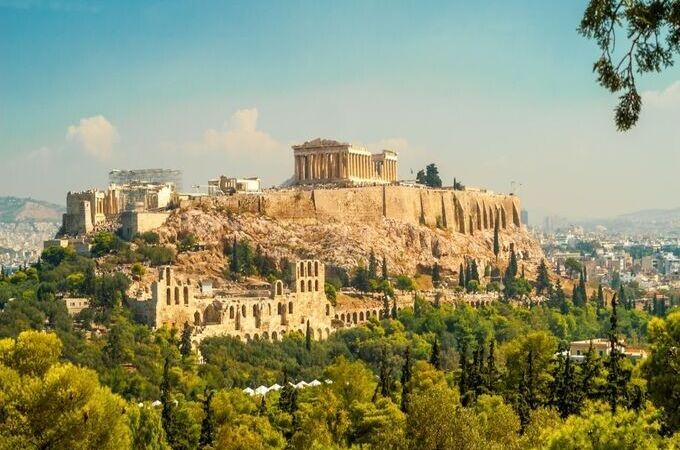
The Acropolis is exposed enough that July timing deserves genuine attention.
An early visit is generally the most sensible approach during hot weather because the site has had less time to accumulate heat and direct solar exposure is less punishing than later in the day.
This becomes even more important during particularly hot periods.
A July Acropolis early-access tour can therefore have practical value beyond avoiding some visitor congestion: timing changes physical comfort.
However, travelers should check current official opening information close to their visit. During exceptional heat events, Greek authorities may introduce temporary measures affecting archaeological sites, and those instructions should always take precedence over generic itinerary advice.
Do not assume that a ticket guarantees the conditions under which you originally expected to use it.
Summer requires current information.
Your Most Expensive Hour Can Be 2:00 p.m.
Not financially.
Energetically.
Imagine spending an hour walking through an exposed part of Athens during intense afternoon heat simply because the next attraction looks close on the map.
You arrive tired, thirsty and less interested in the place you actually wanted to see.
That hour cost more than transportation would have.
July forces travelers to think about energy as a limited daily resource. Walking remains one of the best ways to experience Athens, but not every kilometer has equal sightseeing value.
Crossing Plaka slowly in the evening is an experience.
Crossing a broad, sun-exposed route at the hottest point of the day merely to reach somewhere else may be transportation disguised as sightseeing.
Spend energy where Athens gives something back.
The July Question: Is This Worth the Sun?
Before adding an outdoor activity between late morning and afternoon, ask one simple question:
Would I still choose to do this if it were not already written on my itinerary?
That question eliminates a surprising amount of unnecessary summer effort.
You may decide the Ancient Agora absolutely deserves the exposure and adjust the timing accordingly.
You may realize that a particular viewpoint can wait until evening.
You may decide that walking forty minutes to a museum has no value when the metro can preserve your energy for later.
July is not about seeing less for the sake of seeing less.
It is about becoming selective.
Museums Change Status in July
In winter, museums often function as protection against rain.
In July, they solve a completely different problem.
The Acropolis Museum and National Archaeological Museum are not consolation prizes for travelers who could not tolerate the afternoon outdoors. They are major components of understanding Athens and can be placed deliberately during warmer hours.
This creates a satisfying historical rhythm.
See archaeological remains outdoors when conditions are more comfortable, then move inside later to understand the objects, sculpture and material culture associated with the ancient world.
A museum afternoon can therefore improve the intellectual structure of the day while simultaneously reducing heat exposure.
Good climate planning does not have to feel like climate planning.
Don't Make Every Outdoor Space a Sightseeing Space
One reason July becomes exhausting is that visitors sometimes remain in “tour mode” continuously.
Every street must lead somewhere.
Every walk needs a monument at the end.
Every café break is shortened because another attraction remains unchecked.
Athens becomes easier when some outdoor time has no objective.
Sit somewhere shaded.
Order something cold.
Watch the street for half an hour.
The city is still happening.
This matters especially during July because slowing down is not merely restorative; it allows you to experience the rhythm by which people actually use a hot Mediterranean capital.
A Midday Hotel Return Can Rescue the Evening
By July, choosing accommodation in or near the areas you expect to explore has an additional benefit.
The hotel becomes accessible enough to use twice.
After an early start and several hours outdoors, returning for a shower or rest during the hottest period can feel far more useful than forcing another attraction into the schedule.
Then leave again later.
This is particularly valuable for travelers staying three or more nights because there is less pressure to compress every major site into one continuous day.
A centrally located room may therefore have more practical summer value than a slightly cheaper hotel requiring a long journey each time you want a break.
Location buys flexibility.
In July, flexibility buys comfort.
July Packing Should Reduce Friction, Not Add Equipment
There is no need to carry an expedition pack through Athens.
Lightweight, breathable clothing, excellent walking shoes, sunscreen, sunglasses, a hat and water cover most ordinary summer sightseeing needs.
The emphasis should be on items you will actually use repeatedly.
A heavy bag itself becomes uncomfortable after several hours in heat.
Choose a small day bag and refill or restock what you need rather than carrying the entire day's contingency plan on your back.
The “Will I Still Want This at 4 p.m.?” Packing Test
| Item | Carry It? | Reason |
| Water | Yes | Essential throughout outdoor periods |
| Hat | Yes | High value, little weight |
| Sunscreen | Yes | Reapplication matters |
| Sunglasses | Yes | Constant usefulness |
| Heavy guidebook | Probably not | Use digital/light alternative |
| Large extra clothing layer | Usually no | July nights remain warm |
| Multiple unnecessary gadgets | No | Weight adds fatigue |
| Swimwear | Only if coast/pool planned | Purpose-specific |
Summer packing works when the bag becomes almost forgettable.
The Athens Riviera Is No Longer Just an Add-On
July gives the coast a different role than June.
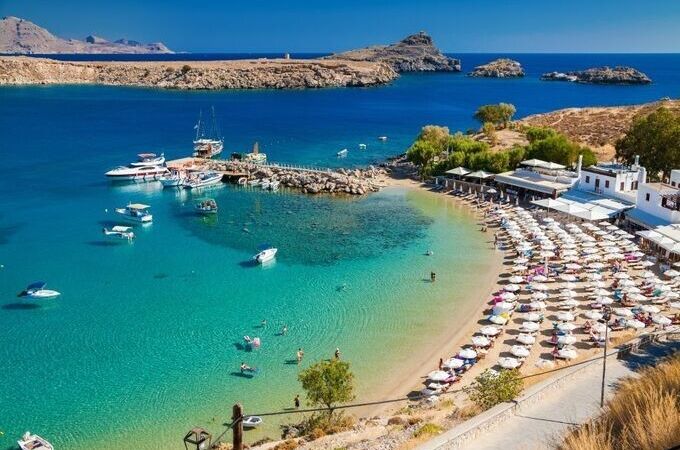
The Riviera can become part of how a longer Athens stay is structured, particularly for travelers who do not want several consecutive full days of archaeological and urban sightseeing.
A July Athens Riviera escape can create a deliberate contrast: history early in the trip, coastal time later, or even a morning in central Athens followed by a less demanding afternoon near the water when logistics make sense.
Swimming is firmly part of the conversation now, although beach choice, access, sea conditions and personal preferences still require separate research.
The important cluster distinction is that July coastal time is not merely “nice because the weather is warm.”
It can function as a pressure-release valve from the dense urban environment.
That becomes much more valuable during peak summer.
Don't Assume the Coast Will Always Feel Cool
This is an important correction to generic summer advice.
Going to the Riviera does not guarantee dramatically lower temperatures.
Hot weather can affect the entire Attica region, and some coastal areas may still feel very warm, particularly when wind is limited.
What changes is the environment.
Water, swimming opportunities, sea breezes when present and a less densely built setting can make the experience feel different from central Athens.
Choose the coast because you want coastal Athens.
Do not treat it as an air-conditioned room with a sea view.
After Sunset, July Athens Changes Category
This is where the month becomes much easier to love.
The city does not instantly become cool when the sun disappears, particularly during a hot spell, but removing direct solar exposure changes how walking feels.
Restaurants fill.
People stay outside.
Rooftops make complete climatic sense.
Neighborhoods that felt demanding several hours earlier become inviting again.
An Athens after-dark summer walk belongs naturally to July because evening is no longer simply the final part of a sightseeing day. It is one of the day's principal activity windows.
Travelers who normally eat dinner at six may benefit from shifting their habits slightly.
You do not need to imitate local schedules perfectly.
Simply recognize that some of July's best hours occur later than conventional sightseeing itineraries suggest.
Summer Athens Is a Two-City Experience
There is daytime Athens: bright, exposed, monumental and physically demanding when temperatures rise.
Then there is evening Athens: social, illuminated, restaurant-filled and easier to inhabit on foot.
Trying to experience the first version continuously from morning until night can make visitors dislike July unnecessarily.
Moving between the two creates balance.
This does not mean hiding indoors all afternoon.
A shaded lunch, museum, hotel rest, metro ride or coastal period can occupy the middle without turning the trip into a rigid heat-avoidance routine.
July requires strategy.
It does not require surrender.
What Should You Actually Cancel During Extreme Heat?
This question matters more than another packing list.
The answer depends on current conditions, official guidance and personal vulnerability, but there is a useful hierarchy.
Activities that are exposed, strenuous and replaceable should be easiest to move or remove.
A hill climb can happen another evening.
A long cross-city walk can become a metro journey.
An exposed viewpoint at midday adds little that the same viewpoint later cannot provide more comfortably.
Major archaeological priorities require more thought because they may be central to the trip, but even those should never override official heat-related restrictions.
The July Sacrifice Test
Instead of ranking activities from “best” to “worst,” rank what you would regret cancelling:
Hard to replace: Acropolis, personally important archaeological sites, pre-booked essential experiences.
Easy to move: viewpoints, neighborhood walks, shopping, rooftop timing.
Easy to replace: unnecessary transfer walks, duplicate viewpoints, activities added merely to fill time.
Never negotiable: current safety guidance and your own physical warning signs.
This hierarchy prevents a common travel mistake: sacrificing your wellbeing to protect the least important part of the itinerary.
Early July and Late July Don't Need Separate Articles
Both belong firmly to high summer.
Weather varies naturally from year to year, and a particular early-July week can be hotter than a later one.
Rather than promising that one half of the month will reliably be easier, treat July as a period in which significant heat is possible throughout.
The practical variable is the forecast for your dates, not whether your flight arrives on July 6 or July 26.
This also helps keep August semantically separate.
August will focus less on simply coping with peak urban heat and more on the unusual relationship between Athens, holiday departures, the coast and a city whose local rhythm changes during Greece's traditional vacation period.
July owns the heat decision.
June, July and August Should Never Read Like Three Temperature Updates
The progression is behavioral.
June: You learn how to distribute a summer sightseeing day.
July: You decide which outdoor experiences justify peak-summer exposure and build contingencies for serious heat.
August: You experience high summer through a different urban rhythm, when local holiday patterns and coast-versus-city decisions become more influential.
That distinction protects all three pages from competing for the same query space.
More importantly, it gives travelers an actual reason to read the month that matches their dates.
July Is Excellent for Some Travelers and Wrong for Others
Someone who loves warm nights, outdoor dining and combining cultural sightseeing with coastal time may genuinely enjoy July.
A traveler who becomes uncomfortable above 27°C may find the same trip unnecessarily demanding.
Neither response is incorrect.
July should not be marketed as universally wonderful simply because Greece is associated with summer.
It is a strong month for visitors prepared to cooperate with the climate.
It is a weak month for visitors who expect to walk intensively through exposed archaeological areas from late morning until afternoon without heat influencing the experience.
Knowing which traveler you are matters more than any “best month” ranking.
Part of Athens Belongs to the Night in July
The mistake is assuming that reducing afternoon intensity reduces the trip.
It can actually broaden it.
An early archaeological start reveals Athens when the city is beginning its day. A museum or long lunch changes the rhythm during the hottest period. Then evening returns you to the streets under completely different conditions.
You have not experienced half a day.
You have experienced several versions of the same city.
That is the structure July wants.
Not because every day will be dangerously hot and not because visitors should become nervous about Mediterranean summer weather, but because pretending temperature is irrelevant makes little sense in a city whose greatest monuments stand beneath an open sky.
July rewards travelers who acknowledge the obvious and then plan intelligently around it.
What Is Worth Spending Your Heat Budget On?
Every July traveler has a limited amount of enthusiasm for being outdoors in direct sunshine.
Some people have considerably more than others, but nobody has an infinite supply.
The useful question is where to spend it.
If ancient Athens is the reason you came, allocate the most comfortable outdoor hours to the archaeological sites that matter. Do not spend that same physical energy walking an exposed route simply because the map says it takes twenty-five minutes.
Likewise, if you have already visited the major monuments on a previous trip, your July priorities may be completely different. A shaded neighborhood, museum, long lunch and coastal afternoon could produce a far better day than repeating an ambitious archaeological circuit.
Heat changes the value of activities unevenly.
That is why a generic summer itinerary rarely works for everyone.
First-Time Visitors Should Protect the Irreplaceable
A first trip to Athens usually carries a few non-negotiables.
The Acropolis is the obvious example. For many travelers, the Ancient Agora and Acropolis Museum sit close behind it, while individual interests may make other archaeological sites or collections equally important.
Those experiences deserve the best conditions you can reasonably give them.
If that means waking earlier than you normally would, the trade is often worthwhile. What makes less sense is using those cooler morning hours for shopping or a leisurely breakfast, then attempting your most exposed historical sightseeing after the day has become significantly hotter.
July requires prioritization before optimization.
Decide what you would genuinely regret missing.
Give those places the favorable hours.
Everything else can negotiate.
Repeat Visitors Have a July Advantage
Returning travelers are often better positioned to enjoy high-summer Athens because they no longer feel obliged to complete the canonical sightseeing list.
If you have already climbed the Acropolis, explored the Agora and visited the major collections, a hot afternoon does not threaten the purpose of the trip.
You can spend longer over lunch.
Explore a less exposed neighborhood.
Visit a smaller museum.
Head toward the coast.
Return to the hotel and go out again in the evening.
This produces a slower Athens that can suit July remarkably well.
Peak summer becomes harder when the itinerary is filled with first-time obligations.
It becomes easier when curiosity replaces completion.
Spend Heat According to Regret
A conventional itinerary ranks attractions according to fame.
July benefits from another ranking system: how disappointed would you be if weather forced you to skip this?
| Experience | Heat Exposure | Replacement Difficulty | July Priority Logic |
|---|---|---|---|
| Dream Acropolis visit | High | Very high | Protect an early slot |
| Personally important ancient site | High | High | Schedule deliberately |
| Major museum | Low | High | Excellent warm-hour anchor |
| Hill viewpoint | High | Low | Move to evening |
| Neighborhood wandering | Variable | Low | Shift with conditions |
| Cross-city walk | High | Very low | Replace with transport |
| Rooftop evening | Low after sunset | Low | Keep flexible |
| Extra photo stop | Variable | Very low | Never force it |
This is not a ranking of Athens attractions.
It is a method for deciding what deserves climatic privilege.
A Two-Day July Trip Needs More Discipline Than a Five-Day One
Short stays create pressure.
You may have only one opportunity to see a major archaeological site, which makes timing and current conditions especially important. There is less room to say, “We will do that tomorrow morning instead.”
This does not mean cramming more into each day.
Quite the opposite.
A short July trip benefits from ruthless prioritization.
Choose the historical experiences that matter most, use transportation strategically and avoid exhausting yourself on secondary activities simply because they happen to be nearby.
With four or five days, weather flexibility improves considerably. You can move an exposed activity, dedicate an afternoon to museums or spend time along the Riviera without feeling that central Athens has been sacrificed.
Time creates options.
In July, options are particularly valuable.
The Worst July Itinerary Is the One That Cannot Move
A schedule built from consecutive timed bookings may look efficient before departure.
During a hot spell, it can become a trap.
If every attraction, meal, transfer and guided experience occupies a fixed hour, you lose the ability to respond when conditions differ from expectations.
Some reservations are naturally necessary.
The problem is not booking.
The problem is booking everything.
Leave at least part of the day movable, particularly around the afternoon. This gives you somewhere to place a neighborhood walk that became too hot, a museum you expected to visit earlier or a longer break you did not think you would need.
Flexibility is not empty itinerary space.
It is usable capacity.
Heatwaves Change the Rules, Not Just the Temperature
During an exceptional heat event, the objective should no longer be preserving the original sightseeing plan as closely as possible.
Current official advice takes priority.
Archaeological sites may operate differently, and authorities can introduce measures in response to extreme conditions. Travelers should check reliable current information rather than assuming normal schedules continue unchanged.
This is also where personal judgment becomes important.
A healthy adult accustomed to hot climates may respond differently from a young child, an older traveler or someone who simply struggles in heat. There is no prize for discovering your limit halfway up an exposed hill.
Move strenuous outdoor plans.
Use air-conditioned environments.
Reduce unnecessary walking.
The itinerary will survive.
Don't Chase Shade So Hard That You Miss Athens
Heat planning can become excessive.
A traveler can become so focused on finding air conditioning that the entire city starts feeling like an obstacle between indoor spaces.
That is not the objective.
Shaded streets, courtyards, cafés and evening walks remain part of Athens itself. The solution to July is not spending the trip inside.
It is avoiding low-value exposure so you retain enough energy for high-value outdoor experiences.
There is a substantial difference between walking through Plaka because you are enjoying it and crossing a long exposed route merely because you refused to take the metro.
One adds Athens.
The other adds temperature.
Afternoon Can Belong to Food
There is another solution that receives less attention than museums and hotel breaks.
Lunch.
Greek dining is not an inconvenience inserted between attractions, and July gives travelers an excellent excuse to stop treating it that way.
Find somewhere shaded or comfortably indoors and allow the meal to occupy part of the hottest period. Instead of eating quickly and returning to exposed streets, let lunch slow the day naturally.
This works particularly well for travelers interested in food because the climatic adjustment does not feel like compromise.
You are not hiding from Athens.
You are eating in it.
The City-to-Coast Decision Is About Contrast
By July, spending part of the trip along the Athens Riviera can make considerable sense, especially during stays of four nights or longer.
However, the coast should offer something you actually want.
If you enjoy swimming, seaside dining and a more relaxed afternoon, the contrast with central Athens can be excellent.
If beaches are unimportant to you and your trip is primarily about ancient history, a museum and evening city walk may produce more value with less transportation.
What Are You Trying to Change?
Instead of another “city vs coast” comparison, identify the problem first:
| If You're Tired Of... | Change This | Not Necessarily This |
| Direct urban heat | Move toward water/shade | Entire itinerary |
| Archaeological sightseeing | Choose coast or modern district | Athens itself |
| Walking | Use transport | Your planned destination |
| Dense city streets | Riviera provides contrast | Whole travel day |
| Museums | Swim/dine outdoors | Historical priorities tomorrow |
| Heat itself | Seek cooler indoor conditions | Assume coast is always cooler |
The Riviera is strongest when it changes the texture of the trip rather than simply its location.
July Dinner Should Not Be Scheduled Like February Dinner
Eating early may suit your normal routine, and there is no requirement to change that simply because you are in Greece.
However, July creates a practical reason to consider a later evening rhythm.
The period around and after sunset is valuable outdoor time.
If dinner begins very early, you may spend some of the day's most comfortable walking conditions sitting indoors or at a table. Moving the meal later can leave space for a neighborhood walk, viewpoint or rooftop beforehand.
Alternatively, have dinner outside and let the meal itself become the evening activity.
There is no correct local schedule tourists must imitate.
The point is simply to recognize that July's most comfortable urban hours often arrive later than your daytime sightseeing instincts expect.
Rooftops Have a Different Job in July
In May, rooftop season becomes part of the social appeal of Athens.
In July, rooftops offer something else: an elevated place to experience the city once direct sunlight has weakened.
The Acropolis illuminated against the night sky is the obvious attraction, but the wider urban landscape matters too. Athens spreads far beyond its archaeological center, and an elevated view reveals the scale of the modern capital between surrounding hills and mountains.
Popular venues can require reservations.
Still, not every evening needs the perfect Acropolis-facing table.
Sometimes the best July rooftop is simply the one where you are comfortable enough to stay.
July Nights Can Remain Very Warm
Sunset does not guarantee cool weather.
During hot periods, nighttime temperatures can remain high, particularly in the dense urban environment.
Travelers expecting a dramatic evening temperature drop may therefore be disappointed.
The improvement comes largely from losing direct solar exposure.
Walking usually feels easier, outdoor dining becomes more comfortable and the psychological intensity of the afternoon fades, even if the thermometer remains distinctly warm.
Light clothing remains appropriate late into the evening.
A jacket carried automatically out of habit may spend the entire trip untouched.
What About Families?
July can work for families, but itinerary design matters more than during milder months.
Children may tire more quickly during prolonged outdoor sightseeing, and young travelers rarely care that an exposed archaeological site was scheduled months ago for exactly 1:30 p.m.
Start important outdoor activities earlier.
Build in genuine breaks.
Use museums selectively rather than trying to complete every collection.
A hotel pool can have disproportionate value for families even if adults would never choose accommodation around one.
Most importantly, avoid measuring a successful family trip by how many attractions were completed.
A child who still has energy for dinner may remember Athens more fondly than one who saw three additional ruins while exhausted.
July Versus June Is About Consequence
June introduced heat-aware planning.
Ignoring that advice may leave you uncomfortable.
In July, ignoring heat can have greater consequences, particularly during exceptionally hot conditions.
That is the semantic boundary.
July is not simply June plus two degrees.
It is the month when contingency planning becomes more important because peak-summer heat can occasionally determine whether exposed activities should happen at all.
August will move the cluster somewhere different again, focusing on the peculiar high-summer rhythm created by Greek holiday patterns, quieter local business districts, active visitor zones and the increasing temptation to divide time between central Athens and the coast.
July remains focused on the physical city.
And how much of it you should ask your body to handle under the sun.
Twelve FAQs About Athens Weather in July
1. Is July a good time to visit Athens?
July can be rewarding for travelers comfortable with high summer temperatures and willing to schedule outdoor sightseeing intelligently. Archaeological sites remain compelling, evenings are lively and coastal options are strong, but midday heat can substantially influence walking comfort and daily itinerary design.
2. How hot does Athens get in July?
Typical daytime highs are often around 32–35°C, while hotter periods can push temperatures considerably higher. Nights commonly remain warm at approximately 23–26°C. Direct sunshine, exposed stone and limited shade can make archaeological areas feel more demanding than air-temperature figures alone suggest.
3. Is July too hot for the Acropolis?
The Acropolis can be visited comfortably during many July mornings, but midday and afternoon exposure may become challenging, especially during hot spells. Visitors should favor cooler periods and always check current official operating information because exceptional heat can lead to temporary measures or schedule changes.
4. What time should I visit archaeological sites in July?
Earlier visits generally provide more comfortable conditions because direct solar exposure and accumulated heat increase later in the day. Exact timing should reflect current weather, official opening schedules and personal heat tolerance rather than relying on one fixed recommendation for every July date.
5. Does it rain in Athens in July?
July is typically part of Athens' dry Mediterranean summer, so rainfall is generally limited compared with winter and spring. Occasional precipitation remains possible, but most travelers will spend considerably more planning effort on heat, sun exposure and hydration than on rain contingencies.
6. What should I wear in Athens in July?
Lightweight, breathable clothing, comfortable walking shoes, sunglasses and a hat are practical choices. Sunscreen and water are essential for extended outdoor sightseeing. Heavy layers are rarely useful because evenings generally remain warm, although individual indoor venues can have strong air conditioning.
7. Should I stay near the Acropolis in July?
Staying centrally can be particularly useful because it shortens outdoor transfers and makes a midday hotel break easier. The best location still depends on budget and preferred neighborhood, but July increases the practical value of being able to return to accommodation without a lengthy journey.
8. Is the Athens Riviera worth visiting in July?
Yes, particularly for travelers with enough time to balance historical sightseeing with swimming, seaside dining or coastal relaxation. The Riviera provides a different environment from central Athens, although it should not be assumed that every coastal location will necessarily be significantly cooler during hot weather.
9. Are Athens nights cooler in July?
Nights are cooler than the daytime peak but can remain distinctly warm, especially during heatwaves and within densely built urban areas. The major comfort improvement comes from the disappearance of direct sunshine, which makes walking, dining and rooftop visits considerably more appealing.
10. How many days should I spend in Athens in July?
Three days can cover major first-time priorities with careful timing, while four or five provide more flexibility for midday breaks, museums, evenings and the Riviera. Additional time reduces the pressure to force outdoor sightseeing into hours when temperatures make it unnecessarily tiring.
11. Is June or July better for Athens?
June generally offers greater flexibility for daytime sightseeing while still providing established summer weather. July suits travelers comfortable with stronger heat who are prepared to prioritize mornings and evenings. Heat-sensitive visitors will usually find June easier, particularly earlier in that month.
12. Is July or August better for Athens?
Both months can be very hot, so the distinction is not simply temperature. July's main planning challenge is peak urban heat, while August also brings Greece's traditional holiday period into the equation, changing parts of the city's local rhythm and strengthening city-versus-coast decisions.
July Doesn't Need to Win Against the Heat
A badly planned July day can turn Athens into an endurance test.
You begin too late, spend the morning walking toward attractions rather than through them, reach an exposed archaeological site when the sun is already strong, eat lunch quickly because the itinerary is behind schedule and continue until the city feels like something to survive.

A travel professional specializing in tailor-made travel planning, guest experience management, and multi-destination tourism operations.
With over 23 years of experience in the travel industry, he designs and manages private and cultural tours for international travelers across Türkiye, Greece, Egypt, Jordan, Morocco, and other destinations.
He has strong expertise in both online and face-to-face guest communication, sales processes, and end-to-end travel operations.
Working closely with hotels, travel agencies, and local partners, he ensures smooth coordination and high-quality travel experiences at every stage of the journey.
His focus is on delivering personalized, reliable, and seamless travel experiences for international guests worldwide.