September in Athens: Summer Stays, the City Returns
- Home
- Travel Guides for Better-Planned Trips
- Greece
- September in Athens: Summer Stays, the City Returns
September in Athens: Summer Stays, the City Returns
Last Updated: August 2026
September creates an unusual mismatch in Athens.
The calendar says summer is ending, but the first afternoon outside may suggest otherwise. Sunshine remains strong, lunches still spill onto terraces, the sea along the Athens Riviera retains much of the warmth accumulated through summer, and lightweight clothing can dominate the suitcase for most of the trip.
Meanwhile, the city itself is moving in the opposite direction.
Athenians return from summer holidays. Neighborhood businesses reopen. Office traffic strengthens, schools and routines begin reasserting themselves, and districts that felt strangely subdued during parts of August recover their everyday pulse.
The climate is still looking backward.
Athens is looking forward.
That tension gives September an identity much richer than the familiar label “shoulder season.” It is not simply a cheaper or cooler substitute for July and August, nor should it be reduced to a generic recommendation for travelers trying to avoid peak summer.
September offers something more specific: a chance to experience Athens functioning increasingly like a normal capital while much of its summer lifestyle remains available.
For travelers interested in the city itself, not only its ancient monuments, that combination can be exceptionally rewarding.
The First Surprise: September Can Still Feel Properly Hot
Anyone arriving on September 2 expecting crisp autumn weather may be disappointed.
Daytime highs frequently remain around 27–31°C, particularly earlier in the month, while nights often stay near 19–23°C. Warmer spells can push conditions higher, although temperatures generally moderate as the month progresses.
Rainfall remains relatively limited compared with later autumn, but the possibility of unsettled weather gradually increases.
The important distinction is that September warmth no longer behaves exactly like July heat.
Nights slowly become easier, mornings gain greater sightseeing value without requiring extremely early starts, and the strongest heat usually has less persistence as the month advances.
The city is still summery.
The climate is beginning to loosen its grip.
September Gives Hours Back to Sightseeing
July taught travelers to protect their heat budget.
August added the unusual rhythm of Greece's holiday period.
September begins returning something both months restricted: greater freedom over the middle of the day.
This does not happen overnight.
An early-September afternoon can still be hot enough that an exposed archaeological walk feels unnecessarily demanding. By later September, however, many days provide a broader window for comfortable outdoor exploration.
Instead of another temperature table, consider how much schedule flexibility the month tends to return.
| September Stage | How Much the Clock Controls You | Practical Effect |
|---|---|---|
| First week | Still significant | Favor morning for exposed sites |
| Early–mid month | Moderate | Longer outdoor windows |
| Mid-month | Increasing flexibility | Lunch timing matters less |
| Late September | Often considerably easier | Extended daytime walking returns |
| Unusually hot spell | Summer rules return temporarily | Follow actual forecast |
| Cooler change | Very little restriction | Use the whole day freely |
The transition is not perfectly linear, but the direction matters.
September gradually stops making the clock the central character of the itinerary.
The Acropolis Becomes Less of a Tactical Operation
During peak summer, visiting the Acropolis can involve more discussion about timing than history.
September begins correcting that imbalance.
Earlier visits remain attractive for comfort and visitor flow, especially during the first half of the month, but travelers increasingly gain latitude as conditions moderate.
A September Athens heritage tour can therefore spend more attention on the archaeological narrative and less on escaping the strongest part of the day.
This is particularly useful for visitors interested in combining several outdoor historical areas.
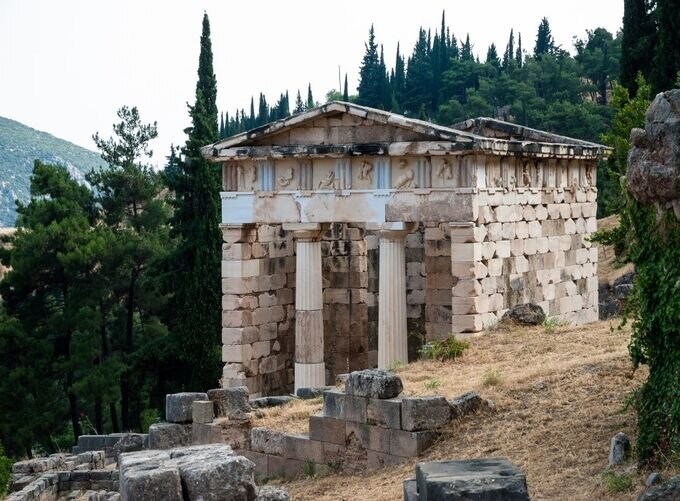
The Acropolis, Ancient Agora and surrounding historic districts make more sense when you can move between them without feeling that every additional thirty minutes outside carries a physical cost.
September does not guarantee mild weather.
It restores the possibility of an unhurried archaeological day.
Athens Sounds Like a Capital Again
One of the clearest differences from August may have nothing to do with weather.
Traffic returns.
Neighborhood cafés regain regular customers.
Office workers reappear.
Local businesses resume ordinary schedules, and residential areas begin feeling inhabited at their usual intensity.
For travelers who enjoy observing everyday urban life, this can add depth that August's holiday rhythm temporarily removes.
There is a trade-off.
More local activity also means more congestion, noise and movement.
The quieter August street may have been easier to cross.
September's version may be more interesting to watch.
Neither is inherently better.
They reveal different Athens.
The Best September Walk May Not Contain a Monument
As daytime conditions become more forgiving, walking can once again serve curiosity rather than climate strategy.
This is an excellent month to continue beyond the compact historical core and spend time in neighborhoods where Athens feels primarily residential, commercial or social rather than archaeological.
You do not need to transform this into a checklist of “hidden gems.”
That phrase often turns ordinary neighborhoods into another form of attraction hunting.
Instead, walk because the weather permits it.
Choose a café because people are sitting there.
Notice apartment balconies, small food shops, squares and the rhythm of streets that exist independently of tourism.
A local Athens neighborhood walk belongs particularly well to September because everyday city life has returned while conditions remain conducive to spending substantial time outside.
The Riviera Hasn't Finished With Summer
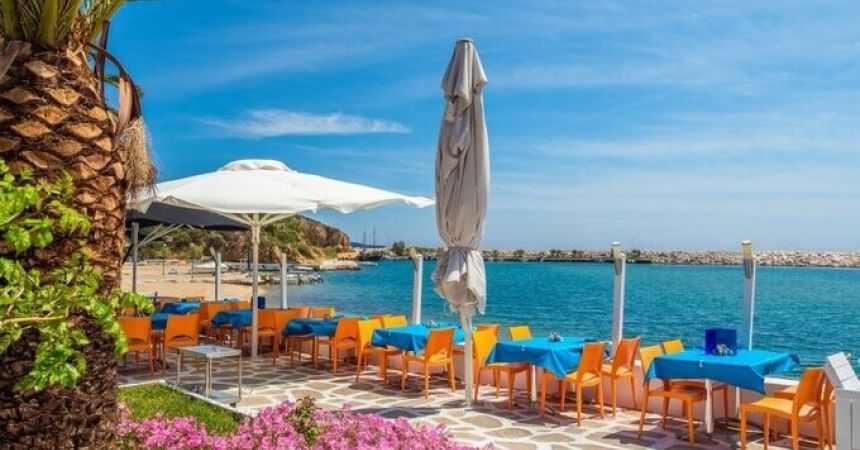
If the urban rhythm says September, the sea may still be saying August.
Water temperatures generally remain attractive after months of summer heating, while daytime weather can continue to support swimming and coastal relaxation.
This creates one of September's strongest advantages.
The Riviera remains genuinely seasonal rather than becoming an off-season excursion, yet the central city is recovering its normal working character.
You can experience both within the same trip.
A September Athens coast escape therefore serves a different purpose from August coastal time. In August, the coast reflects the wider national holiday instinct. In September, it becomes a way to keep one foot in summer while Athens itself has already resumed ordinary life.
Don't Automatically Put the Beach on the Hottest Day
This sounds logical but can produce unnecessary rigidity.
A hot day may indeed be excellent for swimming, but wind, sea conditions, your other reservations and the quality of the sightseeing forecast also matter.
September offers enough flexibility that coastal time can respond to the trip rather than functioning solely as heat relief.
If an unusually pleasant 25°C day appears and you want to walk across central Athens for eight hours, use it.
If the following day is warmer and clear, move toward the water.
The season is becoming flexible enough to reward decisions made closer to the date.
September Has a Better Balance of Day and Night
High summer pushes some of Athens' most comfortable urban hours toward evening.
September begins balancing the equation.
Days become easier for extended exploration while nights remain warm enough for terraces, rooftop venues and long dinners outdoors.
This can make the trip feel unusually complete.
You are no longer sacrificing afternoon energy to protect the evening, yet you have not lost the outdoor social life that makes summer Athens attractive.
That balance is one reason September is frequently popular.
It is also why the month should not be marketed as quiet by default.
Good conditions attract people.
What Has Returned — and What Hasn't Left Yet?
This is perhaps the simplest way to understand the month.
| Returned to Athens | Still Hanging On From Summer |
| Normal business rhythm | Warm afternoons |
| Local neighborhood activity | Outdoor dining |
| Heavier city traffic | Rooftop evenings |
| Broader opening reliability | Swimming conditions |
| Working-capital atmosphere | Lightweight clothing |
| Longer comfortable walks | Strong sunshine |
Most months are described by what replaces the previous season.
September is interesting because replacement has not happened yet.
The two versions overlap.
Early and Late September Should Feel Different
Early September belongs closer to summer. Heat strategy may still matter, swimming conditions are highly attractive and evenings remain distinctly warm.
Late September begins opening the door toward October. Daytime sightseeing usually becomes easier, evenings can occasionally call for a light layer, and weather variability starts deserving slightly more attention.
Neither period owns the month completely.
This internal transition is central to September's search intent.
A traveler arriving during the first week and another arriving during the final week may both correctly describe Athens as warm, yet experience noticeably different daily rhythms.
That makes exact travel dates more useful than the monthly average.
September Isn't the Month Athens Cools Down
That description is too narrow.
September is the month Athens reconnects.
The city reconnects with work, neighborhood routines and everyday movement after August. Visitors reconnect with longer daytime sightseeing as peak heat gradually loses authority. At the same time, Athens remains connected to summer through warm evenings, outdoor dining and a coast that has not yet surrendered its seasonal appeal.
October will move the cluster toward a different question: how to use increasingly changeable autumn weather when both warm days and genuine seasonal interruptions become plausible.
September belongs before that uncertainty becomes central.
It is the month when summer is still present enough to enjoy, but no longer powerful enough to define every decision.

What Can You Stop Planning Around in September?
September does not remove summer from Athens; it removes some of summer's restrictions.
During July, a poorly timed outdoor visit can determine the quality of an entire afternoon. In September, particularly as the month progresses, travelers increasingly stop organizing every decision around the hottest hours.
You may still check the temperature before climbing a hill or spending several hours among exposed ruins, but the forecast gradually becomes information rather than instruction.
That distinction is small on paper and enormous when traveling.
You Can Start Connecting Places on Foot Again
Peak summer encourages selective walking because wasting energy on an uninteresting transfer makes little sense.
September returns spontaneity.
Perhaps you planned to take the metro after visiting an archaeological site, but the afternoon feels comfortable and the next neighborhood is only twenty minutes away. Walking suddenly becomes the better choice because the route itself may reveal something worthwhile.
This freedom grows later in the month and helps Athens feel geographically connected again rather than divided into heat-managed activity zones.
Don't Retire the Summer Habits Too Quickly
Greater comfort does not mean sun protection becomes irrelevant.
September sunshine can remain strong, and extended archaeological visits still justify sunscreen, sunglasses, water and a hat. Lightweight clothing generally works well during the day, while a light extra layer becomes more useful toward the end of the month.
The trick is not packing for autumn simply because September sounds autumnal.
Pack for Athens.
Let Your Exact Dates Decide the Trip
The beginning and end of September can reward different priorities.
Rather than declaring one period superior, match your dates to what you want from the city.
| Your September Dates Favor... | Lean Into... | Keep Flexible |
|---|---|---|
| Early month + hot forecast | Coast, mornings, late evenings | Long exposed afternoons |
| Early month + mild spell | Full city exploration | Riviera timing |
| Mid-month | Mixed city/coast days | Exact daily sequence |
| Late month + sunshine | Long urban walks | Swimming expectations |
| Late month + unsettled forecast | Museums + flexible outdoors | Fixed coastal plans |
September works because the itinerary can increasingly follow the weather rather than defend itself against it.
The Riviera Is Now a Choice, Not an Escape
By September, coastal time no longer needs to function as relief from central Athens.
Swimming can remain appealing, particularly earlier in the month, but the city itself is also becoming easier to explore throughout the day.
That creates a cleaner decision.
Go to the Riviera because you want the sea, waterfront dining or a change of landscape, not because you feel forced out of the historical center by temperature.
Travelers continuing to Greek islands may reasonably give Athens more urban time, knowing that plenty of coastal experience lies ahead.
September Is Particularly Good for Mixed Interests
Some trips struggle because travelers want incompatible things: serious archaeological sightseeing, long meals, neighborhood wandering, nightlife and perhaps a little beach time.
September makes those interests unusually easy to combine.
There is enough summer left for the coast and outdoor evenings, yet increasing daytime comfort supports cultural sightseeing without requiring the rigid timing associated with peak heat.
The result is not necessarily a busier itinerary.
It is an itinerary with fewer compromises.
August, September or October?
Choosing between these months should not come down to a three-row temperature comparison.
Think instead about which version of Athens you want.
August offers the unusual high-summer capital, when tourism remains active while parts of local life slow for holidays.
September brings everyday Athens back while preserving much of summer's climate and coastal appeal.
October introduces greater weather variability and a more distinctly autumnal decision: how much of the trip can still be confidently built outdoors?
That separation is what keeps September from becoming another generic shoulder-season article.
Twelve FAQs About Athens Weather in September
1. Is September a good time to visit Athens?
Yes. September combines warm weather with increasingly comfortable sightseeing conditions and the return of normal local life after August holidays. It particularly suits travelers who want archaeology, neighborhoods, outdoor dining and possible coastal time within the same trip.
2. How hot is Athens in September?
Daytime temperatures often sit around 27–31°C earlier in the month and generally moderate as September progresses. Hot spells remain possible, while evenings gradually become milder. Exact dates therefore matter more than one monthly temperature figure.
3. Is Athens still very hot in early September?
It can be. Early September frequently retains genuine summer conditions, including strong sunshine and hot afternoons. Morning archaeological visits may still be preferable during warmer periods, although conditions vary and should be judged using the forecast for your actual dates.
4. Is late September cooler in Athens?
Generally, late September offers milder daytime conditions and cooler evenings than the beginning of the month, although warm weather can continue. Travelers usually gain greater flexibility for long walks, while carrying a light evening layer becomes increasingly sensible.
5. Does it rain in Athens in September?
Rain remains relatively limited compared with later autumn, but unsettled weather becomes more plausible as the month progresses. Most trips can remain strongly outdoor-focused while retaining enough flexibility to rearrange a coastal excursion or long archaeological day if necessary.
6. What should I wear in Athens in September?
Light summer clothing usually works well during daytime, alongside comfortable shoes, sunscreen and sunglasses. Later in September, add a light layer for evenings or cooler weather. Packing should reflect exact travel dates rather than assuming September automatically means autumn conditions.
7. Can you swim in Athens in September?
Yes. The Athens Riviera can remain very appealing because the sea retains summer warmth, particularly during the first half of September. Daily weather and individual temperature preferences matter, but swimming remains a realistic component of many September trips.
8. Is the Acropolis too hot in September?
Usually not, although early-September hot spells can still make midday exposure uncomfortable. Earlier visits remain sensible during warm weather. As the month progresses, visitors generally gain more freedom to explore archaeological sites without structuring the entire day around heat.
9. Is Athens crowded in September?
Athens can remain busy because September's favorable weather attracts many visitors. Major archaeological sites should not be expected to feel empty. Meanwhile, local residents return from summer holidays, so everyday traffic and neighborhood activity also increase compared with parts of August.
10. Is September good for walking around Athens?
Yes, especially from mid- to late September when temperatures often become more comfortable for extended urban exploration. Earlier in the month, long walks remain possible but may benefit from morning or later-afternoon timing during particularly warm weather.
11. Is August or September better for Athens?
September generally offers a more typical local atmosphere and increasingly comfortable daytime sightseeing while retaining warm evenings and coastal possibilities. August provides a distinctive holiday-period city rhythm. The better choice depends on whether summer intensity or everyday Athens matters more.
12. Is September or October better for Athens?
September usually provides stronger summer continuity, including warmer evenings and better swimming potential. October tends toward cooler walking conditions but brings greater weather variability. Travelers wanting reliable warmth may prefer September, while those prioritizing milder cultural sightseeing may favor October.
September Lets Athens Be Several Things at Once
September does not require travelers to choose between summer Athens and the working city.
For a few weeks, they coexist.
The sea can still be warm enough for an afternoon swim while office traffic has returned to central streets. Rooftop dinners continue to make sense, yet archaeological walks gradually stop requiring the discipline of peak summer. Neighborhood businesses reopen just as the climate begins loosening its grip on the city.
That overlap is the month's real advantage.
August showed Athens partly on holiday. October will introduce a more changeable season in which weather itself becomes a larger planning variable.
September sits between them without feeling indecisive.
It gives everyday Athens back its voice before summer has completely left the room.

A travel professional specializing in tailor-made travel planning, guest experience management, and multi-destination tourism operations.
With over 23 years of experience in the travel industry, he designs and manages private and cultural tours for international travelers across Türkiye, Greece, Egypt, Jordan, Morocco, and other destinations.
He has strong expertise in both online and face-to-face guest communication, sales processes, and end-to-end travel operations.
Working closely with hotels, travel agencies, and local partners, he ensures smooth coordination and high-quality travel experiences at every stage of the journey.
His focus is on delivering personalized, reliable, and seamless travel experiences for international guests worldwide.