
Best Time to Visit Greece Depends on the Greece You Want
Updated: August 2026
Ask ten travelers for the best time to visit Greece and you may receive May, June, September, October or, from someone who cannot imagine a Greek holiday without the full energy of summer, July and August.
None of them is necessarily wrong.
The problem with declaring one month the winner is that Greece asks very different things from different travelers. A couple planning Athens, Mykonos and Santorini needs the islands to be fully alive. Someone primarily interested in the Acropolis, Delphi, Meteora and the Peloponnese may care far more about comfortable walking conditions than beach weather. A family staying on Crete has another set of priorities, while travelers visiting Greece for a second time may actively prefer quieter mainland regions after the strongest summer demand has passed.
There is therefore no single best time to visit Greece.
There is a best seasonal window for the version of Greece you intend to experience.
Once that distinction is made, choosing travel dates becomes considerably easier.
Start With the Part of the Holiday You Cannot Compromise On
Weather averages are useful, but they should not be the first question.
Instead, identify the experience that would disappoint you most if conditions were wrong.
If that answer is swimming, your travel window should protect warm sea conditions and a functioning island season.
If archaeological exploration matters most, comfortable walking and manageable daytime heat may deserve greater weight.
If you imagine late dinners, active island towns and long evenings outdoors, summer energy becomes part of the product rather than something to avoid.
Travelers seeking quieter roads, historical sites and a less beach-dependent journey can accept a completely different calendar.
This sounds simple, but it prevents one of the most common Greece planning mistakes: selecting a supposedly perfect month and only afterward discovering that it does not suit the trip.
Greece Has a Tourism Calendar, Not Just a Weather Calendar
A sunny day does not guarantee that every version of Greece is operating in the same way.
This matters particularly on seasonal islands.
Hotels, restaurants, excursion providers and ferry services respond to tourism demand. Outside the main season, an island can have pleasant weather while offering a much quieter experience than travelers expected from summer photographs.
Athens is different.
The capital remains a year-round city. Museums, archaeological sites, restaurants and neighborhood life do not disappear simply because the beach season has ended.
Thessaloniki behaves similarly, while mainland cultural destinations can remain meaningful well beyond the traditional island window.
That produces one of Greece's most important seasonal distinctions:
The country is year-round. The classic island holiday is not equally seasonal everywhere.
Travel dates should therefore be chosen according to the route rather than the national weather forecast.
April Is for Travelers Who Want Greece Before It Feels Like Summer
April can be beautiful for cultural travel.
Spring landscapes become part of the experience, temperatures can suit walking better than midsummer conditions, and archaeological exploration can feel less physically demanding.
The trade-off appears when travelers expect a conventional island-and-beach holiday.
Sea temperatures are cooler, weather can be less predictable and highly seasonal island destinations may not yet deliver the same atmosphere they will later in spring and summer.
April therefore works particularly well for travelers whose priorities include Athens, mainland archaeology, the Peloponnese and cultural touring.
Greek Easter can also profoundly influence travel during this period depending on the year's calendar, but that deserves its own operational page because transportation, accommodation, celebrations and opening patterns create a distinct search intent.
April is not an inferior version of July.
It is a different Greece.
May Is When the Choices Begin to Open
May is one of the most versatile periods for travelers who want to combine culture with an emerging island season.
Days are generally getting warmer, landscapes can retain their spring character and outdoor archaeological sightseeing is often more comfortable than during the strongest summer heat.
Island travel also becomes increasingly practical.
The important distinction is between being beside the sea and building the holiday around swimming.
Travelers who are satisfied with pleasant coastal days and occasional swimming may love May. Someone who expects warm-water swimming every afternoon may prefer a later window.
May is especially attractive for travelers whose Greece trip contains substantial sightseeing and who regard beach time as one pleasure among several rather than the entire purpose of the journey.
June May Be Greece's Most Balanced Summer Month — for the Right Traveler
By June, the classic Greece holiday is functioning much more confidently.
Island destinations are active, ferry connections support broader combinations, beach time becomes increasingly central and evenings carry the unmistakable rhythm of Mediterranean summer.
At the same time, June often arrives before the strongest concentration of July and August travel.
That makes it particularly useful for mixed itineraries.
A traveler can explore Athens, move into the Cyclades and finish with several days where swimming is no longer treated as a weather-dependent bonus.
This is why Greek island journeys with Athens and the Cyclades work particularly well in this period for travelers seeking a genuine summer experience without automatically choosing the year's busiest weeks.
June is not quiet Greece.
It is Greece moving confidently into summer.
July and August Are Not Months We Should Automatically Tell Travelers to Avoid
Travel advice has developed a strange habit of treating peak season as though travelers have made a mistake by choosing it.
July and August are busy because they offer something people genuinely want.
Island towns are fully active. Beach life dominates. Long evenings encourage late dining, and the tourism infrastructure operates at full seasonal intensity. For families tied to school holidays and travelers who want Greece at its most unmistakably summery, that can be exactly the point.
The compromises are equally real.
Heat can make exposed archaeological sightseeing more demanding. Famous destinations attract significant visitor numbers, and desirable accommodation categories may require earlier booking.
The solution is not necessarily avoiding summer.
It is planning summer properly.
Early archaeological visits, realistic midday pacing, sensible hotel locations and fewer unnecessary transfers can transform the same July trip from exhausting to enjoyable.
August Has an Energy That Cannot Be Replicated in October
August deserves separate attention because it is often discussed only through its disadvantages.
Yes, demand is high.
Yes, some famous destinations can be extremely busy.
Yet travelers who enjoy active resort environments, late dinners, beach culture and the social energy of high summer may find quieter months less satisfying.
This is particularly relevant when Greece itself is the holiday rather than simply a sightseeing destination.
The mistake is not traveling in August.
The mistake is expecting August to behave like May.
If you deliberately choose peak summer, embrace what you are buying and organize the difficult parts of the day around it.
September Solves a Particular Greece Problem Exceptionally Well
September attracts travelers who want the sea to remain important without allowing summer intensity to control the entire journey.
The water has benefited from months of warming, island destinations generally remain active and combinations involving Athens and the islands continue to make strong practical sense.
As the month develops, sightseeing can also become increasingly appealing.
This makes September particularly powerful for travelers unwilling to choose between a beach holiday and a cultural trip.
It does not mean every island becomes empty or inexpensive after September 1. Santorini and other highly demanded destinations can remain busy, while sought-after hotels continue to sell strongly.
September's advantage is not that Greece suddenly becomes undiscovered.
Its advantage is seasonal balance.
Detailed temperatures and regional conditions belong to the dedicated Greece-in-September weather cluster rather than this page.
October Is Excellent When You Know Which Greece You Are Choosing
October is where broad “best time” advice becomes dangerous.
Athens can remain highly rewarding. Mainland cultural travel can work beautifully, and Crete's southern geography gives it different seasonal characteristics from smaller, more tourism-dependent islands.
However, travelers attempting to reproduce a July-style Cycladic island holiday may begin encountering a different seasonal reality as the month progresses.
Ferry patterns can become less convenient, some seasonal businesses reduce operations and beach conditions become less dependable.
This does not make October a poor month.
It makes route selection more important.
Travelers interested in mainland Greece and archaeological touring may find October considerably more attractive than someone whose entire dream revolves around warm evenings and daily island swimming.
The calendar did not improve or deteriorate.
The travel objective changed.
Winter Greece Is More Interesting Than Its Beach Reputation Suggests
Between November and March, Greece largely disappears from conventional island-holiday conversations.
The country itself does not.
Athens continues functioning as a major European capital. Thessaloniki retains its food, museums and urban culture. Archaeological destinations remain historically significant, while mountainous regions introduce a version of Greece completely absent from the familiar blue-and-white summer imagery.
Winter travelers must accept shorter daylight, cooler conditions and greater weather variability.
They should also stop measuring the journey against Santorini in July.
A winter Greece trip is better understood as a cultural, urban and mainland journey in its own right.
For repeat visitors especially, this can reveal a country that summer-focused travel rarely allows them to see.
The Cyclades and Crete Should Not Be Given the Same Seasonal Rule
One of the weaknesses of generic Greece timing guides is treating every island as interchangeable.
Crete is large enough to function almost like a region. It contains substantial cities, archaeological sites, mountain landscapes, villages and coastal areas, giving travelers alternatives when beach conditions are imperfect.
A smaller Cycladic island may be much more dependent on seasonal tourism patterns.
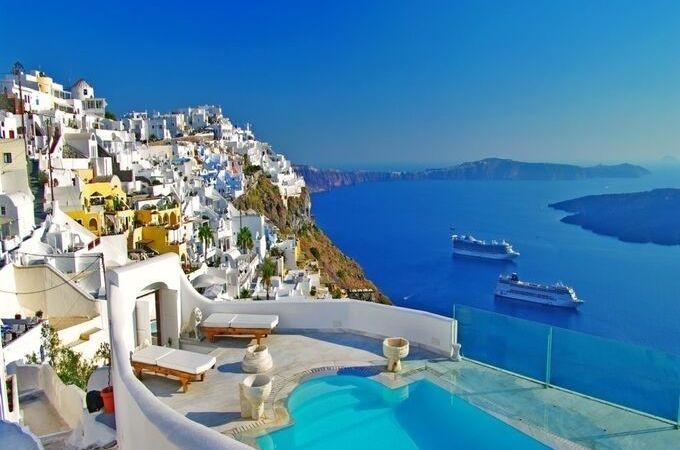
Santorini introduces another variation because the caldera landscape, archaeological interest and distinctive accommodation can remain meaningful even when swimming is not the primary purpose.
Mykonos behaves differently again when the traveler values its beach and social environment.
This is why choosing “an island” before choosing the month is sometimes backwards.
The island itself should participate in the timing decision.
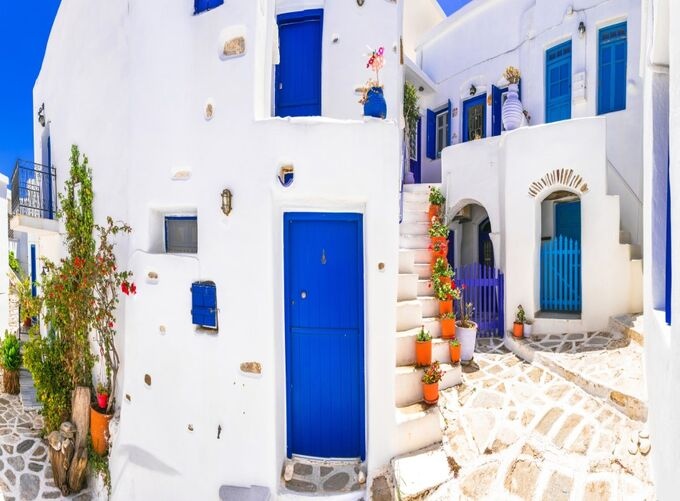
Archaeology Changes the Best-Time Calculation More Than People Expect
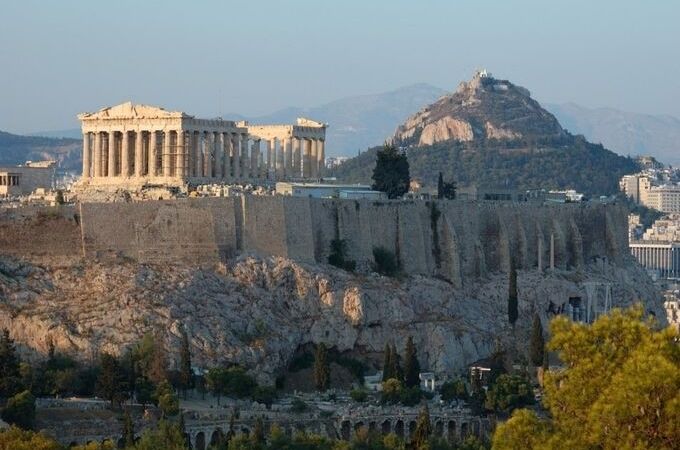
Consider a traveler planning the Acropolis, Ancient Agora, Delphi, Mycenae and Epidaurus.
Their holiday involves substantial outdoor walking, uneven archaeological surfaces and exposed landscapes.
Now compare that traveler with someone spending seven nights at a coastal resort.
The same sunny 33°C afternoon can be wonderful for one and exhausting for the other.
Historical significance does not change with the season, but the physical experience of exploring it does.
Travelers building privately guided Greece history and culture trips should therefore consider how much of each day will be spent outdoors rather than choosing dates purely according to average sunshine.
Climate is not background information.
It influences how much attention you still have after lunch.
The Best Season for Couples Depends on What “Romantic” Means
Couples are often pushed toward May, June or September as though romance has a temperature range.
A better question is what they imagine doing together.
A couple dreaming of Santorini terraces, swimming and long evenings outdoors may reasonably prioritize June or September.
Another pair may prefer Athens, Nafplio and the Peloponnese in spring, with fewer beach expectations and more time devoted to food, history and road travel.
Others want Mykonos at full summer energy.
Romance can mean privacy, but it can also mean atmosphere.
The best month depends on which one matters more.
Families Need to Choose the Daily Rhythm Before the Month
School calendars naturally push many family holidays toward July and August, so telling parents that May is “better” is often useless advice.
A more valuable approach is adjusting the itinerary to the season available.
If traveling in midsummer, choose accommodation that reduces unnecessary movement, protect the hottest hours from demanding archaeological walks and avoid changing islands so frequently that every second morning begins with luggage.
If traveling during spring or autumn school breaks, consider whether swimming is essential to the children or simply desirable.
Families often benefit more from fewer transitions than from supposedly perfect weather.
Seasonal planning should reduce friction rather than create an unrealistic ideal.
Choose Your Greece Window by What You Gain and What You Accept
Instead of ranking months from best to worst, use trade-offs.
| Travel Window | What You Gain | What You Accept | Strongest Fit |
|---|---|---|---|
| April–early May | Spring atmosphere, cultural comfort | Cooler sea, developing island season | Mainland + archaeology |
| Late May–June | Strong culture/coast balance | Growing demand | First-time mixed trips |
| July–August | Full summer, strongest island energy | Heat + peak demand | Beach-led holidays |
| September | Warm sea + easier mixed touring | Popular places remain active | Islands + culture |
| October | Mainland comfort, softer pace | Less predictable island season | Cultural journeys |
| November–March | Urban and historical Greece | Limited classic island experience | Athens + mainland |
Notice that there is no “winner.”
The correct row depends on what you are unwilling to sacrifice.
Do Not Choose a Month Before You Know the Route
This is the most important planning principle on the page.
A traveler saying “We are going to Greece in October” has already made one decision.
A traveler saying “We want Athens, Santorini, Mykonos and Crete in October” has made several additional decisions that may need to be reconsidered according to the exact dates and desired experience.
Route and season should be designed together.
That becomes even more important when ferries, seasonal hotels or beach-dependent activities form essential parts of the trip.
The same logic applies in spring.
A beautifully priced island hotel is not automatically good value if most of the experience you imagined around it is not yet operating in the way you expected.
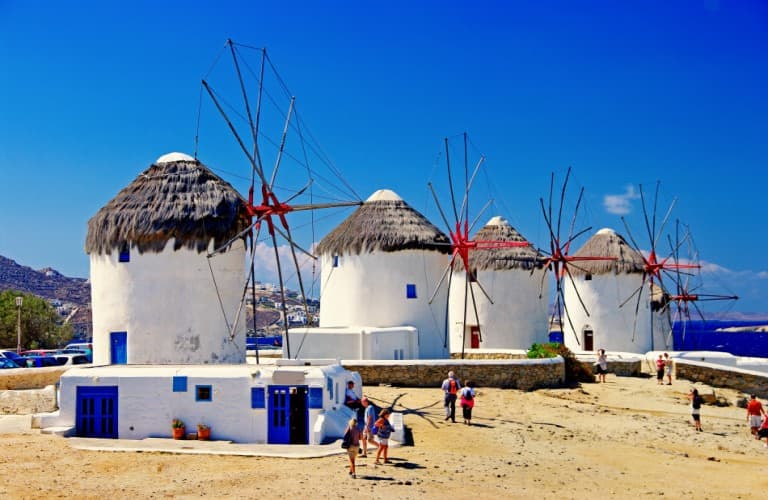
The Best Time to Visit Greece Is When Your Priorities Stop Fighting Each Other
There is no month in which Greece simultaneously provides the lowest demand, warmest sea, coolest archaeological conditions, fullest ferry schedules, liveliest islands and cheapest hotels.
Something always gives.
The intelligent decision is to identify which compromise matters least.
Choose June because you want summer without insisting on August.
Choose September because swimming and sightseeing matter equally.
Choose October because archaeology matters more than beach clubs.
Choose August because your family is free and you genuinely enjoy peak-season energy.
Choose April because the mainland interests you more than the sea.
Once the decision is framed this way, the search for the “perfect” month becomes unnecessary.
You are no longer asking when Greece is best.
You are deciding when Greece is best for you.
Frequently Asked Questions About When to Visit Greece
1. When should I visit Greece if I want to swim every day?
June through September generally provides the strongest window for travelers who consider swimming essential, although exact conditions vary by region and year. September is particularly attractive because the sea has warmed through summer while cultural touring can become increasingly comfortable.
2. Is late May too early for a Greece island holiday?
Not necessarily. Many island destinations are already active, and late May can provide an appealing balance between sightseeing and coastal time. Travelers who require consistently warm sea conditions, however, may prefer June or later rather than making swimming the trip's main expectation.
3. Which part of September is better for a first Greece trip?
Early September preserves more of the high-summer atmosphere, while later September can increasingly favor travelers balancing islands with cultural sightseeing. Neither is universally superior; choose according to whether beach conditions or comfortable exploration carries greater importance.
4. Does Greece shut down after the summer season?
Greece does not shut down, but highly seasonal island destinations can become substantially quieter as tourism demand declines. Athens, Thessaloniki and mainland communities remain active year-round, which is why off-season Greece should be planned differently rather than treated as summer with fewer visitors.
5. When should I travel if I want Athens and Meteora but no islands?
Spring and autumn can be particularly attractive because the trip depends more on walking, historical sightseeing and landscapes than sea temperature. This route has much less reason to tolerate peak island-season demand unless summer dates are otherwise necessary.
6. Is June or September better for a honeymoon in Greece?
June offers the excitement of Greece moving into full summer, while September combines a warm sea with a gradually softer seasonal rhythm. The better choice depends on whether you prefer early-summer energy or a more mature Mediterranean season after the year's hottest months.
7. When should photography-focused travelers consider Greece?
Spring can provide greener landscapes and wildflowers in some regions, while autumn offers different light and atmosphere. Photographers prioritizing famous island architecture may still prefer the main season, but should consider early mornings when pedestrian density and light can both be more favorable.
8. What period suits travelers who dislike very hot archaeological sites?
April, May and parts of autumn can provide more comfortable conditions for extensive outdoor sightseeing than midsummer. Exact weather remains variable, so the advantage is probability rather than certainty, particularly when itineraries include several exposed archaeological locations.
9. Should I avoid Greece completely during August?
No. August is appropriate for travelers who want full summer conditions and accept peak-season demand. The itinerary should respond with earlier sightseeing, well-planned transportation and sensible pacing rather than treating high summer itself as a reason not to visit Greece.
10. When is Greece best if food and local life matter more than beaches?
Athens, Thessaloniki, Crete and many mainland regions can be rewarding well beyond the classic beach season. Travelers with culinary and cultural priorities have a much broader calendar because restaurants, markets and urban life are not dependent on daily swimming conditions.
11. How far in advance should I decide my dates for peak-season Greece?
Once dates and preferred destinations are reasonably firm, earlier planning gives more control over distinctive hotels, room categories, convenient ferry connections and private services. Waiting is most risky when the trip depends on specific accommodation rather than simply finding somewhere available.
12. What is the biggest mistake when deciding when to visit Greece?
Choosing dates from national weather averages before deciding what the holiday needs to accomplish. Greece contains islands, mountains, major cities and archaeological regions with different seasonal priorities, so the route and desired experience should determine the travel window together.

A travel professional specializing in tailor-made travel planning, guest experience management, and multi-destination tourism operations.
With over 23 years of experience in the travel industry, he designs and manages private and cultural tours for international travelers across Türkiye, Greece, Egypt, Jordan, Morocco, and other destinations.
He has strong expertise in both online and face-to-face guest communication, sales processes, and end-to-end travel operations.
Working closely with hotels, travel agencies, and local partners, he ensures smooth coordination and high-quality travel experiences at every stage of the journey.
His focus is on delivering personalized, reliable, and seamless travel experiences for international guests worldwide.