Where to Go on Holiday in September: Match the Month to Your Trip
Updated: August 2026
September is one of those travel months that looks simple until you start comparing destinations properly.
Summer has not disappeared across the eastern Mediterranean, yet the character of the season is beginning to change. The sea can still be central to a Greece or Turkey holiday, while city walking and archaeological sightseeing gradually become easier as the month progresses. Farther south, Egypt and Jordan remain warmer and should be chosen by travelers who value history, desert landscapes and outdoor exploration enough to structure the day intelligently. Morocco adds another layer, because Atlantic cities, inland imperial centers, the Atlas and the Sahara do not move into autumn at the same speed.
This is why the usual advice to “travel in September because it is less crowded” is too vague to be useful.
September should be selected according to what you want to preserve from summer and what you want to leave behind.
If swimming is non-negotiable, Greece and Turkey make particularly strong cases. If the purpose of the trip is archaeology and the Nile, Egypt becomes increasingly interesting even though heat remains a factor. Jordan suits travelers who want Petra, Wadi Rum and the Dead Sea rather than a resort-led holiday, while Morocco works best for people who want cities, road travel and landscape variety.
The destination should not simply still be warm.
It should be warm in a way that improves the holiday you actually want.
September Is Really Two Travel Months Sharing One Name
The beginning and end of September can produce different planning decisions, particularly around the Mediterranean.
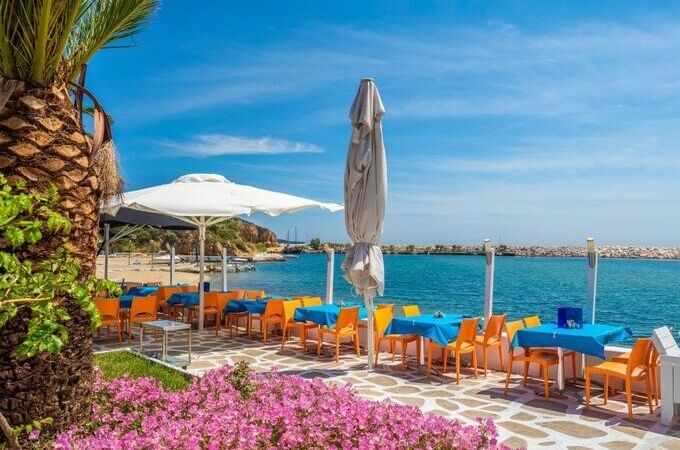
Early September still carries much of summer's personality. Beaches remain central, island services generally operate in strong seasonal mode, evenings feel summery and travelers can build holidays around the sea without treating swimming as a bonus.
By late September, the experience begins to tilt more clearly toward mixed travel. City exploration becomes more comfortable, archaeological days are easier to sustain and travelers become less dependent on the beach to justify the trip.
That distinction is important because two people searching for “best place to go in September” may actually want opposite holidays.
One wants August with slightly less intensity.
The other wants October before autumn becomes too obvious.
September can serve both, but not in the same destination or with the same itinerary.
Choose September by What You Want to Keep From Summer
Instead of starting with temperature, start with the summer experience you are reluctant to lose.
| What You Still Want in September | Strong Destination Fit | What September Gives You | What Still Needs Managing |
|---|---|---|---|
| Reliable island atmosphere | Greece | Sea, ferries, restaurants, long evenings | Popular islands remain busy |
| Culture + coast in one country | Turkey | Istanbul, archaeology and southern beaches | Regional conditions differ |
| Ancient history above everything else | Egypt | Full cultural depth and warm conditions | Heat remains significant |
| Outdoor archaeology + desert | Jordan | Petra, Wadi Rum, Dead Sea | Midday intensity needs pacing |
| Cities + road journey + Sahara | Morocco | Broader touring possibilities | Regional variation is substantial |
| Swimming plus sightseeing | Greece or Turkey | Strongest seasonal balance | Hotel location still matters |
| No need for beach time | Egypt, Jordan or Morocco | Culture becomes primary | Day structure matters more than coast |
This is a more useful September framework than asking which country is hottest.
The hottest place may be the least suitable one for the trip you want.
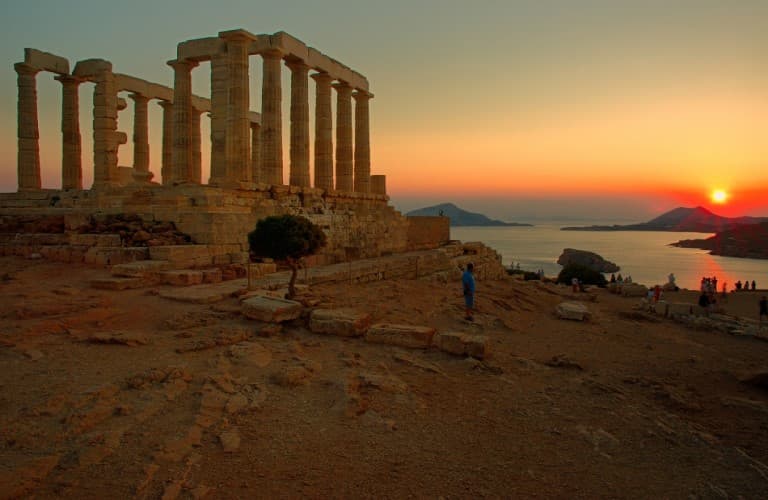
Greece Is September at Its Most Mediterranean
September is one of the strongest months for travelers who want Greece to function as both a cultural and island destination.
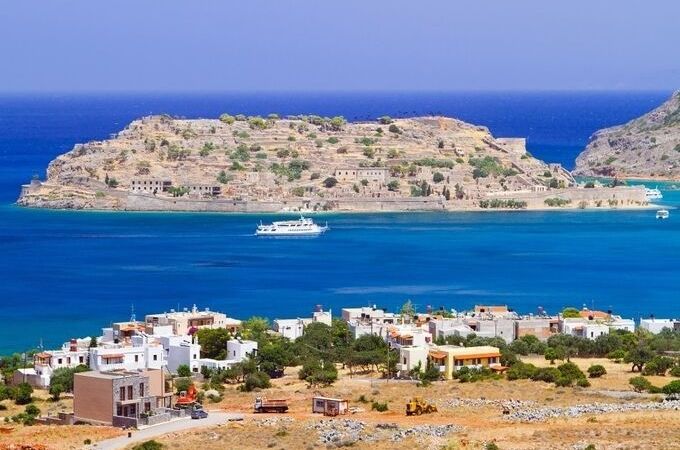
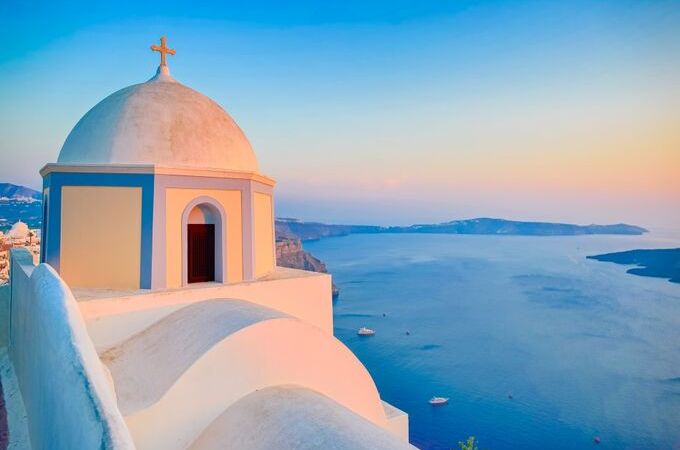
Athens remains fully worthwhile because the city never depends on beach conditions, while island combinations still make sense during the main tourism season. Mykonos retains its social energy, Santorini remains highly active, and islands such as Paros, Naxos or Crete can offer a more relaxed rhythm without feeling as though the season has already ended.
The important word is balance.
In July or August, some travelers organize entire sightseeing days around heat avoidance. September gradually gives them more freedom while still preserving a strong summer atmosphere around the islands.
This makes Greece particularly attractive for first-time visitors who do not want to choose between Athens and the Aegean.
A well-designed September Greece island and city journey can move from history into beach time without either section feeling out of season.
Greece Is Still Busy Enough That “Shoulder Season” Can Be Misleading
September is often marketed as a quiet alternative to summer.
That description needs qualification.
Popular destinations do not suddenly become empty after August 31. Santorini, Mykonos, central Athens and famous island hotels can remain highly sought after, especially during the first half of the month.
This matters because travelers sometimes delay booking after reading that September is “off peak,” then discover that the room category or ferry they wanted has limited availability.
The advantage of September is often better travel conditions, not guaranteed low demand.
For Greece, that distinction matters particularly around hotels with caldera views, well-located island properties and ferry sequences that connect several destinations.
If the route matters, book the structure before waiting for a mythical empty season.
Turkey Offers the Broadest September Mix
Turkey's main September advantage is geographical range.
Istanbul can provide city exploration without the strongest part of midsummer heat dominating the day. Cappadocia adds a completely different inland environment, with valley landscapes and cooler mornings or evenings becoming increasingly relevant as the month progresses. Western Turkey keeps Ephesus and Pamukkale firmly in the cultural itinerary, while the Mediterranean south can still support a proper coastal extension.
Few destinations allow travelers to combine so many different experiences without changing countries.
That makes Turkey cultural and Mediterranean holidays particularly strong in September for people who want more than an island stay but still consider swimming part of the holiday.
The trade-off is that Turkey should never be planned from one weather expectation.
Istanbul, Cappadocia, Ephesus and Antalya do not behave like one climate zone, so the itinerary and packing should reflect the route rather than the country name.
September Is the Month Turkey Rewards Directional Planning
A useful Turkey itinerary can move from more active cultural touring toward slower coastal days.
Begin with Istanbul, where walking, historical neighborhoods and major monuments naturally fill the day. Continue toward Cappadocia or western archaeological regions while energy is still high, then finish on the Mediterranean or Aegean coast when relaxing becomes more appealing.
This sequencing matters because September gives you the chance to use summer rather than simply endure it.
The coast can remain the reward at the end of an active route.
By contrast, placing several beach days first and then filling the final portion with tightly scheduled cultural touring can make the holiday feel more demanding as it progresses.
The month works best when the itinerary gradually releases pressure.
Egypt Is for Travelers Who Want September to Be About History
Egypt is not the destination to choose in September merely because you want warm weather.
There are easier ways to find that.
Choose Egypt because the pyramids, Cairo, Luxor, Aswan, Abu Simbel and the Nile matter enough that the climate becomes something to manage intelligently rather than the central reason for going.
September remains warm, particularly in Upper Egypt, so sightseeing pace and timing still matter. Earlier starts, breaks during the most demanding part of the day and realistic expectations around exposed archaeological sites become part of good planning.
The reward is that Egypt's core attractions do not depend on a short seasonal window.
The history is the trip.
That makes Cairo, Nile and Upper Egypt programs a strong September option for culturally motivated travelers who prefer fewer hotel changes and a route anchored around major archaeological landscapes.
A Nile Cruise Changes the September Calculation
A Nile cruise can make Egypt feel more manageable because the itinerary alternates between sightseeing and time aboard rather than requiring continuous overland movement.
That does not eliminate heat.
It changes the rhythm around it.
Temple visits occur within a structured route, while the cruise provides periods when travelers can rest, eat and watch the river landscape rather than spending every day checking into another hotel or managing another road transfer.
This is particularly valuable in September because the difference between an active archaeological morning and a slower afternoon becomes meaningful.
For travelers who want history but dislike constantly repacking, Egypt can therefore be stronger than a multi-city land-only itinerary.
Jordan Is September for People Who Like Their Holidays Active
Jordan's best-known experiences are not passive.
Petra requires walking. Wadi Rum is experienced through an open desert environment. Madaba, Mount Nebo and the Dead Sea involve movement through very different landscapes, while the classic route connects northern and southern Jordan primarily by road.
September therefore suits travelers who want to spend the holiday doing rather than simply staying somewhere warm.
The main consideration is timing.
The month can still feel hot, particularly during exposed parts of the day, so an itinerary that starts late and places the longest walking at midday is unnecessarily demanding.
A better design protects earlier hours for Petra or other active sightseeing, lets lunch and road movement absorb some of the warmer period, and keeps evenings relatively open.
Jordan rewards travelers who treat the daily schedule as part of the climate strategy.
Morocco Is September's Most Regionally Uneven Choice
Morocco does not move into autumn as one destination.
Casablanca and Rabat have Atlantic influences. Marrakech can remain significantly warmer inland. The High Atlas introduces altitude, while southeastern routes toward the Sahara behave differently again. Essaouira's coast may feel surprisingly different from a desert-oriented itinerary running during the same week.
This makes Morocco particularly interesting for travelers who enjoy changing environments.
It also makes generic September packing advice almost useless.
A route that combines Fes, Marrakech, the Atlas and Sahara gateways needs clothing and daily pacing that can adapt. The same traveler may want lighter clothing during one afternoon and a warmer layer later in a mountain or desert setting.
For Morocco cities, mountains and desert travel, September can be highly rewarding precisely because the route contains these variations.
The country should not be chosen for uniformity.
It should be chosen because uniformity would make it less interesting.
September Couples Should Decide Whether They Want Energy or Space
Couples often assume September automatically means a romantic shoulder-season atmosphere.
The reality depends heavily on destination and timing.
Mykonos can remain socially energetic, while Santorini continues to attract substantial visitor numbers. A quieter Greek island or longer Crete stay may suit couples who want more space. Turkey can offer a different romantic rhythm by combining Istanbul, Cappadocia and the coast rather than requiring one island to provide the entire experience.
Jordan and Morocco work particularly well for couples who see romance in shared exploration rather than resort privacy.
Egypt offers another version again: history, the Nile and a more structured cultural route.
The question should not be “Which destination is most romantic?”
It should be what kind of memory you want to create together in September.
Families Should Use September to Reduce Friction, Not Add More Stops
September can be extremely useful for families traveling outside the busiest school-holiday periods, but the seasonal advantage is easily wasted by overloading the route.
Slightly easier sightseeing conditions do not make repeated hotel changes effortless.
A family with younger children may benefit more from five nights in Crete than from three islands in six nights. In Turkey, fewer bases can allow Istanbul and a coastal stay to work better than attempting every classic region. Jordan's relatively compact route can be excellent when private transportation reduces repeated logistical stress.
The strategic use of September is therefore not “fit more in because conditions are better.”
It is make the same number of days feel easier.
That is a much more valuable seasonal advantage.
September Is One of the Best Months for Multi-Interest Travelers
Some travelers are difficult to satisfy because they want everything: history, beaches, food, scenery and enough relaxation that the trip still feels like a holiday.
September is unusually well suited to them.
Greece combines archaeology and islands naturally.
Turkey offers perhaps the widest range of cultural and coastal contrast.
Morocco introduces cities, mountains and desert without forcing travelers into a purely beach-oriented trip.
Egypt and Jordan suit people who prioritize history and outdoor landscapes over the sea.
The challenge is not finding enough to do.
It is preventing the itinerary from becoming so broad that no experience receives enough time.
September gives you flexibility.
It does not give you extra days.
Do Not Assume September Means Everything Costs Less
Price should be treated as a consequence, not a promise.
Popular hotels, distinctive room categories and well-known destinations can remain expensive because demand stays strong through much of September. In some locations, the month is attractive precisely because experienced travelers prefer it to peak summer.
The better economic question is whether September creates better value, not simply lower prices.
A caldera hotel enjoyed in comfortable conditions may be better value even if the rate remains high.
A guided archaeological tour where you can concentrate for longer may be better value than the same service taken in weather you find exhausting.
Value is experiential.
Price is only one part of it.
Early September Favors the Sea; Late September Favors the Route
If swimming, beach clubs and a strong summer atmosphere matter most, early September is generally the more natural fit in Greece and coastal Turkey.
If cultural touring, road travel and city exploration matter more, the later part of the month can become especially attractive as the seasonal balance starts shifting.
This does not mean late September suddenly becomes cool everywhere, nor that early September is unsuitable for history.
The distinction is about weighting.
The earlier part behaves more like an extension of summer.
The later part behaves more like a bridge toward autumn.
Knowing which version you want can prevent you from choosing the right country for the wrong week.
Five September Travelers, Five Different Answers
Imagine five travelers asking the same question: “Where should I go in September?”
The swimmer who still wants island evenings should look first at Greece.
The traveler wanting Istanbul, ruins and the Mediterranean should put Turkey at the top of the list.
The history enthusiast whose dream trip involves pyramids and the Nile should choose Egypt, accepting that warm conditions remain part of the journey.
The active traveler who wants Petra and desert landscapes should consider Jordan.
The traveler who enjoys road journeys, markets, mountains and changing scenery should choose Morocco.
None of those destinations wins September.
Each wins a different version of it.
That is exactly how seasonal destination selection should work.
Frequently Asked Questions About September Holidays
1. Should I travel at the beginning or end of September for a beach-focused holiday?
The first half generally provides a stronger continuation of summer across Greece and coastal Turkey. Travelers prioritizing sightseeing over swimming may appreciate later September more, when cultural touring becomes increasingly central and the itinerary can rely less heavily on beach conditions.
2. Is September suitable for travelers who hate school-holiday crowds?
It can be a substantial improvement in many places, but famous destinations remain popular. Santorini, Mykonos and major historical sites do not suddenly become quiet, so choosing less concentrated locations can make a greater difference than relying on September alone.
3. Which September destination is easiest if I want only one hotel change?
Egypt can work particularly well when Cairo is followed by a Nile cruise or one Upper Egypt base, while Crete can support a long island stay without constant relocation. The best answer depends on whether culture or beach time dominates.
4. Where should I go in September if swimming matters but nightlife does not?
Crete, Naxos, Paros and selected coastal areas of Turkey can be stronger fits than destinations where social nightlife is a major part of the appeal. September allows travelers to keep the sea while choosing a calmer daily rhythm.
5. Is September too hot for Petra?
Conditions can still be warm, especially during exposed parts of the day, so timing and hydration matter. Petra remains entirely visitable for many travelers, but the itinerary should protect earlier hours for substantial walking rather than treating midday as ideal sightseeing time.
6. Can I combine desert and beach experiences in one September holiday?
Yes. Egypt can combine the Nile with the Red Sea, Jordan can pair desert landscapes with the Dead Sea or Aqaba, and Morocco can connect inland regions with the Atlantic coast. The additional travel time should justify the contrast.
7. Is September a good month for photography?
Yes, particularly for travelers interested in landscapes and cities rather than only midday beach photography. Changing seasonal light, somewhat lower sun angles and the possibility of fewer peak-summer crowds can improve photographic opportunities, although destination and exact timing still matter.
8. What kind of traveler benefits most from September in Greece?
Travelers who want both island atmosphere and cultural sightseeing benefit especially, because September can preserve swimming and active seasonal services while gradually making urban and archaeological days easier than the most intense period of midsummer.
9. Should I choose an all-inclusive holiday in September or a touring trip?
Choose according to purpose rather than month. September's particular strength lies in combining comfortable touring with warm-weather experiences, so travelers interested in history and culture may waste part of the seasonal advantage by remaining entirely inside a resort.
10. Is September suitable for older travelers?
Often yes, particularly later in the month and when itineraries avoid excessive hotel changes. Older travelers should still consider heat exposure, walking requirements and accessibility individually, because destinations such as Petra, Delphi or archaeological sites can involve substantial outdoor movement.
11. Does September work well for a first multi-country trip?
It can, especially when neighboring destinations offer complementary experiences, but every border or regional flight consumes time. A two-country journey should usually provide a clear contrast rather than combining destinations simply because both have favorable September conditions.
12. What is the biggest mistake when choosing a September holiday?
Assuming every warm destination offers the same kind of September. Greece may still behave like summer, Morocco can vary sharply by region, and Egypt remains hot. The strongest choice comes from matching seasonal conditions to the experience you actually want.

A travel professional specializing in tailor-made travel planning, guest experience management, and multi-destination tourism operations.
With over 23 years of experience in the travel industry, he designs and manages private and cultural tours for international travelers across Türkiye, Greece, Egypt, Jordan, Morocco, and other destinations.
He has strong expertise in both online and face-to-face guest communication, sales processes, and end-to-end travel operations.
Working closely with hotels, travel agencies, and local partners, he ensures smooth coordination and high-quality travel experiences at every stage of the journey.
His focus is on delivering personalized, reliable, and seamless travel experiences for international guests worldwide.