Greek Art and Architecture: Learning to Read Greece as You Travel
Ottoman Traces Belong to the Story Even When They Are Less Obvious
Centuries of Ottoman rule affected many areas of Greece, although the visibility and survival of that heritage vary considerably from place to place.
Travel narratives sometimes jump directly from Byzantine Greece to the creation of the modern state, leaving an enormous historical period visually underexplained.
Former mosques, baths, fountains, domestic architecture and altered buildings can preserve traces of this period, sometimes alongside earlier Byzantine and later neoclassical layers.
These structures should not be treated as interruptions to an otherwise continuous Greek architectural story.
They are part of that story.
One of the most valuable habits when exploring an old Greek city is therefore to stop asking, “What style is this town?” and instead ask, “How many different periods can I see occupying the same streets?”
Restoration Is Part of What You Are Seeing
Visitors occasionally feel disappointed when scaffolding surrounds an ancient monument or conservation work affects a photograph.
In a country with an enormous concentration of archaeological and historic structures, conservation is not an inconvenience separate from heritage. It is one reason that heritage continues to exist.
Restoration also raises difficult questions. Which historical phase should be preserved when a building has changed repeatedly? How much reconstruction is appropriate? Which materials can safely replace damaged originals?
Travelers do not need technical conservation knowledge, but recognizing that monuments have continued histories after their construction makes restoration easier to understand.
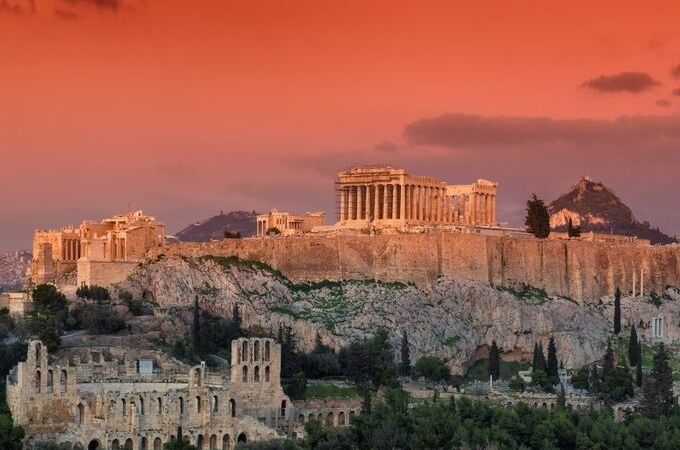
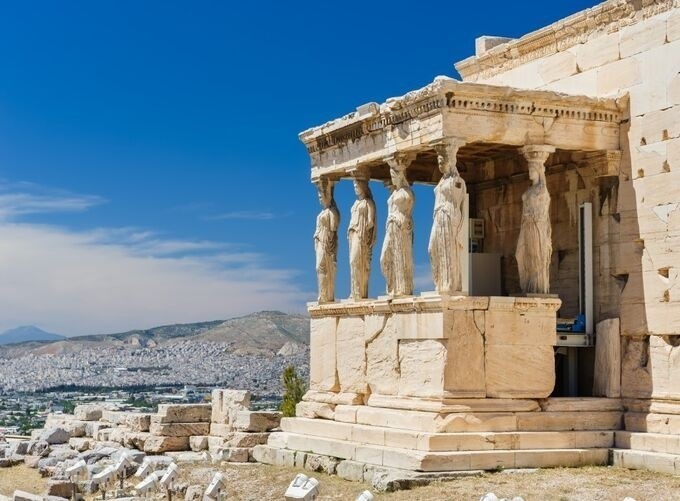
The Parthenon, a Byzantine church and a medieval fortification have all survived through change rather than through remaining untouched.
Let Architecture Influence the Route Without Turning the Trip Into a Lecture
Travelers particularly interested in visual culture do not need to build an itinerary containing every important museum and archaeological site in Greece.
Contrast is more useful than quantity.
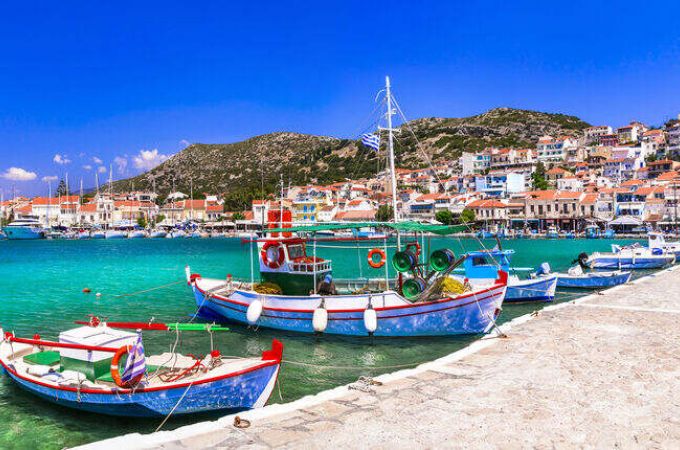
Athens introduces ancient and neoclassical layers. A destination such as Delphi places ancient architecture within a completely different landscape. Thessaloniki deepens Byzantine understanding, while Rhodes or Corfu reveals how external Mediterranean influences changed regional urban form. A Cycladic island then introduces vernacular architecture on an entirely different scale.
That kind of progression creates a visual narrative without requiring the journey to become an academic study tour.
For travelers considering custom Greece tours shaped around art and architecture, the strongest route is often the one that shows meaningful differences between places rather than simply accumulating famous monuments.
The Most Useful Art-History Skill Is Learning to Notice Contradictions
Greece becomes much more interesting when you stop expecting it to look consistently ancient, consistently Byzantine or consistently Cycladic.
A classical column may stand near a modern building. A Byzantine church can sit within the contemporary city. A Venetian fortress can dominate a Greek island, while nineteenth-century architects in Athens deliberately return to ancient forms.
Those are not inconsistencies that need to be resolved.
They are the evidence.
Greek art and architecture are best understood not as one style progressing neatly through a textbook but as layers produced by people repeatedly adapting old places to new religions, governments, technologies and ways of living.
You will still photograph the Parthenon and the whitewashed island lanes. They deserve the attention they receive.
The difference is that, after learning to read Greece more carefully, the building you had never heard of before arriving may become just as interesting as the monument you crossed the world expecting to see.
Frequently Asked Questions About Greek Art and Architecture
1. Why do different parts of Greece have such different architecture?
Greece developed through distinct regional histories, landscapes and political influences. Building materials, climate, trade, Byzantine and Ottoman periods, Venetian presence and later modern development affected places differently, which is why Corfu, Rhodes, Athens and the Cyclades can look remarkably unlike one another.
2. Are Doric, Ionic and Corinthian styles different historical periods?
Not simply. They are architectural orders distinguished particularly by proportions and column details, although their use and popularity developed through time. Travelers can recognize Doric restraint, Ionic scroll-like capitals and the more elaborate plant-inspired decoration associated with Corinthian capitals.
3. Why are ancient Greek statues usually white today?
Many surviving marble sculptures lost surface treatments through centuries of weathering, burial, cleaning and other changes. Ancient sculpture could originally incorporate color, so the white-marble appearance familiar to modern museum visitors does not necessarily represent how every work looked when created.
4. Is Byzantine art mainly found in northern Greece?
No, Byzantine heritage survives across many parts of Greece, although destinations such as Thessaloniki are particularly important for it. Travelers can also encounter Byzantine churches, mosaics, frescoes and religious art in Athens, monasteries, islands and numerous mainland communities.
5. Why do Orthodox icons look stylistically similar to one another?
Icons follow established visual and theological traditions because their purpose extends beyond individual artistic expression. Familiar poses, gestures, colors and compositions can communicate religious meaning, so repetition should be understood within devotional practice rather than judged by modern expectations of artistic originality.
6. Is the architecture of Mykonos typical of all Greek islands?
No. Mykonos reflects the Cycladic visual tradition that has become internationally associated with Greece, but Ionian islands such as Corfu and historically complex islands such as Rhodes display very different architectural influences. Greek island architecture is highly regional rather than uniform.
7. Why does central Athens contain so many neoclassical buildings?
During the development of Athens as the capital of the modern Greek state, neoclassical architecture provided a visual connection with classical antiquity while serving contemporary civic purposes. The result created another historical layer rather than simply reproducing ancient Athens.
8. Should I visit museums if I already plan to see archaeological sites?
Museums and archaeological sites provide complementary experiences. Sites explain scale, landscape and architectural relationships, while museums allow close examination of sculpture, pottery and architectural fragments. Combining both can reveal details and context that either experience alone may leave incomplete.
9. What should I look for when visiting an ancient Greek temple?
Beyond identifying columns, notice how the building relates to its landscape, approach and surrounding sanctuary. Consider proportions, orientation and sightlines, then look for surviving architectural decoration. Thinking spatially usually reveals more than attempting to memorize every historical date beforehand.
10. Why are some important Greek buildings Venetian or Ottoman in style?
Different regions of present-day Greece experienced long periods of political and cultural contact with other Mediterranean powers. Architecture preserves those histories, so Venetian fortifications or Ottoman-era structures should be understood as genuine layers of Greece's built heritage rather than foreign-looking exceptions.
11. Are old churches in Greece always tourist attractions?
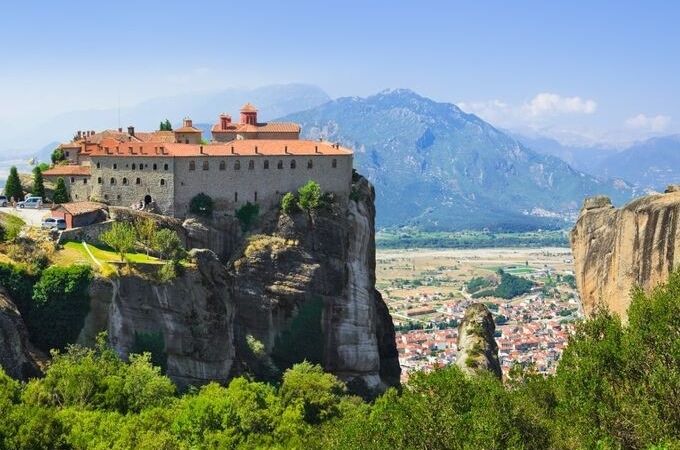
No. Many historic churches and monasteries remain active religious spaces even when their architecture, frescoes or icons attract visitors. Appropriate clothing, photography restrictions and worshippers should therefore be respected, with the building approached as a living sacred environment rather than simply a museum.
12. Which places give first-time visitors the widest architectural contrast?
Athens provides an unusually strong introduction through ancient, Byzantine, neoclassical and modern layers. Adding a destination with a different historical character, such as Rhodes, Corfu, Thessaloniki or a Cycladic island, makes Greece's regional architectural diversity much easier to recognize.

A travel professional specializing in tailor-made travel planning, guest experience management, and multi-destination tourism operations.
With over 23 years of experience in the travel industry, he designs and manages private and cultural tours for international travelers across Türkiye, Greece, Egypt, Jordan, Morocco, and other destinations.
He has strong expertise in both online and face-to-face guest communication, sales processes, and end-to-end travel operations.
Working closely with hotels, travel agencies, and local partners, he ensures smooth coordination and high-quality travel experiences at every stage of the journey.
His focus is on delivering personalized, reliable, and seamless travel experiences for international guests worldwide.