Mykonos Weather in February: Reading a Windy Island
Last Updated: August 2026
Two places in Mykonos can share the same temperature and feel as though they belong to different forecasts.
Stand beside a protected wall in Chora on a sunny February afternoon and the weather may seem pleasantly mild. Drive across the island and step onto an exposed stretch of coast half an hour later, and the same 14°C can suddenly require a zipped jacket and a much shorter visit than you imagined.
This is why February is a useful month for understanding Mykonos through something other than temperature averages.
The island is famously associated with wind, but visitors usually encounter that reputation through conversations about the summer Meltemi. Winter is different. February can bring changing weather systems, strong breezes and periods when exposure matters considerably more than the number displayed on a forecast.
The shape of the island then becomes practical rather than geographical trivia. Hills, bays, settlement patterns and coastal orientation all influence how comfortable a particular location can feel.
February Mykonos is therefore not primarily about finding things to do in winter. January owns that story within this cluster.
February is about learning how to read the island when the wind has a vote in your itinerary.
Start With the Forecast, Then Look Beyond It
Typical February daytime temperatures often sit around 12–15°C, while nights can fall toward approximately 8–11°C. Rain remains possible because Mykonos is still within its wetter winter period, although dry and sunny stretches occur as well.
None of those figures is particularly severe.
What changes the experience is the combination.
Fourteen degrees, sunshine and light wind can produce a comfortable afternoon for walking. Fourteen degrees under cloud with strong wind feels entirely different, especially when you are standing somewhere without shelter.
This makes the familiar “high and low temperature” forecast inadequate for February planning.
Wind speed, direction, precipitation and cloud cover deserve attention too.
Four Forecasts, One Temperature
| Forecast | Likely Experience |
|---|---|
| 14°C, sunny, light wind | Pleasant winter sightseeing |
| 14°C, cloudy, light wind | Cool but manageable |
| 14°C, sunny, strong wind | Much colder on exposed coast |
| 14°C, rain and strong wind | Poor conditions for long outdoor stops |
The lesson is not that February weather is bad.
It is that the temperature tells you less than you think.
Mykonos Doesn't Face the Aegean in One Direction
A beach map can look like a collection of names.
In February, it becomes a map of exposure.
Mykonos has beaches and bays distributed around different sides of the island, while the surrounding terrain varies considerably. Some locations are relatively enclosed; others open much more directly toward the sea.
That difference becomes immediately noticeable during windy winter weather.
Ornos, for example, sits within a bay and can feel quite different from a more exposed stretch of coastline. Platis Gialos also has surrounding terrain that affects its sense of shelter. Other parts of the island provide much more direct contact with the Aegean.
This does not mean one beach is permanently calm and another permanently windy. Actual conditions depend on wind direction and strength.
The important idea is simpler: “Mykonos is windy today” does not automatically mean every part of Mykonos feels identical.
Why the Windmills Are Exactly Where You Would Expect Them to Be
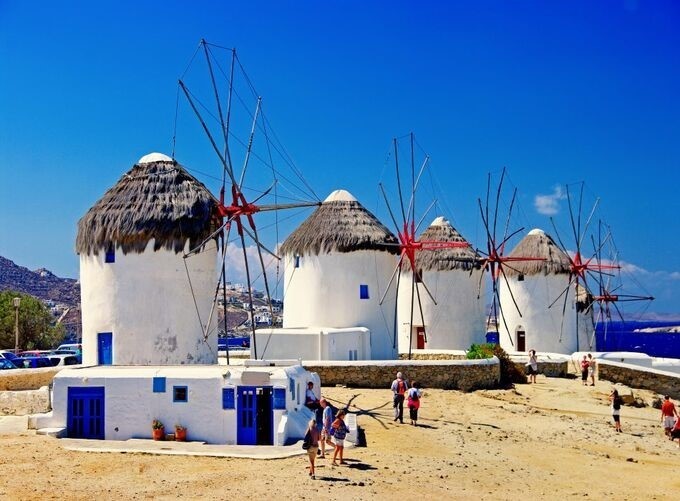
Mykonos's famous windmills are now among the island's most photographed landmarks, yet their location makes more sense when you experience a windy winter day.
They were not positioned above Chora for tourists.
Wind was useful.
The island's exposed setting made wind power valuable for milling grain, and the surviving windmills now provide a visible connection between Mykonos's climate and its economic history.
A February visit can make that relationship far more tangible than reading about it in summer while standing among sunset crowds.
A Mykonos heritage and countryside journey can use the windmills as the beginning of a broader story rather than simply a photography stop, connecting Chora's familiar landmarks with the inland landscape and agricultural history beyond town.
Weather becomes part of the cultural explanation.
That is considerably more interesting than treating wind only as an inconvenience.
The Northern Side Can Feel Like Another Island
On a calm day, exploring the more exposed parts of Mykonos can be rewarding precisely because winter leaves them so quiet.
During stronger wind, the experience changes quickly.
Coastal stops become shorter, photography becomes more awkward and walking for long periods may stop being enjoyable. This is where rigid itineraries make little sense.
If the forecast suggests difficult conditions on exposed parts of the island, there is no prize for proving that you can stand there anyway.
Spend more time inland or around locations offering greater protection.
Return when conditions improve.
February rewards travelers who understand that changing the route according to weather is not missing Mykonos. It is responding to the same geography that has shaped life here for generations.
Shelter Is Not the Same as Warmth
This distinction matters.
A sheltered bay does not magically produce a summer afternoon. February remains winter, sea temperatures are cool and beach facilities associated with the main tourism season are largely irrelevant to the trip.
Shelter simply removes or reduces one factor that can make conditions uncomfortable.
On a sunny day, that difference may be enough to turn a ten-minute coastal stop into an enjoyable walk. During cloudy or rainy conditions, it may make far less difference.
Think of shelter as a modifier rather than a guarantee.
This is also why lists claiming to identify “the least windy beach in Mykonos” should be treated cautiously without reference to actual wind direction.
Geography influences conditions.
It does not override the weather.
Chora Has Its Own Micro-Experiences
Even within Mykonos Town, February weather does not feel uniform.
The waterfront can be breezy while narrow lanes several minutes away feel protected. Turn a corner and the wind may almost disappear, then reappear when the street opens toward the sea.
This makes Chora surprisingly comfortable for winter wandering because you are rarely committed to one exposed environment for long.
Little Venice is different.
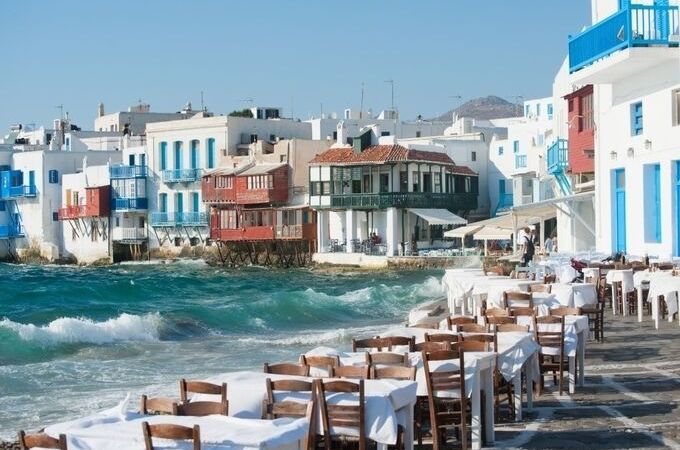
Its direct relationship with the water is part of its appeal, but that same position can make windy or rough conditions considerably more noticeable. Watching waves along the waterfront may be dramatic; sitting outside for an hour may be unrealistic.
A winter walk through Mykonos Town works best when it embraces those contrasts rather than pretending every famous viewpoint deserves the same amount of time regardless of conditions.
The lanes themselves provide part of the solution.
Ano Mera Gives the Day Another Direction
When coastal weather becomes tiresome, moving inland is not merely a backup plan.
Ano Mera provides a fundamentally different environment from Chora and the beaches. Its village scale, central square and Panagia Tourliani Monastery shift attention away from the sea, while the surrounding landscape reveals the less photographed interior of Mykonos.
The village is not immune to wind, of course.
Nothing on a small Cycladic island exists in a weather vacuum.
Yet an itinerary that includes inland Mykonos gives you somewhere meaningful to go when spending several hours moving between exposed beaches would add very little to the day.
This is one reason February works better with a geographically varied route than a checklist of famous coastal locations.
Winter Wind Changes Photography Too
Strong wind creates obvious practical problems for photography, particularly when using lightweight tripods or trying to keep a camera steady at exposed viewpoints.
It also changes the subject.
Rougher water around Little Venice can produce a completely different visual atmosphere from the calm summer images associated with Mykonos. Clouds move quickly, sunlight appears and disappears, and coastal scenes can feel more dramatic than picturesque.
The difficulty is timing.
A promising sky can change before you reach the next location, so February photography rewards responsiveness rather than an exact list of predetermined viewpoints.
If the light becomes interesting where you are, use it.
Mykonos is small, but winter weather can change faster than you can cross it.
Ferries Make Wind More Than a Sightseeing Issue
For summer visitors, wind is often discussed in terms of beach comfort.
In February, transportation deserves equal attention.
Mykonos remains connected to the rest of Greece during winter, but ferry schedules are less extensive than during peak season and rough conditions can affect maritime operations. Travelers should always check current services for their exact dates rather than building an itinerary from a summer timetable.
This matters especially when Mykonos sits immediately before an international departure from Athens.
A tight ferry-to-flight connection may look efficient on paper, but winter weather introduces a variable that does not need to be there.
A winter Mykonos and Athens itinerary works better with sensible transport margins, particularly when an important onward flight cannot easily be changed.
The goal is not to worry about ferries.
It is to avoid asking a winter ferry schedule to behave like an airport shuttle.
February Packing Starts With the Outer Layer
A thick sweater under a jacket that allows wind straight through can be less useful than lighter layers beneath a proper wind-resistant shell.
That is the central February packing principle.
Bring a jacket capable of handling wind, together with a sweater or fleece, comfortable trousers and shoes with good grip. Lightweight waterproof protection is useful when showers are forecast.
A hat can be surprisingly valuable on exposed coastal days, while sunglasses still belong in the bag because clear winter sunshine remains possible.
You do not need to dress for Arctic conditions.
You need clothing that lets a perfectly manageable temperature remain manageable when the Aegean becomes energetic.
Don't Spend the Whole Trip Avoiding Wind
There is another mistake at the opposite extreme.
Once visitors discover that Mykonos can be windy in February, they can become too focused on avoiding exposure altogether.
That misses part of the island.
Walk to the windmills when conditions are reasonable. See the coast. Stand beside the Aegean and understand why shelter matters. Visit Little Venice when the water is more animated than it would be on a calm summer evening.
Weather does not always need to disappear for sightseeing to be successful.
Sometimes it explains the place.
The objective is simply knowing when wind adds character and when it has crossed the line into making an activity pointless.
February Is a Geography Lesson Disguised as a Weather Month
Visitors usually learn Mykonos through names: Chora, Ornos, Psarou, Paradise, Elia, Ano Mera.
February encourages another way of reading the island.
Which way does this bay open?
Why do these lanes feel protected?
Why were windmills built above town?
Why does the sea look relatively calm here and far more active somewhere else?
Those questions turn weather from background information into part of the destination itself.
Summer travelers also encounter wind, particularly during the Meltemi season, but their decision is usually practical: which beach is best today?
February offers the quieter opportunity to understand why the answer changes across such a small island.
That distinction is what keeps this blog separate from the July article still to come.

A travel professional specializing in tailor-made travel planning, guest experience management, and multi-destination tourism operations.
With over 23 years of experience in the travel industry, he designs and manages private and cultural tours for international travelers across Türkiye, Greece, Egypt, Jordan, Morocco, and other destinations.
He has strong expertise in both online and face-to-face guest communication, sales processes, and end-to-end travel operations.
Working closely with hotels, travel agencies, and local partners, he ensures smooth coordination and high-quality travel experiences at every stage of the journey.
His focus is on delivering personalized, reliable, and seamless travel experiences for international guests worldwide.