
Mykonos Weather in November: Life After the Summer Season
Last Updated: August 2026
By November, Mykonos has stopped performing its summer role.
Sunbeds have disappeared from parts of the coast, seasonal businesses have closed their doors, ferry traffic has reduced and the international crowd that filled Chora only a few months earlier has largely moved elsewhere. A lane that required patience to walk through in August may now contain little more than a local resident carrying groceries and a cat sleeping against a whitewashed wall.
For some travelers, this version of Mykonos will feel incomplete.
For others, it finally makes sense.
The island has not closed, because thousands of people live here beyond the tourism season. Children still go to school, cafés serve local customers, ferries connect Mykonos with the mainland and residents continue with everyday routines that summer visitors rarely notice beneath the beach clubs, restaurants and nightlife.
November therefore requires a different travel question. Instead of asking whether Mykonos still offers enough summer experiences to justify visiting, it is more useful to ask whether you would enjoy the island after those experiences have stopped defining it.
Weather matters, naturally. Daytime temperatures are cooler, rainfall becomes more relevant and strong winds can affect how comfortable exposed areas feel. Yet November's real distinction is cultural rather than meteorological.
For the first time in this monthly cluster, Mykonos belongs primarily to the people who live there.
What Does Mykonos Look Like When Tourism Is No Longer in Charge?
The buildings have not changed.
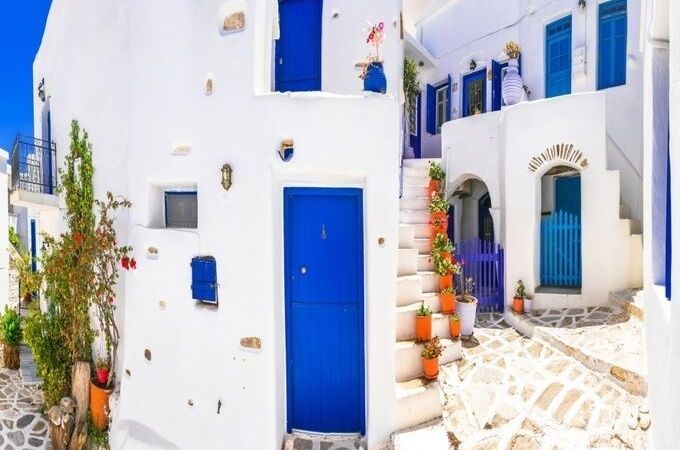
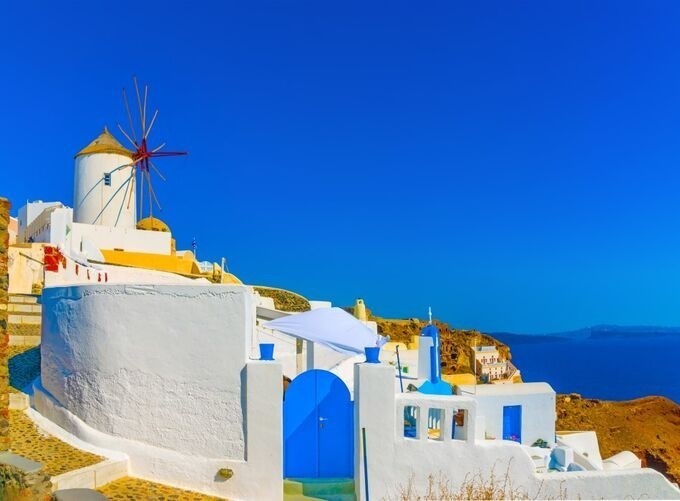
The windmills still overlook Chora, Little Venice still meets the Aegean and the maze of white lanes remains instantly recognizable. What disappears is the density surrounding those places.
Without peak tourism, distances seem shorter and architectural details become easier to notice. You can stand near the windmills without feeling obliged to move because another group is waiting for the same photograph, while Little Venice becomes somewhere to observe the sea rather than primarily a sunset venue.
This is not automatically more “authentic” than summer Mykonos. Tourism has shaped the island for decades and remains part of its modern identity.
November simply removes much of the seasonal layer.
What remains underneath becomes easier to see.
November Weather Is Better for Walking Than Waiting for the Beach
Typical daytime temperatures often fall around 16–20°C, with nights closer to approximately 12–15°C, although individual years and weather systems naturally produce variation.
Sunny periods can feel pleasantly mild, especially in sheltered locations. Cloud, rain and stronger wind can make another day feel considerably cooler despite similar forecast temperatures.
Swimming is no longer a sensible foundation for most itineraries.
The sea retains some warmth from summer, and cold-tolerant swimmers may still enter the water, but November has crossed the point where a general travel guide should promote Mykonos primarily as a swimming destination.
Walking becomes far more important.
What November Weather Favors
| Conditions | Best Use of the Island |
|---|---|
| Sunny and calm | Chora + coast + countryside |
| Mild with light cloud | Long island walk or drive |
| Breezy but dry | Chora + Ano Mera |
| Passing showers | Flexible town exploration |
| Persistent rain | Slow café/lunch day |
| Strong wind | Sheltered sightseeing |
| Clear late afternoon | Coastal photography |
The weather still determines the order of the day, but there is much less pressure to preserve a perfect afternoon for the beach.
Chora Finally Becomes a Town Again
During summer, Mykonos Town can feel like an international meeting place that happens to have permanent residents.
November reverses the proportions.
Some seasonal shops and restaurants close, while businesses serving local life remain. The resulting town has fewer options for visitors but more visible everyday rhythm.
A Mykonos heritage walking tour makes particular sense in this environment because there is time to pay attention to what summer crowds often obscure: small churches incorporated into residential streets, traditional Cycladic architectural details and the unusual urban pattern created by Chora's narrow lanes.
Walking without a strict route works equally well.
In fact, getting slightly lost is easier to enjoy when the streets are not filled with people moving in opposite directions.
“Is Mykonos Open?” Is the Wrong November Question
This search appears frequently because travelers understandably worry about arriving somewhere that feels abandoned.
Mykonos is open in the literal sense.
People live there.
The airport operates, ferries connect the island with other destinations, accommodation remains available and year-round restaurants, cafés and essential services continue functioning.
What changes is choice.
A traveler accustomed to selecting between dozens of beach venues, extensive nightlife options and seasonal excursions will find November dramatically reduced.
What Usually Changes After the Season
| Part of the Experience | November Reality |
| Chora | Quiet but inhabited |
| Hotels | Reduced selection |
| Local restaurants | Available, fewer choices |
| Beach clubs | Mostly seasonal/closed |
| Nightlife | Very limited compared with summer |
| Beaches | Open landscapes, minimal services |
| Ferries | Reduced schedules |
| Tours/excursions | Limited; arrange ahead |
| Car rental | Available but verify |
| Everyday services | Continue for residents |
The right approach is not asking whether “everything” is open.
Decide which three or four services matter to your trip and verify those.
The Beach Becomes a Landscape Again
Few places illustrate Mykonos seasonality more clearly than its beaches.
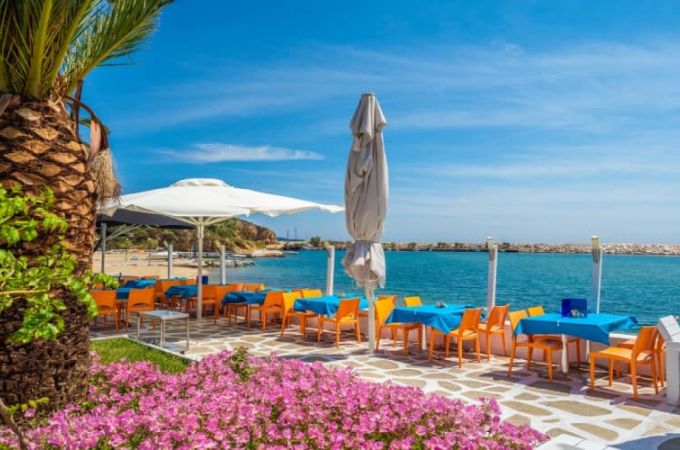
In August, the beach can be an entire social ecosystem involving reservations, music, dining, sunbeds, transfers and nightlife.
November removes much of that infrastructure.
What remains is coastline.
This can make familiar beaches feel unexpectedly spacious, and travelers interested in photography or walking may appreciate them more than those arriving with memories of summer swimming.
A quiet Mykonos coastal journey can connect several parts of the island without pretending that November is still beach season. Stop to walk, photograph the landscape and observe how dramatically the same coastline changes once commercial activity recedes.
You may encounter very few people.
That is no longer surprising.
Ano Mera Makes More Sense in November Than a Beach-Club Map
When the coast stops dominating the itinerary, Mykonos's inland geography gains importance.
Ano Mera becomes less of an alternative sightseeing stop and more of a natural part of understanding the island.
The village maintains a year-round community, and Panagia Tourliani Monastery provides cultural depth that feels particularly appropriate when tourism is quieter. The surrounding landscape, meanwhile, begins changing again as autumn moisture returns after the long dry summer.
Do not expect lush countryside immediately.
Mykonos remains a dry Cycladic island, and November conditions vary substantially from year to year.
What changes is the seasonal direction.
The landscape is no longer drying toward August.
It is recovering from it.
November Rain Has a Purpose Visitors Rarely Consider
For holidaymakers, rain is usually discussed as an inconvenience.
For an island emerging from a long dry Mediterranean summer, autumn rainfall belongs to a different cycle.
The first meaningful rains begin changing the countryside, replenishing soil moisture and supporting the vegetation that will become increasingly visible later in winter and early spring.
This does not make a wet day enjoyable when you planned a long coastal walk.
It does, however, explain why November Mykonos looks and smells different after rainfall. Dust settles, stone darkens, vegetation responds and the landscape temporarily acquires colors that summer visitors rarely see.
A weather event can therefore change more than the itinerary.
It changes the island in front of you.
Strong Wind Feels Different Without Summer Heat
Mykonos remains exposed to Aegean winds outside the Meltemi season.
In November, wind becomes a comfort issue rather than a beach-selection strategy.
An 18°C afternoon in calm sunshine can feel extremely pleasant. Add strong wind and the same temperature may call for a proper jacket, particularly along exposed coastline or around the windmills.
This is why “average high 18°C” does not tell you how to dress.
Wind resistance matters more than simply adding thick layers.
A relatively lightweight jacket that blocks moving air can be more useful than a bulky sweater worn on its own.
This Is a Good Month to Drive Without Chasing Attractions
Summer driving on Mykonos often serves a purpose.
Get to the beach.
Reach a restaurant.
Move between Chora and the hotel.
November allows driving to become exploration.
Traffic is much lighter, and a November Mykonos island drive can move through Ano Mera, countryside roads and coastal areas without every stop needing to correspond to a famous attraction.
This suits the island because Mykonos is compact.
You can change direction because the sky looks clearer toward another coast or stop near a small church simply because the landscape is interesting.
Check rental availability in advance and remain cautious after rain, particularly on unfamiliar roads.
The advantage of low traffic should not encourage careless driving.
The Sunset Is Earlier, but You Don't Need to Organize the Day Around It
November loses the extraordinarily long daylight of summer.
That changes pacing.
Outdoor sightseeing should begin earlier if you want to cover substantial ground, particularly because evenings become cooler once the sun disappears.
Yet the earlier sunset has an unexpected benefit.
It stops dominating the schedule.
There is little need to rush toward Little Venice simply because every visitor on the island has decided to see the same sunset. Choose an open coastal viewpoint, remain wherever you happen to be or watch the evening arrive from Chora.
The spectacle is the same sun.
The logistics are completely different.
November Mykonos Is Not for Everyone
This is important to say plainly.
If the reason you dream about Mykonos is Paradise Beach, all-day swimming, famous beach clubs, luxury sunbeds and nightlife extending into the morning, November will remove much of what attracted you.
Do not book the month simply because accommodation looks inexpensive.
The price difference reflects a different product.
November works for travelers interested in quiet islands, walking, photography, local atmosphere and seeing famous places outside the period when tourism defines them.
It also suits repeat visitors.
Someone who has already experienced Mykonos in summer may find the contrast fascinating.
A first-time visitor seeking the classic Mykonos holiday may simply wonder where everybody went.
November or October? The Difference Is Intent
October still asks whether summer experiences can survive into autumn.
November no longer needs to.
| Choose October | Choose November |
| Swimming still matters | Swimming is optional |
| Some seasonal venues matter | Local life matters more |
| You want late-season tourism | You want off-season Mykonos |
| Greater beach potential | Better walking focus |
| More tourism infrastructure | Quieter environment |
| Summer remains part of the trip | Summer is no longer the reference point |
December will move further toward winter, shorter days and the island's local holiday-season rhythm.
November owns the moment when tourism has stepped aside but winter has not fully settled in.
Packing for November Requires a Real Jacket
The swimsuit can still come if you are optimistic or particularly comfortable in cool water, but it is no longer the center of the suitcase.
Bring comfortable closed walking shoes, trousers, long-sleeved layers and a wind-resistant jacket. Waterproof protection is sensible, while sunglasses remain useful because clear Aegean days can still be bright.
A light scarf can be surprisingly practical during windy periods.
The goal is versatility rather than heavy winter equipment.
Sunny midday conditions may allow you to remove several layers, while the temperature after sunset can make you grateful that you brought them.
November rewards a suitcase that can change as quickly as the day does.
The Quiet Isn't the Attraction — What It Reveals Is
Describing off-season Mykonos only as “peaceful” does the island a disservice.
Plenty of destinations are quiet in November.
What makes Mykonos interesting is the contrast between the place you encounter and the global image attached to its name.
A beach known internationally for summer crowds may contain almost nobody. Chora's lanes stop functioning as a stream of restaurants, shoppers and nightlife visitors and return to being streets where people live. Ano Mera becomes part of the island rather than a cultural excursion added between beach days.
The physical Mykonos is familiar.
Its proportions have changed.
For travelers willing to accept reduced services, cooler weather and the possibility of rain, that shift can reveal an island that peak-season photographs rarely manage to show.
What Is Actually Still Here in November?
Once the beach clubs, seasonal restaurants and summer crowds are removed from the picture, visitors sometimes imagine very little remains.
That assumption says more about the way Mykonos is marketed than about the island itself.
There is a permanent community here, and November makes that community more visible. Local cafés continue serving customers, children attend school, residents shop and work, ferries maintain essential connections, while Chora remains the administrative and commercial center of an island that cannot simply close because international tourism has declined.
For visitors, the difference is choice. There may be fewer restaurants, fewer hotels and considerably fewer organized experiences, but everyday Mykonos continues around them.
This distinction is essential when deciding whether November will suit you.
If you need a broad tourism infrastructure, reduced choice can feel limiting. If a handful of good places to eat, a comfortable hotel and the freedom to explore are sufficient, the quieter seasonal landscape becomes much easier to appreciate.
Restaurants Don't Disappear; the Audience Changes
Summer dining in Mykonos is an enormous part of the destination's international identity, from sophisticated restaurants in Chora to expensive beachfront venues designed around the main visitor season.
November removes much of that layer, but it does not remove eating out.
Year-round restaurants and cafés continue serving local residents, although the selection is naturally smaller. Opening days and hours may also be less extensive than visitors expect from summer.
Rather than compiling a restaurant list months in advance, ask your hotel or accommodation host what is currently operating when you arrive. Local information becomes particularly valuable because seasonal schedules can change from year to year.
This can also lead to a different style of dining. Without the pressure to secure a famous sunset table or destination restaurant, meals can become a more ordinary part of the day rather than an event requiring reservations weeks ahead.
For November, ordinary is not an insult.
It is part of the experience.
Transport Requires More Attention Than Traffic
One of summer Mykonos's practical frustrations is movement. Roads become busy, parking can be difficult and demand for transfers rises sharply at predictable times.
November removes much of that pressure.
The trade-off is reduced frequency.
Public transportation routes may operate on seasonal schedules, ferry connections are less extensive than in summer and some visitor-focused transport services reduce operations.
November Transport Reality
| Transport | What Changes | Best Approach |
|---|---|---|
| Ferries | Fewer departures than summer | Check exact travel date |
| Flights | Connections continue | Compare schedules early |
| Public buses | Reduced seasonal frequency | Verify current timetable |
| Rental car | Less demand | Confirm office/opening hours |
| Private transfers | Usually arrangeable | Pre-book when important |
| Taxis | Lower seasonal pressure | Still plan airport/port journeys |
| Walking in Chora | Much easier | Excellent for local exploration |
Reduced traffic therefore does not mean transport requires no planning.
It means the problem changes from congestion to availability.
You Don't Need a Week Unless You Want One
November changes the ideal length of a Mykonos stay because many summer activities no longer compete for time.
For most first-time off-season visitors, three or four nights provide a comfortable window for Chora, Ano Mera, coastal exploration and a slower day shaped by the weather.
Two nights can work if Mykonos forms part of a broader Greece journey, although the short stay becomes more vulnerable to poor weather. If one of your two days is heavily affected by rain or wind, there is little room to reorganize.
Five nights or longer make more sense for travelers who actively enjoy slow travel rather than those trying to add additional attractions.
How Long Does November Mykonos Need?
| Stay | Best For | Main Limitation |
| 2 nights | Short off-season stop | Weather can dominate |
| 3 nights | Chora + island overview | Limited flexibility |
| 4 nights | Best overall balance | Few drawbacks |
| 5 nights | Walking + photography + slow travel | Requires enjoying quiet |
| 6+ nights | Retreat-style stay | Limited tourism variety |
There is no reason to extend the trip merely because hotel prices are lower.
Stay longer only if doing less appeals to you.
The Empty Beach Has Two Possible Meanings
Stand on a nearly deserted Mykonos beach in November and your reaction will reveal whether you chose the right month.
One traveler sees an empty coastline and thinks, “There is nothing happening.”
Another sees exactly the same place and thinks, “I have never seen Mykonos like this.”
Neither response is incorrect.
The absence of beach infrastructure means there may be no sunbeds, music, waiter service or nearby seasonal restaurant. You might simply walk beside the water for half an hour, take photographs and continue elsewhere.
That is the point.
November beaches are not substitutes for summer beaches. They are landscapes that happen to share the same names.
Trying to judge them by summer standards guarantees disappointment.
Photography Becomes Less About Iconic Shots
Peak-season photography often revolves around recognizable Mykonos imagery: the windmills at sunset, Little Venice, blue-domed churches and brilliant beaches beneath cloudless skies.
November introduces different material.
Cloud formations can create more dramatic coastal scenes, wet stone reflects light differently after rain and the lower seasonal sun produces softer conditions during parts of the day. Empty streets also make architectural photography considerably easier.
The island may appear less conventionally postcard-perfect.
It can be more visually interesting because of it.
Photographers should still prepare for wind and rain, protect equipment appropriately and avoid assuming that dramatic conditions are safe conditions on exposed coastline.
A good photograph is not worth ignoring the weather.
Mykonos Doesn't Become Cheap in Every Possible Way
Lower accommodation demand can create more attractive rates than summer, but off-season travel has its own cost structure.
Reduced public transport may make rental cars or private transfers more useful. Fewer direct ferry connections can complicate multi-island itineraries, while limited hotel choice means the cheapest property is not necessarily conveniently located.
This is why November value should be calculated across the entire trip rather than through room price alone.
A slightly more expensive hotel near Chora may reduce transportation needs and provide easier access to year-round dining.
The room rate is only one line of the holiday budget.
Who Will Love November — and Who Probably Won't?
A month-specific guide should make it possible for somebody to decide not to travel.
That is useful information too.
| November May Suit You If... | Consider Another Month If... |
| You enjoy quiet destinations | Beach clubs are essential |
| Walking matters more than swimming | You expect daily swimming |
| You like photography | Nightlife is a major priority |
| Local atmosphere interests you | You need broad restaurant choice |
| You dislike summer crowds | You want organized activities daily |
| Weather flexibility doesn't bother you | Rain would seriously disappoint you |
| You have already seen summer Mykonos | You want the classic first-time experience |
There is no prize for choosing the most unusual travel month.
Choose November because its limitations sound acceptable, not because fewer people visit.
A November Day Can Be Surprisingly Full Without Looking Busy
Start with breakfast in Chora and spend the morning walking through the old town while it is functioning as an ordinary local center rather than a visitor attraction.
If the weather remains dry, continue toward Ano Mera and the island interior. Stop for lunch without needing to coordinate the meal around a beach reservation, then drive toward the coast while daylight remains.
A beach walk might occupy forty minutes rather than four hours.
That leaves time to return to Chora before the temperature drops after sunset.
On paper, very little has happened.
You have not visited five beaches, attended a beach club, taken a sunset cruise or spent the evening moving between famous venues.
Yet you may have seen considerably more of the physical island.
November changes what counts as a full day.
Twelve FAQs About Mykonos Weather in November
1. Is November a good time to visit Mykonos?
November can be rewarding for travelers interested in quiet Chora, walking, photography and year-round island life rather than beaches and nightlife. Tourism services are substantially reduced, while cooler temperatures, wind and rainfall require flexibility. It is a specialized travel month rather than a conventional Mykonos holiday.
2. How warm is Mykonos in November?
Daytime temperatures commonly fall around 16–20°C, while nights may reach approximately 12–15°C. Sunny, sheltered periods can feel pleasantly mild, whereas cloud and strong wind can make similar temperatures feel much cooler, so practical clothing should be based on conditions rather than averages alone.
3. Does it rain in Mykonos in November?
Rain becomes a normal possibility during November as the Cyclades move further into the wetter part of the year. Continuous rain throughout an entire trip is not inevitable, but showers and unsettled periods should be expected often enough that waterproof clothing and flexible sightseeing plans are worthwhile.
4. Can you swim in Mykonos in November?
Swimming is possible for visitors comfortable with cooler conditions, particularly during sunny and calm periods, but November should not be chosen primarily for a beach holiday. Air temperature and wind often reduce comfort before the sea itself becomes extremely cold, making swimming a bonus rather than an expectation.
5. Is Mykonos open in November?
Mykonos remains inhabited and operational throughout November, with year-round restaurants, cafés, essential services, flights and ferry connections continuing. However, many seasonal hotels, beach venues, shops and tourism businesses close, so visitors should expect substantially less choice than during the main travel season.
6. Are restaurants open in Mykonos in November?
Yes, although the selection is significantly smaller than in summer. Year-round restaurants and cafés continue serving residents and visitors, particularly around Chora. Opening days and hours may vary, so current recommendations from accommodation providers can be more useful than old summer restaurant lists.
7. Is Mykonos windy in November?
Wind can be an important part of November weather, particularly along exposed coastlines. Unlike summer Meltemi discussions centered on beach selection, November wind primarily affects comfort. A wind-resistant jacket is therefore particularly useful even when forecast air temperatures appear relatively mild.
8. What should I wear in Mykonos in November?
Bring trousers, long-sleeved layers, comfortable closed walking shoes and a wind-resistant jacket, together with waterproof protection for rainy periods. Sunglasses remain useful on clear days. Layering works particularly well because sheltered sunny afternoons can feel much warmer than exposed coastal conditions.
9. Are ferries running to Mykonos in November?
Yes, ferry connections continue because Mykonos has a permanent population, but schedules are less extensive than during summer. Travelers should check current timetables for exact dates, particularly when planning connections with other islands, flights or international departures that leave little margin for disruption.
10. How many days should I spend in Mykonos in November?
Three to four nights suit most visitors interested in an off-season island experience, providing time for Chora, Ano Mera and coastal exploration with some weather flexibility. Longer stays work best for travelers deliberately seeking slow travel, walking, photography or a quiet retreat.
11. Is Mykonos worth visiting without nightlife?
Yes, provided your interest extends to Cycladic architecture, local communities, coastal scenery and quiet island exploration. Mykonos has become internationally associated with nightlife, but that represents only one seasonal layer of the destination. November makes the underlying year-round island considerably more visible.
12. Is November or December better for Mykonos?
November suits travelers interested in the immediate post-season transition, autumn walking and seeing local life after tourism recedes. December moves further into the winter identity of Mykonos, with shorter days, cooler conditions and a different local rhythm around the year-end period.
The Island Was Here Before the Summer Crowd Arrived
There is an obvious Mykonos that appears in almost every advertisement.
White buildings against deep blue sky. Beaches filled with sunbeds. Restaurants overlooking the Aegean. Music, boats, sunset drinks and streets crowded late into the night.
That Mykonos is real.
It is simply seasonal.
November makes the other version difficult to ignore because so much of the summer machinery has been removed. The old town becomes quieter, beaches lose their commercial identity and the island's permanent community occupies more of the visible space.
This does not necessarily reveal some secret “real Mykonos” hidden from summer travelers. That would be too romantic and, more importantly, inaccurate. Modern Mykonos has been shaped profoundly by tourism, and its summer culture is part of what the island has become.
November offers something subtler.
It changes the proportions.
Local residents become more visible because visitors are fewer. Chora's architecture receives more attention because restaurants and shopping no longer dominate every walk. The coastline becomes landscape because there is little reason to evaluate every beach according to its sunbeds or social scene.
For some travelers, removing those elements removes the reason to visit.
For others, it removes the distraction.
That is the decision November asks you to make before booking.
Not whether Mykonos is still open, because the island never stopped living.
Whether you are interested in what remains once summer has left.

A travel professional specializing in tailor-made travel planning, guest experience management, and multi-destination tourism operations.
With over 23 years of experience in the travel industry, he designs and manages private and cultural tours for international travelers across Türkiye, Greece, Egypt, Jordan, Morocco, and other destinations.
He has strong expertise in both online and face-to-face guest communication, sales processes, and end-to-end travel operations.
Working closely with hotels, travel agencies, and local partners, he ensures smooth coordination and high-quality travel experiences at every stage of the journey.
His focus is on delivering personalized, reliable, and seamless travel experiences for international guests worldwide.