Santorini Weather in February: Between Storms and Blue Skies
Last Updated: August 2026
There are February mornings in Santorini when opening the curtains settles the day's plans immediately.
The caldera has disappeared.
Cloud hangs over the cliffs, wind pushes rain against the windows, and the sensible response is not to put on a waterproof jacket and prove how committed you are to sightseeing.
Order another coffee.
Two hours later, look again.
The island may have changed completely.
A section of blue appears over the Aegean. The rain stops. Light reaches the white houses across the cliff, and suddenly the afternoon becomes too good to spend indoors.
February Santorini is built around these openings.
It is still firmly winter. There is no dependable beach weather, no guarantee of outdoor sunsets and no reason to expect the island to function at summer capacity. Yet February has a quality January does not quite own: the weather itself becomes part of the atmosphere.
For travelers who can surrender a little control, that makes the island unexpectedly compelling.
Don't Plan February by Day—Plan It by Weather Window
A conventional itinerary says:
Monday: Oia.
Tuesday: Fira.
Wednesday: Akrotiri.
February often suggests something smarter.
When the sky clears, go somewhere exposed.
When wind and rain arrive, switch to something sheltered.
When conditions improve again, go back outside.
This sounds obvious, but it requires a different attitude toward travel. Instead of feeling disappointed because Tuesday's activity moved to Wednesday, you treat the itinerary as a collection of possibilities rather than appointments.
Typical February daytime temperatures are often around 12–15°C, with nights roughly 8–10°C. Cold spells can occur, but raw temperature is rarely the whole story.
Wind and moisture determine how comfortable those numbers actually feel.
The February Weather-Window Method
| Conditions Right Now | Better Choice |
|---|---|
| Calm and clear | Caldera viewpoints or longer walk |
| Sunny but windy | Villages with shorter exposed stops |
| Light showers | Fira, cafés, flexible sightseeing |
| Heavy rain | Indoor cultural experiences |
| Clearing after rain | Photography and viewpoints |
| Calm late afternoon | Sunset attempt |
The important words are right now.
A February forecast covering an entire day may conceal several very different periods within it.
Why Wind Matters More Here Than in Athens
Santorini is not simply “Greece weather on an island.”
Its geography changes the experience.
The settlements perched above the caldera are exposed to the Aegean, and the cliff-edge setting that makes Santorini spectacular also makes wind impossible to ignore.
This is precisely where the Santorini monthly cluster needs to remain separate from Athens weather content.
In Athens, a winter forecast of 14°C can be discussed largely through city sightseeing.
On Santorini, you need to ask where you will be standing.
A narrow lane protected by buildings can feel comfortable.
Walk several minutes to an exposed caldera viewpoint and the same afternoon can suddenly feel much colder.
That difference shapes February more than a one-degree change in average temperature ever could.
The Caldera Has Winter Moods Summer Rarely Shows
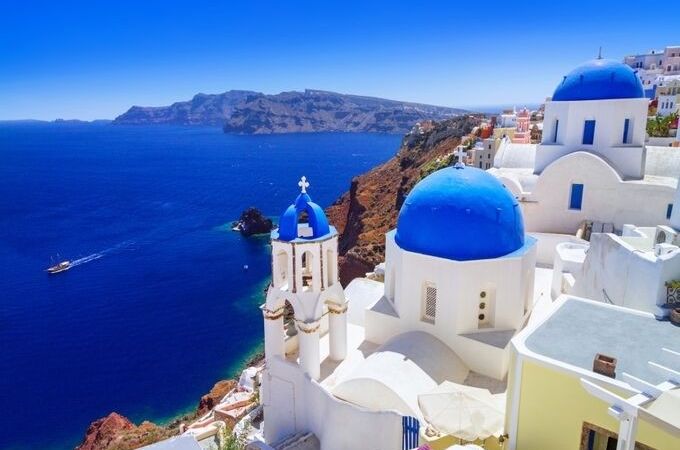
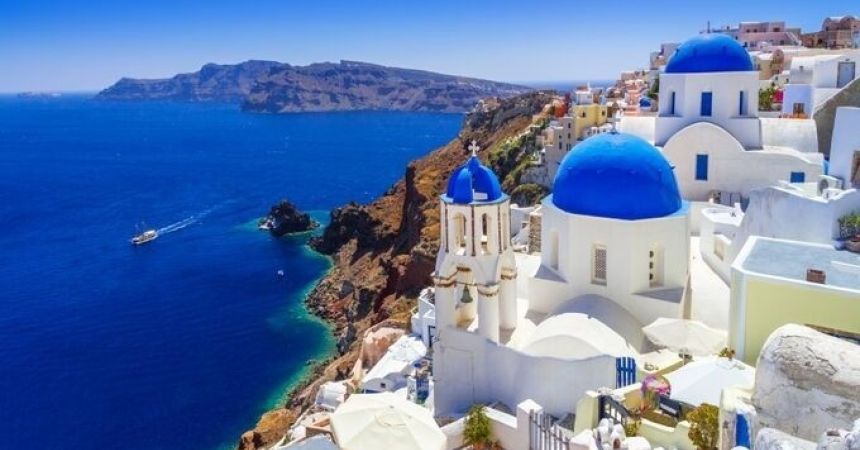
Summer Santorini photography is dominated by clarity.
Blue sea. Blue sky. White architecture. Strong light.
February introduces something less predictable.
Cloud shadows move across the water. Rain can obscure the opposite side of the caldera. Dark skies form behind white villages, and shafts of sunlight occasionally illuminate one section while everything around it remains grey.
The caldera becomes theatrical.
For photographers, this unpredictability can be frustrating if the objective is recreating a famous postcard.
It can be excellent if the objective is making photographs that actually look like February.
A Santorini caldera tour works particularly well when the route can respond to changing conditions rather than committing the entire day to one exposed location.
Sometimes the best view is wherever the weather has just cleared.
February Is Romantic—but Not in the Instagram Version
Calling Santorini romantic in February risks sounding like travel-brochure filler.
The reality is more interesting.
This is not the romance of swimming pools, warm sunset dinners and polished terraces.
Many of those experiences are unavailable.
February's intimacy comes from the opposite direction.
A nearly empty lane in Oia.
A quiet hotel where the caldera is visible from indoors.
Dinner without a reservation made weeks in advance.
Watching rain cross the sea from somewhere warm.
Walking through Firostefani with no need to navigate tour groups.
For couples who need constant entertainment, the quiet may become tedious.
For couples who enjoy simply being somewhere together, February can feel unusually private.
That distinction matters.
Choose the Hotel for the Weather You Don't Want
In summer, the hotel may function mainly as somewhere to sleep between experiences.
February can reverse that relationship.
There may be periods when you actively want to stay inside.
That makes room design, heating, common spaces and the actual view more important.
A February Hotel Decision Table
| Hotel Feature | Why It Matters Now |
| Reliable heating | Winter nights are cool |
| Indoor caldera view | Poor weather does not remove the landscape |
| Comfortable room | More waking time may be spent there |
| Walkable restaurants | Less exposure in rain/wind |
| Year-round operation | Seasonal closures remain relevant |
| Indoor breakfast area | Outdoor terraces may be impractical |
| Spa/hammam | Useful addition on unsettled days |
A caldera-view room that seems extravagant during a sightseeing-heavy summer holiday can make considerably more sense in February.
If rain arrives, the view does not disappear from the trip.
You simply experience it through glass for a while.
What Happens When a Storm Passes?
This can be the best moment of the day.
Winter rain often cleans the atmosphere. When clouds begin moving away, visibility across the caldera can become exceptional.
The problem is that travelers sometimes wait for the forecast to say “sunny” before leaving the hotel.
By then, the interesting light may already have gone.
Watch the sky instead.
If the horizon begins opening, get ready.
A short drive or walk to a viewpoint can produce better conditions than waiting another hour for perfectly blue skies.
February favors people who react.
It is less accommodating to those who need every outdoor activity confirmed the night before.
Should You Walk the Caldera Trail?
Possibly—but February is not a month for emotional commitment to the Fira–Oia walk.
The route is exposed, and strong wind changes both comfort and practicality. Recent rain can also affect surfaces.
On a calm, dry day, however, cool temperatures can create excellent walking conditions.
The important question is not “Is the trail open in February?”
It is:
Is today a good day for this trail?
Those are very different questions.
Travelers joining a Santorini walking experience can also use shorter sections around Fira, Firostefani and Imerovigli rather than treating completion of the entire route as the only meaningful outcome.
February rewards flexible distance.
One February Day Can Contain Four Santorinis
This is perhaps the month's most distinctive characteristic.
At breakfast: grey and wet.
At noon: bright but windy.
At three: almost springlike in a sheltered spot.
At sunset: cold again.
How Conditions Change the Same Island
| Weather | Santorini Feels... |
| Rain + low cloud | Isolated and dramatic |
| Bright cloud | Soft, photographic |
| Clear sunshine | Fresh and open |
| Strong wind | Wild and exposed |
| Calm evening | Surprisingly gentle |
None of these conditions owns the whole month.
Sometimes they do not even own the whole day.
That is why February deserves its own blog rather than being treated as January with slightly different temperature averages.
What Should Go in Your Day Bag?
A February day bag needs to handle changes rather than extremes.
Carry a water-resistant and wind-resistant jacket, preferably one that can be layered over a sweater or fleece. A scarf helps considerably around exposed areas.
Comfortable shoes with reliable grip are important because Santorini's steps and paved lanes can become slippery after rain.
Add sunglasses.
It sounds optimistic until the clouds suddenly disappear.
A small waterproof bag or protective sleeve for electronics is useful if you are carrying camera equipment.
And keep some empty space.
The layer you needed at 9 a.m. may spend the afternoon inside the bag.
Is February Really an Island-Hopping Month?
Not in the conventional summer sense.
Ferry services operate on more limited seasonal schedules, and winter weather can affect sea travel. Building a rapid multi-island itinerary around frequent connections therefore requires considerably more care than it does in July.
Santorini can still form part of a Greece journey.
The important difference is the margin you leave around transportation.
Avoid an unnecessarily fragile sequence where a ferry arrival connects immediately with an important international departure.
February travel works better when you allow the Aegean some authority over the timetable.
February's Beach Experience Has Nothing to Do With Swimming
Kamari or Perissa can look almost cinematic in winter.
Dark volcanic shore.
Grey-blue sea.
Few people.
Closed or quiet seasonal businesses.
A beach that functions as a landscape rather than a leisure facility.
Some travelers find that melancholy.
Others discover they prefer it.
A private Santorini journey can include the island's coastal side without pretending that February is suitable for a conventional beach day.
You walk.
Look at the sea.
Maybe have coffee somewhere open.
Then move on.
The beaches become another piece of Santorini's volcanic geography rather than the center of the holiday.
February Asks One Question Before You Book
How much certainty do you need?
If you need guaranteed sunsets, predictable outdoor dinners, reliable hiking conditions and a long list of operating tourism businesses, February is asking you to compromise too much.
If you can enjoy a destination when the weather changes the plan, the calculation is different.
A rainy morning does not destroy the day.
A closed restaurant does not mean the island is closed.
A cloudy sunset does not invalidate Santorini.
February's strongest experiences often happen precisely because conditions are not perfect: the sudden clearing after rain, the empty viewpoint, the dramatic sky or the unexpected hour of sunshine that sends everyone outside.
That is not summer Santorini with worse weather.
It is a completely different reason to come.
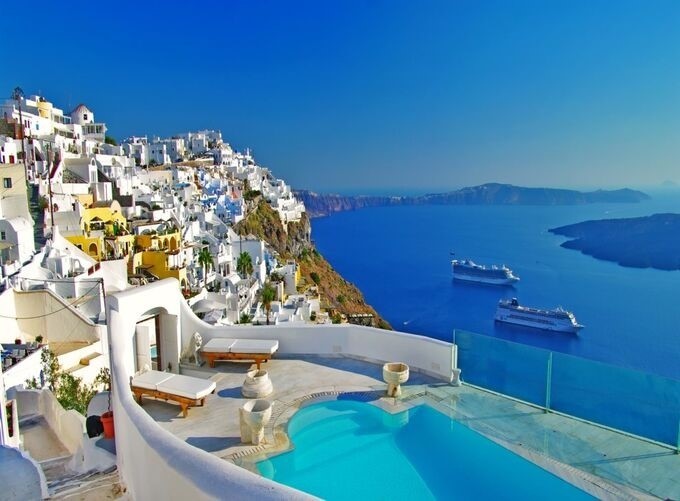
Forty-Eight Hours, Three Completely Different Santorini Trips
A February itinerary makes more sense when it has alternatives rather than fixed expectations.
Imagine you have two full days on the island.
The places you want to see remain the same. What changes is their order.
Forecast A: Two Clear, Calm Days
You have won the February weather lottery.
Use the first morning for the caldera villages and the strongest walking conditions. Spend time between Fira, Firostefani and Imerovigli rather than simply photographing each settlement and moving on.
Oia can take the later afternoon.
On the second day, explore inland villages, Akrotiri and the volcanic coastline. Because the weather is cooperating, there is no need to overload either day.
Forecast B: Rain First, Clear Tomorrow
Do not waste energy fighting Day One.
Use sheltered and cultural stops, enjoy a longer lunch and explore whenever breaks appear between showers.
Save the most exposed caldera experiences for tomorrow.
This is exactly why February itineraries should not assign emotional importance to a particular day. Santorini does not care that your spreadsheet says Oia is scheduled for Tuesday.
Forecast C: Wind and Showers Throughout
Now the trip changes character.
Short outdoor periods become more useful than ambitious walks. Drive between villages rather than committing to long exposed routes. Visit viewpoints when conditions briefly improve and accept that the hotel, cafés and indoor experiences will occupy more of the day.
You still see Santorini.
You simply experience less of it continuously outdoors.
The February Flexibility Matrix
| Forecast | Caldera Walk | Oia | Inland Villages | Coast | Long Lunch |
|---|---|---|---|---|---|
| Calm + sunny | Excellent | Excellent | Good | Good | Optional |
| Sunny + windy | Limited | Good | Excellent | Exposed | Useful |
| Light showers | Short sections | Flexible | Good | Limited | Excellent |
| Heavy rain | Avoid long walk | Brief visit | Best option | Skip if needed | Excellent |
| Clearing after storm | Excellent for views | Excellent | Good | Dramatic | Later |
The purpose is not to follow this table mechanically.
It is to recognize that February gives you several versions of Santorini and your itinerary should be able to move between them.
Who Actually Benefits From February?
February is a surprisingly poor choice for some travelers.
That needs saying clearly.
Couples Who Enjoy Slow Travel: Strong Match
If a holiday can include long breakfasts, wandering without a checklist, quiet evenings and time spent simply looking at the caldera, February can be unusually rewarding.
Photographers: Potentially Excellent
Winter cloud, changing light and emptier viewpoints create possibilities that summer rarely provides.
The trade-off is unpredictability.
You may get extraordinary conditions—or spend hours waiting for the landscape to emerge from cloud.
First-Time Visitors: Conditional Match
Your first Santorini visit can absolutely happen in February, provided you understand what is missing.
If the dream involves swimming, boat trips, lively restaurants and warm evenings, wait.
If the caldera and villages are the real priority, February remains viable.
Families Seeking Activities: More Difficult
Reduced seasonal operations and unpredictable outdoor conditions give families fewer easy fallback options than summer.
It can still work, particularly with older children interested in history and landscapes, but February requires more flexible expectations.
Honeymooners: Depends on the Honeymoon
If “honeymoon” means privacy, beautiful accommodation and uninterrupted time together, February makes sense.
If it means infinity pools, sunset dinners outside and a lively island atmosphere, it does not.
January, February and March Have Different Jobs
These three months should never become three copies of the same “Santorini in low season” article.
| Month | Core Experience | Main Travel Question |
| January | Island without its summer identity | What is Santorini like when tourism recedes? |
| February | Weather-window travel | Can I enjoy the island without controlling the forecast? |
| March | Seasonal awakening | What starts changing as Santorini moves toward spring? |
January reveals the working island.
February makes weather itself part of the experience.
March will look forward rather than backward, following the gradual reopening and seasonal shift toward outdoor travel.
The distinction matters because choosing between them should involve more than comparing average temperatures.
Build Margin Into Winter Transport
There is another kind of February weather window: the one involving your departure.
Flights and ferries serve Santorini in winter, but ferry schedules are more limited than during the summer season, and adverse weather can affect maritime operations.
That makes tight connections a poor design choice.
If you must catch an important international flight from Athens, consider the consequences of placing a weather-dependent sea journey immediately beforehand.
Likewise, do not build a complicated February island-hopping route simply because a summer itinerary online shows several daily ferry choices.
Check the schedule for your actual date.
Winter rewards logistical breathing room in exactly the same way it rewards flexibility while sightseeing.
Twelve FAQs About Santorini Weather in February
1. Is February a good time to visit Santorini?
February can be rewarding for travelers comfortable with changing winter weather and a quiet island atmosphere. Expect cool temperatures, wind and possible rain rather than beach conditions. Its strongest appeal lies in dramatic caldera scenery, uncrowded villages and the ability to travel slowly.
2. What temperatures can I expect in Santorini in February?
Daytime temperatures commonly sit around 12–15°C, while nights are often approximately 8–10°C. Actual comfort varies considerably with wind, cloud and exposure. A sunny sheltered terrace may feel pleasant while an exposed caldera viewpoint at the same temperature can feel distinctly cold.
3. Is February rainy in Santorini?
Rain remains a realistic part of February, although this does not mean every day is continuously wet. Showers and clearer periods can occur within the same day. Flexible travelers can often use breaks in the weather for viewpoints, village walks and shorter outdoor activities.
4. How windy is Santorini during February?
Wind can strongly influence the February experience because many famous viewpoints and walking routes are exposed to the Aegean. Conditions vary from day to day, but travelers should bring a wind-resistant layer and consider wind forecasts before committing to long caldera walks.
5. Is February suitable for the Fira-to-Oia hike?
It can be on a calm, dry day. Strong wind, recent rain and wet surfaces can make exposed sections much less appealing. Rather than planning the hike as a fixed February activity, assess current conditions and consider completing a shorter caldera section when necessary.
6. Can you watch good sunsets in February?
Yes, but clear sunsets cannot be guaranteed. Winter cloud may obscure the horizon, while other days produce dramatic breaks of light and textured skies rarely seen during consistently clear summer weather. February sunset viewing works best when treated as an opportunity rather than an appointment.
7. Can I swim in Santorini in February?
February is not a conventional swimming month. Sea and air temperatures are too cool for most leisure swimmers, and beach tourism infrastructure is limited. Travelers can still visit Kamari, Perissa and other coastal areas for scenery, walks and the island's distinctive volcanic shoreline.
8. Are hotels and restaurants open in February?
Santorini continues functioning, but many tourism-focused properties and restaurants remain closed during the winter period. Year-round options are easier to find in areas with permanent residents. Confirm accommodation and nearby dining rather than assuming businesses shown online will operate during your specific dates.
9. What clothes should I pack for Santorini in February?
Bring layered clothing, a sweater or fleece and a wind-resistant, water-resistant outer jacket. Comfortable shoes with good grip are useful after rain. A scarf and sunglasses also earn their place because the day may shift rapidly between cold wind, showers and surprisingly bright sunshine.
10. Is February suitable for a romantic Santorini trip?
Yes, for couples who value privacy, atmospheric accommodation and quiet time rather than summer entertainment. February's romantic appeal comes from empty villages, dramatic weather and slower evenings. Travelers expecting pools, warm terrace dinners and a lively resort atmosphere should choose a warmer month.
11. How many nights should I spend in Santorini in February?
Three nights provide a sensible balance because they create additional opportunities for favorable weather windows. A two-night visit is possible but becomes more vulnerable to one poor-weather day. Longer stays particularly suit photographers, couples and travelers intentionally seeking a slow off-season experience.
12. Is February better than March for Santorini?
They serve different travelers. February offers a deeper winter atmosphere, greater solitude and weather-driven travel, while March begins Santorini's transition toward spring. Travelers should choose February for the off-season experience itself rather than expecting it to provide an early version of spring.
February Does Not Promise You the Santorini You Planned
That may be its most interesting quality.
You arrive imagining a sunset in Oia.
Cloud rolls in.
You decide to spend the afternoon elsewhere.
Then, while driving back toward Fira, the sky opens and the caldera suddenly appears beneath a strip of winter sunlight.
So you stop.
There is nobody waiting for the same photograph. No schedule says you should be there. Fifteen minutes later, the light is gone again.
In summer, Santorini often delivers the scenes travelers came expecting.
February works differently.
The island decides when to reveal itself.
You only need enough flexibility to notice when it does.

A travel professional specializing in tailor-made travel planning, guest experience management, and multi-destination tourism operations.
With over 23 years of experience in the travel industry, he designs and manages private and cultural tours for international travelers across Türkiye, Greece, Egypt, Jordan, Morocco, and other destinations.
He has strong expertise in both online and face-to-face guest communication, sales processes, and end-to-end travel operations.
Working closely with hotels, travel agencies, and local partners, he ensures smooth coordination and high-quality travel experiences at every stage of the journey.
His focus is on delivering personalized, reliable, and seamless travel experiences for international guests worldwide.