Santorini Weather in July: Heat, Wind and Two Coasts
Last Updated: August 2026
Two people can spend the same July afternoon in Santorini and give you surprisingly different descriptions of the weather.
One has been sitting beside the sea in Perissa, where a steady breeze has made the temperature feel perfectly manageable. The other has spent several hours climbing steps through a sheltered part of Fira and insists that the island is much hotter than expected.
Neither is wrong.
By July, Santorini has entered the dry heart of the Aegean summer. Rain becomes unusual, sunshine is dependable and daytime temperatures commonly reach the upper twenties or low thirties Celsius, with hotter periods certainly possible. The sea has warmed enough to become a natural part of almost any itinerary, while evenings remain comfortably suited to outdoor dining.
Yet temperature alone is a poor way to understand July here because wind and exposure can matter almost as much as heat.
The Meltemi, the seasonal northerly wind associated with the Aegean summer, can cool one part of your day, complicate another and occasionally make a location that looked perfect in photographs feel far more exposed than expected.
July Santorini is therefore less about asking whether it will be hot—you can safely assume summer conditions—and more about learning how the island's geography changes the way that heat actually feels.
The Meltemi Is Not Santorini's Outdoor Air Conditioning
It is tempting to describe summer wind as free air conditioning, but that makes the Meltemi sound more predictable and convenient than it really is.
When northerly winds are present, they can make a warm day much more comfortable, particularly in exposed areas. At the same time, stronger winds may affect boat excursions, create rougher sea conditions, make exposed terraces less pleasant and turn an otherwise straightforward caldera walk into a tiring experience.
The effect also varies according to where you are standing.
A protected lane can feel almost still while a nearby viewpoint receives a persistent breeze. Move to another side of the island and conditions change again.
What July Wind Can Actually Change
| Your Plan | Light to Moderate Breeze | Stronger Wind |
|---|---|---|
| Caldera sightseeing | Often refreshing | Exposed viewpoints can become tiring |
| Beach afternoon | Comfortable cooling | Some beaches may feel very windy |
| Boat excursion | Pleasant conditions possible | Sea conditions become more important |
| Outdoor dinner | Usually welcome | Exposed terraces may be uncomfortable |
| Long walk | Helps with heat | Sustained exposure can be exhausting |
| Photography | Clear summer visibility | Stability and airborne dust may matter |
Checking only the temperature forecast before leaving the hotel misses half of July's weather story.
The Caldera Side and Beach Side Do Not Always Feel Like the Same Island
Santorini is small enough that travelers sometimes assume weather conditions will be effectively identical everywhere.
In broad terms, they often are. In practical terms, local exposure can make a noticeable difference.
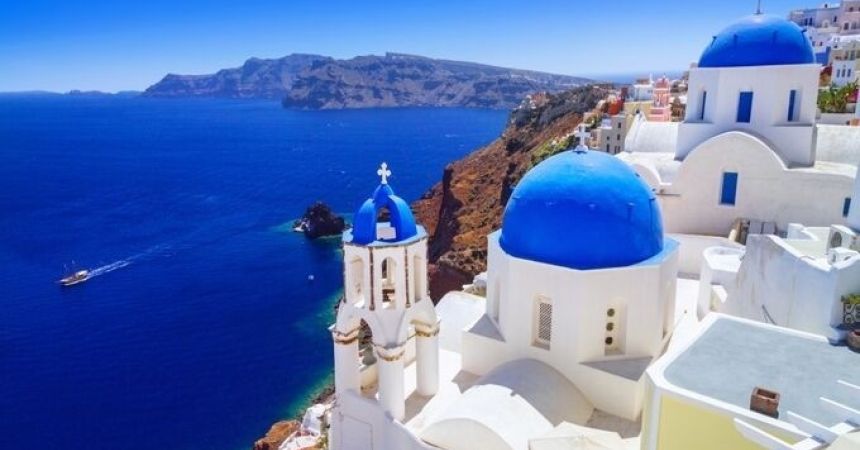
Fira, Firostefani, Imerovigli and Oia sit within a dramatic elevated landscape where wind can be very apparent. Their appeal is obvious: extraordinary views, iconic architecture and immediate access to the caldera.
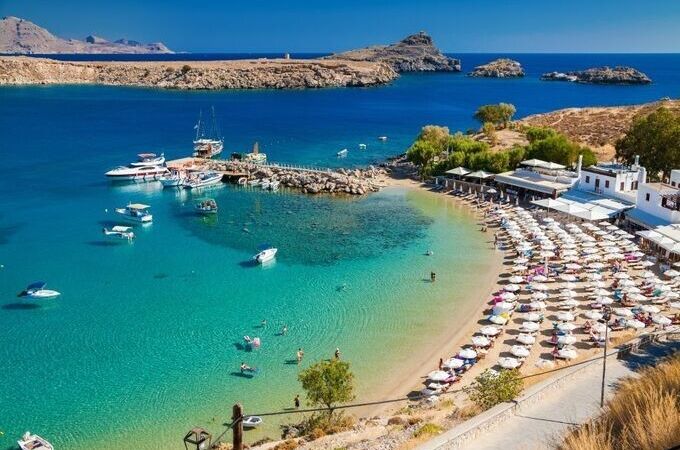
Beach areas such as Kamari, Perissa and Perivolos provide a completely different physical environment. You are at sea level, swimming becomes central to the day, and the surrounding terrain influences how exposed or sheltered individual sections feel.
This creates a useful July strategy: instead of expecting one area to provide everything from breakfast until midnight, move with the conditions.
A Santorini coast and caldera tour can make more sense in July than spending the entire day in one environment, particularly when you want sightseeing without sacrificing several hours beside the water.
July Is Dry Enough That Rain Stops Being a Planning Category
During spring, checking for showers can still influence the itinerary.
In July, rainfall is typically scarce enough that most travelers stop thinking about it.
That simplifies packing and daily planning, but it creates another issue that deserves more attention: the landscape is now properly dry.
The greenery associated with early spring has largely faded. Volcanic earth, pale grasses and exposed rock become part of the dominant palette, while strong sunshine creates sharper contrast around the whitewashed settlements.
The island looks much closer to the Santorini seen in classic summer photographs.
That dry landscape also means shade becomes valuable.
Not all archaeological sites, trails or viewpoints provide much of it, so an itinerary that appears reasonable on a map may feel very different after several continuous hours under July sun.
Midday Isn't Forbidden; It Just Needs a Purpose
There is a tendency in hot-weather travel advice to treat the middle of the day as though everyone should disappear indoors.
That is unnecessary for many July visitors.
You can absolutely explore Santorini at 1 p.m. The question is whether the activity deserves that part of the day.
Spending lunchtime wandering an exposed trail when you could complete it earlier makes little sense. Sitting beside the water, enjoying a shaded restaurant or exploring somewhere with natural breaks from the sun is entirely different.
A useful July itinerary assigns activities according to exposure rather than declaring entire hours unusable.
Think in Terms of Exposure
| Activity | July Timing Logic |
| Long caldera walk | Earlier morning |
| Oia lanes | Morning or later afternoon |
| Archaeological site | Earlier if heavily exposed |
| Inland village | Flexible with shaded stops |
| Beach | Excellent through warm afternoon |
| Winery | Useful during hotter hours |
| Caldera viewpoint | Late afternoon into evening |
| Outdoor dinner | Excellent after sunset |
This approach leaves the day full without forcing you to spend every hour sightseeing at maximum intensity.
Walking the Caldera Requires a Different Attitude Now
May owned the comfortable long-distance walking window, so July should not pretend to offer the same experience with warmer scenery.
The Fira–Oia route remains possible, and plenty of travelers complete it successfully during summer. What changes is the amount of respect you need to give the combination of sun, exposure, water requirements and wind.
Starting early is sensible, particularly on a hot forecast.
Carry more water than you think a scenic walk should require, wear proper sun protection and avoid assuming that a cooling breeze means you are not being affected by the sun.
Strong wind introduces another complication. Several hours of persistent exposure can become tiring even when the temperature itself feels manageable.
July walking should therefore be deliberate rather than spontaneous.
Shorter sections around Fira, Firostefani and Imerovigli remain an easy way to experience the caldera without turning the day into an endurance exercise.
July Finally Makes the Beach a Serious Competitor
For several months of the year, Santorini's caldera easily wins the argument over where to spend your time.
July makes the competition much closer.
The sea is warm enough for regular swimming, beach infrastructure is operating and a few hours at Perissa, Perivolos or Kamari can feel like a genuine part of the holiday rather than recovery time between sightseeing days.
Santorini's beaches are not conventional pale-sand Cycladic beaches, and that distinction is part of their character. Dark volcanic sand and pebbles absorb heat, so footwear can be useful when surfaces become hot under strong sunshine.
A Santorini volcanic beach experience is therefore not a substitute for the caldera. It reveals another physical consequence of the same volcanic history.
The best July trips usually make room for both.
Your Hotel Location Now Changes Your Relationship With the Heat
A caldera hotel and a beach hotel create two genuinely different July holidays.
Stay around Fira, Firostefani or Imerovigli and the view becomes part of daily life. You can step outside in the evening and already be where you want to spend it, while swimming may require a hotel pool or a journey to the coast.
Stay in Kamari or Perissa and the relationship reverses. The sea becomes effortless, while caldera sightseeing turns into the excursion.
Oia introduces another calculation because its atmosphere and views are exceptional, but the village can become very busy during the summer day.
Where Would You Rather Be at 3 p.m.?
| Base | Typical July Advantage | Trade-Off |
| Fira | Central, practical, evening life | Busy and limited beach immediacy |
| Imerovigli | Views, breeze, quieter feel | More exposed to wind |
| Oia | Iconic setting | High visitor pressure |
| Kamari | Easy beach access | Away from caldera |
| Perissa/Perivolos | Swimming-focused rhythm | Transport needed for major viewpoints |
This may be a more useful accommodation question than asking which village is “best.”
In July, the middle of your day matters as much as the sunset.
A Strong Breeze Can Hide the Strength of the Sun
This deserves special attention because it is easy to underestimate.
When the Meltemi is blowing, you may feel comfortable enough to remain outdoors for hours without noticing how much direct sunlight you are receiving. Santorini's white architecture and open landscapes add to the brightness.
Regular sunscreen, sunglasses, a hat and water are basic rather than excessive precautions.
Hydration matters particularly if you are combining walking with alcohol at lunch or winery visits.
There is no need to turn a Santorini holiday into a heat-management operation, but summer comfort depends on small decisions made before you become uncomfortable.
What to Wear When the Forecast Barely Changes
July packing is refreshingly straightforward.
Lightweight, breathable clothing handles most daytime conditions. Comfortable sandals are suitable for villages, while proper walking shoes make more sense for the caldera trail or extended exploration over uneven ground.
Swimwear will probably see regular use.
A hat, sunglasses and reliable sun protection deserve permanent space in the day bag.
One lightweight layer can still be useful for a windy boat excursion or unusually breezy late evening, although many nights remain comfortably warm.
The greater challenge is footwear on hot surfaces. Dark volcanic beach material can become surprisingly warm, while smooth village paving and countless steps reward shoes chosen for practicality rather than appearance alone.
Boats Depend on More Than Blue Sky
From a hotel terrace, the day can look perfect.
Blue sky. Sunshine. No rain anywhere near the forecast.
That does not automatically tell you what conditions are like on the water.
Wind influences sea state and therefore matters for sailing and other boat activities. Operators make decisions according to actual conditions and safety requirements, which may not match a traveler's visual impression from shore.
A Santorini sailing day is worth keeping in a July itinerary, but it should be approached with the understanding that wind is part of the Aegean rather than an inconvenience that can be scheduled away.
When conditions cooperate, being on the water also provides welcome relief from the heat and a completely different perspective on the caldera cliffs.
July Doesn't Need to Be a Battle Against the Heat
The least enjoyable July itineraries are often the ones that try to prove otherwise.
They start with a long walk, continue through exposed sightseeing at midday, add an inland village, rush to the hotel and then head straight to Oia because sunset is supposedly mandatory.
Santorini can absorb that schedule.
The traveler may not.
A better day allows geography to do some of the work. Use the morning for places where exposure matters, move toward water or shade as the afternoon warms, and return to the caldera when the light softens.
You still experience a full Santorini day, but the weather stops feeling like an opponent.
That is the real skill of visiting in July: not escaping summer, but arranging the island so summer works in your favor.
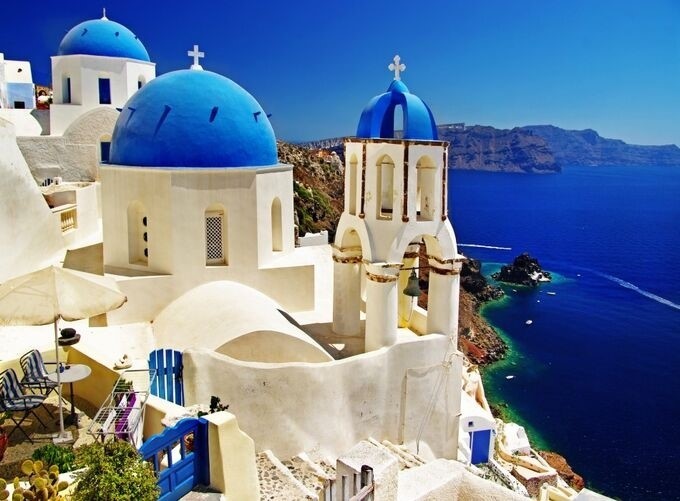
Where Should You Go When the Wind Picks Up?
Santorini is compact enough that changing location can sometimes improve a windy day, although there is no simple rule saying one coast will always be sheltered.
Wind direction and strength matter, as does the shape of the surrounding terrain. Before abandoning an activity, ask locally what conditions are like elsewhere on the island. Hotel staff, drivers and boat operators deal with these variations throughout summer and often have a better practical sense of the day than a generic forecast provides.
This is particularly useful when planning beach time. One stretch of coast may be considerably less comfortable than another, while a protected village can feel surprisingly calm despite strong wind at an exposed caldera viewpoint.
Rather than treating a windy forecast as a reason to cancel the day, treat it as information about where to spend it.
Caldera or Coast? July Makes You Choose Differently
In cooler months, the caldera can dominate almost every day because there is little reason to devote several hours to swimming.
July removes that imbalance.
The coast now competes seriously for your time, particularly during the warmest afternoon hours.
| July Priority | Caldera Side | Beach Side |
|---|---|---|
| Morning sightseeing | Excellent | Good |
| Midday comfort | Depends on exposure | Strong with shade/swimming |
| Swimming | Hotel pool dependent | Excellent |
| Iconic scenery | Outstanding | Volcanic coastal landscape |
| Afternoon relaxation | Hotel dependent | Excellent |
| Sunset | Outstanding | Different coastal perspective |
| Dining | Broad choice | Strong seasonal options |
| Wind | Highly noticeable in exposed areas | Varies by location |
The best July itinerary rarely requires choosing one side for the entire trip.
A morning above the caldera followed by an afternoon near the water often makes better use of the weather than spending eight continuous hours in either environment.
Early July and Late July: Similar Weather, Different Intensity
Unlike March or April, July does not undergo a dramatic seasonal transformation from beginning to end. You are firmly in summer throughout.
The more relevant change is intensity.
Early July already brings warm, dry weather, active beaches and substantial visitor numbers. As the month progresses, the island moves deeper into its busiest summer period, while consistently strong sunshine and warm sea conditions make beach time increasingly central.
Meltemi conditions cannot be assigned neatly to one half of the month. Wind varies according to broader weather patterns, so choosing July 8 rather than July 25 does not guarantee a calmer experience.
What Actually Changes Through July?
| Early July | Late July |
| Full summer conditions | Full summer conditions |
| Warm sea | Warm sea |
| Strong sunshine | Strong sunshine |
| Busy visitor season | Moving deeper into peak period |
| Meltemi possible | Meltemi possible |
| Hot days possible | Persistent summer heat well established |
If crowd levels are important, earlier July may offer a modest advantage.
If your concern is avoiding wind altogether, changing weeks is not a reliable strategy.
Don't Let the Weather App Design Your Holiday
A forecast showing 29°C and wind tells you very little about whether your planned afternoon will be comfortable.
Where will you be?
Walking on an exposed ridge?
Sitting beneath an umbrella in Perivolos?
Exploring narrow lanes in Pyrgos?
Swimming?
Crossing the caldera by boat?
All five can feel different under the same forecast.
July planning becomes easier once weather apps are used for context rather than as instructions. Check temperature, wind and any marine conditions relevant to boat trips, then combine that information with the geography of what you actually intend to do.
Santorini's small size encourages people to think of it as one weather point.
Traveling around the island quickly teaches you otherwise.
How Many Nights Work Best in July?
Three nights can cover the major Santorini highlights, but July makes a strong case for four.
The reason is not that there are suddenly more attractions.
It is that swimming and slower afternoons deserve room in the itinerary.
With only two or three days, travelers sometimes treat a beach afternoon as time taken away from Oia, archaeological sites or caldera villages. An extra night removes much of that pressure and allows the warmest part of one day to be spent doing very little.
Four nights can comfortably include caldera sightseeing, inland villages, meaningful beach time and an evening or sailing experience without turning every day into a sequence of reservations.
Five nights suit travelers who genuinely want the holiday side of Santorini alongside its sightseeing.
July Rewards a Different Kind of Flexibility
Winter flexibility means changing plans because of rain.
July flexibility is more subtle.
Perhaps you intended to walk farther, but the sun is stronger than expected.
Maybe the beach you selected is uncomfortable in the day's wind, so you try another part of the island.
A sailing departure changes because marine conditions require it.
Or you simply realize that leaving a shaded lunch at 2 p.m. to stand at another exposed viewpoint adds nothing to the day.
These are small adjustments, but together they determine whether July feels exhausting or effortless.
Twelve FAQs About Santorini Weather in July
1. Is July a good time to visit Santorini?
July is excellent for travelers seeking dependable summer weather, warm swimming conditions and long outdoor evenings. It is also one of the island's busiest periods, so the experience works best when sightseeing, beach time and rest are balanced rather than trying to remain continuously active.
2. How hot is Santorini in July?
Daytime temperatures commonly reach the upper twenties to low thirties Celsius, with hotter periods possible. Nights generally remain comfortably warm. Wind can make exposed locations feel cooler, but strong sunshine means heat and sun exposure should still be taken seriously during extended outdoor activities.
3. What is the Meltemi in Santorini?
The Meltemi is a seasonal northerly wind affecting the Aegean during summer. It can provide welcome relief from July heat but may also create stronger conditions at exposed viewpoints, beaches and on the water. Its intensity varies, so daily conditions matter more than monthly averages.
4. Is Santorini too windy in July?
Not usually in a way that prevents enjoying the island, although some days can be notably windy. Conditions vary by location and wind direction. Rather than avoiding July because of the Meltemi, travelers should remain flexible about beaches, boat activities and long exposed walks.
5. Is July too hot for sightseeing in Santorini?
Most sightseeing remains completely practical with sensible timing. Early morning and later afternoon are particularly comfortable for exposed locations, while beaches, shaded lunches or less strenuous activities fit naturally into warmer hours. Trying to maintain an intensive outdoor itinerary throughout midday is less rewarding.
6. Can I walk from Fira to Oia in July?
Yes, but an early start is strongly preferable because much of the route is exposed and shade is limited. Carry sufficient water, use sun protection and check wind conditions. Travelers who dislike prolonged heat may prefer shorter sections around Fira, Firostefani and Imerovigli.
7. Is the sea warm in Santorini in July?
Yes. July generally provides comfortable swimming conditions for most visitors, making beaches a genuine part of the daily itinerary. Sea conditions can still be influenced by wind, so the calmness of individual beaches may vary even when water temperatures themselves are pleasantly warm.
8. Does it rain in Santorini in July?
Rain is generally uncommon because July falls within Santorini's dry Mediterranean summer. Travelers can usually plan outdoor activities with high confidence regarding rainfall, although unusual weather is always possible. Sunshine, heat and wind are considerably more relevant to everyday planning during this month.
9. What should I pack for Santorini in July?
Pack breathable summer clothing, swimwear, comfortable footwear, sunglasses, a hat and reliable sunscreen. Proper walking shoes are useful for longer trails, while a lightweight layer can help during windy boat trips. Regular hydration is particularly important during prolonged sightseeing under direct sunshine.
10. Are boat trips affected by July wind?
They can be. Clear skies do not necessarily mean calm marine conditions, and stronger winds may influence sailing routes, comfort or operations. Professional operators assess actual conditions and safety requirements, so travelers should retain some flexibility rather than assuming every planned departure will operate identically.
11. Should I stay near the caldera or beach in July?
Choose the caldera for iconic scenery, sunset access and village atmosphere; choose the beach side if daily swimming and relaxed afternoons are priorities. Travelers staying four or more nights can easily experience both environments regardless of where they ultimately choose to sleep.
12. Is July or August better for Santorini?
Both offer established summer conditions and warm seas. July is particularly defined by the interaction between dry heat, Meltemi winds and different island exposures. August moves further into peak-season dynamics, when visitor intensity and the timing of popular experiences become an even larger planning consideration.
The Wind Is Part of the Landscape Too
Visitors understandably remember Santorini visually: white villages above dark volcanic cliffs, the enormous caldera and an Aegean horizon that seems to occupy half the island.
In July, however, you also experience Santorini physically.
The dark beach surface is hot beneath your feet, the afternoon sun reflects from white walls, and then a northerly breeze reaches an exposed viewpoint and changes the temperature you thought you understood.
That wind may be welcome while you are walking through Firostefani and annoying when you sit down on an exposed terrace. It can make a hot afternoon comfortable while simultaneously changing plans for time on the water.
Trying to label the Meltemi as either an advantage or a disadvantage misses what makes July distinctive.
It is simply another part of Santorini's geography—one you cannot see in the photographs but quickly learn to include in the way you move around the island.
Once you do, July becomes considerably easier to read.

A travel professional specializing in tailor-made travel planning, guest experience management, and multi-destination tourism operations.
With over 23 years of experience in the travel industry, he designs and manages private and cultural tours for international travelers across Türkiye, Greece, Egypt, Jordan, Morocco, and other destinations.
He has strong expertise in both online and face-to-face guest communication, sales processes, and end-to-end travel operations.
Working closely with hotels, travel agencies, and local partners, he ensures smooth coordination and high-quality travel experiences at every stage of the journey.
His focus is on delivering personalized, reliable, and seamless travel experiences for international guests worldwide.