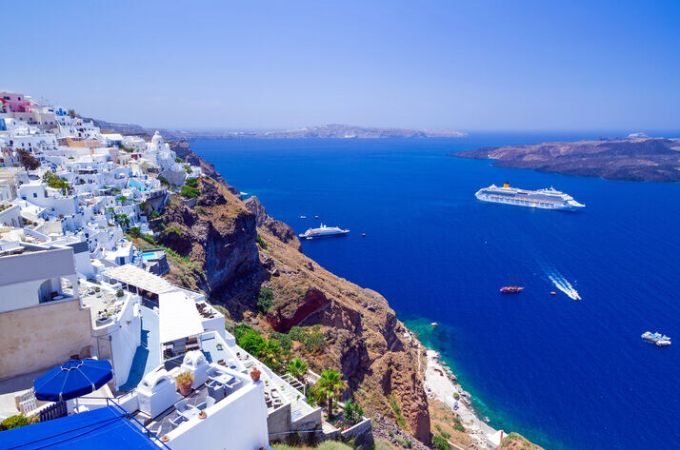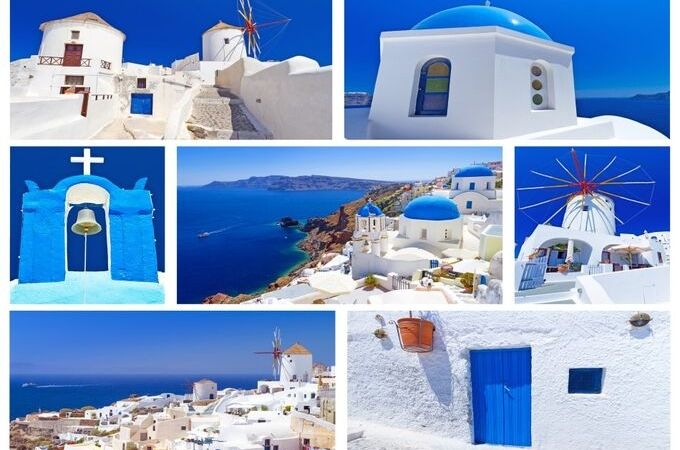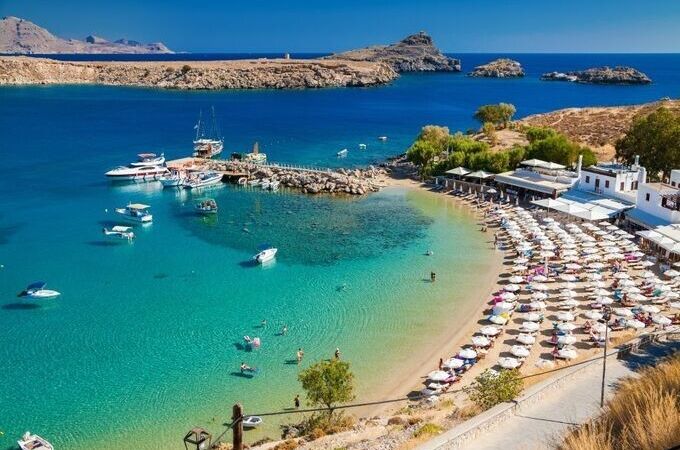
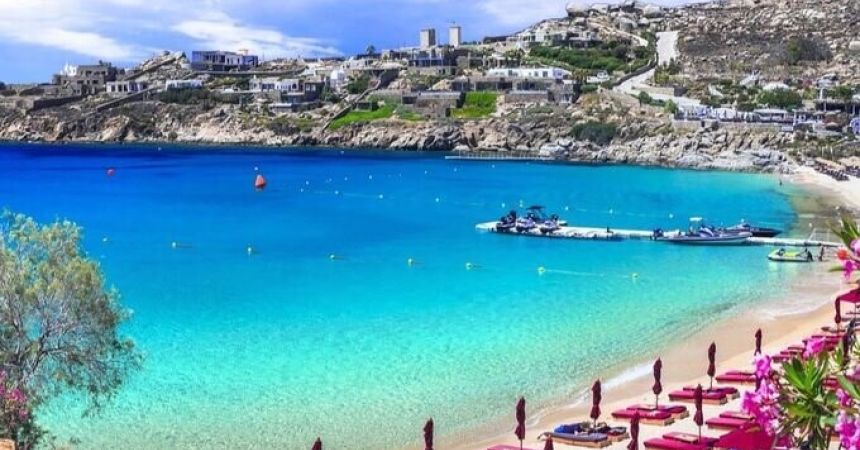
Santorini Weather in June: From First Swim to Sunset
Last Updated: August 2026
At 8:30 in the evening, you may still be outside waiting for Santorini to finish the day.
That is the real luxury of June.
Not simply warmer temperatures. Not simply less rain. June changes how much life fits between breakfast and bed.
You can walk through a village in the morning, disappear to the coast after lunch, swim without treating cold water as a personal challenge, return to the hotel, shower, change and still have an entire sunset and dinner ahead of you.
Santorini finally has a summer rhythm.
Yet it has not reached the point where heat needs to dictate every decision.
That balance makes June particularly versatile. The sea has become part of the holiday rather than scenery in the background, while long daylight creates enough space to separate sightseeing from relaxation.
May asks how far you want to explore.
June asks something different:
Why choose between exploring Santorini and enjoying it?
07:00 — The Island Gives You an Early Shift
You do not have to wake at seven.
That is part of June's appeal.
But travelers who naturally rise early discover an almost separate version of Santorini.
Fira is quieter. Oia's lanes have not yet filled. The light is softer, temperatures are comfortable, and breakfast terraces feel entirely different before the day's movement begins.
June daytime temperatures commonly reach approximately 25–29°C, with nights often around 19–22°C.
Early mornings sit well below the warmest part of that range.
This creates an opportunity rather than an obligation.
If photography or quiet village exploration matters, use the first hours.
If it doesn't, sleep.
June gives you enough daylight to recover the time later.
09:30 — Sightseeing Still Belongs to the Morning
By mid-morning, Santorini is fully awake.
This is an excellent period for archaeological sites, villages and caldera viewpoints.
The sun is already strong enough that sunscreen should be applied before you decide whether the day “feels hot.” A breeze can disguise how much sun exposure you are actually getting.
That is one of June's traps.
You feel comfortable.
You stay outside.
Three hours later, your shoulders explain what happened.
Sun protection becomes a daily requirement rather than an optional item reserved for beach days.
11:30 — The Temperature Starts Changing the Route
This is where June begins separating itself from May.
Walking remains completely practical, but there is less reason to schedule the longest exposed route through the middle of a bright afternoon.
The Fira–Oia trail has not become impossible.
It has simply lost its right to dominate every hour.
If a long caldera walk matters, begin earlier.
If you want to wander through Pyrgos or Megalochori, village lanes provide intermittent shade and natural places to stop.
Or switch the rhythm entirely.
Go toward the sea.
June Is the First Month Where Splitting the Day Makes Real Sense
| Time | Better Use of the Island |
|---|---|
| 07:00–09:00 | Quiet villages, photography |
| 09:00–12:00 | Main sightseeing |
| 12:00–15:00 | Lunch, coast, slower activities |
| 15:00–17:30 | Beach, pool, relaxed exploration |
| 17:30–20:00 | Villages and caldera |
| Sunset onward | Views, dinner, evening walks |
This is not a timetable.
It is permission to stop trying to sightsee continuously.
13:00 — Lunch Can Finally Become a Long Event
Winter lunches sometimes provide shelter.
June lunches provide a pause.
That distinction matters.
You have already spent several hours outside. The warmest part of the day is approaching, and sunset is still a very long way away.
There is no prize for filling the gap with another viewpoint.
Find somewhere you actually want to eat.
Stay for dessert.
Order another drink.
The Mediterranean habit of allowing the middle of the day to slow down makes complete sense in June.
You are not losing sightseeing time.
You are redistributing it.
14:30 — The Sea Has Entered the Itinerary
This is June's major seasonal shift.
Santorini's beaches no longer function mainly as volcanic landscapes to visit.
For most travelers, they can now function as beaches.
Sea temperatures vary and individual tolerance always matters, but swimming becomes considerably more comfortable than during spring.
That changes what Kamari, Perissa and Perivolos contribute to a trip.
You can spend two hours there without needing a larger reason.
Swim.
Dry off.
Have coffee.
Do nothing.
A Santorini beach and village tour can now combine inland sightseeing with meaningful coastal time rather than using the beach as a photographic stop.
What Changes When the Water Warms?
| May | June |
| Swimming becoming realistic | Swimming established for many visitors |
| Beach is secondary | Beach can occupy half a day |
| Cooler sea | Increasingly comfortable water |
| Walking dominates outdoor planning | Walking and swimming share the itinerary |
| Light evening layer often useful | Warmer evenings become normal |
| Spring-to-summer transition | Summer rhythm established |
This is the cluster boundary.
June does not own Santorini's most intense heat.
It owns the moment when the sea finally joins the day.
16:00 — Don't Mistake a Breeze for Cool Weather
You are sitting beside the Aegean.
The breeze feels excellent.
The temperature seems completely manageable.
This is exactly when people stay in direct sunlight longer than intended.
June sunshine is strong, and Santorini offers relatively little natural shade in many exposed locations.
Use sunscreen properly rather than symbolically.
A hat helps during prolonged outdoor periods, and water should accompany any extended walk.
This matters particularly around archaeological sites and caldera routes where shade may be limited.
The goal is not to become obsessive about heat.
June is generally far easier than the hottest part of summer.
It simply deserves respect for how much time you are likely to spend outdoors.
17:30 — Santorini Gets a Second Day
This may be the best part.
The strongest afternoon sun begins easing, yet several hours remain before darkness.
You can leave the beach and return to the caldera.
Or take a shower, change clothes and start again.
This “second day” feeling is one of June's strongest advantages.
Travelers who normally dislike cramming sightseeing into vacations can have a slow afternoon without sacrificing the evening.
An evening Santorini experience makes particular sense now because sunset no longer signals that the entire day is almost finished.
It becomes a transition.
19:00 — Oia Is Not Your Only Sunset Decision
By June, sunset culture is fully active.
Oia attracts significant attention, and rightly so.
But long summer evenings make it worth thinking beyond the standard formula.
Imerovigli provides a different relationship with the caldera.
Firostefani is easy to combine with an evening walk.
Fira allows you to move naturally from sunset into dinner.
A boat changes the perspective entirely.
The correct choice depends on what you want the evening to become afterward.
This is more useful than asking which location has “the best sunset.”
Santorini has no shortage of horizon.
20:30 — The Island Hasn't Finished
This is where June differs emotionally from spring.
You have already had a complete day.
Yet restaurants are filling, people are walking through the villages, terraces remain comfortable and there is no immediate reason to return to the hotel.
Warm evenings stretch the destination.
During cooler months, sunset can effectively close the outdoor portion of the itinerary.
June keeps it open.
Dinner becomes part of the day's landscape.
You are still looking at the caldera.
Still walking.
Still outside.
A Santorini summer escape works best when those evening hours are treated as part of the holiday rather than empty space after sightseeing.
June Accommodation: The Pool Question Finally Matters
A hotel pool in April may look more useful in photographs than in reality.
June changes that calculation.
A pool can become genuinely valuable during the afternoon pause, especially if you prefer not to travel to the beach every day.
But ask whether you will actually use it.
If your itinerary includes daily coastal time, paying heavily for an infinity pool may be unnecessary.
If you plan to return to the hotel between sightseeing and sunset, it can transform the rhythm of the trip.
Where Your Hotel Sits Changes the June Day
Caldera hotel: strongest for views, sunset atmosphere and evening access.
Beach hotel: stronger for swimming-focused travelers and relaxed afternoons.
Fira base: practical for travelers mixing sightseeing, dining and transport.
Quieter inland property: useful for those prioritizing space and a less tourism-heavy environment.
By June, accommodation is no longer just about where you sleep.
It determines how easily you can divide the day.
June Is Not Yet July
This distinction is important.
June is summer.
But it is early summer.
July will require a stronger conversation about dry heat, Meltemi influence, exposed caldera conditions and choosing between beach and cliffside environments.
June still retains greater freedom.
Long walks remain possible with sensible timing.
Afternoons are warm but do not automatically need to be abandoned.
The sea is increasingly inviting.
Evenings are long.
That combination gives June unusually broad appeal.
The Best June Itinerary Has an Empty Space in the Middle
Not literally empty.
Just uncommitted.
Plan the morning.
Know roughly where you want to watch sunset.
Leave the afternoon loose.
Perhaps you will swim for three hours.
Perhaps lunch runs long.
Perhaps the hotel pool turns out to be impossible to leave.
Perhaps someone suggests a winery.
Perhaps you simply need a nap.
June has enough daylight that spontaneity does not punish you.
That is rare in destinations where every famous experience seems attached to a specific hour.
Santorini in June gives you room.
Use it.
Build Your June Day Around the Way You Travel
There is no single ideal June itinerary because the month's greatest advantage is precisely that it accommodates different travel styles. Long daylight and generally warm conditions give you enough flexibility to spend six active hours exploring or divide the day between sightseeing, swimming and an unhurried evening.
For travelers who want to see as much of Santorini as possible, the morning remains the most valuable period. Starting with the caldera villages or an archaeological site leaves the warmer afternoon available for lunch and the coast, while the evening can be reserved for another village rather than becoming simply the end of the sightseeing day.
Couples looking for a slower holiday can use the same weather very differently. A late breakfast, two or three hours exploring, an afternoon beside the water and a return to the caldera before sunset creates a full day without making it feel scheduled.
Families may find June particularly convenient because swimming can break up sightseeing naturally. Instead of asking children to spend an entire day moving between archaeological sites and villages, the itinerary can shift toward the beach when the afternoon becomes warmer.
Which June Rhythm Fits You?
| Travel Style | Morning | Afternoon | Evening |
|---|---|---|---|
| Active explorer | Villages and sightseeing | Coastal stop or lighter activity | Caldera and dinner |
| Couple | Slow exploration | Pool, beach or long lunch | Sunset and late dinner |
| Family | Main sightseeing | Swimming and rest | Short village visit |
| Photographer | Early village walk | Break during stronger light | Caldera until sunset |
None of these schedules needs to be followed exactly. Their value lies in showing how June's weather allows very different trips to coexist within the same month.
Warm Air Does Not Mean the Sea Has Caught Up Completely
By June, swimming is realistic for many visitors, although there is still a distinction between early and late month.
The Aegean warms gradually rather than responding immediately to a run of hot afternoons. Someone arriving during the first week may therefore encounter beautifully warm weather while still finding the sea fresher than expected. By later June, longer periods of summer sunshine generally make swimming considerably more appealing.
This difference matters when choosing a hotel. If swimming is merely something you would enjoy when conditions suit, a caldera base remains an easy choice. If you expect to spend several hours in the water every day, staying near Kamari, Perissa or Perivolos changes the practical shape of the holiday.
A beach stay also does not prevent you from experiencing the caldera. Santorini is compact enough to move between the two environments, although transportation becomes part of the daily routine.
Early June and Late June Offer Different Balances
The shift across June is subtler than the seasonal change seen in spring, yet it can influence the experience.
Early June often appeals to travelers who want summer conditions while retaining slightly more comfortable temperatures for substantial sightseeing. The sea is still warming, and evenings can occasionally feel fresher when the breeze picks up.
Later June leans more confidently into summer. Afternoons tend to feel hotter, swimming becomes more attractive and the island's seasonal tourism rhythm is fully established.
| Early June | Late June |
| Excellent sightseeing balance | Stronger beach appeal |
| Sea still warming | More comfortable swimming for many |
| Long daylight | Very long summer days |
| Warm afternoons | Hotter periods increasingly possible |
| Busy season underway | Summer visitor activity stronger |
| Pleasant outdoor evenings | Consistently summery evening feel |
The choice should therefore depend on how you expect to divide your time. Travelers who place sightseeing first may prefer the earlier balance, while those wanting the beach to play a larger role may find the latter part of June more satisfying.
The Hotel Should Fit the Middle of Your Day
Most accommodation advice focuses on what you see when you wake up, yet June makes the hours between lunch and late afternoon equally important.
A caldera hotel with a pool can be ideal if you plan to return after morning sightseeing, particularly because it allows you to rest without sacrificing the view that brought you to Santorini in the first place. This arrangement also makes it easy to change and head out again before sunset.
A beach hotel supports another rhythm. Instead of treating Kamari or Perissa as an excursion, swimming becomes part of everyday life, and the caldera can be visited during selected afternoons and evenings.
Fira works particularly well for travelers who prefer flexibility over either extreme. Restaurants, transportation and access to other parts of the island make it easier to decide each morning whether the day will lean toward sightseeing or relaxation.
The best June hotel is therefore not necessarily the property with the most impressive photograph. It is the one that makes your preferred daily rhythm easy.
Don't Give Every Sunset to Oia
Oia deserves at least one evening, particularly for first-time visitors, but spending every sunset there can make a Santorini trip strangely repetitive.
June's long evenings provide enough time to experiment.
Imerovigli gives the sunset a broader caldera setting, while Firostefani can feel less ceremonial and easier to combine with a walk or dinner. Fira offers the advantage of allowing the evening to continue naturally after the light disappears, without immediately turning the experience into a transportation problem.
Boat trips provide another perspective, although the experience is fundamentally different from watching the changing light from the cliff.
Once you stop treating sunset as one attraction with one correct location, Santorini evenings become much more varied.
June Works Particularly Well for First-Time Visitors
Someone visiting Santorini for the first time usually wants several different things from the same trip. They want Oia and the caldera, but may also want archaeology, a volcanic beach, a boat experience, good restaurants and perhaps enough free time to justify booking a beautiful hotel.
June makes that mixture relatively easy.
The weather is sufficiently established for summer activities, while the strongest seasonal heat has generally not yet become as dominant as it can later. Long daylight also reduces the need to choose between an afternoon break and an evening excursion.
For a first visit of three or four nights, this versatility can be more valuable than chasing the warmest possible weather.
Twelve FAQs About Santorini Weather in June
1. Is June a good time to visit Santorini?
June is an excellent month for travelers who want a genuine summer experience while still combining beaches with substantial sightseeing. Warm days, very limited rainfall and long daylight make it easy to divide a trip between caldera villages, archaeological sites, swimming and relaxed outdoor evenings.
2. How hot is Santorini in June?
Daytime temperatures commonly reach around 25–29°C, with nights often approximately 19–22°C. Hotter periods can occur, particularly later in the month, while coastal breezes may make temperatures feel more comfortable. Strong sunshine nevertheless makes regular sun protection important throughout the day.
3. Is the sea warm enough for swimming in June?
For many travelers, yes. Sea temperatures continue rising throughout June, so late-month swimming generally feels more comfortable than during the first week. Individual tolerance varies, but June marks the point when swimming becomes a realistic everyday part of a Santorini holiday.
4. Does it rain in Santorini during June?
Rain is generally limited during June, and extended dry periods are typical as Santorini moves firmly into its Mediterranean summer. Occasional unusual weather remains possible, but most travelers can organize outdoor activities with considerably greater confidence than during the winter and spring months.
5. Is Santorini windy in June?
Breezy conditions are common on an Aegean island, and exposed caldera viewpoints can feel noticeably different from sheltered village lanes or beaches. Wind conditions vary by day and location, so travelers planning boat excursions or long exposed walks should still check the short-range forecast.
6. What should I wear in Santorini in June?
Light summer clothing is suitable for most daytime activities, together with comfortable shoes, sunglasses, sunscreen and a hat. A lightweight layer can still be useful for breezy evenings or boat trips, particularly during early June when nighttime conditions may occasionally feel fresher.
7. Is June too hot for the Fira-to-Oia walk?
Not necessarily, although timing becomes more important than in May. Starting during the cooler morning hours is generally more comfortable than beginning around midday. Carry sufficient water and sun protection because long sections of the route are exposed and provide limited natural shade.
8. Are Santorini beaches good in June?
Yes. June is when the beaches become genuinely useful for swimming and relaxation rather than primarily coastal sightseeing. Kamari, Perissa and Perivolos are active for the summer season, making it easy to combine volcanic beaches with the island's more famous caldera experiences.
9. Is Santorini crowded in June?
June is part of the active summer season, so popular locations can be busy, particularly Oia around sunset and major caldera viewpoints. Visitor pressure generally increases as the month progresses, although exploring earlier in the day and spending time beyond headline locations can improve the experience.
10. How many nights should I stay in Santorini in June?
Three nights provide enough time for the main highlights, while four allow a more comfortable balance between sightseeing and swimming. Travelers who have chosen a resort-style hotel or want substantial beach time may appreciate five nights without needing to fill every day with organized activities.
11. Is early or late June better for Santorini?
Early June is particularly attractive for travelers prioritizing sightseeing alongside emerging summer conditions, while late June offers warmer sea temperatures and a stronger beach atmosphere. Both provide long daylight, although heat and visitor activity generally become more noticeable toward the end of the month.
12. Is June or July better for Santorini?
June offers a broad balance of swimming, sightseeing and long summer evenings before the year's hottest period becomes more influential. July is firmly within peak summer and brings a different relationship between heat, wind, beaches and exposed caldera areas, making the choice dependent on travel priorities.
The Best Part of June May Begin After Five
There is a particular pleasure in returning from the beach or hotel pool during the late afternoon and realizing that the day is nowhere near finished.
The strongest sunshine has softened, the villages are becoming comfortable for walking again, and several hours remain before dinner. You might head toward Imerovigli without deciding exactly where you will stop, spend longer than expected over the caldera, then continue to a restaurant after sunset without needing another jacket or an entirely different plan.
That generous stretch of usable time is what makes June more than simply a warm month.
Swimming has joined the itinerary, but it has not pushed sightseeing out. Warm evenings have arrived, but the day does not need to revolve entirely around escaping the heat. There is enough daylight to slow down in the afternoon without wondering which attraction you have sacrificed.
By July, Santorini will have moved deeper into the realities of Aegean summer, when stronger heat, dry conditions and wind deserve a more prominent role in planning.
June occupies the balance just before that shift. You can spend the morning discovering the island, the afternoon enjoying the water and the evening returning to the caldera, without any one part of the day having to win.

A travel professional specializing in tailor-made travel planning, guest experience management, and multi-destination tourism operations.
With over 23 years of experience in the travel industry, he designs and manages private and cultural tours for international travelers across Türkiye, Greece, Egypt, Jordan, Morocco, and other destinations.
He has strong expertise in both online and face-to-face guest communication, sales processes, and end-to-end travel operations.
Working closely with hotels, travel agencies, and local partners, he ensures smooth coordination and high-quality travel experiences at every stage of the journey.
His focus is on delivering personalized, reliable, and seamless travel experiences for international guests worldwide.