Santorini Weather in March: The Island Begins to Wake
Last Updated: August 2026
March is the month when Santorini starts putting things back.
A few more tables appear outside. A hotel that was dark through winter begins preparing rooms. Someone is painting a wall before the season starts. Trails stay usable for longer in the afternoon, and the countryside carries more green than visitors accustomed to summer photographs might expect.
Nothing happens overnight.
That is precisely what makes March interesting.
Santorini is neither fully winter nor properly ready for summer. One afternoon can feel gentle enough for a long walk; the next morning brings wind and a reminder that the Aegean has not finished with the colder season.
The island is changing while you are there.
For travelers who enjoy destinations during transitions rather than at their most polished, March offers a Santorini that is visibly preparing to wake up.
The Landscape May Surprise You First
Ask someone who has only visited Santorini in August to describe the island and they will probably mention dry volcanic slopes.
March can look remarkably different.
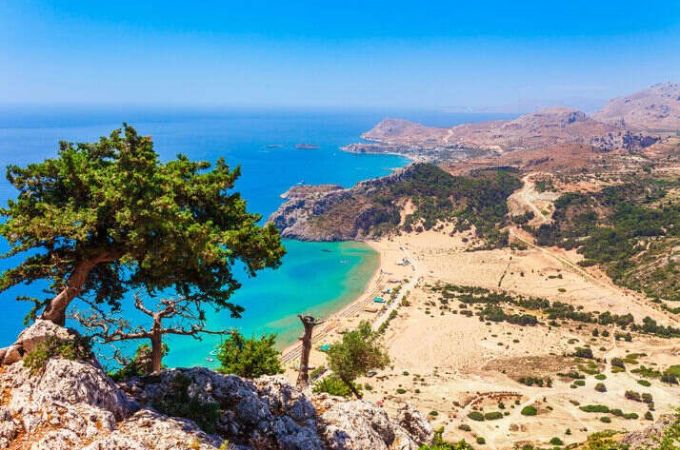
Winter rainfall encourages grasses and seasonal vegetation across areas that later become brown and sunbaked. Vineyards remain low and sculptural, but the land around them begins showing life.
Wildflowers can start appearing as spring develops, although timing depends on rainfall and temperatures during the preceding weeks.
The volcanic geology does not disappear.
It gains a green foreground.
That contrast—fresh vegetation against dark volcanic soil and pale villages—is one of March's most distinctive visual signatures.
Santorini's Landscape Through the Seasonal Turn
| What You See | March Character |
|---|---|
| Caldera cliffs | Volcanic and dramatic year-round |
| Countryside | Noticeably greener than summer |
| Vineyards | Beginning seasonal transition |
| Wild vegetation | Increasing as spring develops |
| Beach landscapes | Quiet, not yet summer-oriented |
| Village lanes | Gradually becoming more active |
March is therefore not simply “Santorini before it gets warm.”
It is one of the few periods when the island's land itself looks substantially different from the version most visitors know.
The Temperature Starts Helping, but Don't Trust It Completely
March daytime temperatures often reach roughly 14–17°C, with nights commonly around 9–12°C.
That sounds only slightly warmer than winter.
The lived difference can be greater.
Daylight is increasing. The sun sits higher. Longer clear periods can make sheltered locations feel genuinely pleasant, particularly around midday.
Then wind arrives and changes the calculation.
Or cloud moves across the caldera.
March remains transitional enough that a single outfit rarely works from breakfast through dinner.
Layering remains the sensible approach, but the heavy winter feeling begins easing.
What 16°C Might Feel Like in March
| Conditions | Likely Experience |
| Sunny + calm | Pleasant for walking |
| Sunny + strong breeze | Cooler than expected |
| Cloudy + calm | Mild to cool |
| Cloudy + windy | Clearly chilly |
| Sheltered village lane | Warmer |
| Exposed caldera ridge | Noticeably cooler |
The thermometer is becoming friendlier.
Exposure still gets the final vote.
March Gives Walking Back to the Middle of the Day
Winter walking often depends on finding a suitable weather window.
March begins expanding that window.
On a dry day, you may have several comfortable hours for walking without the heat considerations that arrive later in the year. This is particularly useful on Santorini because so much of the island's landscape is best understood on foot.
The famous route between Fira and Oia is one option, but it does not need to dominate the discussion.
Walking between Fira, Firostefani and Imerovigli can provide exceptional caldera scenery without committing to the full trail. Inland villages create another kind of experience, while vineyard landscapes reveal a side of Santorini that disappears behind summer's beach-and-sunset image.
A springtime Santorini tour can take advantage of these different environments while the island remains relatively uncrowded.
March's strength is variety rather than completing one famous hike.
The Island Is Reopening—But Not on Your Schedule
This is where March travel requires realistic expectations.
More businesses begin preparing for the coming season, but there is no universal date when Santorini suddenly becomes “open.”
One hotel may resume operations earlier than another.
A restaurant might reopen halfway through the month.
A seasonal activity may not begin until later.
Beach areas can remain especially quiet.
This creates a curious experience: you may walk past workers painting, repairing or preparing a property that will be packed several weeks later.
Rather than treating this as an inconvenience, it can become part of what makes March distinct.
You are seeing the machinery of a seasonal destination being rebuilt.
Early March and Late March Can Belong to Different Seasons
For this month, the calendar genuinely matters.
The change is not perfectly linear, and weather can reverse expectations, but someone arriving during the first week may encounter a noticeably different Santorini from a visitor arriving near month's end.
| Early March | Late March |
| Winter influence still obvious | Spring character stronger |
| More businesses remain closed | More seasonal reopening |
| Cooler evenings | Mild periods more frequent |
| Greater weather uncertainty | Outdoor windows often expand |
| Very quiet atmosphere | Visitor activity begins increasing |
| Green landscape | Spring growth continues |
This is one reason a generic March temperature average can be misleading.
The month is moving.
Your dates determine where in that movement you arrive.
March Is Excellent for Seeing the Island Beyond Oia
When tourism is quieter, there is less pressure to spend every available hour around the locations that dominate social media.
That makes March a good time to look inland.
Pyrgos climbs around a hilltop with lanes that reward wandering rather than rushing. Megalochori offers another village scale entirely. Emporio reveals architectural layers that feel far removed from the familiar blue-dome image.
Then there is the agricultural landscape between them.
Santorini's vines grow low to the ground, traditionally trained in basket-like forms to protect grapes from strong winds. Even outside harvest season, seeing vineyards across the volcanic terrain helps explain how island life developed beyond tourism.
An authentic Santorini discovery can connect these villages and landscapes without treating them as filler between Fira and Oia.
In March, they often become the point.
Rain Hasn't Finished Yet
Spring does not mean the wet season disappears on March 1.
Showers remain possible, and periods of unsettled weather can still occur.
The difference from deeper winter is what often happens around them.
Longer daylight and gradually improving temperatures create more opportunity to use the dry portions of a day. A wet morning does not automatically eliminate an afternoon walk.
Recent rainfall still matters on unpaved routes.
Do not judge a trail solely from the sky above you. Mud and slippery sections can remain after the clouds have moved away.
March asks for flexibility, but increasingly rewards it with usable outdoor time.
The Sea Looks Ready Before It Feels Ready
A bright March afternoon can be deceptive.
The Aegean is blue. The beach is empty. The sun feels warm against a sheltered wall.
Then you put your hand in the water.
March is not a conventional swimming month for most visitors.
That does not make the coast irrelevant.
Kamari, Perissa and the volcanic shoreline remain worthwhile as landscapes. Without rows of summer sunbeds dominating the scene, the geology becomes more obvious.
You notice the dark sand.
The cliffs.
The scale of the coast.
March is a month for looking at Santorini's beaches rather than building the holiday around using them.
Why Photographers Should Look Away From Sunset
Santorini photography often becomes strangely repetitive.
Blue dome.
Caldera.
Sunset.
Repeat.
March provides a reason to look elsewhere.
Green vegetation against volcanic soil creates seasonal contrast. Cloud remains possible, adding texture to skies. Agricultural areas have not yet taken on their dry summer appearance.
Village life is also less concealed behind tourism activity.
A Santorini spring escape can therefore produce photographs that communicate season rather than merely location.
Walk inland in the morning.
Look toward the vineyards.
Photograph the island when nobody is facing the sunset.
Santorini has more than one direction.
March Packing Is a Layering Problem With a Smaller Bag
You still need a jacket.
It just may spend more time tied around your waist or carried in your bag than it would in January.
Bring a wind-resistant outer layer, sweater or fleece, comfortable trousers and proper walking shoes.
A light waterproof layer remains useful.
Sunglasses and sunscreen become increasingly relevant as outdoor hours expand.
If your trip falls late in March, include some lighter clothing for warm sunny periods—but do not interpret one optimistic forecast as permission to leave every warm layer at home.
Evenings can still become cool quickly.
Santorini is entering spring.
It has not signed a contract promising to behave like it.
Don't Rush March Into April
There is a temptation to describe March as “the beginning of the tourist season.”
That oversimplifies both months.
March is about emergence.
The landscape is changing. Outdoor possibilities expand. Businesses gradually prepare. Visitors begin returning, but the island has not yet reached the more established spring rhythm that April will own.
April will bring its own questions about Easter-period travel, wider reopening and a more settled spring visitor experience.
March belongs to the stage before that.
You can see Santorini becoming ready.
For some travelers, witnessing that transition is more interesting than arriving after the work is finished.
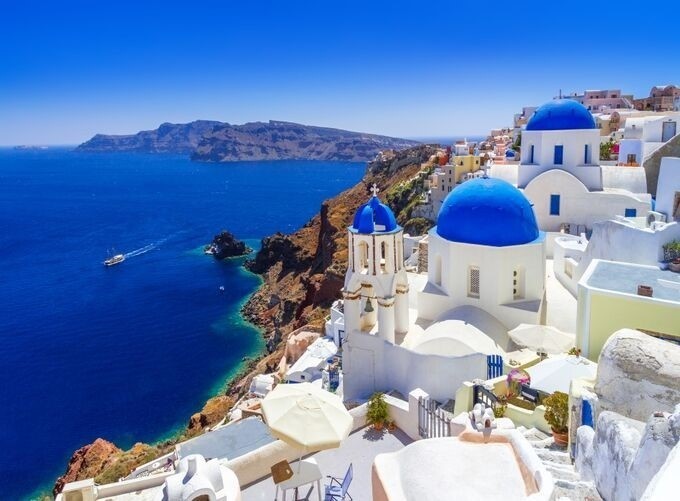
Five Signs Spring Has Actually Reached Santorini
You do not need a weather app to notice that March is moving forward.
The evidence appears around the island.
The ground changes first. Areas that will look dry and golden later in the year can be surprisingly green.
Walking becomes easier to improvise. A clear morning increasingly has a reasonable chance of turning into several usable outdoor hours rather than a brief winter weather window.
Village doors begin opening. Seasonal preparations become visible, even where businesses have not yet resumed normal operations.
People spend longer outside. A sheltered table in direct sunshine starts looking genuinely inviting rather than optimistic.
The evenings arrive later. You begin getting enough daylight to combine villages, archaeological sites and a meaningful walk without feeling that sunset is chasing you through the itinerary.
None of these changes arrives on a fixed date.
March is interesting precisely because you can watch them happen.
The Green Santorini Decision Table
Travelers rarely associate Santorini with greenery, making March particularly useful for certain interests.
| Your Priority | March Fit | Why |
|---|---|---|
| Green volcanic landscapes | Excellent | Winter moisture changes the island visually |
| Long hot beach days | Poor | Sea and air remain too cool |
| Comfortable walking | Very good | Mild days and no summer heat |
| Fully operating tourism scene | Variable | Seasonal reopening is still underway |
| Quiet villages | Very good | Visitor numbers remain comparatively low |
| Agricultural landscapes | Excellent | Countryside has a distinctive spring character |
| Predictable sunshine | Moderate | Changeable weather remains possible |
| Outdoor photography | Very good | Greenery, cloud and softer seasonal light |
March is therefore strongest when the land itself matters to your trip.
If your only priorities are beach clubs and swimming, the month is solving a problem you do not have.
Three Days in March Should Have Breathing Room
A three-night Santorini visit works particularly well in March because it allows the itinerary to move with the season.
One day can concentrate on the caldera settlements.
Another can move inland toward Pyrgos, Megalochori or Emporio.
A third can remain partly open for walking, archaeology or whichever outdoor experience receives the best weather.
Notice what is missing from that plan: rigid hourly sequencing.
March conditions are improving, but flexibility still has value.
If the clearest day happens to be your second rather than your first, move the longer outdoor activity.
If rain arrives, use the archaeological and village elements differently.
A seasonal-transition trip should be allowed to transition too.
Early March or Late March?
The answer depends partly on why you are coming.
Choose earlier March if maximum quiet matters and you are comfortable with stronger winter influence. Expect fewer seasonal businesses to be operating and keep the itinerary relatively independent of tourism infrastructure.
Choose later March if you want the island to feel as though it is moving more clearly toward spring. Daylight is longer, seasonal activity tends to increase and outdoor conditions may feel more inviting.
Neither period guarantees better weather.
A beautiful clear day can occur early in the month, while late March can still deliver wind and rain.
The difference is the broader rhythm surrounding the weather.
Who Gets the Most From March?
March suits travelers who notice change.
Walkers benefit because the landscape is comfortable before summer heat arrives.
Photographers gain a version of Santorini with greenery and more varied skies.
Repeat visitors may appreciate seeing familiar places outside their usual dry-season appearance.
Travelers interested in villages, agriculture and local landscapes also have more reason to move beyond the caldera's famous viewpoints.
For first-time visitors, March can work very well—but only if the Santorini dream is not entirely built around swimming and a fully operating resort atmosphere.
That distinction is important.
A month can be excellent without being excellent for everybody.
March Versus April: The Boundary Matters
March and April both belong to spring, but they should not answer the same travel question.
March is about the island coming back into motion.
April is about what happens once spring has established itself more clearly and seasonal tourism begins functioning on a broader scale.
That means March owns the transition.
You see preparations.
You notice the landscape changing.
You encounter a mixture of open and still-closed businesses.
You have more outdoor freedom than winter but not the consistency of later spring.
April will take that story forward rather than repeat it.
Twelve FAQs About Santorini Weather in March
1. Is March a good month to visit Santorini?
March is a strong choice for travelers interested in walking, villages, green landscapes and quieter sightseeing. Weather remains changeable and some seasonal businesses may still be closed, but increasing daylight and gradually milder conditions make outdoor exploration considerably easier than during deeper winter.
2. How warm is Santorini in March?
Daytime temperatures commonly reach around 14–17°C, while nights often fall to approximately 9–12°C. Sunshine can make sheltered areas feel considerably warmer, although wind and cloud quickly change perceived temperature. Layered clothing remains more practical than relying on the day's forecast maximum.
3. Is Santorini green in March?
It can be surprisingly green. Winter rainfall encourages grasses and seasonal vegetation across parts of the island that become much drier later in the year. The contrast between green countryside, volcanic soil and white villages gives March a visual character quite different from summer Santorini.
4. Are there wildflowers in Santorini during March?
Wildflowers can begin appearing as spring develops, although their timing and abundance vary according to winter rainfall and seasonal temperatures. March visitors should treat them as part of a broader awakening landscape rather than expecting a guaranteed island-wide floral display during specific travel dates.
5. Can I swim in Santorini in March?
Most travelers will find March too cool for a conventional swimming holiday. The beaches remain worthwhile for walking, photography and appreciating Santorini's volcanic coastline without summer infrastructure dominating the view. Travelers prioritizing warm sea conditions should choose a later part of the year.
6. Is the Fira-to-Oia walk good in March?
It can be excellent on a dry, reasonably calm day because temperatures are generally comfortable and summer heat is absent. Wind, recent rainfall and trail conditions still matter. Check the day's weather rather than assuming the entire month provides identical walking conditions.
7. Does it still rain in Santorini in March?
Yes. March remains a transitional month, and showers or unsettled periods are possible. However, longer daylight and gradually improving conditions often provide useful outdoor periods around the rain. Recent precipitation should also be considered before attempting unpaved or exposed walking routes.
8. Are hotels and restaurants open in March?
More businesses generally begin preparing or reopening as spring progresses, but March does not have a single island-wide reopening date. Availability can differ by location and individual property. Confirm important hotels, restaurants and activities rather than relying on summer listings or schedules.
9. What should I wear in Santorini in March?
Pack layers: a sweater or fleece, wind-resistant jacket, comfortable trousers and walking shoes with good grip. A light waterproof layer remains useful. Sunglasses and sunscreen are increasingly important because clearer spring periods can provide several consecutive hours of strong outdoor light.
10. Is March crowded in Santorini?
March is generally much quieter than the main visitor season, although activity gradually increases as the month progresses. Famous villages and viewpoints are easier to explore without peak-season congestion, making the month particularly attractive to travelers who prioritize space over a fully developed tourism atmosphere.
11. Is early or late March better for Santorini?
Early March offers deeper off-season quiet but stronger winter influence and fewer seasonal services. Late March generally feels closer to established spring, with longer daylight and increasing tourism activity. Weather varies annually, so the choice should depend on atmosphere and travel priorities rather than temperature alone.
12. How many nights should I stay in Santorini in March?
Three nights provide a useful balance, allowing time for caldera villages, inland exploration and a flexible outdoor day. Two nights can work for highlights, while four suit walkers and slower travelers who want enough flexibility to respond comfortably to changing spring weather.
March Is Santorini Before the Finished Product
By summer, almost everything looks intentional.
Terraces are arranged.
Beach businesses are operating.
Hotels are full.
The landscape has dried beneath months of stronger sunshine, and the island knows exactly what season it is in.
March is less certain.
Someone is repainting a wall. A restaurant is preparing to reopen. Green grass grows between volcanic rocks that will look completely different a few months later. One day still belongs partly to winter; the next seems determined to become spring.
That unfinished quality is not something to tolerate until the “real” Santorini begins.
It is the reason to come.
You are not arriving before Santorini is ready.
You are watching it get ready.

A travel professional specializing in tailor-made travel planning, guest experience management, and multi-destination tourism operations.
With over 23 years of experience in the travel industry, he designs and manages private and cultural tours for international travelers across Türkiye, Greece, Egypt, Jordan, Morocco, and other destinations.
He has strong expertise in both online and face-to-face guest communication, sales processes, and end-to-end travel operations.
Working closely with hotels, travel agencies, and local partners, he ensures smooth coordination and high-quality travel experiences at every stage of the journey.
His focus is on delivering personalized, reliable, and seamless travel experiences for international guests worldwide.