Santorini Weather in November: After the Season Ends
Author: Kenan Ungur
Article Date: 10.09.2024
Reading Time: 18 min

Santorini Weather in November: After the Season Ends

Last Updated: August 2026

The important question in November is not whether Santorini is open.

Santorini is an inhabited island. People live here throughout the year, children go to school, supermarkets operate, cafés serve regular customers and ferries continue connecting the island with the rest of Greece.

What begins disappearing is something else: the version of Santorini built specifically for visitors.

Beach facilities close or reduce operations. Seasonal hotels finish for the year. Excursion schedules become thinner, restaurants in heavily tourism-dependent locations may shut their doors, and villages that spent summer accommodating enormous numbers of people return to a much smaller scale.

The weather changes at the same time, with cooler temperatures, greater chances of rain and considerably shorter daylight than the summer months.

These two transitions are connected.

November is not simply Santorini with fewer tourists. It is the month when you begin needing to understand which parts of the island function independently of tourism, because those places make a much better base once the summer machinery is being packed away.

November Makes Fira More Important

During summer, choosing between Fira, Oia, Imerovigli and the beach areas can be largely a matter of taste.

In November, practicality enters the decision.

Fira is the island's principal town and serves residents as well as visitors, giving it a stronger year-round infrastructure than places whose economies are more intensely tied to seasonal tourism. Restaurants, cafés, shops and transport options still require checking individually, but the overall town remains functional in a way that makes daily life easier.

Oia is still beautiful, of course.

The architecture has not packed up for winter.

However, staying somewhere because it contains Santorini's most famous sunset view is a different proposition when a substantial part of the surrounding visitor infrastructure is operating seasonally.

For many November travelers, the best accommodation decision is therefore less about finding the most romantic location and more about asking what will be within walking distance after dark.

The Temperature Is Mild Until the Wind Joins In

November daytime temperatures commonly sit around 17–20°C, while nights often fall to roughly 12–15°C. Individual years and weather systems naturally produce warmer or cooler periods.

On paper, those numbers can look pleasantly mild.

In direct sunshine and a sheltered location, they often are.

The experience changes quickly when cloud and wind combine, particularly around exposed caldera viewpoints. A temperature that would feel comfortable while sitting outside a protected café can feel distinctly cool after twenty minutes facing an Aegean breeze.

This makes November a layering month rather than a genuinely cold-weather destination.

The Forecast Number Doesn't Tell the Whole Story

Conditions How November May Feel
Sunny and calm Mild, sometimes pleasantly warm
Sunny and breezy Fresh, especially near caldera
Cloudy and calm Cool but comfortable for walking
Cloudy and windy Jacket weather
Rainy Damp and noticeably cooler
Clear evening Cool after sunset

Heavy winter clothing is usually unnecessary, but traveling without a proper jacket because the forecast says 19°C can be equally misguided.

Seasonal Closures Change the Route More Than the Weather Does

Imagine two November days with identical weather.

On the first, you stay somewhere with several year-round restaurants, easy transport access and a café around the corner.

On the second, your hotel sits in a beautiful but highly seasonal area where the nearest open dinner option requires transportation.

The temperature is the same.

The holiday is not.

This is why November planning should begin with infrastructure before moving to weather. Confirm accommodation, check nearby dining options and verify any activity that is particularly important to you.

Do not rely entirely on a business profile showing summer opening hours.

A November Santorini private tour can also make logistical sense because sightseeing does not have to depend as heavily on the frequency of seasonal visitor services.

The island remains easy to explore.

The systems built around summer tourism become less automatic.

Oia Becomes a Place Rather Than an Event

During August, Oia sunset can feel almost ceremonial. Visitors begin arriving well before the sun approaches the horizon, particular viewpoints fill and the village's evening rhythm revolves around a predictable moment.

November changes the experience.

There are far fewer people competing for the same spaces, and you can walk through streets that felt almost choreographed during summer without planning your movement around crowds.

The trade-off is obvious: some shops, restaurants and tourism-oriented businesses may be closed, while cooler or cloudy conditions can make sunset less predictable.

For travelers who mainly wanted to see Oia's architecture and understand its position above the caldera, that can be a perfectly reasonable exchange.

You stop waiting for Oia to perform.

You simply walk through it.

November Rain Needs Respect, Not Fear

The chance of rainfall becomes meaningfully higher as Santorini moves into the wetter part of its Mediterranean year.

That does not mean November is a month of continuous rain.

Sunny days, clear intervals and long usable periods remain entirely possible, while some rainy days may contain significant breaks.

The difference from summer is that rain now deserves a place in the plan.

A four-night stay is easier to work with than a rushed two-night visit because weather-sensitive experiences can move between days. Long exposed walks should remain flexible, and footwear with reasonable grip becomes more important after rainfall.

There is also no reason to treat every cloud as a warning.

November skies can add depth to the caldera that summer's almost uninterrupted blue rarely provides.

This Is Not the Month to Chase Beaches

Santorini's volcanic coast remains worth seeing.

Swimming is another matter.

The sea retains some warmth from earlier months, and cold-tolerant swimmers may still enter the water, particularly during warmer periods. For most leisure travelers, however, November is no longer a sensible month around which to build a beach holiday.

That actually changes how the coast feels.

Kamari and Perissa lose much of their summer resort character. Dark volcanic sand, cliffs and the Aegean become visually dominant once sunbeds and beach activity are no longer the main reason for being there.

A Santorini culture and landscape route can include the coast as part of the island's geography rather than treating it as somewhere you need to spend half a day swimming.

November moves Santorini's center of gravity back onto the land.

Archaeology Becomes More Important When Swimming Disappears

Akrotiri makes sense in every month, yet cultural sites gain relative importance when beach time stops competing for the afternoon.

The prehistoric settlement provides context that the caldera viewpoints cannot. Santorini's history is inseparable from volcanic activity, and understanding the Bronze Age settlement helps transform the island from a beautiful landscape into a place with a much longer human story.

Ancient Thera adds another perspective, although weather conditions matter more because of its exposed position.

Museums and cultural stops also become more useful when the weather is unsettled.

This is not about inventing “rainy-day attractions.”

November simply creates more time to engage with parts of Santorini that summer itineraries often compress between beaches and sunsets.

Lunch Becomes One of the Best Parts of the Day Again

Summer dining frequently happens around a schedule.

You eat before going to the beach, after returning from a tour or while calculating how long remains before sunset.

November removes much of that pressure.

A long lunch can occupy the middle of the day without feeling as though you are sacrificing prime swimming weather. If the morning has been cool or windy, sitting somewhere warm becomes part of the experience rather than merely refueling.

The important practical consideration is availability.

Your favorite restaurant from a July recommendation may not be operating in November. Ask locally, check current opening information and be prepared to choose according to what is actually open rather than what appears highest on a summer restaurant list.

This can lead to places serving more year-round clientele, which is often an interesting shift in itself.

Don't Assume the Caldera Trail Is Automatically Easier

Cooler weather seems ideal for walking, and on a calm, dry November day it can be.

The problem is exposure.

Wind, recent rainfall and shorter daylight become more relevant than heat. The Fira-to-Oia route should therefore be treated as a weather-dependent experience rather than automatically scheduled because temperatures are lower.

Shorter walks remain easy to incorporate.

Moving between Fira and Firostefani, continuing toward Imerovigli when conditions are comfortable or exploring inland villages can provide substantial outdoor time without committing to several exposed hours.

A quiet-season Santorini experience is often better when walking is woven through the day rather than treated as a single endurance activity.

The island is quiet enough that you do not need to escape crowds by walking farther.

Daylight Becomes a Real Planning Constraint

This is one of November's biggest differences from early autumn and an issue that temperature averages fail to show.

Days are much shorter.

You cannot start slowly, spend several hours over lunch, explore another village and still assume sunset is somewhere in the distant future.

Outdoor activities need a little more awareness of time, particularly if they involve trails, remote viewpoints or driving between several locations.

Earlier sunset also changes dinner.

There may be a significant gap between the end of outdoor sightseeing and the time you would normally eat, especially if you are accustomed to Mediterranean summer schedules.

Rather than trying to stretch daylight, November works better when you accept that the evening starts earlier.

Pack for Range Rather Than Cold

A November suitcase should handle a mild sunny afternoon, a windy caldera viewpoint and a wet evening without becoming unnecessarily heavy.

Layers remain the best approach. Bring comfortable daytime clothing, a sweater or fleece, a proper wind-resistant jacket and something capable of handling rain. Shoes with decent grip are preferable if you plan to walk extensively.

Sunglasses still belong in the bag because clear Aegean days do not disappear in November.

A compact umbrella may help in some situations, although strong wind can make a waterproof jacket considerably more practical.

Swimwear is optional rather than essential. If your hotel has a genuinely heated indoor or protected pool, that is a different calculation, but verify what “heated” and “pool available” actually mean outside the main season.

November Is Not an Empty Version of Santorini

This is where expectations determine whether the month works.

If you imagine Santorini as a collection of beach clubs, sailing excursions, infinity pools and sunset restaurants, November can feel as though pieces are missing.

They are.

Seasonal destinations change when the season ends.

If your interest is in the volcanic landscape, villages, archaeology, photography and the experience of seeing a famous island after its tourism intensity recedes, those missing pieces create room for something else.

You hear more of the village.

You notice ordinary movement.

You stop judging every afternoon according to whether it delivered perfect swimming conditions.

November does not offer a discounted version of August.

It offers a different Santorini, but only to travelers willing to stop expecting August to be there.

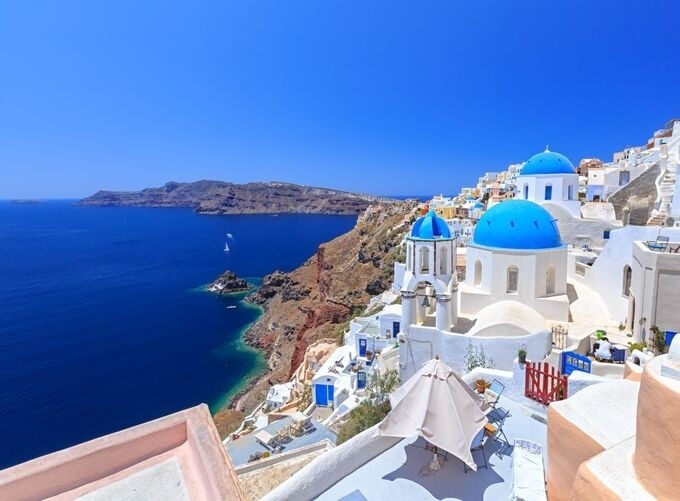
Santorini’s caldera sparkling under clear sky and endless sun

What Still Works, What Needs Checking, What You Can Stop Expecting

November planning becomes much easier once Santorini is separated into three categories. Some experiences remain dependable because they belong to the island itself, others continue but need checking because they rely on seasonal tourism, and a third group should no longer be treated as essential to the trip.

The caldera is obviously still there. Oia does not become less beautiful because several nearby businesses have closed. Fira remains a working town, villages continue their everyday lives, and archaeological sites retain exactly the same historical importance they had in July.

What changes is the network of services surrounding those places.

A More Realistic November Checklist

Usually Still Central Check Before Relying On It Stop Building the Trip Around
Caldera scenery Boat excursions Daily beach time
Fira Seasonal restaurants Beach clubs
Oia architecture Individual hotels Guaranteed swimming
Inland villages Public transport frequency Summer nightlife
Archaeological sites Opening hours Pool-focused days
Walking on suitable days Organized tours Late summer evenings

Opening schedules can change from year to year, so the middle column should always be verified close to travel rather than treated as a permanent November timetable.

That small amount of research prevents most off-season disappointments.

Stay in Fira, but Don't Spend the Whole Trip There

Choosing Fira for practical reasons does not mean turning November into a city break.

It simply gives you a reliable center.

From there, Oia remains an obvious excursion, while Pyrgos, Megalochori and Emporio reveal parts of Santorini that deserve more attention once the summer race between beaches and sunsets has disappeared. Akrotiri adds archaeological depth, and the coast remains worth seeing even when swimming is no longer the main purpose.

Returning to Fira at the end of the day has one important advantage: you are more likely to find a reasonable choice of places to eat and spend the evening without needing to organize transportation every time.

During summer, travelers often pay heavily to escape practical considerations.

In November, practicality can make the trip considerably more enjoyable.

Transport Becomes Something to Verify, Not Assume

Santorini's small size does not automatically make every journey straightforward outside the main season.

Public buses continue serving the island, but routes and frequencies can differ from summer operations. Ferry schedules also become less extensive than during the high season, and weather can have a greater effect on maritime travel.

If Santorini forms part of a larger Greek island itinerary, this matters considerably more than whether a particular afternoon is forecast to reach 18°C or 19°C.

Do not construct a tight chain of connections based on summer assumptions.

Check current ferry schedules, allow sensible margins around onward travel and confirm how you will reach locations that matter to you.

Travelers using private transportation have greater flexibility, particularly when daylight is limited and waiting for an infrequent connection would consume a substantial part of the day.

A Bad-Weather Day Doesn't Need a Fake “Rainy-Day Itinerary”

Travel writing sometimes responds to rain by producing an artificial list of activities that nobody would otherwise choose.

November Santorini does not need that treatment.

If substantial rain arrives, slow the day down.

Visit Akrotiri if it fits current opening hours. Spend longer over lunch. Explore Fira between showers. Visit a winery that is operating. Use a clearer period later in the stay for the exposed caldera experience you originally intended to do that day.

There may also be periods when the most sensible decision is simply to spend an hour at the hotel.

A holiday does not become unsuccessful because every hour failed to produce an attraction.

The important point is that a four-night itinerary provides enough space to rearrange priorities without allowing one unsettled day to dominate the trip.

November Photography Has Almost Nothing to Do With Summer Santorini

Photographers often imagine Santorini through strong blue-and-white contrast, but November can offer a more complicated visual landscape.

Lower seasonal light creates longer shadows. Clouds add texture above the caldera, while occasional breaks in unsettled weather can produce dramatic changes in brightness across the cliffs and sea.

The reduced number of visitors also changes what is possible in the villages. Photographs that would require patience during summer can become relatively straightforward, particularly earlier in the day.

There is no guarantee of spectacular skies, of course. Some days will simply be grey.

That is part of photographing a real place rather than waiting for the island to reproduce its tourism campaign.

Four Nights Make More Sense Than Two

A very short November visit puts too much pressure on the weather.

Arrive for two nights and encounter one significantly unsettled day, and half the available sightseeing period has immediately changed.

Four nights create resilience.

You can move a long walk, wait for better caldera visibility or visit Oia when conditions improve. The extra time also supports November's slower pace, when fewer activities need to be packed into every daylight hour.

This does not mean everyone needs four nights. Travelers continuing through Greece may reasonably choose a shorter stay.

The point is that November rewards time differently from summer.

You are not adding nights because there are more things to do.

You are adding them because flexibility itself becomes useful.

Twelve FAQs About Santorini Weather in November

1. Is November a good time to visit Santorini?

November suits travelers interested in quiet villages, caldera scenery, archaeology and a slower island experience rather than beaches or nightlife. Weather is cooler and more changeable than during the main season, while some tourism businesses close, so expectations and accommodation location become particularly important.

2. How warm is Santorini in November?

Daytime temperatures commonly reach around 17–20°C, while nights often fall to approximately 12–15°C. Sunny, sheltered afternoons may feel pleasantly mild, whereas wind, cloud and rain can make identical temperatures feel considerably cooler, particularly around exposed caldera viewpoints and coastal areas.

3. Does it rain a lot in Santorini in November?

November falls within the wetter part of Santorini's year, so rain becomes a realistic possibility. This does not mean continuous wet weather, and sunny periods remain common. Travelers should allow flexibility for showers or occasional unsettled days rather than expecting summer's prolonged dry conditions.

4. Can you swim in Santorini in November?

Swimming remains physically possible, and some cold-tolerant visitors may enjoy the sea during warmer periods. For most travelers, however, November should not be planned as a swimming holiday because cooler air, wind and changing weather make beach conditions far less dependable than during September or October.

5. Are restaurants open in Santorini in November?

Yes, particularly in year-round population centers such as Fira, although many tourism-focused restaurants elsewhere may close seasonally. Opening patterns vary, so check important venues individually and avoid assuming that recommendations or operating hours published during summer remain valid in November.

6. Is Oia open in November?

Oia itself remains accessible because it is a real village rather than a seasonal attraction. However, some hotels, shops and restaurants operate seasonally and may be closed. Visitors can still explore its architecture and caldera views, often with dramatically fewer people than during summer.

7. Where should I stay in Santorini in November?

Fira is generally the most practical choice because it has stronger year-round infrastructure, transport connections and dining options. Travelers can still visit Oia, Imerovigli and inland villages during the day while returning to a base where evening services are less dependent on the summer tourism season.

8. What should I wear in Santorini in November?

Pack adaptable layers, including a sweater or fleece, wind-resistant jacket and lightweight waterproof protection. Comfortable walking shoes with reasonable grip are useful after rainfall. Sunglasses remain worthwhile for clear days, while heavy winter clothing is generally unnecessary under typical November conditions.

9. Can I hike from Fira to Oia in November?

Yes, when conditions are dry and wind is manageable. Cooler temperatures can make walking comfortable, but rain, strong wind and shorter daylight require more attention than summer heat. Check current conditions before committing to the entire exposed route and carry appropriate footwear and layers.

10. Are ferries running to Santorini in November?

Ferry connections continue, although schedules are generally less extensive than during the main tourism season and weather can influence maritime operations. Travelers combining several islands should check current schedules carefully and avoid relying on the frequency associated with peak summer travel.

11. How many nights should I spend in Santorini in November?

Three nights can cover the principal sights, while four provide useful flexibility if one day brings poor weather. A longer stay also suits travelers interested in photography, villages and slower cultural exploration rather than trying to complete a summer-style list of activities.

12. Is November cheaper than summer in Santorini?

Accommodation can be less expensive than during peak summer, but reduced demand does not guarantee that every hotel or service will offer lower rates because many properties simply close. Compare the options actually operating rather than assuming the full summer accommodation market remains available at discounted prices.

When the Summer Stage Comes Down

Santorini has become so famous as a summer destination that it is easy to confuse its tourism infrastructure with the island itself.

November separates the two.

Sunbeds disappear from parts of the coast. Some hotel terraces go dark. Restaurants that spent summer serving hundreds of visitors close their doors, and Oia no longer organizes its entire evening around enormous sunset crowds.

What remains is less polished but arguably easier to understand.

Fira behaves more obviously like the island's main town. Inland villages regain their ordinary proportions. The volcanic landscape becomes more prominent because there are fewer tourism activities competing for attention, and weather once again becomes something you notice rather than a background of almost uninterrupted sunshine.

There are disadvantages. Choice is reduced, swimming is no longer dependable and anyone arriving for the full summer Santorini experience has chosen the wrong month.

For travelers interested in the place underneath that experience, however, November has its own logic.

You are not seeing Santorini after it has closed.

Kenan Ungur
Author

A travel professional specializing in tailor-made travel planning, guest experience management, and multi-destination tourism operations.

With over 23 years of experience in the travel industry, he designs and manages private and cultural tours for international travelers across Türkiye, Greece, Egypt, Jordan, Morocco, and other destinations.

He has strong expertise in both online and face-to-face guest communication, sales processes, and end-to-end travel operations.

Working closely with hotels, travel agencies, and local partners, he ensures smooth coordination and high-quality travel experiences at every stage of the journey.

His focus is on delivering personalized, reliable, and seamless travel experiences for international guests worldwide.

Join The Newsletter

To receive our best monthly deals

Magnificent Travel Logo

Magnificent Travel
Usually responds the same day

Magnificent Travel
Welcome to the Magnificent Travel

How may i help you?
Today
+905324935198
X