Santorini Weather in October: When Autumn Meets the Aegean
Last Updated: August 2026
October can produce one of the stranger combinations in Santorini: you leave the hotel wearing a light jacket, spend the afternoon swimming, and put the jacket back on before dinner.
Nothing about that sequence is unusual.
The Aegean has spent an entire summer absorbing heat, so the sea does not suddenly become cold because the calendar reaches October. The air changes more quickly. Days shorten, evenings cool and the long dry certainty of summer begins to weaken as the possibility of rain returns.
This makes October difficult to summarize with a single label.
Calling it “autumn” can make the month sound cooler and less beach-friendly than it often is, particularly during its first half. Calling it an extension of summer ignores the growing variation that becomes increasingly important later in the month.
October belongs somewhere between those descriptions. Santorini remains very much available for outdoor travel, yet for the first time since early summer, flexibility begins earning a meaningful place in the itinerary again.
The Sea and the Air Are Following Different Calendars
This is the key to understanding October.
Typical daytime temperatures often sit around 20–24°C, with warmer periods possible, especially earlier in the month. Nights can fall to approximately 15–18°C, making a jacket or additional layer useful after sunset.
Meanwhile, the sea cools much more slowly.
Travelers comfortable with moderately warm water may continue swimming well into October, although getting out of the sea on a breezy afternoon can feel considerably cooler than the swim itself.
That mismatch creates a distinctive travel experience. A sunny day can support both sightseeing and swimming, while the evening feels unmistakably removed from August.
October Is a Month of Combinations
| Conditions | What They Can Mean |
|---|---|
| Sunny + calm | Excellent sightseeing and possible swimming |
| Sunny + breezy | Comfortable walking, cooler after swimming |
| Cloudy + mild | Very good village exploration |
| Brief rain + clearing | Flexible sightseeing still possible |
| Wind + cloud | Jacket becomes important |
| Clear evening | Pleasant but noticeably cooler |
The month does not require a winter itinerary.
It simply stops guaranteeing that every day will behave like the one before it.
Rain Returns to the Conversation
For several months, rainfall barely deserves a paragraph in a Santorini weather guide.
October changes that.
Mediterranean autumn gradually brings a greater chance of showers and unsettled periods, although this should not be interpreted as continuous wet weather. Long dry stretches and beautiful sunny days remain entirely possible.
What changes is confidence.
In July, planning an outdoor day weeks in advance carries relatively little concern about rain. By October, checking the short-range forecast becomes useful again.
A shower does not usually justify abandoning the day's plans altogether. Santorini's compact geography and mixture of villages, archaeological sites, wineries and coastal locations provide enough alternatives to adjust without losing an entire day.
This is where October begins rewarding travelers who plan possibilities rather than fixed sequences.
A Good October Itinerary Has One Movable Day
If you are staying four nights, avoid assigning every major outdoor experience permanently before you arrive.
Leave one day relatively flexible.
Perhaps it becomes your longer caldera walk if conditions are dry and calm. If the forecast looks less favorable, use another day for the walk and shift inland sightseeing, a winery or slower village exploration into the uncertain period.
This does not mean October weather is unreliable enough to undermine a trip.
Quite the opposite.
A small amount of flexibility is usually enough to protect the experiences most affected by weather.
A flexible Santorini island tour works particularly well during this period because the route can emphasize the caldera, inland villages or coast according to actual conditions rather than assuming that one fixed sequence suits every October day.
The Caldera Looks Different Under an Autumn Sky
Summer photographs often present Santorini with almost uniform blue overhead.
October brings back texture.
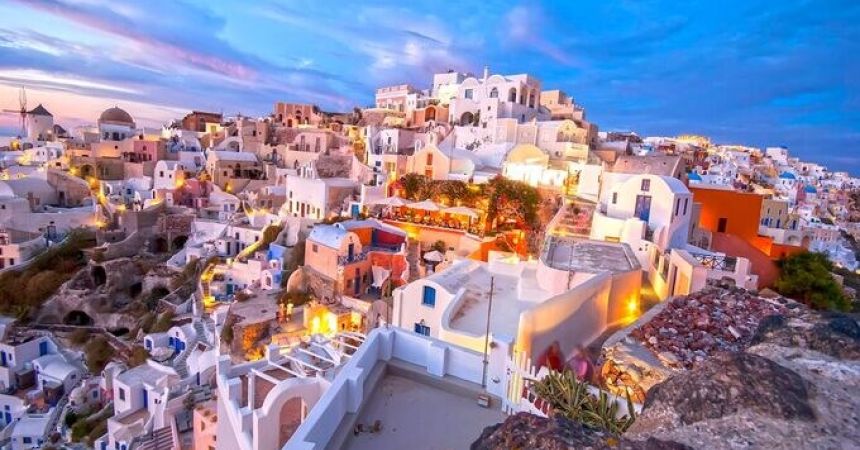
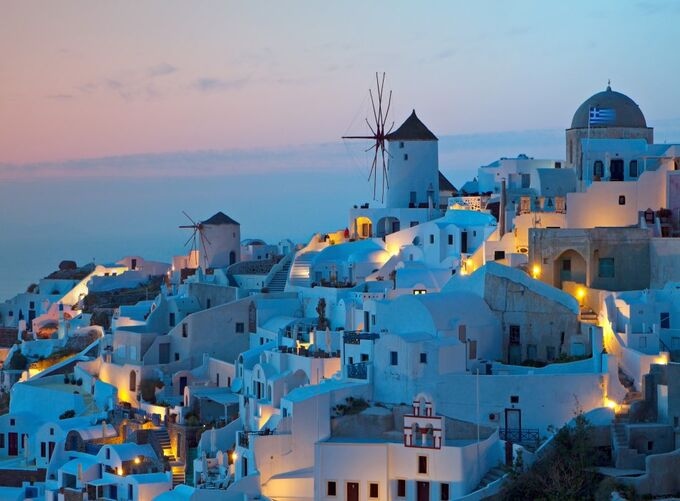
Clouds begin appearing more frequently, changing the light across the caldera and creating conditions photographers may actually prefer. White villages can stand dramatically against darker skies, while breaks in cloud produce shifting patches of light across the volcanic cliffs.
The famous blue-and-white image remains.
It simply gains another mood.
For photography, this variability can be more interesting than endless clear skies, provided you are not arriving with a checklist of specific photographs that require identical conditions every day.
October asks you to respond to the landscape rather than reproduce it.
You May Still Have a Beach Day, but Don't Build the Entire Trip Around It
Early October can deliver afternoons that feel convincingly summery.
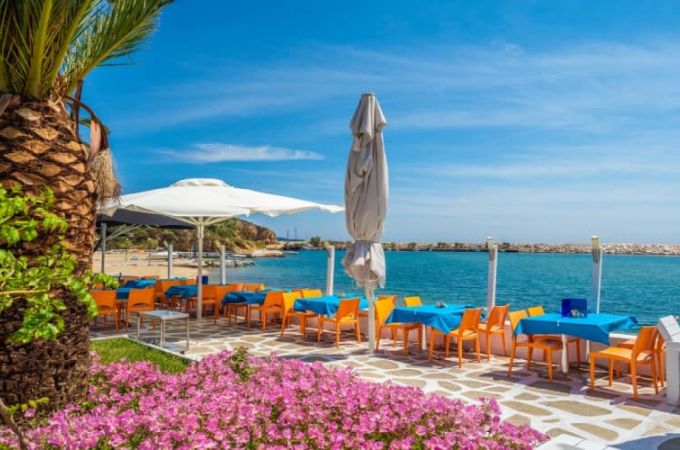
The beach remains active, the sea can be inviting and sitting beside the water in direct sunshine may feel far removed from autumn.
Later in the month, beach conditions become more dependent on the day itself.
That is an important cluster distinction from September, where warm-sea travel remains one of the month's defining strengths.
In October, swimming becomes a valuable bonus that can still happen frequently, rather than something around which every traveler should confidently structure the holiday.
What Happens to the Beach Experience?
| Beach Element | October Reality |
| Sea temperature | Often still suitable for swimming |
| Air after swimming | Can feel cool when windy |
| Sunbathing | Good on warm, calm days |
| Beach facilities | Seasonal operations may begin changing |
| Long beach days | Increasingly weather-dependent |
| Coastal walking | Excellent in milder conditions |
If swimming is essential, earlier October provides the stronger bet.
If it is simply one activity among several, the entire month remains interesting.
October Gives Inland Santorini More Space
Once the beach stops demanding half of every day, other parts of the island naturally receive more attention.
Pyrgos becomes an easy place to spend longer than planned. Megalochori feels appropriate for a slow lunch rather than a quick stop. Emporio's narrow lanes offer shelter when conditions are breezy and enough architectural detail to justify wandering without an agenda.
The vineyards also look different from their spring appearance. The growing season has passed through its summer cycle, and the surrounding countryside carries the dry tones accumulated over previous months.
A Santorini villages and heritage route can use October's milder temperatures to connect these places without turning the day into a race between the caldera and the coast.
The island begins feeling less beach-led again, which changes what travelers notice.
Walking Comes Back Without Recreating May
October can provide excellent walking conditions, particularly on mild, dry days.
That does not make it another May.
In May, walking belongs at the center of the month's identity because conditions are moving toward summer while the landscape still retains elements of spring.
October approaches from the opposite direction. The summer heat is retreating, the land is dry and weather variability is increasing.
The same trail therefore tells a different seasonal story.
The Fira–Oia route can be very comfortable when conditions cooperate, although rain and wind should be considered before committing to several exposed hours. Shorter sections around Fira, Firostefani and Imerovigli remain easy alternatives.
Proper footwear becomes especially useful after rainfall because surfaces that were reliably dry through summer can become slippery or muddy in places.
Sunset Is Earlier, and That Improves Some Itineraries
Summer sunset receives enormous attention in Santorini, but late daylight can push dinner surprisingly far into the evening.
October brings sunset forward.
That creates a different rhythm. You can watch the light change over the caldera, have dinner at a conventional hour and still enjoy an evening walk afterward.
The trade-off is temperature.
Once the sun disappears, warmth can fade quickly, particularly in exposed locations. A terrace that felt perfect at 5 p.m. may require a jacket an hour later.
A Santorini autumn escape benefits from embracing that shift rather than trying to recreate a July evening. Earlier sunsets and cooler nights are part of the month, and they can make the day's pace feel more natural for travelers who prefer dinner before late evening.
What October Requires in the Suitcase
This is the first month after summer when packing only for the warmest forecast becomes risky.
You still need lightweight daytime clothing, sunglasses and sunscreen because sunny periods can remain strong. Swimwear deserves space if you enjoy the water, especially earlier in October.
Add proper layers.
A light jacket should be standard, while a sweater or similar mid-layer becomes useful for cooler evenings and breezy days. A lightweight waterproof outer layer can solve the occasional rainy period without requiring bulky winter clothing.
Comfortable shoes with reasonable grip are preferable if walking forms part of the itinerary.
The goal is versatility rather than warmth.
October rarely demands heavy clothing, but it rewards travelers who can adjust comfortably between a sunny afternoon and a much cooler evening.
Don't Read a Ten-Day Forecast Like a Contract
This is particularly important during transitional months.
A forecast viewed well before arrival may display several rain symbols and create the impression that the entire holiday will be wet. Another forecast may promise uninterrupted sunshine and change significantly before you land.
Long-range weather information is useful for understanding possibilities, not scheduling individual activities.
Closer to the trip, the forecast becomes more actionable.
Even then, a rain symbol does not necessarily mean an entire day of rain.
Look at timing, wind and the probability of precipitation rather than only the icon displayed beside the date.
October travelers who understand that distinction usually worry less and plan better.
The Question Isn't Whether October Is “Still Summer”
Parts of it can feel that way.
A warm afternoon beside the sea certainly can.
So can lunch outdoors beneath clear blue skies.
Then the sun drops, a cooler breeze arrives and the island reminds you that the season has moved on.
Trying to decide whether October belongs to summer or autumn misses what makes the month useful.
It offers access to both.
The sea may still be warm enough to swim, while walking conditions become more forgiving. Clear days remain common, but clouds begin giving the caldera another visual character. The island remains active, yet the relentless certainty of high summer has softened.
October is not valuable because it secretly behaves like August.
It is valuable because it doesn't.
Plan A, Plan B and the Things You Shouldn't Decide Yet
October is easier when the itinerary has priorities but not rigid assignments.
Suppose you have four nights and want to walk part of the caldera, visit Akrotiri, explore inland villages, spend some time near the sea and experience sunset from somewhere memorable. All of that fits comfortably into an October stay, but deciding several weeks beforehand that the long walk must happen on Tuesday morning creates a restriction that serves no useful purpose.
Keep the most weather-sensitive experience movable until the short-range forecast becomes clearer. Archaeology, villages, restaurants and wineries are generally easier to rearrange, so they can occupy the less certain periods without feeling like second choices.
This is not contingency planning in the dramatic sense. It is simply a more intelligent way to travel during a Mediterranean transition month.
If One Day Turns Unsettled, You Haven't Lost 25% of the Trip
A four-day Santorini holiday can look vulnerable when one date on the forecast carries rain.
In reality, an unsettled October day rarely needs to become an empty day.
A morning shower might be followed by a usable afternoon, while intermittent rain can leave long enough breaks for village exploration. Even when conditions remain grey, the island offers several ways to travel without spending hours continuously exposed.
Pyrgos, Megalochori and Emporio can be explored in shorter sections. Akrotiri adds an archaeological dimension that does not depend on perfect blue skies. A winery can absorb part of the afternoon, while a long lunch is considerably more enjoyable than repeatedly checking a weather app and waiting for Santorini to become sunny again.
The objective should be to protect the experiences that genuinely need better conditions rather than trying to protect every hour from imperfect weather.
Three Things Worth Leaving Until You Arrive
A few October decisions are better made with current conditions in front of you.
The first is any long exposed walk. You can intend to complete it without assigning it permanently to a particular morning.
The second is a substantial beach period. Keep swimwear ready, but let the temperature, wind and sunshine decide whether the beach receives two hours or most of the afternoon.
The third is your most important sunset location. Cloud can create spectacular evening light, but a completely obscured horizon changes the experience. If you have several nights, there is little reason to place all expectations on one date.
Accommodation and important transport should obviously be arranged beforehand. October flexibility concerns the order of experiences, not traveling without plans.
Early October and Late October Require Different Expectations
October changes enough that travel dates deserve attention, although there is no precise point when one season ends and another begins.
During the earlier part of the month, warm summer-like afternoons can remain common and swimming is easier to treat as a normal component of the trip. Evenings are cooler than high summer, but the overall experience can still lean strongly toward the warmer season.
Later October usually requires broader expectations. Pleasant sunny days remain entirely possible, but cooler periods and rain become more relevant, while some tourism businesses may begin adjusting their seasonal operations.
| Early October | Late October |
|---|---|
| Greater chance of summer-like warmth | Autumn influence becomes stronger |
| Swimming easier to prioritize | Swimming increasingly day-dependent |
| Warmer evenings | Layers become more important |
| Dry conditions can still dominate | Rain deserves greater consideration |
| Tourism season remains active | Seasonal changes become more visible |
The mistake is assuming that October 30 will simply provide October 3 with slightly shorter daylight.
It might.
It might not.
A Cloudy Santorini Day Can Still Be Beautiful
The island's reputation has become so closely tied to blue skies that visitors sometimes regard cloud as a failure of the destination.
October offers a useful correction.
Cloud changes the caldera dramatically. Darker skies bring out the white settlements, while moving light can reveal sections of the volcanic cliffs that appear flatter under the hard illumination of summer.
Photographers may find these conditions particularly interesting, but you do not need a serious camera to appreciate them.
There is also a practical advantage: overcast conditions can make extended walking and village exploration extremely comfortable.
A blue sky is easier to advertise.
It is not automatically more interesting to travel beneath.
October Is Better for Travelers Who Like Options
Someone booking Santorini solely for seven uninterrupted hours beside the pool every day assumes a degree of weather consistency that October does not need to provide.
A traveler interested in the caldera, archaeology, villages, food, walking and perhaps swimming is in a much stronger position.
When one activity becomes less appealing, another usually improves.
A cloudy afternoon may be poor for sunbathing but excellent for walking. A warm clear day sends you toward the coast. A cooler evening makes a long dinner indoors more appealing than chasing another viewpoint.
That ability to move between experiences is why October remains a compelling month even after high summer has ended.
Twelve FAQs About Santorini Weather in October
1. Is October a good time to visit Santorini?
October can be an excellent month for travelers who value mild sightseeing conditions, quieter seasonal rhythms and the possibility of swimming without requiring guaranteed beach weather every day. The month becomes increasingly changeable, so flexible itineraries work better than trips built exclusively around sunshine.
2. How warm is Santorini in October?
Daytime temperatures commonly sit around 20–24°C, although warmer periods are possible, particularly earlier in the month. Nights are often approximately 15–18°C. Sunshine can make afternoons feel pleasantly warm, while wind and cloud may create noticeably cooler conditions on other days.
3. Can you swim in Santorini in October?
Yes, and many visitors do, especially during early October. The Aegean retains summer warmth longer than the air, so water temperatures can remain appealing. Later in the month, swimming becomes more dependent on sunshine, wind and individual tolerance rather than simply the sea temperature.
4. Does Santorini get much rain in October?
The chance of rain increases compared with the dry summer months, although October should not be interpreted as continuously wet. Sunny stretches remain common, and rainfall may arrive as shorter periods rather than all-day conditions. Checking the short-range forecast becomes increasingly useful.
5. Is Santorini cold at night in October?
Evenings are noticeably cooler than during summer but generally not winter-cold. A light jacket or sweater is useful, particularly later in October and around exposed caldera locations. Travelers accustomed to warm climates may appreciate an additional layer after sunset or during breezy conditions.
6. Is October good for walking in Santorini?
Yes. Milder temperatures can create very comfortable walking conditions, especially on dry days. The Fira-to-Oia route and shorter caldera sections become attractive again after summer heat. Check wind and recent rainfall before longer walks because exposed or unpaved areas may be affected.
7. Are Santorini beaches open in October?
The beaches themselves are always accessible, while seasonal restaurants, beach facilities and other tourism businesses may gradually alter their operations as the month progresses. Early October generally retains more of the established summer beach atmosphere than the final weeks of the month.
8. What should I pack for Santorini in October?
Bring lightweight daytime clothing together with a sweater, light jacket and preferably a compact waterproof layer. Comfortable walking shoes, sunglasses and sunscreen remain useful, while swimwear is worthwhile for warm days. Packing adaptable layers is more practical than preparing exclusively for either summer or autumn.
9. Is Santorini crowded in October?
October generally experiences less visitor pressure than peak summer, although famous locations such as Oia remain popular and can still become busy around sunset. Conditions usually feel more manageable, particularly later in the month, making spontaneous village exploration easier than during July or August.
10. Is early October better than late October?
Early October offers stronger odds for warm, beach-friendly conditions, while late October provides a more pronounced autumn atmosphere and generally requires greater weather flexibility. Neither period is automatically better; the choice depends largely on how important swimming and consistently warm afternoons are to your trip.
11. How many nights should I stay in Santorini in October?
Three nights are sufficient for major highlights, although four are particularly useful in October because an additional day creates flexibility around changing weather. Travelers interested in walking, inland villages and slower exploration may appreciate the extra time even when conditions remain consistently good.
12. Is October or November better for Santorini?
October is generally better for travelers wanting a broad combination of sightseeing, outdoor dining, possible swimming and active tourism services. November moves further into the off-season, bringing a quieter island experience, cooler conditions and greater importance of seasonal closures and reduced visitor infrastructure.
Leave One Afternoon Unclaimed
There is a temptation to respond to October's greater weather uncertainty by planning more carefully.
The opposite often works better.
Book the hotel. Arrange transportation that matters. Reserve the restaurant you genuinely do not want to miss. Know which villages, archaeological sites and walks interest you.
Then leave some space.
A free afternoon can become a beach afternoon if October unexpectedly behaves like summer. It can turn into a long caldera walk if the air is mild and still, or disappear into Pyrgos and a late lunch when clouds make the island feel more suited to wandering than swimming.
Perhaps rain arrives and the afternoon becomes slower than expected.
That is not necessarily lost time either.
October is no longer the season when Santorini promises the same blue-sky version of itself every morning. In exchange, it gives travelers more reasons to pay attention to the day they actually have rather than the itinerary they created several weeks earlier.
For the right traveler, that uncertainty does not make Santorini less rewarding.
It makes the island feel less rehearsed.

A travel professional specializing in tailor-made travel planning, guest experience management, and multi-destination tourism operations.
With over 23 years of experience in the travel industry, he designs and manages private and cultural tours for international travelers across Türkiye, Greece, Egypt, Jordan, Morocco, and other destinations.
He has strong expertise in both online and face-to-face guest communication, sales processes, and end-to-end travel operations.
Working closely with hotels, travel agencies, and local partners, he ensures smooth coordination and high-quality travel experiences at every stage of the journey.
His focus is on delivering personalized, reliable, and seamless travel experiences for international guests worldwide.