Athens in October: When the Forecast Stops Being Predictable
Last Updated: August 2026
October is difficult to summarize with a suitcase.
Pack only for warm Mediterranean sunshine and the first properly wet afternoon may catch you unprepared. Bring clothing suited to a northern European autumn and you could spend several days carrying unnecessary layers beneath a bright sky and temperatures comfortably above 20°C.
Both versions of Athens belong to October.
Sometimes they belong to the same week.
This is precisely why the month should not be treated as September with a few degrees removed. September still has one foot firmly planted in summer. By October, seasonal change becomes visible enough that travelers need to think differently, although not necessarily more cautiously.
The most useful October itinerary is not built around avoiding bad weather.
It is built to move when the weather moves.
An archaeological morning can trade places with a museum afternoon. A coastal excursion can wait for the clearest day rather than occupying Tuesday simply because Tuesday appeared in the itinerary first. A long outdoor lunch can happen when sunshine makes it irresistible, while an unexpected shower may provide the perfect reason to spend longer inside a collection you originally planned to rush through.
October rewards flexibility more than prediction.
For a city with major experiences both beneath an open sky and behind museum doors, that is hardly a disadvantage.
October Weather Has Range
Typical daytime temperatures often sit around 21–26°C earlier in the month and gradually become cooler as November approaches, while nights commonly fall somewhere around 14–19°C.
Those figures hide the important part.
Warm spells can still produce days that feel remarkably summery, particularly during the first half of October. Cooler changes and rain become more plausible as the month progresses, while individual weather systems can alter conditions quickly enough that a monthly average tells you little about the exact Tuesday you intend to visit the Acropolis.
October is therefore less about asking, “What temperature should I expect?”
A better question is, “How much of my itinerary needs a particular type of weather?”
Give Every Plan a Weather Dependency
Some Athens experiences barely care whether the sky is blue.
Others gain considerably from it.
Once you separate those categories, an uncertain forecast becomes much easier to manage.
| Experience | Weather Dependency | Why |
|---|---|---|
| Major archaeological site | Medium–high | Long outdoor exposure |
| Acropolis Museum | Very low | Strong all-weather option |
| Neighborhood food exploration | Low | Easy to adapt |
| Hill viewpoint | High | Visibility matters |
| Long outdoor lunch | Medium | Better in mild, dry weather |
| Riviera excursion | High | Sunshine adds substantial value |
| Central shopping/cafés | Low | Easily mixed with showers |
The objective is not creating separate sunny-day and rainy-day itineraries.
It is knowing which experiences should receive the better forecast.
The Acropolis No Longer Needs a Summer Clock
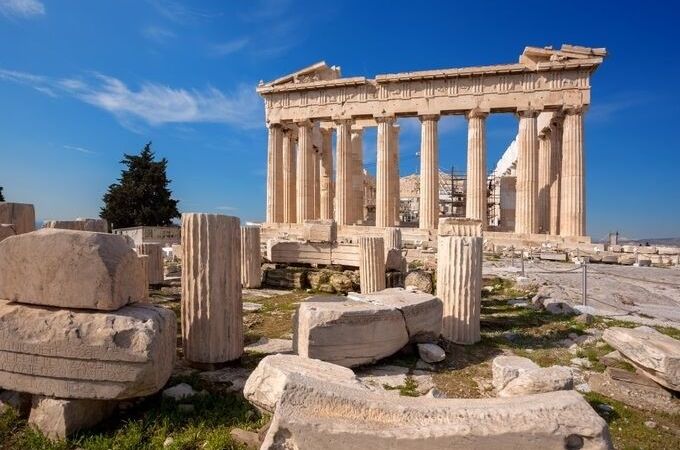
One of October's greatest freedoms is that archaeological sightseeing becomes less dependent on avoiding the hottest part of the day.
During warm early-October periods, morning visits can still be particularly comfortable, but there is usually much greater flexibility than in high summer.
This changes the experience.
You can choose timing according to the wider itinerary, visitor flow or personal preference rather than assuming the sun dictates the schedule.
An October Athens cultural tour can therefore connect archaeological areas and neighborhoods more naturally without building the entire day around heat avoidance.
The new variable is rain.
Light unsettled weather may be little more than an inconvenience, while heavier rain can make exposed stone surfaces less pleasant and influence how much time you want to spend outdoors.
Check the actual forecast rather than carrying July habits into October.
Rain Is Finally Important Enough to Deserve a Plan
October is where generic Athens advice often becomes unhelpful.
Some guides emphasize the month's remaining sunshine so strongly that rain sounds exceptional. Others describe autumn weather in a way that makes the city appear considerably wetter than many visitors actually experience.
Neither approach helps.
Rain becomes meaningfully possible, not permanently dominant.
You might receive several dry days.
You might encounter intermittent showers.
A weather system may produce a wetter period.
The solution is not dedicating an entire day in advance to “rain activities.”
That wastes October's flexibility.
Instead, identify two or three experiences that work particularly well indoors and move them when necessary.
The Museum Stops Being a Backup
This distinction matters.
Calling the Acropolis Museum or National Archaeological Museum a rainy-day alternative suggests they are secondary experiences waiting to rescue a failed outdoor plan.
They are not.
October simply provides a reason to position them intelligently.
Suppose tomorrow looks clear while the following afternoon carries a substantial chance of rain. Use tomorrow for the archaeological landscape and move the museum later.
Nothing has been downgraded.
The order has improved.
This mindset prevents travelers from feeling that weather has “ruined” a day simply because the activities occurred in a different sequence.
October Rewards the 48-Hour Decision
Summer travelers can often organize outdoor plans far in advance with reasonable climatic confidence.
October benefits from shorter decision cycles.
Hotel and major tour reservations naturally still require advance planning, but flexible elements such as a Riviera afternoon, viewpoint or extended neighborhood walk can often be positioned more intelligently once the near-term forecast becomes clearer.
When Should You Commit?
Rather than another month-stage table, October planning works better by commitment horizon:
| Decide Early | Decide 1–2 Days Ahead | Decide That Morning |
| Hotel | Riviera timing | Hill/viewpoint |
| Essential guided experience | Long outdoor route | Outdoor lunch |
| Major transport | Flexible excursion | Evening terrace |
| Fixed-date ticket if needed | Archaeology sequence | Extra neighborhood walk |
This is October's planning advantage.
Not everything needs certainty at the same time.
The Riviera Becomes Weather-Dependent Again
September allowed the Athens Riviera to remain firmly connected to summer.
October changes its role.
A warm, clear day can still produce an excellent coastal experience, particularly earlier in the month. Waterfront dining and walking remain appealing, and some travelers may still consider swimming depending on conditions and personal tolerance.
However, the coast is no longer something every October visitor should assume belongs in the itinerary.
A October Athens Riviera journey works best when the forecast supports what you actually want from it.
If your interest is purely scenery and seaside dining, mild weather may be enough.
If you are expecting a beach-style summer day, October requires more caution.
The coast becomes conditional.
Central Athens does not.
The City Gets Stronger as the Beach Gets Weaker
This is an important seasonal exchange.
As coastal certainty declines, the appeal of cultural Athens increases.
Walking becomes more comfortable. Long archaeological visits require less heat strategy. Museums fit naturally into the day rather than functioning as climate shelters. Restaurants feel appealing at lunchtime instead of simply providing an escape from the sun.
October gradually concentrates attention back toward the city.
For travelers primarily interested in history, food, museums and neighborhoods, that can improve the trip rather than diminish it.
Not every reduction in summer conditions represents a loss.
Sometimes it gives another part of Athens more room.
Evenings Start Asking Questions Again
In September, outdoor dinner can still feel almost automatic.
October reintroduces uncertainty after sunset.
A warm evening may allow you to sit outside comfortably for hours. On another night, wind or a cooler change can make an extra layer genuinely useful.
This affects packing more than daytime temperatures do.
Bring layers that can be removed rather than one heavy solution to “autumn.”
A light jacket, overshirt or sweater can cover a wide range of evening conditions without filling the suitcase with clothing you may never wear.
October is a month for adjustment.
Your wardrobe should work the same way.
Pack for Three Hours, Not Three Seasons
Travelers sometimes overreact to variable forecasts by packing for every possible scenario.
Athens does not require an expedition wardrobe.
Comfortable walking shoes remain essential. Add lightweight daytime clothing, one or two warmer layers, a compact rain option and sun protection, because bright days remain entirely plausible.
The objective is being able to respond when conditions change between lunch and dinner.
You do not need to prepare simultaneously for August and January.
October Gives Walking Back Its Full Purpose
Peak-summer walking is selective.
September gradually reconnects neighborhoods.
October can make long urban exploration genuinely attractive again, particularly during dry, mild weather.
This is the season for letting the route expand because something looks interesting rather than because the itinerary demands it.
A autumn streets of Athens experience fits October especially well because the city's neighborhoods, cafés, markets and modern urban texture can occupy more of the day once heat stops competing so strongly for attention.
Walking is no longer merely transportation between monuments.
It becomes one of the reasons to visit.
October Is Not Unreliable; It Is Negotiable
Calling October weather unreliable suggests the month fails to deliver what it promised.
It never promised July.
What October offers is range.
A warm afternoon may still feel surprisingly close to summer. A shower may send you into a museum earlier than planned. The following morning could produce perfect conditions for several hours among ancient ruins, followed by an evening cool enough that you are glad you packed another layer.
The traveler who needs every day to behave identically may find this frustrating.
The traveler willing to rearrange Tuesday and Wednesday may barely notice.
November will take Athens further into a culture-first, cooler-season city break where daylight and wetter conditions become stronger structural factors.
October sits before that point.
It is the month when flexibility becomes more valuable than certainty — and Athens happens to be exceptionally well designed to reward it.

Which Plans Deserve the Best Forecast?
October becomes easier once you stop trying to protect every activity from imperfect weather.
Some experiences genuinely improve with a clear sky. A viewpoint is an obvious example, as is a long coastal afternoon. Others lose surprisingly little when clouds arrive, while museums and food-focused periods may become more enjoyable when you are not tempted to rush back outside.
Think of good weather as something to allocate rather than something every day must provide.
If one beautifully clear day appears between two unsettled ones, give it to the experience that benefits most from visibility, outdoor time and comfortable walking.
That may be the Acropolis.
It may be the Riviera.
For someone fascinated by photography, it could simply be an unscheduled day wandering through the city.
The correct answer depends on what brought you to Athens.
Don't Waste Sunshine Indoors by Accident
This sounds obvious, yet rigid itineraries frequently do exactly that.
A traveler books a museum for Tuesday, plans the Acropolis for Wednesday and schedules a coastal excursion for Thursday. By Monday evening, the forecast shows Tuesday will be clear while Thursday looks unsettled.
Keeping the original sequence simply because it was written first makes little sense.
October rewards movable plans.
You do not need to reorganize the trip every morning, but when the weather signal is strong and the activities are flexible, use the information available.
A Shower Doesn't Automatically Change the Day
Not all rain deserves a new itinerary.
A brief shower may require little more than coffee, lunch or an indoor visit placed slightly earlier than expected. Persistent rain is different and may justify restructuring several hours.
The distinction prevents travelers from overreacting to a rain icon.
Forecast apps compress complex weather into tiny symbols. “Rain” may describe anything from a short interruption to a genuinely wet period.
Look at timing and expected intensity when planning close to the date rather than treating every precipitation symbol as a lost sightseeing day.
Early October Still Negotiates With Summer
The first part of the month can retain distinctly warm conditions.
Outdoor dining remains attractive, afternoons may still feel surprisingly summery and coastal time can work beautifully when the forecast cooperates.
Later October usually shifts the balance toward cooler evenings, more variable weather and stronger city-focused sightseeing.
That does not make late October inferior.
For travelers who primarily want archaeological sites, museums, food and extensive walking, the reduction in heat may actually improve the experience.
The question changes from “How warm will it be?” to “What do I want warmth for?”
Give October Weather the Right Job
| If You Want... | Weather Matters... | Best Strategy |
|---|---|---|
| Archaeological depth | Moderately | Choose a dry window |
| Coastal atmosphere | Considerably | Save a clear day |
| Museum-heavy trip | Very little | Stay flexible |
| Food and neighborhoods | Somewhat | Work around showers |
| Photography | Considerably | Follow light and visibility |
| Long-distance walking | Moderately | Favor dry, mild periods |
This is why two travelers can experience identical October weather and judge it completely differently.
Their trips asked different things from the climate.
October Is Strong for Travelers Who Dislike Heat
There is a group for whom October's supposed weather disadvantage becomes an advantage.
If temperatures above 30°C reduce your enjoyment of archaeological sites, long walks or outdoor exploration, sacrificing guaranteed summer conditions may be an excellent trade.
You gain cooler walking weather while retaining reasonable daylight and a meaningful possibility of warm sunshine.
The price is uncertainty.
For many cultural travelers, that is an easy exchange to make.
September, October and November Own Different Decisions
September asks how to enjoy lingering summer after everyday Athens returns from its August holiday rhythm.
October asks how to build a trip around weather that is increasingly variable without allowing the forecast to dominate it.
November moves the cluster decisively toward cooler-season Athens, when shorter daylight, greater rain probability and indoor cultural depth begin shaping the itinerary more consistently.
The difference is not simply 27°C, 23°C and 19°C.
It is what each month asks the traveler to manage.
Twelve FAQs About Athens Weather in October
1. Is October a good month to visit Athens?
Yes, particularly for travelers interested in archaeology, museums, food and walking rather than guaranteed beach weather. Temperatures are generally milder than summer, although rain becomes more relevant, making a flexible itinerary more useful than one dependent on continuous sunshine.
2. How warm is Athens in October?
Daytime conditions often remain pleasantly mild, particularly early in October, with temperatures commonly around 21–26°C before generally cooling later in the month. Warm spells and cooler changes are both possible, so exact travel dates and short-range forecasts matter.
3. Does Athens get much rain in October?
Rain becomes more likely than during the dry summer months, but October should not automatically be considered persistently wet. Travelers may experience long dry periods, occasional showers or a more unsettled weather system, making flexible scheduling particularly valuable.
4. Is early October warm in Athens?
Early October can still feel distinctly Mediterranean, with warm afternoons and plenty of usable outdoor time. Some days may even retain a summer-like quality, although visitors should avoid assuming that every early-October trip will provide consistently dry or beach-style conditions.
5. What is Athens like in late October?
Late October generally brings cooler evenings and greater autumn variability while remaining highly suitable for cultural sightseeing. Extended walking can become particularly comfortable, although travelers should carry a useful extra layer and allow flexibility for occasional rain.
6. What should I wear in Athens in October?
Layering works best. Bring comfortable walking shoes, lightweight daytime clothing, a sweater or light jacket and compact rain protection. Sunglasses and sun protection remain useful because clear, bright days are still possible, especially earlier in the month.
7. Can I visit the Acropolis in October?
Absolutely. October can provide excellent archaeological sightseeing conditions because peak-summer heat is no longer the primary concern. Rain may occasionally influence plans, so checking the forecast and placing exposed sites into a suitable dry period can improve the experience.
8. Can you swim in Athens in October?
Swimming remains possible for some travelers, particularly earlier in the month when warm weather coincides with relatively mild sea temperatures. However, October swimming is increasingly weather-dependent and should not be treated with the same confidence as August or September.
9. Is the Athens Riviera worth visiting in October?
Yes, when you value coastal scenery, waterfront dining or walking rather than requiring a guaranteed beach day. A clear, mild forecast can make the Riviera highly enjoyable, but travelers with limited time should keep coastal plans flexible.
10. Is Athens crowded in October?
Major attractions can remain busy, particularly during favorable weather, but October generally sits outside the intensity of peak summer tourism. Exact crowd levels vary by date and location, so the month should not be marketed as either empty or crowd-free.
11. Is September or October better for Athens?
September provides stronger summer continuity, warmer evenings and more dependable coastal possibilities. October usually offers more comfortable conditions for extensive cultural sightseeing but greater weather uncertainty. The better month depends on whether warmth or walking comfort matters more.
12. Is October or November better for Athens?
October generally retains more warmth, longer daylight and greater potential for outdoor dining or coastal time. November moves further toward museums, food and cooler urban exploration. Travelers seeking an autumn city break with some remaining summer character may prefer October.
October Doesn't Need Perfect Weather
A successful October trip is rarely the one that guessed the forecast months in advance.
It is the one that did not need to.
Athens gives you enough variety to move between ancient sites, museums, neighborhoods, restaurants and the coast without every experience depending on the same conditions. Sunshine can be spent where it adds the most value, while a wet afternoon does not need to become a failed day simply because the original itinerary placed something outdoors.
That flexibility changes the emotional relationship with the forecast.
Instead of checking whether Wednesday will be “good” or “bad,” you begin asking what Wednesday will be good for.
A clear day may belong to archaeology or the Riviera. A cooler one may invite a long walk through neighborhoods you would have rushed through in August. Rain might simply lengthen a museum visit and move an outdoor plan twenty-four hours.
September still carries summer strongly enough that weather often supports the itinerary without much negotiation.
November will make autumn more established.
October occupies the useful space between them, where Athens stops promising climatic consistency but offers enough alternatives that consistency is no longer particularly necessary.
Pack intelligently, keep the movable parts movable and let the best forecast go to the experience that deserves it most.

A travel professional specializing in tailor-made travel planning, guest experience management, and multi-destination tourism operations.
With over 23 years of experience in the travel industry, he designs and manages private and cultural tours for international travelers across Türkiye, Greece, Egypt, Jordan, Morocco, and other destinations.
He has strong expertise in both online and face-to-face guest communication, sales processes, and end-to-end travel operations.
Working closely with hotels, travel agencies, and local partners, he ensures smooth coordination and high-quality travel experiences at every stage of the journey.
His focus is on delivering personalized, reliable, and seamless travel experiences for international guests worldwide.